Corn Plant Fertilizer: When, How, and Mistakes to Avoid
Corn Plant Fertilizer: When, How, and Mistakes to Avoid
Corn Plant Fertilizer: When, How, and Mistakes to Avoid
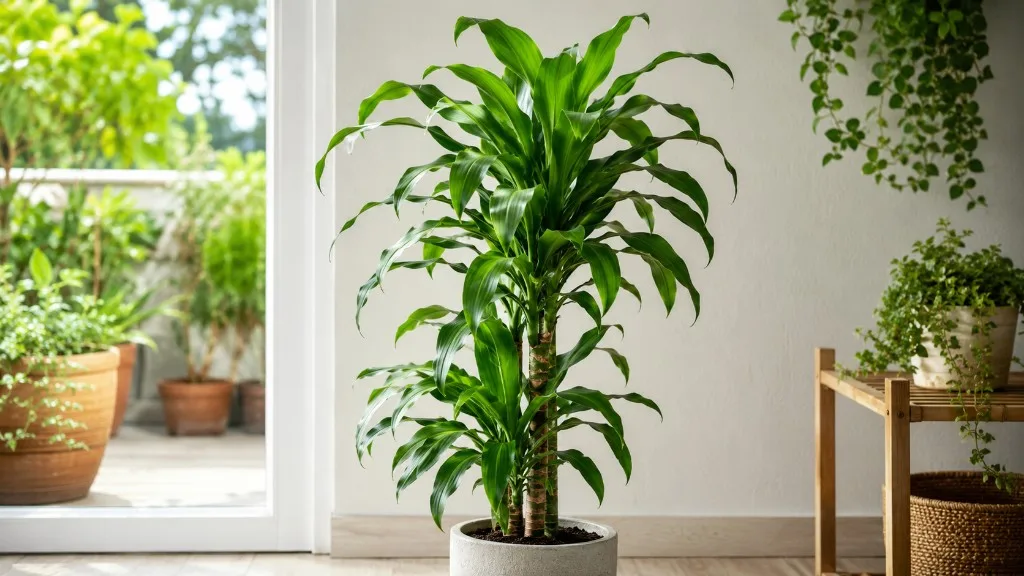
Corn plant fertilizer decisions are simpler than the internet makes them sound - and more consequential than most growers realize. Dracaena fragrans, the species sold as corn plant, mass cane, and striped dracaena, is a slow-growing indoor foliage plant prized for its arching, corn-like leaves and tolerance of low light. It is not a heavy feeder. It does not need aggressive nutrition to look good indoors, and it cannot tolerate the salt loads that faster-growing houseplants sometimes shrug off. Feed too much, too often, or with the wrong product - especially one containing fluoride - and you get brown leaf tips, yellow margins, white crust on the soil, and a plant that looks worse after your best intentions.
The practical goal for most home growers is straightforward: use a balanced, water-soluble foliage plant fertilizer at half the label strength, apply it once a month from spring through summer while the plant is actively growing, and pause entirely in late fall and winter. Water onto moist soil, never onto dry roots. Avoid fertilizers containing superphosphate or other fluoride sources, because corn plant is among the most fluoride-sensitive houseplants you can grow. Large, established specimens in stable conditions may need feeding only once or twice per year at quarter strength - and many look excellent with none at all if light and water are right.
This guide covers when to fertilize, how much to use, which products work best, how to tell deficiency from burn, and the mistakes that cause more damage than skipping a month ever would.
Why Fertilizer Matters for Corn Plant
Corn plant is a slow to moderate grower indoors, typically reaching 4 to 6 feet in a floor pot over several years rather than surging through a single season. That pace shapes its nutritional needs. The plant continuously replaces older leaves on its cane-like stems and occasionally pushes out new shoots at the top or from side buds after pruning. Each new leaf draws nitrogen, phosphorus, potassium, and trace elements from the potting mix. Watering leaches some of those nutrients over time. Root growth and microbial activity consume others. Fertilizer replaces what the plant uses - but only up to the point its roots can absorb without salt damage.
Clemson University’s Home & Garden Information Center notes that dracaenas, including corn plant, benefit from liquid foliage plant fertilizer once a month during spring and summer, with time-release pellets as an alternative (Clemson HGIC - Dracaena). The University of Florida IFAS Apopka production guide classifies dracaenas as plants that require careful fertility management because excess soluble salts and fluoride both cause leaf injury (UF IFAS - Dracaena Production Guide). That dual sensitivity - to salts and to fluoride - is why corn plant fertilizer advice should always start with “less” rather than “more.”
Think of feeding as maintenance for a healthy, actively growing plant - not a rescue tool for a corn plant with brown tips from fluoridated tap water, chronic overwatering on Corn Plant, or a dim corner where it barely photosynthesizes. Fix water quality, light, and Corn Plant watering guide first, then add nutrients on a conservative schedule. Half-strength liquid feeding and periodic salt flushing match how corn plant handles nutrition in indoor containers far better than full label rates or slow-release spikes stacked on top of monthly liquids.
When to Fertilize Corn Plant: Active Growth vs Rest
Timing is the first decision, and it follows the plant’s metabolism more than the calendar on your wall. Feed when corn plant is actively producing new leaves or extending its cane, and stop when growth slows sharply. Indoors, that rhythm tracks longer days and warmer room temperatures from roughly April through September in temperate climates. Heated homes blur the edges, but most corn plants still slow noticeably in late fall and winter even when foliage stays green.
A corn plant in a north-facing office often keeps its leaves all year, which tricks growers into feeding on a summer schedule through December. In practice, lower light and shorter days reduce new shoot production even when old foliage stays upright. Unused nutrients then accumulate as soluble salts while roots absorb water more slowly - a common path to brown tips and stunted spring growth. The plant is not dormant like an outdoor deciduous tree, but its metabolic demand drops enough that fertilizer becomes a liability rather than a benefit.
Spring and Summer Feeding Window
Start feeding when you see fresh growth - a new leaf unfurling at the crown, a side shoot emerging after you shortened a cane, or roots visibly active if you gently check the drainage hole for white root tips. In most homes, that means mid-spring through late summer, roughly April through August or September depending on light and room temperature.
During this active window, a half-strength balanced liquid feed once a month works for most container plants. Conservative growers - especially those with large specimens, fluoridated tap water, or a history of tip burn - may feed only once or twice in the entire growing season at quarter strength and still see healthy foliage. Both approaches are reasonable if leaves stay deep green for the cultivar, canes stay firm, and the soil surface stays free of heavy salt crust.
| Month (temperate climate) | Growth phase | Feeding guidance |
|---|---|---|
| March–April | Waking up, occasional new leaf | Start half-strength liquid if active growth visible |
| May–August | Steady foliage maintenance, new shoots | Monthly at half strength, or 1–2× at quarter strength for conservative setups |
| September | Slowing slightly | Reduce to one light feed or taper off |
| October | Wind-down | Final quarter-strength feed if still growing, then pause |
| November–February | Low growth indoors | No fertilizer for typical setups |
The table is a framework, not a law. A corn plant in a bright east window in July may use nutrients slightly faster than one in a dim corner, but the difference is modest compared to fast-growing coleus or pothos. Watch the plant: if it is producing new tissue steadily, the timing is right. If it is static for months, solve light and water before adding food.
Fall Taper and Winter Pause
Taper feeding in early to mid-fall as day length drops and room temperatures cool. One practical approach: give a final quarter- to half-strength feed in early fall if you still see new growth, then stop entirely from late fall through winter. Most indoor corn plants do fine with no fertilizer from November through February, especially in cooler rooms or north-facing windows.
Winter rest is not full dormancy, but metabolic demand drops sharply. The Pacific Northwest Pest Management Handbooks note that fluoride is an accumulative poison in foliage and that excessive drying between waterings combined with heavy fertilization accelerates tip burn on sensitive dracaenas (PNW Handbooks - Dracaena Tip Burn). Winter feeding on a plant that is not using nutrients is an easy way to create exactly that problem.
Exception: if you grow under strong supplemental grow lights and the plant keeps producing new shoots all winter, you can feed lightly - still at half strength or weaker - but extend the interval to every six to eight weeks and watch closely for salt crust. Even then, skipping winter feeds is safer than forcing growth with nutrients the roots cannot process.
Best Fertilizer Type for Corn Plant
The best corn plant fertilizer for most homes is a complete, water-soluble, balanced foliage plant formula with nitrogen adequate for leafy growth and no fluoride-bearing phosphorus sources. You want nitrogen for green tissue, phosphorus for root function at modest levels, and potassium for overall vigor and stress tolerance. Micronutrients on the label - iron, magnesium, manganese - matter because pale new growth on otherwise well-watered plants sometimes traces to trace-element gaps rather than macronutrient hunger.
Avoid shopping by the word “corn plant” on the bottle unless you already trust the brand’s dosing guidance. A standard balanced indoor foliage formula used conservatively outperforms most specialty products applied at label strength.
Balanced Liquid Formulas and NPK Ratios
A 10-10-10 or 20-20-20 water-soluble foliage plant fertilizer diluted to half strength is the default recommendation across horticultural sources for corn plant. Equal ratios keep feeding simple when your main goal is steady foliage, not flowers or fruit. Some growers prefer a slightly nitrogen-leaning ratio such as 3-1-2 or 5-2-3 because indoor dracaenas are grown entirely for leaves, but the difference is modest at the low feeding rates corn plant actually needs.
Liquid formulas win for control. You mix, dilute, and apply a known dose to moist soil. That matters in pots where precision prevents localized hot spots of concentrated salts. For a typical corn plant in an 8- to 12-inch pot, mix fertilizer at half the label’s recommended strength for houseplants, then apply until a little water drains from the bottom. Discard saucer water so roots are not sitting in concentrated runoff.
Time-release fertilizer pellets are an option Clemson HGIC lists for dracaenas, but they are harder to dial back if you see tip burn developing mid-season. If you use pellets, skip liquid feeding for several months and never combine both at full rates. In small pots, slow-release products can create uneven salt pockets that liquid feeds avoid.
If you are deciding between two bottles on the shelf: pick balanced, water-soluble, foliage-appropriate, with micronutrients listed. Skip anything marketed primarily for flowering, fruiting, or lawn use.
Fluoride, Urea, and What to Skip
Corn plant’s most important fertilizer rule has nothing to do with NPK numbers. Dracaena fragrans is highly sensitive to fluoride, which causes tip and margin necrosis that looks identical to fertilizer burn but will not resolve until you remove the fluoride source (Clemson HGIC - Dracaena). Municipal tap water in many regions contains 0.7–1.0 ppm fluoride added for dental health. Fertilizers made with superphosphate as a phosphorus source can add more. Perlite-heavy potting mixes and low soil pH can increase fluoride availability to roots.
Practical product rules:
- Avoid fertilizers listing superphosphate or other fluoride-heavy phosphorus sources
- Prefer urea-free or low-urea formulas when possible, because some dracaena growers report better tolerance; balanced foliage formulas without urea are widely recommended for fluoride-sensitive species
- Skip slow-release spikes in small pots - they concentrate salts unevenly and are difficult to remove once inserted
- Skip foliar feeding - corn plant does not need it, and wet leaf surfaces invite fungal issues indoors
- Skip fertilizer-pesticide combo products for routine care
Fluoride injury and fertilizer burn both show as brown tips, which is why growers often blame food when water is the real culprit. If tips brown on a plant you have never fertilized, or browning appeared gradually over months with plain watering, suspect tap water fluoride before nutrient deficiency. Switching to filtered, distilled, or rainwater often helps more than any fertilizer change.
Pet note: The ASPCA lists corn plant (Dracaena fragrans) as toxic to cats and dogs, with ingestion causing vomiting, drooling, and loss of appetite (ASPCA - Corn Plant). Concentrated fertilizer solution and crusty soil are not safe for pets to ingest either. Keep plants and runoff out of reach.
How Much Fertilizer to Use on Corn Plant
If you remember one number, make it half strength - and for large, slow-growing specimens or any plant with a history of tip burn, quarter strength is often wiser.
Houseplant fertilizer labels assume a range of species and pot sizes. Corn plant sits in the light feeder category - far less hungry than tomatoes or even pothos, and highly vulnerable to salt damage in the same pot year after year. Cutting the label rate to one-half is the safest default for monthly liquid feeding during active growth. Quarter strength is reasonable for once- or twice-yearly feeding on a plant in moderate light with established canes.
Example: if the bottle says 1 teaspoon per gallon for houseplants, use ½ teaspoon per gallon for monthly feeding, or ¼ teaspoon per gallon for a single spring and mid-summer feed on a conservative schedule. Measure with a spoon or syringe - “eyeballing” concentrates errors because different products use different scoops and scoop sizes vary between brands.
For a final fall feed, quarter to half strength is enough. Go weaker still if you see salt crust, post-feed tip burn, or an oversized pot that stays wet for weeks. Pale lower leaves on an otherwise healthy cane usually mean natural senescence, overwatering, or low light - not hunger.
How Often to Fertilize Corn Plant
Frequency should follow growth rate, specimen size, water quality, and salt management - not guilt about whether you are “doing enough.”
For most container corn plants indoors:
- Once a month with half-strength balanced liquid from mid-spring through late summer (the Clemson HGIC baseline)
- Once or twice per year at quarter strength if the plant is large, slow-growing, in moderate light, or you use fluoridated tap water (a conservative approach many experienced growers prefer)
- Once in early fall at quarter to half strength if growth is still visible, then stop
- No fertilizer from late fall through winter for typical room-grown plants
- Optional light feed every six to eight weeks only if the plant keeps actively growing under bright light or grow lights in winter
For large floor specimens in 12- to 14-inch pots that have filled out their space:
- One to two feeds per year in late spring and mid-summer at quarter strength is often sufficient
- Many established mass cane plants in offices grow well for years with no fertilizer if repotted on schedule and watered with low-fluoride water
That monthly-to-twice-yearly range exists because corn plant is genuinely a light feeder. Feeding at every watering - even at low doses - stacks salts faster than the plant can use them, especially in pots that stay moist for long stretches. Corn plant does better with a clear feeding schedule and plain water between feeds.
| Situation | Suggested frequency | Strength |
|---|---|---|
| Active growth, bright light, medium pot | Monthly | Half label strength |
| Active growth, moderate light, medium pot | Every 4–6 weeks | Half label strength |
| Large specimen, slow growth, low light | 1–2× per growing season | Quarter label strength |
| History of tip burn or fluoridated tap water | 1–2× per growing season | Quarter label strength |
| After Corn Plant repotting guide with fresh mix | Wait 4–6 weeks, then resume lightly | Quarter to half strength |
| Fall and winter | None | - |
Step-by-Step: How to Feed Corn Plant Safely
Feeding corn plant is not complicated, but the order of operations matters. Salts on dry roots burn. Fertilizer on stressed tissue makes things worse. A repeatable routine prevents both.
The basic monthly routine (active growth season):
- Check the calendar and the plant. Confirm it is spring or summer and you see active growth or steady foliage replacement - not winter slowdown or post-stress decline.
- Check soil moisture. The top inch or two should be approaching dry, but the root zone should not be bone-dry. If the pot is parched, water with plain water first and feed the next day.
- Mix fertilizer at half strength (or quarter strength on a conservative schedule) in your watering can. Stir well.
- Pour slowly over the soil surface, avoiding the crown and leaf bases where liquid can collect and cause rot.
- Water until a small amount drains from the bottom. Stop. Do not let the pot sit in saucer runoff.
- Mark the date on your phone or a plant tag so you do not double-feed in the same month.
If you also flush salts monthly - a good practice for fluoride-sensitive dracaenas - do the flush with plain water on a separate day from feeding, or flush first and feed a week later. Doing both in one session is possible but makes it harder to know whether tips reacted to feed or to a heavy flush.
Pre-Feed Checks and the Moist-Soil Rule
Before every feed, run through a short checklist:
- Soil moisture: Moist root zone, not desert-dry. Water plain the day before if needed.
- Season: Active growth window, not late fall or winter unless you have strong grow lights and visible new shoots.
- Plant stress: No recent repotting (wait four to six weeks), no heavy leaf drop, no pest outbreak, no wilting from drought.
- Salt crust: White mineral film on the soil surface means skip the feed and flush instead.
- Tip condition: Progressive brown tips on a plant you feed regularly may mean reduce strength or frequency - not add more.
The moist-soil rule is non-negotiable for corn plant. Dry roots encounter concentrated fertilizer solution as a shock. Moist roots absorb nutrients gradually. This is standard advice for houseplants generally, but it matters especially for a species already prone to marginal necrosis from fluoride and salts.
Signs Your Corn Plant Needs More Nutrition
Genuine under-fertilization on corn plant is less common than over-fertilization, fluoride injury, or care problems masquerading as hunger. Still, a plant in the same pot for years with no feeding, depleted mix, and good light may show subtle deficiency signs.
Watch for:
- Overall pale green leaves across new and middle foliage, not just older lower leaves yellowing naturally
- Small new leaves relative to older ones, with thin tissue and weak color
- Very slow new shoot production over an entire growing season despite Corn Plant light guide and correct watering
- No improvement after correcting water and light when the plant has not been fed in two or more years
Lower leaf yellowing alone is not a reliable hunger signal on corn plant. Older leaves senesce naturally as the cane grows taller. Yellowing that climbs the plant, accompanies mushy stems, or follows a watering binge points to overwatering or root stress first. Clemson HGIC explicitly warns that yellowing and burned tips can result from fertilizing too heavily (Clemson HGIC - Dracaena). Adding fertilizer to a yellowing plant without diagnosing the cause is one of the fastest ways to make it worse.
If you suspect mild under-feeding, start with one half-strength application in spring and reassess over four to six weeks. Corn plant responds slowly; you are looking at the next one or two new leaves, not overnight transformation.
Signs of Over-Fertilizing and Salt Buildup
Over-fertilizing is the most common nutrition mistake on corn plant, and it overlaps with fluoride toxicity enough that growers often misread the symptoms.
Classic signs include:
- Brown, necrotic leaf tips and margins - especially on newest leaves after a recent feed
- White or yellowish crust on the soil surface and rim of the pot
- Sudden leaf drop or widespread yellowing after fertilizing
- Stunted new growth with twisted or smaller leaves following repeated feeds
- Sour or musty smell from the soil, indicating salt stress and compromised root function
- Wilting despite moist soil - damaged roots cannot take up water efficiently
Because fluoride toxicity produces nearly identical tip burn, look at timing: burn that appeared gradually over months without feeding points to water or mix. Burn that spiked within days of a feed points to fertilizer. Burn that worsens in summer under bright light and low humidity may be fluoride accumulating in leaf margins - a process the UF IFAS guide documents as progressive chlorosis followed by necrosis on dracaena cultivars (UF IFAS - Dracaena Production Guide).
When in doubt, stop feeding, flush salts, and review water quality before you feed again.
How to Flush Corn Plant After Over-Feeding
If you suspect fertilizer burn or salt buildup, flushing leaches excess minerals from the root zone. Act promptly - salts continue damaging roots while they remain in the mix.
Flush protocol:
- Stop all fertilizer immediately. Plan a four- to six-week pause minimum.
- Move the pot to a sink, tub, or outdoors where copious water runoff is manageable.
- Water slowly and deeply with plain, room-temperature water - preferably low in fluoride. Let water run through the drainage holes for several minutes until the outflow looks clear rather than discolored.
- Repeat two to three times over the course of an hour, allowing the pot to drain fully between rounds. You are aiming for several times the pot’s volume of water passing through the mix.
- Empty the saucer and do not let the plant sit in runoff.
- Resume normal watering only after the top inch of mix dries on your usual schedule. Do not compensate for the flush with extra feed.
- Reassess after four to six weeks. New growth without fresh tip burn means the salt load dropped enough to consider a single quarter-strength feed next spring.
Badly burned leaf tips will not green up again - they are dead tissue. Recovery shows up in the next one or two leaves emerging clean at the crown. If tips keep browning after a thorough flush, shift your focus to water fluoride and fertilizer product choice before you feed again.
Seasonal and Situational Adjustments
Corn plant fertilizer is not a fixed calendar independent of the rest of care. Light, pot size, water chemistry, and recent stress all change what the plant can safely use.
Bright indirect light supports more photosynthesis and slightly higher nutrient demand - but only marginally for this slow grower. Do not jump to weekly feeding; stay monthly at half strength or keep a twice-yearly quarter-strength schedule if that already produces healthy canes.
Low light reduces demand sharply. A corn plant in a dim office corner may need no fertilizer at all for a year if it is not producing new shoots. Feeding low-light plants is how salt crust accumulates on soil that stays wet longer between waterings.
Hard or fluoridated tap water adds minerals every time you water, not just when you feed. Fertilizer stacks on top of that baseline. Conservative feeding and periodic flushing matter more in those homes than in homes using reverse-osmosis or rainwater.
Heat waves above 85°F (29°C) stress indoor plants even without direct sun. Skip feeding during heat spikes; resume when temperatures stabilize and the plant looks turgid again.
After Repotting, Stress, and Large Specimens
After repotting, wait four to six weeks before fertilizing. Fresh potting mix already contains starter nutrients, and root tips need time to heal from disturbance. Feeding too soon after repotting is a common cause of post-transplant tip burn on dracaenas.
After drought stress, cold damage, pest treatment, or major pruning, hold fertilizer until you see stable new growth. Stressed roots absorb nutrients poorly and concentrate salts in damaged tissue.
Large specimens in heavy floor pots - the classic mass cane with multiple canes in a 12-inch or larger container - have substantial stem reserves and a large soil volume that buffers nutrients. They rarely need monthly feeding. One to two quarter-strength applications per year often suffices. Many commercial interior plantings never feed at all beyond what slow decomposition of organic matter in the mix provides, and the plants remain acceptable for years until repotting refreshes the substrate.
Newly purchased plants from a nursery were likely fed at the grower. Give them two to three months to acclimate to your home before starting any fertilizer program.
Fertilizer and Other Corn Plant Care
Fertilizer only works when light, water, soil, and temperature are already in range. Corn plant in bright indirect light uses nutrients modestly more efficiently than the same plant in deep shade. Corn plant in soggy, compacted mix cannot absorb nutrients properly and suffers salt injury faster. Corn plant watered with fluoride-rich tap water will brown at the tips whether or not you fertilize correctly.
Light: Medium to bright indirect light supports the modest feeding schedules described here. In low light, reduce or eliminate fertilizer before you reduce water - but remember low light usually means lower water and lower feed needs together.
Watering: Corn plant prefers the top half of the mix to dry before the next thorough watering. Overwatering causes root decline that looks like nutrient problems. Never use fertilizer to “perk up” a plant in wet soil.
Soil: A well-draining loamy potting mix with moderate perlite works. Clemson HGIC notes that very perlite-heavy mixes can contribute to fluoride availability problems; keeping soil pH between 6.0 and 6.5 helps reduce fluoride uptake (Clemson HGIC - Dracaena). Repot every two to three years to refresh depleted, salt-laden mix.
Humidity: Low humidity accelerates tip browning on dracaenas, especially when fluoride or salts are already stressing leaf margins. Fertilizer does not fix dryness damage. Aim for moderate indoor humidity and keep leaves dust-free so photosynthesis stays efficient.
Tune feeding to match the whole routine, not fertilizer alone.
Common Corn Plant Fertilizer Mistakes
These errors cause more corn plant problems than skipping fertilizer entirely.
Feeding on a calendar without checking growth. Monthly feeding in winter, or feeding a plant that has not produced a new leaf in months, builds salts for no benefit.
Using full label strength. Corn plant is a light feeder. Full-strength liquid on a slow grower in an indoor pot is one of the most predictable paths to tip burn.
Fertilizing dry soil. Concentrated salts on dry roots cause immediate injury. Always moisten the root zone first.
Ignoring fluoride in fertilizer and water. Superphosphate-based products and fluoridated tap water both cause tip necrosis that fertilizer strength adjustments cannot fix.
Combining slow-release pellets with monthly liquid. Double feeding stacks nutrients faster than the plant can use them.
Feeding after repotting or during stress. Roots need recovery time. Fresh mix supplies adequate nutrients for the first month.
Treating brown tips as hunger. Tip burn from fluoride or salts means less fertilizer, not more. Diagnose before you pour.
Feeding to fix yellow lower leaves. Natural senescence and overwatering are far more common causes than deficiency on an established cane.
Skipping salt flushes for years. Even careful feeding leaves residual salts. A periodic plain-water flush during the growing season keeps the root zone habitable.
Conclusion
Corn plant fertilizer rewards a light hand. Dracaena fragrans is a slow-growing, fluoride-sensitive foliage plant that looks its best with half-strength balanced liquid fertilizer once a month from spring through summer, or an even more conservative once- or twice-yearly quarter-strength feed on large specimens and in homes with fluoridated tap water. Pause entirely in late fall and winter, water onto moist soil, avoid superphosphate-based products, and flush salts when you see crust or tip burn.
If your corn plant struggles, fix water quality, watering rhythm, and light before you increase feeding. When in doubt, skip a month - corn plant tolerates missed feeds far better than it tolerates another dose on stressed roots. The next clean leaf at the crown is the scoreboard; let that guide your schedule more than any generic calendar ever could.
When to use this page vs other Corn Plant guides
- Corn Plant overview - Start here for whole-plant context before deep-diving this topic.
- Corn Plant problems hub - Jump to symptom-specific fix guides when this care topic does not resolve the issue.
Related Corn Plant guides
- Corn Plant overview
- Corn Plant watering
- Corn Plant light
- Corn Plant soil
- Corn Plant propagation
- Corn Plant repotting
- Corn Plant problems
Related tool
Try the Fertilizer Dilution Calculator with corn-plant pre-selected to estimate needs for your setup.