Not Enough Light on Corn Plant: Causes, Checks & Fixes
Quick answer
Corn Plant survives low light but grows slowly, leans toward windows, and fades variegation when photons are scarce. First step: move the plant to bright indirect light within a few feet of an east or filtered west window, then watch the next new leaf set for tighter spacing.
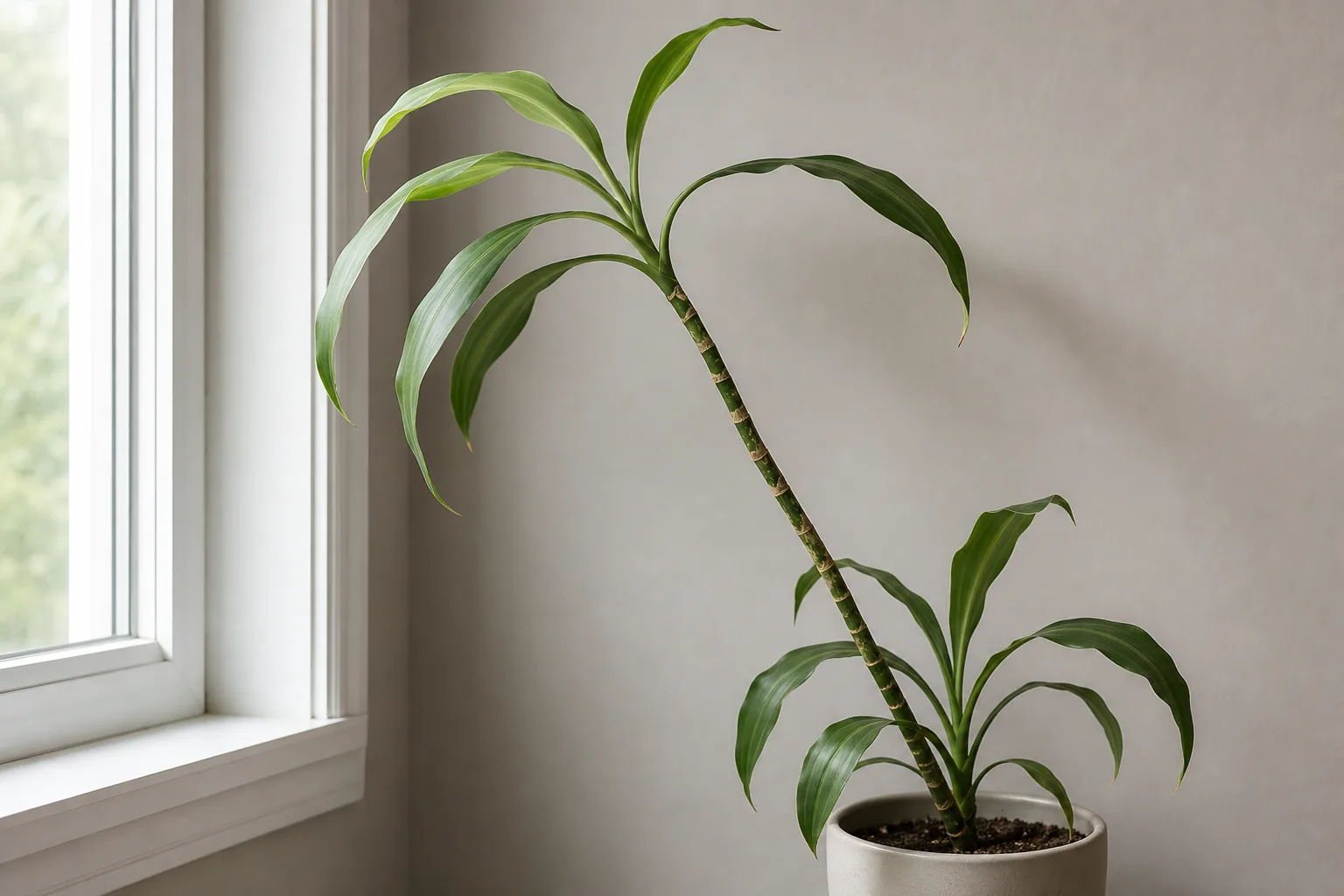
Not Enough Light on Corn Plant: Causes, Checks & Fixes
This guide covers not enough light on Corn Plant. See also the general Not Enough Light guide, watering, and light pages for this plant.
Not Enough Light on Corn Plant: Causes, Checks & Fixes
Quick answer
Corn Plant (Dracaena fragrans) is marketed as a low-light survivor, and it will persist in dim offices-but it grows best in bright indirect light. In genuinely dark corners, new leaves space farther apart on the cane, the crown leans toward windows, growth stalls for months, and variegated forms lose stripe definition.
First step: move the plant to bright indirect light within a few feet of an east-facing window (or a filtered west or south exposure where the leaf crown sees sky brightness without harsh midday sun on the foliage). Do not repot, fertilize, or prune the cane on the same day. Wait for the next new leaf rosette before judging whether the spot is bright enough.
What not enough light looks like on Corn Plant
Low light on Corn Plant shows up in growth rhythm and posture more than dramatic leaf color collapse. Because mature plants naturally shed lower leaves and reveal a bare woody cane, the trick is reading whether the top is weak-not confusing normal trunk exposure with a light problem.
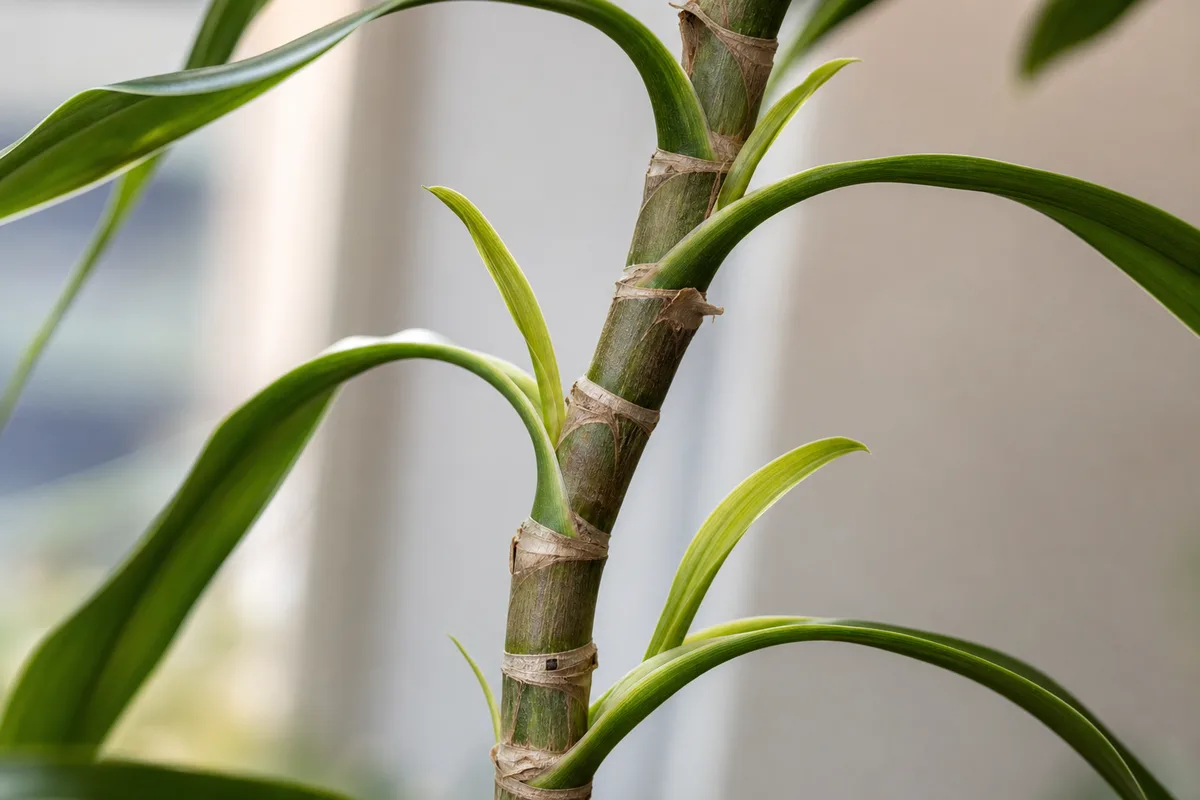
Stretched internodes and smaller dull new leaves on a Corn Plant cane - compare spacing with tighter growth from a brighter window.
Growth and posture changes:
- New leaves emerge smaller and spaced farther apart along the cane
- The crown leans or angles toward the brightest window
- Months pass without a fresh leaf rosette during spring and summer
- Canes feel thin, weak, or curved rather than upright and firm
- Overall height increases slowly while the leaf crown stays sparse at the top
Foliage color shifts:
- Solid green forms turn a dull, flat green instead of glossy deep green
- Variegated cultivars (yellow-striped Massangeana types) lose stripe contrast on successive new leaves
- Lower leaves may yellow and drop faster than expected, though some lower shedding is normal on older canes
Secondary stress that mimics other problems:
- Soil stays wet longer because the plant uses less water in low light
- Yellowing lower leaves while the top still looks vaguely healthy
- Fungus gnats or sour-smelling mix when watering continues on the old schedule from a brighter season
Corn Plant is a slow grower even in good light. If three or four months pass in warm weather with no new crown leaves and widening internode spacing, treat insufficient light as the leading suspect until placement checks prove otherwise.
Why Corn Plant struggles in dim light
Corn Plant evolved in the understory of tropical Africa as a broadleaf evergreen that filters light through forest canopy-not as a deep-cave dweller. Missouri Botanical Garden describes it as best sited in bright indirect locations protected from long direct sun periods, while tolerating some low light. That tolerance means survival, not thriving.
University of Maryland Extension classifies dracaena among medium-bright light houseplants needing roughly 100–500 foot-candles-typical of east- or west-facing windows. Interior shelves more than six feet from glass, north rooms far from windows, and fluorescent-only offices often fall below that range for the leaf crown, even when the room feels adequately lit to human eyes.
Corn Plant’s cane architecture amplifies light stress. Each rosette of sword-shaped leaves sits atop a segment of bare stem. When light is weak, the plant stretches internodes between rosettes to reach brighter zones, producing the classic “leggy corn plant” silhouette: a tall naked trunk with a small leaf tuft at the top. This looks similar to normal lower-leaf drop on an aging specimen, but low-light legginess shows active stretch on new segments-longer spaces between the newest leaves and a crown that tracks toward glass.
Low light also breaks the watering balance specific to Corn Plant overview. Corn Plant prefers soil that dries partway between waterings; in dim conditions it transpires less and the same watering calendar keeps roots wet longer. Wet soil in weak light is a common path to yellowing and root stress that sends growers adjusting fluoride or humidity while photons were the root cause.
Marketing adds confusion. Corn Plant shares office-lobby durability with snake plants and ZZ plants, but dracaena sits in a brighter category on extension light charts. It will live in a dark corner; it will not grow steadily or hold variegation there.
How to confirm insufficient light
Work through these checks in order before changing water, fertilizer, or Corn Plant repotting guide.
- New-leaf spacing test - Compare the distance between the three newest leaves to leaves formed a year ago. Progressive widening between new blades confirms stretch for light. A bare lower trunk alone is not diagnostic.
- Leaf-level brightness - Stand at the pot and look at the top of the foliage crown, not the floor. At midday on a clear day, a soft fuzzy shadow on the leaves means useful indirect light. No meaningful shadow at canopy height means the spot is too dim for steady growth.
- Lean and crown direction - Strong one-sided lean toward a window with the crown facing glass points to phototropism from deficit. Rotate mentally: if the plant always faces one compass direction, light is uneven or insufficient.
- Growth calendar - During spring and summer indoors, a healthy Corn Plant in adequate light should produce new crown leaves at least occasionally. Zero new foliage for four or more months in warm conditions suggests energy shortage.
- Soil dry-down speed - Press into the top two inches of mix. If soil stays wet five to seven days after watering while growth is stalled, pair that with placement checks. Dim light plus wet soil is a frequent dracaena failure pattern.
- Variegation drift - On striped cultivars, compare stripe width and brightness on the newest leaf to older crown leaves. Progressive fade on successive new leaves supports low light over fluoride tip burn, which hits margins regardless of new growth quality.
- Rule out too much light - Bleached tan patches on the window-facing side of leaves mean excess direct sun, not deficit. Corn Plant leaf tips may brown from fluoride or dry air, but sun scorch shows as pale burned panels on the exposed face.
If new leaves keep emerging smaller, farther apart, and paler in a spot that fails the canopy shadow test, you have enough evidence to fix light first.
First fix to try
Move Corn Plant to bright indirect light within two to six feet of an east-facing window, with the leaf crown-not just the pot base-receiving window-level brightness.
East exposure is the most reliable default because morning light is bright but relatively gentle on dracaena foliage. If east glass is unavailable, use a west window with several feet of setback or a sheer curtain that blocks hot direct midday rays. Missouri Botanical Garden recommends bright indirect sites protected from significant direct sun and drafts.
Rotate the pot a quarter turn when you move it so future growth does not repeat one-sided lean. Do not jump from a dim interior shelf to unfiltered south glass in one afternoon-acclimate over seven to fourteen days if the plant has been in very low light for months, because shade-formed leaves lack pigment readiness for sudden hard sun.
After the move, change nothing else for ten to fourteen days except watering frequency if the soil now dries faster. Judge success by the next new leaf rosette, not by old bare cane that will not regrow leaves.
Step-by-step recovery
Once the plant is in brighter indirect light:
- Watch dry-down for one week - Brighter light increases water use. Check the top half of soil before watering rather than following the calendar from the dim corner. Corn Plant is sensitive to both chronic wet soil and fluoride in tap water; fix light before chasing water additives.
- Add a grow light if windows are insufficient - Position a full-spectrum LED twelve to eighteen inches above the crown and run it twelve to fourteen hours daily on a timer. Offices and north rooms often need this supplement for steady growth.
- Rotate weekly - A quarter turn prevents one-sided lean and keeps variegation even on striped forms.
- Prune only after stability - If the cane is extremely tall with a tiny top tuft, plan a cane cut to stimulate branching below the cut-but only after the plant has sat in brighter light for several weeks and shows new growth energy. Do not mass-prune on move day.
- Hold fertilizer - Do not feed a stalled Corn Plant hoping to force growth. Nutrients do not replace photons. Resume light monthly feeding only after new leaves open with tighter spacing for several weeks during active growth season.
- Clean windows seasonally - Grimy glass and heavy sheers cut foot-candles more than owners expect, especially in winter when day length already drops.
If the first brighter spot still produces widely spaced small leaves after four to six weeks in growing season, move closer to the window or add supplemental light before assuming the plant is finished.
Recovery timeline
Light correction is gradual because each new Corn Plant leaf forms under whatever exposure the crown currently receives.
Within two to three weeks of better placement, you should see signs of new crown activity if the plant is in active growth-either a visible leaf bud or faster firming of the terminal rosette. Within four to eight weeks, the next fully opened leaf should show tighter spacing and stronger color if brightness is adequate. Variegated stripes may sharpen on that new leaf even though older blades stay faded.
Existing stretched internodes and long bare cane do not shorten. Recovery proof is always the newest growth. Old sparse crown leaves can remain until replaced; remove them only for aesthetics once new foliage looks stronger.
If no new crown leaf appears for three or more months during warm indoor conditions despite brighter placement, reassess whether the new spot still fails the canopy shadow test or whether roots, fluoride burn, or chronic overwatering on Corn Plant need separate attention.
Lookalike symptoms to rule out
Normal lower-leaf shedding leaves a bare woody trunk on mature Corn Plants as they grow upward-this is expected architecture, not proof of low light. Low light is suspect when the top stays sparse, new spacing widens, and growth stalls while the cane keeps reaching.
Fluoride or salt tip burn causes brown leaf margins and tips on dracaena, often from high levels of water additives such as chlorine or fertilizer buildup. Tips brown regardless of internode stretch; new leaves may still be well spaced if light is adequate. Switching water helps tips but will not fix lean and stretch.
Overwatering in dim conditions produces yellow lower leaves, sour soil, and soft cane bases. Check whether soil stays wet more than five days. If yes, reduce watering-but still brighten the plant so future moisture use matches your routine.
underwatering on Corn Plant makes leaves droop and feel dry; the crown does not systematically produce smaller successive leaves with strong lean toward glass. Soil will be light and dry deep in the pot.
Spider mites cause stippling and fine webbing-common pests on dracaena-often worsening in hot dry air near heat vents, not primarily from photon deficit. Inspect leaf undersides and rinse if webbing is present; light correction alone will not clear mites.
Mistakes to avoid
- Assuming survival equals good placement - Corn Plant can look fine for years in a dim lobby while barely growing. Judge by new leaf rhythm, not absence of death.
- Jumping to direct south sun - Moving a stretched shade-grown plant to a hot windowsill scorches foliage within days. Increase brightness gradually.
- Over-fertilizing to compensate - Extra nitrogen in low light produces weak soft growth and can worsen fluoride salt stress on leaf tips.
- Repotting on day one - Root disturbance stacks stress on a plant already energy-limited. Fix light first unless roots are clearly rotting.
- Ignoring seasonal light drop - Winter short days stall growth even in the same window. Supplement or accept slower rhythm rather than overwatering a dormant-feeling plant.
- Watering on the old schedule - Soil that stayed appropriately moist in October may stay too wet in January at the same pour volume when light intensity falls.
Corn Plant care cross-check
After correcting light, align the rest of care with how this species actually grows:
- Water when the top half of soil is dry; reduce frequency if the brighter spot dries slower than expected after a move.
- Use filtered or rainwater if brown tips persist-fluoride sensitivity is independent of light but often appears on the same stressed plants.
- Keep temperatures in the 60–75°F range Corn Plant prefers; cold drafts near windows slow recovery.
- Expect sparse indoor flowering - flowers rarely appear on indoor plants even in good light, so lack of flowers alone does not diagnose low light.
How to prevent low light next time
Place new Corn Plants where the crown receives medium-bright indirect light by default-east windows or filtered west exposures-not where the pot fits the room layout. Rotate a quarter turn weekly. In offices or north rooms, install a grow light before stretch begins rather than after the cane is six feet of bare wood with a small top.
When buying variegated forms, remember pale stripe tissue needs more brightness than solid green dracaena to hold contrast. A Massangeana stripe that looked vivid in the greenhouse will fade in a dim corner within a few new leaves.
Before winter, note whether the plant already leans; add supplemental light or move closer to glass when day length drops, and cut watering to match slower dry-down.
When to worry
Escalate beyond a simple light move if:
- The cane base feels soft, squishy, or smells sour-possible stem or root rot on Corn Plant from chronic wet soil in low light
- Multiple crown leaves yellow within two weeks despite corrected placement and drier soil
- New growth is absent for a full growing season and the crown shadow test still fails after a grow light trial
- Webbing, stippling, or sticky residue appears on new growth-pests may have exploited a weakened plant
A tall bare cane with a healthy firm base and new tight leaves after a light fix is cosmetically awkward but not an emergency. Prune and branch when growth stabilizes.
Conclusion
Corn Plant earns its reputation for tolerating dim rooms, but tolerance is not the same as good growth. When new leaves space out, the crown leans, and variegation fades, the first and most important fix is brighter indirect light at canopy height-not fertilizer, repotting, or aggressive pruning. Move the plant, watch the next rosette, adjust watering to match new dry-down speed, and judge recovery on fresh leaves. Old stretched cane will not revert, but a firm base and tighter new foliage mean the plant is back on track.
When to use this page vs other Corn Plant guides
- Corn Plant watering guide - Use for routine moisture checks before assuming not enough light is the main issue.
- Corn Plant problems hub - Browse all 16 common issues on this species.
- Leggy Growth on Corn Plant - Different entry point when symptoms overlap with not enough light.
- Slow Growth on Corn Plant - Different entry point when symptoms overlap with not enough light.
- Yellow Leaves on Corn Plant - Different entry point when symptoms overlap with not enough light.