Leggy Growth on Corn Plant: Causes, Checks & Fixes
Quick answer
Leggy corn plants are almost always etiolating-internodes stretch and the crown reaches toward scarce light. First step: move Dracaena fragrans to bright indirect light within two to six feet of an east window (or add a grow light), then watch the next new leaf rosette for tighter spacing. Do not prune stretched canes until new growth proves the placement works.
Leggy Growth on Corn Plant: Causes, Checks & Fixes
This guide covers leggy growth on Corn Plant. See also the general Leggy Growth guide, watering, and light pages for this plant.
Leggy Growth on Corn Plant: Causes, Checks & Fixes
Quick answer
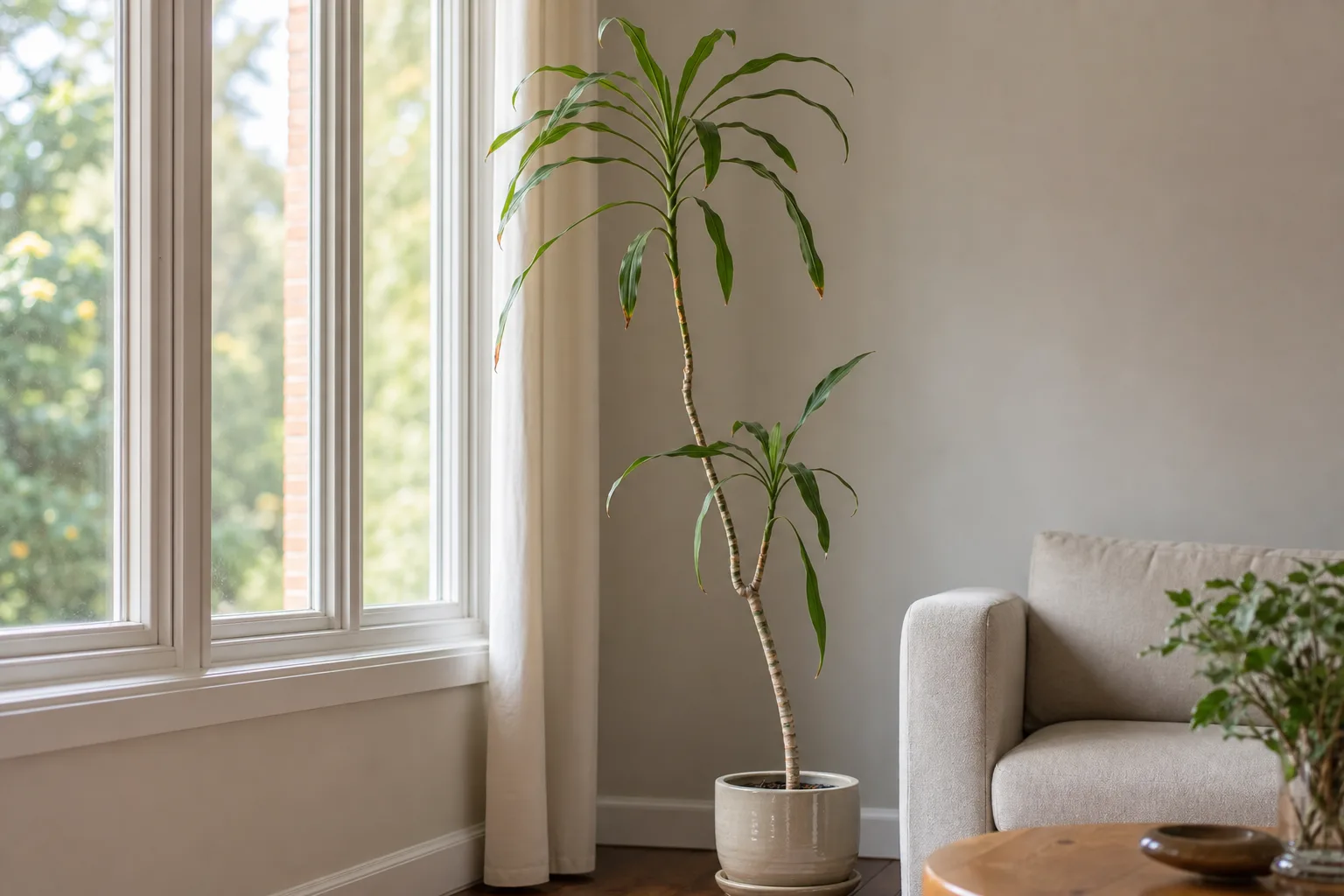
Leggy growth on Corn Plant (Dracaena fragrans) is etiolation-the plant survival response when photons are too scarce to build compact, sturdy tissue. Corn plant does not collapse in a dim lobby; it stretches. Internodes lengthen between rosettes, new leaves shrink, canes lean toward the brightest direction, and the once-full crown starts looking like a tall palm tree: a long bare woody trunk with a small leaf tuft at the top.
That structural stretch is the same low-light pathway covered on the not enough light page-but leggy growth is what you notice when spacing between leaves on the cane, not color fade or general stall alone, is the complaint.
First step: increase filtered brightness in one move. Shift the pot so the leaf crown-not just the pot base-sits within two to six feet of an east-facing window, or behind a sheer curtain a few feet from filtered west or south glass. Add a full-spectrum LED twelve to eighteen inches above the crown on a twelve-to-fourteen-hour timer if windows are insufficient. Do not repot, fertilize, or prune on the same day. Wait for one new leaf rosette with shorter internode spacing before judging success.
What leggy growth looks like on Corn Plant
Etiolation shows up in cane architecture first. Color fade and slow growth often follow on the same plant, but you can diagnose stretch even when older leaves still look reasonably green from a brighter past.
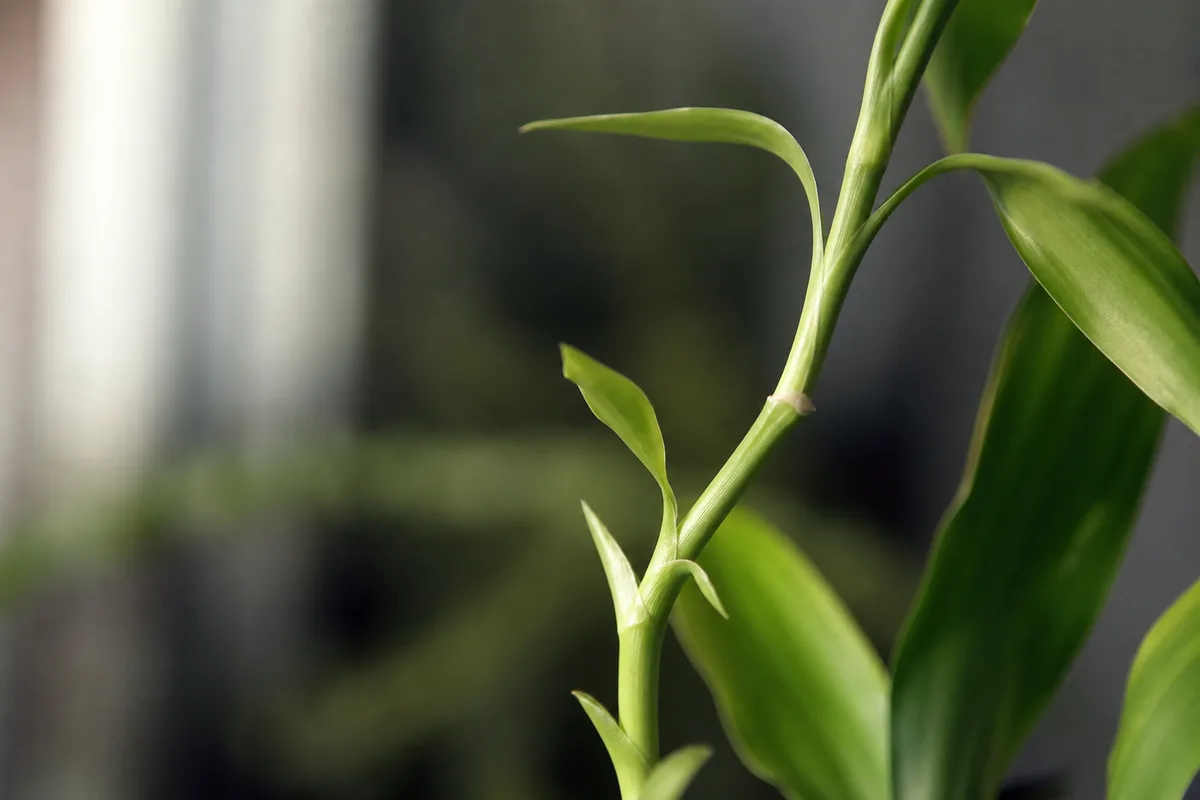
Leggy Growth symptoms on Corn Plant - compare with healthy tissue on the same plant.
Typical corn plant patterns:
- Long internodes on new growth - the gap between successive leaves on the active cane is visibly longer than nursery photos or early ownership. A segment that once held leaves every few centimeters may push them eight to fifteen centimeters apart in chronic shade.
- Smaller new blades - each emerging leaf in the crown rosette is narrower or shorter than the previous tier while the cane keeps climbing. Indoor plants stretch toward light when intensity is too low, producing weaker tissue.
- One-sided crown lean - the whole cane or top rosette tilts toward one window; the glass-facing side stays greener while the room side dulls and drops lower leaves faster.
- Sparse “palm tree” silhouette - a single bare tan cane six feet tall with a tuft of arching leaves at the top is classic long-term etiolation on Dracaena fragrans, not a cultivar trait. Missouri Botanical Garden notes that plants lose lower leaves over time revealing bare stems-but active stretch on new segments above that bare zone confirms etiolation.
- Thin, curving canes - stretched leaders feel less rigid than compact growth and may bow under their own weight or a heavy wet leaf sheath.
- Fading stripes on new leaves - on variegated Massangeana types, successive blades open with weaker yellow central stripes. That color shift belongs on the not enough light page too, but on leggy plants it confirms the same photon deficit driving the stretch.
Corn plant is marketed as low-light tolerant, and it will survive in dim offices. Clemson HGIC notes that most dracaenas grow best in bright indirect light but tolerate lower light-tolerance means persistence, not compact form. Less light means slower growth and longer internodes when the plant is actively reaching.
Why Corn Plant gets leggy indoors
Dracaena fragrans evolved in the understory of tropical Africa receiving filtered, moderate light-not deep cave shade. When indoor PAR falls below what the species needs for compact rosette formation, it switches to shade avoidance: cells in stem internodes elongate, raising leaves toward the light source. The plant survives; the silhouette changes.
Corn plant’s cane architecture amplifies the visual drama. Each rosette of sword-shaped leaves sits atop a segment of bare woody stem. When light is weak, the plant stretches internodes between rosettes to reach brighter zones, producing the classic leggy corn plant: tall naked trunk, small top tuft. This looks similar to normal lower-leaf drop on an aging specimen, but etiolation shows active stretch on new segments-longer spaces between the newest leaves and a crown that tracks toward glass.
Setups that produce leggy corn plants most often:
- Interior shelves and lobby corners - the room feels bright to your eyes, but the canopy receives a fraction of sill intensity. Light intensity drops quickly as distance from the window increases.
- North rooms without supplemental lighting - often too dim to hold tight internodes through winter unless the plant sits close to glass.
- Post-nursery downgrade - corn plant arrives compact from greenhouse brightness, then stretches within one growing season after a move to a dim apartment.
- Winter day-length drop - same window, fewer photons; internode spacing widens from late autumn onward unless you add LED hours.
- One-sided exposure without rotation - phototropism bends growth toward glass; the shaded side stagnates, producing lopsided legginess even when average light is borderline acceptable.
Because dim corn plants transpire less, growers sometimes misread leggy stretch plus yellow lower leaves as overwatering alone. Wet soil in a dark corner usually means light is throttling the whole system-pair any watering cutback with a brightness increase, not a darker shelf.
Leggy growth vs. related Corn Plant problems
This page focuses on stretched cane structure. Use the links below when another symptom dominates.
| What you see | Likely cause | Where to read next |
|---|---|---|
| Long internodes, lean toward window, sparse crown tuft | Low-light etiolation (this page) | Light guide for placement targets |
| Mostly pale leaves, fading stripes, general stall | Low light broadly | Not enough light |
| Brown leaf tips and margins, no internode stretch | Fluoride or salt burn | Brown tips |
| Soil wet for days, soft cane base, rapid yellowing | Overwatering in dim light | Overwatering |
| Little new foliage, no active stretch | Chronic shade or root stress | Slow growth |
| Stippling, webbing on weak new tips | Spider mites on stressed growth | Spider mites |
If internodes are lengthening and variegation is fading on each new leaf, treat it as one problem-insufficient light-not two separate mysteries.
How to confirm the cause
Work through these checks before buying grow gear or cutting canes:
- Measure internode spacing on the last three crown leaves. Progressive lengthening on each newest segment strongly implicates etiolation. Random old bare stems with firm new compact tips at the crown suggest past stretch already corrected by light, not active worsening.
- Run the canopy shadow test at midday. Stand at the pot and look at the top of the foliage crown, not the floor. A soft fuzzy shadow on the leaves means useful indirect light. No meaningful shadow at canopy height means the spot is too dim for steady compact growth.
- Note lean direction. Strong one-sided lean toward a window with the crown facing glass points to phototropism from deficit. Rotate mentally: if the plant always faces one compass direction, light is uneven or insufficient.
- Compare to normal aging. A bare lower trunk with a full, tight crown and occasional new leaves is normal cane architecture. A bare trunk plus widening gaps on new segments and a sparse top tuft is etiolation.
- Check growth calendar. During spring and summer indoors, a healthy corn plant in adequate light should produce new crown leaves at least occasionally. Zero new foliage for four or more months in warm conditions suggests energy shortage.
- Rule out lookalikes. Brown tips regardless of internode spacing point to fluoride sensitivity, not shade stretch alone. Soft squishy cane base with sour soil points to root stress-escalate beyond a simple light move.
If still unsure, run a two-week placement trial: move the plant one step brighter (closer to the same window or add a lamp), change nothing else, and measure the next internode that forms.
First fix for Corn Plant
Move the plant to brighter filtered light-or add a grow light-before pruning, Corn Plant repotting guide, or feeding.
Practical targets from the corn plant light guide:
- East window: often the best default; morning light is bright but relatively gentle on dracaena foliage. Place within two to six feet so the crown sees window-level brightness.
- West or south window: keep the plant behind a sheer curtain or several feet back from hot glass so leaves do not scorch while you fix the dim problem.
- No usable window: use a full-spectrum LED twelve to eighteen inches above the crown, twelve to fourteen hours daily on a timer. University of Maryland Extension recommends supplemental lighting when natural light is insufficient.
Move in one step, not a leap from a dark interior shelf to unfiltered south glass. Shade-formed leaves lack pigment readiness for sudden hard sun-acclimate over seven to fourteen days if crossing more than one light tier.
After the move, pause fertilizer until a healthy new leaf opens. Do not increase watering to “help” a stressed plant-match water to how fast the pot actually dries in the new spot. See the watering guide for dry-down rhythm.
Step-by-step recovery after light improves
Once brightness improves:
- Wait for the next leaf rosette - internode length on that segment is your scorecard.
- Rotate the pot a quarter turn weekly so all sides see similar exposure and the lean corrects slowly.
- Adjust watering - brighter light speeds dry-down; check the top half of soil before each drink instead of keeping a calendar from the dim corner.
- Prune only after two compact new leaves prove placement-cut stretched canes back to a node below healthy tissue. Full technique lives on the pruning guide.
- Clean dusty leaves - grime filters light; wipe arching blades with a damp cloth when dry.
If two healthy leaves open with shorter spacing than the previous pair, the placement is working. If new growth stays elongated, step brightness up again or extend LED hours, then reassess.
Recovery timeline and what improves
Expect two to three weeks to see the first new leaf after a light increase during active growth. Within four to eight weeks, the next fully opened leaf should show tighter spacing and stronger color if brightness is adequate. Variegated stripes may sharpen on that new leaf even though older blades stay faded.
What can recover
- Spacing between future leaves on the cane
- Stem rigidity on new growth
- Growth rate and water use
- Stripe contrast on new Massangeana blades
What cannot recover
- Length of old stretched internodes-only new segments are compact
- Foliage on bare lower cane sections-they will not regrow leaves on old wood
- Sun-scorched patches from a bad acclimation jump
Judge success by new growth only, not by waiting for a six-foot bare trunk to suddenly bush out.
When to prune stretched canes
Pruning fixes shape, not photons. New York Botanical Garden reference guidance notes that when dracaena becomes too tall and leggy, trim canes down to just above nodes and new growth will appear from those nodes-but only when the plant has energy to do so.
Safe sequence for leggy corn plant:
- Correct light first; confirm two compact new leaves.
- Prune in late spring through early summer when warmth supports bud break.
- Cut five to ten centimeters above a node on stretched sections you want to shorten; limit removal to one-third of living foliage per session.
- Keep the cut section upright if propagating-the best rooting material is relatively green crown tissue.
Do not mass-prune a dim, etiolated cane “to make it bushy” before brightness improves. You will get weak sprouts on a still-starved plant. The pruning guide covers node placement and cane-section propagation.
What not to do
- Do not prune first hoping shape fixes what light caused-stretched tissue remains, and new sprouts stay weak in shade.
- Do not jump from a dark corner to harsh midday sun to “force” compact growth-dracaena foliage scorches before green areas show adequate stress signals.
- Do not fertilize a dim, leggy corn plant hoping to restore density-Clemson HGIC notes that plants moved from dim to bright light produce thicker, stronger new leaves; nutrients do not replace photons.
- Do not keep watering on a bright-window schedule after the plant sits in shade or after winter light drops.
- Do not stack repotting, heavy pruning, and light moves on the same day-corn plant drops leaves when multiple variables change at once.
- Do not assume tall equals healthy-corn plant can add height while losing the full crown that made it attractive.
How to prevent leggy growth next time
- Default to bright indirect light at canopy height-not where the pot fits the room layout.
- Keep the crown within medium-bright range-roughly 100 to 500 foot-candles for dracaena-not merely in a room that “has a window.”
- Add twelve to fourteen hours of supplemental LED on north exposures or during winter stretch.
- Rotate weekly and clean windows seasonally-film and heavy sheers cut foot-candles more than owners expect.
- Read each new internode, not just leaf color; catch stretch when only one gap widens, not after the cane goes six feet of bare wood.
- Adjust watering when light changes-more light means faster dry-down; less light means slower.
Variegated Massangeana forms need more brightness than solid green dracaena to hold stripe contrast. A stripe that looked vivid in the greenhouse will fade and stretch in a dim corner within a few new leaves.
When to worry
Escalate beyond a simple light move if:
- The cane base feels soft, squishy, or smells sour-possible stem or root rot on Corn Plant from chronic wet soil in low light
- Multiple crown leaves yellow within two weeks despite corrected placement and drier soil
- New growth is absent for a full growing season and the crown shadow test still fails after a grow light trial
- Webbing, stippling, or sticky residue appears on new growth-pests may have exploited a weakened plant
A tall bare cane with a healthy firm base and new tight leaves after a light fix is cosmetically awkward but not an emergency. Prune and branch when growth stabilizes.
Corn Plant care cross-check
Leggy stretch rarely exists in isolation. After you move the pot, skim these guides so secondary stress does not undo recovery:
- Light needs - window direction, foot-candle ranges, acclimation from shade
- Not enough light - lean, color loss, wet-soil overlap, and broader low-light symptoms
- Watering - dry-down rhythm changes when light increases
- Pruning - when and where to cut cane after compact new growth returns
- Overview hub - full care baseline and troubleshooting map
Conclusion
Corn plant earns its reputation for tolerating dim rooms, but tolerance is not the same as compact growth. When internodes stretch, the crown leans, and the silhouette becomes a bare cane with a tiny top tuft, the first and most important fix is brighter indirect light at canopy height-not fertilizer, repotting, or aggressive pruning. Move the plant, watch the next rosette, adjust watering to match new dry-down speed, and judge recovery on fresh leaves. Old stretched cane will not revert, but a firm base and tighter new foliage mean the plant is back on track.
When to use this page vs other Corn Plant guides
- Corn Plant watering guide - Use for routine moisture checks before assuming leggy growth is the main issue.
- Corn Plant problems hub - Browse all 16 common issues on this species.
- Not Enough Light on Corn Plant - Different entry point when symptoms overlap with leggy growth.
- Slow Growth on Corn Plant - Different entry point when symptoms overlap with leggy growth.
- Yellow Leaves on Corn Plant - Different entry point when symptoms overlap with leggy growth.