Corn Plant Pruning: When, Where & What to Cut
Corn Plant Pruning: When, Where & What to Cut
Corn Plant Pruning: When, Where & What to Cut
Corn Plant (Dracaena fragrans) Pruning - Quick Answer
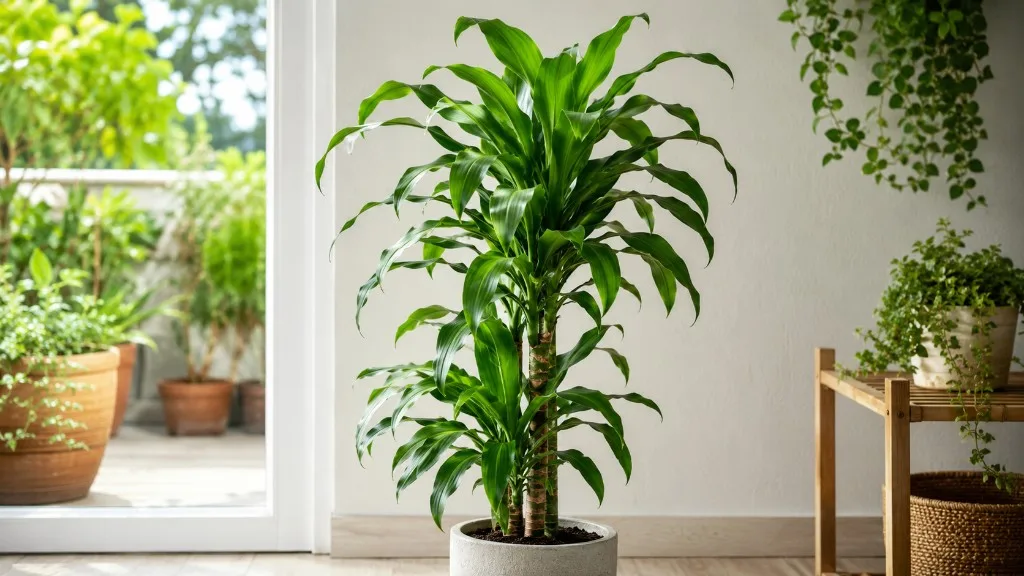
The striped-leaf floor tree in your office lobby is almost certainly Dracaena fragrans - wide strap leaves in a rosette atop a woody cane, with older foliage senescing until the lower trunk goes bare. That bare wood is normal, not neglect. Pruning on this species splits into two jobs owners mix up: cosmetic cleanup of brown tips and yellow lower straps, and structural cane topping when the rosette hits the ceiling and you want shorter, bushier heads from dormant nodes.
First action: remove only fully brown, dry, or mushy leaves - pull straps that release cleanly at the cane, or cut where the leaf base meets the stem. Do not top the cane or trim green tissue until you decide whether you need height control or just cleanup and better water quality.
How Corn Plant Grows - Wide Straps, Bare Cane, Office Floor Tree
Unlike vining houseplants you pinch for fullness, corn plant branches only from leaf nodes - ring-shaped scars encircling the cane where straps once attached. The apical rosette at the top drives upward growth; lower leaves drop with age, exposing smooth internodes that will never sprout foliage on their own. Missouri Botanical Garden describes D. fragrans as a durable indoor tree commonly sold as multi-stem nursery pots with canes staggered at different heights.
Cultivar habits that change what you see, not where you cut
- ‘Massangeana’ - the most commonly grown cultivar with a yellow central stripe on wide straps; often reaches 1.5–2 m indoors on a single cane before owners consider topping
- ‘Lemon Lime’ - brighter chartreuse margins on slightly narrower straps; same node rules, but tip burn shows faster on pale tissue in dry heated rooms
- Compact / ‘Compacta’ forms - shorter internodes and tighter rosettes; less ceiling pressure but the same fluoride sensitivity and node-only branching
Cut placement and recovery timing follow the cane anatomy, not the stripe pattern. For full species context beyond pruning, see the corn plant overview.
Cosmetic Cleanup vs. Structural Cane Cuts - Which Job Do You Need?
| Situation | What to do | Counts toward one-third structural limit? |
|---|---|---|
| Dry brown leaf tips on otherwise green straps | Trim dry tissue only, leaving a thin brown margin | No |
| Round dry patches or sun-scorched streaks on a leaf | Remove entire strap at the cane base | No |
| Fully yellow or brown dry lower leaves | Pull or cut at attachment point | No |
| Rosette above desired height; want multiple heads | Top cane 5–10 mm above a firm node | Yes |
| Leggy single cane with bare trunk and one top tuft | Same node topping; stagger if multiple canes in pot | Yes |
| Widespread yellowing with wet soil | Fix roots and watering rhythm first - not a pruning problem | N/A |
If brown tips return on every new leaf, you likely have a fluoride or salt water issue - trimming alone will not fix it. If the plant is simply too tall, cosmetic work will not change architecture; you need a heading cut above a node.
For shared dracaena node anatomy and genus-wide cautions, the genus Dracaena pruning guide complements this species page - use it for cross-species comparison, and stay here for wide-strap floor-tree specifics.
What to Check Before You Cut
Run through this inspection before any structural cut:
- Nodes below your planned cut line - leave at least two or three healthy nodes between the cut and the soil for branching room
- Cane firmness - soft, hollow, or dark mushy tissue signals rot; cut back to firm white or pale green interior before expecting regrowth
- Recent stress - Corn Plant repotting guide, relocation, drought, or overwatering on Corn Plant within the past two to three weeks argues for waiting
- Brown tip pattern - widespread tip burn on new leaves points to fluoride in tap water; switch water before endless re-trimming
- Light context - plants in dim offices branch slower after topping than specimens near an east window; see light placement guidance before expecting fast recovery
- Pet access - ASPCA lists corn plant as toxic to cats and dogs; plan glove use and secure disposal of all trimmings
When to Prune Corn Plant
Anytime: Fully brown, yellow-dry, or dead leaves at the base; minor cosmetic trimming of dry tip tissue only.
Late spring through early summer: Cane topping, multi-head shaping, and rooting removed sections. Active growth gives the fastest bud break. Clemson HGIC recommends spring for propagation from cane sections and cuttings - the same window when heading cuts heal fastest indoors.
Avoid heavy cane work in autumn and winter when bud swell may stall for months on a bare-topped cane, especially in low-light offices.
When not to prune structurally: Immediately after repotting, during active root rot on Corn Plant (widespread yellowing with wet soil), or when the plant is clearly dehydrated and wilted. Fix the underlying stress first; cosmetic dead-leaf removal is still fine.
The First Cut - Dead and Yellow Leaf Cleanup
Start with dead-leaf cleanup only. Grip a fully dry yellow or brown strap at the base and pull downward - if it releases without tearing green tissue, discard it. If it resists, use sterilized scissors at the attachment point. This single step clarifies how much living canopy remains and whether you actually need a heading cut or just better water and light.
Only after cleanup should you decide on cane topping for height or bushiness.
Topping the Cane - Node Placement on Bare Wood
On bare cane between rosettes, leaf nodes appear as rings or slight swellings encircling the stem - not the papery brown leaf sheaths that sometimes cling to the surface. Plan your target height, then make the heading cut 5–10 mm above a firm node with sharp bypass pruners, angled slightly so moisture runs off the wound.
New shoots emerge from one to three nodes directly below the cut during active growth. RHS notes dracaenas respond well to pruning and readily produce new shoots on stems just below the cut. Leave several healthy nodes between the cut and the soil line if you want maximum branching. Cutting flush with or crushing the node slows response or kills that bud site.
Visual check: trace the ring with your finger - the cut line sits just above it, never between two rings.
How much height to remove at once
Limit structural cane cuts to one-third of the plant’s foliage-bearing height per session. On a 2 m specimen, one topping pass may be enough - wait for visible bud swell before shortening additional canes in the same pot. Fully dead leaves and tip-only trims do not count toward this structural limit.
Staggering multi-cane nursery pots
Nursery corn plants often ship with three canes at different heights. Before topping, stagger your cut heights so regrowth forms tiered rosettes rather than a blunt horizontal line. Step back after each cut and assess balance - two canes topped to the same level can look flat until new heads fill in.
Brown Tips vs. Whole Leaf Removal
Minor tip browning on an otherwise green leaf: trim with sterilized scissors following the natural pointed tip. Leave a thin margin of brown tissue rather than cutting into green - nicking healthy tissue invites further edge dieback.
Extensive tip damage, round dry patches, or sun scorch streaks: remove the entire leaf at its base where the strap meets the cane. Clemson HGIC associates round dry patches with excessive light and dry tips with low humidity or water quality issues - trim for appearance, then adjust placement and switch to filtered or rainwater for fluoride-sensitive D. fragrans.
When many leaves show tip burn, pause cosmetic trimming and correct water source first. Otherwise every new leaf will need the same trim within weeks.
Removing Yellow Lower Leaves
Lower yellow leaves on mature canes often senesce naturally as the plant sheds its oldest foliage. Remove when mostly yellow and dry. Widespread yellowing with soggy soil suggests overwatering or root stress - inspect roots and moisture rhythm before repeated leaf stripping.
Corn plants do not sprout new leaves along bare cane between nodes. Pulling green lower leaves hoping to force trunk foliage wastes energy and exposes more bare wood.
Tools, Sterilization, and Sap Handling
Use bypass pruners for cane cuts and sharp scissors for leaf tips. Wipe blades with 70% isopropyl alcohol before use and between plants. Clean cuts reduce rot entry on fleshy cane tissue.
Wear gloves when handling sap or large volumes of trimmings - dracaena sap can irritate sensitive skin, and all parts remain hazardous to pets per ASPCA guidance.
Propagation From Prunings
Do not discard viable material after topping. The removed cane top - with several leaves and firm stem - roots as a cutting in moist medium or water once the cut end calluses. Clemson HGIC describes cane sections 8–15 cm long laid horizontally on moist perlite sprouting from nodes in weeks. Mark top orientation on segments if dividing long canes. Full step-by-step timing lives in the corn plant propagation guide.
Rooting pruned tops while the parent cane branches below the cut is the fastest way to fill a sparse pot base without buying another plant.
Aftercare and Recovery - Office vs. Bright Light
After a heading cut, place the plant in medium to bright indirect light - corn plants tolerate low light for survival but branch faster with brighter stable conditions. Water when the top half of soil dries; reduce frequency if you removed significant leaf area, since transpiration drops.
Hold fertilizer two to three weeks after cane topping. Expect bud swell in two to four weeks during active growth in spring or summer. New rosettes with several leaves typically follow in six to eight weeks near an east or shaded south window. In a dim office with no window access, the same cut may sit visually unchanged until longer days arrive - firm cane and correct watering still matter more than forcing feed.
Keep humidity moderate and avoid direct sun on freshly cut canes.
Signs Pruning Worked vs. Went Wrong
Worked: Swelling at one to three nodes below the cut within two to four weeks; new strap leaves unfurling from those points; stable firm cane above and below the wound; tip burn stops recurring after water correction.
Went wrong or was mistimed: No bud activity after eight weeks in spring despite firm cane and good light - cut may have been between nodes or node was damaged; cane softening below the cut - rot entry or pre-existing decay; yellowing continues after leaf removal - underlying watering or root issue unresolved; endless tip re-trimming - fluoride or salt source unchanged.
Judge success by node swell and new rosettes, not by expecting branches on bare internodes.
Corn Plant vs. Other Dracaenas - When Advice Differs
Node placement and the one-third rule apply across dracaenas, but habit and recovery speed differ:
| Species / form | Leaf shape | Typical indoor use | Pruning nuance |
|---|---|---|---|
| D. fragrans (corn plant) | Wide straps, often striped | Floor tree, multi-cane pots | Topping produces one to three thick upright heads; fluoride tip burn is common |
| D. deremensis ‘Janet Craig’ | Dark narrow straps, tight rosette | Low-light corners | Slower branching in deep shade; same nodes, smaller head |
| D. marginata (dragon tree) | Narrow red-edged leaves | Vertical accent | Often produces more slender shoots per node; see genus guide |
Use this page for wide-strap D. fragrans office specimens. For dragon tree or Janet Craig specifics, read those species pruning pages; for shared anatomy, start with the genus Dracaena pruning overview.
Common Mistakes to Avoid
- Cutting between nodes - no buds activate; a dead stub remains indefinitely
- Topping in winter - months of bare cane before any response in dim rooms
- Tip trimming without filtered water - cosmetic fix on a chemistry problem
- Overwatering after removing many leaves - wet mix lingers when transpiration is lower
- Structural pruning during root rot - yellow leaves return until moisture is corrected
- Stripping green lower leaves - exposes bare trunk without triggering new growth there
- Leaving toxic trimmings accessible to pets - all plant parts remain hazardous per ASPCA
Conclusion
Corn plant pruning is really two decisions: cosmetic strap cleanup for fluoride-damaged tips and senescent lower leaves, and optional cane topping above nodes when height control matters. Remove dead foliage first, cut structurally in spring if needed, and match ambition to the one-third guideline. Switch to filtered water to stop recurring tip burn, root removed tops instead of discarding them, and treat sap and debris as toxic around pets. Success looks like swelling at nodes below your cut - not foliage magically appearing on bare wood between them.
When to use this page vs other Corn Plant guides
- Corn Plant overview - Start here for whole-plant context before deep-diving this topic.
- Corn Plant problems hub - Jump to symptom-specific fix guides when this care topic does not resolve the issue.
- Leggy Growth on Corn Plant - Escalate here when pruning adjustments are not enough.
- Slow Growth on Corn Plant - Escalate here when pruning adjustments are not enough.
- Brown Tips on Corn Plant - Escalate here when pruning adjustments are not enough.