Slow Growth on Corn Plant: Causes, Checks & Fixes
Quick answer
Corn Plant is naturally slow indoors-often one new rosette every six to twelve weeks in bright light, slower in winter. First step: note when the last crown leaf opened and run a canopy shadow test at leaf level; if no new growth appears for four or more months in warm weather, or soil stays wet for a week, fix placement and watering before fertilizing.
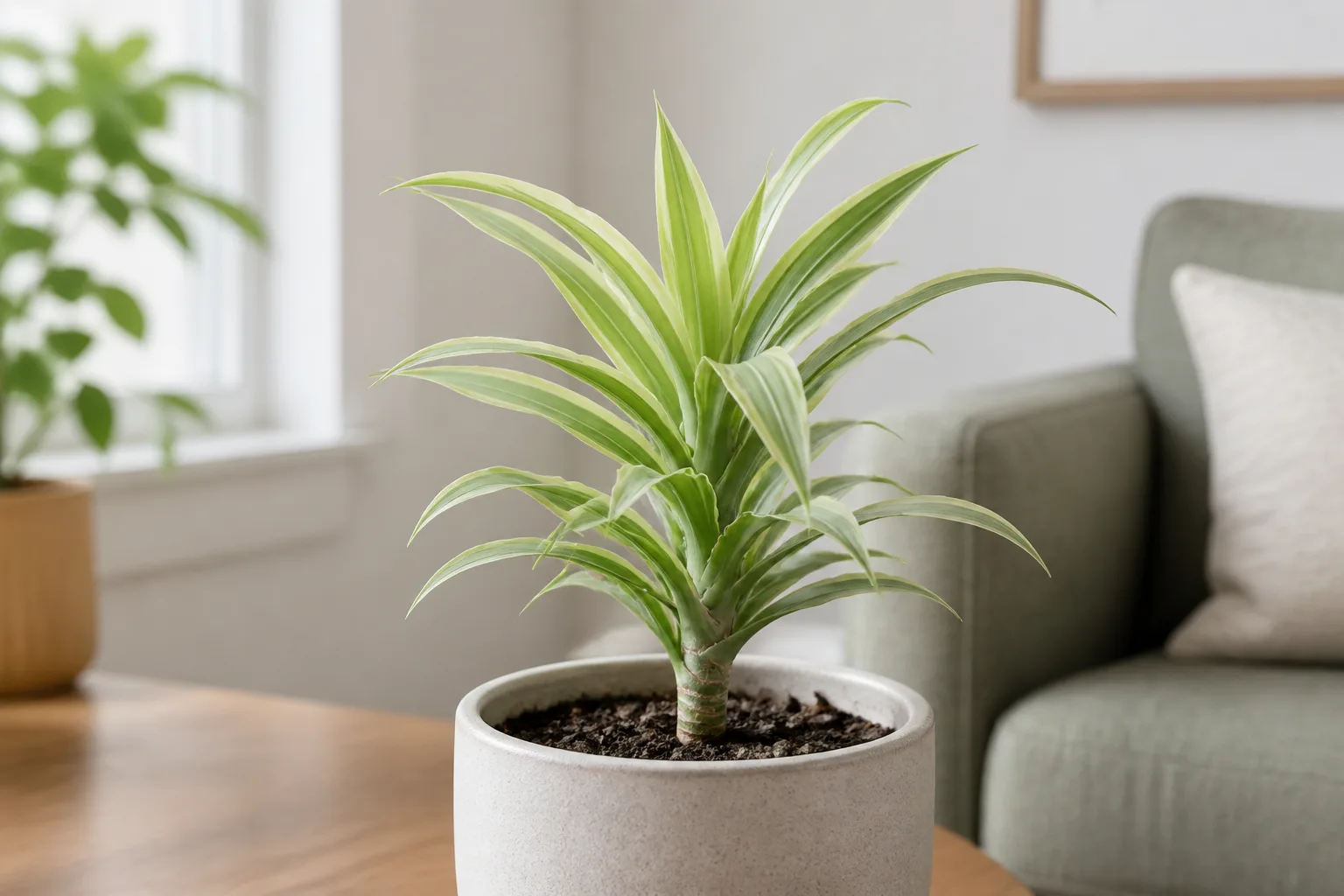
Slow Growth on Corn Plant: Causes, Checks & Fixes
This guide covers slow growth on Corn Plant. See also the general Slow Growth guide, watering, and light pages for this plant.
Slow Growth on Corn Plant: Causes, Checks & Fixes
Quick answer
Corn Plant (Dracaena fragrans) is inherently slow indoors. NC State describes it as a slow-growing broadleaf evergreen that forms upright cane-like stems topped by rosettes of strap-shaped leaves. In bright indirect light, many healthy specimens produce one new crown rosette every six to twelve weeks during active months and nearly pause in winter when day length and room temperatures drop. Reaching four to six feet often takes years, not one growing season.
That normal slowness is why owners worry-and why overcorrecting hurts. A plant that looks fine but adds only occasional leaves is often healthy. A stall is different: no new crown leaf for four or more months during warm indoor weather, soil that stays wet five to seven days after every watering, a soft squishy cane base, or new leaves that emerge smaller and paler every cycle while nothing else changes.
First step: log the last time a crown leaf fully opened and test light at leaf level. Stand at the pot at midday and look at the top of the foliage. A soft fuzzy shadow on the leaves means useful indirect light; no shadow at canopy height means energy is too low for steady growth. If the shadow test fails, move toward brighter filtered light before changing fertilizer, repotting, or pruning. If soil stays wet while growth is stalled, pair a light check with the watering guide-dim light slows water use and turns routine watering into root stress.
This page covers growth pace and stalls. For stretch and long internodes, see leggy growth. For lean, faded variegation, and photon deficit diagnosis, see not enough light.
Is slow growth normal on Corn Plant?
Yes-often. Corn plant evolved as a montane forest understory shrub in tropical Africa, building height slowly from thick canes that store water. Indoors it is a long-lived foliage plant, not a fast filler like pothos or spider plant. Missouri Botanical Garden notes indoor specimens grow far more slowly than outdoor plants, typically reaching four to six feet within a few years in good light.
Normal slow growth looks like this:
- Steady but infrequent crown leaves - a new rosette opens every one to three months in spring and summer, then slows or stops October through February without other stress signs
- Firm tan cane - woody stem feels solid from base to crown; lower leaves may yellow and drop while the top keeps producing occasionally
- Predictable dry-down - top half of soil dries in one to two weeks in moderate light; you water, the plant uses moisture, cycle repeats
- Stable variegation on new leaves - on Massangeana types, stripe contrast on the newest blade matches recent crown leaves, even if growth is unhurried
- Height gain without crisis - the cane may add only a few inches per year while the leaf crown stays proportionate
Abnormal slow growth-what this guide treats as a problem stall-adds red flags:
- Zero new crown foliage for four or more months during warm indoor conditions (roughly March through September in temperate homes)
- Soil wet for five to seven days after each watering while the plant produces nothing new
- Soft, squishy, or sour-smelling cane base - possible root or stem rot masking as “just slow”
- Progressively smaller or paler new leaves every cycle without seasonal explanation
- Tip burn on every new leaf alongside stalled emergence - often fluoride or salt stress, not normal pace
The thick cane stores water, which is why corn plant can look fine for weeks while roots decline, then stop growing entirely. Do not wait for collapse-check firmness, soil smell, and months-since-last-rosette together.
Indoor growth benchmarks for Dracaena fragrans
Use these as rough indoor guides, not deadlines. Your home’s light, pot size, and cultivar shift timing.
| Signal | Normal slow pace | Problem stall |
|---|---|---|
| New crown rosette frequency | Every 6–12 weeks in bright indirect light; slower in winter | None for 4+ months in warm weather |
| Cane firmness | Solid tan wood base to tip | Soft, squishy, or hollow-feeling lower stem |
| Soil dry-down | Top half dry in 7–14 days (varies by pot/light) | Stays wet 5–7+ days repeatedly |
| New leaf size vs prior crown | Similar or slightly smaller in low light | Each new leaf noticeably smaller and paler |
| Seasonal rhythm | Near pause in winter; resumes in spring | No resume when days lengthen and room warms |
Cultivar notes: Variegated Massangeana needs brighter light than solid-green Janet Craig to maintain steady growth-pale stripe tissue cannot photosynthesize as efficiently. Compacta stays shorter and grows even more slowly by design. Match expectations to the cultivar on your cane label.
Seasonal rhythm and winter slowdown
Corn plant follows a seasonal metabolic rhythm indoors even in heated homes. Shorter days and cooler rooms from late fall through early spring reduce new leaf production. Clemson HGIC recommends cutting back on water in winter when growth slows-continuing a summer watering calendar on a dormant-feeling plant keeps roots wet and can stall spring recovery.
Winter slowdown is normal when:
- The cane stays firm
- You see at most one slow leaf or none for two to three months
- Soil dries more slowly but is not sour or constantly saturated
- Growth resumes within weeks once days lengthen and temperatures stabilize
Winter slowdown becomes a problem when soil stays wet, lower leaves yellow in clusters, or the stall continues through May and June without new crown activity.
What problematic slow growth looks like on Corn Plant
Growth problems on corn plant show at the terminal rosette-the cluster of arching leaves at the cane tip. Because lower leaves drop with age, judge health by what the top is doing, not by a bare trunk alone.
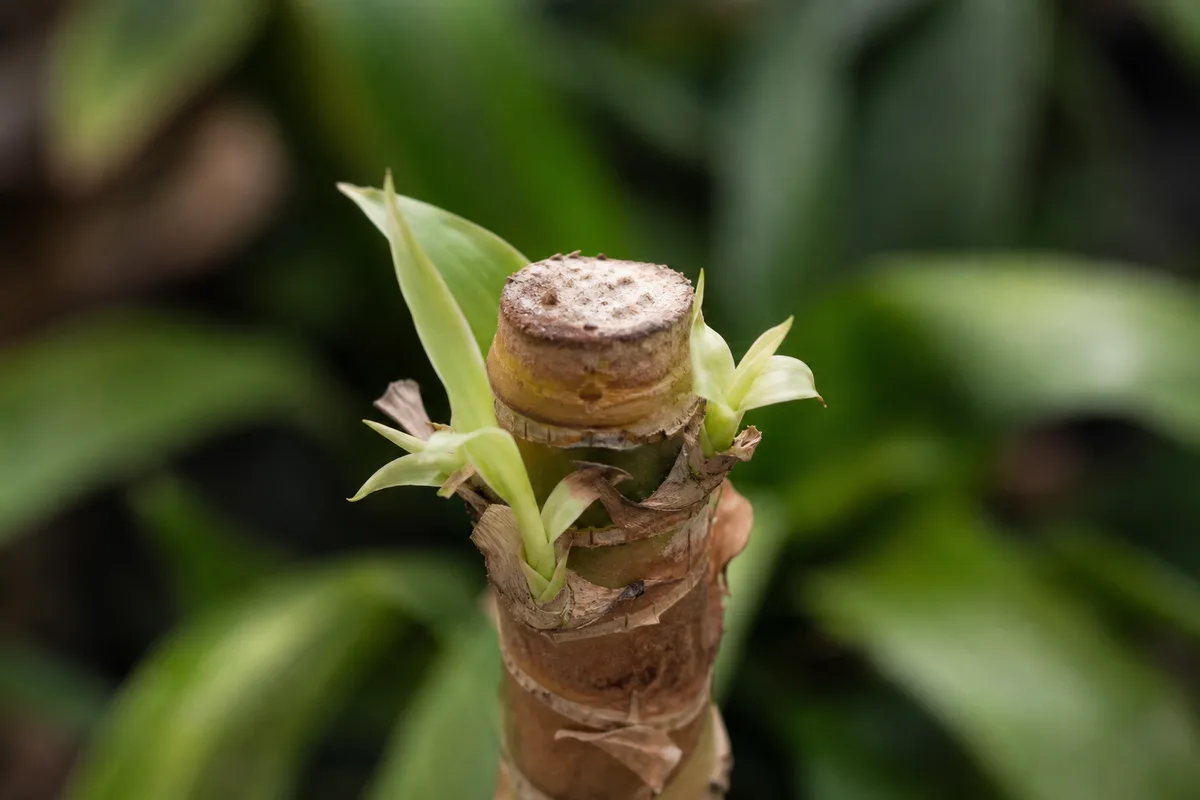
Slow Growth symptoms on Corn Plant - compare with healthy tissue on the same plant.
Stalled crown with no new rosette
The most common owner complaint is a plant that “has not done anything in months.” The cane may look green and upright, but the central leaf bud never unfurls. Causes include chronic low light, root stress from overwatering, fluoride toxicity, root-bound congestion, salt buildup from overfertilizing, or pests on new tissue. A firm cane with dry-appropriate soil and a failed canopy shadow test points to energy shortage-see not enough light. A firm cane with wet soil points to overwatering or impending root rot.
Stretched cane with sparse top growth
If the cane keeps adding height but new leaves space farther apart and the crown leans, that is etiolation, not generic slow growth. Internode stretch belongs on the leggy growth page-fix brightness before pruning bare canes.
Soft cane with wet soil
When growth stops and the lower stem feels mushy, or soil smells sour, root or stem rot is likely. The cane’s water storage masked decline until the apical bud could no longer push new leaves. This is urgent-stop watering, inspect roots, and follow the root rot guide rather than fertilizing a silent plant.
Common causes of abnormally slow growth
Not enough light at the leaf crown
Low light is the leading limiter for indoor corn plant. The species tolerates dim rooms but Clemson HGIC notes growth rate increases when a plant moves from dim light to brighter indirect exposure. In shade, metabolism drops, variegation fades, and the same watering volume keeps soil wet longer-creating a secondary root-stress loop. Full diagnosis lives on not enough light; here, treat failed canopy shadow tests and multi-month warm-season stalls as light-first problems until placement improves.
Watering and root stress
Corn plant prefers soil that dries slightly between waterings. Chronic wet soil in dim light is the classic stall pattern: the plant transpires less, roots sit anaerobic, and new leaves stop emerging while old tissue still looks green. underwatering on Corn Plant stalls growth too-very dry soil for weeks limits uptake-but drooping dry leaves and light pot weight distinguish thirst from rot. Align rhythm with the watering guide.
Fluoride and tap-water chemistry
Dracaena is highly sensitive to fluoride, which causes tip and margin burn and can suppress healthy new leaf expansion. Fluoride does not dissipate when tap water sits out. If growth stalls alongside brown tips on successive new leaves, switch water before feeding. Details overlap with brown tips.
Root-bound pot
After years in the same container, circling roots limit uptake even when you water correctly. Signs include roots visible at drainage holes, the plant lifting out of the pot, water running through without soaking, and stalled crown leaves despite adequate light. Repot one size up in spring with fresh well-draining mix-see the repotting guide for timing.
Salt buildup from overfertilization
Heavy or frequent fertilizer on a plant that is not actively growing deposits salts that burn leaf margins and stress roots. Clemson HGIC warns that overfertilizing dracaena can yellow or burn tips and margins. Do not feed a stalled plant hoping to force growth-flush with low-mineral water and resume light monthly feeding only after new leaves open with normal spacing.
Pests on new growth
Spider mites, scale, and mealybugs sap energy from crown tissue. Inspect leaf undersides and new sheaths for stippling, webbing, or waxy bumps. Pests rarely cause a multi-month stall alone but often exploit plants already weakened by low light or wet soil.
How to confirm the cause
Work through these checks in order. Make one major correction at a time so you can read the plant’s response.
- Growth calendar - Note the date the last crown leaf fully opened. Four or more months without a new rosette during warm indoor weather is abnormal; two to three months in winter may be normal.
- Canopy shadow test - At midday, hold your hand above the leaf crown. Soft fuzzy shadow = adequate indirect light for steady growth; no shadow = fix light first via the light guide.
- Cane firmness - Press the lower third of the stem. Solid tan wood is healthy; squishy or hollow tissue means escalate to root inspection immediately.
- Soil dry-down speed - After watering, track how many days until the top half feels dry. Wet beyond five to seven days with stalled growth suggests overwatering, low light, or poor drainage-not a fertilizer shortage.
- New leaf quality - Compare the youngest fully opened leaf to the previous crown leaf. Progressive shrinkage and paleness support light or root limits; tip burn on every new blade supports fluoride or salt stress.
- Root and pot check - Slide the plant partly out of the pot. White-tan firm roots and moderate root mass fit a healthy slow plant; dark slimy roots, dense circling, or sour smell confirm root stress.
- Rule out stretch - If internodes lengthen and the crown leans, switch to the leggy growth workflow-structural stretch needs brightness before other fixes.
First fixes by cause
Match one leading fix to your confirmed pattern. Wait ten to fourteen days before stacking treatments.
If the canopy shadow test fails or warm-season growth has stalled four or more months: Move corn plant so the leaf crown sits within two to six feet of an east-facing window, or add a full-spectrum grow light twelve to eighteen inches above the crown for twelve to fourteen hours daily. Do not repot or fertilize the same day. See not enough light for acclimation from very dim rooms.
If soil stays wet five to seven days with a firm cane: Stop watering until the top half of mix dries. Confirm drainage holes are open and empty saucers after every pour. Adjust to the dry-down rhythm in the watering guide. If the base softens or smell turns sour, inspect for root rot.
If new leaves show tip burn and growth hesitates: Switch to distilled, rainwater, or reverse-osmosis water. Flush accumulated salts with low-mineral water until runoff runs clear. Hold fertilizer until a healthy new leaf opens. See brown tips.
If roots circle the pot and light is adequate: Repot one container size up in spring or early summer with fresh well-draining mix. Water once, then wait for normal dry-down before the next pour.
If you recently overfed a stalled plant: Leach the soil with low-mineral water and withhold fertilizer until two new crown leaves open with normal spacing during active season.
If pests coat new growth: Isolate, rinse leaf undersides, confirm active infestation, then treat-light correction alone will not clear mites or scale.
Recovery timeline
Corn plant recovery is measured by new crown leaves, not by old bare cane or healed tip burn.
- After a light move: Visible bud activity or faster firming of the terminal rosette within two to three weeks in active season; a fully opened new leaf with normal spacing within four to eight weeks if brightness is adequate
- After watering correction: Soil dry-down should normalize within one to two cycles; new growth may follow three to six weeks later if roots were stressed but not rotted
- After water-quality change: Tip burn on old leaves remains; judge fluoride fixes by cleaner margins on the next one to two new leaves, which may take six to ten weeks
- After repotting: Expect two to four weeks of adjustment pause, then resumed crown activity within four to eight weeks if roots were healthy
- Winter: Even corrected plants may add little until day length increases-do not interpret seasonal pause as failure if the cane is firm and soil dries appropriately
Existing damaged leaf tissue does not revert. Success is tighter spacing, stronger color, and regular-if slow-new rosettes on the cane tip.
Lookalike symptoms to rule out
| What you see | Likely issue | Where to go |
|---|---|---|
| Long internodes, lean, sparse top tuft | Leggy etiolation | Leggy growth |
| Fade, lean, wet soil in dim corner | Low light broadly | Not enough light |
| Brown tips, margins; cane upright | Fluoride or salt burn | Brown tips |
| Yellow spreading leaves, sour wet soil | Overwatering | Overwatering |
| Soft base, dark roots, stalled crown | Root or stem rot | Root rot |
| Bare lower trunk, steady tight crown | Normal aging | Overview hub |
Normal lower-leaf drop exposes woody cane on mature specimens-that is expected architecture, not proof of a stall. Worry when the top stops producing while firmness, soil, or new leaf quality deteriorates.
What not to do
- Do not fertilize a plant that has not grown in months without checking light, roots, and water chemistry first-salts worsen tip burn and root stress.
- Do not repot, prune, and change water on the same day - corn plant needs one variable at a time to show you what worked.
- Do not assume slow equals sick - compare to seasonal rhythm and cultivar before escalating.
- Do not increase watering to “wake up” a stalled plant - wet soil in low light is a common stall cause.
- Do not confuse slow growth with leggy stretch - pruning a stretched cane before light improves removes tissue the plant still needs.
Corn Plant care cross-check
After identifying the leading limiter, align baseline care:
| Factor | Target for steady slow growth |
|---|---|
| Light | Bright indirect at leaf crown; see light guide |
| Water | Top half dry before next pour; see watering guide |
| Water quality | Low-fluoride water if tips burn on new leaves |
| Temperature | Roughly 65–80°F (18–27°C); avoid cold drafts below 55°F |
| Feeding | Light monthly feed only during active new growth |
| Pot | Repot when root-bound in spring-not on stall day one |
Related corn plant problems
Growth stalls rarely have a single isolated cause. Use these paths when symptoms overlap:
- Not enough light - primary photon deficit, lean, variegation fade, wet-soil overlap
- Leggy growth - internode stretch and sparse crown on tall cane
- Overwatering and root rot - wet-soil stalls and soft cane
- Brown tips - fluoride and salt stress slowing new leaves
- Overview hub - full species baseline and cultivar notes
How to prevent slow growth problems
Place new corn plants where the crown receives medium-bright indirect light by default, not where the pot fits the room. Use filtered water if your tap is high in fluoride. Check soil dry-down monthly-when light drops in winter, extend intervals before watering. Repot before roots circle for years in the same pot. Track months between new rosettes in a note on your phone; a sudden pause is easier to catch when you know your plant’s normal slow rhythm.
Variegated Massangeana needs more brightness than Janet Craig to hold steady growth-buy the cultivar that matches your room, or add a grow light early rather than after a multi-month stall.
When to worry
Escalate beyond simple light or watering fixes if:
- The cane base feels soft, squishy, or smells sour
- Multiple crown leaves yellow within two weeks despite corrected care
- No new growth appears for a full warm season after light and water corrections
- Roots are dark, slimy, or hollow when inspected
- Pests coat new growth and persist after rinsing
A firm cane with occasional slow rosettes in winter is usually fine. A silent crown with wet soil in summer is not.
Conclusion
Corn Plant is supposed to grow slowly indoors. The useful question is not “why isn’t it faster?” but “is my plant’s pace normal for this season, light, and cultivar-or stalled by a fixable limiter?” Log when the last crown leaf opened, test light at leaf level, check cane firmness and soil dry-down, and make one correction at a time. Old bare cane and burned tips will not undo themselves-judge recovery by the next new rosette. When stretch-not pace-is the complaint, use the leggy growth and not enough light guides; when the whole care picture needs reset, start from the overview hub.
When to use this page vs other Corn Plant guides
- Corn Plant watering guide - Use for routine moisture checks before assuming slow growth is the main issue.
- Corn Plant problems hub - Browse all 16 common issues on this species.
- Not Enough Light on Corn Plant - Different entry point when symptoms overlap with slow growth.
- Leggy Growth on Corn Plant - Different entry point when symptoms overlap with slow growth.
- Yellow Leaves on Corn Plant - Different entry point when symptoms overlap with slow growth.