Drooping Leaves on Dracaena: Causes, Checks & Fixes
Quick answer
Dracaena leaves droop when water is not reaching foliage-most often from wet soil and failing roots, or from a genuinely dry pot. Lift the pot and probe the top half of the mix before you pour: heavy wet soil with limp leaves means stop watering; a light dry pot means one deep soak.
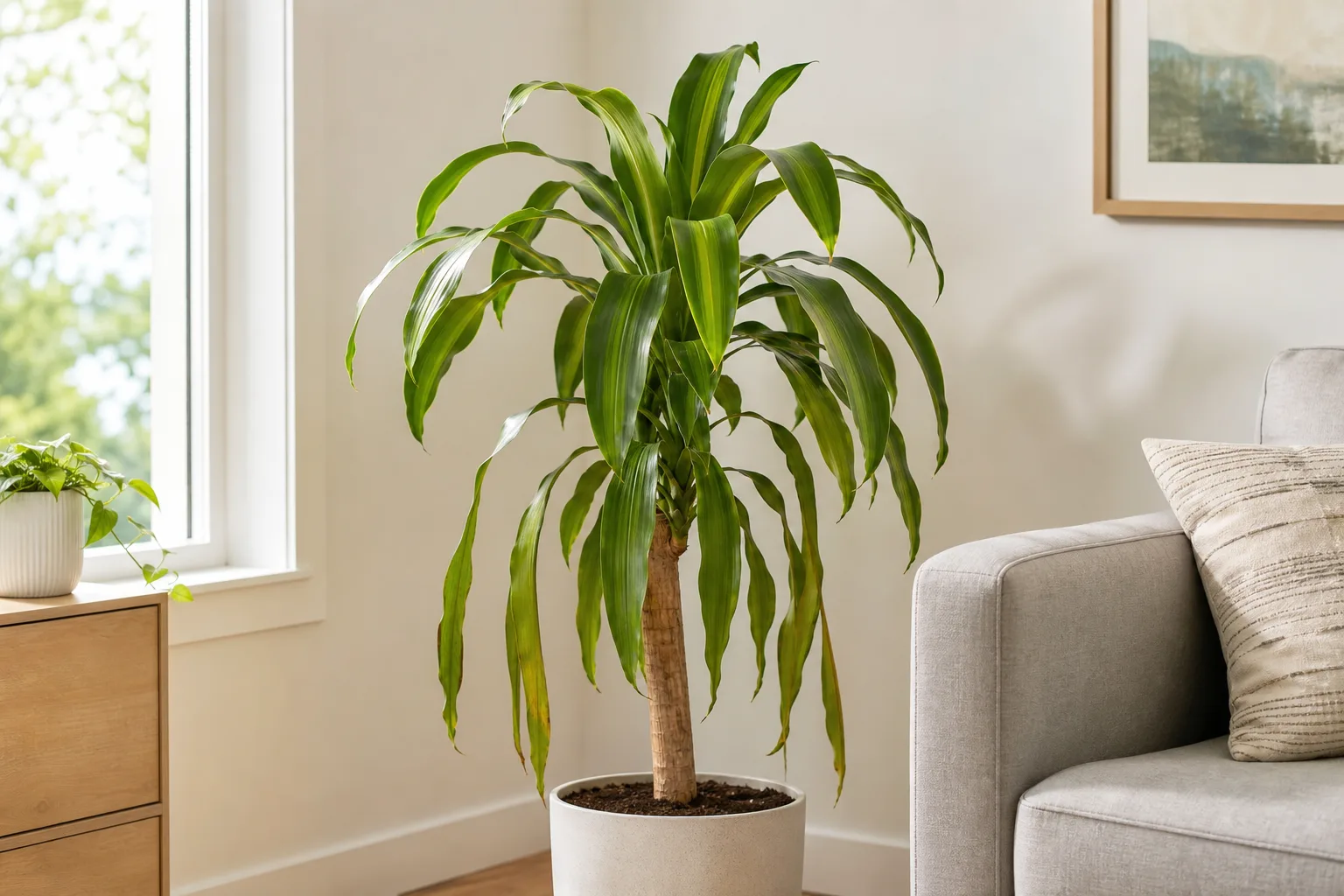
Drooping Leaves on Dracaena: Causes, Checks & Fixes
This guide covers drooping leaves on Dracaena. See also the general Drooping Leaves guide, watering, and light pages for this plant.
Drooping Leaves on Dracaena: Causes, Checks & Fixes
Quick answer
Drooping leaves on Dracaena-corn plant (Dracaena fragrans), dragon tree (D. marginata), Janet Craig, Warneckii, and related cane cultivars-mean the strap-shaped foliage has lost turgor and hangs limply instead of arching crisply from the woody stem. On these plants, droop almost always traces to how water is moving between roots and leaves, not to a mystery “sick leaf” problem.
The critical split is pot weight plus soil moisture at depth. A heavy, wet pot with limp green or yellowing lower leaves usually means overwatering or root decline-adding water makes it worse. A light, dry pot with thin, flexible leaves on a firm cane usually means underwatering-one deep soak after drainage is the fix. Dracaena stores moisture in its cane, which can mask chronic wet soil until several lower leaves droop at once.
First step: lift the pot and push your finger or a dry skewer into the top half of the mix. Do not water on sight alone. If the upper soil is damp and cool while leaves hang limp, stop watering and press the lower cane gently. If the pot feels light and the top half is dry and crumbly, soak until runoff and drain fully. Full watering rhythm: Dracaena watering guide.
What drooping looks like on Dracaena
Healthy Dracaena leaves arch outward from the cane with a stiff, leathery feel-whether broad corn-plant blades or narrow dragon-tree straps. Problem drooping changes the silhouette: leaves hang downward, feel soft or thin, and may curl slightly at the margins. The plant reads collapsed rather than gracefully pendulous.
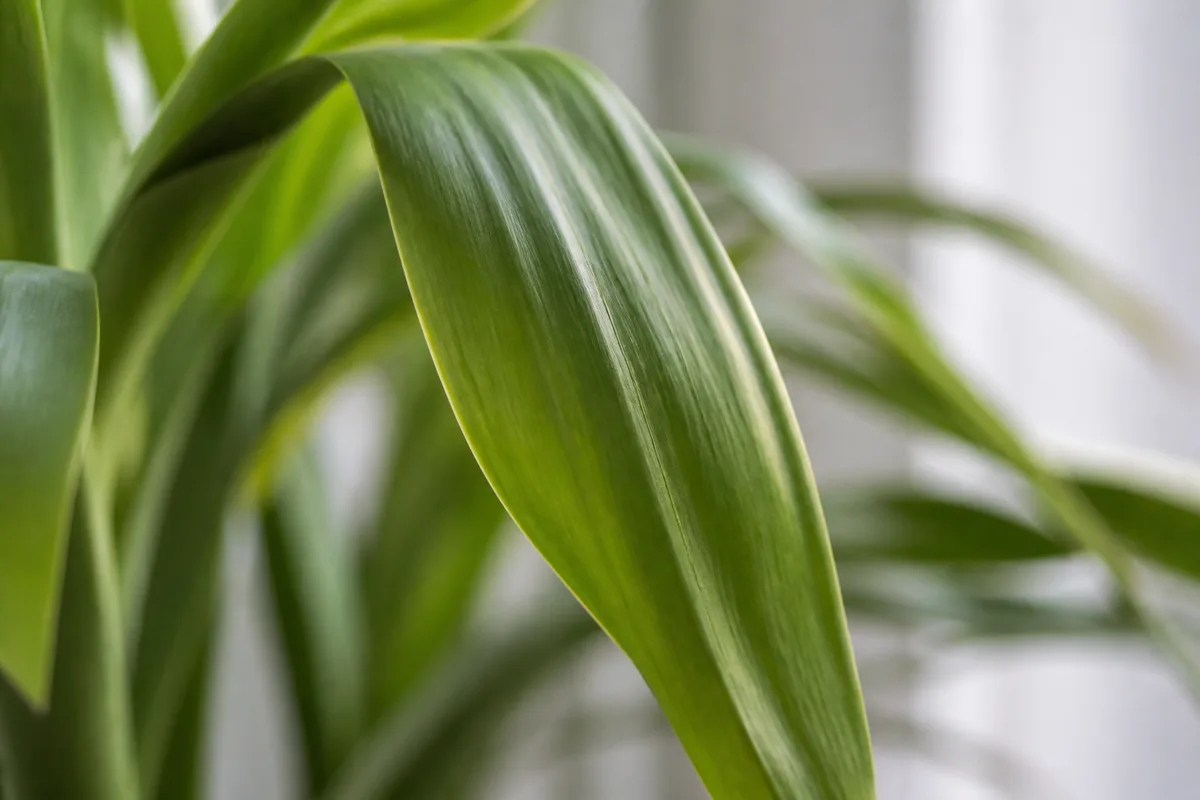
Limp, thin strap leaves that hang downward instead of arching crisply - cross-check pot weight to separate wet-soil droop from drought.
Wet-soil droop is the pattern owners misread most often. Lower leaves go limp first, often in clusters, while the mix stays dark, cool, and heavy for days after the last watering. A wilted appearance with moist soil can indicate damaged roots that cannot move water upward. Yellowing may start on the oldest foliage near the soil line. The cane above the pot should still feel firm in early cases; spongy tissue at or just above the soil surface means rot may be advancing-see root rot on Dracaena.
Dry-soil droop shows limp or slightly curled leaves on a noticeably lightweight pot. The surface mix is pale and may pull away from the pot wall. Leaves feel thinner but the cane stays solid when pressed. On large corn plants, outer strap leaves often droop before the center rosette. This pattern fits drought better than pest damage, which usually shows stippling, webbing, or sticky residue on undersides.
Post-repot or relocation droop can appear within two to seven days after disturbing roots or moving to a brighter or dimmer spot. Leaves may stay green while they hang; growth often pauses until roots re-establish. This is distinct from wet-soil rot-check whether you watered heavily right after Dracaena repotting guide into slow-drying mix.
Cold-draft droop hits quickly when the cane sits beside a winter window, exterior door, or AC vent. Outer leaves wilt overnight while inner foliage still looks normal. Sudden leaf loss on dracaenas can follow temperature changes and drafts as well as watering mistakes.
Low-light softening develops over weeks, not hours. Stems may stretch slightly, new leaves emerge smaller, and existing foliage softens even when you water on schedule. The plant is supporting more leaf area than the current light can sustain-see not enough light on Dracaena if the canopy thins as well as droops.
Why Dracaena leaves droop
Dracaena evolved in tropical Africa with seasonal wet and dry periods, not perpetually damp soil. Indoors, these cane plants behave more like drought-tolerant foliage plants than thirsty ferns-but they are not cacti. Woody stems store some moisture, which buys forgiveness for a missed drink yet also delays visible droop when roots sit in soggy mix. By the time leaves hang limp on wet soil, fine roots may already be damaged.
Overwatering and root rot are the leading causes. Root rot on dracaena usually results from mix that drains too slowly or from overly frequent watering. Saturated soil drives out oxygen; decaying roots cannot move water upward even when the pot is full. Owners see limp leaves and pour more water, which accelerates cane failure. Calendar watering in winter, oversized pots, cachepots without drainage, and heavy peat blends all keep roots wet too long.
Underwatering dries fine root hairs first. Without them, even a later deep soak cannot restore turgor instantly. Large-leaf corn plants in bright windows transpire heavily; a root-bound pot can go from moist to critically dry in a few days during summer heat. Fear of overwatering after a past rot scare often swings owners into chronic drought stress.
Repot shock and root disturbance temporarily reduce uptake. Fresh, wet mix around trimmed roots plus a dim winter room can leave foliage limp while the cane still feels firm-different from rot, but easy to confuse if you only look at leaves.
Cold exposure and drafts slow metabolism and damage leaf tissue fast. Dracaena prefers day temperatures around 60–70 °F with cooler nights; repeated cold shocks show as limp outer leaves before wider decline.
Insufficient light weakens stems over time. Dragon tree and Janet Craig in dim corners may look “thirsty” when soil moisture is adequate-the plant cannot photosynthesize enough to maintain firm foliage. Cross-check Dracaena light requirements before increasing water.
Fluoride and drought both brown tips on Dracaena-the genus is very sensitive to fluoride-but tip burn alone rarely causes whole-canopy droop. If only margins are papery while the cane is firm and soil is evenly moist, see brown tips on Dracaena before treating droop as a watering emergency.
Lookalike symptoms to rule out
Drooping overlaps with wilting, overwatering, underwatering, and yellow leaves on Dracaena. Use pot weight and cane firmness-not leaf color alone-to choose the right page.
| What you see | Most likely cause | Next step |
|---|---|---|
| Limp leaves, heavy wet pot, yellow lower clusters | Overwatering / early root stress | Stop watering; overwatering guide |
| Limp leaves, light dry pot, firm cane | Underwatering | One deep soak; underwatering guide |
| Limp leaves on wet soil + soft mushy cane | Root rot | Urgent unpot; root rot guide |
| Lower yellow leaves only, otherwise firm | Natural senescence or mild overwater | Compare soil moisture at depth |
| Whole plant limp after move/repot, firm cane | Transplant shock | Hold water conservatively; stabilize light |
| Gradual softening in dim room, moist soil | Low light | Brighten spot; not enough light |
| Brown tips only, no canopy droop | Fluoride or low humidity | Brown tips |
How to confirm the cause
Work through these checks in order. One pot-weight reading beats guessing from photos.
- Lift the pot - Learn how it feels after a proper soak versus when the top half has dried. A dramatically lighter pot with limp leaves supports drought. A heavy pot that has stayed wet for a week supports overwatering.
- Top-half dry probe - Push your finger 2–3 inches deep or insert a dry skewer to mid-pot. Allow dracaenas to dry slightly between waterings-water when the upper half of the mix is dry, not merely when the surface looks pale. Damp cool soil at depth with limp leaves means do not add water.
- Cane firmness at soil line - Press the lower trunk gently with a finger. Firm wood is reassuring. Soft, spongy, or hollow-feeling tissue is an escalation signal-see root rot before any further watering.
- Drainage and saucer check - Confirm holes are open and no stale water sits in a cachepot. Standing runoff keeps the bottom saturated even when the surface looks dry.
- Smell and pests - Neutral dry soil fits drought. Sour or fermented odor from drain holes fits wet rot. Fungus gnats hovering when you water suggest chronically moist surface soil.
- Recent history - Note repotting, relocation, seasonal light drop, or a switch to winter heating. Calendar watering that worked in July often overwaters in January when growth slows.
If the pot is heavy, soil stays cool and damp at the surface for many days, and three or more lower leaves yellow within a week, treat as wet-soil stress even if you “only water once a week.”
First fix for Dracaena
Pick one branch based on your confirmation checks. Do not stack repotting, pruning, fertilizer, and pesticide on the same day.
When the pot is wet and leaves are limp
- Stop watering immediately. Do not “give it a little drink” because the leaves look sad-that is the most common way droop becomes rot.
- Move to brighter indirect light if the plant has been in deep shade. Light helps the mix dry; dark corners extend wet-soil duration.
- Empty any saucer or cachepot and ensure drain holes are clear.
- Press the lower cane. If it feels anything less than solid, unpot and inspect roots before the next watering cycle-follow the root rot recovery steps.
- Wait until the top half of the mix is dry before the next soak. That may take one to three weeks in a cool winter room.
When the pot is light and the top half is dry
- Water thoroughly once at the soil surface until steady runoff from drain holes-not repeated small splashes that never reach the root ball center.
- Drain every drop from the saucer within 10–15 minutes.
- Recheck in 24–48 hours. Firm leaves and a heavier pot mean roots rehydrated. Persistent limpness on now-moist soil suggests root damage rather than simple thirst-switch to the wet-soil branch.
After repot shock (firm cane, moist new mix, recent repot)
Hold to conservative top-half dry watering and avoid fertilizing until new growth appears. Do not repot again “to fix” droop-that adds shock on top of shock.
When to escalate to root rot
Treat as urgent if any of these appear:
- Soft, mushy cane at or just above the soil line while mix is wet
- Sour or ammonia-like odor from the pot
- Brown slimy roots visible at drain holes or after a gentle tilt
- Three or more lower leaves yellowing within a week on a regularly watered plant
- Drooping that worsens after you skipped one watering cycle and soil is still damp
Dracaena can recover if the cane above the rot is still firm and white roots remain after trimming decay. If the entire base is mushy with no firm roots, recovery is unlikely-cane propagation may be the salvage path. Full protocol: root rot on Dracaena.
Recovery timeline
Mild dry droop on a firm cane often shows visible firming within 24–48 hours after one proper soak. Leaves may not return to their original arch, but they should feel less thin and the pot should regain weight.
Mild wet-soil droop without soft cane may stabilize over one to two dry-down cycles (often two to four weeks in winter) once you stop watering and soil oxygen returns. Judge progress by new growth from the crown, not by old yellow leaves greening up.
Moderate root damage can take several weeks to months after trim-and-repot intervention. Expect some permanent loss of lower foliage.
Severe rot with soft cane may not recover. If no new leaves emerge after six to eight weeks of correct dry-down care on a trimmed plant, reassess whether propagation from healthy cane above the rot is warranted.
What not to do
- Do not water a drooping Dracaena before checking soil moisture at depth. Surface dryness on wet subsurface soil is common in peat-heavy mixes.
- Do not fertilize a stressed plant to ” perk it up.” Feed only after firm cane, stable moisture rhythm, and visible new growth return.
- Do not repot on day one for simple dry droop-soak correctly first. Repot only when you confirm rot, failed nursery peat that never dries, or severe compaction.
- Do not mist instead of watering when soil is dry and leaves droop. Misting does not rehydrate roots.
- Do not stack treatments-repot, prune, move, and spray on the same afternoon obscures which change helped.
How to prevent drooping leaves next time
Prevention on Dracaena is mostly watering discipline tied to cane biology, not humidity gadgets.
- Use the top-half dry rule from the watering guide: check every 5–14 days in active growth, 10–14 days or longer in winter slowdown-water only when the upper half of the pot has dried.
- Treat the calendar as a reminder to check, not permission to pour. Winter intervals often stretch to 3–6 weeks on large plants in cool rooms.
- Empty saucers after every soak; never let the pot sit in stale runoff.
- Size pots to the root mass, not the canopy height. Oversized containers stay wet too long in the center.
- Use fluoride-free water if brown tips persist despite correct dry-down-fluoride injury shows as yellowing or scorched leaf tips on dracaena and can look similar to drought stress on limp days.
- Weekly pot-weight habit during problem seasons catches wet-soil droop before the cane softens.
Corn plant, dragon tree, Janet Craig, and Warneckii share this logic. Cultivar-specific growth notes live on the Dracaena overview and individual plant pages; drooping diagnosis does not require a separate URL per cultivar.
Related Dracaena problems
- Dracaena overview - genus habit and species differences
- Watering - top-half dry rule and seasonal rhythm
- Overwatering - wet-soil droop deep-dive
- Underwatering - dry pot and light weight
- Root rot - mushy cane emergency
- Wilting - overlapping limp-leaf symptom clarification
- Yellow leaves - lower cluster overlap on wet soil
- Brown tips - fluoride vs drought on margins
- Not enough light - gradual softening in dim rooms
When to use this page vs other Dracaena guides
- Dracaena watering guide - Use for routine moisture checks before assuming drooping leaves is the main issue.
- Dracaena problems hub - Browse all 16 common issues on this species.
- Underwatering on Dracaena - Different entry point when symptoms overlap with drooping leaves.
- Overwatering on Dracaena - Different entry point when symptoms overlap with drooping leaves.
- Root Rot on Dracaena - Different entry point when symptoms overlap with drooping leaves.