Wilting on Dracaena: Causes, Checks & Fixes
Quick answer
Wilting on Dracaena usually means overwatering and failing roots (limp leaves on wet soil and a soft cane at the base) or drought after the top half of the pot has gone too dry (light pot, dusty mix, drooping arching leaves). First step: lift the pot for weight, then press the lower cane where it meets the soil-firm cane with a light dry pot means a deep soak; soft cane with damp heavy mix means stop watering and inspect roots.
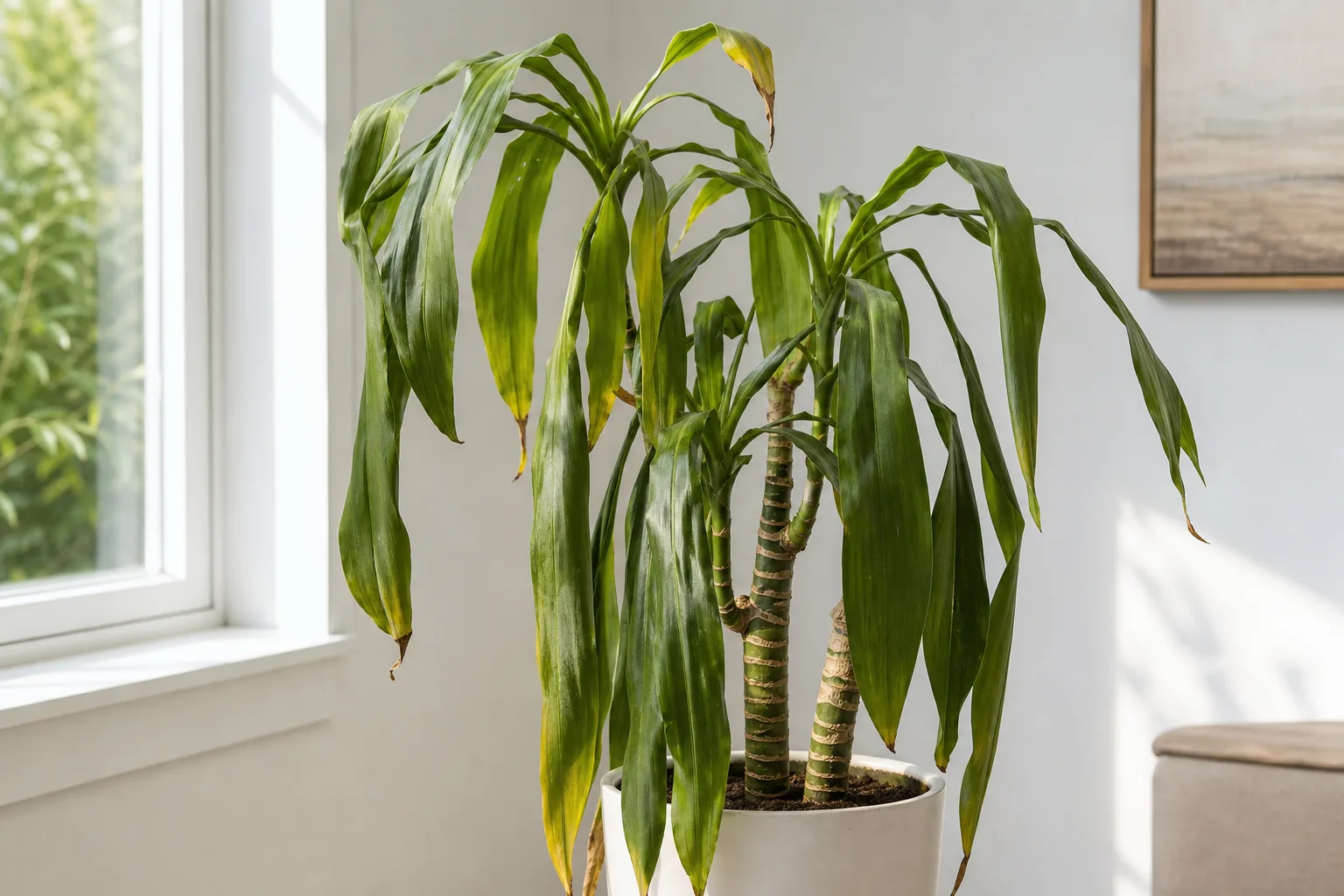
Wilting on Dracaena: Causes, Checks & Fixes
This guide covers wilting on Dracaena. See also the general Wilting guide, watering, and light pages for this plant.
Wilting on Dracaena: Causes, Checks & Fixes
Quick answer
Wilting on Dracaena usually means overwatering and failing roots (limp arching leaves on wet soil and a soft cane at the base) or drought after the top half of the pot has gone too dry (light pot, dusty mix, drooping strap leaves on a firm cane). First step: lift the pot for weight, then press the lower cane where it meets the soil-firm cane with a light dry pot means a deep soak; soft cane with damp heavy mix means stop watering and inspect roots.
Dracaena-corn plant (Dracaena fragrans), dragon tree (Dracaena marginata), Janet Craig, Warneckii, and related cane cultivars-stores some moisture in its woody trunk. That reserve delays visible wilt, which is why leaves can look fine briefly while roots are already damaged, then collapse over a few days. The useful clues are soil moisture at depth, cane firmness, pot weight, and whether newest crown leaves are firm or declining.
What wilting looks like on Dracaena
On Dracaena, wilting shows up as loss of turgor in the arching strap leaves at the crown. Outer leaves may hang lower than usual, feel limp instead of springy, or fold slightly along the midrib. The woody cane itself should stay upright; if the trunk leans or feels hollow, root or stem rot is likely involved.
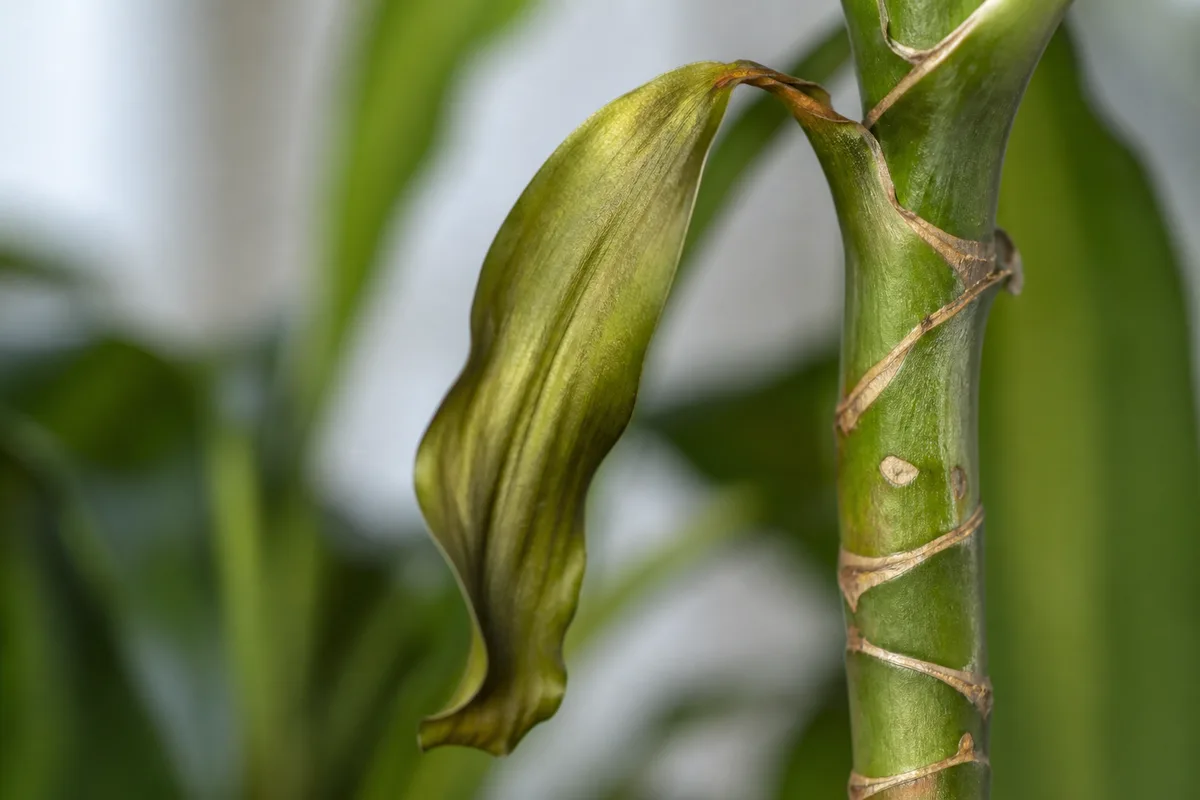
Wilting symptoms on Dracaena - compare with healthy tissue on the same plant.
Two patterns dominate indoor Dracaena:
Overwatering and root failure: Mix stays damp or heavy for many days after you watered. Lower leaves yellow in clusters while the soil still feels wet-yellowing leaves can be caused by overwatering when roots sit in overly moist mix. The cane at the soil line feels soft or spongy when pressed. A sour or fermented smell from the pot supports rot. Leaves look thirsty even though you watered recently-the wilted despite wet soil pattern extension pathologists describe when roots can no longer function.
Underwatering and drought stress: The top half of the pot is dry and the container feels noticeably light. Leaves droop and may feel thin or papery at the tips, but the lower cane stays firm. On D. marginata, narrow leaves show wilt sooner than the broader leaves on a corn plant because there is less leaf tissue to hold water.
Less common: Wilting for a week after Dracaena repotting guide in warm weather, cold drafts below the 65–80°F (18–27°C) range NC State recommends, or a recent move from a bright greenhouse to a dim office. Those usually affect the whole crown evenly without mushy cane or extreme wet-dry soil mismatch.
Why Dracaena gets wilting
Root rot usually results from a mix that does not drain quickly or from overly frequent watering on Dracaena. When soil stays wet, roots in saturated soil lose oxygen and decay fungi proliferate. The root system stops moving water, yet the mix remains damp-so the plant wilts while you think it is hydrated.
Dracaena is especially vulnerable because growers often treat it like a thirsty tropical. Peace lilies and ferns prefer evenly moist soil; Dracaena needs air between drinks. Calendar watering, oversized pots, heavy peat mix, low light, and decorative cachepots that trap runoff all keep the center of the root ball wet longer than the surface suggests. Tall office displays are a frequent trap: the outer pot looks fine while the bottom sits in stale water.
Severe underwatering causes a different wilt. After the upper half of the pot dries completely and drought continues, fine roots die back and leaves lose turgor. Dracaena tolerates dry spells better than constant sogginess, but repeated full desiccation in small pots under heating vents still produces limp foliage.
Repot shock, cold exposure, and recent over-fertilizing on wet soil can weaken the crown without immediate rot. Those are usually temporary if the cane stays firm and you hold a stable watering rhythm.
Lookalike symptoms to rule out
Before you water or repot, separate true wilt from problems that mimic it:
| Pattern | Soil | Cane feel | Leaf clue | Likely issue |
|---|---|---|---|---|
| Limp crown, wet mix | Damp days after watering | Soft at base | Yellow lower cluster | Overwatering / root rot - see overwatering |
| Limp crown, dry mix | Top half dusty dry | Firm | Thin, droopy arch | Underwatering - see underwatering |
| Tips brown only, firm cane | Normal dry-down | Firm | Papery margins, no full limp | Fluoride tip burn - see brown tips |
| Gradual lean, firm cane | Neither extreme | Firm | Long bare stem, faded color | Low light droop - see drooping leaves |
| Sudden wilt after repot | Moist but not soggy | Firm | Whole crown soft for days | Transplant shock - hold water briefly |
Dracaena deremensis and D. fragrans are very sensitive to fluoride toxicity. Brown necrotic tips and margins with otherwise firm upright leaves are not wilt-watering more will not fix them and may trigger real rot.
How to confirm the cause
Use this inspection order before changing anything:
- Cane squeeze test. Press the lowest few inches of trunk at the soil line. Firm wood suggests roots may still be viable; spongy or collapsing tissue points to stem or root rot.
- Soil moisture at depth. Push a finger or dry skewer 2–3 inches down-or to the midpoint of the pot for large containers. Cool clinging mix with a soft cane confirms overwatering. Dry crumbly mix through the top half with a firm cane confirms drought.
- Pot weight. Lift the container. Heavy days after watering with limp leaves suggests waterlogging; very light with drooping leaves suggests thirst.
- Smell and drainage. Sour odor, blocked holes, or water sitting in a saucer support rot. Confirm the nursery pot is not sealed inside a cachepot full of old runoff.
- Newest growth. A firm emerging crown leaf while older outer leaves droop may mean partial stress or normal lower-leaf aging-not always an emergency.
Do not water automatically when leaves hang. On Dracaena, that reflex worsens rot when soil is already wet.
First fix for Dracaena
Make one targeted correction and wait several days to read the response.
If soil is wet and the cane is soft or lower leaves are yellowing in clusters: Stop watering immediately. Move the plant to brighter indirect light if it sits in deep shade so the mix can dry. If the cane is mushy or soil smells sour, unpot, rinse away wet mix, trim brown mushy roots with clean shears, remove soft cane tissue, and repot into fresh well-drained mix. Do not water for 7 to 14 days after a rot rescue-details in the root rot guide.
If the top half of the pot is dry, the cane is firm, and the pot is light: Water thoroughly until excess runs from drainage holes, then empty the saucer within 10 to 15 minutes. For very dry hydrophobic mix, water in two slow passes so the root ball rewets evenly. Resume the top-half dry rule-not a fixed calendar.
If wilting followed repotting within the last week and the cane is still firm: Hold water slightly longer than usual, keep the plant out of direct sun and cold drafts, and let roots settle. One care correction at a time.
Stacking repotting, heavy pruning, fertilizer, and pesticide on the same day obscures which step helped and can stress the plant further.
Recovery timeline
Existing wilted leaves on Dracaena often do not fully re-arch after rot or prolonged drought, especially on older lower foliage. Judge progress by a firm cane, no spreading mush, and new crown leaves that open firm and green.
Mild underwatering usually shows plumper leaves within a day or two after a proper soak after a proper soak. Mild overwatering caught early may stabilize once the mix dries for two to three weeks. Active root rot can take several weeks to months and may require removing yellowed lower leaves even after roots recover.
What not to do
Do not fertilize a stressed Dracaena before the root zone is stable. Do not keep watering because leaves look tired if the pot is already wet. Do not mist heavily as a substitute for correct soil moisture-misting does not rehydrate roots and can encourage foliar spotting on some cultivars. Do not repot repeatedly unless mix failure or confirmed rot is part of the diagnosis. Do not assume wilting is always thirst; wet soil with a soft cane is the opposite problem.
How to prevent wilting next time
Prevent repeat wilting by matching watering to how your pot dries in your room. Follow the Dracaena watering guide: allow dracaenas to dry slightly between waterings, then soak thoroughly-let the top half of the mix dry between deep soakings, use water low in fluoride if tips brown, and empty cachepots after every drink. Use a calendar as a reminder to check, not as permission to pour.
In winter, soil dries slowly-intervals often stretch to three to six weeks in cool dim rooms. Summer bright windows may need checks every 7 to 14 days. D. marginata with thin leaves may show drought wilt slightly sooner than a broad-leafed corn plant, but both still die faster from chronic wet feet than from occasional dry-down.
Inspect the lower cane during routine care so soft tissue is caught while only a few leaves are affected.
When to worry
Treat wilting as urgent on Dracaena when:
- The cane feels mushy at or above the soil line
- Multiple lower leaves yellow within a week while mix stays wet
- Soil smells sour or ammonia-like
- New crown growth shrivels or fails after you corrected drought
- Wilting spreads while the pot stays heavy and damp
Slow droop on a few outer leaves in a light dry pot gives you more time-but do not let drought run for weeks in small containers on hot registers.
Related Dracaena problems
- Dracaena overview - species differences and normal cane habit
- Watering - top-half dry rule and fluoride sensitivity
- Overwatering - wet-soil wilt and yellow lower leaves
- Root rot - mushy cane rescue and propagation fallback
- Underwatering - dry pot branch
- Drooping leaves - gradual lean from low light vs. acute wilt
- Brown tips - fluoride lookalike that is not wilt
When to use this page vs other Dracaena guides
- Dracaena watering guide - Use for routine moisture checks before assuming wilting is the main issue.
- Dracaena problems hub - Browse all 16 common issues on this species.
- Underwatering on Dracaena - Different entry point when symptoms overlap with wilting.
- Overwatering on Dracaena - Different entry point when symptoms overlap with wilting.
- Root Rot on Dracaena - Different entry point when symptoms overlap with wilting.