Leggy Growth on Dracaena: Causes, Checks & Fixes
Quick answer
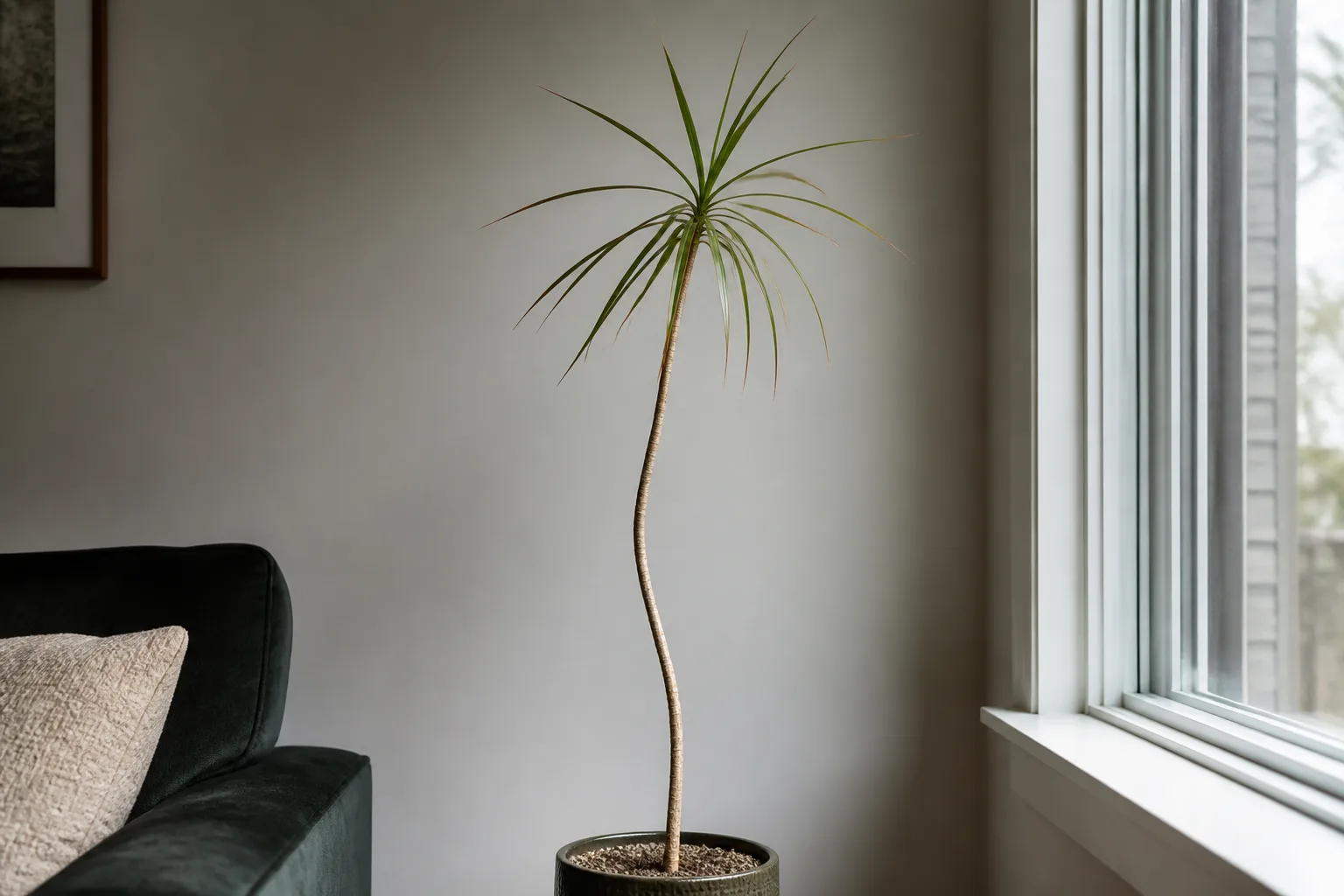
Leggy Dracaena-long bare canes, small crown leaves, and a plant leaning toward the window-is etiolation from insufficient light, not fast healthy growth. First step: move the pot to bright indirect light or add a grow lamp for 12–16 hours daily before you prune, repot, or fertilize.
Leggy Growth on Dracaena: Causes, Checks & Fixes
This guide covers leggy growth on Dracaena. See also the general Leggy Growth guide, watering, and light pages for this plant.
Leggy Growth on Dracaena: Causes, Checks & Fixes
Quick answer
Leggy Dracaena-tall woody canes with wide gaps between leaf clusters, a small leafy crown at the top, and stems bending toward the window-is etiolation, not vigorous growth. Corn plants (Dracaena fragrans), dragon trees (D. marginata), and striped Warneckii canes all stretch when daily light falls below what they need for compact foliage, even though the genus is marketed as low-light tolerant.
First step: improve usable light before you prune, repot, or fertilize. Move the pot within bright indirect range-typically a few feet of an east or west window, or several feet back from filtered south glass-or add a full-spectrum grow lamp 12–18 inches above the crown for 12–16 hours daily. Give the plant two to three weeks in better light, then consider cane topping if you still want a shorter, bushier profile. See the Dracaena light guide for placement detail and pruning guide for cane cuts after light stabilizes.
What leggy growth looks like on Dracaena
Etiolation on Dracaena shows up on its upright woody canes and strap or sword leaves in a recognizable pattern:
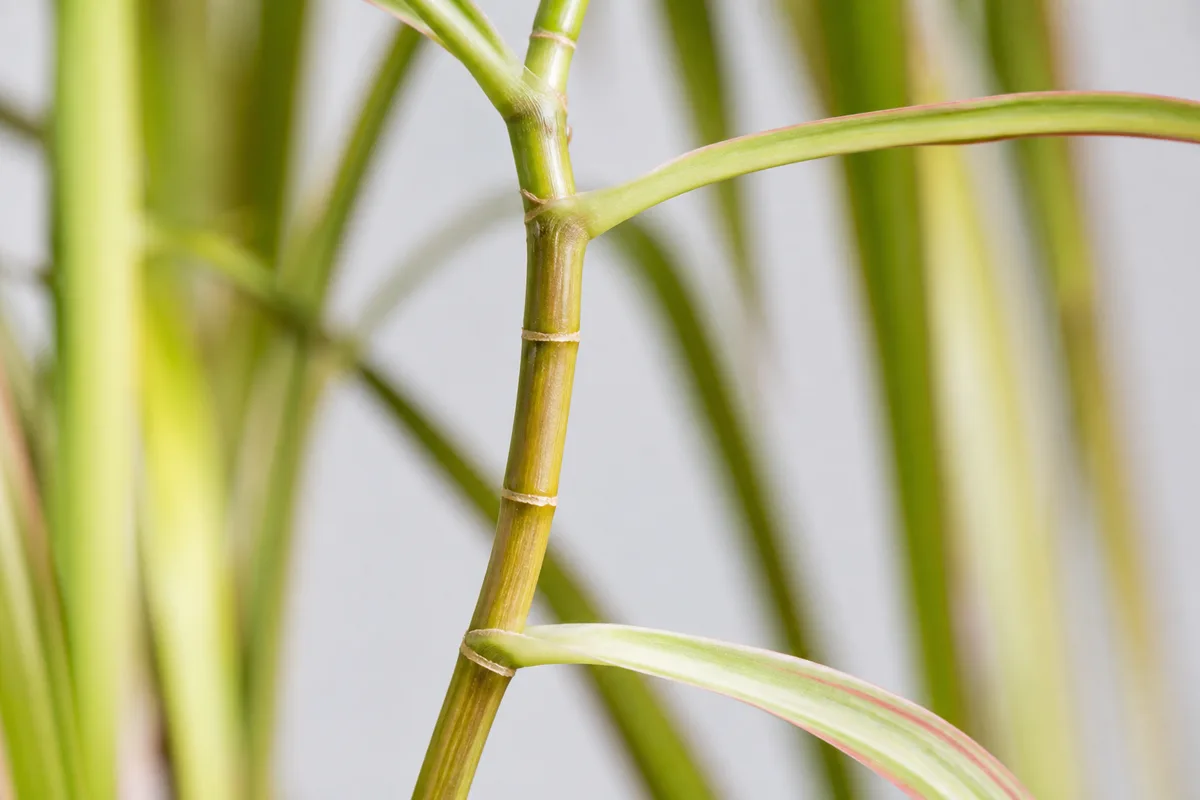
Leggy Growth symptoms on Dracaena - compare with healthy tissue on the same plant.
- Long internodes - the bare gap between leaf clusters on new cane growth is noticeably longer than on older compact sections near the base.
- Smaller or thinner crown leaves - fresh foliage at the top may look narrow, lighter, or less glossy than leaves produced in better light.
- Directional lean - the cane or crown points toward the brightest window or lamp; one side often grows taller than the other.
- Bare lower trunk with a sparse top - mature Dracaena naturally sheds lower leaves, but legginess is the problem when new growth also stretches with weak leaf clusters, not when only the lower cane is bare.
- Faded variegation - yellow or white stripes on Lemon Lime, Warneckii, or Song of India lose contrast and may look mostly green in dim rooms before solid-green types show obvious stretch.
- Winter worsening - plants that looked acceptable in summer become noticeably taller and thinner after short days, when office and hallway light drops.
Dracaena grows slowly even in good conditions, so stretch can build for months before owners notice. A soft, tall cane with tiny crown leaves is usually light-starved tissue, not a sign that feeding or Dracaena repotting guide will fix the shape.
Why Dracaena gets leggy growth
Low-light tolerance is not the same as low-light preference. Dracaena survives dim corners because many cultivars tolerate lower light, but plants moved from dim spots to brighter locations produce thicker, stronger new leaves and faster growth-proof the darker site was limiting. Survival and compact growth are different thresholds.
Insufficient light is the primary cause. When daily light falls below what the cultivar needs, the plant stretches its cane toward photons-a deliberate etiolation response. University of Maryland Extension classifies Dracaena among medium-bright houseplants that become spindly when light is too weak.
Variegated cultivars stretch first. Lemon Lime, Warneckii, Tricolor, Colorama, and Song of India contain less chlorophyll in their pale zones. In the same dim office, a solid-green Janet Craig may merely grow slowly while a striped Warneckii becomes visibly leggy within a few months.
Uneven exposure creates one-sided stretch. Dracaena rarely receives light from all sides indoors. Canes on the shaded side stay longer and weaker, and the crown tilts toward the brightest direction-phototropism layered on etiolation, not a separate disease.
Overfeeding in dim light can worsen stretch. Fertilizer pushes new tissue when the plant lacks the light energy to build dense leaves. The result is soft, elongated cane rather than the upright architectural form Dracaena should hold.
Dark winter rooms and decor-first placement block usable light. A corn plant in a corner far from glass, or a dragon tree under ceiling fixtures alone, often stretches even though the room feels adequately lit to you. Soil in those spots also stays wet longer because photosynthesis slows-a setup that invites the root problems Dracaena is prone to when overwatered.
Lookalike symptoms to rule out
Not every tall Dracaena is light-starved. Check these before treating:
- Normal cane architecture - mature corn plants and dragon trees naturally shed lower leaves, leaving bare woody trunk. Legginess is the problem when new crown growth also has long gaps and small leaves, not when only the lower cane is naked.
- root rot on Dracaena from overwatering on Dracaena - yellow lower leaves spreading quickly, foul soil, and a soft cane base mean wet roots, not etiolation. Light correction alone will not fix a mushy crown.
- underwatering on Dracaena stress - very dry soil, a light pot, and drooping leaves point to drought. Stretch can coexist with drought in a dim room, but dry pot weight confirms water stress.
- Fluoride brown tips - crisp leaf margins with otherwise normal posture usually trace to fluoride in tap water or salts, not legginess.
- Single tall multi-cane specimen - one dominant cane on an old plant may simply be mature height. Multiple stretched canes with weak new foliage still point to light.
If new crown leaves are small, pale, and far apart while the soil smells normal and the stem base is firm, low light is the leading cause.
How to confirm the cause
Work through this inspection in order:
- Note placement - how many feet from the nearest window, which direction it faces, and whether furniture or other plants shade one side.
- Compare cultivar to light - solid-green Janet Craig and plain marginata tolerate lower light; variegated stripes need brighter indirect exposure.
- Measure the stretch - photograph crown leaf size and internode spacing now, then check again in two to three weeks after a brighter move.
- Shadow test at midday - hold your hand between the plant and the window. A soft, diffuse shadow with recognizable edges suggests bright indirect light. A faint or absent shadow means the spot is too dim for compact growth.
- Feel the stem base and sniff the soil - firm tissue and neutral-smelling mix support a light diagnosis; softness and sour odor mean check roots before pruning.
- Season check - if symptoms appeared in late autumn, winter light reduction may be the trigger even though the pot never moved.
Confirmed etiolation shows long new internodes, lean toward light, and more compact leaf spacing only after you improve exposure. For a deeper low-light diagnosis path, see not enough light on Dracaena.
First fix for Dracaena
Move the plant to brighter indirect light-or add a grow light-and wait before pruning.
Place Dracaena where it receives medium to bright indirect light-typically within a few feet of an east- or west-facing window, or several feet back from a filtered south window. If the only available spot is more than a few feet from any window, use a full-spectrum LED or fluorescent fixture 12–18 inches above the crown for 12–16 hours daily.
Increase light gradually if the plant has lived in a very dark corner for months. A sudden jump to harsh direct sun can bleach or scorch wide strap leaves-filter peak rays with sheer curtain or pull the pot back from the glass.
Rotate the pot a quarter turn every week so all sides receive similar exposure. Do not repot, fertilize, or hard-prune on the same day you move light-give the plant one change to respond to first.
Step-by-step recovery
Once the plant is in brighter indirect light or under a grow lamp:
- Adjust watering - brighter light increases transpiration. Water when the top 2 inches of mix are dry, but expect the pot to dry faster than it did in the dark corner. Wet soil in low light is a common path to root rot; do not keep watering on the old dim-room schedule.
- Dust the leaves - large Dracaena leaves collect dust that blocks light. Wipe with a damp cloth so the plant uses the brighter spot efficiently.
- Wait for one full leaf cycle - the next two or three crown leaves tell you whether light is adequate. Wider blades and tighter spacing mean success.
- Optional cane pruning after stabilization - if the trunk is too tall and bare for your space, cut the cane just above a leaf node once new growth looks healthy. Dracaena usually sprouts new shoots from nodes below the cut. Follow the Dracaena pruning guide for cut height, timing, and how much foliage to remove at once.
- Remove only fully spent leaves - pull or snip lower leaves that are completely yellow or brown. Do not strip healthy green foliage trying to refresh the plant.
Lower bare cane sections never regrow leaves. If a stem is mostly naked trunk with a small tuft on top, topping the cane and letting side buds break-or rooting the removed top-is cleaner than waiting for old internodes to leaf out again.
Recovery timeline
Light correction works faster than pruning shows. Expect tighter new leaf spacing within two to three weeks after usable light increases. Old elongated cane sections remain long permanently-existing stretched internodes do not shrink. Recovery is measured on the next one or two crown leaf flushes, not by shortening existing gaps.
| Phase | What to expect |
|---|---|
| Week 1–2 | Leaning may slow; soil dries slightly faster; no dramatic leaf change yet |
| Week 3–4 | New crown leaf should look wider and closer to the previous node if light is sufficient |
| Month 2–3 | Steadier flush of crown growth; variegation may look sharper on striped cultivars |
| Long term | Old stretched cane remains; permanent improvement shows in new tissue only |
Winter recovery may take longer unless you supplement light. A grow lamp through short days prevents repeat stretch the following season.
If canes stay soft, new leaves stay tiny, or yellowing spreads after light improves, reassess watering and roots-etiolation alone should not collapse a firm Dracaena crown.
What not to do
- Do not assume fast height equals health. Stretching is the plant searching for light, not vigorous growth.
- Do not prune heavily before fixing light. New shoots in the same dim spot will etiolate again.
- Do not move abruptly into direct sun. Dracaena scorches in prolonged direct sunlight on the foliage; acclimate over one to two weeks.
- Do not fertilize a stretched plant in a dark corner. Feed lightly only after light improves and new growth looks normal.
- Do not stack repotting, pruning, and relocation on one day. Change light first, then adjust shape once the plant responds.
- Do not confuse legginess with normal lower-leaf drop. Bare lower trunk on an otherwise stable crown is often aging, not etiolation.
How to prevent leggy growth next time
Match cultivar to realistic home light. Keep solid-green Janet Craig and plain marginata in medium indirect light, but place Lemon Lime, Warneckii, Tricolor, and Song of India where they receive brighter indirect exposure year-round.
Rotate pots weekly, dust leaves so they intercept light efficiently, and add supplemental lighting from autumn through early spring when window light weakens. Prune long canes lightly in late spring or early summer to encourage branching on multi-cane specimens-only after light is adequate.
Choose the window before the corner. A compact Dracaena with stable leaf color and firm new crown foliage is the goal-not the tallest cane in the dimmest office that still survives.
When to worry
Legginess alone is rarely an emergency, but these combinations need faster action:
- Rapid yellowing of many leaves with soggy soil - inspect roots for rot; improve light and reduce watering.
- Cane softening at the base - stem rot from chronic overwatering in a dim room; may require cutting away affected tissue and repotting into fresh gritty mix.
- No new growth for two or more months in spring and summer - the plant is surviving on reserves; increase light or accept decline.
- Repeated pest outbreaks - spider mites on weak, dim-grown Dracaena often signal overall stress; treat pests after correcting light.
A corn plant with a tall bare trunk and a small leafy top can still be healthy if new crown leaves keep emerging with good color. The goal is active, proportional top growth-not a short bushy silhouette unless you prune for shape.
When to use this page vs other Dracaena guides
- Dracaena watering guide - Use for routine moisture checks before assuming leggy growth is the main issue.
- Dracaena problems hub - Browse all 16 common issues on this species.
- Not Enough Light on Dracaena - Different entry point when symptoms overlap with leggy growth.
- Slow Growth on Dracaena - Different entry point when symptoms overlap with leggy growth.
- Yellow Leaves on Dracaena - Different entry point when symptoms overlap with leggy growth.