Low Humidity on Dracaena: Causes, Checks & Fixes
Quick answer
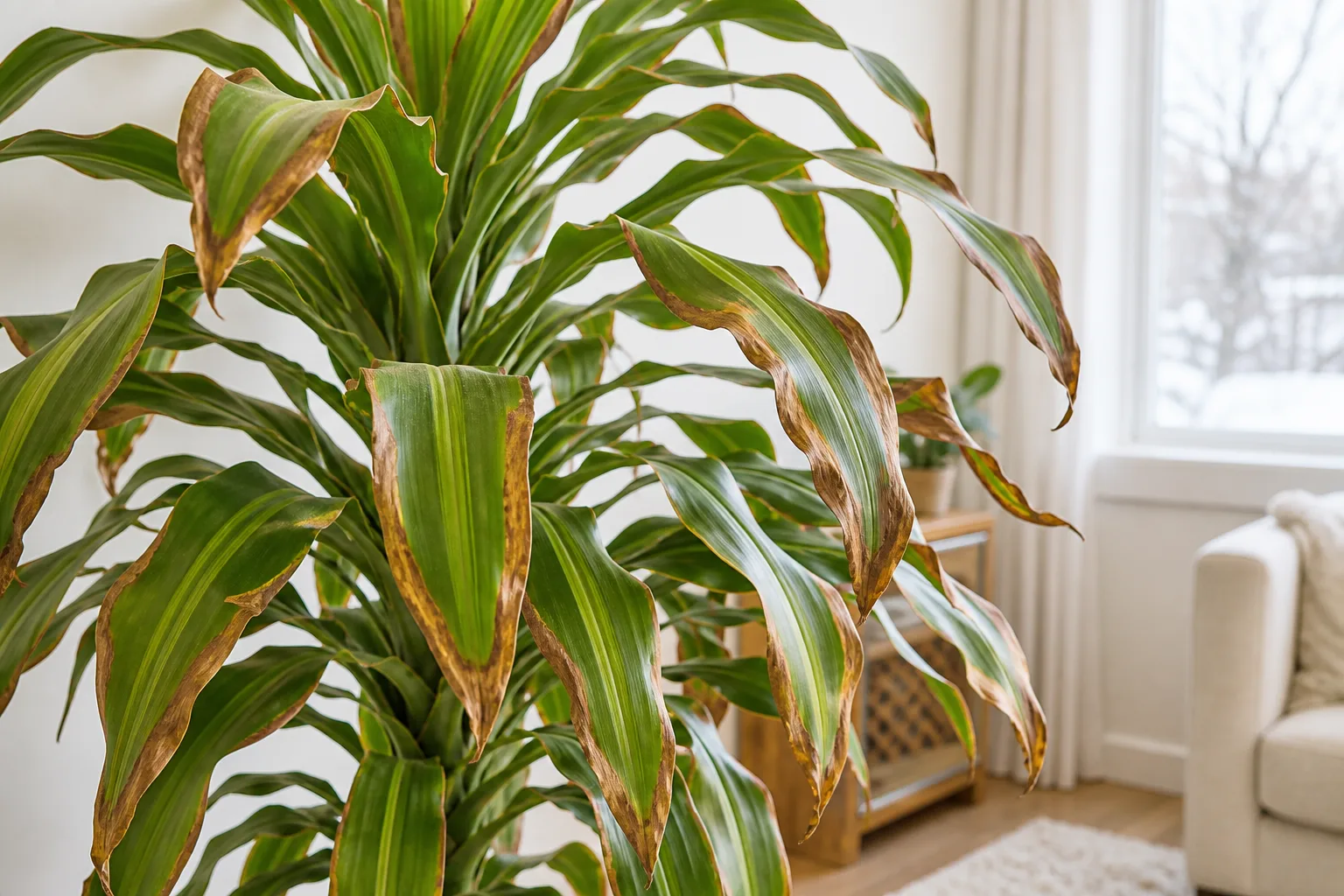
Dracaena tolerates average indoor humidity better than calatheas, but winter heating below 35% RH can crisp strap-leaf margins-after you rule out fluoride in tap water, which is the more common tip-burn cause on this genus. First step: place a hygrometer beside the plant and switch to distilled or rainwater if brown tips appear on otherwise well-watered leaves.
Low Humidity on Dracaena: Causes, Checks & Fixes
This guide covers low humidity on Dracaena. See also the general Low Humidity guide, watering, and light pages for this plant.
Low Humidity on Dracaena: Causes, Checks & Fixes
Quick answer
Low humidity on Dracaena - corn plant (Dracaena fragrans), dragon tree (Dracaena marginata), Janet Craig, Warneckii, and related cane cultivars - shows up as brown, dry leaf margins and tips on strap-shaped foliage when winter heating or AC drops room air below roughly 35–40% relative humidity. Dracaena evolved in tropical Africa and tolerates average homes better than fussy humidity lovers, but it is not immune to dry air, especially near radiators, forced-air vents, and sunny window glass in January.
First step: place a digital hygrometer at canopy height and rule out fluoride in tap water before chasing humidity. Dracaena is among the most fluoride-sensitive common houseplants; brown tips on well-watered leaves often trace to municipal water, not dry air. Once water quality and soil moisture look correct, target 40–60% RH with placement fixes, grouping, a pebble tray, or a humidifier - not misting alone. See the Dracaena watering guide for the full fluoride-vs-humidity framework.
What low humidity looks like on Dracaena
Dry-air stress on Dracaena appears on leaf margins and tips of long strap leaves - not as random center spots. Typical patterns:
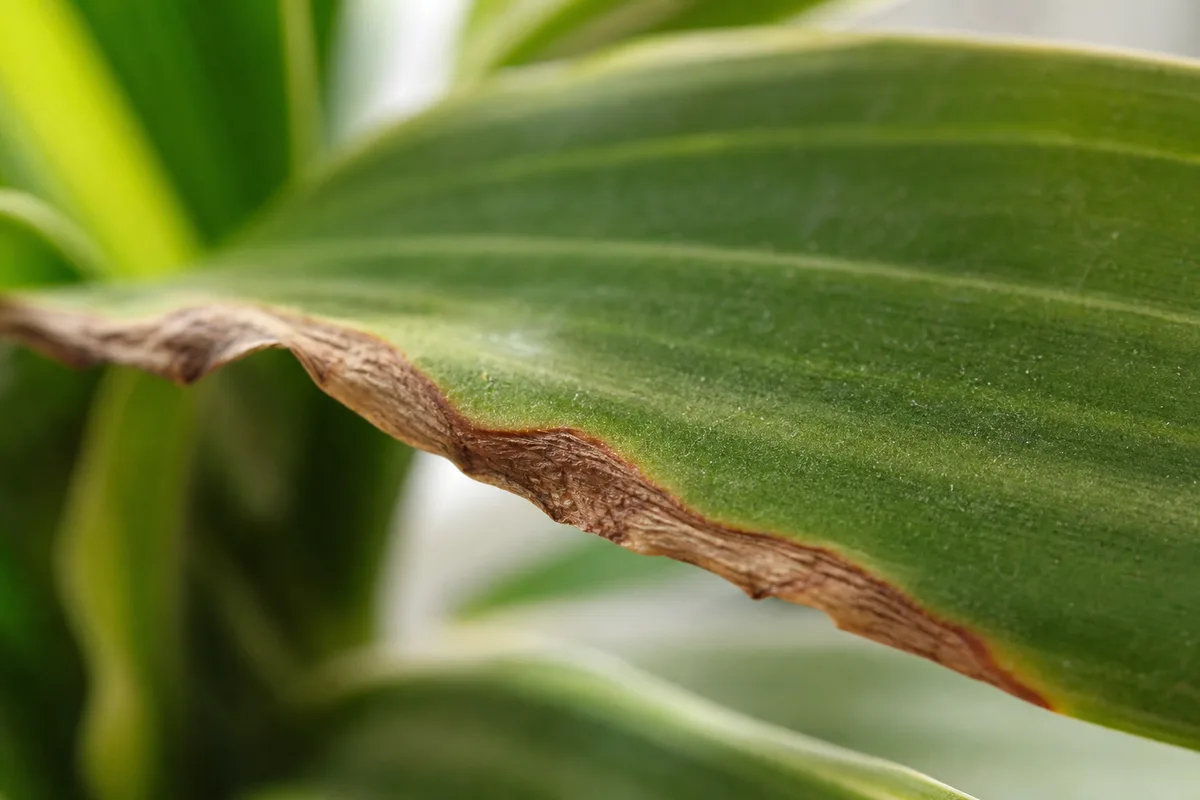
Low Humidity symptoms on Dracaena - compare with healthy tissue on the same plant.
- Even brown, crispy edges on several leaves at once, often after heating season starts or the pot moves beside a radiator
- Papery margin lines while the rest of the leaf stays green and the cane feels firm - distinct from the soft, mushy cane of overwatering
- Accelerated tip browning on newest leaves when a hygrometer reads below 35% RH for weeks
- Subtle leaf curl or dullness before margins fully necrose, especially on D. marginata with thinner leaves
- Spider mite overlap - dry indoor air increases pest pressure on foliage; check undersides for stippling if margins crisp and humidity is chronically low (see spider mites on Dracaena)
Fluoride tip burn can look similar but often starts at the very tip or a thin margin line on leaves that otherwise look turgid while you have been watering on a normal dry-down schedule. If the whole pot is dry, leaves droop, and edges crisp together, see underwatering before raising humidity - drought and dry air both brown edges but soil moisture tells them apart.
Why Dracaena gets low humidity stress
Dracaena is marketed as an easy office plant because it survives 40–50% RH typical of heated homes - Clemson HGIC notes dracaenas grow well at normal house temperatures and only need extra humidity help when indoor air falls below 30–40 percent, common in winter. That tolerance is real, but large strap leaves still transpire heavily near heat sources.
Common Dracaena-specific triggers:
Winter forced-air heat. Furnaces drop whole-room RH toward 25–35% for months. A corn plant that looked fine in September can show margin burn by February even when watering rhythm is unchanged.
Radiator and vent placement. Hot, dry blasts strip moisture from leaf edges faster than the room average suggests. A hygrometer on the windowsill may read 45% while the spot six inches from a floor vent reads far lower.
Overcorrection after fluoride panic. Many owners switch to distilled water correctly but ignore placement - the plant stays beside a heating duct and margins keep crisping from air, not water chemistry.
Large leaf surface on floor specimens. Mature D. fragrans leaves span two feet or more; more surface area means faster edge desiccation in dry rooms than on compact D. deremensis rosettes.
Dry air plus underwatering. Low humidity browns margins; chronic dry soil browns tips and wilts the whole leaf. Both can stack in winter when owners water less often and heat runs constantly - check soil depth per the watering guide before assuming air alone is the problem.
Dracaena is more humidity-forgiving than calatheas or rex begonias but less forgiving than snake plants or ZZ plants in the same dry corner. Expect to act when RH chronically sits below 35%, not when it reads a healthy 45%.
Low humidity vs. fluoride tip burn vs. other lookalikes
| Symptom pattern | Soil / cane | Location on leaf | Most likely cause | First fix |
|---|---|---|---|---|
| Papery tips on well-watered leaves; tap water user | Normal moisture; firm cane | Tips and thin margin lines | Fluoride in water | Distilled or rainwater; see brown tips |
| Broad crispy margins on several leaves in winter | Normal moisture; firm cane | Leaf edges; heating season | Low humidity | Hygrometer; humidifier or pebble tray |
| Limp leaves + light dry pot | Dry mix 2+ inches down | Whole leaf droop | Underwatering | Deep soak; resume dry-down rule |
| Yellow lower leaves on wet soil | Wet mix; heavy pot | Lower leaves | Overwatering | Stop water; inspect roots |
| Stippling + fine webbing | Often dry air too | Leaf undersides | Spider mites | Rinse; raise RH; treat mites |
| White crust on soil surface | Any moisture | Tips; older leaves | Salt / fertilizer burn | Flush pot; reduce feed |
The critical Dracaena insight: fluoride usually beats humidity as the primary tip-burn driver when you irrigate with fluoridated tap water on a reasonable schedule. Iowa State Extension lists low humidity as the most likely cause of brown leaf tips on houseplants generally - but for Dracaena specifically, Clemson HGIC and the PNW Handbooks both emphasize fluoride toxicity as a leading cause of margin necrosis. Run the decision table above before buying a humidifier.
Species notes: corn plant, dragon tree, and Janet Craig
All Dracaena share fluoride sensitivity and a preference for 40–60% RH when you can provide it, but leaf shape changes how fast dry air shows:
Dracaena fragrans (corn plant) - Broad arching leaves make margin burn highly visible. Easily overwatered, so do not raise humidity by keeping soil wet. The PNW Handbooks note D. fragrans should dry out between waterings while still benefiting from stable air moisture in winter.
Dracaena marginata (dragon tree) - Narrow leaves transpire differently; thin tips brown quickly in dry air but the species also shows rapid fluoride damage on tap water. Often placed near sunny glass where winter sun plus dry heat accelerates edge crisping.
Dracaena deremensis cultivars (Janet Craig, Warneckii) - Broader leaves in compact rosettes; PNW guidance suggests keeping soil evenly moist but never soggy for D. deremensis, with humidity in the same 40–60% band as other cane types.
When species identity is uncertain, default to fluoride-free water + firm dry-down watering + 40–60% RH - that combination covers the genus.
How to confirm low humidity
Work through these checks in order:
- Hygrometer at canopy height - Place a digital hygrometer beside the pot, not across the room. Readings below 35% RH with firm cane and normal soil moisture strongly support low humidity as an active stressor. Target 40–60% per the Dracaena watering guide humidity section.
- Rule out fluoride first - Are you using municipal tap water? Do tips brown on leaves that are otherwise well hydrated? Switch to distilled or rainwater for one month before attributing damage purely to dry air.
- Soil moisture at depth - Push your finger two inches into the mix. Dry throughout with limp leaves points to drought, not humidity alone. Damp soil with crispy margins on firm leaves fits dry air or fluoride better.
- Season and placement audit - Did damage start after heating season, a move beside a radiator, or installing a dehumidifier? Dry-air symptoms track environmental change.
- Cane firmness - Firm woody cane with crispy edges fits humidity or fluoride. Soft, mushy base with sour smell is rot - see overwatering, not this page.
- Pest check - Tap a leaf over white paper; stippling plus webbing means spider mites - dry air is both cause and consequence.
When RH holds above 45% on fluoride-free water and margins still brown, investigate salt buildup or fertilizer burn before adding more humidity.
First fix for Dracaena
Measure RH beside the plant and switch to distilled or rainwater if you still use fluoridated tap water.
These two checks run in parallel because Dracaena tip burn is often mislabeled “humidity” when fluoride is the real driver. Michigan State University Extension documents fluoride accumulation in sensitive species irrigated with city water; stopping fluoride stops new necrosis even if RH stays at 40%.
If the hygrometer reads below 35% after water quality is addressed, proceed to ranked humidity fixes below - one change at a time so you can read the plant’s response over two weeks.
Ranked fixes for low humidity (after fluoride is ruled out)
Once water quality and watering rhythm look correct, raise humidity in this order:
- Move away from heat vents, radiators, and direct AC blasts - Often the highest-impact free fix. Even 40% average room RH fails at the leaf surface six inches from a floor vent.
- Group plants - Clustering Dracaena with other foliage creates a modest shared microclimate; helpful as a supplement, rarely sufficient alone in a 25% RH room.
- Pebble tray - Fill a shallow tray with pebbles and water so the pot sits above the water line. Iowa State Extension recommends pebble trays to raise humidity around houseplants; evaporation lifts local RH without soaking roots.
- Small humidifier at canopy height - The most reliable fix for sustained 40–60% RH. Run during dry months consistently rather than short bursts. Keep the mist stream off the cane crown to avoid fungal spotting where leaves meet the stem.
- Bright bathroom or kitchen placement - Only if light remains bright indirect; dim humid rooms produce leggy Dracaena that need less water, not more humidity alone.
Do not rely on misting. Clemson HGIC mentions occasional misting when house humidity falls below 30–40 percent, but misting lasts minutes and can leave wet foliage in cool rooms. A humidifier or pebble tray addresses the air Dracaena actually breathes.
Recovery timeline
Brown margins on existing Dracaena leaves do not turn green again - necrotic tissue is permanent on strap leaves. Judge recovery by new growth:
- 1–2 weeks - Further margin spread usually stops once RH holds above 40% and fluoride is excluded from irrigation.
- 2–4 weeks - First new leaf with clean edges is the main success signal.
- One full season - Large floor specimens may need months to replace a winter-damaged canopy; old brown tips can be trimmed for appearance anytime.
If margins keep browning on new leaves after four weeks of 45%+ RH and distilled water, re-check for mites, salt crust on soil, or hidden vent placement before escalating care.
What not to do
Do not skip the fluoride test and buy a humidifier because tips are brown - you may treat the wrong variable for months. Do not overwater because leaf edges look crispy; wet soil plus dry-looking margins is a split signal, and Dracaena rots faster than it recovers from drought.
Do not mist heavily as your primary humidity strategy; brief surface moisture does not replace ambient RH and can spot leaves. Do not stack repotting, heavy pruning, fertilizer, and humidifier setup on the same day - one correction at a time keeps diagnosis readable.
Do not let pebble-tray water touch the pot base for long periods; Dracaena needs drainage, not standing moisture at the cane. Do not confuse humidity stress with root rot - soft cane and sour soil mean stop watering, not add humidity.
How to prevent low humidity stress next winter
Build a seasonal plan before heating season:
- Monitor RH weekly at canopy height from October through March in temperate climates; act when readings drop below 40%, not after half the plant has crisped.
- Keep Dracaena away from radiator lines and forced-air vents - even brief daily hot blasts add marginal damage over a month.
- Use fluoride-free water year-round if your municipality fluoridates - prevention is easier than diagnosing which brown tips are water vs air. Details on the watering guide.
- Run a humidifier proactively in rooms that chronically sit below 35% RH; Dracaena does not need 70% like a calathea, but sustained desert air still costs you leaf tips.
- Inspect for spider mites monthly in dry months - dry air weakens foliage and invites outbreaks covered on the spider mites page.
In summer, natural humidity often rises and humidifier use can taper. Still check plants beside sunny AC vents - cooling dries local air even when outdoor humidity is high.
Low humidity and spider mites
When RH stays chronically low, Dracaena becomes more vulnerable to spider mites - mites thrive in warm, dry conditions on houseplants near heaters and glass. Stippled leaves with fine webbing mean pest treatment, not humidity alone.
Raising RH to 40–50% helps prevent reinfestation but does not replace rinsing leaf undersides and appropriate miticide or horticultural oil if colonies are active. If mites appear while margins crisp, address both dry air and pests - see spider mites on Dracaena.
When to worry
Escalate if the cane base softens, soil stays wet and smells sour, or mites coat new growth despite higher RH - those are rot or pest emergencies, not humidity-only issues.
Low urgency: firm cane, RH now above 40%, fluoride excluded, and browning limited to older leaf margins while new tips emerge clean. Trim worst leaves for aesthetics and maintain stable air moisture through the rest of heating season.
If humidity is adequate above 45% on distilled water and tips still necrose on every new leaf, revisit perlite-heavy mix and superphosphate fertilizer - both can increase fluoride availability per Clemson HGIC - before assuming the room is still too dry.
Related Dracaena guides
- Dracaena overview - species, fluoride sensitivity, and general humidity tolerance
- Watering - fluoride vs humidity, 40–60% RH, and the top-half dry rule
- Brown tips - when tip burn is the main symptom entry point
- Underwatering - crisp edges with dry soil and limp leaves
- Spider mites - dry-air pest pressure on cane foliage
Conclusion
Low humidity on Dracaena is a real winter problem - but on this genus, fluoride in tap water is the more common tip-burn cause and should be ruled out first. Place a hygrometer beside the plant, target 40–60% RH when readings fall below 35%, move pots away from heat vents, and use pebble trays or a humidifier rather than misting. Damaged margins do not heal; watch for clean new strap leaves as proof your air and water quality are finally aligned.