Aphids on Dracaena: Causes, Checks & Fixes
Quick answer
Aphids on Dracaena cluster on new crown leaves and tender strap-leaf tips, leaving sticky honeydew on broad foliage. First step: isolate the plant and rinse colonies off with a strong stream of water before reaching for sprays.
Aphids on Dracaena: Causes, Checks & Fixes
This guide covers aphids on Dracaena. See also the general Aphids guide, watering, and light pages for this plant.
Aphids on Dracaena: Causes, Checks & Fixes
Quick answer
Aphids are small, soft-bodied sap feeders that colonize tender tissue. On Dracaena (Dracaena fragrans), often sold as Corn Plant, Mass Cane, or Happy Plant, they show up where the plant produces its only fast-growing tissue: the crown whorl at the top of each cane section and the youngest strap leaves still unfurling. Sticky honeydew on broad leaf surfaces, ants on pot saucers, and curled new growth are common early clues.
First step: isolate the plant and rinse aphids off with a strong stream of lukewarm water. Target crown tips, leaf sheaths, and the undersides of new leaves before you buy sprays. Dracaena tolerates a thorough shower when the pot is wrapped so soil does not waterlog-this single move dislodges many colonies and buys time to confirm how heavy the infestation is.
What aphids look like on Dracaena
Dracaena grows as upright canes with large, arching strap leaves arranged in rosettes at each stem tip. Aphids prefer exactly that soft crown tissue-not the tough, mature blades lower on the cane.
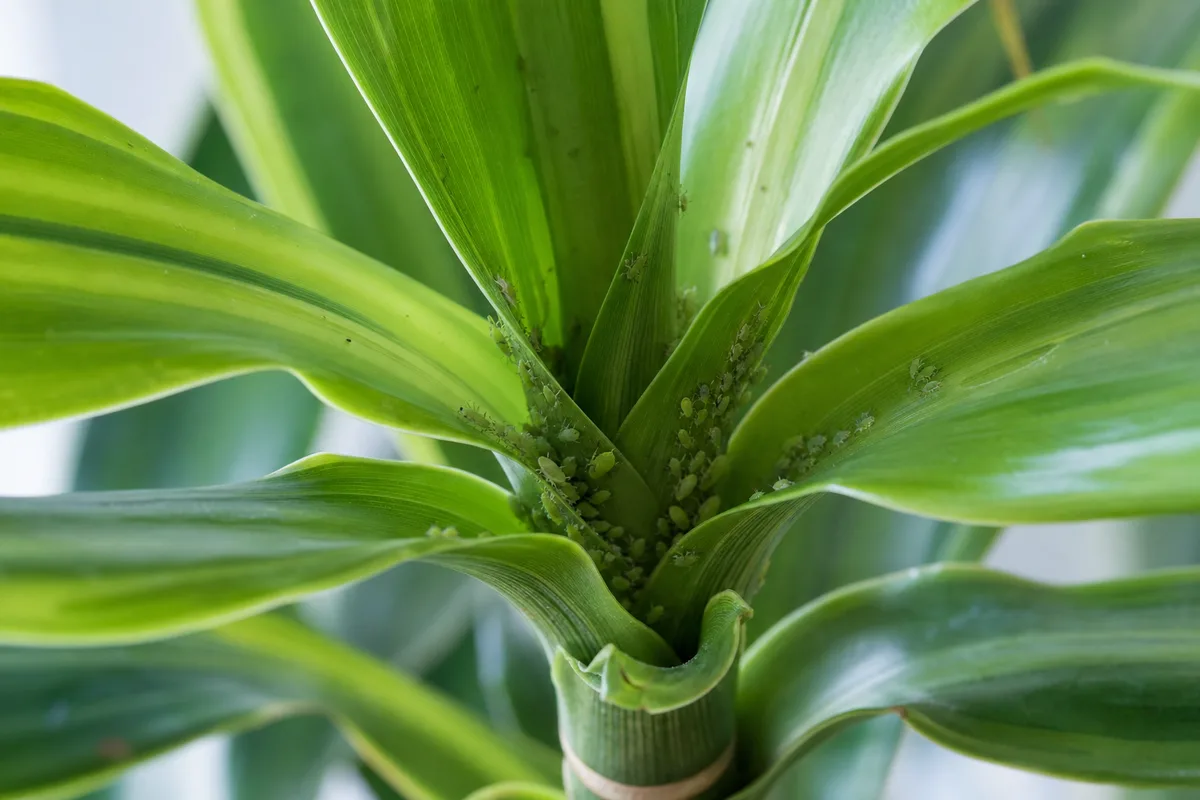
Soft-bodied aphids tucked into the crown whorl at a cane tip - inspect every stem on multi-cane mass cane arrangements.
Typical signs on Dracaena overview:
- Clusters of tiny pear-shaped insects in the crown whorl where new leaves emerge-often green, but sometimes black, brown, or pale
- Groups tucked into leaf sheaths where strap leaves wrap the cane, especially on the youngest unfurling blades
- Curled, puckered, or stunted new leaves while older arching foliage still looks mostly normal
- Shiny, sticky honeydew on leaf surfaces, pot rims, floors, or furniture below tall specimens
- Ants traveling up the cane or across the saucer to harvest honeydew
- Black sooty mold growing on honeydew-coated leaves
- Whitish cast skins left behind after aphids molt, visible in crown crevices on close inspection
The damage pattern follows the plant’s architecture. You may see clean mature leaves on the lower two-thirds of a Mass Cane while every active crown tip carries insects. That uneven look confuses owners who only glance at the oldest foliage on lower canes.
Heavy feeding can yellow or distort new strap leaves and slow crown growth. The woody cane and firm root system often stay healthy unless a separate problem like overwatering on Dracaena is also present-aphids hit the aerial crown first.
Why Dracaena gets aphids
Dracaena is not unusually pest-prone, but its growth habit and typical indoor placement make it a convenient host.
Crown-focused tender growth. Indoor dracaenas push new strap leaves from cane tips during warm, bright months. Each fresh whorl is easy feeding ground for aphids that reproduce quickly on soft tissue.
Large floor specimens with weak airflow. Corn plants often live in corners and large pots where air circulates less than on an open bench. Colonies can build in crown crevices and leaf sheaths before you notice stickiness on broad leaves at eye level.
Indoor predator gap. Outdoors, lady beetles, lacewings, and parasitic wasps knock aphid numbers down. Inside, populations can explode because few natural enemies reach houseplants.
Introduction routes. Aphids arrive on new nursery plants, cut flowers, open windows in warm weather, or contaminated tools. Skipping quarantine on a fresh dracaena is one of the fastest ways to spread them to crown tips on established specimens.
Nitrogen-rich, soft growth. Heavily fertilized plants produce lush, tender shoots that aphids prefer when nitrogen levels are high. Dracaena grows slowly and does not need heavy feeding-pushing nitrogen during active growth can invite pests without improving leaf color.
Spring surge. Warm, bright conditions from late winter through spring match the period when aphids are most common on tender new growth-even on plants that live indoors year-round.
Shared pest pressure. Dracaena is a common host for spider mites and other indoor pests in dry heated rooms. A plant already stressed by low humidity or fluoride tip burn is easier for aphids to colonize once they arrive.
How to confirm the cause
Work through these checks in order before you treat:
- Inspect every cane crown - On multi-stem Mass Cane arrangements, check each tip separately. Aphids cluster in whorls, not randomly across tough lower blades.
- Follow leaf sheaths - Trace where new strap leaves wrap the cane. Soft-bodied groups in those folds confirm aphids; no insects with only brown dry tips suggests fluoride, low humidity, or salt burn instead.
- Honeydew test - Rub a sticky patch between fingers. Honeydew feels tacky and may soot over time; normal leaf texture does not leave a shiny film on your skin.
- Ant trails - Ants on saucers or pot rims strongly suggest aphids or other honeydew producers on the plant above.
- Magnify the undersides - A hand lens reveals pear-shaped bodies, legs, and antennae. Cast skins mean aphids were present even if live numbers look low today.
- Scan neighbors - Check other houseplants within a few feet. Aphids colonize many species; one clean dracaena beside a heavily infested neighbor can be reinfected within days.
If you find live aphids on crown growth plus honeydew or cast skins, the diagnosis is confirmed. Move to treatment without waiting for yellowing to spread through every strap leaf.
First fix for Dracaena
Move the plant away from others and rinse it with a forceful stream of lukewarm water, focusing on crown whorls, leaf sheaths, and the undersides of new strap leaves.
Wrap the pot with plastic so soil does not saturate-dracaena roots rot in soggy mix, and repeated showering without protection can create a second problem. Take tall specimens to a shower or bathtub. Angle the spray upward so undersides of arching new leaves get direct contact. Let foliage dry in Dracaena light guide the same day.
This one step physically removes aphids, washes fresh honeydew before ants or sooty mold escalate, and shows you how heavy the infestation really is after the foam clears. Do not apply insecticide on day one if you have not finished rinsing and reinspecting-contact sprays only work where they touch live insects.
Do not repot on day one. Dracaena dislikes unnecessary root disturbance, and aphids on this species are almost always an above-ground crown problem. Do not fertilize a pest-hit plant to “help it recover”-that produces more tender shoots aphids prefer.
Step-by-step recovery
After the initial isolation and rinse:
- Repeat water sprays every two to three days until two weekly inspections find no live aphids on crown tips or in leaf sheaths.
- Apply insecticidal soap if colonies persist after several thorough rinses. Coat crown whorls and leaf sheaths completely; soap must contact the insects directly. Repeat at label intervals through at least one full generation cycle.
- Wipe sooty mold off broad strap leaves with a damp cloth once honeydew production stops. Trim individual leaves that stay heavily blackened and block light to inner crown growth.
- Snip and discard crown leaves or cane tips where aphids remain dense after two soap cycles on multi-head specimens. Bag the clippings; do not compost them near other plants.
- Manage ants on pot rims or saucers if they protect colonies. Sticky barriers on pot exteriors-not in the soil-can help natural enemies reach aphids.
- Scout weekly during active growth. Dracaena produces new crown leaves slowly but steadily in good light; that is where reinfestation shows first.
- Hold off on air layering or cane cuttings until the parent plant stays clean for at least two weeks. Aphids transfer easily to propagation setups.
If nonchemical steps fail on a severely coated specimen and growth stays weakened after repeated treatments, discarding one cane section may cost less than endless chemical cycles-but most moderate indoor infestations clear with rinsing and soap alone.
Recovery timeline
Water knockdown shows results within two to three days when colonies are moderate. A full soap course often takes one to two weeks with label-interval repeats because aphids reproduce rapidly when warm and nymphs hide in crown crevices.
Expect new crown leaves to emerge cleaner within two to four weeks once live aphids stay gone-dracaena’s slow growth means visible recovery takes longer than on fast-growing spider plants. Older leaves that carried heavy sooty mold may never look glossy again; judge success by clean crown tips and firm canes, not every lower strap leaf.
Lookalike symptoms to rule out
Brown leaf tips without insects - Dracaena is sensitive to fluoride and salts in tap water and low humidity. Tips turn crisp and brown; you will not see pear-shaped bugs, honeydew, or ants farming the plant.
Spider mites - Cause stippling, bronzing, and fine webbing on leaf undersides, especially in hot dry air. Mites are microscopic dots, not soft clusters on crown whorls. Dracaena is a frequent spider mite host indoors. Confirm with a white-paper tap test and magnification.
Mealybugs - Look cottony or waxy in leaf axils and crown crevices, not as smooth pear-shaped groups on open new growth.
Scale insects - Immobile bumps on stems or leaf midribs; armored scales do not produce heavy honeydew like soft scales and aphids.
Sticky leaves from other pests - Whiteflies fly when disturbed and leave honeydew similar to aphids. Shake a crown leaf cluster to distinguish flying adults from stationary aphid colonies.
Mistakes to avoid
Do not treat only the tallest cane while ignoring shorter stems in a Mass Cane pot-dracaena infestations often live on the crown you overlook at a lower height.
Do not return a plant to a mixed display after a single rinse. Hold isolation until you see no live aphids for at least two weeks.
Do not use homemade dish soap sprays. Harsh detergents burn broad dracaena leaves; use products labeled for plants.
Do not shower repeatedly without wrapping the pot-soggy soil invites root rot on Dracaena on a plant already under pest stress.
Do not increase nitrogen feeding during an active infestation.
Do not propagate infested cane cuttings-aphids spread through propagation faster than through the parent pot alone.
Dracaena care cross-check
Aphids exploit weak growth, but the underlying plant still needs stable care while you treat.
Water when the top 2 inches of mix are dry-roughly every 7–14 days in summer and less often in winter-and never let the pot sit in a saucer of water. Canes rot at the soil line in soggy mix, and a wilted plant is harder to rinse repeatedly.
Keep medium to bright indirect light. Leggy, pale growth in dim corners is more vulnerable to persistent reinfestation after you clear the first wave.
Because Dracaena is toxic to cats and dogs, isolate treated plants until sprays dry and keep pets from chewing wet leaves or drinking runoff from the saucer. Rinsing and labeled soap sprays are practical in pet homes when you block access during treatment-not a reason to skip isolation.
How to prevent aphids next time
Quarantine every new plant, including small dracaena canes, for at least two to three weeks before placing them near existing specimens.
Inspect crown tips weekly from late winter through spring, when tender shoots are most common.
Feed lightly during active growth-half-strength balanced liquid fertilizer every four to six weeks is enough. Avoid heavy nitrogen that produces soft, aphid-friendly tissue.
Keep strap leaves free of heavy dust so you spot colonies early. A damp cloth wipe on mature blades is enough; skip leaf shine products.
Improve airflow around crowded floor displays. Stagnant warm pockets let aphid numbers climb before honeydew drips onto lower leaves.
Before taking cane cuttings for propagation, rinse and inspect each crown. Clean stock prevents introducing aphids into water jars and new pots.
When to worry
Treat as urgent when honeydew and sooty mold coat most crown foliage across multiple canes, when ants defend colonies on every stem tip, or when the infestation has already spread to nearby houseplants. Aphids in a shared living room spread through a whole collection quickly.
A few aphids on one crown during active growth is not a discard-level crisis if you isolate and rinse promptly. Dracaena recover well when canes stay firm at the soil line and new tips grow in clean.
Replace the plant only when repeated labeled treatments fail, crown growth stays stunted for months, and new leaves keep emerging already coated despite isolation-rare on an otherwise healthy indoor specimen with firm roots.
Conclusion
Aphids on Dracaena follow the plant’s own shape: crown whorls at cane tips and the youngest strap leaves still unfurling. Isolate first, rinse with water until inspections stay clean, then use insecticidal soap only if colonies persist. Scout crown tips weekly, hold off on propagation until the parent is clean, and distinguish honeydew stickiness from the brown fluoride tips this species is famous for. That path stops most indoor infestations before sooty mold dulls the whole rosette.
When to use this page vs other Dracaena guides
- Dracaena watering guide - Use for routine moisture checks before assuming aphids is the main issue.
- Dracaena problems hub - Browse all 16 common issues on this species.
- Mealybugs on Dracaena - Different entry point when symptoms overlap with aphids.
- Spider Mites on Dracaena - Different entry point when symptoms overlap with aphids.
- Yellow Leaves on Dracaena - Different entry point when symptoms overlap with aphids.