Mealybugs on Dracaena: Causes, Checks & Fixes
Quick answer
Mealybugs on Dracaena hide where strap leaves meet the cane and inside multi-stem crowns. First step: move the plant away from others and inspect every leaf axil with a cotton swab before spraying anything.
Mealybugs on Dracaena: Causes, Checks & Fixes
This guide covers mealybugs on Dracaena. See also the general Mealybugs guide, watering, and light pages for this plant.
Mealybugs on Dracaena: Causes, Checks & Fixes
Quick answer
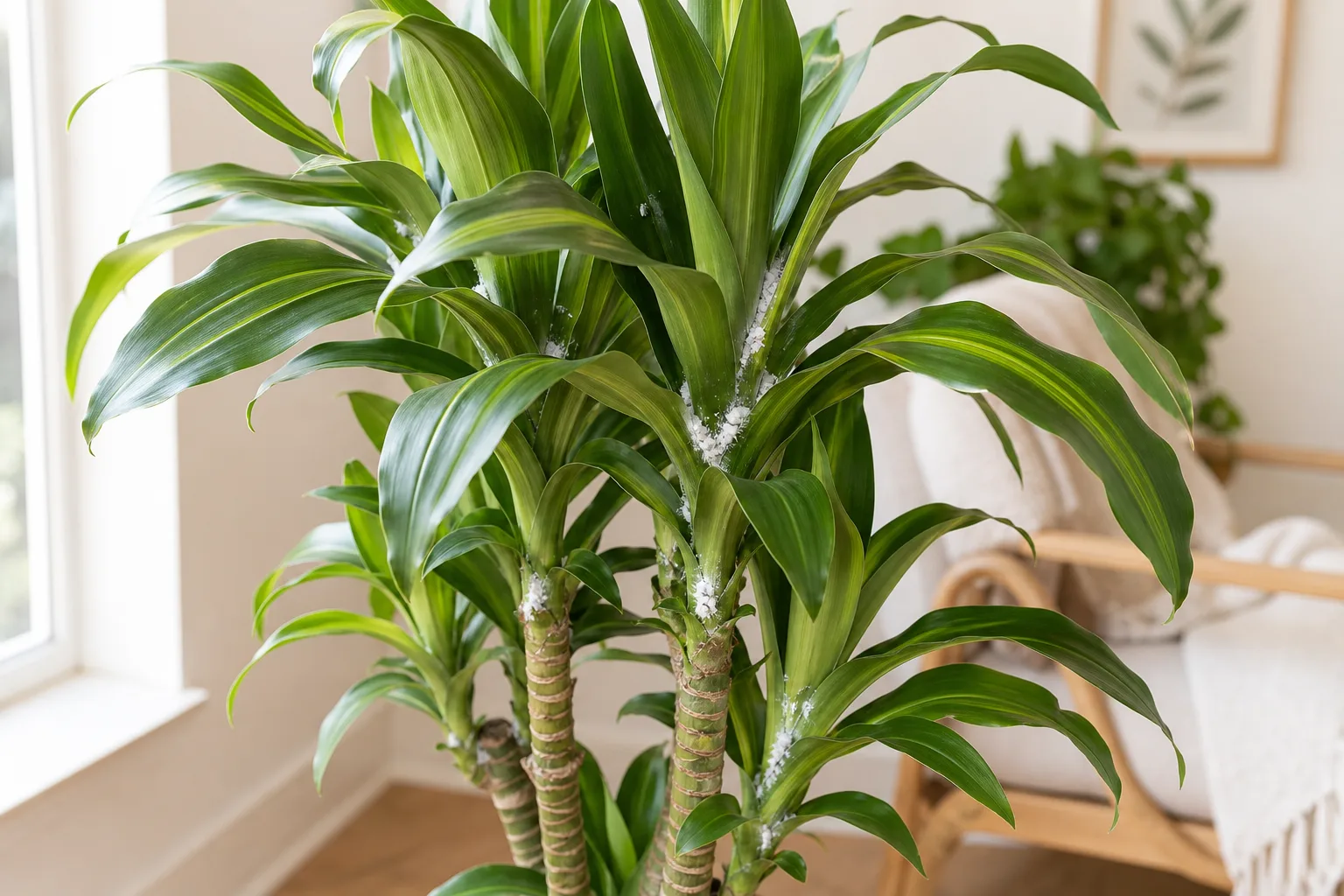
Mealybugs on Dracaena (Dracaena fragrans-corn plant, mass cane, happy plant) are sap-sucking insects that settle where broad strap leaves meet the upright cane. Their white wax makes them look like tiny bits of cotton tucked into tight joints, not a harmless dusting on the leaf blade.
First step: isolate the plant and inspect every leaf axil and crown crevice with a cotton swab. Mealybugs spread slowly on their own but hitchhike easily on watering cans, pruning snips, and your hands. You need to confirm live insects and map every colony before alcohol dabs, soap sprays, or any other treatment-spraying foliage without finding hidden clusters is the main reason infestations bounce back on Dracaena.
What mealybugs look like on Dracaena
On a cane-style Dracaena, the first sign is usually white, cottony masses at leaf bases, along stem nodes, or in the crowded center of a multi-stem mass cane. Individual adults are small, oval, and wax-covered; nymphs may look like yellow or pink specks before they grow their white coat. As numbers rise, you will see them on leaf undersides, petioles, and sometimes on the pot rim or soil surface near the trunk.
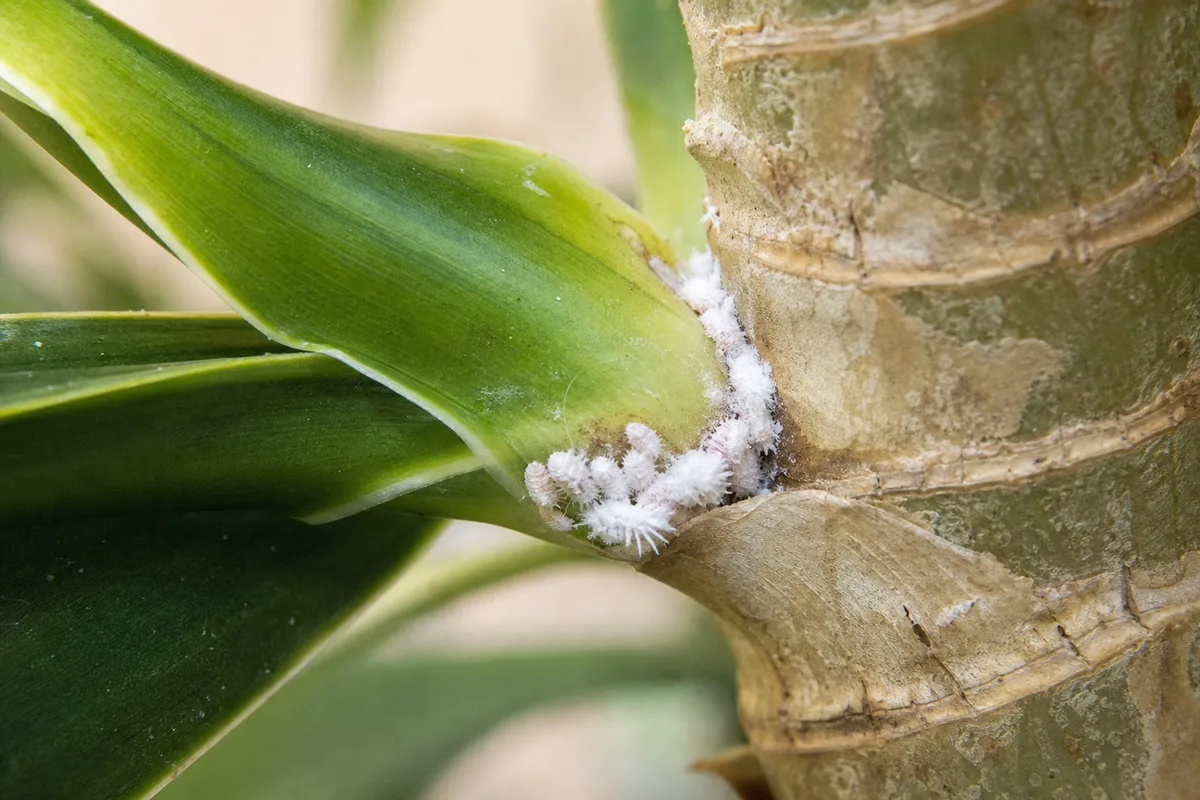
White cottony mealybug masses in leaf axils and crown crevices - crush one with a swab to confirm pink smear vs. mineral dust.
Feeding damage on Dracaena shows up gradually because the plant grows slowly. Expect yellowing lower leaves, slight stunting of new strap leaves, and sticky honeydew on glossy foliage or nearby surfaces. Honeydew often leads to black sooty mold, which blocks light and makes leaves look grimy even after the insects are dead.
The wax and hiding habit make mealybugs easy to miss during a quick water check. They are not the same as:
- Hard water or fluoride spots - flat, crusty deposits on leaf tips or tops, not clustered in axils
- Normal leaf texture - some Dracaena cultivars have pale striping; mealybugs form discrete fluffy clumps
- Scale insects - brown or tan armored bumps that do not wipe away as easily as fresh mealy wax
Why Dracaena gets mealybugs
Mealybugs are almost always brought in on a new plant, reused pot, or contaminated tool-not generated by your watering routine alone. Even so, Dracaena becomes a better host when culture slips.
Tight architecture gives shelter. Strap leaves wrap thick canes at sharp angles, and multi-stem specimens pack several crowns together. Those protected crotches are exactly where mealybugs prefer to feed-similar to the crown and branch crotches cited for many houseplants. A casual glance at the top of the foliage misses colonies buried one leaf layer down.
Indoor conditions favor year-round breeding. Stable room temperatures let populations build without a cold break, and indoor Dracaena lack the predatory insects that suppress mealybugs outdoors. Dracaena is among the houseplant genera most commonly listed with recurring mealybug problems.
Stress invites sap feeders. Dracaena tolerates neglect better than soggy soil, but chronic overwatering on Dracaena, dim corners, and stagnant air weaken the plant. Tender new growth from heavy nitrogen fertilizer in low light is especially attractive to egg-laying females. Fixing water and light will not kill existing bugs by itself, but it speeds recovery once treatment starts.
How to confirm the cause
Work through these checks before committing to sprays:
- Location - Are white clumps in leaf axils, crown centers, and nodes-not scattered evenly across leaf faces?
- Smear test - Crush one cluster with a dry swab. Mealybugs leave a pink, orange, or reddish smear; mineral dust or dried sap does not.
- Movement - Nymphs without full wax may crawl slowly. Tap a suspect area onto white paper and watch for tiny moving specks.
- Honeydew - Sticky leaves, pots, or floors beneath the plant point to sap feeders, not fluoride tip burn alone.
- Soil line - Some species feed on roots. If stems look clean but the plant keeps declining, scrape the top inch of mix and inspect near the base of the cane.
- Neighbors - Scan ficus, palms, philodendron, and other nearby plants; mealybugs share favorites across collections.
If the plant has only firm cane tissue, no wax clusters, and yellow lower leaves on a dry pot, natural senescence or underwatering on Dracaena may explain the symptom better than mealybugs-still isolate until you rule pests out.
First fix for Dracaena
Move the plant to an isolated spot with space around it.
Lay newspaper under the pot, then systematically open each leaf axil along every cane. Dab visible mealybugs with a cotton swab barely moistened with 70% isopropyl alcohol, touching each insect directly. Test on a small area of the plant first; wait 24 hours to confirm the alcohol does not burn Dracaena foliage-some houseplants react to solvent contact even when the cane tissue tolerates it.
Work from the top of each stem downward so dislodged crawlers do not fall onto areas you already cleaned. Wipe honeydew off strap leaves with a damp cloth so sooty mold does not continue spreading.
Do not start with a whole-plant oil drench, systemic granules, or Dracaena repotting guide on day one. Those steps come only if direct removal fails or root mealybugs are suspected.
Step-by-step recovery
After isolation and alcohol dabs, continue in this order based on severity:
- Manual removal pass - Repeat alcohol dabs every five to seven days, focusing on new wax you missed earlier. Mealybugs treated with alcohol often turn light brown; that color change confirms contact kills.
- Shower knockdown (moderate infestations) - If the plant size allows, rinse leaf undersides and stems with lukewarm water in a sink or shower to wash off crawlers and honeydew. Let foliage dry in Dracaena light guide-not hot sun through a window, which can scorch wet Dracaena leaves.
- Insecticidal soap or horticultural oil - For colonies tucked where swabs cannot reach, spray a product labeled for houseplants and mealybugs, covering leaf undersides and stem joints thoroughly. Soaps and oils work on contact only and miss insects hidden inside dense crowns unless you part each leaf. Test on one leaf first; Dracaena can show phytotoxicity like many broad-leaf houseplants.
- Repeat on a schedule - Plan at least three to four weekly cycles because eggs and newly hatched crawlers survive single treatments. You will need to repeat this procedure every week until the infestation is gone. Count the infestation cleared only when you find no new wax for two consecutive inspections at seven-day intervals.
- Trim only when necessary - Remove a leaf or short cane section if it is more wax than green tissue and you cannot clean the axil. Sterilize blades between cuts. Dracaena is toxic to cats and dogs; wear gloves if sap irritates your skin and keep trimmed material away from pets.
- Root-stage escalation - If stems stay clean but the plant wilts with soggy mix and white fluff near soil, unpot and inspect roots. Wash away visible mealybugs, trim mushy roots, repot into fresh well-draining mix in a clean pot, and consider a systemic houseplant insecticide labeled for root mealybugs only after reading the label for indoor use.
Skip fertilizer until new growth looks healthy for two weeks. Feeding a stressed Dracaena does not kill mealybugs and can push soft tissue that pests prefer.
Recovery timeline
You should see fewer live clusters within one to two weeks of consistent alcohol dabs and weekly follow-ups. Honeydew stickiness usually fades before sooty mold does; wipe mold off leaves once insects stop dripping sap.
Clean new strap leaves are the best success marker-expect them within three to six weeks during spring or summer active growth, sometimes longer in winter when Dracaena slows. Old yellow leaves will not green up again; remove them for hygiene.
Call the plant clear after two weekly inspections with zero new wax. If cottony patches reappear on multiple stems after a month of diligent treatment, survival odds drop-consider propagating firm cane cuttings from the highest clean section before the infestation reclaims the crown.
Worsening signs: sooty mold coating most foliage, sticky floors despite treatment, cane softening at soil line from secondary rot, or colonies jumping to several other houseplants.
Lookalike symptoms
- Powdery mildew - Flat white dust on leaf surfaces that rubs off uniformly; uncommon on Dracaena indoors and not clustered in axils.
- Hard water deposits - Crisp white crust on leaf tips from fluoride or minerals; wipe dry with vinegar-damp cloth, no insects inside.
- Scale insects - Flat or domed brown shells stuck to canes; scrape test reveals a different body under a hard cover.
- Fungus gnats - Flying adults from wet soil; larvae do not produce cottony wax on stems.
- Normal lower leaf yellowing - Single old leaves drop on an otherwise firm cane with dry soil and no wax; no treatment needed beyond removal.
What not to do
Do not return the plant to its display spot after one cleaning pass-crawlers hatch for weeks. Avoid whole-plant alcohol sprays without a leaf test; solvent burn shows up as pale patches on strap leaves. Do not compost infested prunings indoors where crawlers can spread.
Skip broad-spectrum pyrethroid sprays as a first choice indoors unless the label explicitly matches your pest and plant; they often miss hidden wax and can stress Dracaena without clearing the colony. Do not overwater because the plant looks sad-wet mix plus open feeding wounds invites root problems on a species already sensitive to rot.
When handling treated plants, remember Dracaena is toxic to cats and dogs. Keep isolated plants off pet routes until sprays dry, and wash hands after working in leaf axils.
How to prevent mealybugs next time
Inspect every new plant in quarantine for two to three weeks before it joins your Dracaena. Check leaf axils, not just the showy top foliage. Wipe watering-can spouts and pruners when moving between pots.
During routine care, part leaves at the crown monthly and look for white wax-early colonies fit on one swab. Keep Dracaena in medium to bright indirect light with a mix that drains well and a pot with open drainage holes. Let the top two inches of soil dry before watering; a lighter pot and firm cane mean your culture supports recovery.
Avoid heavy nitrogen fertilizer on a plant sitting in a dim corner. Pair modest feeding during active growth with good light so new leaves stay firm, not soft and pest-prone. Stable, inspectable plants beat reactive spraying every time.
When to worry
Escalate immediately if multiple stems carry dense wax, honeydew drips daily, or other houseplants show matching clusters. A lone patch on one axil on an otherwise firm cane can be managed with weekly alcohol dabs-but do not delay isolation.
If more than half the crown is encrusted and the cane feels soft near soil, mealybugs may be secondary to root decline-decide whether to salvage upper cane cuttings or discard the specimen to protect the rest of your collection. Extension guides note that heavily infested houseplants are often easier to replace than to cure; that is especially true for large mass cane specimens with layered, inaccessible crowns.
Conclusion
Mealybugs on Dracaena are a hiding pest on a plant built for tight leaf joints and slow growth. Confirm them with axil inspections and a smear test, isolate first, then remove insects directly with alcohol before escalating to soaps or systemics. Judge success by two weeks without new wax and clean new leaves, not by how quickly old yellow foliage disappears. Regular crown checks and quarantine do more to protect a corn plant than any single spray.
When to use this page vs other Dracaena guides
- Dracaena watering guide - Use for routine moisture checks before assuming mealybugs is the main issue.
- Dracaena problems hub - Browse all 16 common issues on this species.
- Yellow Leaves on Dracaena - Different entry point when symptoms overlap with mealybugs.
- Slow Growth on Dracaena - Different entry point when symptoms overlap with mealybugs.
- Spider Mites on Dracaena - Different entry point when symptoms overlap with mealybugs.