Aglaonema Pink Dalmatian Care Guide
Aglaonema commutatum 'Pink Dalmatian'
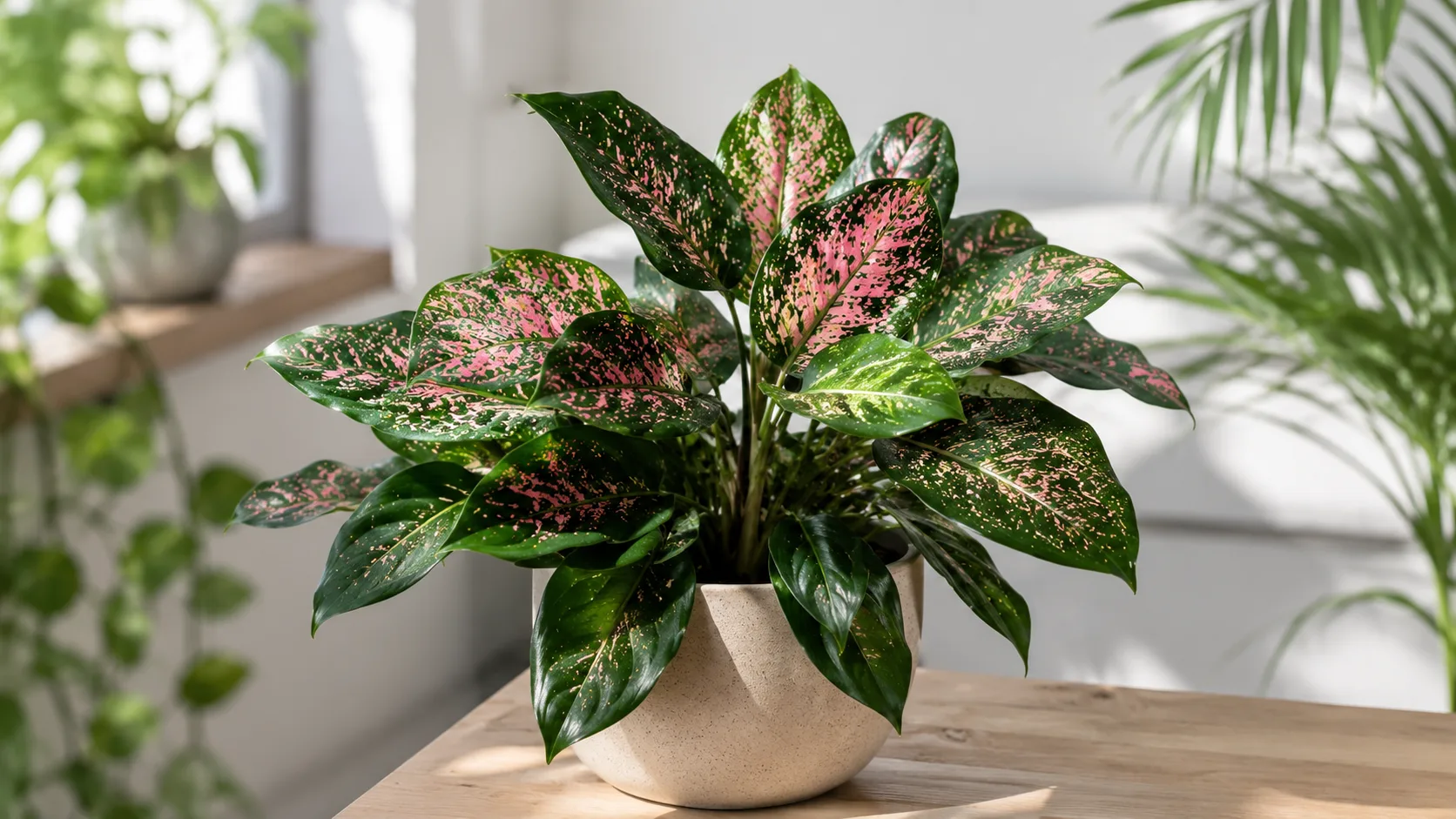
Aglaonema Pink Dalmatian is easy to grow with its cheerful pink-spotted foliage. Brighter indirect light intensifies the pink spots.
Aglaonema Pink Dalmatian Care Guide
Start with wateringThe most common care mistake for Aglaonema Pink DalmatianWatering guide →Aglaonema Pink Dalmatian care essentials
Light
medium to bright indirect light, low indirect light (pink fades)
Water
Water when top half of soil dries.
Soil
Well-draining standard potting mix.
Humidity
Average household humidity (40–60%)
Temperature
18°C to 27°C (65–80°F)
Fertilizer
Feed lightly during active growth. Use monthly in spring and summer..
About Aglaonema Pink Dalmatian
Aglaonema Pink Dalmatian has a upright growth habit.
| Detail | Information |
|---|---|
| Growth habit | Upright |
| Scientific name | Aglaonema commutatum 'Pink Dalmatian' |
Aglaonema Pink Dalmatian Care Guide
Aglaonema Pink Dalmatian is grown for one thing first: the scattered pink speckles. If new leaves keep opening with clear spotting and firm texture, the plant is doing well. If the speckles fade, the crown softens, or the pot stays wet for too long, the plant tells on the setup quickly.
By Sai Ananth
Use this guide to get the whole-plant picture first, then jump to a narrower topic page if one problem is already obvious.
What Pink Dalmatian actually is
Pink Dalmatian is a pink-speckled Chinese evergreen cultivar in the Aglaonema group. NC State Extension lists many named forms in the genus, including the trade spelling “Pink Dalmation,” which is useful to know if you are comparing tags from different sellers. Whatever spelling is on the pot, the plant is still an Aglaonema selected for decorative foliage rather than flowers.
What matters indoors is not the exact trade history but the growth habit: upright, slow, cane-forming with age, and less forgiving of deep shade than the older solid-green office types. The pink tissue looks cheerful, but it also carries less chlorophyll than all-green foliage, which is why light placement matters more here than it does on darker cultivars.
What makes this cultivar different
Pink Dalmatian does not color up the way Red Valentine or other broad-panel pink Aglaonemas do. Its look depends on speckles, not whole pink leaf sections. That makes the success marker simpler:
- healthy new leaves open firm
- the leaf base stays mostly green
- the pink spotting stays visible instead of fading into plain green
The cultivar still shares the usual Aglaonema strengths: it tolerates normal household humidity, grows acceptably in pots, and does not demand greenhouse-level care. But it also shares the usual Aglaonema weakness: wet roots in low light are a much bigger risk than missing one watering by a day or two.
Light is the main lever for keeping pink visible
UF/IFAS FP025 notes that high-color Aglaonema selections need brighter indirect light than green forms if you want them to keep their color. That is the central rule for Pink Dalmatian.
The best home placements are usually:
- near an east window
- back from a brighter south or west window with filtered light
- under a grow light if the room itself is too dim
Clemson HGIC also cautions that direct sun can scorch Chinese evergreen foliage. On Pink Dalmatian, the pale pink areas usually show damage first.
The balance to aim for:
- enough light for clear new spotting
- not so much direct sun that pale tissue bleaches or crisps
If the newest leaves are opening greener than older ones, the plant usually needs more usable light. If the leaves show tan or papery patches where sun hits them, the plant needs softer exposure, not more water.
For deeper help, go to Aglaonema Pink Dalmatian light or not enough light.
Water after partial drying, not on autopilot
Pink Dalmatian follows the same moisture logic as other Chinese evergreens: the mix should dry partway, then be watered thoroughly. Clemson HGIC and UF/IFAS FP025 both point toward partial drying between drinks instead of permanently wet soil.
That means:
- check deeper than the surface
- water thoroughly when it is time
- let runoff escape
- empty any standing water from the outer pot or saucer
What makes Pink Dalmatian tricky is that low light and wet roots can also dull new color. So if the plant looks greener and weaker at the same time, do not assume the problem is only light. Check the root-zone moisture too.
Start with these pages when the pattern is clear:
Soil and pot size decide how risky watering becomes
UF/IFAS EP160 describes Aglaonema media as porous and aerated, not heavy and airless. In a home setup, that translates to a houseplant mix that drains cleanly and holds enough structure that the roots can breathe between waterings.
Good habits here are plain:
- use a pot with drainage holes
- avoid dense, muddy mixes that stay wet too long
- add chunky aeration material if your base mix is very fine
- size up conservatively when repotting
Pink Dalmatian grows slowly enough that an oversized pot can stay wet long after the plant has stopped using the moisture. That is a common path to yellowing and soft crowns.
If you need specifics, use the soil guide and repotting guide.
Temperature and humidity are secondary, but still matter
This cultivar is not especially demanding about humidity compared with ferns or calatheas. Average indoor air is usually workable. But because Pink Dalmatian has pale variegated tissue, cosmetic stress shows up quickly when several factors stack together: dry vents, hard water, tip burn, and inconsistent watering.
University of Arkansas Extension warns that Chinese evergreens are damaged by cold exposure, and Clemson HGIC keeps them in a warm indoor range. In practice, this means:
- keep it out of cold drafts
- do not leave it pressed against winter glass
- avoid strong AC or heat vent airflow on the foliage
If tips keep crisping, use the low humidity and brown tips pages after checking the watering rhythm first.
Fertilizer should stay light
Pink Dalmatian is a slow variegated foliage plant, not a heavy feeder. UF/IFAS EP160 notes that excessive fertilizer can contribute to edge burn on Aglaonema, which is a good reminder not to use feeding as a fix for weak light or root stress.
The practical approach is:
- feed lightly during active growth only
- skip fertilizer if the plant is stressed or newly repotted
- flush the mix occasionally if mineral salts build up
If the plant looks pale, stretched, or weak, check light and watering before assuming it needs more nutrients.
Propagation and pruning are both conservative jobs
UF/IFAS EP160 lists division and stem cuttings among standard Aglaonema propagation methods. At home, division during repotting is usually the most predictable method when a plant has multiple rooted crowns. Stem cuttings work too, but they ask for more patience and steadier conditions.
Pruning is usually just cleanup:
- remove fully yellow or damaged leaves
- cut spent blooms if they appear
- shorten a leggy cane only after confirming light is the real cause
Use the dedicated propagation and pruning guides when you are ready to do either one intentionally.
Pet safety matters here too
ASPCA lists Chinese evergreen as toxic to cats and dogs because of insoluble calcium oxalate crystals. Pink Dalmatian should be treated the same way as other Aglaonemas: keep it away from pets that chew foliage, and do not use it as an easy floor plant in a pet-heavy room.
The plant is attractive enough that placement decisions should happen before you bring it home, not after a pet has already sampled it.
The common ways Pink Dalmatian goes wrong
Pink fades on new leaves
Usually a light issue. New growth tells the story better than older leaves do. Go to not enough light or leggy growth.
The plant gets greener and softer at the same time
Think excess moisture plus poor light, not just a color problem. Start with overwatering or root rot.
Brown patches form on pale tissue
That usually points to direct sun scorch rather than underwatering. Move the plant out of harsh exposure and reassess.
Brown tips with otherwise normal color
Think dry air, salts, or watering inconsistency first. Use brown tips and low humidity as the next checks.
Webbing or stippling appears
Jump to spider mites. Pale variegated foliage shows that damage quickly.
Buying and the first month home
Choose Pink Dalmatian for:
- bright rooms with filtered light
- growers who want color without full sun
- shelves or stands away from pets
Be cautious if the plant already has:
- a sour-smelling pot
- sticky residue under leaves
- a collapsing crown
- a very wet pot sitting in a dark shop corner
Once home, keep the first month simple. Do not repot immediately unless something is clearly wrong. Learn how fast the pot dries in your space, watch the newest leaves, and avoid stacking several changes together.
Related Pink Dalmatian guides
- Aglaonema Pink Dalmatian light
- Aglaonema Pink Dalmatian watering
- Aglaonema Pink Dalmatian soil
- Aglaonema Pink Dalmatian repotting
- Aglaonema Pink Dalmatian propagation
- Aglaonema Pink Dalmatian pruning
- Yellow leaves on Aglaonema Pink Dalmatian
- Brown tips on Aglaonema Pink Dalmatian
Conclusion
Pink Dalmatian succeeds when you focus on the newest growth. If the new leaves stay firm and open with visible pink speckling, the plant is in a workable setup. Keep it in brighter indirect light than darker Aglaonemas usually need, let the mix dry partway before watering again, and stay conservative with fertilizer and repotting. When the pink fades, think light first. When the crown softens, think roots first.
How to care for Aglaonema Pink Dalmatian?
How much light does Aglaonema Pink Dalmatian need?
medium to bright indirect light, low indirect light (pink fades)
- medium to bright indirect light, low indirect light (pink fades) - medium to bright indirect light, low indirect light (pink fades).
When should you water Aglaonema Pink Dalmatian?
Water when top half of soil dries.
- Check top 2 inches - Water when top half of soil dries.
- Drain excess water - Water when top half of soil dries.
What soil works best for Aglaonema Pink Dalmatian?
Well-draining standard potting mix.
- Well-draining mix - Well-draining standard potting mix.
Grower notes for Aglaonema Pink Dalmatian
What makes Pink Dalmatian different
Aglaonema Pink Dalmatian has speckled pink variegation rather than broad red panels. It looks best when new leaves keep clear spotting and firm texture. Too little light reduces the pink; too much sun scars the pale sections.
What matters most with Aglaonema Pink Dalmatian
Aglaonema Pink Dalmatian should be judged by color stability and firm new leaves, not fast growth. Variegated aglaonemas often grow slowly, so a compact plant with clean crowns is better than a tall soft plant pushed in low light. In practice, the care checkpoint is simple: medium to bright indirect light, low indirect light (pink fades). Pair that with well-draining standard potting mix, and avoid changing water, pot size, and placement all at once.
Best placement in a real home
Aglaonema Pink Dalmatian belongs where medium to bright indirect light, low indirect light (pink fades) is realistic for most of the day, not only where the pot looks good. Water when top half of soil dries. If the pot stays wet longer than expected, move the plant into better light or reassess the mix before watering again. Humidity target: Average household humidity (40–60%).. Temperature comfort zone: 18°C to 27°C (65–80°F).
Before you buy this plant
Choose Aglaonema Pink Dalmatian with firm new growth, clean leaf undersides, and soil that does not smell sour or feel compacted. Be cautious if you see yellow-leaves, sticky residue, collapsed crowns, or a pot that is wet in poor light. Cosmetic old-leaf damage is less worrying than weak roots or active pests.
First month after bringing it home
Do not repot Aglaonema Pink Dalmatian on day one unless the mix is failing or pests are obvious. Quarantine it, learn how fast the pot dries, and keep care boring while it adjusts. Watch especially for yellow-leaves. If problems appear, correct the condition first rather than stacking fertilizer, repotting, and pruning together.
Safety note for Aglaonema Pink Dalmatian
Aglaonema Pink Dalmatian is not a plant to keep within reach of pets or children. Treat it as an inaccessible display plant. Use gloves if sap or plant tissue is irritating, and pick a pet-safe alternative for floor pots or low shelves.
How to tell Aglaonema Pink Dalmatian is settling in
If you plan to multiply it later, common methods include Division and Stem cuttings.
Is it pet safe?
Aglaonema Pink Dalmatian is toxic to cats and dogs.
Toxic - calcium oxalate crystals cause oral irritation.
Watering Aglaonema Pink Dalmatian
Water when top half of soil dries.
Soil & potting for Aglaonema Pink Dalmatian
Well-draining standard potting mix.
Humidity & temperature for Aglaonema Pink Dalmatian
Aglaonema Pink Dalmatian prefers average household humidity (40–60%), though normal home humidity is usually fine. Keep temperatures around 18°C to 27°C (65–80°F).
| Detail | Information |
|---|---|
| Humidity | Average household humidity (40–60%) - normal home humidity is fine. |
| Ideal temperature | 18°C to 27°C (65–80°F) |
Fertilizer & pruning for Aglaonema Pink Dalmatian
Use feed lightly during active growth. Use monthly in spring and summer.. for Aglaonema Pink Dalmatian.
| Detail | Information |
|---|---|
| Fertilizer type | Feed lightly during active growth. Use monthly in spring and summer.. |
Common problems on Aglaonema Pink Dalmatian
Yellow Leaves
MediumLikely cause: Overwatering.
Quick fix: Reduce watering frequency.
Full fix guide →Brown Tips
MediumLikely cause: Common on this plant type; confirm with recent watering, light, and root checks.
Quick fix: Inspect the plant and correct the most likely care stressor before stacking treatments.
Full fix guide →Root Rot
MediumLikely cause: Common on this plant type; confirm with recent watering, light, and root checks.
Quick fix: Inspect the plant and correct the most likely care stressor before stacking treatments.
Full fix guide →Overwatering
MediumLikely cause: Common on this plant type; confirm with recent watering, light, and root checks.
Quick fix: Inspect the plant and correct the most likely care stressor before stacking treatments.
Full fix guide →Underwatering
MediumLikely cause: Common on this plant type; confirm with recent watering, light, and root checks.
Quick fix: Inspect the plant and correct the most likely care stressor before stacking treatments.
Full fix guide →Spider Mites
MediumLikely cause: Common on this plant type; confirm with recent watering, light, and root checks.
Quick fix: Inspect the plant and correct the most likely care stressor before stacking treatments.
Full fix guide →Mealybugs
MediumLikely cause: Common on this plant type; confirm with recent watering, light, and root checks.
Quick fix: Inspect the plant and correct the most likely care stressor before stacking treatments.
Full fix guide →Aphids
MediumLikely cause: Common on this plant type; confirm with recent watering, light, and root checks.
Quick fix: Inspect the plant and correct the most likely care stressor before stacking treatments.
Full fix guide →Leggy Growth
MediumLikely cause: Common on this plant type; confirm with recent watering, light, and root checks.
Quick fix: Inspect the plant and correct the most likely care stressor before stacking treatments.
Full fix guide →Slow Growth
MediumLikely cause: Common on this plant type; confirm with recent watering, light, and root checks.
Quick fix: Inspect the plant and correct the most likely care stressor before stacking treatments.
Full fix guide →Wilting
MediumLikely cause: Common on this plant type; confirm with recent watering, light, and root checks.
Quick fix: Inspect the plant and correct the most likely care stressor before stacking treatments.
Full fix guide →Drooping Leaves
MediumLikely cause: Common on this plant type; confirm with recent watering, light, and root checks.
Quick fix: Inspect the plant and correct the most likely care stressor before stacking treatments.
Full fix guide →Low Humidity
MediumLikely cause: Common on this plant type; confirm with recent watering, light, and root checks.
Quick fix: Inspect the plant and correct the most likely care stressor before stacking treatments.
Full fix guide →Not Enough Light
MediumLikely cause: Common on this plant type; confirm with recent watering, light, and root checks.
Quick fix: Inspect the plant and correct the most likely care stressor before stacking treatments.
Full fix guide →Fungus Gnats
MediumLikely cause: Common on this plant type; confirm with recent watering, light, and root checks.
Quick fix: Inspect the plant and correct the most likely care stressor before stacking treatments.
Full fix guide →Mold on Soil
MediumLikely cause: Common on this plant type; confirm with recent watering, light, and root checks.
Quick fix: Inspect the plant and correct the most likely care stressor before stacking treatments.
Full fix guide →Curling Leaves
MediumLikely cause: Common curling leaves pattern on Aglaonema Pink Dalmatian under indoor care stress.
Quick fix: Inspect roots, watering, light, and pests; adjust one variable and monitor new growth.
Full fix guide →Brown Leaves
MediumLikely cause: Common brown leaves pattern on Aglaonema Pink Dalmatian under indoor care stress.
Quick fix: Inspect roots, watering, light, and pests; adjust one variable and monitor new growth.
Full fix guide →Black Spots
MediumLikely cause: Common black spots pattern on Aglaonema Pink Dalmatian under indoor care stress.
Quick fix: Inspect roots, watering, light, and pests; adjust one variable and monitor new growth.
Full fix guide →Holes in Leaves
MediumLikely cause: Common holes in leaves pattern on Aglaonema Pink Dalmatian under indoor care stress.
Quick fix: Inspect roots, watering, light, and pests; adjust one variable and monitor new growth.
Full fix guide →Pale Leaves
MediumLikely cause: Common pale leaves pattern on Aglaonema Pink Dalmatian under indoor care stress.
Quick fix: Inspect roots, watering, light, and pests; adjust one variable and monitor new growth.
Full fix guide →Distorted Leaves
MediumLikely cause: Common distorted leaves pattern on Aglaonema Pink Dalmatian under indoor care stress.
Quick fix: Inspect roots, watering, light, and pests; adjust one variable and monitor new growth.
Full fix guide →Scale Insects
MediumLikely cause: Common scale insects pattern on Aglaonema Pink Dalmatian under indoor care stress.
Quick fix: Inspect roots, watering, light, and pests; adjust one variable and monitor new growth.
Full fix guide →Thrips
MediumLikely cause: Common thrips pattern on Aglaonema Pink Dalmatian under indoor care stress.
Quick fix: Inspect roots, watering, light, and pests; adjust one variable and monitor new growth.
Full fix guide →Whiteflies
MediumLikely cause: Common whiteflies pattern on Aglaonema Pink Dalmatian under indoor care stress.
Quick fix: Inspect roots, watering, light, and pests; adjust one variable and monitor new growth.
Full fix guide →Leaf Miners
MediumLikely cause: Common leaf miners pattern on Aglaonema Pink Dalmatian under indoor care stress.
Quick fix: Inspect roots, watering, light, and pests; adjust one variable and monitor new growth.
Full fix guide →Caterpillars
MediumLikely cause: Common caterpillars pattern on Aglaonema Pink Dalmatian under indoor care stress.
Quick fix: Inspect roots, watering, light, and pests; adjust one variable and monitor new growth.
Full fix guide →Nitrogen Deficiency
MediumLikely cause: Common nitrogen deficiency pattern on Aglaonema Pink Dalmatian under indoor care stress.
Quick fix: Inspect roots, watering, light, and pests; adjust one variable and monitor new growth.
Full fix guide →Iron Deficiency
MediumLikely cause: Common iron deficiency pattern on Aglaonema Pink Dalmatian under indoor care stress.
Quick fix: Inspect roots, watering, light, and pests; adjust one variable and monitor new growth.
Full fix guide →Magnesium Deficiency
MediumLikely cause: Common magnesium deficiency pattern on Aglaonema Pink Dalmatian under indoor care stress.
Quick fix: Inspect roots, watering, light, and pests; adjust one variable and monitor new growth.
Full fix guide →Potassium Deficiency
MediumLikely cause: Common potassium deficiency pattern on Aglaonema Pink Dalmatian under indoor care stress.
Quick fix: Inspect roots, watering, light, and pests; adjust one variable and monitor new growth.
Full fix guide →Calcium Deficiency
MediumLikely cause: Common calcium deficiency pattern on Aglaonema Pink Dalmatian under indoor care stress.
Quick fix: Inspect roots, watering, light, and pests; adjust one variable and monitor new growth.
Full fix guide →