Aglaonema Pink Dalmatian Propagation Guide
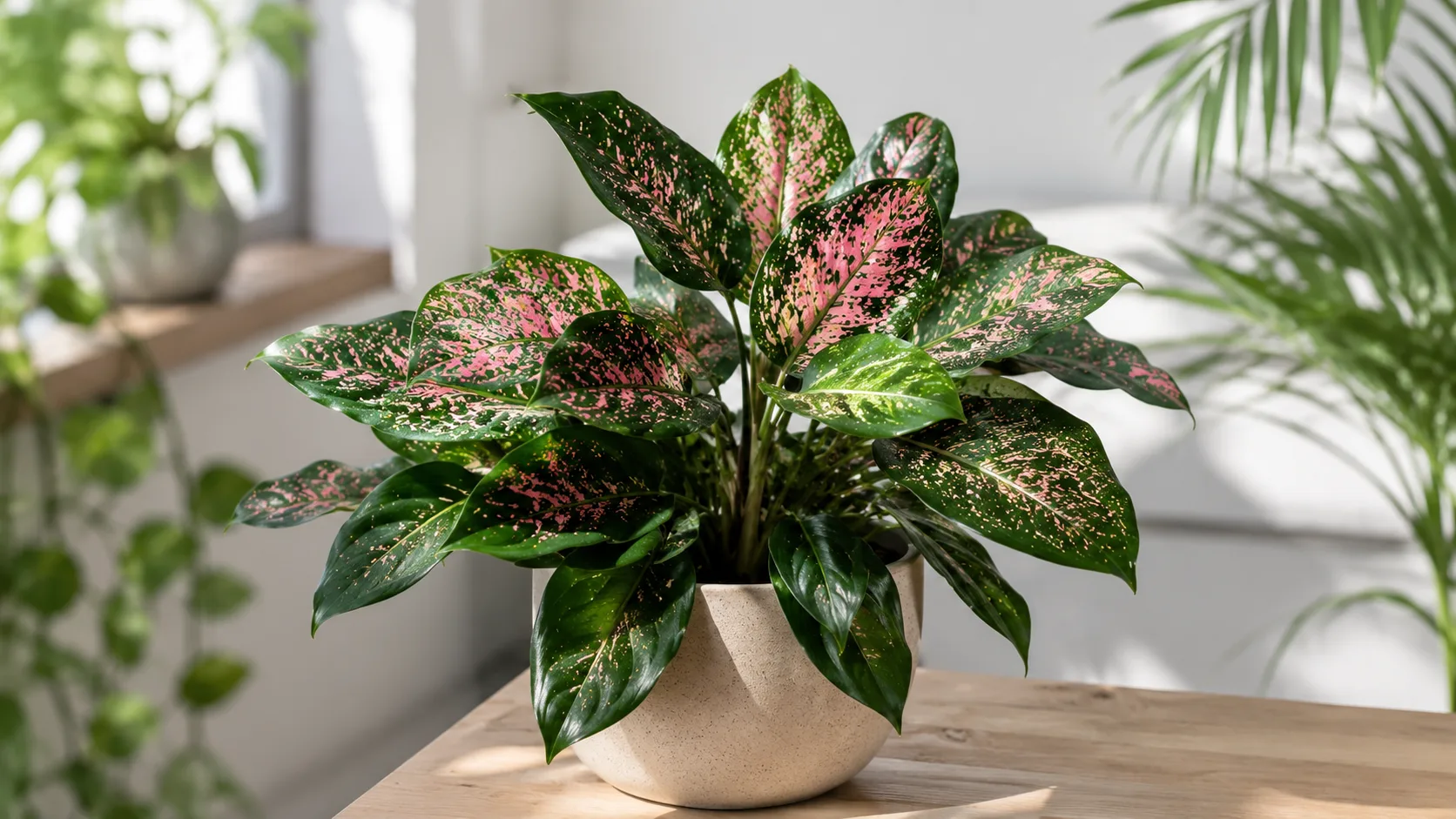
Aglaonema Pink Dalmatian Propagation Guide
Aglaonema Pink Dalmatian Propagation Guide
Aglaonema ‘Pink Dalmatian’ is propagated vegetatively: you either divide an established clump or root a piece of stem that contains viable growing tissue. This matters because the pink-spotted foliage is a selected cultivar trait. A vegetative offspring is a clone of the parent plant and is therefore the most dependable way to retain its general pattern and growth habit, although individual leaves can still emerge with more or less pink. Seed is slow, uncommon indoors, genetically variable, and not a sensible route when your goal is another plant that resembles the one you own.
The plant is forgiving once established, but an unrooted cutting is less resilient than a mature Chinese evergreen. It cannot replace water efficiently, and a saturated, airless medium can decay the stem before roots form. Successful propagation therefore depends less on a clever additive and more on four controls: a viable stem or rooted division, clean cuts, warmth, and a rooting environment that is moist but oxygenated. The method below makes those controls visible so you can adjust them rather than follow a rigid calendar.
The Quick Answer
The easiest Aglaonema Pink Dalmatian propagation method is division when the pot contains separate basal shoots with their own roots. Remove the plant, identify natural clumps, gently separate one with both foliage and roots, and pot it in a container only slightly wider than its root mass. Division produces an independent plant immediately; it does not have to build a root system from scratch. Its main cost is disturbance to the mother plant, so it is best combined with a planned repot.
If there is only one cane or no rooted offset, take a stem cutting. Cut a healthy top section just below a node, remove leaves that would sit in the medium or water, and root the cutting in an airy propagation mix or clean water. Keep it warm in bright, indirect light and judge progress by firm new roots and stable growth, not by an exact number of days. Do not attempt to propagate a detached leaf without stem tissue, and do not keep “insurance watering” a wet cutting; both approaches commonly end with a leaf that declines or a stem that rots.
Understand What Can Produce a New Plant
Aglaonema develops an upright, cane-like stem as it matures. Leaves attach along that stem at nodes, and dormant buds or adventitious roots can develop from suitable stem tissue under favorable conditions. A top cutting retains the growing tip and usually establishes more predictably than a short, leafless cane piece. A basal shoot that already has roots is more advanced still, which is why division is normally the lowest-risk option.
Before cutting, inspect the lower stem closely. A node is the joint or ring associated with a former or current leaf attachment; it is not merely any green section of petiole. Your cutting should include at least one sound node, and two or more nodes provide more margin for error. Avoid tissue that is translucent, blackened, mushy, badly scarred, or foul-smelling. A cutting cannot outrun an active stem infection, and placing diseased tissue in warm moisture usually accelerates the problem.
Why a Leaf Alone Is Not Enough
A Pink Dalmatian leaf may remain green in water for weeks and may even look “healthy,” but survival is not the same as propagation. The petiole and blade do not normally contain the stem bud required to build a complete new Aglaonema shoot. Without a piece of node-bearing stem, a leaf has no dependable route to become a self-sustaining plant. This is why successful examples described as “leaf cuttings” often include an unnoticed sliver of stem or basal tissue.
Do not confuse this limitation with the behavior of plants that make plantlets directly from leaf tissue. Aglaonema is not commonly multiplied that way at home. Use the leaf as a visual guide to locate its attachment point, then include the stem below that point. If a leaf breaks off by itself, enjoy it temporarily in a vase if you wish, but do not build a propagation plan around it.
Choose the Best Propagation Method
Choose according to the structure and condition of the plant, not according to which method looks most dramatic online. A dense, multi-crown plant offers ready-made divisions. A tall, bare lower cane with a healthy leafy top is a good candidate for a top cutting and rejuvenation. A damaged root system may justify salvaging healthy upper stems, while a freshly purchased, stressed plant is usually better left alone until it acclimates and resumes stable growth.
The season matters through conditions rather than the calendar alone. Spring and early summer commonly provide longer days and active growth, so roots and shoots tend to develop more readily. You can propagate at another time if you can supply steady warmth and adequate light, but low winter light increases the time a wet cutting remains vulnerable. NC State Extension describes Aglaonema as cold-intolerant and comfortable around 70–80°F (21–27°C) during the day, which is a useful rooting range rather than a guarantee of speed (NC State Extension).
Division Versus Stem Cuttings
|| Method | Best for | Main advantage | Main risk | ||---|---|---|---| || Division | Plants with rooted basal shoots | Fastest route to an independent plant | Root disturbance | || Top cutting in mix | Tall or leggy healthy stems | Roots form in the long-term medium | Moisture is harder to observe | || Top cutting in water | Growers who need visible root checks | Easy to inspect and refresh | Water roots need a careful transition | || Cane sections | Long healthy bare stems | Can produce several plants | Slow and more prone to rot |
Division is not automatically appropriate just because several stems emerge from the pot. Nurseries sometimes plant multiple cuttings together, which may separate easily, but young shoots may also share a compact root mass. Trace each stem to its roots before pulling. If separation would strip most roots from a shoot, keep that group intact or use a clean blade to make one deliberate cut rather than repeatedly tearing tissue.
Prepare the Mother Plant, Tools, and Workspace
Start with a hydrated but not waterlogged mother plant. Water normally a day or two before division if the medium is dry; a moderately moist root ball is easier to handle than dust-dry peat or saturated sludge. For stem cuttings, choose firm growth with good color and no active pest outbreak. Propagating while scale, mealybugs, mites, or thrips are present creates a second vulnerable plant and spreads the monitoring burden.
Use sharp bypass pruners, a propagation knife, or scissors that can make a clean cut without crushing the cane. Wash off debris, then disinfect the blade with an appropriate household disinfectant or 70% isopropyl alcohol and let it dry. Clean the work surface and use fresh rooting media and clean containers. University of Minnesota Extension recommends clean pots and new sterile potting soil for indoor plants because used media and dirty materials can carry pests or pathogens (University of Minnesota Extension).
Wear gloves, especially if your skin is sensitive, and wash your hands after handling sap. Aglaonema belongs to the Araceae and contains insoluble calcium oxalate crystals. The ASPCA lists Chinese evergreen as toxic to dogs and cats, with chewing capable of causing oral irritation, drooling, vomiting, and difficulty swallowing (ASPCA). Keep cut pieces, loose leaves, water vessels, and newly potted divisions away from children and animals.
Method 1: Divide a Multi-Stem Plant
Slide the plant out by supporting the base and squeezing or tapping the nursery pot. Do not pull hard on the leaves; petioles can snap while the root ball remains lodged. Remove only enough loose medium to see where stems and roots connect. Healthy roots are generally firm and pale tan, cream, or light brown, while rotten roots are soft, dark, easily stripped, and may smell sour.
Look for a natural division containing at least one healthy shoot, several leaves, and a useful share of roots. Two or three shoots make a fuller new plant, but a single rooted shoot can succeed if its roots are intact. Tease roots apart with your fingers from the outside inward. When roots are tightly interwoven, use the disinfected knife to divide between crowns, making the fewest cuts possible and preserving fine roots on both sides.
Do not turn division into aggressive root cleaning unless disease requires it. Washing every particle of mix away can make separation easier to see, but it also removes fine root hairs and lengthens recovery. If the original medium is healthy and compatible with the new mix, leaving some attached is reasonable. If it is sour, compacted, infested, or conceals rot, remove more and inspect carefully.
Separate and Pot Each Division
Choose a pot with a drainage hole that fits the division’s root mass. A container about 1–2 inches wider than the arranged roots is usually enough; a tiny division in a large decorative pot leaves a volume of mix that can stay wet long after the roots have used their available oxygen. Fill around the roots with a fresh, airy houseplant mix, keeping the crown at approximately its previous depth. Burying the petiole bases or healthy cane more deeply than necessary creates a persistently wet collar where rot can begin.
Water once to settle the mix, allow the pot to drain completely, and empty the saucer or cachepot. A division with substantial roots can return to a normal dry-down cycle; it does not need permanently wet soil. Place it in bright, indirect light and hold fertilizer until you see stable new growth or clear recovery. Mild drooping or loss of an older leaf can follow root disturbance, but progressive collapse, a soft base, or wet soil that never dries demands inspection.
Method 2: Root a Top Stem Cutting in Potting Mix
Soil or substrate propagation avoids the later conversion from water roots to mix-grown roots. It also gives the stem both moisture and oxygen when the medium is correctly built. Use a small container with drainage, because a small rootless cutting cannot manage a large reservoir of wet mix. A transparent nursery cup with several drainage holes can make moisture and some root growth easier to observe, but an ordinary 3- or 4-inch pot works.
A practical rooting medium is equal parts fine coco coir or fresh peat-based mix and perlite, or two parts light houseplant mix to one part perlite or pumice. The exact brand matters less than structure: the medium should hold slight, even moisture while draining freely and springing back rather than compressing into mud. Avoid rich compost, garden soil, and oversized bark chunks around a small cutting. Garden soil is dense in a pot and may introduce organisms that thrive in the warm, damp rooting environment.
Make and Plant the Cutting
Select a healthy top with several leaves and roughly 4–6 inches of usable stem when the plant allows it. Make a clean cut just below a node. Remove the lowest one or two leaves so no blade or petiole is buried, but retain enough foliage to photosynthesize. If the remaining leaves are unusually large and the cutting wilts rapidly, reducing leaf area slightly is preferable to stripping the top bare.
Let surface moisture on the cut stop before planting; there is no need to leave a tropical stem drying for days. Rooting hormone is optional. It may improve consistency in some circumstances, but excess powder can cake against wet tissue, and it cannot compensate for a nonviable node or waterlogged mix. If you use it, apply a thin coating only to the prepared lower stem according to the label.
Insert at least one node into the medium and firm gently so the cutting stands without crushing air spaces. Water thoroughly once, drain, and then keep the mix lightly moist rather than continuously saturated. A support stake can prevent a top-heavy cutting from rocking, because movement breaks delicate new root initials. Do not repeatedly tug the stem to “test” it; watch for new growth, resistance over time, and roots at a clear pot wall or drainage hole.
Method 3: Root a Stem Cutting in Water
Water propagation makes the lower stem visible, which helps a beginner catch cloudiness or decay early. Use a clean, narrow vessel that supports the cutting without submerging leaves. Place one or two nodes under water while keeping all leaf blades and petiole junctions above it. Start with room-temperature water and position the vessel in bright, indirect light rather than a hot window where water warms, evaporates, and grows algae quickly.
Change the water whenever it clouds, smells, or develops debris, and otherwise refresh it regularly enough to maintain cleanliness. Rinse the vessel rather than merely topping it up forever. If the submerged stem stays firm and roots begin to emerge, leave them undisturbed. If a section turns brown and soft, remove the cutting, cut back to completely firm tissue with a disinfected blade, clean the vessel, and restart only if a sound node remains.
Water rooting is not inherently superior or inferior. It is observable and simple, but roots developed in water are anatomically adapted to that environment and can be brittle. The transfer to a porous medium changes moisture and oxygen availability abruptly. Waiting for an enormous tangle does not make the transition safer; it often makes positioning the roots harder and increases breakage.
Move Water Roots Into Potting Mix
Transplant when several roots are roughly 1–2 inches long and beginning to branch, rather than after they fill the vessel. Prepare a small pot and airy mix before removing the cutting so roots are not left drying on the table. Make a hole, arrange the roots downward without forcing sharp bends, backfill gently, and water thoroughly. The stem should sit at the same depth needed to cover the rooted node, not deeper.
For the first one to two weeks, keep the medium somewhat more evenly moist than you would for an established Pink Dalmatian, while still letting all excess water drain. Then lengthen the dry-down gradually. University of Minnesota Extension uses a similar principle for rooted tropical cuttings: maintain moisture early, provide drainage, and then allow the surface to dry between waterings (University of Minnesota Extension). This transition is more useful than a fixed Aglaonema Pink Dalmatian watering guide because pot size, light, mix, and indoor temperature alter drying speed.
Method 4: Propagate Bare Cane Sections
An old, healthy cane can be cut into sections when a top cutting has already been taken or a leggy plant needs rejuvenation. Each piece must include at least one viable node; two nodes give more stored energy and options. Mark which end was originally uppermost before cutting, because short leafless pieces are easy to reverse. You can place sections vertically with the original lower end down, or lay them horizontally half-buried in lightly moist propagation mix.
Keep cane sections warm and humid enough to limit dehydration, but do not seal soaking-wet media in stagnant air. A loose clear cover can slow moisture loss, provided you vent it and remove condensation that continually drenches the stem. Cane propagation is slower and less predictable because the section must activate a dormant bud as well as make roots. Discard any piece that becomes fully soft, hollow, black, or foul-smelling; cutting repeatedly into advancing decay rarely rescues a tiny section.
The remaining rooted stump of the mother plant may also produce a new shoot below the cut. Continue caring for it conservatively rather than flooding it to force growth. With less foliage, it uses water more slowly, so the pot may remain wet longer than before. New shoots can emerge only while the lower stem and roots remain healthy.
Create the Right Rooting Environment
Place propagations in bright, indirect light. Very dim light reduces the energy available for root and shoot development, while strong direct sun can overheat a water vessel, scorch pink-variegated leaves, and drive water loss faster than an unrooted cutting can replace it. A bright east-facing position, filtered window, or grow light at a suitable distance is more controllable. Keep the setup away from cold glass, air-conditioning, and heating vents.
Warmth should be steady rather than extreme. A room around 70–80°F suits the genus, while cold, wet media dramatically slows rooting and favors decline. A seedling heat mat can help in a cool room, but use a thermostat and monitor the medium; unchecked bottom heat can dry a small pot or cook roots. Humidity around the leaves may reduce wilting, yet the stem base still needs air exchange, so a closed, dripping propagation chamber is not a shortcut.
Water by condition. In mix, check below the surface with a finger, wooden skewer, pot weight, or view through a clear wall. Rewater when the medium is approaching lightly moist, not only after complete collapse and not while it remains saturated. In water, maintain the node below the waterline and keep the vessel clean. Do not fertilize an unrooted cutting; mineral salts do not create roots and can stress fresh tissue.
Follow a Realistic Rooting Timeline
Aglaonema cuttings may show root initials in several weeks under warm, bright conditions, but establishment can take longer. Temperature, stem maturity, light, method, and the health of the source plant all affect the timeline. Treat any exact promise such as “roots in 14 days” as an observation from one setup, not a biological deadline. A firm green cutting that is not worsening may still be progressing below the surface.
Read multiple signs together. Early signs include stable leaf posture, a firm stem, swelling at a node, or pale root nubs. Stronger evidence includes several branching roots, resistance that develops without tug-testing, and a new leaf that continues to unfurl rather than stalling. New foliage alone is not absolute proof, because a cutting can spend stored energy before having enough roots to support itself.
Once rooted, avoid immediately moving the plant to a much larger pot, stronger sun, and a fertilizer routine at the same time. Make one change at a time and allow the cutting to establish. A small root system in a proportionate container is easier to water correctly and can be potted up later. The goal is not the fastest visible leaf; it is a balanced plant whose roots can support future growth.
Diagnose Propagation Problems
Most failures trace back to compromised source material, insufficient stem tissue, or a mismatch between water and oxygen. Check the stem before blaming humidity or nutrients. Firmness, smell, and the boundary between healthy and discolored tissue reveal more than leaf color alone. Yellowing can occur from ordinary loss of an older leaf, but several leaves yellowing while the base softens points to a failing cutting.
Do not respond to every wilt by adding water. An unrooted cutting may wilt because it lacks roots even when the medium is already wet. Adding more water removes air and can worsen the underlying problem. Conversely, a very dry, loose medium may never maintain contact with the node, so the answer is not universally “water less”; it is to restore slight, even moisture and adequate aeration.
Rot, Yellowing, Wilting, and No Growth
A soft, dark stem indicates rot. Cut above the damage into clean, uniformly firm tissue, disinfect the tool between cuts, and restart in fresh medium or a clean vessel if a node remains. Do not reuse contaminated water or saturated mix. Avoid routine hydrogen peroxide treatments as a substitute for correcting poor drainage and overwatering on Aglaonema Pink Dalmatian; concentration errors can injure living tissue, and the environmental cause remains.
One lower leaf turning yellow can be a normal resource trade-off while roots form. Remove it after it releases easily, and keep decaying material out of the medium. All leaves drooping in wet mix is more concerning: inspect for stem or root decay and improve warmth, light, and aeration. No visible growth calls for patience if the cutting remains firm, but after a prolonged stall, inspect gently for callus or roots and reassess temperature and node viability.
New leaves with little pink do not prove the propagation method changed the cultivar. Variegation expression can differ from leaf to leaf and may be influenced by maturity and light, while too much direct sun can damage the foliage. Give the plant bright filtered light and assess several leaves. A truly all-green shoot can be pruned selectively only after the plant is strong enough and if a better-variegated growth point is available; never remove most foliage from a weak new plant merely to chase color.
Care for the New Pink Dalmatian
After establishment, let the top portion of the mix dry before watering again, then soak evenly and drain completely. NC State Extension advises keeping Aglaonema mix moist during active growth while reducing water in winter, but “moist” should never mean standing in water (NC State Extension). University of Minnesota Extension likewise links poor drainage and overwatering with root rot on Aglaonema Pink Dalmatian and fungus gnats (University of Minnesota Extension). Your pot, substrate, and light determine how quickly the next watering is needed.
Delay fertilizer until roots are functioning and the plant is producing stable growth. Then use a balanced houseplant fertilizer at a conservative label rate during active growth. More fertilizer will not restore pink patterning or accelerate a damaged root system; accumulated salts can burn young roots. Flush the pot periodically with plain water if your water or fertilizer leaves visible deposits, always allowing the runoff to escape.
Inspect the new plant weekly. Check leaf undersides, petiole bases, the soil line, and new growth for pests or softness. Keep it separate from a larger collection until you are confident the mother plant and cutting are clean. As roots fill the container and the mix starts drying unusually fast, move up only one pot size rather than using a large final container.
Conclusion
Reliable Aglaonema Pink Dalmatian propagation begins with choosing the method the plant is structurally ready for. Divide only shoots that can retain useful roots; take stem cuttings with real nodes; use water when visibility helps, or an airy mix when you want to avoid a later transition. In every method, clean tissue, a proportionate container, warmth, Aglaonema Pink Dalmatian light guide, and controlled moisture matter more than rooting products or rigid schedules.
Watch the plant instead of the calendar. A firm stem, branching roots, and sustained new growth show that the cutting is becoming independent, while soft tissue and persistently wet media require immediate correction. Once established, transition gradually to normal Pink Dalmatian care and protect people and pets from its irritating sap and foliage. That measured approach preserves both the health and the distinctive spotted character of the parent plant.
When to use this page vs other Aglaonema Pink Dalmatian guides
- Aglaonema Pink Dalmatian overview - Start here for whole-plant context before deep-diving this topic.
- Aglaonema Pink Dalmatian problems hub - Jump to symptom-specific fix guides when this care topic does not resolve the issue.
Related Aglaonema Pink Dalmatian guides
- Aglaonema Pink Dalmatian overview
- Aglaonema Pink Dalmatian watering
- Aglaonema Pink Dalmatian light
- Aglaonema Pink Dalmatian soil
- Aglaonema Pink Dalmatian fertilizer
- Aglaonema Pink Dalmatian repotting
- Aglaonema Pink Dalmatian problems
Related tool
Try the Propagation Success Calculator with aglaonema-pink-dalmatian pre-selected to estimate needs for your setup.