Aglaonema Pink Dalmatian Repotting: When, How & Soil Mix
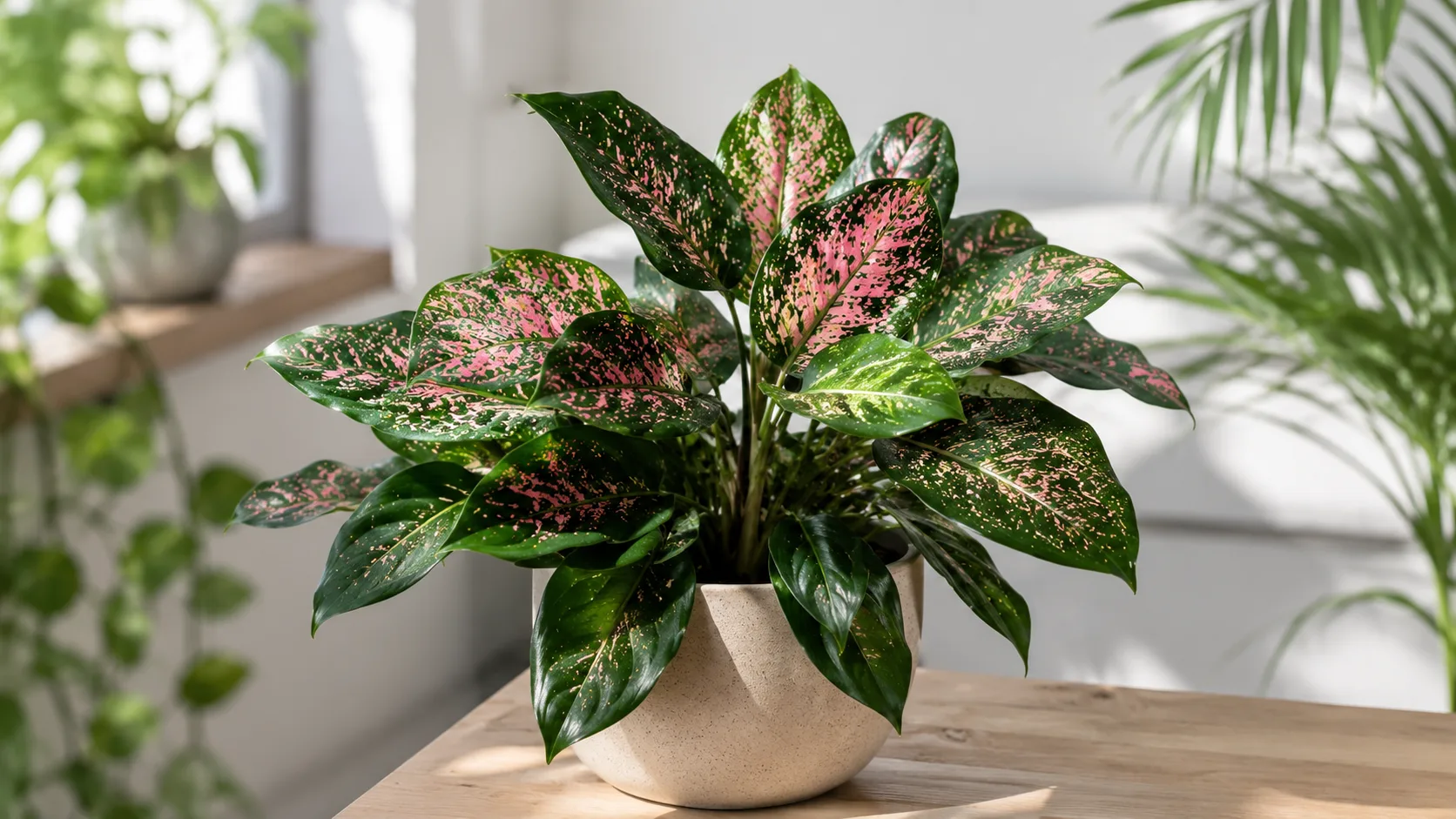
Aglaonema Pink Dalmatian Repotting: When, How & Soil Mix
Aglaonema Pink Dalmatian Repotting: When, How & Soil Mix
By Sai Ananth · Reviewed by LeafyPixels Review Board · Last reviewed 2026-06-15
Aglaonema ‘Pink Dalmatian’ is a slow-growing, pink-speckled Chinese evergreen cultivar where repotting decisions show up on the leaves before they show up on the calendar. Unlike solid-green office Aglaonemas that tolerate dim corners and snug pots for years, Pink Dalmatian carries less chlorophyll in its pale pink tissue and needs brighter indirect light to keep new speckling crisp. That biology changes how you size the next pot, how fast the mix should dry after disturbance, and what the first new leaf tells you about recovery. Repotting here is not a decorative upgrade-it is a root-zone intervention when crowding, collapsed media, poor drainage, or rot can no longer support the foliage you bought the plant for.
This guide owns cultivar-specific Pink Dalmatian repotting. For genus-wide cultivar comparisons and semi-hydro notes, see the Chinese evergreen repotting guide. For day-to-day placement and speckle maintenance, start with the Pink Dalmatian overview.
Illustrative Scenario: A Typical Tabletop Pink Dalmatian Repot
The following walkthrough is an illustrative indoor scenario-a composite of common grower situations, not a photo-documented case study from a single repot session. Use it to see how diagnosis, pot choice, and recovery signals connect before you read the quick-reference summary.
Imagine a Pink Dalmatian in a 14 cm nursery pot on a bright east windowsill. New leaves have slowed despite consistent watering. Roots circle the bottom, water runs through in minutes without wetting the center, and the mix smells slightly sour. In mid-April, you choose a routine upgrade repot (not a rot rescue): slide into a 16–17 cm pot, refresh with the airy blend from our soil guide, tease only the outer circling roots, and skip fertilizer for one month. Mild droop lasts about four days. At week three, a new leaf opens with dark green base tissue and clean pink speckles-your clearest sign that roots have reconnected. If your plant matches only one vague symptom-a single yellow lower leaf-this scenario does not apply. Inspect the root ball before you unpot.
The Short Answer
Repot a healthy Pink Dalmatian when roots densely circle the pot, emerge in quantity from drainage holes, lift the root ball, make the plant unstable, or leave so little functional mix that water races through. Move it into a clean pot with drainage that is usually 1–2 inches wider than the existing root ball-often the conservative end of that range because variegated Aglaonemas grow slowly and use water cautiously in dim rooms. Use a fresh, airy houseplant mix aligned with our Pink Dalmatian soil recipe, preserve sound roots, keep the crown at its previous depth, water to settle the medium when appropriate, and drain the pot completely.
If the plant has root rot, the procedure changes. Remove wet contaminated mix, cut away roots that are genuinely soft or decayed, disinfect tools between cuts, and downsize the container if the remaining root system is small. After either type of repot, return the plant to bright indirect light-brighter than a solid-green Aglaonema needs-avoid fertilizer until recovery is evident, and water according to the new mix rather than the old schedule.
Decide Whether Repotting Is Necessary
Start with evidence, not anxiety. Lift the nursery pot and inspect drainage holes. Slide the root ball out gently if possible, noting whether roots occupy the perimeter densely or abundant loose soil still surrounds them. Observe watering behavior over several cycles. A root-bound plant often dries much faster than it used to because roots have displaced the medium, while degraded peat may behave in the opposite way and stay wet in a dense core.
Penn State Extension recommends repotting when a plant has outgrown its pot and advises teasing densely matted or circling roots before placing it in fresh mix. University of Minnesota Extension lists roots escaping the pot, rapid drainage, top-heaviness, and a root-filled container among useful signs, while noting that some plants need fresh soil without a larger pot. These are stronger triggers than age alone-and Pink Dalmatian’s slow variegated growth often means two to three years between upsizes in stable conditions, longer than fast aroids but shorter than a chronically wet, collapsed mix demands.
A pot can also need intervention when the plant is not root-bound. Old organic media can shrink from the sides, resist rewetting, remain soggy in the center, accumulate salts, or lose the coarse structure that once created air spaces. A sour smell, recurring fungus gnats, or water that pools on top may point to a substrate problem. Before repotting, confirm that the container has a clear drainage path and is not simply sitting in runoff inside a cachepot.
Reliable Signs Versus Misleading Symptoms
Reliable evidence includes a dense root mantle, extensive circling, roots pushing the plant upward, broken or distorted plastic, repeated wilting soon after thorough watering, and a mix that has physically broken down. Stalled growth can support the diagnosis when light, temperature, pests, and nutrition are otherwise appropriate. Repotting is also justified when inspection finds root disease, contaminated mix, or a hidden nursery plug that stays much wetter than the surrounding substrate.
Yellow leaves, drooping, or slow growth alone are not proof that a bigger pot is needed. Pink Dalmatian may droop from dry soil, cold, damaged roots, or saturated soil; each demands a different response. Low light slows water use and growth, so upsizing a plant in a dark location may make the root zone wetter and worsen the symptoms-especially dangerous for a cultivar whose speckled leaves already transpire less efficiently than solid-green foliage. Check the whole system before deciding that more soil is the cure.
Do not repot solely because roots are visible at one drainage hole. Roots naturally explore openings, and one adventurous root does not show that the full pot is occupied. Likewise, a new plant leaning in loose nursery mix may need stabilization in the same pot rather than an immediate jump in size. A brief inspection prevents a common error: solving an assumed space problem by creating a moisture problem.
| Decision | Choose slip-pot or modest upsize | Choose same-pot refresh | Choose rot rescue |
|---|---|---|---|
| Root color | Firm, mostly tan or cream | Firm; mix degraded | Mushy, foul-smelling |
| Mix condition | Functional but crowded | Sour, compacted, hydrophobic | Saturated, failing |
| Pot direction | 1–2 in wider | Same size, new mix | Same or smaller after trim |
| Priority | Loosen perimeter only | Replace old substrate | Remove decay first |
Choose the Best Time
The easiest time to repot a healthy Pink Dalmatian is when warmth and light support active growth, commonly spring through early summer indoors. The plant can replace fine roots damaged during handling and resume leaf production more readily. Penn State Extension notes that spring is when houseplants naturally begin seasonal growth and roots grow into fresh mix most readily. However, indoor seasons are created partly by the home. A warm room with reliable grow lights may offer better winter recovery conditions than a cold, dim spring windowsill.
Do not postpone emergency repotting to match a calendar. A plant sitting in sour, saturated media with soft roots is losing viable tissue now. Remove the cause as soon as you can provide clean tools, fresh substrate, warmth, and monitoring. Conversely, do not disturb a stable plant during a heat wave, after cold shipping, during a pest treatment, or immediately after moving it into a different light environment unless the root zone is actively dangerous.
New purchases benefit from observation before intervention, as the overview guide recommends. Give a healthy plant time to acclimate and learn how its nursery mix dries in your conditions. Repot promptly only when there is a clear issue: absent drainage, severe compaction, active rot, a restrictive internal basket or plug, major instability, or pests associated with the medium. Changing home, light, humidity, and root environment simultaneously makes any later decline harder to diagnose.
Select the Right Pot Size
For a healthy root-bound Pink Dalmatian, choose a container about 1–2 inches wider in diameter than the old root ball. University of Minnesota Extension advises limiting the diameter increase for houseplants to roughly 2–3 inches because overly large containers can increase root-rot risk. Pink Dalmatian often does better at the conservative end of that range, especially in low light, cool rooms, moisture-retentive mix, or nonporous pots-conditions where variegated leaves use water slowly while extra mix stays wet.
Pot size controls the relationship between roots and stored water. After irrigation, a large mass of uncolonized mix may remain wet while a small root system consumes water slowly. “The pot has drainage” does not eliminate that delay; drainage removes free water, but fine media still retain moisture. Match the new volume to the roots you actually have, not the canopy you hope to grow.
Every long-term container should have a functional drainage hole. A layer of stones at the bottom does not substitute for one and reduces the depth available for root-supporting mix. If a decorative vessel lacks drainage, use it as a cachepot around a draining nursery pot. Remove the inner pot to water, let it finish dripping, and empty any collected runoff before replacing it.
Container Materials and Cachepots
Plastic nursery pots are lightweight, inexpensive, easy to squeeze during removal, and slow moisture loss through the sides. They suit warm, bright rooms and growers who check moisture carefully. In cool or dim spaces-the same conditions that already threaten Pink Dalmatian speckle quality-the same moisture retention means watering may be much less frequent and rot risk rises after repot.
Unglazed terracotta allows evaporation through the wall and can help a mix dry more evenly, but it is not an automatic protection against overwatering. Fine peat in a large terracotta pot can still remain wet centrally, while the outer edge becomes dry. Glazed ceramic retains moisture more like plastic and adds stability for a top-heavy clump. A cachepot offers design flexibility because the plant remains in a practical nursery pot, but standing water can be hidden inside it. Set a routine of checking the outer pot after every watering.
| Material | Useful when | Watch for |
|---|---|---|
| Plastic nursery pot | Bright rooms; predictable moisture checks | Mix stays wet longer in dim light |
| Unglazed terracotta | You tend to overwater; humid rooms | Fast drying stresses slow roots in dry heat |
| Glazed ceramic | Top-heavy tabletop clumps need stability | Heavy pots hide remaining water weight |
| Cachepot liner | Decorative display without disturbing roots | Trapped runoff after every watering |
Prepare a Suitable Potting Mix
Pink Dalmatian needs a medium that retains usable moisture but also restores air after watering-the same balance detailed in our soil guide. A workable starting blend is two parts quality indoor potting mix, one part perlite or pumice, and one part fine orchid bark. In a dry, bright home, increase the moisture-retentive base slightly. In a humid, low-light room or a nonporous pot, increase durable aeration components rather than watering a dense mix less skillfully.
University of Florida IFAS publication EP160 on commercial Aglaonema production emphasizes aerated media and mildly acidic conditions for the genus; household growers can translate that into fresh indoor mix amended with coarse, stable ingredients. Clemson HGIC recommends a commercially available, standard soilless mix with extra humus for Chinese evergreen. Do not use garden soil indoors. University of Minnesota Extension specifically advises clean pots and fresh sterile potting soil for indoor plants. Avoid reusing mix from a diseased plant, even after removing visible roots.
Pre-moisten very dry peat or coco so it accepts water uniformly, but do not turn the blend into sludge before potting. Mix components thoroughly to prevent a wet fine-textured lower layer and a coarse dry upper layer. Prepare more mix than you think you need so the plant is not left exposed while you search for ingredients.
Gather Tools and Protect Your Workspace
Gather the new pot, mix, gloves, a tray, clean pruners, a blunt stick or chopstick, and labels before removing the plant. A mesh screen can keep large particles from falling through a wide hole, but it should not obstruct drainage. Do not pack gravel into the bottom. If the plant is large, ask for help so one person can support the stems while the other handles the pot.
Clean old pots with soap and water, remove mineral crusts, and disinfect them when disease or pests are suspected. Clean cutting tools before use and between diseased cuts. Keep healthy trimmings separate from rotten material so tools and gloves do not carry debris back to sound roots. Dispose of contaminated mix away from other houseplants.
Aglaonema sap and tissues contain irritating insoluble calcium oxalates. Wear gloves and avoid touching your face while dividing or cutting roots and stems. The ASPCA identifies Chinese evergreen as toxic to dogs and cats and lists oral pain, swelling, drooling, vomiting, and swallowing difficulty among possible signs after chewing. Keep the workspace and discarded material inaccessible to pets and children.
Remove the Plant Without Damaging It
If the mix is extremely dry and hard, water lightly a day before routine repotting so roots are flexible and the ball releases. If the plant is being repotted because it is waterlogged, do not add more. Lay smaller plants on their side, support the stems near the base without squeezing them, and slide off the pot. Squeeze flexible plastic, tap the rim, or run a blunt tool around the inner wall rather than pulling on foliage.
Roots emerging from drainage holes may anchor the plant. Untangle them if possible; if they cannot pass back through without tearing, cut the plastic pot or trim only the trapped tips. A valuable root system is worth sacrificing an inexpensive nursery pot. For rigid containers, work patiently around the perimeter and avoid sudden force that can snap canes at soil level.
Once removed, observe before manipulating. Note the moisture gradient, root distribution, odor, and whether a dense nursery plug remains inside a newer outer mix. Photographing the root ball can help compare future health and prevents hurried assumptions. Decide whether the plant needs a gentle slip-pot, moderate loosening, complete substrate replacement, division, or disease treatment.
Inspect and Manage the Roots
Healthy Aglaonema roots are firm and may be cream, tan, pale brown, or lightly stained by the mix. Color alone does not diagnose rot. Squeeze suspicious roots gently: healthy tissue resists pressure, while decayed tissue feels mushy, may shed its outer layer, and can smell unpleasant. Fine roots are naturally delicate, so handle them by supporting the root mass rather than combing aggressively from the crown.
For routine repotting, tease the outer layer and loosen major circling roots. You do not need to remove every trace of healthy old mix. Excessive bare-rooting destroys fine roots and creates more recovery work without benefit. Remove compacted pockets that will behave very differently from the new medium, but preserve stable root-to-media contact where the old substrate remains sound.
Healthy Roots, Bound Roots, and Root Rot
A moderately bound root ball can be loosened with fingers and several shallow vertical scores if roots form a dense shell. Redirect loosened roots outward into the new mix. If the plant is an extremely tight mass, divide it only where stems form natural groups and each section can retain roots. Pink Dalmatian clumps often carry multiple basal shoots; each division needs its own crown and root mass-see our propagation guide for division expectations.
For root rot, remove wet, degraded mix until the extent is visible. Cut soft, hollow, or sloughing roots back to firm tissue with disinfected tools. Preserve every sound root you reasonably can. If the stem base is soft, the problem extends beyond roots, and healthy upper stems may need to be salvaged as cuttings. After pruning, select a pot that fits the remaining roots-often returning to the same size or downsizing substantially. Full root rot recovery guidance covers rescue timing and post-trim watering.
Position the Plant at the Correct Depth
Add enough mix to place the top of the root ball slightly below the rim, leaving room to water without overflow. Keep the crown and petiole bases at approximately the same depth as before. Burying stems deeply can hold moisture against tissue not adapted to constant contact, while planting too high exposes roots and makes the clump unstable.
Center the plant or position it according to the direction of growth, then add mix in stages. Work it between roots with fingers or a blunt stick, tapping the pot to settle gaps. Do not ram the blend down; compaction defeats the purpose of adding aeration. The finished plant should stand securely, but the medium should still feel resilient rather than brick-like.
Leave a modest watering lip below the rim. If water instantly runs down a gap between the root ball and pot wall, add and settle mix into that channel. If the plant remains unstable, use a temporary stake rather than burying it deeper. Remove support once new roots anchor the plant.
Water Correctly After Repotting
For a healthy plant moved into fresh, only lightly moist mix, water thoroughly after potting to settle particles around the roots. Let water flow from the drainage hole, then allow the pot to finish draining and empty the saucer or cachepot. This first watering exposes blocked drainage and large dry pockets. Add a little mix if settling reveals roots.
If the original root ball was saturated, the new mix was heavily pre-moistened, or extensive rotten roots were removed, do not blindly add a full watering. The purpose of watering is to create root contact and restore usable moisture, not to satisfy a ritual. Slightly moist mix may already provide enough; wait until the root zone approaches an appropriate dry-down per our watering guide. Avoid letting severely pruned roots become bone dry, but do not return them to the condition that caused decay.
Afterward, abandon the old schedule. Fresh mix may hold more water than a root-packed old pot, and a larger pot dries more slowly. Check moisture below the surface and use pot weight as a second cue. Water evenly when the upper portion has dried, then drain fully; do not give frequent small sips that wet only part of the root ball or keep the center continuously damp.
Manage the First Four Weeks After Repotting
Return the plant to stable bright, indirect light, not intense sun. Strong light raises water demand while disturbed roots are least able to meet it, yet deep shade slows recovery, extends drying time, and pushes Pink Dalmatian toward greener new growth. Keep temperatures steady and avoid cold windows, air-conditioning, and heating vents. NC State Extension describes Aglaonema as cold-intolerant and preferring daytime temperatures in the 70–80°F range.
Do not fertilize immediately. Fresh commercial mix may already contain nutrients, and damaged roots are more vulnerable to salt stress. Wait until the plant has stabilized and shows active new growth, then resume a conservative feeding program during the growing period per our fertilizer guide. Rooting tonics and high-phosphorus shock products are not substitutes for proper moisture, oxygen, temperature, and light.
Monitor rather than fuss. A lower leaf may yellow, and the plant may droop mildly for several days after substantial root handling. Repeatedly unpotting it to check progress causes more injury. Escalate only if decline is progressive: a soft stem base, foul odor, multiple rapidly yellowing leaves, wet mix that never changes, or severe wilt despite adequate moisture.
Preserve Pink Speckles During Recovery
Variegated leaves carry less chlorophyll in pale tissue than solid-green sections (NDSU plant variegation notes), which means Pink Dalmatian already runs closer to its energy limit before any root disturbance. After repot, the plant cannot afford a dim corner while roots rebuild. NC State Extension lists ‘Pink Dalmation’ among cultivars with pink spots scattered over large foliage and notes that Aglaonema does well in diffuse sun or good indirect light-Pink Dalmatian sits at the brighter end of that safe range.
| Recovery factor | Pink Dalmatian (variegated) | Solid-green Aglaonema (e.g. Maria) |
|---|---|---|
| Post-repot light target | Medium to bright indirect; avoid dim recovery | Low to medium indirect often sufficient |
| New leaf success signal | Firm leaf with clear pink speckling | Firm green leaf at normal size |
| Oversized pot risk in dim rooms | High-slow transpiration + wet mix | Moderate-faster green growth uses water |
| Typical mild droop duration | Several days to ~2 weeks (home heuristic) | Similar; often slightly faster green recovery |
Watch the first new leaf after repot-not older foliage that cannot regain lost speckles. Temporary stress may produce slightly greener or smaller leaves; sustained firm growth with the cultivar’s normal dalmatian scatter pattern means roots and light are aligned. If speckles fade on several consecutive new leaves, raise light gradually before assuming the plant has “reverted.” Do not jump from recovery shade to hot west-window sun; acclimate over one to two weeks to avoid scorching pale pink tissue.
Repot Special Cases and Divisions
A root-bound but healthy plant can often be slip-potted with only the perimeter loosened. A plant in broken-down media needs more of the old mix removed, even if the pot size stays the same. An overgrown clump can be divided during repotting, but each division must retain roots and should receive a container proportionate to its own smaller root system. Pink Dalmatian divisions with few roots may lose an older leaf while rebalancing; the base should stay firm. Avoid fertilizing until growth resumes.
Self-watering planters and semi-hydro systems require additional judgment. Moving a soil-grown Pink Dalmatian into a mineral substrate is a root-environment conversion, not ordinary repotting. Existing roots may shed while new roots adapt, and reservoir height, nutrient concentration, and flushing matter. Do not combine that conversion with major division or root pruning unless rescue needs outweigh the compounded stress.
For a healthy new purchase, quarantine, inspect for pests, confirm drainage, and learn the drying pattern before repotting. If a decorative upgrade is the only goal, place the nursery pot inside a cachepot instead of disturbing roots. For an emergency rescue, prioritize removal of decay over preserving the original pot size. Use clean media, clean tools, and a snug container. If too few roots remain to support the canopy, remove only clearly failing leaves and consider propagating a healthy top as insurance.
Troubleshoot Repotting Problems
Drooping in dry mix can mean the new medium was not wetted evenly or roots lost contact. Water thoroughly once, ensure the root ball accepts water, drain, and stabilize the plant. See wilting if limp foliage persists beyond a week in appropriate moisture.
Drooping in wet mix is more urgent because damaged roots may not be functioning. Increase warmth and indirect light, stop adding water, verify drainage, and inspect only if the decline continues or the stem softens-often overlapping with overwatering or active root rot.
Yellowing lower leaves may be temporary after root disturbance, especially if only one or two older leaves are affected. Rapid yellowing across the plant suggests saturated media, severe root damage, cold, or another pre-existing stress.
The pot stays wet for weeks when it is too large, the mix is too fine, light is insufficient, temperatures are low, or drainage is blocked. Move the plant to appropriate brighter indirect light and warmth, clear the drain, and stop watering. If the root system is small in a large volume or decline has begun, repot into a smaller, airier setup rather than waiting for roots to colonize hostile media.
Speckle fade on new leaves only after an otherwise successful repot usually traces to insufficient recovery light, not failed roots. Correct placement before repotting again.
Know When the Repot Has Succeeded
Success is a stable plant that resumes normal water use and growth, not an immediate new leaf. Over the first weeks, foliage should regain or maintain firmness, the stem base should remain sound, and the mix should progress through a predictable wet-to-dry cycle. The pot should drain freely, and the plant should not smell sour or continue leaning as roots settle.
New root tips may reach a clear pot wall before a new speckled leaf appears. Sustained leaf unfurling with normal pink dalmatian patterning is stronger evidence than a bud that was already developing at repotting time. Once the plant is actively growing, gradually resume fertilizer and ordinary handling. Keep the pot until roots again occupy it substantially; do not reward recovery with another premature size increase.
Record the date, pot size, mix recipe, and reason for repotting. That simple note turns future care into a comparison instead of a guess. Repot again based on roots and substrate performance, not a fixed anniversary.
Conclusion
Repotting Aglaonema Pink Dalmatian starts with diagnosis, not a calendar date. Confirm that roots, substrate, or drainage genuinely need intervention; choose a pot that fits the current root mass; preserve firm roots; and restore a medium that balances moisture with air. Healthy root-bound plants usually need a modest size increase, while plants that lost roots to rot often need a smaller container. The weeks after repotting are part of the procedure-especially bright indirect light for speckle preservation, a new moisture-checking routine, and patience before fertilizing.
Related guides: Pink Dalmatian overview · Soil mix · Watering · Light · Propagation · Root rot · Yellow leaves · Genus repotting
When to use this page vs other Aglaonema Pink Dalmatian guides
- Aglaonema Pink Dalmatian overview - Start here for whole-plant context before deep-diving this topic.
- Aglaonema Pink Dalmatian problems hub - Jump to symptom-specific fix guides when this care topic does not resolve the issue.
- Root Rot on Aglaonema Pink Dalmatian - Escalate here when repotting adjustments are not enough.