Root Rot on Aglaonema Pink Dalmatian: Causes, Checks & Fixes
Quick answer
Root rot on Aglaonema Pink Dalmatian usually starts when dense mix or low-light pots stay wet too long. First step: stop watering and unpot today to check whether roots are firm or mushy.
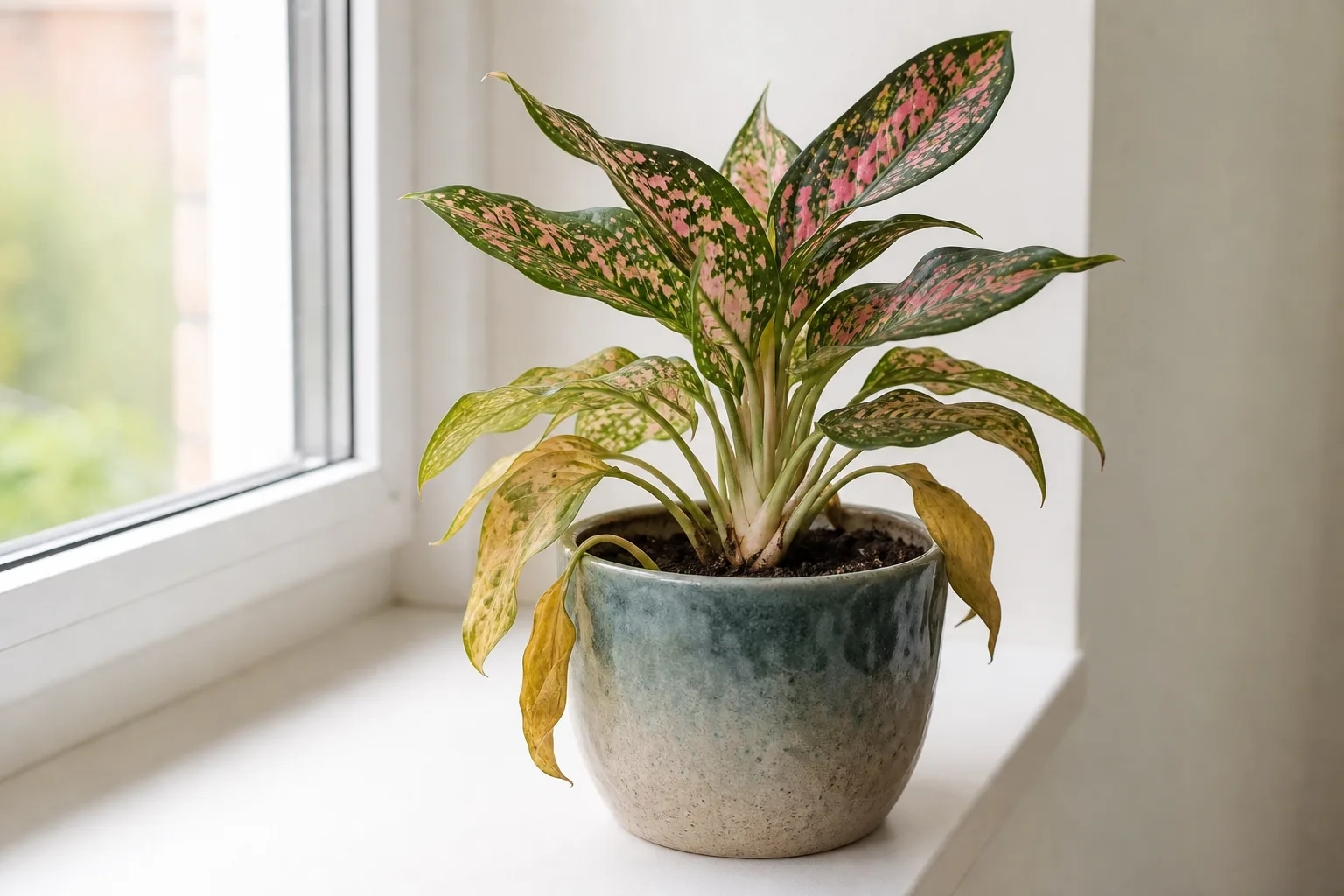
Root Rot on Aglaonema Pink Dalmatian: Causes, Checks & Fixes
This guide covers root rot on Aglaonema Pink Dalmatian. See also the general Root Rot guide, watering, and light pages for this plant.
Root Rot on Aglaonema Pink Dalmatian: Causes, Checks & Fixes
Quick answer
Root rot on Aglaonema commutatum ‘Pink Dalmatian’ almost always traces to roots sitting wet too long-not a random fungus attack. The cultivar is marketed as easy and drought-tolerant, which is true for brief dry spells, but slow evaporation in dim rooms plus calendar watering keeps the root zone oxygen-starved until decay starts. On this high-color speckled selection, chronic wet stress also shows as faded pink spots on lower leaves before the crown collapses.
First step: stop watering and unpot the plant today. You need to see whether roots are firm and pale or brown and mushy before repotting, pruning, or spraying anything. Waiting for the surface to dry on its own rarely saves a Pink Dalmatian once the base has gone soft.
What root rot looks like on Aglaonema Pink Dalmatian
Above soil, rot often mimics thirst. Lower leaves yellow first, then droop or feel limp even though the mix is damp-because damaged roots cannot move water upward. The pink dalmatian speckling may fade or wash out on affected lower blades while upper leaves still look normal briefly. A sour or swampy smell from the pot is a strong clue. Fungus gnats hovering near the surface often appear when soil stays wet for weeks.
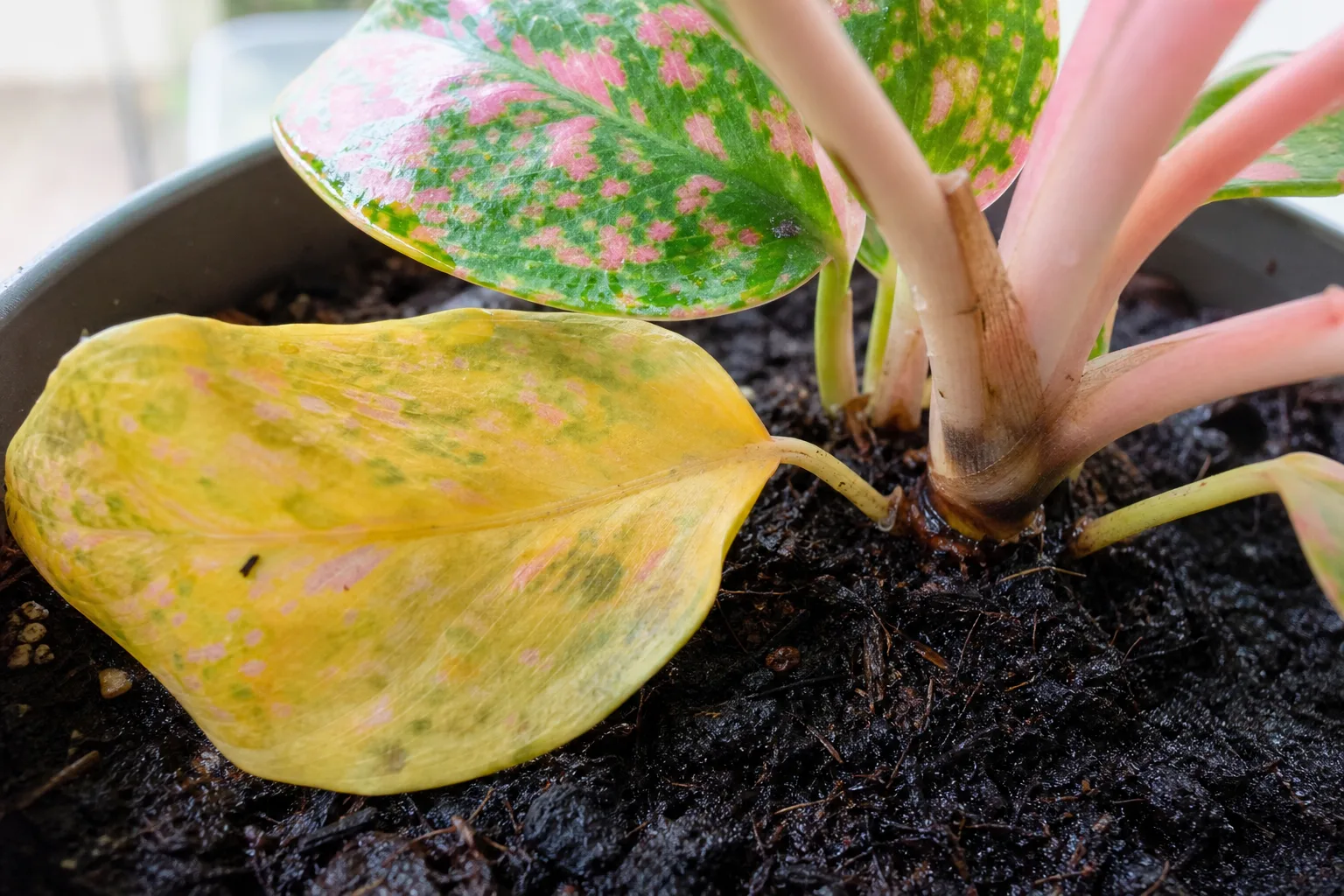
Yellowing limp lower leaf and dull pink speckles at the soil line on wet mix - above-soil signs that warrant an unpot and root inspection.
The decisive checks are stem base firmness and roots below soil. Healthy Pink Dalmatian tissue at the crown feels solid when you press lightly at the soil line. Rot shows as:
- Soft, collapsing tissue where stems meet the mix
- Lower leaves that yellow in a wave while upper speckled leaves still look normal briefly
- Limp foliage that does not perk after the mix has been wet for days
- Black or brown mush spreading up from buried stems
Below soil, infected roots turn brown, translucent, or slimy instead of firm and whitish. A white fuzz on rotted roots is decay, not healthy root hairs.
Normal lookalikes: Pink Dalmatian naturally sheds older lower leaves occasionally on a firm plant. That single yellow leaf with dry upper soil and a light pot points to age or underwatering-not rot. Rot is limp leaves plus wet mix plus soft roots, not one cosmetic blemish alone.
Why Aglaonema Pink Dalmatian gets root rot
Pink Dalmatian is a compact Chinese evergreen cultivar with slow, upright growth and scattered pink speckles on dark green leaves. It uses water slowly compared with sun-loving foliage plants, so the same weekly watering schedule that works in summer can leave roots submerged through a cool, shaded week.
Overwatering in low light is the leading indoor trigger. When growth slows, root uptake drops. Water applied before the upper mix dries keeps pores filled with water instead of air. Fungi such as Pythium, Rhizoctonia, and Phytophthora colonize oxygen-starved roots, but the root cause is almost always culture, not bad luck.
Other Pink Dalmatian-specific triggers:
- Dense retail peat in nursery pots that stays wet far longer at home than in a warm greenhouse
- Decorative cachepots or sleeves common on retail displays that hide standing water after bottom-watering
- Heavy soilless mix without perlite or bark that does not drain quickly
- Pots without drainage holes or blocked holes at the base
- Oversized pots where a small root ball sits in a large wet zone that never dries
- Cool rooms below about 55°F combined with wet soil-chilled roots function poorly and rot faster
- Watering on a calendar instead of checking whether the top half of mix has dried
- Dim placement that slows evaporation even when the plant survives-see not enough light for how low light affects dry-down on high-color cultivars
Pink Dalmatian tolerates drought better than constant sogginess. Root rot usually results from a mix that does not drain quickly or from overwatering. Brief dry periods stress leaf margins before they kill the crown; chronic wet soil kills roots first.
How to confirm the cause
Work through these checks in order:
- Pot weight - A heavy, cool pot days after watering suggests saturated mix. A light pot with wilt may mean drought instead.
- Moisture at depth - Insert a finger or wooden skewer into the upper several centimeters. Cold, clinging mix means wait. Dry upper layer with a firm crown may mean underwatering.
- Smell - Sour odor at the drainage hole strongly supports rot.
- Light and season - Dim office light and winter cool slow drying. Have you watered on schedule anyway?
- Stem base - Press gently at the soil line. Soft tissue means unpot immediately.
- Roots - Knock the plant out of its nursery pot. Rinse gently. Healthy tissue is firm and pale; rot collapses between fingers.
- Pests - Persistent fungus gnats with constantly damp surface mix often overlap with root decline from overwatering.
If the pot is light, the upper mix is dry, leaves are slightly curled but the crown is firm, underwatering may explain wilt better than rot-do not soak a plant you have not inspected.
First fix for Aglaonema Pink Dalmatian
Stop all watering and unpot the plant.
Lay Pink Dalmatian on newspaper, knock away wet mix, and identify where tissue turns from firm to mushy. That single inspection tells you whether you are treating rot, underwatering, or normal leaf senescence-everything else depends on it.
Do not fertilize, mist heavily, or repot into fresh mix until you have cut away decay and understand how much healthy crown remains. Stacking fixes the same day stresses an already failing root system.
Step-by-step recovery
Once rot is confirmed, work in this order:
- Trim all decay - With clean, sharp scissors, cut mushy roots and any soft stem base back to firm, healthy tissue. Keep cutting inward until you see solid white or tan flesh, not brown jelly. Sterilize blades between cuts with rubbing alcohol.
- Rinse and assess the crown - Remove old contaminated mix from remaining roots. If multiple stems share one root ball and only part is mushy, you may divide firm offsets away from failing tissue at repotting.
- Discard old mix and clean the pot - Reusing soggy soil reintroduces pathogens. Scrub the container or use a fresh one with drainage holes.
- Repot into airy, well-drained mix - Use commercial soilless mix amended with perlite or orchid bark so water moves through quickly. Choose a pot sized to the trimmed root mass, not dramatically larger. See the repotting guide for mix ratios after severe root loss.
- Water once lightly to settle - After repotting, moisten the mix once and let excess drain fully. Empty the saucer. Do not keep the root zone constantly wet during recovery.
- Aglaonema Pink Dalmatian light guide and airflow - Move to the brightest indirect spot Pink Dalmatian tolerates-never direct hot sun on a stripped plant. Gentle airflow helps the mix dry evenly without scorching pale pink speckles.
- Hold fertilizer - Skip feed until new growth looks healthy for two weeks. Salt stress on damaged roots slows recovery.
If the main stem is still firm but roots were mostly lost, the plant can recover from a severe root prune. If rot has hollowed the crown, divide healthy side shoots with firm bases into separate pots as backup before the last tissue fails.
Recovery timeline
Stabilization often takes two to four weeks after trimming and repotting-during that window the crown should stop softening and the pot should dry on a predictable cycle.
New speckled leaves unfurling from the center are the best sign of success; expect them in four to ten weeks during warm active growth, sometimes longer if recovery started in a cool winter room. Old yellow leaves will not green up again-snip them once the plant is stable.
Full root mass rebuilds over several months, not days. Pink Dalmatian grows slowly by design; judge success by firm tissue and fresh pink-speckled leaves, not fast height gain.
Worsening signs: crown softens further after dry repotting, stems blacken upward from the base, or no new growth appears by late spring-those point toward tissue that cannot be salvaged.
Lookalike symptoms
| Symptom pattern | Root rot | Overwatering (no rot yet) | Underwatering | Normal senescence |
|---|---|---|---|---|
| Pot weight when wilted | Heavy | Heavy | Light | Normal |
| Mix moisture | Wet throughout | Wet, firm roots on inspection | Dry throughout | Dry upper layer |
| Crown at soil line | Often soft | Firm | Firm | Firm |
| Root texture | Brown, slimy | Firm, pale | Dry but firm | Firm |
| Leaf pattern | Wave of yellow lower leaves | Limp with wet mix | Curled, firm leaves | One old lower leaf |
| Pink speckling | Fades on stressed lower leaves | May dull on stressed leaves | Often unchanged | Unchanged on firm plant |
Additional lookalikes:
- Low humidity stress - Crispy brown leaf tips with firm roots and appropriate moisture; see brown tips rather than repotting.
- Cold damage - Darkened or limp leaves after exposure near drafty windows below about 50°F; warm up, keep drier until stable-chilled wet roots rot easily.
- Mealybugs or scale - Sticky residue or cottony patches with firm roots; treat pests, fix watering separately.
What not to do
Do not water more because leaves look wilted while soil is already wet-that accelerates rot. Avoid dense garden soil or water-retentive mix without amendments. Do not feed immediately after root pruning.
Skip fungicide alone without removing mushy tissue and fixing drainage-chemicals do not restore oxygen to waterlogged roots. Do not repot into a much larger pot; extra wet soil volume slows drying in low light. Do not leave the plant in a full saucer or decorative sleeve after bottom-watering.
When trimming roots and handling sap, wear gloves and wash hands after-Aglaonema Pink Dalmatian is toxic to cats and dogs and sap can irritate skin. Keep cuttings and contaminated soil away from pets.
How to prevent root rot next time
Match watering to how fast your pot dries in your light. Allow the top 1 to 2 inches of mix to dry before the next drink-Pink Dalmatian in a typical home pot often needs the top half dry, not just the surface crust. In dim offices that can mean two to three weeks between drinks in winter; in bright warm growth, it may be weekly. See the watering guide for the dry-down rhythm.
Use well-draining soilless mix, pots with open drainage, and empty saucers within thirty minutes of watering. Avoid upsizing pots “for growth” in low light-a slightly root-bound Pink Dalmatian in a right-sized pot dries more predictably than a small root ball swimming in extra mix.
Move plants away from cold drafts below about 55°F and reduce water in cool months when growth slows. Quarantine new Aglaonemas and lift the pot weekly during your first month-early heaviness is easier to fix than a collapsed crown.
When to worry
Escalate immediately if the stem base dents under light pressure, stems blacken upward from the soil line, or inspection shows mostly mushy roots. Slow cosmetic yellowing on one old leaf with a firm crown can wait for a watering tweak.
If more than half the root system is mushy after trimming, or the crown will not firm up within two weeks of corrected care, survival odds drop-divide any firm offsets while tissue is still healthy.
Conclusion
Root rot on Aglaonema Pink Dalmatian is a drainage and timing problem more than a mystery disease. Confirm it with wet mix versus firm roots, stop water, cut decay, repot airy, and hold fertilizer until new speckled leaves appear. Prevent it by respecting how slowly Pink Dalmatian drinks in low light-this cultivar forgives brief drought far more willingly than it forgives a wet, shaded pot.
This guide was built from Clemson HGIC Chinese evergreen care, NC State Extension Aglaonema profiles, Missouri Botanical Garden overwatering guidance, UMN Extension fungus-gnat bulletins, ASPCA Chinese evergreen toxicity data, and LeafyPixels pages including overview, overwatering, wilting, yellow leaves, and watering. Claims were checked against those sources before publication.
Related Pink Dalmatian problems
- Overwatering - wet mix upstream cause before roots fail
- Underwatering - light dry pot lookalike
- Wilting - limp leaves with wet or dry mix
- Yellow leaves - lower-leaf symptom overlap
- Fungus gnats - wet-soil pest branch
- Mold on soil - surface growth on chronically damp mix
When to use this page vs other Aglaonema Pink Dalmatian guides
- Aglaonema Pink Dalmatian watering guide - Use for routine moisture checks before assuming root rot is the main issue.
- Aglaonema Pink Dalmatian problems hub - Browse all 16 common issues on this species.
- Overwatering on Aglaonema Pink Dalmatian - Different entry point when symptoms overlap with root rot.
- Yellow Leaves on Aglaonema Pink Dalmatian - Different entry point when symptoms overlap with root rot.
- Wilting on Aglaonema Pink Dalmatian - Different entry point when symptoms overlap with root rot.
Related Aglaonema Pink Dalmatian guides
- Aglaonema Pink Dalmatian overview
- Aglaonema Pink Dalmatian watering
- Aglaonema Pink Dalmatian light
- Aglaonema Pink Dalmatian soil
- Overwatering on Aglaonema Pink Dalmatian
- Yellow Leaves on Aglaonema Pink Dalmatian
- Wilting on Aglaonema Pink Dalmatian
- Mold on Soil on Aglaonema Pink Dalmatian
- Aglaonema Pink Dalmatian problems