Underwatering on Aglaonema Pink Dalmatian: Causes, Checks &
Quick answer
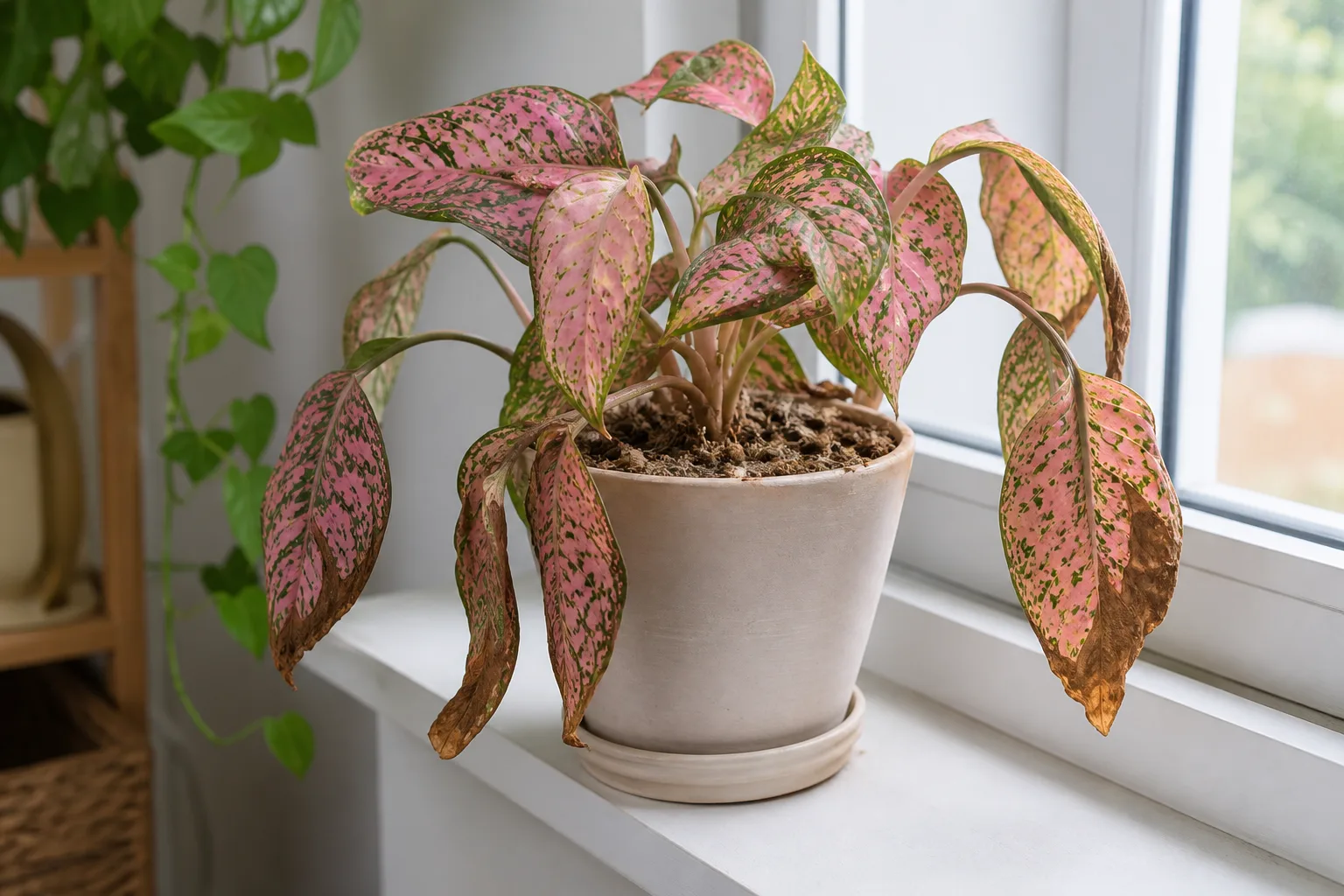
Underwatering on Aglaonema Pink Dalmatian makes the pot feel light, leaves go limp or crisp at the edges-often on pale pink tissue-and the mix is dry well below the surface. First step: soak the root ball thoroughly until water drains freely-one deep drink beats repeated shallow sips.
Underwatering on Aglaonema Pink Dalmatian: Causes, Checks & Fixes
This guide covers underwatering on Aglaonema Pink Dalmatian. See also the general Underwatering guide, watering, and light pages for this plant.
Underwatering on Aglaonema Pink Dalmatian: Causes, Checks & Fixes
Quick answer
Underwatering on Aglaonema Pink Dalmatian (Aglaonema commutatum ‘Pink Dalmatian’) means the root zone has gone too dry for too long. On this pink-speckled Chinese evergreen with smooth, waxy lance-shaped leaves, drought shows up as a lightweight pot, limp or papery foliage, and mix that is dry well below the surface-sometimes with soil pulled away from the pot edge. Crisp brown damage often appears first on pale pink speckles, where thin variegated tissue loses water faster than the green base.
Pink Dalmatian is very drought-tolerant like other Aglaonemas, so underwatering is less common than overwatering on this cultivar. Still, long vacations, fear of rot after past damage, hydrophobic old mix, or a root-bound pot in a bright window can leave Pink Dalmatian chronically thirsty-high-color cultivars in brighter light dry faster than solid-green office types.
First step: give one thorough soak until water runs freely from the drainage holes, then empty the saucer. Do not sprinkle the surface or mist leaves-that does not rehydrate dry roots.
Scope on this page: Dry-soil thirst diagnosis and rehydration on Pink Dalmatian. For wet-soil wilt with a heavy pot, start with overwatering. For fast collapse when you are unsure which branch fits, see wilting.
Underwatering vs. overwatering vs. low humidity on Pink Dalmatian
All three can brown leaf edges on a variegated Chinese evergreen-but the fix differs. Run this fork before you pour:
| Pattern | Pot weight | Soil at half depth | Leaf feel | First action |
|---|---|---|---|---|
| Underwatering | Light | Bone-dry | Limp or papery whole blades; crisp on pale pink speckles | One thorough soak; empty saucer |
| Overwatering / root rot | Heavy | Cool and damp | Limp with yellow lower leaves; stems may soften | Stop watering; see overwatering |
| Low humidity / salt tips | Normal | Moist at depth | Firm leaves; brown tips only, no whole-plant flop | Humidity or water quality; see brown tips and low humidity |
When in doubt, pot weight plus a skewer at half depth beats how the surface looks. Pink Dalmatian’s drought-tolerant reputation makes owners wait too long; its pink variegation makes edge damage look worse than on solid-green siblings even when the crown is still recoverable.
What underwatering looks like on Aglaonema Pink Dalmatian
Pink Dalmatian’s leaves normally feel firm with scattered pink speckles on a green base. When underwatered, the pattern is distinct from the yellow-leaf overwatering look:
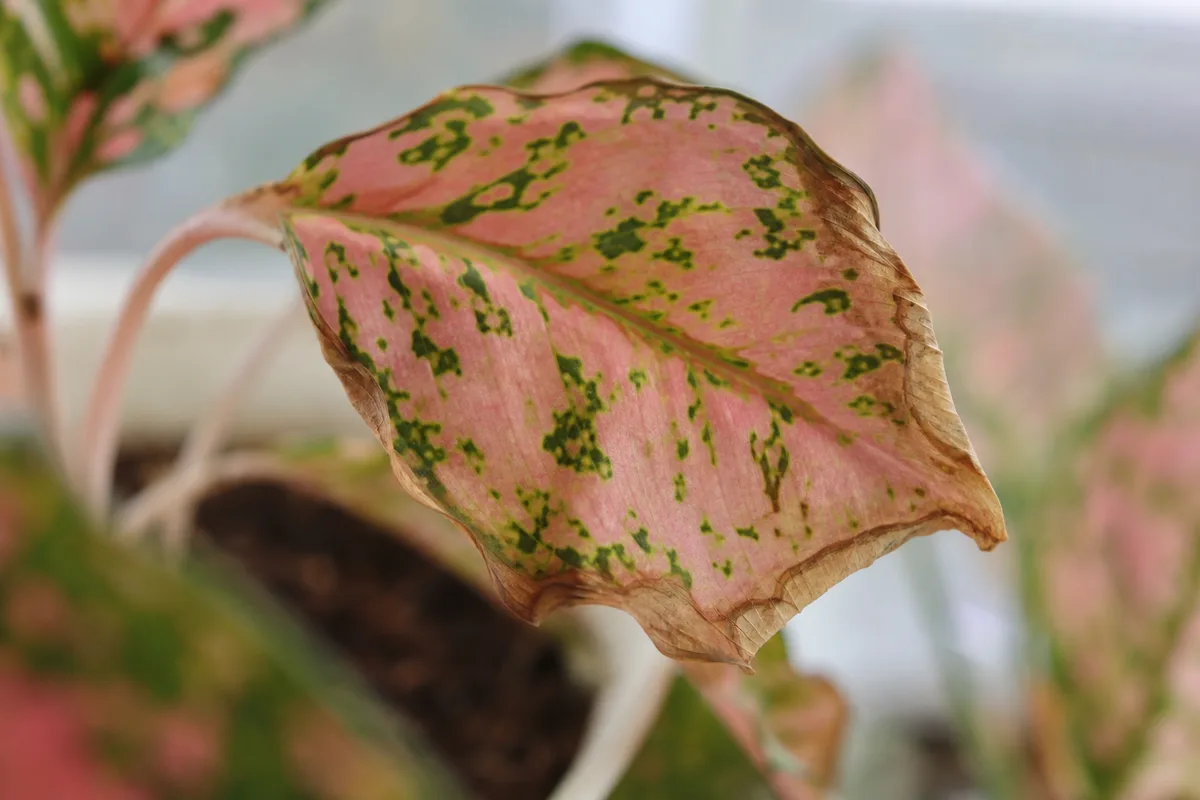
Underwatering symptoms on Aglaonema Pink Dalmatian - compare with healthy tissue on the same plant.
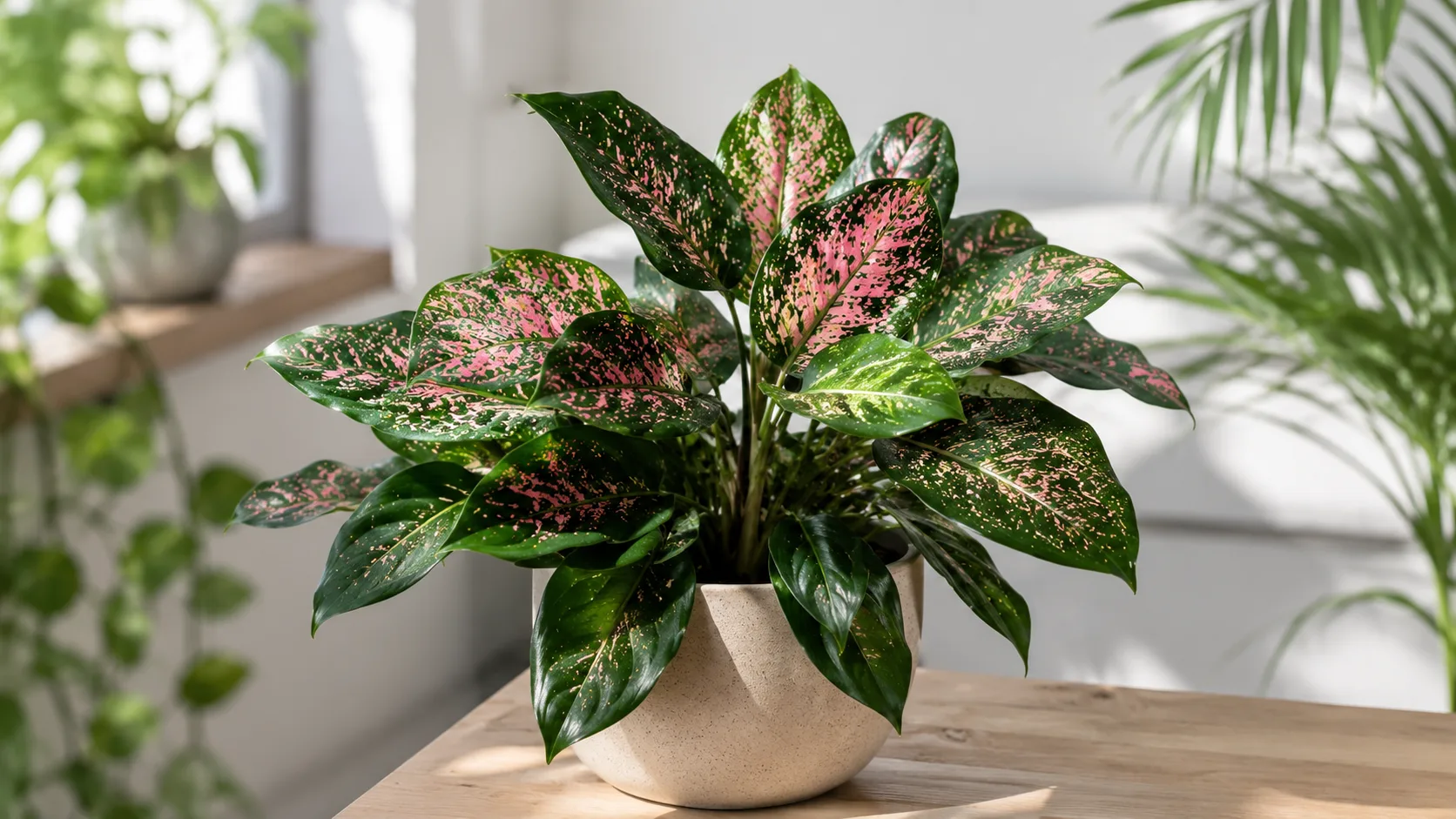
- Limp or drooping leaves - Blades lose turgor and hang down even though you have not recently watered. Lower leaves often droop first.
- Dry, lightweight pot - Lifting the nursery pot feels noticeably lighter than after a full drink. The mix may look pale and dusty.
- Soil pulling from the pot wall - Chronic dryness shrinks peat-heavy mix away from the sides, leaving a gap water can run down without soaking roots.
- Crisp brown edges on pink-speckled tissue - Margins turn papery and brown, often most visible on pale pink spots where variegated tissue is thinner. Fully yellow lower leaves can follow repeated dry cycles.
- Thin, papery leaf feel - Underwatered tissue feels less turgid than healthy Pink Dalmatian foliage with its smooth, waxy surface.
Worry when the entire crown wilts, soil is dust-dry through the root ball, and the plant sits in hot sun or near a heating vent-that combination can damage fine roots quickly.
Why Aglaonema Pink Dalmatian gets underwatered
Drought-tolerant genus-owners wait too long
Aglaonema Pink Dalmatian should be watered when the top half of the soil dries-not on a calendar, and not only when leaves wilt. Because Chinese evergreens are remarkably tolerant of drought, owners who corrected past overwatering sometimes swing too far and let the pot stay dry for weeks. Brief dryness is survivable; repeated long dry cycles stress fine roots and crisp leaf margins-especially on pink variegation.
Bright-window dry-down on a high-color cultivar
Pink Dalmatian needs medium to Aglaonema Pink Dalmatian light guide to hold its speckling, unlike solid-green Aglaonemas that tolerate dim corners. Variegated types need low to moderate light at minimum, and high-color selections in brighter windows lose water faster through transpiration. A Pink Dalmatian pushed toward a sunny sill for better pink color may need water every 7 to 10 days in summer while a green Aglaonema in the same dim office goes two to three weeks.
Grow lights placed close above the canopy raise transpiration the same way a bright window does-Pink Dalmatian under a shelf grow light can dry out faster than a sibling in a shaded corner even when both look “indoors.”
Terracotta vs. plastic: Unglazed clay wicks moisture from the mix and can pull a root-bound Pink Dalmatian dry in a bright window within a week. Plastic nursery pots dry more slowly but still crash when the top half is never checked. A decorative cachepot without drainage can hide standing water after you overcompensate with daily shallow splashes-lift the inner pot to confirm the root ball actually re-wet.
Calendar watering in the wrong season
Pink Dalmatian grows slowly but still uses more water in warm active growth than in cool, dim winter months. Some owners underwater in summer when the plant sits in a bright window or near AC, while others forget entirely during travel. Water when the mix actually dries, not when a reminder app says so.
Hydrophobic, aged potting mix
Old peat-heavy mix that has dried completely can repel water. You pour from the top, water runs straight through the gap along the pot wall, and the center of the root ball stays dry. The surface may look briefly damp while deep roots remain thirsty-a classic underwatering trap on container Chinese evergreens.
Root-bound pots in bright, warm spots
A crowded root ball in a small nursery pot dries fast. Pink Dalmatian in a sunny window, near a radiator, or in porous terracotta may need water weekly in summer while the same plant in a dim corner goes longer. Pot size, light, and airflow change drying speed more than the plant label’s generic advice.
Fear of overwatering after past rot
Pink Dalmatian rots easily when soil stays wet too long-that is its main weakness. After losing leaves to overwatering, owners often undercorrect and stop watering until the plant wilts. Limp leaves with wet soil mean damaged roots, not thirst. Limp leaves with dry soil through the top half mean underwatering.
Heat and low humidity speeding water loss
Pink Dalmatian tolerates average household humidity, but heat near vents and direct sun increase transpiration. A plant in bright indirect light loses water faster than one in deep shade-the correct placement range for holding pink speckling.
Lookalike symptoms to rule out
Before soaking, rule out these common misreads:
| Symptom pattern | Likely cause | Key check |
|---|---|---|
| Limp leaves, light pot, dry top half, crisp pink-speckled edges | Underwatering | Soak once; see watering guide |
| Limp leaves, heavy wet soil, yellow lower leaves, soft stems | Overwatering / root rot | Stop watering; see overwatering |
| Crisp brown tips, firm leaves, normal soil moisture | Low humidity or salt buildup | Check vents and tap water; see brown tips |
| Afternoon wilt on hot window sill, firm by morning, normal pot weight | Temporary heat stress, not chronic drought | Move back from glass; only soak if mix is actually dry at half depth |
| Yellowing or limp leaves after cold night near window | Cold damage | Soil moisture normal; temperature is the trigger |
| One old bottom leaf yellowing slowly, firm crown | Normal senescence | Not drought; see yellow leaves |
| Whole plant collapsed fast | Severe wilt | See wilting or drooping leaves |
If the top half of the mix is dry, the pot is light, and leaves are limp or papery, treat underwatering first.
How to confirm the cause
Seven-step confirmation checklist
Work through this inspection in order:
- Moisture through the top half - Insert a finger or wooden skewer. Bone-dry through that zone with a lightweight pot confirms drought. Cool damp mix halfway down rules underwatering out.
- Pot weight - Lift before and after a known full watering to learn the difference. A very light pot with limp leaves supports underwatering.
- Water penetration test - Pour a small amount on the surface. If it runs down the side gap without darkening the center, mix may be hydrophobic.
- Leaf pattern - Crisp edges on pink-speckled tissue with dry soil fit drought. Uniform yellow lower leaves with wet soil fit overwatering.
- Recent care context - Travel, skipped checks, new bright placement for better speckling, or Aglaonema Pink Dalmatian repotting guide into a smaller pot all increase underwatering risk on Pink Dalmatian.
- Crown firmness - Press the base of the stem cluster. Firm crown with drooping outer leaves is more recoverable. Soft, dark crown means rot may have reached the growing point-see root rot the same week.
- Root spot-check (if repeated dry cycles) - Slide the plant partway out. Firm pale roots support a soak-and-adjust fix. Crisp, shriveled fine roots suggest prolonged drought damage.
Confirmed underwatering needs at least two signs: dry mix through the top half, lightweight pot, and limp or crisp foliage.
Dry-vs-wet decision table
| What you see | Soil at half depth | Pot weight | Crown | Urgency | First action |
|---|---|---|---|---|---|
| Limp pink-speckled leaves, papery edges | Bone-dry | Light | Firm | Routine-same day | One thorough soak; empty saucer |
| Limp leaves, yellow lower foliage | Cool and damp | Heavy | Firm or softening | High-do not add water | Overwatering dry-down path |
| Crisp edges only, otherwise firm blades | Dry or moist | Normal | Firm | Low | Soak if dry; if moist, see brown tips |
| Water runs through gap, center stays pale | Dry core, damp crust possible | Light | Firm | Same day | Bottom-water 20–45 min, then top soak |
| Collapsed plant, dust-dry root ball | Dry throughout | Very light | Firm | Urgent-today | Soak thoroughly; move off hot sun |
| Limp after two soaks a week apart | Variable | Variable | Soft or sour smell | Emergency-unpot same week | Root rot inspection |
First fix for Aglaonema Pink Dalmatian
Soak the entire root ball once until water drains freely from the bottom, then empty the saucer within 30 minutes.
That single deep drink is the correct first response-not daily splashes, not fertilizer, and not an immediate repot unless mix is hydrophobic or roots are severely damaged.
How to soak effectively:
- Top water slowly - Use room-temperature water and pour in stages so the mix absorbs instead of channeling out the sides. Stop when excess runs from drainage holes.
- Bottom water if mix repels water - Set the drainage pot in a tray of shallow water for 20 to 45 minutes until the surface moistens, then remove and let it drain fully. Chronic under-watering causes wilting and leaf curling; re-wetting a hydrophobic root ball often needs both bottom and top passes per UC Master Gardener hydrophobic-soil guidance.
- Repeat once if needed - If water ran through too fast the first time, let the pot drain, then soak again the same day.
After soaking, place Pink Dalmatian back in medium to bright indirect light-never direct sun while the plant is stressed. Move it away from heating vents if that is where it dried out fastest.
Wait until the top half of the mix dries before the next full watering. That may take 7 to 14 days in active growth or longer in cool winter months.
Step-by-step recovery
Match follow-up steps to what you confirmed:
Mild underwatering (firm roots, first wilt):
- Complete one thorough soak as above.
- Remove fully crisp or brown leaves at the base if they are mostly dead tissue.
- Resume checking the top half of the mix every few days.
- Watch for leaves regaining firmness within 24 to 48 hours.
Hydrophobic mix (water runs through, center stays dry):
- Bottom-water until the root ball re-wets, then top-water slowly to flush the center.
- Consider repotting into fresh well-draining mix at the next check if hydrophobia returns within two weeks.
- Do not let the plant sit in standing water overnight.
Repeated dry cycles (multiple crisp leaves, shriveled fine roots):
- Soak thoroughly, then adjust schedule so the top half never stays bone-dry for weeks during growth.
- Trim fully dead roots if any are brittle and brown; keep firm pale roots.
- Hold fertilizer until new center leaves stay firm for two consecutive weeks.
Do not confuse with rot:
If soil is wet and stems are soft, stop soaking and switch to the overwatering dry-down path instead.
Recovery timeline
Crisp brown edges on pink speckles do not turn green again. Fully yellow drought-stressed leaves usually drop or can be trimmed. Judge recovery by new growth from the center:
- Mild dehydration - Leaves often regain turgor within hours to two days after a proper soak. Pink speckling on new leaves should look stable within one to two weeks.
- Repeated dry stress - Edge damage remains on old leaves; expect two to three weeks of firm new crown growth before calling the plant stable.
- Severe root damage from long drought - Recovery is slower and may be partial. If the crown stays limp after two thorough soaks a week apart, unpot and inspect roots the same week-follow the numbered protocol on root rot if stems soften or roots are mushy.
Signs of improvement: pot weight returns to a normal wet-dry cycle, new leaves emerge firm with clear pink speckles, and wilting does not return between appropriate waterings. Signs of worsening: increasing crispness up the plant, collapsed crown despite rehydration, or sour smell developing after overcompensating with daily water.
Recovery case study
Editorial observation - LeafyPixels review, June 2026.
A 12 cm Pink Dalmatian in a plastic nursery pot sat on an east-facing sill with afternoon heat from a nearby radiator. Top half of mix was dust-dry; pot weight was noticeably light; lower leaves hung limp with crisp brown margins on pale pink speckles while the crown stayed firm. First top pour ran through the gap along the pot wall in under 30 seconds. Bottom-water in a basin for 35 minutes re-wetted the core; a slow second top soak produced steady runoff. Saucer emptied within 15 minutes. Leaves began firming by evening; a new pink-speckled crown leaf unfolded 12 days later. Crispy old margins were trimmed after day 14-they did not green up.
What not to do
Do not mist leaves instead of soaking roots. Surface humidity does not replace soil moisture for a drought-stressed Pink Dalmatian.
Do not water a little every day after one dry spell. Shallow sips keep the surface damp while deep roots stay dry-and the wet-dry swing invites rot on a plant already prone to overwatering damage.
Do not fertilize a dry, stressed plant. Rehydrate first; feeding drought-stressed roots can burn tissue.
Do not assume all drooping means underwatering. Always check soil moisture through the top half before adding water.
Do not move Pink Dalmatian into direct sun to “help it recover.” Bright indirect light is the ceiling for this variegated cultivar.
Do not repot into a much larger pot on day one unless mix has failed. An oversized pot holds water too long and increases rot risk after drought recovery.
How to prevent underwatering on Aglaonema Pink Dalmatian
Prevention is about reading the pot, not the calendar:
- Check the top half of the mix every few days until you learn Pink Dalmatian’s rhythm in your home.
- Water when that zone has dried-often every 7 to 14 days in warm active growth in a bright spot, and longer in cool winter low light.
- Soak thoroughly each time until runoff exits drainage holes, then empty saucers promptly.
- Refresh hydrophobic mix that repeatedly repels water after drying out.
- Size pots appropriately-very small root-bound pots in bright windows may need more frequent checks; terracotta dries faster than plastic.
- Account for travel - Use a trusted sitter or bottom-water deeply before extended absence; Pink Dalmatian can skip a week in dim cool conditions but not three weeks in a hot window.
Full watering rhythm and moisture targets are in the Pink Dalmatian watering guide.
When to worry
Treat underwatering as urgent when:
- The entire plant is collapsed with dust-dry soil through the root ball.
- Crisp damage is climbing toward new center growth, not just old lower leaves.
- Two thorough soaks a week apart fail to restore leaf firmness-roots may be extensively damaged; unpot and follow root rot if tissue is mushy.
- You cannot tell drought from rot because soil smells sour or stems feel soft-inspect roots the same week, not after a third blind soak.
A slightly limp Pink Dalmatian with dry top half and firm crown tissue is routine drought. Widespread collapse with shriveled roots after weeks without water needs immediate rehydration and a schedule reset. If crown softness appears after soaking, stop watering and escalate to root-rot treatment the same day.
If two proper soaks and a root inspection still leave the crown limp, contact your local cooperative extension office or a certified master gardener for hands-on diagnosis-extensive fine-root loss on Aglaonema can look like drought from above while rot is advancing at the crown.
Aglaonema Pink Dalmatian care cross-check
When drought keeps returning, these checkpoints isolate the failing habit:
| Checkpoint | Healthy target | Underwatering risk when wrong |
|---|---|---|
| Soil moisture | Top half dry before watering | Bone-dry for weeks; only surface checked |
| Watering method | One thorough soak per cycle | Shallow splashes or misting only |
| Light | Medium to bright indirect | Hot direct sun drying the pot too fast |
| Season | More frequent checks in warm growth | Same long winter interval in summer |
| Mix and pot | Absorbent, draining mix; open holes | Hydrophobic old peat; water runs through |
| Root space | Appropriate pot size | Severely root-bound small pot in bright heat |
Fix the failing checkpoint before adding fertilizer, upsizing pots, or treating for pests you have not confirmed.
Related Pink Dalmatian problems
- Pink Dalmatian overview - full care hub
- Watering - prevention rhythm and moisture targets
- Overwatering - wet pot lookalike
- Root rot - damaged roots branch
- Wilting - fast collapse overlap
- Drooping leaves - slow sag overlap
- Yellow leaves - post-drought senescence
- Brown tips - firm-leaf edge browning without drought
- Low humidity - margin crisping on watered plants
Conclusion
One dry check decides the branch: light pot plus bone-dry top half plus limp or crisp pink-speckled leaves means soak thoroughly once-bottom-water first if mix repels water. Heavy wet pot plus limp yellowing leaves means stop watering and open overwatering. If two proper soaks a week apart leave the crown limp or soft, unpot the same week and follow root rot-a third soak will not fix mushy roots. Old crispy pink margins never green up; success is firm new speckled growth from the center within one to three weeks.
FAQs
How can I confirm underwatering on Aglaonema Pink Dalmatian?
Lift the pot-it should feel noticeably lighter than after a full watering. Probe the top half of the mix; if it is bone-dry and leaves are limp or papery with crisp brown edges on pink-speckled blades, underwatering fits. Wet, cool soil with the same wilt pattern means overwatering or root damage instead.
Why does my Pink Dalmatian wilt when the soil feels wet at the surface?
Hydrophobic peat-heavy mix can leave the surface briefly damp while the root ball center stays dry-or the opposite, a wet crust over dry roots after a shallow splash. Push a skewer to half-pot depth. If the core is dry but leaves are limp, the plant needs a thorough soak, not another surface sprinkle.
Will damaged Aglaonema Pink Dalmatian leaves recover from underwatering?
Crisp brown edges on pink-speckled tissue and fully yellowed blades do not turn green again. Recovery shows as firm new leaves emerging from the center with stable pink speckling within one to three weeks after proper rehydration.
When is underwatering urgent on Aglaonema Pink Dalmatian?
Act the same day if the entire plant is collapsed, soil is dust-dry through the root ball, and the pot sits in hot direct sun or near a heating vent. Severe drought can kill fine roots; rehydrate gently but thoroughly rather than waiting for the next calendar watering.
Is underwatering on Pink Dalmatian the same as brown tips?
No. Underwatering brings a light pot, dry mix through the top half, and limp whole leaves with crisp edges on pale pink speckles. Brown tips on firm, well-watered leaves with normal pot weight usually point to low humidity, salt buildup, or tap water stress-not drought. See brown tips and low humidity if soil moisture is fine.
When to use this page vs other Aglaonema Pink Dalmatian guides
- Aglaonema Pink Dalmatian watering guide - Use for routine moisture checks before assuming underwatering is the main issue.
- Aglaonema Pink Dalmatian problems hub - Browse all 16 common issues on this species.
- Wilting on Aglaonema Pink Dalmatian - Different entry point when symptoms overlap with underwatering.
- Brown Tips on Aglaonema Pink Dalmatian - Different entry point when symptoms overlap with underwatering.
- Yellow Leaves on Aglaonema Pink Dalmatian - Different entry point when symptoms overlap with underwatering.
Related Aglaonema Pink Dalmatian guides
- Aglaonema Pink Dalmatian overview
- Aglaonema Pink Dalmatian watering
- Aglaonema Pink Dalmatian light
- Aglaonema Pink Dalmatian soil
- Wilting on Aglaonema Pink Dalmatian
- Brown Tips on Aglaonema Pink Dalmatian
- Yellow Leaves on Aglaonema Pink Dalmatian
- Overwatering on Aglaonema Pink Dalmatian
- Drooping Leaves on Aglaonema Pink Dalmatian
- Aglaonema Pink Dalmatian problems