Wilting on Aglaonema Pink Dalmatian: Wet Roots, Dry Mix
Quick answer
Wilting on Aglaonema Pink Dalmatian usually means one of three things: roots are sitting too wet, the pot dried out too far, or a high-color cultivar has weakened in dim light while the mix stayed wet. First step: lift the pot, check the top inch of mix, and press the crown for softness before you add water.
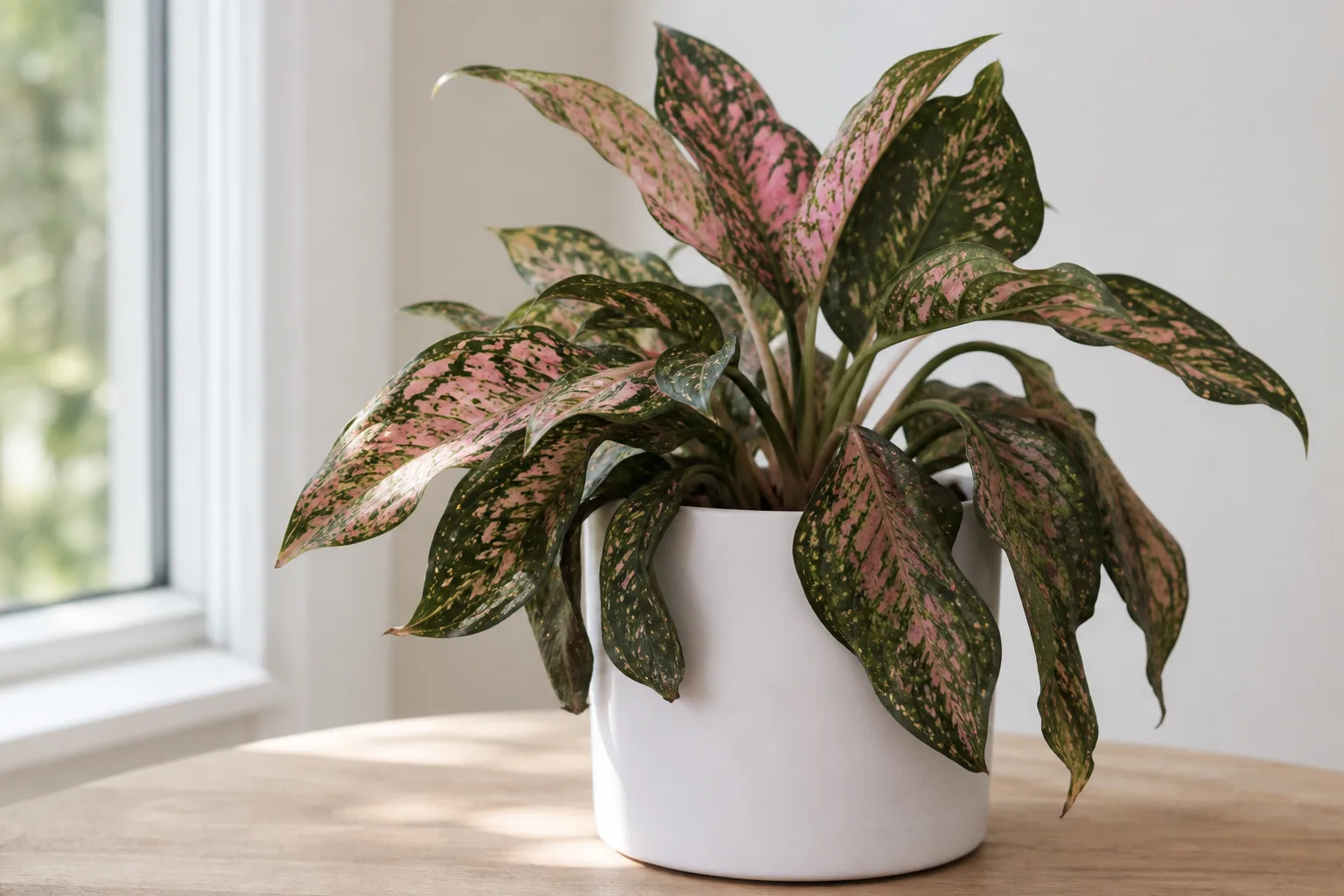
Wilting on Aglaonema Pink Dalmatian: Wet Roots, Dry Mix, or Light Stress?
This guide covers wilting on Aglaonema Pink Dalmatian. See also the general Wilting guide, watering, and light pages for this plant.
Wilting on Aglaonema Pink Dalmatian: Wet Roots, Dry Mix, or Light Stress?
Quick answer
On Pink Dalmatian, wilt is not just about water. This cultivar combines thin, pink-speckled foliage with a need for brighter indirect light than darker Chinese evergreens, so it can show stress in three different ways: true drought, wet-root failure, or dim-light weakening that keeps the pot wet too long. Clemson and UF/IFAS both describe Aglaonema as adaptable but still vulnerable to overwatering and poor drainage (Clemson HGIC; UF/IFAS).
First step: lift the pot, check the top inch of mix, and gently press the crown. If the mix is dry and the pot feels light, water thoroughly once. If the pot is heavy, cool, and wet while the leaves are limp, stop watering and treat this as root stress until proven otherwise.
What wilting looks like on Pink Dalmatian
Pink Dalmatian usually tells you something is wrong before it fully flops. That makes the early pattern worth reading carefully.
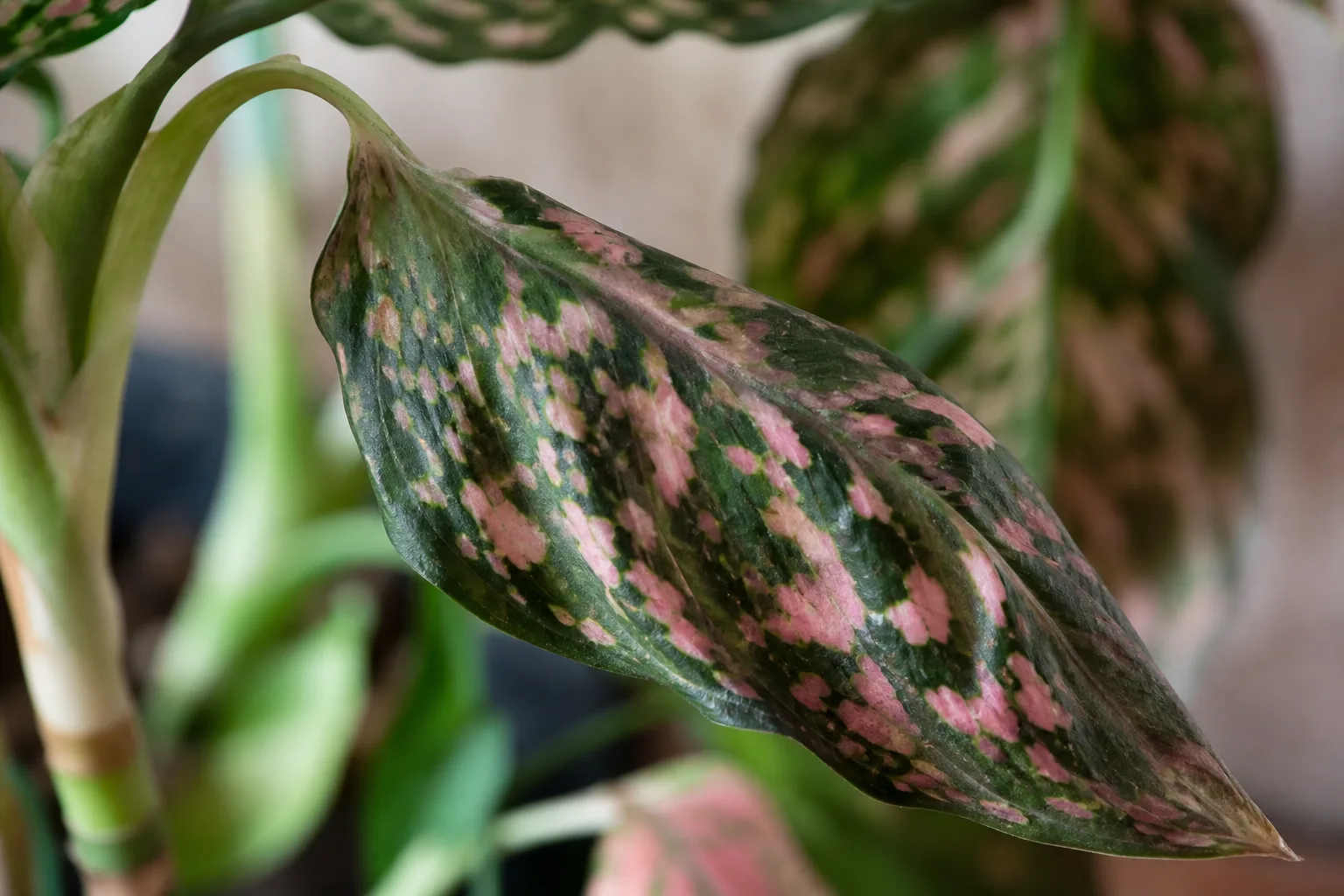
On Pink Dalmatian, stress often shows as washed-out pink speckling and soft posture before the entire crown collapses.
Common patterns:
- Dry wilt: light pot, pale crumbly surface, slightly curled but still fairly firm leaves
- Wet-root wilt: dark heavy mix, limp lower leaves, possible yellowing from the bottom, sour smell, or gnats
- Dim-light wilt: faded pink speckling, softer stems, slower growth, and a pot that stays wet too long in a dark corner
- Cold shock: sudden flop after AC blast, window chill, or a temperature drop below the comfortable tropical range Clemson cites for Aglaonema (Clemson HGIC)
Pink Dalmatian often looks “tired” before it looks desperate. That is useful. If the pink is washing out and the plant is getting softer in a dim spot, do not keep solving the problem with more water.
Why this cultivar wilts
1. Overwatering is still the leading cause
Aglaonema roots need air as well as moisture. When the mix stays saturated, roots stop functioning well and leaves wilt even while the pot is full of water (Clemson HGIC). Pink Dalmatian is not more rot-proof than other aglaonemas just because it is sold as decorative foliage.
2. Smaller pots in brighter light can dry quickly
Pink and red aglaonemas generally need brighter indirect light than darker green forms to hold color (UF/IFAS). That means growers often place Pink Dalmatian closer to a bright window, where a small nursery pot can dry faster than expected. A missed watering there causes real dry wilt, not just cosmetic droop.
3. Dim placement creates a false watering problem
This is the cultivar-specific trap. In deep shade, Pink Dalmatian often fades, stretches, and softens before it ever looks “crispy.” Owners see limp leaves and water more, but the real issue is that the plant is weak and the pot is staying wet too long.
How to confirm the cause
Run these checks in order:
- Top-inch moisture. Dry top inch plus light pot supports drought. Damp or wet mix points away from thirst.
- Pot weight. This is often clearer than the finger test alone.
- Crown feel. Firm crown means recovery odds are much better. Soft crown means act fast.
- Color check. If the pink speckling has dulled and the stems are softer in a dim room, light is part of the diagnosis.
- Root check if needed. Healthy roots should be pale and firm. Brown, translucent, or mushy roots confirm wet-root stress.
Use this quick split:
| Clue | Most likely branch | First move |
|---|---|---|
| Light pot, dry mix, slight curl | Dry wilt | Water once, then reassess |
| Heavy pot, wet mix, sour smell, yellow lower leaves | Wet-root wilt | Stop watering and inspect roots |
| Faded pink, soft stems, dim shelf, wet mix lingering | Low-light plus wet roots | Brighten placement and dry down |
First fix
Do not add water until pot weight and surface moisture tell you which side you are on.
If the pot is light and dry, water thoroughly until runoff drains out, then empty the saucer or cachepot. If the pot is heavy and wet, stop watering immediately, give the mix time to dry, and move the plant into brighter indirect light so it is not sitting in a dark swamp.
For Pink Dalmatian specifically, correcting placement matters early. A pale high-color aglaonema kept too dim often cannot use water on a healthy schedule.
Recovery by cause
Dry wilt
- water once, deeply
- keep in bright indirect light, not hot direct sun
- expect leaves to firm up within one to two days if roots are still healthy
Wet-root wilt
- stop watering
- let excess moisture leave the pot
- inspect roots if limp growth continues after a few days
- repot only if roots are clearly rotting or the mix is staying soggy
Dim-light weakening
- move the plant to brighter indirect light over about a week
- keep watering conservative while it adjusts
- watch new growth and color, not just the old limp leaves
What not to do
- Do not keep watering a wet wilted plant.
- Do not move a wilted Pink Dalmatian into harsh direct sun to “perk it up.”
- Do not repot on day one unless rot or failed soil is obvious.
- Do not ignore faded color as a clue. On this cultivar, lost pink often means the placement is part of the problem.
Recovery timeline
Mild dry wilt can improve fast, often within 24 to 48 hours. Wet-root wilt is slower and depends on whether the crown and enough roots are still alive. Light-related softness usually improves over a couple of weeks as new growth strengthens.
Old damaged leaves may never look perfect again. Judge success by:
- firmer crown
- leaves no longer collapsing
- new growth holding better color
- the pot drying on a more normal rhythm
When to use this page vs other Pink Dalmatian guides
- Aglaonema Pink Dalmatian watering guide - for routine moisture rhythm
- Underwatering on Aglaonema Pink Dalmatian - when the pot is clearly dry
- Overwatering on Aglaonema Pink Dalmatian - when the pot is clearly wet
- Root Rot on Aglaonema Pink Dalmatian - when roots or crown are soft
- Aglaonema Pink Dalmatian overview - for full cultivar care