How to Water Aglaonema Pink Dalmatian: When, How Often &
How to Water Aglaonema Pink Dalmatian: When, How Often & Soil Checks
How to Water Aglaonema Pink Dalmatian: When, How Often & Soil Checks
By sai-ananth · Reviewed by LeafyPixels Review Board · Last expert review: June 2026
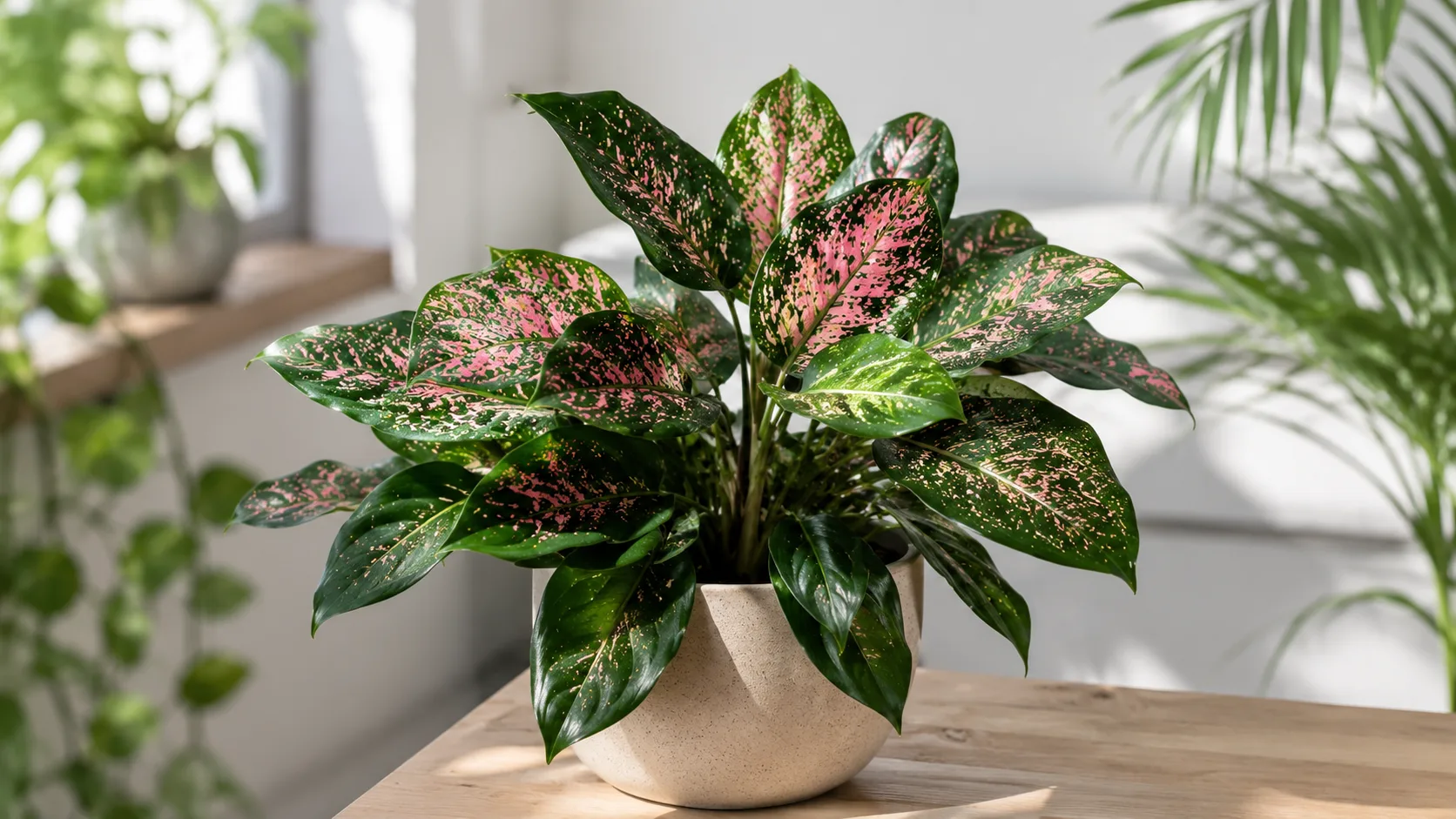
Aglaonema ‘Pink Dalmatian’ is a slow-growing, speckled Chinese evergreen that stores some resilience in its thick-looking leaves and fleshy Araceae roots, yet it still rots quickly when retail peat stays wet in a dim office. The practical goal is simple: let the upper root zone dry partially, then water the entire ball thoroughly and drain it completely. Everything else-light band, pot size, dense greenhouse mix, season-changes how fast that cycle runs. For species context, toxicity, and placement, start with the Pink Dalmatian overview. This page owns cultivar watering; the genus Aglaonema watering guide covers shared mechanics across varieties.
The Short Answer
Water Aglaonema Pink Dalmatian when the top 1 to 2 inches of potting mix feel dry and the nursery pot is noticeably lighter than after the last watering, while the deeper root zone is no longer saturated. (Clemson Cooperative Extension) Then apply room-temperature water evenly until excess drains from the holes, and empty any saucer or cachepot. A calendar can remind you to check the plant every few days; it should not decide whether water is added.
Pink Dalmatian is not a desert succulent. (University of Florida IFAS) It needs moist-but-aerated soil between waterings, not bone-dry substrate or permanently wet peat. NC State Extension advises keeping Aglaonema mix moist from spring through fall and reducing water in winter-compatible with partial dry-down when “moist” means lightly damp and aerated, not continuously saturated. Because speckled variegation often grows more slowly than solid-green Chinese evergreens, the same pot can stay wet longer in low light; pair watering checks with the Pink Dalmatian light guide whenever you move the plant.
Why a Weekly Schedule Fails Pink Dalmatian
A calendar can remind you to inspect the plant, but it cannot know how quickly your specific pot dried. University of Arizona Cooperative Extension explains that plants in warm, dry, sunny positions need water more often than those in cool, low-light situations. Moving Pink Dalmatian three feet from a bright window, turning on winter heating, repotting it, or changing from terracotta to plastic can alter its interval substantially. The day of the week tells you none of that.
Rigid schedules cause trouble in both directions. Frequent scheduled watering leaves slow-drying roots without enough oxygen, while a long fixed interval can dehydrate a plant in brighter, warmer conditions. Learn the normal weight and feel of your specific pot. Once you do, the interval becomes an observation you can plan around, not the rule itself. Fresh nursery plants in dense peat often dry slower than the care tag suggests-especially in medium office light-so the first month home should be treated as a new observation period, not a copy of the greenhouse schedule.
How Dry Should the Soil Become?
Pink Dalmatian should not remain swampy, but it also does not need to become bone-dry from top to bottom. Aim for partial dry-down: the upper layer feels dry and loose, while deeper mix retains slight coolness or moisture. In a small, airy pot, testing 1 to 2 inches down may represent much of the root ball. In a deep or large container, the surface can be dry while the bottom remains saturated-a pattern Mississippi State University Extension warns about when large containers stay moist in the lower root zone even when the top looks dry.
The cultivar’s thick-looking leaves offer some drought resilience, yet repeated severe drying can damage roots and leaf margins. Conversely, constantly wet media excludes air from pore spaces and encourages root decline. Missouri Botanical Garden notes that Aglaonema commutatum prefers consistent moisture from spring to fall but still appreciates reduced watering in winter-not a mandate to keep mix saturated year-round. The best cycle alternates thorough hydration with enough drying to restore oxygen.
The Three-Part Moisture Check
No single household test is perfect, so combine three inexpensive observations: upper-soil feel, pot weight, and lower-pot moisture. Using multiple signals makes the decision more robust than trusting surface color alone, which often lies on peat-heavy retail mix.
Build a reference after a complete watering. Lift the drained pot, feel the mix, and inspect the drainage holes. Repeat every few days without watering. Within several cycles, you will recognize how the pot changes as roots use water and evaporation removes moisture. Visual check walkthrough: On a typical 6-inch Pink Dalmatian nursery pot, insert a plain skewer 3 to 4 inches deep near the pot wall (not through the crown). After watering, the skewer exits dark and cool with mix particles clinging; the pot feels distinctly heavy. Five to seven days later in medium light, the top inch may look pale while the skewer still shows faint moisture at mid-depth-wait. When the skewer withdraws mostly clean and dry and the pot lifts easily with one hand, that is the “ready” profile for another soak.
Finger or Wooden-Skewer Test
Insert a finger 1 to 2 inches into the mix, away from the main stems. Dry mix feels loose and does not cling; moist mix feels cool and adheres slightly. For a deeper pot, insert an unfinished wooden skewer toward the lower half, leave it briefly, and remove it. Darkened wood with wet particles indicates deeper moisture. Avoid stabbing the root ball repeatedly in many places; use a consistent point near the pot edge. Pair skewer results with weight because chunky bark may leave fewer visible particles on the wood.
Pot-Weight Test
Lift the pot after watering and again as it dries. Water contributes substantial weight, so the difference can be easier to detect than subtle soil texture. This technique works especially well with plastic nursery pots placed inside decorative covers. For a large plant, tilt one side carefully rather than lifting the entire container. Pot weight is comparative, not absolute: a ceramic container remains heavy when dry, and a root-bound plant may hold less water than it did months earlier. If the pot stays heavy far longer than expected, investigate low light, cool temperatures, dense soil, blocked drainage, or root decline before adding water.
Drainage-Hole Check
Look and feel at the bottom when accessible. Moist mix visible through the holes, active dripping long after watering, or a sour smell suggests the lower zone is still wet. Roots emerging from holes do not automatically mean the plant needs water; they show root distribution or crowding. A dry upper layer paired with a saturated bottom is a reason to wait and review the substrate. This check also confirms that drainage paths remain open and that runoff is not trapped in a cachepot.
How to Water Step by Step
- Confirm partial dry-down with at least two checks rather than surface color alone.
- Move the nursery pot to a sink, tub, or draining saucer and use room-temperature water.
- Pour slowly across the entire surface, not only beside one stem.
- Continue until water flows freely from the drainage holes.
- Pause briefly; if the mix initially repelled water, apply a second slow pass.
- Let the pot drain fully and empty every saucer or cachepot.
- Return the plant to its normal light and do not water again until the next verified dry-down.
Slow, even application matters because dry peat-based mixes can shrink from the pot and route water down the sides. Fast runoff in that case does not mean the root ball is saturated. Thorough watering is not the same as overwatering: overwatering usually means watering too often or leaving roots in standing runoff-not giving a properly drained plant one complete drink. (University of Florida IFAS) Pink Dalmatian contains insoluble calcium oxalate crystals like other Chinese evergreens-keep trimmings and runoff away from pets when you water at the sink.
Top Watering vs. Bottom Watering
| Method | Strength | Limitation | Best use |
|---|---|---|---|
| Top watering | Flushes some salts and wets from the crown downward | Fast application may channel through dry mix | Normal routine |
| Bottom watering | Rehydrates water-repellent mix evenly | Does not flush salts and can oversaturate if left too long | Occasional corrective soak |
| Self-watering reservoir | Can provide consistent supply in a suitable mix | Staying continuously full can keep roots too wet | Established roots in an airy, wick-compatible mix only |
Top watering is the best default because it allows runoff to carry away some soluble salts. Bottom watering is useful when a dry root ball repels water: stand the pot in shallow water for roughly 10 to 20 minutes, remove it when the upper mix becomes slightly damp, and let it drain completely. Do not leave Pink Dalmatian sitting in water indefinitely. Alternate with top watering so minerals do not continually accumulate. Self-watering pots and capillary mats are risky for Pink Dalmatian in dim offices where slow variegated growth uses little water while the reservoir keeps the lower mix continuously moist.
How Pot and Soil Change the Routine
Plastic and glazed ceramic lose little water through their sides, so the mix generally dries more slowly than in unglazed terracotta. Oversized pots hold a larger reservoir around the roots and can remain wet long after the surface dries. Root-bound pots may dry quickly because roots occupy much of the volume. A drainage hole is essential in every case. If your mix remains saturated for weeks in appropriate light, changing the watering schedule alone may not solve the physical problem; reassess soil structure or repotting before the next soak.
Root distribution matters as much as pot diameter. A recently divided plant may have a small root system surrounded by a large volume that no roots can dry efficiently. An established plant with roots throughout the mix can use the same volume much faster. When repotting, increase container size modestly and choose a shape that matches the root ball rather than the desired mature display size.
Check Intervals by Light Level for Pink Dalmatian
There is no honest single-day schedule for every home. Use these check intervals as starting points, then adjust when you move the plant, repot, or enter a new season. Always confirm dryness before watering-not on the calendar alone.
| Light situation | Typical check rhythm | What “ready to water” often looks like |
|---|---|---|
| Bright filtered east or sheer-curtained south/west | Every 5–8 days in warm active growth | Top 1–2 in dry; pot light; lower mix lightly moist |
| Medium office or north window | Every 10–14 days in growth season | Top dry; skewer cool but not wet at mid-depth |
| Low light or cool interior desk | Every 14–21+ days; longer in winter | Surface dry slowly; weight drop is the main cue |
These ranges are baselines for a 6-inch nursery pot in well-drained mix-not rules. A root-bound plant in bright light may dry faster; an oversized fresh repot in shade may take three weeks to need water. UF/IFAS Gardening Solutions notes that Aglaonema has low water requirements relative to many houseplants and should be watered only when the top inch feels dry-emphasizing checks over frequency labels.
Why Speckled Variegation Dries More Slowly in Dim Rooms
Green leaf tissue contains chlorophyll that drives photosynthesis and transpiration. Pink Dalmatian’s speckled pattern has less green surface area per leaf than a solid-green Aglaonema or a broad-panel cultivar like Lady Valentine in the same pot. In bright filtered light the plant still uses water steadily. In a dim office, slower photosynthesis and slower growth mean the root zone can stay wet long after the care tag’s weekly watering would have you adding more-exactly the profile that leads to sour peat, fungus gnats, and overwatering symptoms. Compared with solid-green Chinese evergreens in the same light and pot, Pink Dalmatian often dries more slowly, not faster, because it is not pulling as much water through its leaves. That is why two plants on the same shelf can need different intervals even when they share a genus.
Seasonal Watering Adjustments
Spring and summer often bring longer days, warmer conditions, and active leaf production, so Pink Dalmatian may reach its dry-down point sooner. Check more often, but water only when the tests agree. During autumn and winter, lower light usually slows photosynthesis and water use. The interval commonly lengthens even in a heated home. NC State Extension recommends reducing watering in winter even without full dormancy; expect some checks to end with “wait” for two weeks or more in dim rooms.
Winter heating can dry the air while the potting mix still dries slowly because light is weak. Do not infer root-zone dryness from crisp room air or a dry surface alone. Check deeper. A grow light may maintain active growth and shorten the interval, but its effect depends on intensity, duration, and temperature; continue using evidence from the pot. Reduce frequency, not soak size: when the root ball is ready, water thoroughly rather than giving tiny sips that wet only the top inch.
Signs Pink Dalmatian Needs Water
The strongest signal is verified dry-down, not dramatic wilting. Early signs may include a lighter pot, dry upper mix, and leaves that feel slightly less firm. More advanced dehydration can cause drooping, inward curling, dry brown margins on pale speckled tissue, and lower-leaf yellowing. Severe drought may make the mix pull away from the pot and repel water on the next soak.
If a dry plant droops, water it thoroughly and observe it over the next day. Recovery supports the diagnosis, although damaged leaves may remain marked. Repeated wilting is not a good routine because fine roots can die each time. Water shortly before obvious collapse once you know the normal dry-down point. For persistent limp leaves after a proper soak, see underwatering and drooping leaves guides.
Signs of Overwatering
Overwatering is not simply “too much water at once”; it is keeping the root zone wet for too long or watering again before sufficient drying and aeration. Warning signs include persistently heavy soil, yellowing lower leaves, soft petioles, edema-like spots, a sour smell, fungus gnats, and wilting despite moist mix. New growth may stall as roots lose function. Mushy dark roots confirm tissue decay.
One yellow older leaf does not prove overwatering. Aglaonema naturally sheds leaves, and cold, low light, drought, pests, and nutrition can overlap. Review the moisture history and inspect the pot. If symptoms began after moving to a darker position while the same watering schedule continued, prolonged wetness is a strong possibility-open the overwatering guide before stacking fertilizer or repotting. (Clemson Cooperative Extension)
Why a Plant Droops in Wet Soil
Roots need oxygen for respiration. When water fills pore spaces for too long, oxygen becomes limited and roots lose the ability to function, even though moisture surrounds them. Damaged roots cannot move enough water into the leaves, so the top can wilt in wet soil. Adding more water responds to the appearance while worsening the cause-a pattern that sends many Pink Dalmatian owners to the drooping leaves page before they inspect the mix.
If Pink Dalmatian droops and the pot is heavy, stop watering and check drainage, temperature, and roots. Do not assume it is thirsty merely because leaves hang down. A cold root ball also uses water slowly and can produce similar stress. Address the wet environment before considering fertilizer or humidity changes.
What to Do About Root Rot
Remove the plant from its pot if decline is active and the mix stays wet. Gently clear enough substrate to inspect the roots. Healthy roots are firm and usually pale, cream, or light brown; rotten roots are soft, dark, hollow, or foul-smelling. Trim clearly dead tissue with sterilized tools, retaining every firm root possible.
Repot into a clean container only slightly larger than the remaining root system, using fresh, airy mix. Water enough to settle the substrate, drain thoroughly, and place the plant in warm bright indirect light. Do not fertilize until stable new growth appears. For step-by-step recovery, see root rot on Pink Dalmatian. Recovery is uncertain when most roots or the stem base have rotted, so healthy stem sections may need to be propagated as insurance.
Common Watering Mistakes
The most common mistake on Pink Dalmatian is watering because the top looks dry without checking the lower pot-especially in dense retail peat that dries unevenly. Others include using tiny sips, leaving runoff in a cachepot, trusting a cheap moisture meter without verification, keeping a self-watering reservoir permanently full, and maintaining the summer interval after a winter light drop. A large decorative pot around a small nursery pot can hide standing water, so remove and inspect the inner pot after every watering.
Another mistake is changing too many variables after one yellow leaf. Extra water, fertilizer, misting, and relocation applied together can turn a minor issue into root stress. Check moisture first, then roots, light, and temperature. Make one justified correction and evaluate new growth. Misting is not watering-it does not rehydrate the root zone meaningfully and can leave foliage damp near pets; Pink Dalmatian is toxic to cats and dogs, so keep the plant out of reach when misting or sink-watering. Keep a short watering log while learning the plant: record the date, moisture checks, whether runoff appeared, and any major placement change. After several cycles, the notes reveal the plant’s normal range.
Conclusion
Before your next watering, run this checklist: (1) Are the top 1 to 2 inches dry and is the deeper mix no longer saturated? (2) Is the nursery pot clearly lighter than after the last soak? (3) Has light or season changed since the last cycle? (4) Will excess water exit through open holes with the saucer emptied? (5) Is the plant drooping on dry soil or wet soil?
If the first two answers support dryness and drainage is clear, water thoroughly. If the pot is heavy or a skewer shows wet material at mid-depth, wait-even when the surface looks pale. If Pink Dalmatian wilts on wet soil, inspect roots today rather than adding another soak; open root rot if the stem base is soft. Track skewer depth, pot weight, and check dates through one full wet-to-dry cycle this month-that single observation teaches more than a year of weekly reminders.
Related Pink Dalmatian care: overview · light · soil · repotting · genus watering comparison
How this guide was verified: Recommendations checked against Clemson Cooperative Extension, NC State Extension, UF/IFAS FP025, UF/IFAS Gardening Solutions, Missouri Botanical Garden, and LeafyPixels Pink Dalmatian overview data. Author: sai-ananth · Reviewer: LeafyPixels Review Board · Methodology: Guide recommendations are reviewed against botanical or extension references, LeafyPixels plant-care data, and practical indoor growing constraints before publication.
When to use this page vs other Aglaonema Pink Dalmatian guides
- Aglaonema Pink Dalmatian overview - Start here for whole-plant context before deep-diving this topic.
- Aglaonema Pink Dalmatian problems hub - Jump to symptom-specific fix guides when this care topic does not resolve the issue.
- Overwatering on Aglaonema Pink Dalmatian - Escalate here when watering adjustments are not enough.
- Underwatering on Aglaonema Pink Dalmatian - Escalate here when watering adjustments are not enough.
- Root Rot on Aglaonema Pink Dalmatian - Escalate here when watering adjustments are not enough.
Related Aglaonema Pink Dalmatian guides
- Aglaonema Pink Dalmatian overview
- Aglaonema Pink Dalmatian light
- Aglaonema Pink Dalmatian soil
- Aglaonema Pink Dalmatian propagation
- Aglaonema Pink Dalmatian fertilizer
- Aglaonema Pink Dalmatian repotting
- Overwatering on Aglaonema Pink Dalmatian
- Underwatering on Aglaonema Pink Dalmatian
- Root Rot on Aglaonema Pink Dalmatian
- Wilting on Aglaonema Pink Dalmatian
- Drooping Leaves on Aglaonema Pink Dalmatian
- Mold on Soil on Aglaonema Pink Dalmatian