Mold on Soil on Aglaonema Pink Dalmatian: Causes, Checks &
Quick answer
White or gray mold on Aglaonema Pink Dalmatian soil is usually harmless saprophytic fungus on a damp surface-not a leaf disease. First step: scrape the top 1–2 cm, then let the top 1–2 inches of mix dry before you water again.
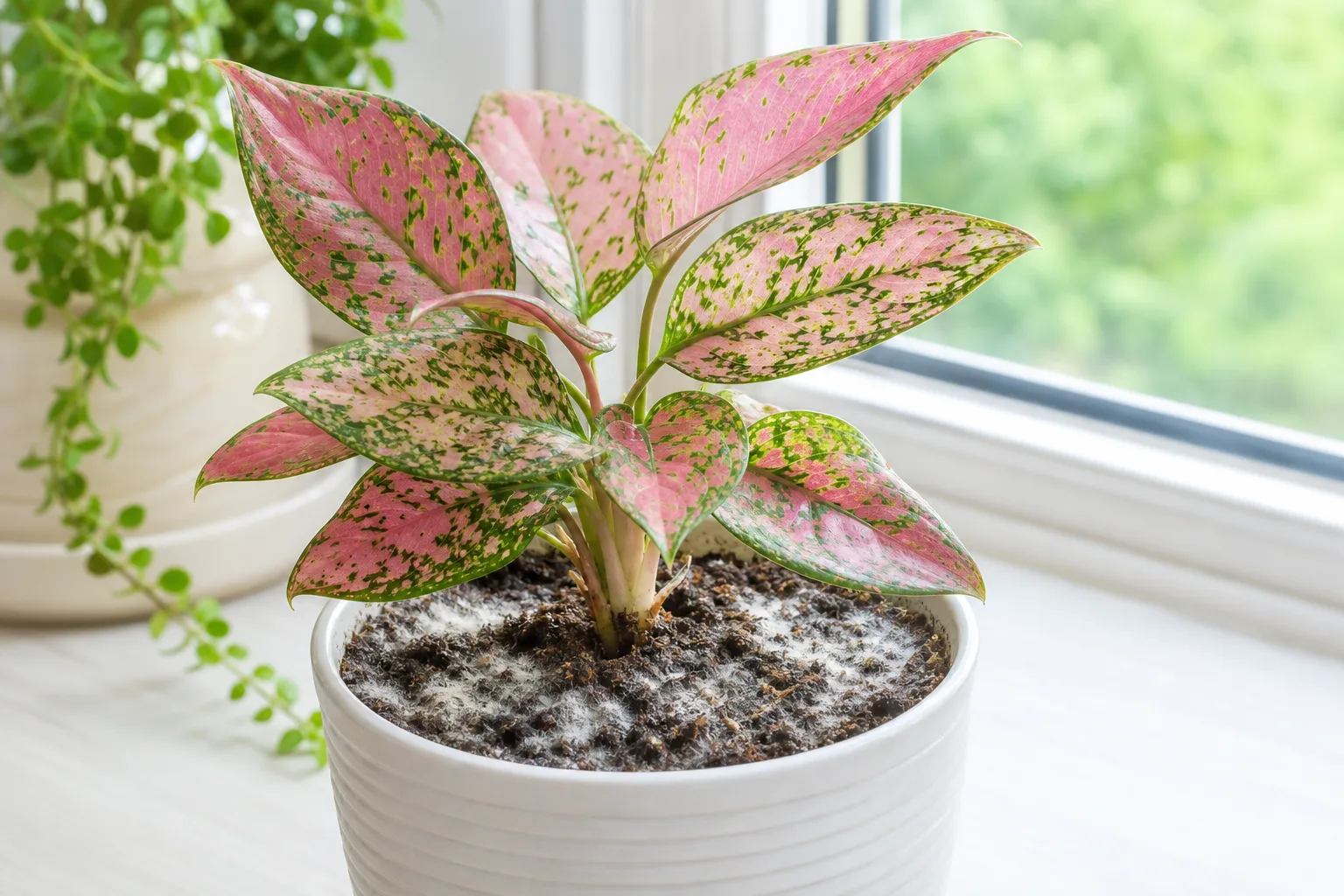
Mold on Soil on Aglaonema Pink Dalmatian: Causes, Checks & Fixes
This guide covers mold on soil on Aglaonema Pink Dalmatian. See also the general Mold on Soil guide, watering, and light pages for this plant.
Mold on Soil on Aglaonema Pink Dalmatian: Causes, Checks & Fixes
Quick answer
White or gray fuzz on the soil surface of an Aglaonema Pink Dalmatian pot is almost always saprophytic mold-a fungus breaking down dead organic matter in the mix, not a disease attacking the pink-speckled leaves above. Chinese evergreens are slow-growing foliage plants that can look perfectly healthy while the top layer stays damp enough for spores to bloom.
First step: scrape off the top 1–2 cm of moldy soil and stop watering until the top 1–2 inches of mix feel dry. That single action removes active growth and breaks the wet cycle that keeps mold-and often fungus gnats-coming back. Do not reach for fungicide on day one; fix moisture and airflow first.
Mold on soil vs. overwatering on Pink Dalmatian
These two problems share wet soil but show up at different stages. Understanding the split keeps you from treating surface fuzz like a full root crisis-or ignoring wet mix because the leaves still look fine.
| Pattern | What you see on the soil | Foliage & stems | What it usually means |
|---|---|---|---|
| Surface mold | White or gray fuzzy patches on top; soil dark and wet for days | Firm stems; normal pink variegation; leaves healthy | Harmless saprophyte on a damp surface-moisture alarm |
| Early overwatering | Wet surface; may or may not have visible mold | Yellow lower leaves; slight droop; mix heavy when lifted | Chronic wet feet starting to stress roots-see overwatering |
| Advanced overwatering / rot | Sour smell; sometimes mold plus dark wet mix | Soft stems at soil line; widespread yellowing; collapse | Root failure-see root rot |
Surface mold often appears before leaves show stress. That is why scraping and drying the top layer is the right first fix here-not the full stop-watering-and-unpot protocol reserved for overwatering on Aglaonema Pink Dalmatian. If stems are already soft or leaves yellow on wet mix, skip cosmetic scraping alone and follow the overwatering path.
Why Pink Dalmatian soil grows mold
Aglaonema cultivars prefer bright indirect light and well-drained potting mix. Pink Dalmatian tolerates lower light than many houseplants, but dim placement slows evaporation from the pot surface. Mold appears when the top layer never dries-exactly the condition that develops when care routines do not match how fast the pot actually loses moisture in your room.
Several factors stack on this compact Chinese evergreen specifically:
Overwatering on a calendar. Clemson HGIC recommends watering when the top one to two inches of soil are dry. Many growers water weekly because the label said so, without checking dryness at that depth. In winter, when growth slows and light drops, that same schedule keeps peat-based mix wet at the surface while the plant uses less water.
Dense, organic potting mix. Standard peat blends hold moisture at the top longer than chunky aroid mixes. Without enough perlite, the surface stays spongy and feeds saprophytic fungi on decomposing bark fines and old roots.
Low light in interior corners. Aglaonema survives shade, but pots in dim rooms evaporate less water from the soil surface. The pink Dalmatian pattern does not mean the plant needs more water-it is a leaf variegation, not a thirst signal.
Oversized pots. A pot much wider than the root ball holds a large volume of wet mix that dries slowly. Extra soil at the edges stays cold and damp-prime territory for surface mold and fungus gnats.
Organic debris on the surface. Fallen Aglaonema leaves, moss top-dressing, or decorative mulch trap moisture and give mold a food source.
Mold is a symptom of environment, not a random infection. The fungus was always present in the mix or air; wet, stagnant conditions let it reproduce on the surface.
What mold on soil looks like on Pink Dalmatian
Surface mold on Aglaonema Pink Dalmatian overview typically shows up as:
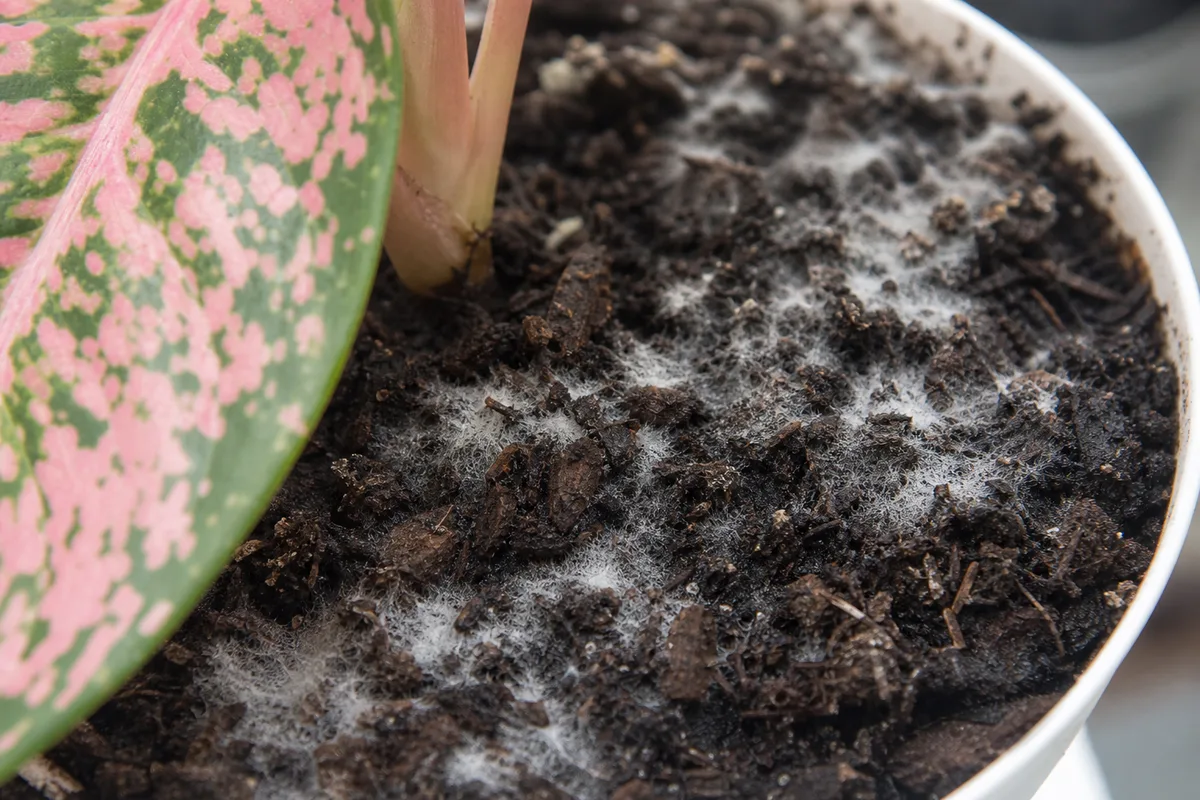
Mold on Soil symptoms on Aglaonema Pink Dalmatian - compare with healthy tissue on the same plant.
- White, gray, or occasionally yellow-tan fuzzy patches on the top of the soil, sometimes creeping onto the inner pot wall
- Soil that looks dark and wet several days after the last watering, with no dry crust forming at the surface
- A faint musty smell when you tilt the pot
- Tiny flies rising when you water-fungus gnats thrive in damp soil and share the same wet-soil niche
- Healthy-looking pink-speckled foliage in early cases; stems firm, variegation normal, no leaf spots
The leaves themselves usually show no direct mold damage. If you see fuzzy growth on leaves or stems, that is a different problem-botrytis, powdery mildew, or mealybugs-not the common soil-surface saprophyte this guide covers.
How to confirm the cause
Work through these checks before changing anything else:
- Surface moisture - Stick a finger 1–2 inches into the mix near the pot edge. If it clings to your skin days after watering, the mix is too wet for this plant’s normal rhythm.
- Pot weight - Lift the container. A heavy pot days after watering confirms slow dry-down.
- Stem base - Feel where stems meet soil. Firm stems suggest surface mold only. Soft, dark, or collapsing stems point toward rot beneath the fuzz.
- Leaf pattern - Yellow lower leaves, curling from chronic wetness, or widespread drooping mean root stress-not just cosmetic mold. That pattern belongs on the overwatering page.
- Drainage - Confirm drainage holes are open and no decorative pot liner is trapping water. Check whether the saucer was left full.
- Light level - Note if the plant sits more than a few feet from a bright window. Dim placement extends surface dry time.
The first fix to try
Scrape off the top 1–2 cm of moldy soil and stop watering until the top 1–2 inches of mix feel dry. Replace scraped material with a thin layer of fresh dry mix if you want a clean surface. Empty saucers after any watering. Improve airflow around the pot by pulling it slightly away from walls or grouping plants less tightly.
Do not apply fungicide to the soil on day one-surface mold is usually harmless when roots are healthy and disappears when the surface dries.
Step-by-step recovery
- Scrape and expose - Remove fuzzy soil and any decaying leaf bits sitting on the surface.
- Dry cycle - Wait until the top 1–2 inches are dry before the next thorough watering. This may take several days longer than your old schedule in winter.
- Water correctly - Water until a little drains from the bottom, then discard saucer water. Never let the pot sit in standing water.
- Top-dress if needed - A thin layer of fresh perlite-heavy mix on the surface can speed drying without Aglaonema Pink Dalmatian repotting guide the whole plant.
- Address gnats - If flies appear, let the surface stay dry longer and use sticky traps. See fungus gnats on Aglaonema Pink Dalmatian if they persist.
- Repot only when mix fails - If soil smells sour, stays wet a week after one drink, or mold returns within days despite correct watering, repot into fresh well-draining mix with added perlite in a pot only one size up.
Recovery timeline
| Stage | What to expect |
|---|---|
| 24–48 hours | Scraped surface looks clean; do not water yet |
| 3–7 days | Top inch should dry; mold should not return if rhythm is fixed |
| 1–2 weeks | Stable dry-down cycle; gnats decrease if they were present |
| Ongoing | Mold after every watering means schedule or mix still too wet |
Lookalike symptoms
| Pattern | What you see | Likely cause |
|---|---|---|
| Surface mold only | Fuzz on soil, firm stems, healthy leaves | Wet top layer-scrape and dry |
| Mold plus yellow leaves | Wet mix, lower leaf yellowing | Overwatering-see overwatering guide |
| Green algae on soil | Slimy green film in wet pots | Chronic surface moisture-same dry fix |
| Mealybugs on stems | White cottony patches on petioles | Pest-not soil mold |
| Leaf spots with halos | Lesions on blades, not soil | Fungal or bacterial leaf disease |
Mistakes to avoid
- Spraying fungicide on healthy roots - Fix moisture first.
- Misting the soil surface - Adds moisture where mold thrives.
- Covering soil with decorative moss - Traps dampness against the surface.
- Ignoring returning mold - Recurring fuzz within days means chronic overwatering or poor drainage.
- Repotting on day one - Scrape and dry first unless roots are already failing.
When to worry
Treat as urgent when:
- Mold returns within two to three days after scraping and a full dry cycle
- Stems soften at the soil line or the mix smells sour
- Multiple lower leaves yellow while soil stays wet
- The plant collapses despite cosmetic mold removal
Those patterns need root inspection and possible repot-not another surface scrape alone.
How to prevent mold on soil next time
Water when the top one to two inches of soil are dry, not on a calendar. Use perlite-amended mix with open drainage holes. Empty saucers promptly. Give medium to bright indirect light so the pot dries evenly. Remove fallen leaves from the soil surface. Overwatering encourages fungal growth on soil surfaces-preventing wet feet prevents mold before it blooms.
When to use this page vs other Aglaonema Pink Dalmatian guides
- Aglaonema Pink Dalmatian watering guide - Use for routine moisture checks before assuming mold on soil is the main issue.
- Aglaonema Pink Dalmatian problems hub - Browse all 16 common issues on this species.
- Fungus Gnats on Aglaonema Pink Dalmatian - Different entry point when symptoms overlap with mold on soil.
- Overwatering on Aglaonema Pink Dalmatian - Different entry point when symptoms overlap with mold on soil.
- Root Rot on Aglaonema Pink Dalmatian - Different entry point when symptoms overlap with mold on soil.
Related Aglaonema Pink Dalmatian guides
- Aglaonema Pink Dalmatian overview
- Aglaonema Pink Dalmatian watering
- Aglaonema Pink Dalmatian light
- Aglaonema Pink Dalmatian soil
- Fungus Gnats on Aglaonema Pink Dalmatian
- Overwatering on Aglaonema Pink Dalmatian
- Root Rot on Aglaonema Pink Dalmatian
- Slow Growth on Aglaonema Pink Dalmatian
- Aglaonema Pink Dalmatian problems