Slow Growth on Aglaonema Pink Dalmatian: Causes, Checks &
Quick answer
Aglaonema Pink Dalmatian is naturally slow-judge health by firm new leaves and stable pink speckling, not height. Worry when no new leaves appear across a warm bright season, consecutive new leaves lose pink spots, or wet soil sits in a dim corner. First step: check light on the newest leaf and move to brighter indirect exposure before fertilizing or repotting.
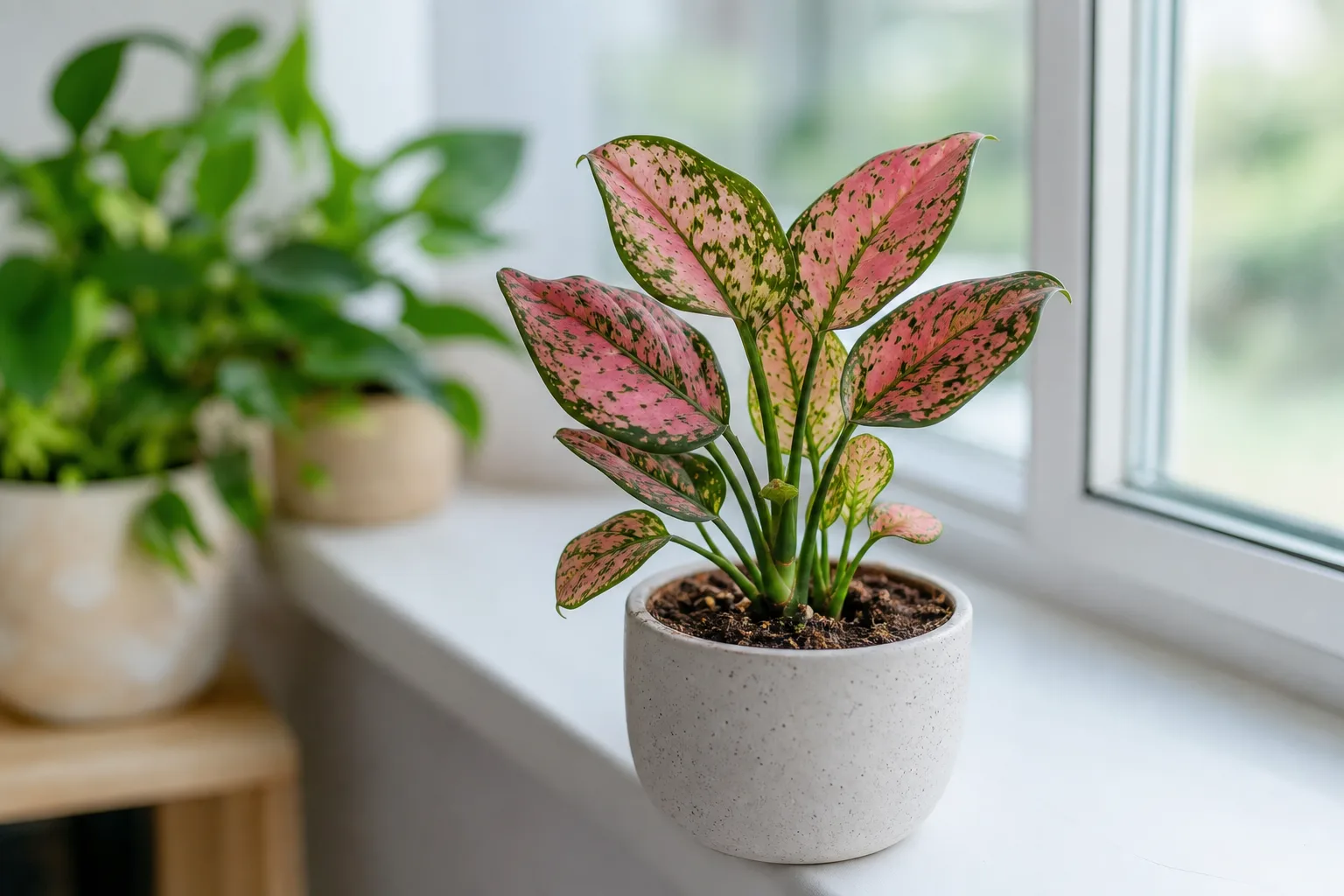
Slow Growth on Aglaonema Pink Dalmatian: Causes, Checks & Fixes
This guide covers slow growth on Aglaonema Pink Dalmatian. See also the general Slow Growth guide, watering, and light pages for this plant.
Slow Growth on Aglaonema Pink Dalmatian: Causes, Checks & Fixes
Quick answer
Aglaonema Pink Dalmatian (Aglaonema commutatum ‘Pink Dalmatian’) is supposed to grow slowly. Heavily variegated Chinese evergreens put less chlorophyll into each leaf than solid-green types, and the genus is naturally slow-growing even in good conditions. A compact upright plant with firm pink-speckled new leaves is healthy even if it adds only occasional height.
Slow growth becomes a problem when the plant stops producing leaves across a warm bright season, when consecutive new leaves lose their pink dalmatian spotting, or when soil stays wet for days in a dim corner while nothing emerges from the crown. Those patterns point to insufficient light for variegated tissue, root-bound stress, chronic overwatering, or cold-not normal cultivar pace.
First step: examine the newest leaf and the light around the pot. If speckles are fading or no leaf has opened in months despite warm weather, move Pink Dalmatian to medium or bright indirect light-an east window or a few feet back from a south or west window behind sheer fabric-before you fertilize, repot, or prune. Judge success by the next one or two leaves, not by how fast the plant gains height.
What normal slow growth looks like on Aglaonema Pink Dalmatian
Pink Dalmatian grows as a compact, upright, bushy Chinese evergreen with lance-shaped leaves flecked in pink. In a well-placed home, expect modest height gain and occasional new leaves rather than pothos-like speed. The overview guide frames success for this cultivar as color stability and firm new foliage, not rapid vertical growth.
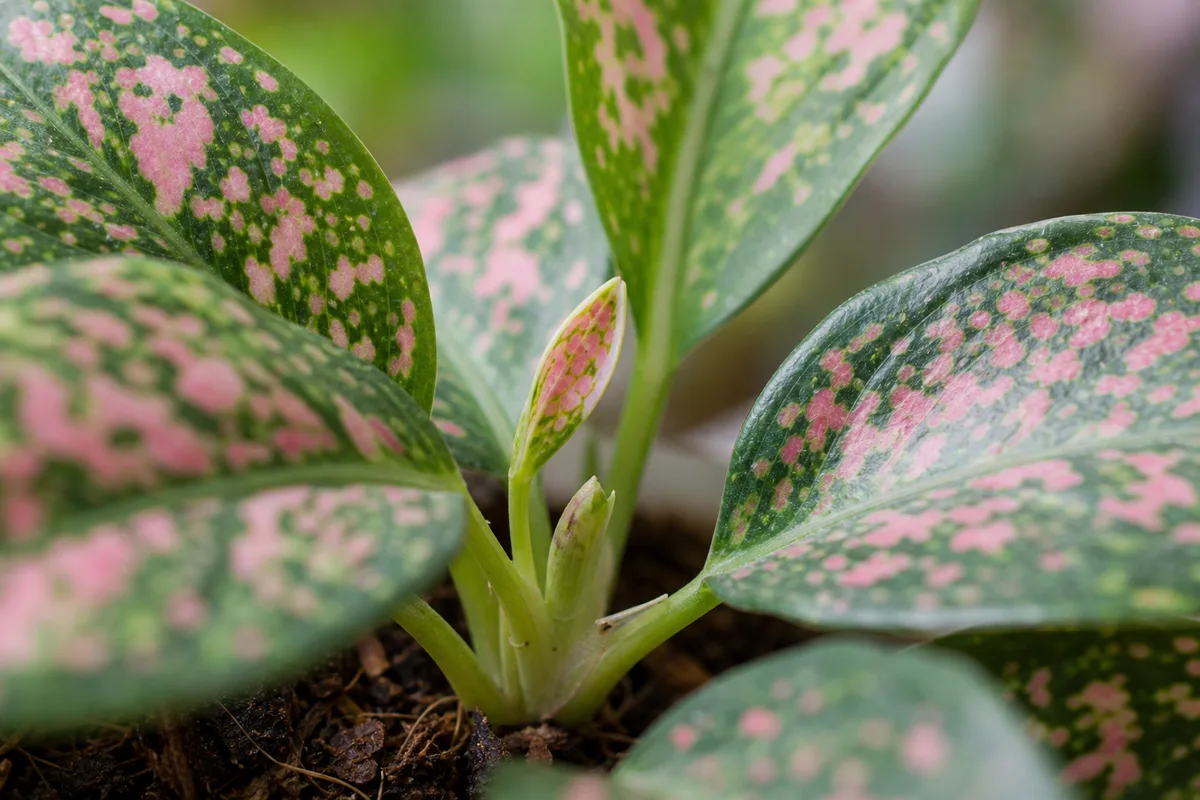
Slow Growth symptoms on Aglaonema Pink Dalmatian - compare with healthy tissue on the same plant.
Expected pace indoors for a variegated cultivar
In medium to bright indirect light during spring and summer, many Pink Dalmatian plants produce one new leaf every two to six weeks-sometimes slower in winter. That rhythm is normal. Leaves emerge from a tight central crown, unfurl with visible pink speckling, and sit on short petioles close to the stem cluster. A plant that looks almost unchanged for a month but opens one crisp speckled leaf is growing on schedule.
High-color Aglaonema selections require bright indirect light to retain their color, while green and silver forms tolerate lower light. Pink Dalmatian sits in the high-color group: it needs enough light to support pigment in pale tissue and to fuel the slow leaf-production cycle.
Seasonal winter slowdown
Growth naturally pauses or slows when days shorten and room temperatures dip. Pink Dalmatian may produce few or no new leaves from late fall through early spring even in a good spot-that is dormancy-like slowdown, not failure. Resume concern only if growth does not return once daylight lengthens and indoor temperatures stay in the 68 to 80 °F range through spring.
Signs Pink Dalmatian is healthy despite slow pace
- Stable pink speckling on the newest leaf-not plain green or washed-out blush
- Firm crown at the stem base where new leaves emerge
- Compact spacing between leaves; petioles are short, not reaching toward a window
- Occasional new leaf during warm months, even if weeks apart
- Pot weight drops on a normal schedule when you water-soil is not permanently soggy
When slow growth is actually a problem
Worry when the plant shows stall patterns that differ from healthy slowness:
No new leaves across a warm bright season. If Pink Dalmatian sits in adequate indirect light through spring and summer and the crown produces nothing for three or more months, something is limiting growth beyond normal cultivar pace.
Consecutive new leaves losing pink speckles. Two or more new leaves arriving greener, smaller, or with faded spotting usually mean insufficient light for variegated tissue-the plant is surviving, not performing.
Wet soil plus stall in a dim corner. Mix that stays damp for a week or more while growth stops often pairs low light with overwatering. Roots use less oxygen and less water in shade; calendar watering keeps the root zone wet and can progress toward root rot.
Root-bound crowding. When white roots circle the pot exterior and the plant has not been repotted in years, new leaves may stop even with good light until the root mass has room.
Cold or draft stress. Temperatures below 55 °F can injure Chinese evergreen foliage and halt growth. AC vents and cold windowpanes in winter are common stall triggers.
Soft crown with yellow lower leaves on wet soil. That combination is urgent-inspect roots before you assume the plant is merely slow.
Why Aglaonema Pink Dalmatian grows slowly
Naturally slow variegated cultivar biology
Chinese evergreens are slow-growing, long-lived houseplants even under ideal care. Pink Dalmatian adds variegation overhead: pale pink tissue photosynthesizes less efficiently than green tissue, so the plant builds leaves conservatively. Comparing Pink Dalmatian to a solid-green Maria-type Aglaonema in the same corner will always make Pink Dalmatian look stalled-even when it is healthy.
Bright indirect light requirement for high-color selections
UF IFAS is explicit: high-color selections require bright indirect light to retain their color. Pink Dalmatian needs the brighter end of the Chinese evergreen light range. In dim placement, the plant can hover at its light compensation point-around 10 foot-candles-where it earns just enough energy to survive but does not actively grow. It will sit there awaiting better conditions.
Low light compensation floor vs. performance threshold
Survival and performance are different thresholds. An average interior room may offer 20 to 60 foot-candles; a good reading spot has about 100. Pink Dalmatian may persist in dim corners but will not grow or hold vivid speckles there. The light guide explains how to target medium to bright indirect light without scorching pale pink tissue.
Root-bound and pot size
Aglaonemas tolerate being somewhat root-bound, but a severely crowded root ball in the same pot for years eventually limits new leaf production. Roots fill the container, water runs straight through, and the plant stalls despite correct light. See repotting when roots circle heavily and no new growth appears across a warm season.
Overwatering in shade
In low light, Pink Dalmatian uses water slowly. Owners who keep the same summer Aglaonema Pink Dalmatian watering guide in a dim winter corner leave soil wet too long. Saturated mix reduces root function; growth stops while lower leaves may yellow. This is one of the most common abnormal stall patterns on variegated Chinese evergreens marketed as “low-light easy.”
Cold and acclimation stress
Recent moves from a greenhouse to a drafty office, or nights near a cold window, can pause growth for weeks. Pink Dalmatian prefers stable warmth; chill damage shows as limp or spotted leaves before growth resumes.
Lookalike symptoms to rule out
Leggy stretch vs. compact slow growth. Long thin petioles reaching toward a window with wide leaf spacing is etiolation from low light-not healthy slow growth. See leggy growth if stems lengthen even when occasional leaves appear.
Speckle fade vs. true stall. The plant may still open leaves, but each new leaf is greener with fewer pink spots. That is a light problem progressing toward stall, not normal cultivar slowness. See not enough light.
Winter dormancy vs. year-round stall. No leaves from November through February in a cool room is often seasonal. No leaves from April through August in a bright room is not.
Root rot collapse vs. patience. Wet soil, sour smell, soft crown, and yellow spreading leaves mean rot-not slow growth. See root rot and wilting if stems go limp.
How to confirm the cause
Work through this checklist before changing watering, feeding, or pot size.
- Newest leaf color - Are pink speckles clear and scattered, or is the leaf mostly green? Fading on consecutive new leaves confirms light as the primary limiter.
- Last new leaf date - Note when the most recent leaf opened. Zero leaves across a warm bright season is abnormal; one leaf every few weeks in good light is normal.
- Light placement - Stand where the pot sits. Is it more than six feet from any window, blocked by furniture, or in a north room that feels dim for reading? Compare to an east sill or filtered south exposure.
- Soil moisture rhythm - Insert a finger to the first knuckle. Does mix stay wet for seven or more days between waterings? Wet long cycles in dim light suggest overwatering stress. Water when the top 1–2 inches of mix are dry.
- Pot weight and root check - Lift the pot. A plant that dries in two days in bright light but stalls in shade may simply need less water, not more. Slide the plant out if growth stopped for months-white circling roots mean root-bound; brown mushy roots mean rot.
- Temperature history - Note AC vents, cold windows, and recent repotting. Chill and transplant shock pause growth temporarily.
- Crown firmness - Press the stem base gently. Firm crown with slow but speckled new growth is healthy patience. Soft crown on wet soil is urgent.
Confirmed normal slow growth: occasional new leaves, stable speckles, firm crown, appropriate dry-down. Confirmed light-limited stall: fading speckles, zero leaves in warm months, interior dim placement. Confirmed wet-soil stall: damp mix for days, yellow lower leaves, possible sour smell.
First fix for Aglaonema Pink Dalmatian
Examine the newest leaf and move the pot to the brightest safe indirect light you can offer today-before fertilizing, repotting, or pruning.
For most homes that means within one to four feet of an east-facing window, or three to five feet back from a south or west window behind sheer curtains. Variegated Chinese evergreens need more usable light than solid-green cultivars to maintain color and steady leaf production. Do not jump from a dark corner to hot direct sun; pale pink speckles scorch easily.
After the move:
- Hold watering steady for one week and observe dry-down-brighter light often speeds water use; adjust only when the top inch is dry.
- Do not fertilize until you see a new leaf with improved speckling or confirm roots are healthy on inspection.
- Do not repot on the same day unless roots are mushy or severely circling with zero growth across a warm season.
Make one correction, then wait two to four weeks. Pink Dalmatian is slow to respond; the next leaf is your benchmark.
Step-by-step recovery by cause
Light-limited stall
- Move to medium or bright indirect light as described above.
- Rotate the pot a quarter turn weekly for even growth.
- Wipe dusty leaves so pale tissue can use available light.
- If natural daylight is weak in winter, add a full-spectrum LED six to twelve inches above the canopy for twelve to fourteen hours daily.
- Judge the next two leaves for tighter spacing and restored pink speckling.
Wet-soil stall in dim corners
- Stop calendar watering; check the top inch before every drink.
- Move to brighter indirect light so the mix dries on a normal schedule.
- If soil stays wet after ten days of corrected watering, inspect roots. Trim rot, repot into fresh well-drained mix sized to the root mass, and keep barely moist until new growth appears.
Root-bound stall
- Confirm healthy white roots circling the pot exterior and no new leaves across a warm season.
- Repot in spring into a container only one size larger with drainage holes.
- Keep mix lightly moist-not wet-for two weeks after repotting; expect a brief pause before the next leaf.
Cold or repot shock pause
- Move away from drafts; maintain 68 to 80 °F.
- Avoid fertilizing or heavy pruning while the plant stabilizes.
- Wait two to four weeks for the next leaf after repotting if roots looked healthy.
Recovery timeline
Light correction - The next leaf may take three to six weeks to appear after a brighter move; speckle improvement on that leaf confirms progress. Full recovery of compact habit may take two to three leaf cycles.
Wet-soil or root stress - Once watering is corrected, expect one to three weeks before the mix dries normally; new growth may take four to eight weeks if roots were impaired but the crown stayed firm.
Root-bound repot - A two- to four-week pause after repotting is normal. The first post-repot leaf often arrives six to ten weeks later on this slow cultivar.
Seasonal winter pause - Resume normal slow leaf production when spring light and warmth return; no intervention needed if speckles stayed stable on the last leaf.
Judge improvement by new upright leaves with clear pink spotting, not by old leaf color or height gained.
What not to do
Do not fertilize a stalled Pink Dalmatian in a dim room to “wake it up.” Light is the limiting factor before fertilizer on most indoor foliage plants; excess feed on stressed roots burns leaf edges.
Do not repot and fertilize on the same day on a slow plant that only needs brighter light. Stacking interventions makes it impossible to read which change helped.
Do not water more often because growth is slow when soil is already wet- that deepens root stress in shade.
Do not remove healthy leaves because “nothing is happening.” Pink Dalmatian has few leaves to spare; pruning healthy foliage slows recovery further.
Do not expect pothos speed. Comparing to fast growers guarantees disappointment even when Pink Dalmatian is healthy.
Do not ignore speckle fade. Greener consecutive new leaves are an early warning before growth stops entirely.
How to prevent abnormal slow growth on Aglaonema Pink Dalmatian
- Place for performance, not survival - Medium to bright indirect light year-round; see the light guide.
- Water on dryness - Top 1–2 inches dry before watering; slow dry-down in winter dim rooms means longer intervals, not more water.
- Repot before severe crowding - Every two to three years or when roots circle heavily.
- Keep stable warmth - Away from AC vents; avoid prolonged exposure below 55 °F.
- Feed lightly in growth season only - Half-strength balanced fertilizer in spring and summer when light is adequate and speckles are stable; see fertilizer.
- Read the newest leaf weekly - Speckle fade is the earliest stall signal on this cultivar.
When to worry
Act promptly if the crown softens, soil stays wet while the whole plant declines, or roots are brown and mushy on inspection-those signs mean rot, not patience. Sudden stall after repotting with limp leaves and sour mix needs a root check the same week.
You can observe if the plant is merely slow but opens occasional speckled leaves, the crown is firm, and soil dries on a normal schedule. Improvement shows as the next leaf with clearer pink dalmatian spotting within four to eight weeks after a light correction.
Aglaonema Pink Dalmatian care cross-check
| Check | Healthy slow growth | Abnormal stall |
|---|---|---|
| New leaf pace | One every few weeks in warm months | Zero leaves across spring–summer in good light |
| Newest leaf color | Clear pink speckles | Two or more consecutive greener, plainer leaves |
| Light | Medium to bright indirect | Interior shelf, far from windows |
| Soil moisture | Top inch dries before next drink | Wet for 7+ days in dim placement |
| Crown | Firm at stem base | Soft, dark, or collapsing |
| Pot / roots | Moderate root fill | Severe circling or mushy rot |
Related Pink Dalmatian problems
- Aglaonema Pink Dalmatian overview - Slow growth is normal; judge by speckle stability
- Light for Pink Dalmatian - Bright indirect light without scorching pale tissue
- Fertilizer for Pink Dalmatian - When feed helps vs. when light is the limiter
- Not enough light - Speckle fade and stretch before full stall
- Leggy growth - Long petioles vs. compact slow growth
- Repotting Pink Dalmatian - Root-bound diagnosis and timing
- Root rot - Wet-soil stall with soft crown
- Overwatering - Chronic wet mix in dim corners
When to use this page vs other Aglaonema Pink Dalmatian guides
- Aglaonema Pink Dalmatian watering guide - Use for routine moisture checks before assuming slow growth is the main issue.
- Aglaonema Pink Dalmatian problems hub - Browse all 16 common issues on this species.
- Not Enough Light on Aglaonema Pink Dalmatian - Different entry point when symptoms overlap with slow growth.
- Leggy Growth on Aglaonema Pink Dalmatian - Different entry point when symptoms overlap with slow growth.
- Yellow Leaves on Aglaonema Pink Dalmatian - Different entry point when symptoms overlap with slow growth.