Leggy Growth on Aglaonema Pink Dalmatian: Causes, Checks &
Quick answer
Leggy growth on Aglaonema Pink Dalmatian is etiolation-long petioles, wide gaps between leaves, and a lean toward the brightest window-because light is too weak for this pink-variegated cultivar. First step: move the pot to medium or bright indirect light within a few feet of a window, then judge the next leaf for tighter spacing before you prune.
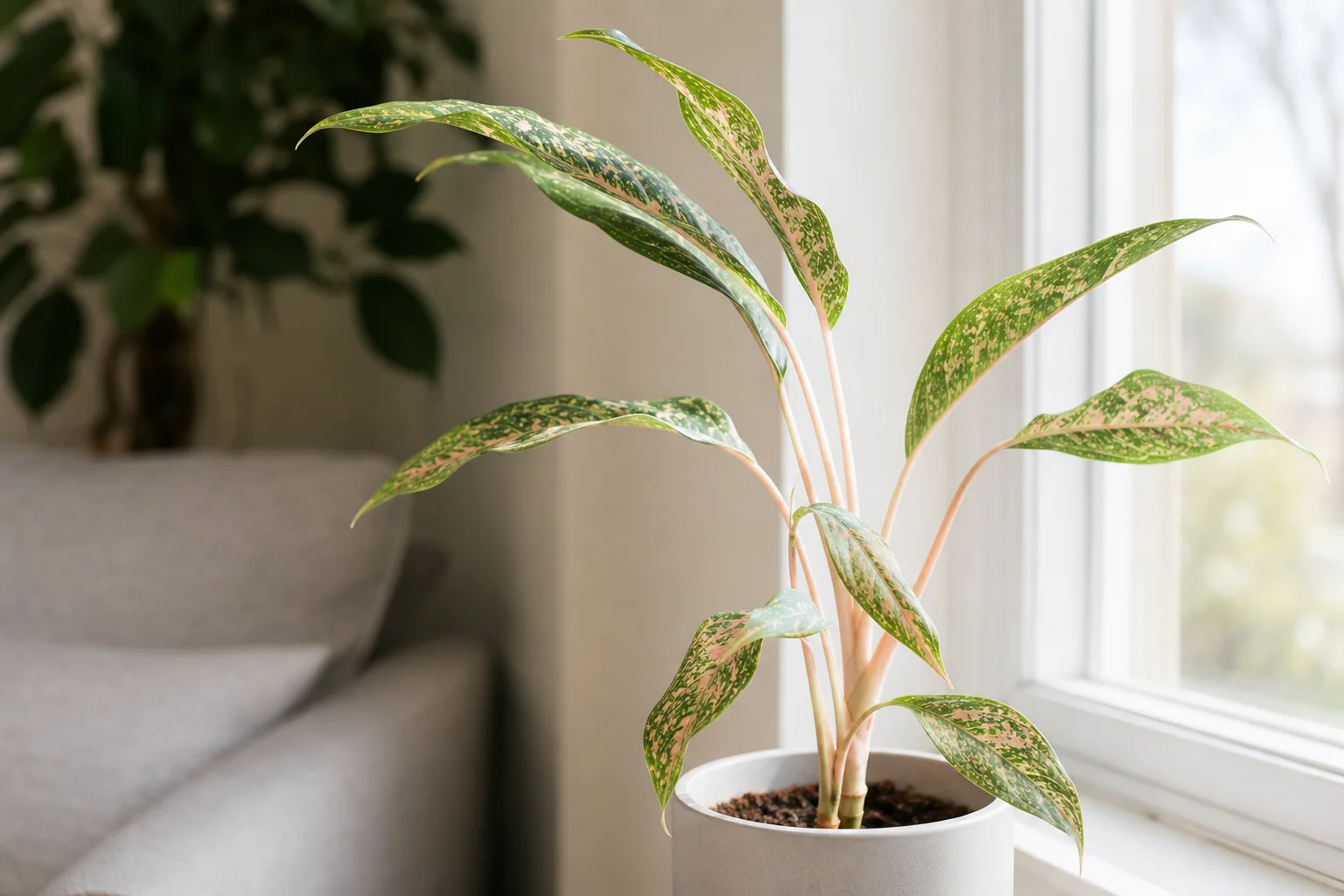
Leggy Growth on Aglaonema Pink Dalmatian: Causes, Checks & Fixes
This guide covers leggy growth on Aglaonema Pink Dalmatian. See also the general Leggy Growth guide, watering, and light pages for this plant.
Leggy Growth on Aglaonema Pink Dalmatian: Causes, Checks & Fixes
Quick answer
Leggy growth on Aglaonema Pink Dalmatian (Aglaonema commutatum ‘Pink Dalmatian’) is etiolation-the plant stretching toward usable light. Petioles lengthen, gaps between new leaves widen, pink dalmatian speckling fades toward plain green, and the whole canopy leans toward the brightest window. Unlike solid-green Chinese evergreens that tolerate dim corners, pink-spotted cultivars need medium to bright indirect light to hold a compact shape and their color pattern.
First step: move the pot to the brightest indirect location you can offer today-typically one to four feet from an east-facing window, or three to five feet back from a south or west window behind sheer fabric. Do not repot, fertilize, or heavily prune on the same day. Read the next unfolding leaf after two weeks: tighter spacing and sharper pink spotting confirm light was the bottleneck. Stretched stems already on the plant will not shrink back; prune them only after new growth looks healthy.
How this page differs from our not-enough-light guide: that URL covers the full low-light symptom set-placement thresholds, color fade, wet-soil overlap, and grow-light setup. This page focuses on stretch diagnosis, telling etiolation from normal slow growth, pruning above nodes after relighting, and deciding when legginess stacks with root stress or sun scorch. For window distance and foot-candle targets, pair with the light guide.
What leggy growth looks like on Aglaonema Pink Dalmatian
A well-placed Pink Dalmatian sits upright with short petioles, leaves clustered near the crown, and crisp pink speckles on firm green blades. Leggy growth breaks that silhouette over weeks or months.
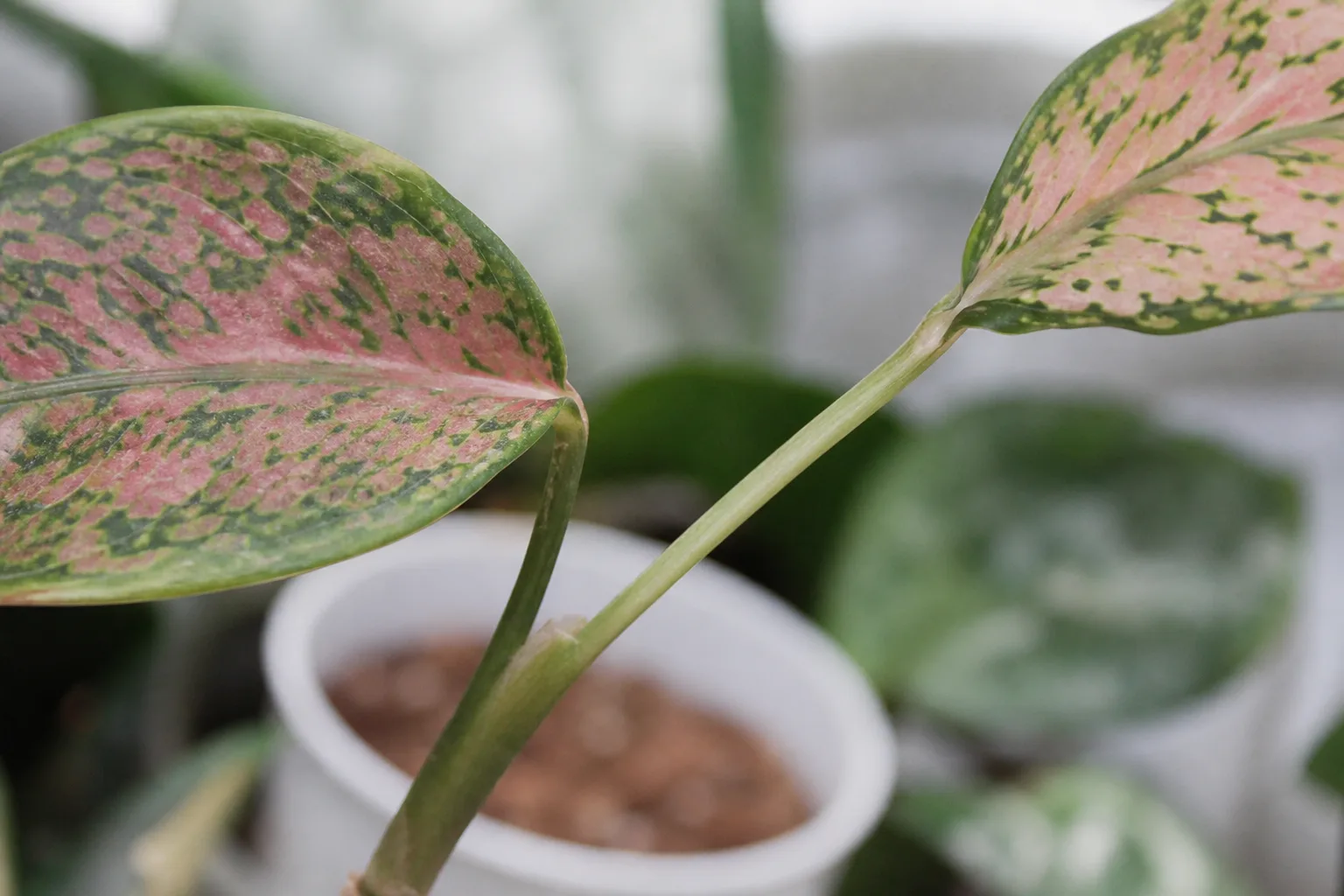
Elongated petiole and widened internode gap on Pink Dalmatian - pink dalmatian speckles washed toward muddy green on stretched foliage.
Compact reference: imagine a tight rosette of lance-shaped leaves, each stalk only a few centimeters long, with scattered pink dalmatian spots on dark green tissue. Etiolated reference: the same plant gains height through long naked-looking petioles, leaves sit far apart along each cane, pink speckles wash toward muddy green, and the pot leans toward one window.
Etiolation and stretched petioles
The clearest sign is elongated petioles-the leaf stalks between stem and blade grow longer than they did when you bought the plant. Internodes (gaps along the stem between leaf attachment points) widen. New leaves may arrive smaller and softer than older ones, even as the plant gains height. Plants in insufficient light develop spindly growth with abnormally long stems as they reach for photons.
Fading pink dalmatian speckling
Pink Dalmatian is sold for pink dalmatian-style spotting. Under stretch conditions, that variegation is often the first visual casualty-speckles dull toward muddy green because pale tissue cannot maintain pigment without adequate photosynthesis. High-color Aglaonema selections require bright indirect light to retain their color; a Maria or Silver Bay may look fine in the same corner while Pink Dalmatian beside it greens out and lengthens.
Leaning toward light
Stems and new leaves emerge on the side facing the brightest direction. The pot may look lopsided even though you have not moved it. That active lean is strong evidence of etiolation-not a random watering glitch.
What leggy growth usually is not
Leggy stretch rarely shows bleached or tan crispy patches on pale pink sections-that pattern fits direct sun scorch after a sudden move to a hot sill. Sudden whole-plant collapse with sour wet soil points to root rot, often worsened by low light plus overwatering but not caused by stretch alone. Webbing or stippling on undersides suggests pests, not etiolation.
Why Aglaonema Pink Dalmatian gets leggy
Low light beyond the genus “tolerance”
Aglaonema as a genus survives in shade better than many houseplants, but “low-light tolerant” does not mean pink cultivars stay compact in deep interior shade. NC State Extension notes that aglaonema tends to get leggy with age as stems elongate-and that process accelerates when light is weak. Pink Dalmatian in a desk corner facing a wall, a bathroom with frosted glass only, or a spot more than six feet from any window is a common setup for stretch.
Pink variegation light demands
The more color in the foliage, the more light the plant needs to maintain both pigment and compact growth. Pink Dalmatian sits in the heavily variegated group: it needs the moderate-to-bright end of the indirect range, not the dim shelf where dark-leaf types hang on.
Seasonal daylight drop
Winter shortens day length even when the pot never moves. The same east window that carried Pink Dalmatian through summer may not deliver enough energy from November through February-when new internodes widen and owners blame “the plant being moody.” A north-facing room that barely passes the two-week leaf test in summer often fails entirely in winter; add a full-spectrum LED six to twelve inches above the canopy for twelve to fourteen hours daily when natural daylight alone cannot tighten new growth.
Decor-first placement
Pink Dalmatian is often bought for colorful foliage and placed where it looks good in the room, not where light is adequate. Nursery benches are brighter than most living-room shelves; stretch begins weeks after you bring the plant home.
Less common contributors
Over-fertilizing in shade pushes soft, weak elongation without restoring pink spots-extra nitrogen cannot substitute for photons. Root-bound stall in a dim spot can produce a tall sparse silhouette with little new growth at the crown; unpot to check if the root mass is a solid mat and soil dry-down has slowed. These overlap with light stress; confirm placement before repotting.
Lookalike symptoms on Aglaonema Pink Dalmatian
| What you see | More likely cause | Quick differentiator | Urgency |
|---|---|---|---|
| Long petioles, lean toward window, fading pink, wide leaf spacing | Leggy growth / low light | Stretch plus color loss; see not enough light | Low - correct light gradually; not same-day emergency if crown is firm |
| Compact shape, firm leaves, crisp pink, little height gain for months | Normal slow growth | No unusual elongation; see slow growth | None - healthy patience |
| Yellow lower leaves, soggy mix, sour smell, weak lean | Overwatering / root stress | Wet soil persists; crown may soften | High - inspect roots same week; light alone will not fix rot |
| Limp leaves on lightweight dry pot | Underwatering | Soil dry through top inch; stems not unusually long | Medium - water thoroughly; stretch pattern absent |
| Bleached crispy patches on sun-facing pale sections | Too much direct sun | Damage after sudden move to hot glass | Medium - pull back from glass; tissue will not heal |
Low light and overwatering often travel together on Pink Dalmatian because a plant photosynthesizing weakly uses less water. Fixing light without adjusting water can leave roots in stale moisture-check dry-down after you move the pot.
How to confirm the cause
Work through these checks before repotting, feeding, or cutting:
-
Window relationship - Note nearest window direction and distance in feet. More than six feet from glass, or in a windowless room, strongly suspects etiolation on a pink cultivar. Compare to targets in the light guide.
-
Stretch trend - Compare newest leaves to a photo from purchase or to older foliage at the crown. Longer petioles and wider spacing on fresh growth confirm ongoing etiolation.
-
Color trend - Fading pink speckles with stretch point to light-not a random nutrient shortage.
-
Growth direction - Lean toward one window is etiolation behavior, not optional aesthetics.
-
Soil dry-down - If mix that used to dry on your schedule now stays damp ten days or more without wilting, reduced light may have slowed transpiration. Pair with stretch before blaming soil alone.
-
Two-week placement test - Move Pink Dalmatian to the brightest indirect spot available-never into direct midday sun, which scorches variegated foliage on pale pink tissue. After two weeks, inspect the next leaf. Tighter internodes and clearer spotting confirm light was the limiter.
-
Rule out root stress - Soft stems, spreading yellow on wet soil, or sour smell need a root check before you treat stretch as light-only. See root rot if the crown softens.
Confirmed leggy etiolation: elongated petioles, lean, fading pink, adequate moisture, firm crown. Suspected overlap: stretch plus wet soil for weeks in a dark corner-fix light and dry-down together.
First fix for Aglaonema Pink Dalmatian
Move the pot to medium or bright indirect light today.
Practical targets:
- East-facing window - Pink Dalmatian typically handles the full indirect day without scorch; one to three feet from the glass often tightens new growth
- North-facing window - May work in summer but often falls short in winter for pink cultivars; move closer or add supplemental light when spacing widens
- South or west window - Stay three to six feet back or behind sheer curtains; pale pink sections burn in hot direct rays
If no window spot passes the two-week leaf test, add a full-spectrum LED grow light six to twelve inches above the canopy for twelve to fourteen hours daily. UF/IFAS notes that fluorescent and LED sources work well when natural light is scarce.
Increase light gradually if Pink Dalmatian is coming from a very dark corner-a week of slightly brighter placement, then the final spot, reduces leaf stress.
Do not fertilize, repot, or heavily prune on the same day you move the plant. Let Pink Dalmatian respond to light first; shape correction comes after new growth looks healthy.
Step-by-step recovery
Once Pink Dalmatian is in better light:
-
Adjust watering - Brighter exposure usually means faster dry-down. Check the top half of the mix before every drink rather than following an old calendar from the dim corner.
-
Dust the leaves - Wipe both sides with a damp soft cloth. Clean foliage captures more light and helps you spot pests early.
-
Rotate weekly - A quarter turn prevents one-sided lean and keeps pink patterning visible on all sides.
-
Wait for one or two good new leaves - Tighter spacing and restored speckling mean light is adequate before structural cuts.
-
Prune leggy canes above a node - Cut just above a visible node or leaf scar with clean scissors. The stub often pushes a tighter side shoot. Old elongated petioles will not revert-remove them if they ruin the silhouette. Full technique is in the pruning guide.
-
Hold fertilizer - Feed lightly during active growth only after two to three firm new leaves with visible pink speckling appear.
Recovery timeline
Expect to read improvement on the next one or two leaves, not on tissue already stretched. Under adequate indirect light during spring or summer, tighter new foliage with sharper pink spotting often shows within two to three weeks. Winter recovery may take four to six weeks because day length is shorter.
Signs Pink Dalmatian is recovering from legginess:
- New leaves closer together on the stem
- Clearer pink dalmatian speckling on fresh foliage
- Firmer leaf texture and reduced lean
- Soil drying on a predictable rhythm again
Signs the problem is worsening or another issue is involved:
- Continued stretch and greening after four weeks in a clearly brighter spot-the location may still be too dim; add a grow light
- Yellowing spreads while soil stays wet-inspect roots
- Brown crispy patches on pale pink sections-too much direct sun; pull back from glass
Stretched stems, faded pink on old leaves, and small mature foliage do not revert-judge recovery on compact new growth instead. A recovered Pink Dalmatian may still carry some long older petioles until you prune them.
What not to do
Do not jump to direct sun to fix legginess-pale pink tissue burns faster than dark green. Bright indirect light is the target. Do not fertilize heavily in shade to “bring back” pink; without photons, extra feed can salt-burn edges without shortening stems. Do not overwater a slow plant in a dim corner-less light means less water use, and wet soil invites root problems. Do not repot into a larger container as the first response to stretch; fix placement first. Do not stack repot, prune, move, and feed on one weekend-you will not know which change helped or hurt.
How to prevent leggy growth next time
Place Pink Dalmatian where medium to bright indirect light is realistic all year-not only where the pot complements the room. Missouri Botanical Garden lists Aglaonema commutatum for bright to moderately bright indoor areas with diffused sun or good indirect light.
Seasonal habits that help:
- Move slightly closer to glass in late autumn, or extend grow-light hours in winter
- Clean windows and leaf surfaces when daylight shortens
- Rotate the pot weekly for even exposure
- Re-check dry-down whenever you move the plant or change clocks for daylight saving time
Judge success by compact habit and stable pink speckling, not height. A short Pink Dalmatian with crisp spots in bright indirect light is healthier than a tall soft plant pushed in a dark corner.
When to worry
Pure stretch with a firm crown and soil that dries on a normal schedule is not an emergency-increase light gradually and read the next leaves.
Escalate the same week if:
- Yellowing spreads while soil stays waterlogged and smells sour - Reduce watering and inspect roots before cosmetic pruning. Light correction alone will not fix advanced root stress; see root rot.
- Crown softens or collapses - Treat as root emergency, not an etiolation timing issue.
- No tighter new leaf after six weeks in a confirmed brighter spot during summer - Re-check placement or add a grow light; if light is adequate, unpot for root crowding or mushy roots before assuming fertilizer will help.
Related Pink Dalmatian guides
- Not enough light - placement, color loss, and light thresholds in depth
- Light requirements - window direction, distance, and grow-light setup
- Pruning - where to cut leggy canes above nodes
- Slow growth - normal compact pace vs. abnormal stall
- Pink Dalmatian overview - full care hub
FAQs
Will my stretched Aglaonema Pink Dalmatian stems shrink back with more light?
No. Existing elongated petioles and stems do not shorten after you improve light, and faded pink speckling on old leaves usually does not return. Judge recovery by the next one or two leaves-tighter spacing, firmer texture, and clearer pink dalmatian spotting mean the fix worked. Prune long bare sections if shape matters.
Should I prune a leggy Pink Dalmatian before or after moving to brighter light?
Move to brighter indirect light first, then wait for one or two healthy new leaves with tighter spacing before structural cuts. Pruning in a still-dim corner often produces weak side shoots. Once new growth confirms adequate light, cut each stretched cane just above a visible node-see the pruning guide for technique.
Is leggy growth the same as not enough light on Pink Dalmatian?
Leggy growth is the main visible result of insufficient light on this cultivar-stretching, leaning, and fading pink are etiolation signs. The not-enough-light guide covers placement and color loss in depth; this page focuses on recognizing stretch, fixing shape with pruning, and separating leggy etiolation from normal slow growth or root-stress lookalikes.
How long until a leggy Pink Dalmatian looks compact again?
Brighter indirect light often shows tighter new leaves within two to three weeks during spring or summer. Winter may take four to six weeks because day length is shorter. Full shape recovery after pruning can span one growing season because variegated Aglaonema produces leaves slowly-old long petioles stay long until you cut them.
Can fertilizer fix leggy Aglaonema Pink Dalmatian?
No. Fertilizer cannot replace photons, and feeding a stretched plant in a dim corner can salt-burn pale leaf edges without restoring pink speckling or shortening stems. Fix light first, adjust watering to match faster dry-down in the brighter spot, and hold fertilizer until two or three firm new leaves with visible pink spots appear.