How to Prune Aglaonema Pink Dalmatian: When, Where & What
How to Prune Aglaonema Pink Dalmatian: When, Where & What to Cut
How to Prune Aglaonema Pink Dalmatian: When, Where & What to Cut
Quick Answer
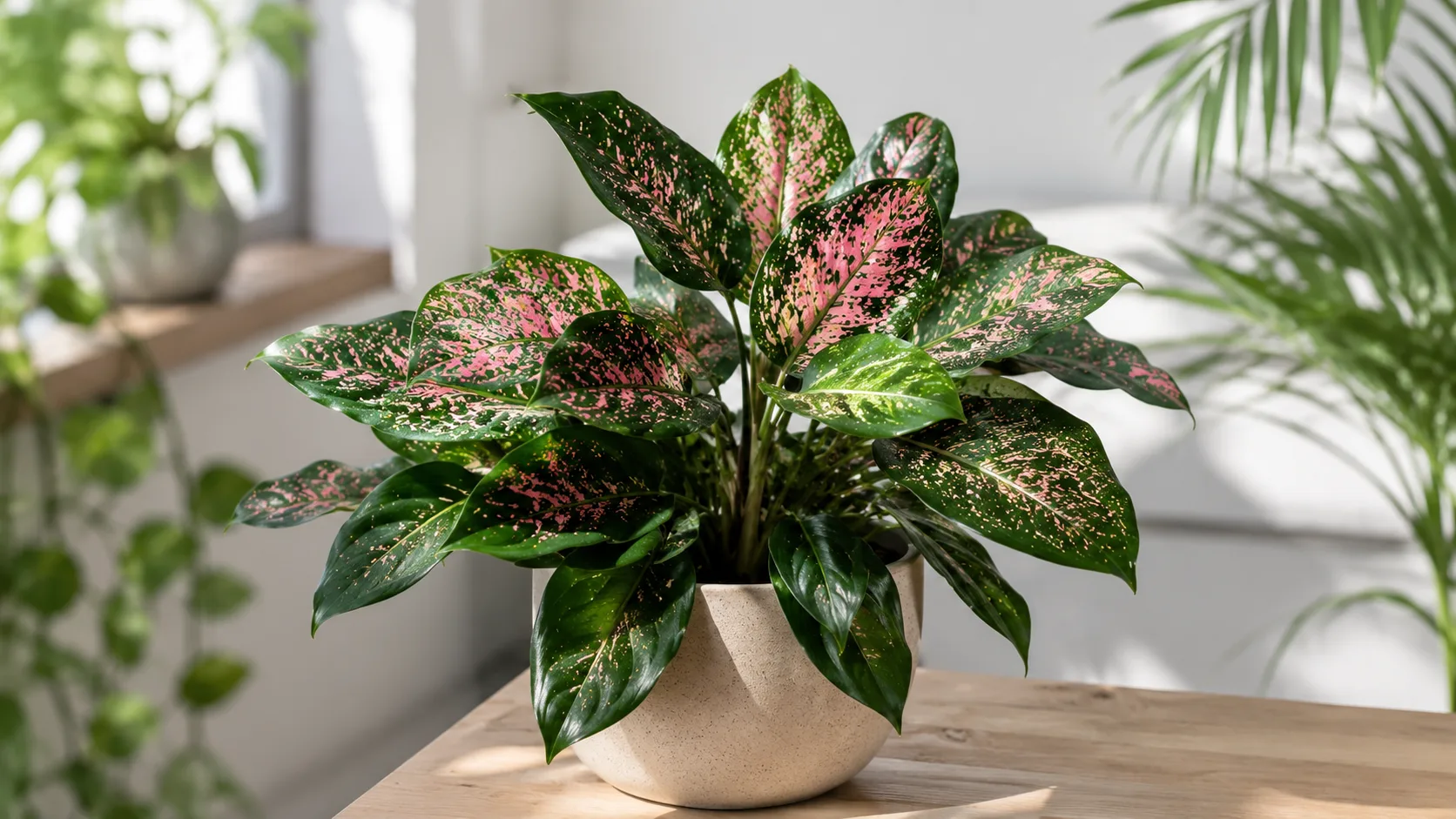
First, remove only leaves and stems that are fully yellow, brown, soft, or clearly damaged - cut each petiole cleanly at its base and do nothing else until you have walked the whole plant. Aglaonema Pink Dalmatian (Aglaonema commutatum ‘Pink Dalmatian’) is an upright, slow-growing Chinese evergreen kept for pink-speckled foliage, not for frequent reshaping. The Royal Horticultural Society lists no pruning required for several aglaonema cultivars beyond routine grooming, and UF/IFAS states that pruning is not necessary for the genus under normal indoor conditions - though dead or yellowing leaves should be removed. On a healthy Pink Dalmatian, scissors are a maintenance tool, not a monthly habit.
What Pruning Does for Pink Dalmatian
Pink Dalmatian grows as upright canes with leaves emerging from a central crown and along the stem. NC State Extension notes that aglaonema tends to get leggy with age as the stem elongates and lower leaves senesce - a pattern that looks alarming on a slow variegated cultivar but is often normal aging rather than neglect. Unlike trailing pothos, there is no endless vine tip to pinch weekly.
Pruning serves three practical roles on this cultivar:
- Sanitation - removing tissue that holds moisture, hides mealybugs, or spreads discoloration up the cane
- Proportion - shortening a stretched stem so foliage sits closer to the pot
- Propagation - harvesting a healthy top as a tip cutting while resetting the parent base
Structural cuts redirect energy. A cane carrying a small leaf cluster at the tip while feeding a long bare section below is inefficient. Shortening that cane - or removing the top for rooting - lets the remaining base concentrate on fewer, closer nodes. Clemson HGIC notes that when lower leaves drop and bare stems develop, the leafy top can be removed and rooted.
What Pruning Cannot Fix
Scissors will not restore pink speckling if the plant has been growing in weak light - new leaves after a cut reflect current conditions, not past color. Clemson HGIC states that variegated aglaonema types need low to moderate indirect light; too little light fades pink and stretches internodes. Pruning also cannot rescue a plant with rotting roots, chronic overwatering on Aglaonema Pink Dalmatian, or widespread yellowing from care failure. Fix the environment first; trim afterward.
Cosmetic snipping of narrow brown leaf margins is optional. A thin dead edge on an otherwise firm green or pink-speckled leaf still photosynthesizes. Follow the natural leaf curve with fine scissors if appearance bothers you, but do not remove whole leaves for minor tip browning unless damage covers most of the blade.
What to Check Before You Cut
Walk around the plant in good light. Note:
- Leaves that are fully yellow versus pale pink-cream patches - Pink Dalmatian’s speckled variegation is normal, not automatic disease
- Stem firmness from soil line to crown; soft, wrinkled, or dark tissue signals rot or moisture stress
- Bare cane length and whether the crown leans toward the window
- Optional hooded flower stalks at the base or between leaves - NC State Extension recommends removing flowers and fruits to direct energy to foliage growth
- Pest signs at leaf axils - mealybug cotton, scale shells, sticky honeydew
If multiple leaves are yellowing, soil smells sour, or stems feel mushy, delay structural pruning. Correct Aglaonema Pink Dalmatian watering guide and root health before removing healthy foliage the plant may still need for recovery.
The First Cut to Make
Remove fully yellow, brown, collapsed, or pest-heavy leaves before considering any shaping cut. For each affected leaf, trace the petiole down to where it meets the main stem and snip cleanly at the base. Pull only leaves that release cleanly at the petiole; cut those that resist to avoid tearing cane bark.
This single sanitation pass often finishes the job on a healthy Pink Dalmatian. A symmetrical plant with firm stems and mostly firm variegated foliage does not need further cutting. Only proceed to cane shortening or flower-stalk removal when a specific structural problem remains after cleanup.
When to Prune Aglaonema Pink Dalmatian
Cleanup Cuts Anytime
Remove fully yellow or brown leaves, soft rotting stems, and spent inflorescences whenever you notice them. Waiting for spring does not help tissue that is already decomposing at the base. UF/IFAS recommends removing dead or yellowing leaves as part of normal interior maintenance.
Flower stalks are optional on Pink Dalmatian - the arum-type blooms are small and not why most growers keep this cultivar. UF/IFAS notes that removing inflorescences aids plant longevity and keeps the plant full. Cut them near the base after bloom to redirect energy toward foliage.
Best Season for Structural Cuts
Plan cane shortening, top removal for propagation, or multi-stem balancing during late spring through early summer, when indoor temperatures sit in Pink Dalmatian’s comfort range and day length supports new spear unfurling. During active growth, a cut above a node often activates a bud within a few weeks on a healthy plant.
Winter and late-autumn reshaping is possible for broken or rotting stems, but expect visible progress to pause until warmth returns. That stall is normal dormancy behavior, not proof the cut failed.
When Not to Prune
Hold major cuts when the plant was recently repotted, shipped, chilled, or treated aggressively for pests. Let it stabilize one to two weeks with stable light and a drying rhythm that matches your home. Do not hard-prune a plant showing widespread wilt, root rot on Aglaonema Pink Dalmatian smell, or collapsing crowns - address roots and moisture first.
Tools, Sterilization, and Sap Safety
Use sharp bypass pruners or floral snips for cane cuts; fine scissors handle petioles and cosmetic tip trimming. Dull blades crush aglaonema tissue and leave edges that brown slowly.
Wipe blades with 70% isopropyl alcohol before starting. Iowa State University Extension recommends sanitizing pruning shears between cuts on diseased material and between plants when disease is suspected. Keep a damp cloth for sap and a bag for infected trimmings.
Pink Dalmatian sap contains calcium oxalate crystals. The ASPCA lists Chinese evergreen as toxic to cats and dogs, causing oral irritation. Wear gloves if you are sap-sensitive, wash hands after handling cut tissue, and keep trimmings off floors where pets or children can reach them.
Where to Cut: Petioles, Nodes, and Canes
Aglaonema pruning uses three distinct cut types. Mixing them up causes most disappointment.
Leaf removal: Sever the petiole where it meets the stem, or trace it to the base without yanking. Partial tearing wounds the cane and invites slow dieback.
Cane shortening: Find a node - a ring or slight swelling where a leaf attached. Cut 5–10 mm above firm tissue on a healthy node. A long bare stub above the node dries out uselessly; cutting through the node damages bud tissue needed for regrowth.
Rejuvenation: When the lower stem is bare but the top cluster is healthy, remove the top 5–10 cm below the lowest good leaves for propagation. On the parent, you may shorten remaining cane to a low node near soil level. The base may sprout, but success depends on root health, warmth, and light - not every old cane branches predictably.
There is no universal “cut to soil line” rule. Remove soft rot at soil level; otherwise preserve firm cane that might activate a latent bud.
Step-by-Step Pink Dalmatian Pruning
Work methodically - one cane at a time - and step back between cuts.
Removing Yellow, Brown, and Spent Flowers
- Sterilize tools.
- Cut or pull fully senescent leaves at the petiole base.
- Trace soft stems upward until cross-sections show clean, light-colored tissue; sanitize between cuts if rot was present.
- Snip spent flower stalks near their origin.
This pass alone often clarifies whether structural work is even needed.
Shortening a Leggy Cane
Identify the node where you want the new crown to sit - often two-thirds down a bare stem toward the soil. Cut just above that node on firm green or tan cane. Remove no more than one-third of healthy foliage in the session. Return the plant to stable Aglaonema Pink Dalmatian light guide and resume watering when the top half of the mix dries.
Rejuvenating a Top-Heavy Plant
When several feet of bare cane support a healthy top:
- Confirm roots are firm and soil dries on a normal schedule.
- Cut the top section with several leaves and at least one node for rooting.
- Optionally shorten the parent cane to a lower node.
- Let cut ends callus briefly before rooting in airy moist mix or water.
- Hold fertilizer until new growth appears on either the cutting or the base.
How Much Foliage Is Safe to Remove
Treat one-third of healthy leaves as the maximum in a single session. Pink Dalmatian grows more slowly than plain green aglaonema forms, so staging major work across two sessions spaced several weeks apart is safer than one hard reset.
Dead, yellow, or rotting tissue does not count toward that limit - remove it promptly. The risk is stripping too much functioning variegated foliage from a plant that already produces new speckled leaves slowly, leaving a sparse crown that takes a full growing season to refill.
Using Pruning Cuttings
Healthy tops with multiple leaves and a firm node root reliably in moist, well-draining mix or water after a day of callusing. Clemson HGIC lists stem and tip cuttings among standard aglaonema propagation methods. Discard soft, foul-smelling sections. Warmth and bright indirect light speed rooting; Pink Dalmatian is slower than pothos. A rooted cutting can later share the parent pot to fill a sparse base once roots are established - useful after rejuvenation pruning.
Aftercare and Recovery Timeline
After pruning, keep light, water, and temperature boring. Return the plant to the same bright indirect spot if it was healthy there. Water when the top half of soil dries - do not soak reflexively because you trimmed. Skip fertilizer two to three weeks until a new leaf spear shows firm texture and visible pink spotting.
Petiole cleanup has no recovery wait. Cane cuts on an actively growing plant may show bud swelling in three to six weeks. Full crown refill after hard rejuvenation can take an entire growing season. Off-season cuts may look unchanged until spring - patience is part of the technique.
Signs pruning worked: new spears unfurl with firm texture and characteristic pink speckling; stems stay firm; yellowing stops spreading. Signs to reassess: continued soft stems, more yellow leaves weekly, or new growth that emerges mostly green and stretched - usually light or root stress, not a bad cut angle.
Common Pruning Mistakes
Pruning for color loss without improving light. Pink fades in dim rooms; cutting leaves does not restore speckling. Brighten indirect light before judging new foliage.
Removing too much healthy foliage at once. Slow growers need leaves to fund wounds. Stage aggressive work.
Stopping at the edge of rot. Trace mushy stems until tissue is firm in cross-section.
Treating normal variegation as damage. Compare new versus old leaves before removing imperfect pink-and-cream blades.
Pruning during root stress. Wet sour mix and widespread yellowing mean fix watering and roots first.
Leaving optional flowers attached indefinitely. They are not harmful, but removal keeps energy on the foliage display most growers want.
Bottom Line
Treat Pink Dalmatian pruning as selective maintenance: dead and diseased tissue off anytime, leggy cane correction in spring above firm nodes, and conservative limits on healthy leaf removal. Match every cut to Aglaonema Pink Dalmatian overview’s upright cane architecture, keep blades clean, protect remaining variegated foliage, and let stable light and watering do what scissors cannot.
When to use this page vs other Aglaonema Pink Dalmatian guides
- Aglaonema Pink Dalmatian overview - Start here for whole-plant context before deep-diving this topic.
- Aglaonema Pink Dalmatian problems hub - Jump to symptom-specific fix guides when this care topic does not resolve the issue.
- Leggy Growth on Aglaonema Pink Dalmatian - Escalate here when pruning adjustments are not enough.
- Slow Growth on Aglaonema Pink Dalmatian - Escalate here when pruning adjustments are not enough.
- Brown Tips on Aglaonema Pink Dalmatian - Escalate here when pruning adjustments are not enough.
Related Aglaonema Pink Dalmatian guides
- Aglaonema Pink Dalmatian overview
- Aglaonema Pink Dalmatian watering
- Aglaonema Pink Dalmatian light
- Aglaonema Pink Dalmatian soil
- Aglaonema Pink Dalmatian propagation
- Aglaonema Pink Dalmatian fertilizer
- Leggy Growth on Aglaonema Pink Dalmatian
- Slow Growth on Aglaonema Pink Dalmatian
- Brown Tips on Aglaonema Pink Dalmatian
- Aglaonema Pink Dalmatian problems