Yellow Leaves on Aglaonema Pink Dalmatian: Causes, Checks &
Quick answer
On Aglaonema Pink Dalmatian, yellow leaves most often mean the soil has stayed wet too long-especially in cool, dim months when this slow-growing cultivar uses little water. First step: check whether the top half of the mix is still damp. If it is, stop watering until that zone dries.
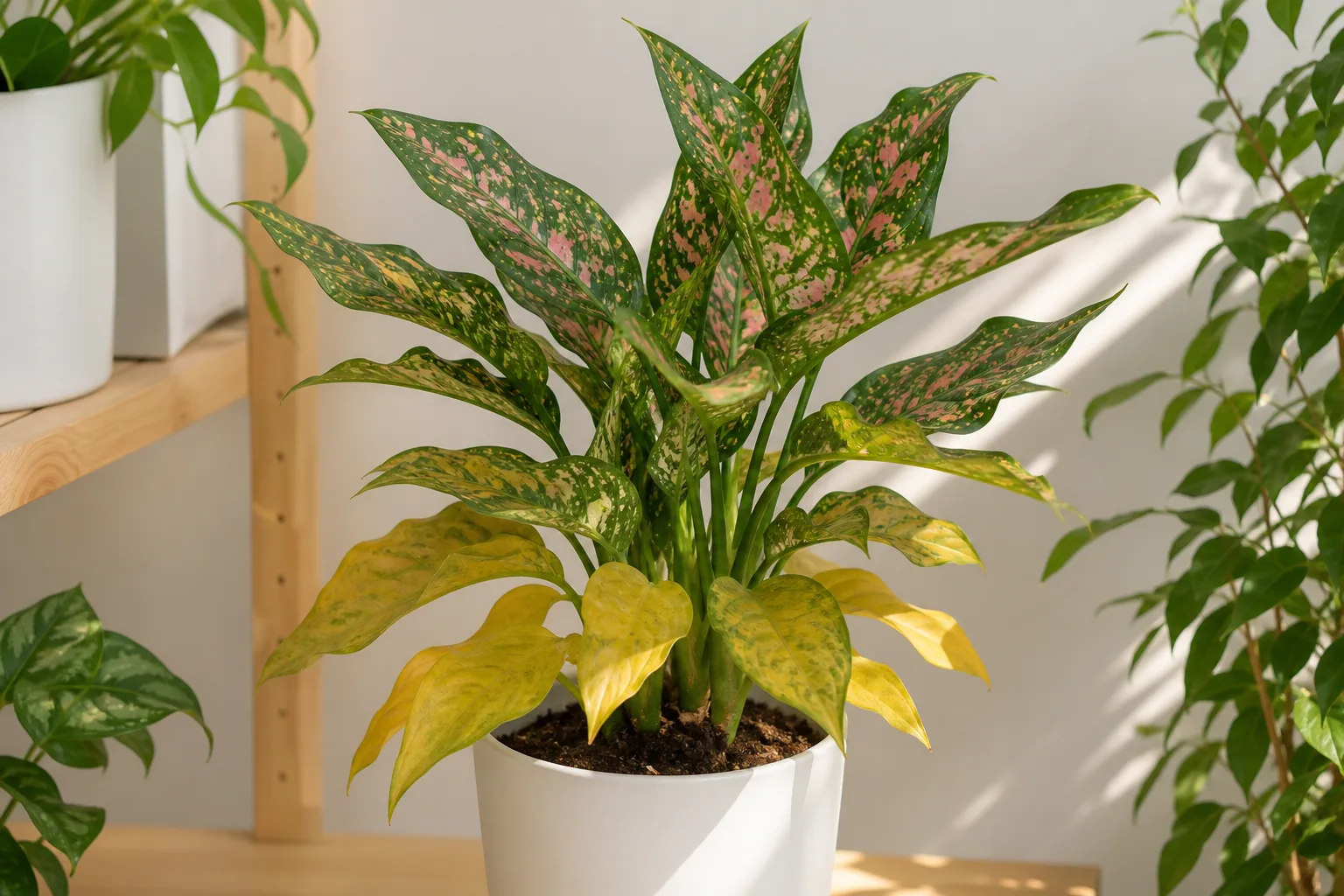
Yellow Leaves on Aglaonema Pink Dalmatian: Causes, Checks & Fixes
This guide covers yellow leaves on Aglaonema Pink Dalmatian. See also the general Yellow Leaves guide, watering, and light pages for this plant.
Yellow Leaves on Aglaonema Pink Dalmatian: Causes, Checks & Fixes
Quick answer
Yellow leaves on Aglaonema Pink Dalmatian are a stress signal, not one diagnosis. This slow-growing, pink-speckled Chinese evergreen yellows most often when soil stays wet too long-especially in winter when lower light slows water use and cool air slows evaporation from the pot. Overwatering is the leading cause on this cultivar.
First step: check moisture through the top half of the mix before you change anything else. Push your finger deep enough to feel whether the upper half is still damp. If it is cold and wet, stop watering until that zone dries. If the surface is dust-dry and the pot feels light, underwatering on Aglaonema Pink Dalmatian may explain the yellowing instead.
Separate normal lower-leaf aging from stress yellowing before you reach for fertilizer or repot. Pink Dalmatian is judged by color stability and firm new leaves-not by keeping every old bottom leaf green forever.
What yellow leaves look like on Aglaonema Pink Dalmatian
Pink Dalmatian carries green leaves splashed with pink speckles on short upright stems. Yellowing shows up in patterns that point to different causes:
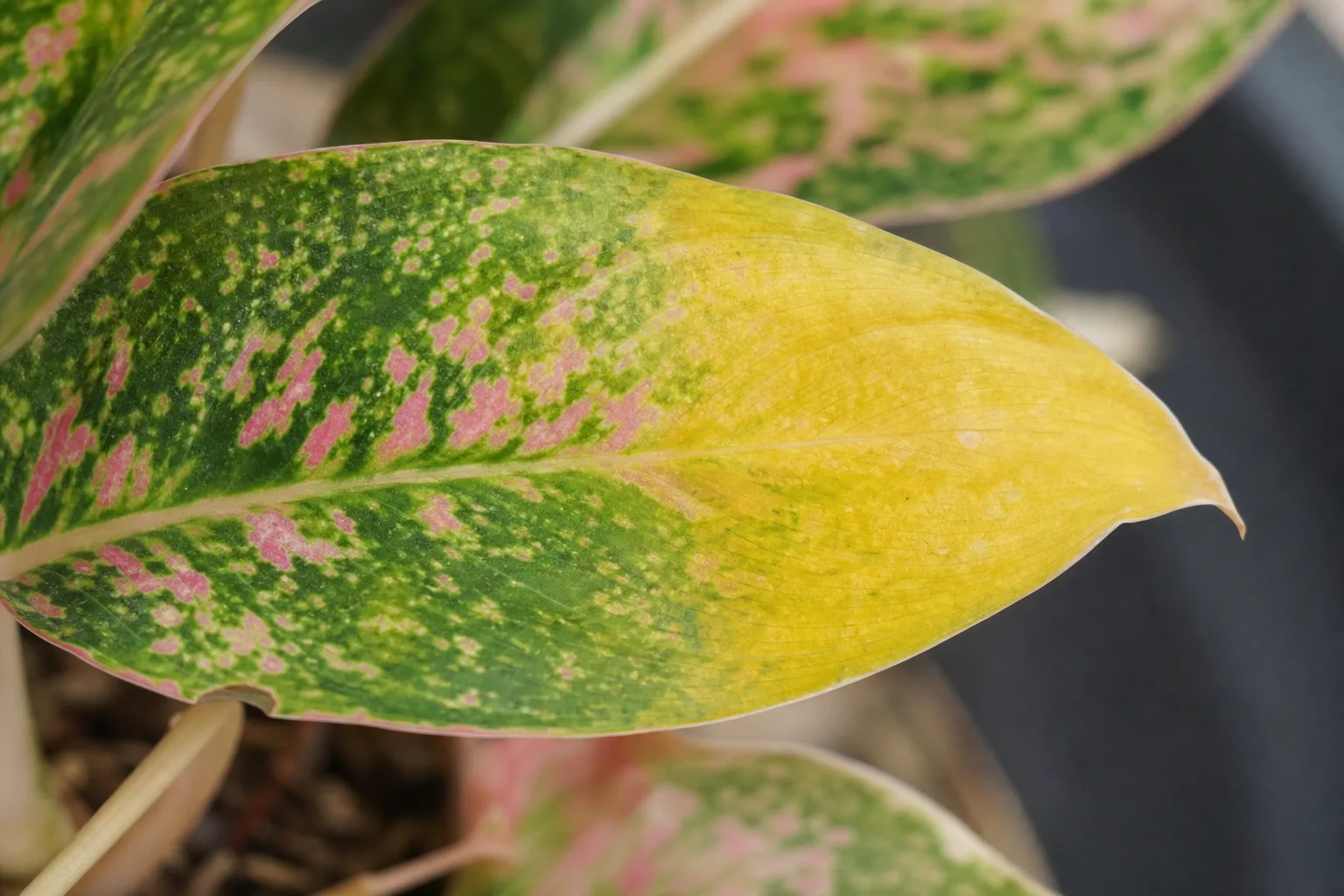
Chlorotic lower leaf on Pink Dalmatian with fading pink dalmatian speckles - compare with firm green speckled foliage on newer crown growth.
- Normal aging - One or two oldest bottom leaves fade from green to yellow over weeks or months while new center leaves stay firm with clear pink spotting. On a slow variegated aglaonema, losing a lower leaf now and then is expected turnover.
- Overwatering stress on Aglaonema Pink Dalmatian - Multiple lower leaves turn uniform yellow or pale green. Leaves may feel limp even though soil is wet. The pot stays heavy days after watering, and you may notice a sour smell from the mix.
- Low light fade - Pink speckles wash out to pale green or yellow-green on new and mid-crown leaves before older leaves fully yellow. Stems may stretch slightly. This is not the same as one bottom leaf aging out-it is a color-loss pattern across active growth.
- Direct sun bleaching - Pale pink and cream sections on leaves placed in direct sunlight show yellow or tan scorch patches on the exposed side while the shaded side keeps more color. Pink Dalmatian scars easily in harsh sun because its pale variegation lacks chlorophyll protection.
- Cold damage - Yellowing can appear suddenly on leaves touching a cold window, near an AC vent, or after a drafty night. Tissue may look water-soaked along veins before turning yellow or brown.
- Underwatering - Less common, but chronic drought yellows leaf edges first, then whole blades. Soil pulls away from pot sides and feels bone-dry through the top half.
Worry when yellowing climbs toward the center, pairs with wet soil, or strips pink color from new growth-not when one spent bottom leaf fades slowly on an otherwise firm plant.
Why Aglaonema Pink Dalmatian gets yellow leaves
Overwatering is the leading cause
Pink Dalmatian prefers evenly moist soil-not constant sogginess. When the mix stays saturated, roots lose oxygen and stop functioning. The plant sheds older leaves first because it cannot support them, which shows up as lower leaves turning yellow while the crown still looks intact.
This pattern worsens in cool, dim conditions. Pink Dalmatian grows slowly year-round and especially little in winter. Watering on the same summer schedule in December keeps the root zone wet for days-a common path from yellow leaves to root rot on Aglaonema Pink Dalmatian on variegated aglaonemas.
Heavy potting mix, blocked drainage holes, oversized pots, and saucers left full of runoff all keep roots wet longer than this cultivar tolerates. Root rot on Chinese evergreen usually results from slow-draining mix or overwatering.
Low light fades pink and slows dry-down
Pink Dalmatian needs medium to Aglaonema Pink Dalmatian light guide to keep speckling vivid. In very dim placement, pink fades toward pale green and the plant uses less water-so soil that would dry in a week under brighter indirect light may stay damp for two weeks in a dark corner. That makes a normal watering habit effectively become overwatering.
Variegated aglaonemas need low to moderate light but do not tolerate direct sun on foliage. The combination of dim light plus wet soil is one of the fastest routes to yellow lower leaves on this cultivar.
Too much direct light scorches pale sections
The pale pink and cream flecks on Pink Dalmatian leaves contain less chlorophyll than the green tissue. Direct sun bleaches or burns those sections to yellow-tan patches. This looks like yellow leaves but is a light injury, not root failure-fix placement, not watering frequency.
Cold temperatures and drafts
Aglaonema is tropical foliage. Sustained exposure to temperatures below about 15°C (60°F) disrupts root function and leaf metabolism. Chinese evergreen is sensitive to chilling below about 55°F and grows best around 68–80°F. Cold windowsills, frequently opened doors, and air-conditioning vents blowing directly on the pot are frequent triggers.
Cold stress often pairs with wet soil in winter-the combination that pushes a forgiving plant into rapid decline.
Natural lower-leaf senescence
Because new leaves emerge from the center of each crown, the oldest leaves at the bottom eventually yellow and drop. On a healthy Pink Dalmatian, this happens gradually-one leaf at a time-with firm new growth showing clear pink speckles above. Removing fully yellow leaves keeps the base tidy and makes new problems easier to spot.
Underwatering and nutrient stress (less common)
Repeated long dry cycles can yellow and crisp leaf edges. Nutrient deficiency usually follows years in the same depleted mix and more often causes pale new growth than random yellowing on an otherwise well-fed plant. Do not assume fertilizer is the fix until moisture and light are stable.
Lookalike symptoms to rule out
Before Aglaonema Pink Dalmatian repotting guide or spraying, rule out these common misreads:
- Brown tips only - Usually low humidity, fluoride in tap water, or fertilizer burn-not the full-leaf yellowing discussed here.
- Root rot - Advanced overwatering with mushy stems, sour soil, and collapsing crowns. Yellow leaves are an early sign; soft tissue at the soil line means escalation is urgent.
- Spider mites or mealybugs - Stippling, webbing, or white cottony clusters with sticky residue. Pests often follow a stressed plant but are not the first cause of plain yellow lower leaves.
- Leggy pale growth - Long stems and washed-out pink on new leaves point to too little light, which may overlap with overwatering but needs a placement fix, not just less water.
If wet soil and multiple yellow lower leaves appear together, treat watering and drainage first.
How to confirm the cause
Work through this inspection in order:
- Moisture through the top half - Dry upper half means you can water soon; cold and damp means pause watering. Bone-dry mix with a lightweight pot suggests underwatering.
- Pot weight and drainage - Lift the pot before and after watering. A heavy pot days later confirms slow dry-down. Check that drainage holes are open and saucers are empty.
- Which leaves are affected - Bottom only, slowly = aging likely. Multiple lower leaves quickly + wet soil = overwatering likely. Sun-facing patches on pale sections = light scorch. New center growth yellowing or losing pink = more serious root or placement stress.
- Pink color on new leaves - Fading speckles with wet soil suggests low light compounding overwatering. Scorched pale patches with dry soil near a window suggest too much sun.
- Temperature placement - Is the pot on a cold windowsill, near AC, or in a draft? Night temperatures below 15°C support cold stress.
- Root spot-check (if wet soil + spreading yellow) - Gently slide the plant partway out of the pot. Firm pale roots support a dry-down fix. Mushy brown roots confirm rot and need trimming before recovery.
Confirmed overwatering shows at least two signs: wet mix at depth, yellowing lower leaves, and a heavy pot that is not drying on schedule.
First fix for Aglaonema Pink Dalmatian
Stop watering until the top half of the mix is dry.
That single pause breaks the wet cycle that causes most Pink Dalmatian yellow leaves. Do not compensate with fertilizer, misting marathons, or an immediate repot unless roots are already mushy.
After the mix dries:
- Water thoroughly until runoff exits the drainage holes, then empty the saucer within 30 minutes. Never let houseplants stand in a saucer of water.
- Move the plant to medium to bright indirect light if pink has faded and the pot dries too slowly in deep shade-slightly brighter light helps predictable dry-down without exposing pale pink sections to direct sun.
- Move away from cold windows and AC drafts if leaf yellowing appeared after a temperature drop.
Remove fully yellow leaves at the base with clean scissors. Partially green leaves can stay-they still photosynthesize while the plant recovers.
Make this one correction first. Wait two weeks before stacking repotting, feeding, or pest treatments unless roots are clearly rotting.
If roots are mushy
When a spot-check finds brown, slimy roots and sour-smelling mix, escalate to root-rot recovery: unpot, trim dead roots, let cut surfaces dry briefly, and repot into fresh well-draining mix. Do not water for seven to ten days after repotting. That path is for confirmed rot-not for a single aging bottom leaf.
Step-by-step recovery
Match follow-up steps to what you confirmed:
Overwatering (wet soil, firm crown):
- Let the top half of the mix dry fully between waterings.
- Adjust winter frequency-Pink Dalmatian often needs water every 14–21 days in cool months versus every 7–10 days in active summer growth.
- Improve airflow around the pot and ensure drainage holes are clear.
- Watch for new center leaves staying green with visible pink speckles for two consecutive weeks.
Low light fade (pale new growth, slow dry-down):
- Shift to medium to bright indirect light-enough to restore pink color without direct rays on foliage.
- Pair the light fix with corrected watering; dim corners keep soil wet longer.
- Trim fully bleached leaves if they are mostly yellow; new leaves should show stronger speckling in correct light.
Direct sun bleaching:
- Move out of direct sun immediately.
- Trim severely scorched leaves if more than half the blade is yellow-tan.
- New growth should show intact pink flecks within two to three weeks in indirect light.
Cold stress:
- Move to a stable 18–27°C (65–80°F) spot away from vents and cold glass.
- Remove severely damaged leaves; do not water heavily while the plant is cold-stressed.
- Allow normal dry-down before the next drink.
Normal aging:
- Snip off fully yellow bottom leaves.
- No watering or light change needed if new growth stays firm with clear pink spotting and the pot dries on a healthy schedule.
Recovery timeline
Fully yellow leaves do not turn green again. They drop or can be removed. Judge recovery by healthy new leaves from the center-firm texture and visible pink speckling that holds for two to three weeks:
- Mild overwatering - Yellowing often stops within one to two weeks once soil oxygen returns. New leaves emerge green with pink within two to three weeks.
- Low light or sun stress - Damaged leaves may drop; color on new growth improves after placement correction within two to four weeks.
- Cold shock - Damaged leaves may drop; new growth resumes after stable warmth within two to four weeks.
- Advanced root rot - Recovery takes longer and may be partial. If the crown softens or new leaves keep yellowing after a dry-down and root trim, the plant may not be saveable.
Signs of improvement: pot weight drops on a normal schedule, new leaves hold their color and pink pattern, and yellowing does not climb toward the center. Signs of worsening: sour smell, soft stems, yellowing on new growth, or soil that never dries.
What not to do
Do not water more because leaves look limp when soil is already wet-that deepens root stress.
Do not fertilize a yellowing, wet-rooted plant. Salt buildup from overfeeding can also yellow foliage and burn leaf edges.
Do not repot on day one unless roots are mushy or drainage has failed. Repotting a waterlogged plant into a bigger pot often makes drying slower.
Do not move Pink Dalmatian into direct sun to “help it recover” or “bring back pink.” Bright indirect light is the ceiling; direct rays scar pale sections.
Do not ignore cold placement while fixing watering. Wet soil plus cold air is the fastest route from yellow leaves to crown rot on Aglaonema Pink Dalmatian overview.
How to prevent yellow leaves on Aglaonema Pink Dalmatian
Prevention comes down to matching water to how fast the pot actually dries in your home:
- Water on dryness, not calendar - Check the top half of the mix every time. Summer may mean every 7–10 days; winter often means every 14–21 days.
- Use well-draining mix - Standard potting compost with perlite or bark; avoid dense garden soil in a decorative pot without drainage.
- Keep medium to bright indirect light - Enough to keep pink speckles vivid and the pot drying on schedule; never direct sun on variegated foliage.
- Keep temperatures stable - Above 15°C (60°F) always; ideal range 18–27°C (65–80°F).
- Remove spent lower leaves promptly - Keeps the base clean and makes new problems easier to spot early.
- Flush salts occasionally - If you feed regularly during spring and summer, an occasional thorough flush reduces fertilizer-related tip burn that can accompany stress yellowing.
When to worry
Treat yellow leaves as urgent when:
- Many leaves yellow within a week, not one bottom leaf over months.
- Soil smells sour or stems feel soft at the soil line.
- New center growth yellows or loses pink speckling while older leaves also decline.
- The plant collapses despite moist soil-roots may be failing to absorb water.
A single yellow bottom leaf on an otherwise stable Pink Dalmatian with normal dry-down is routine. Widespread yellowing with wet soil is not-inspect roots the same week.
Pink Dalmatian care cross-check
If yellow leaves keep returning after you adjust watering, compare your routine to what this cultivar actually needs:
| Checkpoint | Healthy target | Yellow-leaf risk when wrong |
|---|---|---|
| Soil moisture | Top half dry before watering | Wet mix for days after each drink |
| Seasonal rhythm | Less water in cool, dim months | Summer schedule all year |
| Light | Medium to bright indirect | Deep shade + wet soil, or direct sun on pale pink sections |
| Pink color | Clear speckles on firm new leaves | Washed-out pink with slow dry-down |
| Temperature | 18–27°C (65–80°F), above 15°C minimum | Cold windowsills and AC drafts |
| Pot and mix | Drainage holes open; light, airy mix | Oversized pot, saucer water, heavy soil |
Fix the condition that fails this check before adding fertilizer, repotting for size, or treating for pests you have not confirmed.
When to use this page vs other Aglaonema Pink Dalmatian guides
- Aglaonema Pink Dalmatian watering guide - Use for routine moisture checks before assuming yellow leaves is the main issue.
- Aglaonema Pink Dalmatian problems hub - Browse all 16 common issues on this species.
- Overwatering on Aglaonema Pink Dalmatian - Different entry point when symptoms overlap with yellow leaves.
- Underwatering on Aglaonema Pink Dalmatian - Different entry point when symptoms overlap with yellow leaves.
- Not Enough Light on Aglaonema Pink Dalmatian - Different entry point when symptoms overlap with yellow leaves.
Related Aglaonema Pink Dalmatian guides
- Aglaonema Pink Dalmatian overview
- Aglaonema Pink Dalmatian watering
- Aglaonema Pink Dalmatian light
- Aglaonema Pink Dalmatian soil
- Overwatering on Aglaonema Pink Dalmatian
- Underwatering on Aglaonema Pink Dalmatian
- Not Enough Light on Aglaonema Pink Dalmatian
- Root Rot on Aglaonema Pink Dalmatian
- Aglaonema Pink Dalmatian problems