How to Water Aglaonema: A Complete Indoor Guide
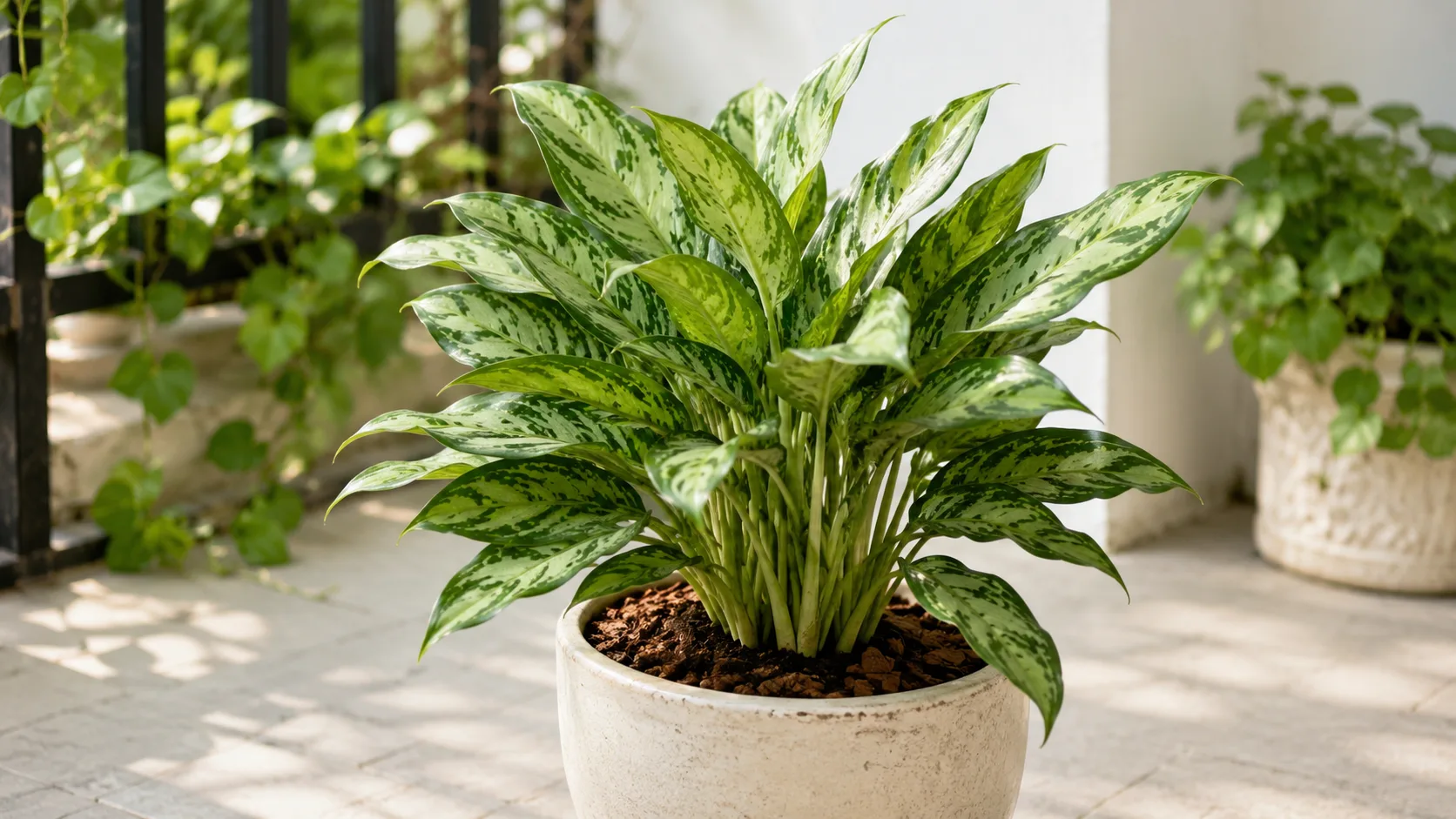
How to Water Aglaonema: A Complete Indoor Guide
How to Water Aglaonema: A Complete Indoor Guide
Good Aglaonema watering is a balance between moisture and oxygen. Chinese evergreen prefers a root ball that does not remain bone-dry for long, but its roots decline when dense mix stays saturated and airless. The safest routine is therefore not “water every seven days.” It is to check the root zone, water thoroughly when the upper layer has dried, let excess water escape, and check again only after conditions have had time to change.
Authoritative care guidance converges on that pattern. Clemson Cooperative Extension advises allowing the top one to two inches to dry before watering again. UF/IFAS recommends watering when the top inch feels dry and warns that overwatering on Aglaonema can trigger other problems. Arkansas Cooperative Extension says Aglaonema should dry slightly between waterings but not to the point of wilting, while Missouri Botanical Garden recommends consistent moisture during active growth and reduced winter watering without complete desiccation. The apparent differences are mostly differences in wording: lightly moist is acceptable; permanently saturated is not.
The Quick Answer: When and How to Water Aglaonema
Water Aglaonema when the top one to two inches of potting mix feel dry and the pot is noticeably lighter, while deeper mix still holds some moisture. Pour water evenly over the surface until it drains from the bottom, let the pot finish dripping, and empty the saucer or cachepot. Check more often in bright, warm conditions and less often in dim, cool conditions. Never water solely because a calendar reminder appears.
How often that happens may range from roughly a week in a small, warm, bright pot to two or three weeks in a large pot during winter. Those examples are not targets. A plant in dense peat, low light, and a nonporous plastic pot may take even longer, while a root-bound plant in terracotta can dry faster. The moisture check determines the day.
The amount at each watering should be enough to moisten the whole root ball and produce drainage. Giving a small measured sip every few days often leaves lower roots dry while the surface remains deceptively damp, and it allows fertilizer salts to accumulate. Frequency should change; thoroughness usually should not.
Why a Fixed Watering Schedule Fails
Water leaves a pot through plant use and evaporation. Both processes change continuously with light, temperature, humidity, leaf area, root health, airflow, pot material, and substrate. A schedule records time but measures none of those variables. It can be a reminder to inspect the plant, never proof that water is required.
The same Aglaonema can need water at very different intervals after a move. Brighter light increases photosynthesis and often water use. A darker location slows use and keeps the mix wet longer. Aglaonema repotting guide into a larger container surrounds the existing root ball with more moisture-holding material, while becoming root-bound can make a pot dry rapidly.
Consistency means responding consistently to the same moisture condition, not pouring water on the same weekday. Learn the weight and texture of the pot at “just watered” and “ready to water.” That feedback becomes more reliable than a generic online interval.
Light, temperature, and seasonal growth change demand. Light is one of the strongest controls on water use. In adequate indirect light, stomata open, photosynthesis proceeds, and the plant moves water from roots to leaves. In low light, demand falls. If the old watering interval continues after a move to a dim corner, the root zone may stay saturated for too long.
Temperature changes both evaporation and plant metabolism. Warm conditions usually speed drying, while cold roots absorb water slowly. Aglaonema is a tropical plant, so cold, wet mix is especially risky. Keep it away from winter drafts and air-conditioning vents, then lengthen the interval if the pot remains moist.
Humidity has a smaller and less predictable effect than many people assume. Dry air can increase moisture loss, but low light or a large pot may still keep the mix wet. Do not water because a hygrometer reads 35 percent. Check the substrate.
Pot Size, Material, and Potting Mix
A pot should be only modestly larger than the root mass. An oversized container holds a large volume of wet mix that roots cannot use quickly, increasing the chance of oxygen depletion. A very small or root-bound pot may dry so fast that moisture becomes difficult to maintain. When repotting, move up gradually rather than jumping several sizes.
Terracotta loses moisture through its porous walls and generally dries faster than glazed ceramic or plastic. Plastic nursery pots are useful because they are light, drain well, and can be lifted from decorative covers for inspection. A ceramic cachepot can hide standing runoff, so always remove or empty it after watering.
Mix structure matters at least as much as pot material. A blend containing peat or coir plus coarse perlite, bark, or another aeration component can retain moisture while preserving pore space. Fine, compacted, decomposed mix drains slowly even when the pot has a hole. Adding a layer of rocks at the bottom does not fix poor structure and can leave saturated mix perched above the coarse layer.
How to Tell When Aglaonema Needs Water
Use at least two signals until you know the plant well. Surface color alone is unreliable because the top can look dry while the center remains wet, or look dark because of mineral staining. Leaf droop is a late and ambiguous signal. Directly check the mix and pot weight before deciding.
Test at several points if the pot is wide. Water may channel down one side, leaving another dry. Dense roots may also create uneven pockets. A complete check prevents repeated watering of a wet center simply because one surface corner feels dry.
Finger, Skewer, and Pot-Weight Checks
Insert a finger one to two inches into the mix. Water when that layer feels dry or only faintly cool, rather than wet and clinging. For a deep pot, a plain wooden skewer inserted farther down can reveal moisture: dark, cool mix sticking to the wood indicates that the center remains wet. Avoid repeatedly stabbing thick roots in exactly the same place.
Lift the pot before and after watering. Water is heavy, so the difference is often obvious in a plastic nursery pot. Over several cycles, the “ready” weight becomes a fast, noninvasive check. Large ceramic planters are harder to lift, making a removable nursery pot or skewer more useful.
Do not wait for every particle to become dry. Aglaonema is not a cactus, and repeated severe drought can kill fine roots, curl leaves, and create brown margins. The goal is partial drying near the top while lower mix retains limited moisture and air.
Using a Moisture Meter Carefully
An inexpensive probe meter can help compare moisture at different depths, but it should not be the only test. Readings are influenced by salts, substrate composition, probe contact, and placement. A probe beside the pot wall may report dry while the center is saturated. A reading in an air pocket may be meaningless.
Insert the cleaned probe into multiple locations and depths, avoiding force against major roots. Compare its reading with finger feel, skewer appearance, and pot weight. Over time, learn what the number means in this specific mix rather than relying blindly on the colored zone printed on the device.
Remove and wipe the probe after use unless its instructions allow permanent installation. Leaving a basic metal probe in moist mix can corrode it and distort readings. If meter results conflict with obvious pot weight and wet mix on a skewer, investigate rather than automatically adding water.
How to Water Aglaonema Correctly
Take the plant to a sink or place a tray beneath it. Apply room-temperature water slowly and evenly across the entire surface, pausing if the mix initially repels water. Continue until water exits the drainage holes. Let the pot drain fully before returning it to its location.
This method moistens the root zone, dissolves available nutrients, and carries some accumulated salts out. It also gives you a chance to confirm that drainage holes remain open. A pot that accepts water slowly may be root-bound or compacted; a pot where water immediately races down one channel may contain shrunken, hydrophobic peat.
Avoid pouring water repeatedly into the plant’s crown. Occasional wet leaves are not inherently disastrous, but water trapped around crowded stems in cool, stagnant conditions can encourage problems. Direct most water to the substrate and provide reasonable airflow.
Top Watering and Bottom Watering
Top watering is the best default because it wets the mix from above and allows drainage to carry salts downward and out. Pour gently enough that mix does not wash away. If water beads on a very dry surface, add a small amount, wait several minutes, then continue. This staged approach gives peat-based mix time to rehydrate.
Bottom watering can rewet a hydrophobic root ball. Set the drainage pot in a shallow container of water for roughly 10 to 20 minutes, then remove it and let it drain. Do not leave it submerged for hours or permanently standing in water. Finish with occasional top watering to flush salts that bottom watering can draw toward the upper layers.
Either method can work when used deliberately. The key is complete wetting followed by free drainage and an appropriate drying interval. Bottom watering is not a cure for a pot with no drainage, and top watering cannot rescue compacted mix that excludes air for weeks.
Drainage, Saucers, and Cachepots
Every soil-grown Aglaonema container should have a functional drainage opening. Drainage does not make overwatering impossible, but it allows excess water to leave and makes thorough watering practical. Check holes during repotting and prevent roots or compacted material from sealing them.
Empty saucers after watering. If the nursery pot sits inside a decorative cachepot, remove it to water or check the cover afterward for hidden runoff. A raised insert can keep the pot above a small residual amount, but it is still better to discard the water. Roots should not remain submerged.
Do not solve a no-hole planter by adding less water. Small sips make moisture distribution and salt levels difficult to control, and accumulated water has no reliable exit. Use the decorative container as a cachepot around a drained nursery pot instead.
How Watering Changes Through the Year
The plant’s moisture target remains similar across seasons, but the time needed to reach it changes. Longer days and warm temperatures often accelerate use. Short days, cool rooms, and slowed growth extend the interval. Indoor heating can dry air while the root ball still dries slowly, so never infer soil moisture from air dryness alone.
Recheck after any environmental change: opening or closing blinds, starting air conditioning, moving the plant, switching pots, installing a grow light, or repotting. A one-week observation period catches changes before they become chronic. Keep a log if you tend to forget whether you checked or actually watered.
Spring and Summer
During active growth, inspect the mix more frequently because leaves and roots may use water faster. In Aglaonema light guide, a smaller pot can dry quickly. Check every few days, but water only when the upper layer reaches the target dryness. More frequent checking is not the same as more frequent watering.
Warm outdoor placement, if climate permits, can change demand sharply. Wind and brighter outdoor shade may dry a pot faster than an indoor room, while heavy rain can keep it saturated. Protect the plant from direct sun and cold, confirm drainage, and never leave a saucer collecting rain.
Fertilizer is often applied during spring and summer growth. Use diluted fertilizer on an appropriately moist root ball and allow runoff to drain. Plain-water irrigation between feedings helps prevent salt accumulation.
Fall and Winter
As growth slows, let the surface dry and expect a longer wait before the pot becomes light. Missouri Botanical Garden advises reducing watering from early fall to late winter without allowing the mix to dry completely. That is a reduction in frequency, not a switch to tiny sips. When watering is due, wet the root ball thoroughly and drain it.
Cold is an important multiplier. Chilled roots in wet mix are vulnerable because water uptake and evaporation slow. Move the pot away from cold glass, exterior doors, and drafts. Water earlier in the day with room-temperature water so the plant does not sit freshly wet in the coldest overnight conditions.
Plants under strong grow lights in warm rooms may continue active growth and need a less dramatic winter reduction. Follow actual drying and new growth. The calendar tells you to pay attention; the pot tells you whether to water.
Diagnose Overwatering and underwatering on Aglaonema
Both overwatering and underwatering can cause droop, yellow leaves, brown areas, and slowed growth. The decisive evidence is in the substrate and roots, not the leaf symptom alone. Check how long the mix has stayed wet, smell it, inspect drainage, and examine roots if decline is serious. Healthy roots are generally firm and pale tan, cream, or light brown; rotted roots become dark, soft, hollow, or foul-smelling.
One yellow lower leaf may simply be aging. Multiple leaves changing quickly, stem softness, persistent wilt, or a sour mix deserves investigation. Do not alternate panic watering and prolonged drought; that damages roots further and obscures the original cause.
|| Evidence | Too much water or poor aeration | Too little water | ||---|---|---| || Potting mix | Wet for many days, possibly sour | Dry, shrunken, may pull from pot edge | || Pot weight | Persistently heavy | Very light | || Roots | Dark and mushy if rot has begun | Dry, brittle fine roots if severe | || Leaves | Yellowing, soft wilt, edema-like damage | Limp, curled, crisp margins | || Stem base | May soften in advanced rot | Usually firm unless damage is extreme |
Signs and Rescue Steps for Too Much Water
Overwatering means the root zone remains too wet for too long, often because of frequent watering, dense mix, low light, cold, an oversized pot, or blocked drainage. Stop watering and empty all standing runoff. Move the plant to warm, appropriate indirect light with gentle airflow. Do not use intense sun to “dry it out,” because stressed foliage may scorch while the root center remains wet.
If the plant is stable and the mix is merely wetter than ideal, allow it to dry naturally and correct the interval. If leaves yellow rapidly, stems soften, or the mix smells sour, slide the root ball out and inspect it. Trim truly mushy dead roots with clean tools, remove degraded mix, and repot into fresh, airy substrate in a pot sized to the remaining roots.
Do not fertilize during recovery. Nutrient salts add stress to injured roots. Water the fresh mix enough to settle it, drain completely, and then wait for appropriate partial drying. If extensive stem-base rot is present, preserve healthy upper stem sections as cuttings rather than assuming the original root system can recover.
Signs and Recovery Steps for Too Little Water
An underwatered Aglaonema often has limp or curling leaves, a very light pot, dry mix, and crisp edges after repeated drought. If the plant perks up within a day after thorough watering, the roots remain functional. One isolated dry event is usually recoverable, but repeated wilting kills fine roots and causes lasting leaf damage.
Rehydrate gradually when mix has become hydrophobic. Add water in stages or bottom-water briefly, then top-water and allow complete drainage. Do not leave the pot standing in water overnight. Severely dried roots cannot absorb an unlimited volume instantly, and permanent saturation after drought creates a second stress.
Damaged brown tissue will not turn green. Resume watering based on partial drying and assess new leaves. If the pot becomes dry again within a day or two, the plant may be root-bound, the mix may contain too little water-retentive material, or the environment may be unusually hot and windy.
Water Quality, Humidity, and Special Setups
Most Aglaonemas can be maintained with ordinary potable tap water. Problems are more likely when water is very hard, high in dissolved salts, softened with sodium, or combined with frequent fertilizer. White crust on the pot and repeated tip burn suggest reviewing water quality, but those signs are not exclusive to water. Root damage and inconsistent moisture can look similar.
Humidity affects leaves more than it determines watering day. Aglaonema tolerates average household humidity but generally appreciates moderate humidity. A humidifier can reduce stress in very dry air; it does not mean the soil should stay wetter. Pebble trays have limited effect beyond their immediate area and must not leave the pot base submerged.
Tap water, filtered water, and salt buildup require context. If tap water works and the plant grows cleanly, keep using it. Letting water stand overnight may allow chlorine to dissipate, but it does not remove dissolved minerals, chloramine, fluoride, or sodium. A basic carbon filter changes some compounds but may not reduce hardness substantially. Check the filter specification rather than assuming.
Rainwater or distilled water can help when local water is very mineral-rich, but rainwater collection must be clean and legal in your location. Reverse-osmosis water is another low-mineral option. If using very low-mineral water exclusively, a complete fertilizer during active growth supplies essential nutrients in controlled amounts.
Flush a free-draining pot periodically with plain suitable water, especially when fertilizing. Let a generous volume pass through and discard runoff. Do not flush a plant that is already waterlogged or in a no-hole container; first correct drainage and root conditions.
Self-Watering Pots, Semi-Hydro, and Propagation
Self-watering pots can suit Aglaonema when the substrate is designed for capillary action and the reservoir does not keep a dense conventional mix saturated. Establish roots in the system before maintaining a full reservoir, and allow an appropriate air gap or dry interval according to the planter design. Monitor the mix rather than assuming the indicator proves root conditions are ideal.
Semi-hydro systems using mineral media require a different approach to reservoir level, flushing, pH, and nutrients. Do not transfer a soil watering schedule directly. Soil roots may die back while water-adapted roots develop, so transition carefully and use fertilizer designed for the system.
Aglaonema stem cuttings can root in water, but propagation water should be refreshed regularly and the container kept clean. When moving water-rooted cuttings into mix, maintain even light moisture initially while roots adapt, then transition toward the normal partial-drying routine. Keeping the new pot permanently saturated does not recreate oxygen-rich water propagation.
Troubleshoot Yellow Leaves and Other Symptoms
Yellow lower leaf: If it is one old leaf and the plant otherwise grows well, natural senescence is likely. If several leaves yellow while the mix stays wet, investigate low light, poor drainage, and root health. If the mix is dry and the pot is very light, drought may be involved. Remove the leaf only after identifying the pattern.
Brown tips: Review inconsistent watering, salt accumulation, dry air, damaged roots, and fertilizer concentration. Do not automatically water early because a tip is brown. Check the root zone first. Old tip damage remains visible after the cause is corrected.
Drooping in wet soil: Do not add water. Wet-soil droop can indicate oxygen-starved or rotting roots that cannot take up moisture. Improve warmth and light, inspect drainage, and examine roots if the condition does not stabilize.
Drooping in dry soil: Water thoroughly and allow drainage. If the plant recovers, adjust your checking interval so the mix does not reach that point repeatedly. If it remains wilted despite rehydration, root death or stem damage may prevent uptake.
Water runs straight through: The mix may have shrunk away from the pot or developed channels. Rewet slowly in stages or bottom-water briefly, then assess whether the substrate has broken down or the plant is root-bound. Repot if water distribution remains poor.
Soil never seems to dry: Improve usable light, warmth, airflow, and drainage. Check whether the pot is oversized or the mix too fine. Do not keep waiting indefinitely if the plant is declining; inspect roots and repot into an appropriate container and airy mix.
Conclusion
Reliable Aglaonema watering comes from checking conditions, not counting days. Wait until the top one to two inches have dried and the pot feels lighter, then water the whole root ball until excess drains. Empty saucers and cachepots, protect the root zone from cold and chronic saturation, and adjust the interval whenever light, season, pot, or mix changes.
Use multiple moisture signals and diagnose leaves in context. A wet, heavy pot calls for patience and possibly a root check; a dry, light pot calls for thorough rehydration. Good watering keeps both moisture and oxygen available. Once that balance is stable, Chinese evergreen becomes far more predictable, and yellow leaves, rot scares, and emergency rescues become much less common.
When to use this page vs other Aglaonema guides
- Aglaonema overview - Start here for whole-plant context before deep-diving this topic.
- Aglaonema problems hub - Jump to symptom-specific fix guides when this care topic does not resolve the issue.
- Overwatering on Aglaonema - Escalate here when watering adjustments are not enough.
- Underwatering on Aglaonema - Escalate here when watering adjustments are not enough.
- Root Rot on Aglaonema - Escalate here when watering adjustments are not enough.
Related Aglaonema guides
- Aglaonema overview
- Aglaonema light
- Aglaonema soil
- Aglaonema propagation
- Aglaonema fertilizer
- Aglaonema repotting
- Overwatering on Aglaonema
- Underwatering on Aglaonema
- Root Rot on Aglaonema
- Wilting on Aglaonema
- Drooping Leaves on Aglaonema
- Mold on Soil on Aglaonema
Related tool
Try the Plant Watering Calculator with aglaonema pre-selected to estimate needs for your setup.