Overwatering on Aglaonema (Chinese Evergreen): Causes &
Quick answer
On Chinese evergreen, wet soil plus yellow or limp lower leaves means stop watering-not another drink. Push your finger into the top 2 inches of mix; if it feels cold and damp while lower leaves yellow, wait until that zone dries and the pot feels lighter before watering again.
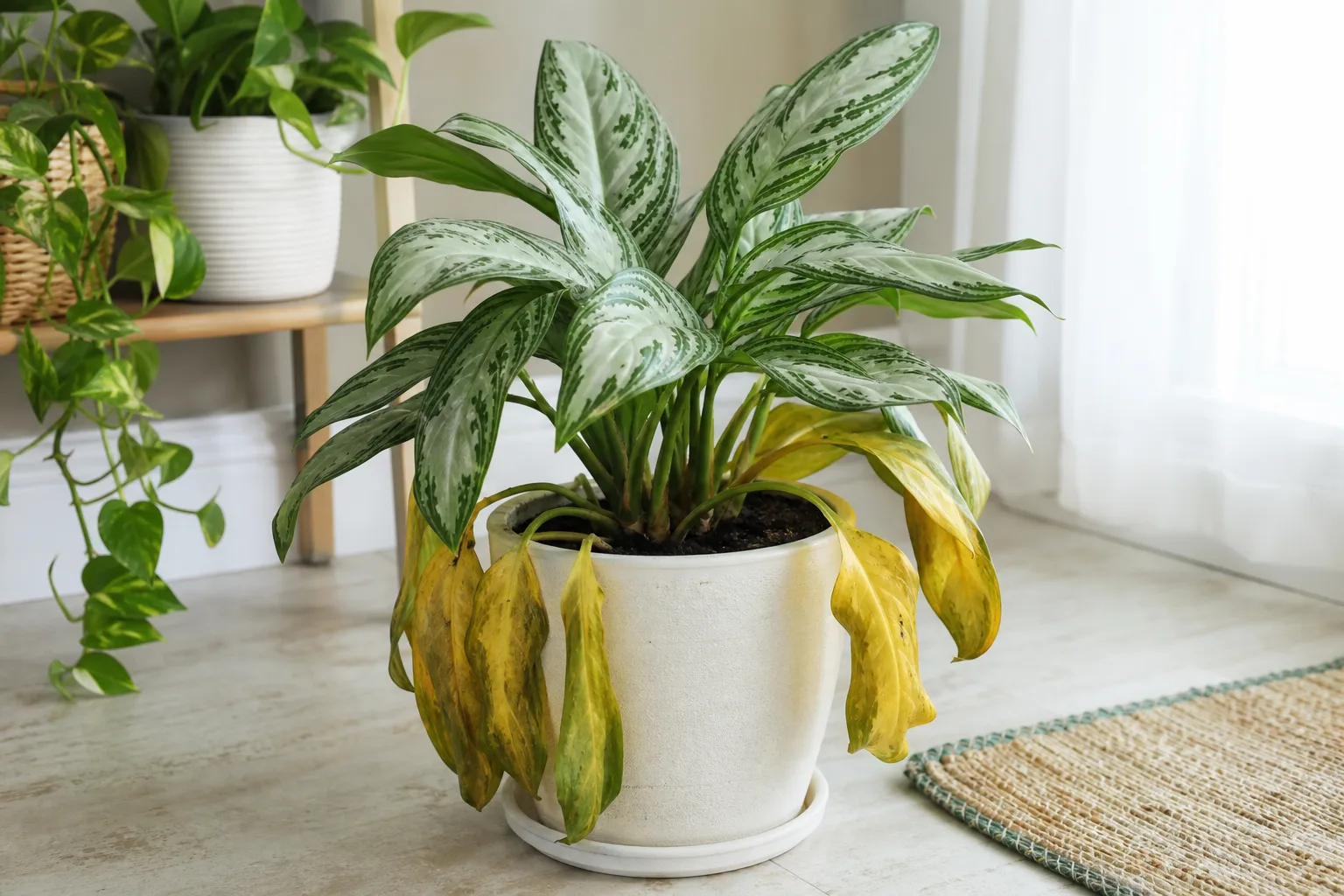
Overwatering on Aglaonema: Causes, Checks & Fixes
This guide covers overwatering on Aglaonema. See also the general Overwatering guide, watering, and light pages for this plant.
Overwatering on Aglaonema: Causes, Checks & Fixes
Quick answer
On Aglaonema (Chinese evergreen), the signature overwatering paradox is limp, thirsty-looking leaves while the mix stays wet. Fine tropical roots evolved for humid understory floors that drain and breathe-not sealed indoor pots that hold water around the crown for days. When soil stays saturated, roots lose oxygen and stop absorbing water properly, so the plant wilts even though you watered recently.
First step: stop watering and check depth, not just the surface. Push two fingers into the top 2 inches of mix. Cold, damp soil combined with yellowing lower leaves and a heavy pot points to overwatering. Do not pour again until that zone dries and the container feels noticeably lighter.
This page is the genus-wide overwatering hub for any Chinese evergreen cultivar. For yellow leaves with multiple possible causes, see the yellow leaves guide. Cultivar-specific pages (Maria, Silver Bay, Pink Dalmatian, Red Valentine) cover variegation-only nuances; start here for wet-soil diagnosis on any Aglaonema.
By sai-ananth · Reviewed by LeafyPixels Review Board · Last expert review: June 2026
What overwatering looks like on Aglaonema
Overwatering on Aglaonema usually attacks the oldest leaves first. Lower foliage turns yellow or pale green and may droop while the soil surface still looks dark and cool. Stems near the soil line can feel soft in advanced cases. You may notice a sour smell from the pot, white mold on the surface, or fungus gnats hovering when mix stays wet for days.
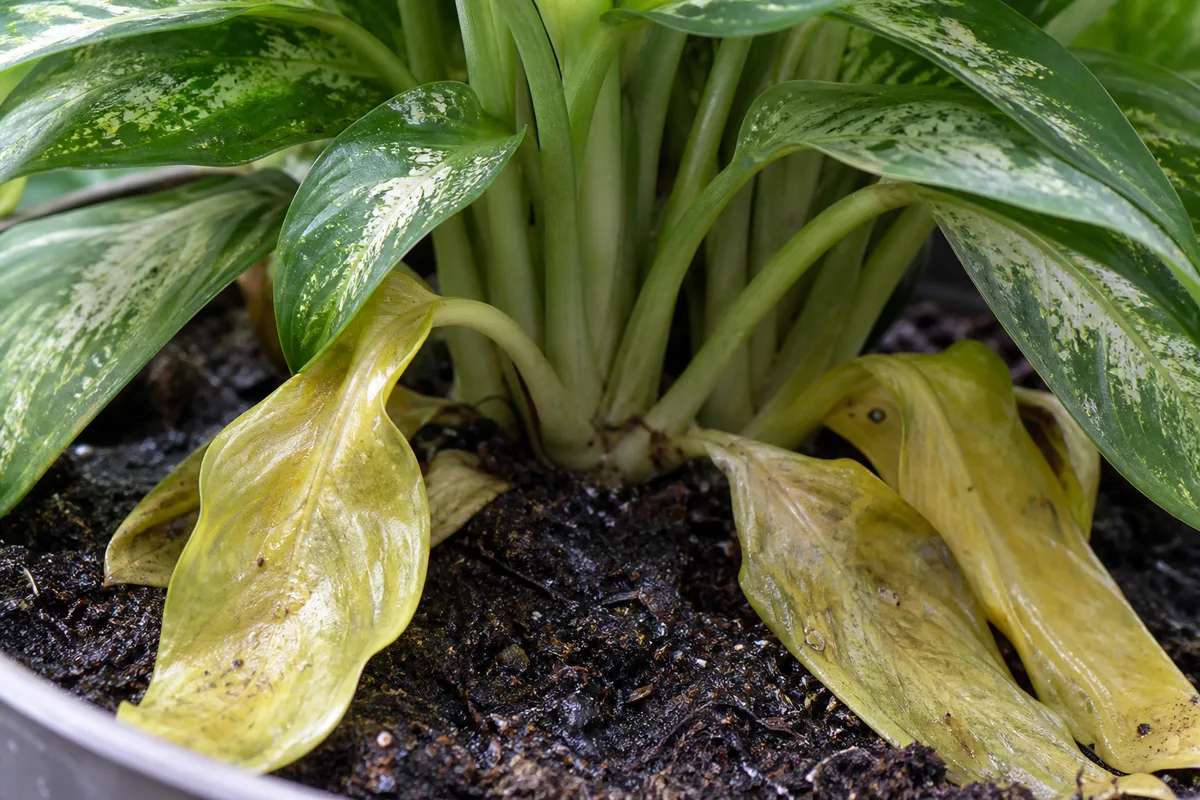
Yellow limp lower leaves on Aglaonema with damp dark soil at the base - the classic wet-soil pattern before roots fail completely.
The confusing part is wilting with wet soil. When roots suffocate in saturated, airless mix, they cannot move water to the leaves-the plant looks thirsty even though the problem is too much water. Healthy Aglaonema leaves should feel firm and hold their pattern color. Limp, pale lower leaves on a heavy pot are the classic early pattern.
Variegated cultivars often show stress as washed-out silver or pink zones before entire leaves yellow. A single yellow leaf after repotting is less alarming than a steady march of yellowing from the bottom up while the mix never dries.
Multi-crown pots can hide wet pockets at the core: one section yellows while another crown still looks fine, especially when the plant is root-bound or the nursery pot sits inside a sealed decorative sleeve.
Photo check (illustrative): Uniform yellow on several lower leaves with a heavy wet pot points to overwatering; washed-out pink or silver zones on variegated blades with damp mix suggest root stress before full yellowing; firm stems with one fading bottom leaf and normal dry-down may be natural aging. Original labeled comparison photos are pending for a future update-use the comparison table below until then.
Why Aglaonema gets overwatering
Aglaonema evolved in the humid understory of tropical Asia. It tolerates brief drying better than constant sogginess, but jungle floor soil drains between rains-something a sealed indoor pot often does not replicate. Several habits push Chinese evergreen into chronic wetness:
Calendar watering. Watering every Sunday ignores how fast your pot dries. Cool rooms, short winter days, and dim corners slow water use. Continuing a summer schedule through winter keeps roots wet when growth has slowed.
Low light slowing dry-down. Aglaonema tolerates low to moderate indirect light, which makes it popular for offices and north-facing rooms. Less light means less photosynthesis and slower water uptake. The same volume of water that worked in a brighter spot can leave soil soggy for a week in shade.
Heavy or compacted mix. Standard peat-heavy potting soil without perlite or bark holds water around fine roots. Old mix that has broken down behaves like a sponge. On Aglaonema, dense soil plus frequent watering is a fast route to root rot.
Oversized pots, cachepots, and poor drainage. A decorative outer pot without holes, a saucer left full after watering, or a container much larger than the root ball keeps the center of the mix wet long after the surface looks acceptable. Multiple crowns in one pot can hide wet pockets at the core-worse when the plant is root-bound and water cannot move through dense root mass.
Winter mismatch. Aglaonema does not go fully dormant indoors, but growth slows in cool, low-light months. Reduce watering from fall through winter when water use drops sharply. Many yellow-leaf cases in winter trace to unchanged watering rather than cold alone.
Pot material. Unglazed terracotta breathes and dries faster than plastic in the same room. In a dim office, a slow-growing Aglaonema in a sealed plastic nursery pot inside a cache sleeve often stays wet 14–21 days on a weekly calendar-long enough for lower leaves to yellow even when the owner thinks they are being careful. Terracotta is not a cure for overwatering, but it can shorten dry-down when you also fix the watering rhythm.
How to confirm the cause
Work through these checks before repotting, fertilizing, or trimming heavily:
- Soil moisture at depth - Surface dryness can mislead. Stick two fingers into the top 2 inches. Cold, damp soil means wait. Dry, warm soil at that depth means the plant may actually need water-or is recovering from past wetness.
- Pot weight - Lift the container. A heavy, cool pot days after watering indicates wet mix throughout. A light pot with wilted leaves points toward underwatering or root loss, not simple thirst.
- Leaf pattern - Yellowing starting on lower, older leaves while upper growth still looks normal fits overwatering. Random spots, crisp brown tips only, or bleached patches suggest other causes-see the yellow leaves hub.
- Stem and crown firmness - Press gently at the soil line. Firm tissue is reassuring. Soft, collapsing stems mean escalate beyond a simple watering pause-inspect roots the same week.
- Drainage and setup - Confirm holes are open, no standing water sits in the saucer, and the plant is not sealed inside a decorative outer pot. Lift the nursery pot out of cache sleeves after every drink.
- Recent care changes - Repotting into a larger container, moving to a darker corner, or increasing watering after leaves drooped often explains a sudden decline.
If soil is dry throughout, the pot is light, and leaf edges are crispy, underwatering or low humidity is more likely. Do not water until you know which direction the problem runs.
Lookalike symptoms
| What you see | Soil / pot | Stem base | Likely cause | First move |
|---|---|---|---|---|
| Limp lower leaves, uniform yellow | Wet, heavy, cool mix | Firm | Overwatering | Stop water until top 2 inches dry |
| Crisp brown edges, drooping blades | Bone-dry, light pot | Firm | Underwatering | Water thoroughly; empty saucer |
| One fading bottom leaf, firm crown | Normal dry-down | Firm | Natural senescence | Snip when fully yellow; no panic |
| Sudden yellow near window/AC | Often still damp | Firm | Cold + wet combo | Move from draft; dry down |
| Yellow + sour smell + soft stem | Saturated | Soft | Root rot | Unpot and trim mushy tissue same week |
| Washed-out variegation, heavy pot | Damp 5+ days | Firm | Overwatering (early) | Pause water; check cachepot |
Root rot is often the end stage of chronic overwatering. If stems blacken at the base or roots are mushy on inspection, follow the root rot guide for trimming and repotting steps-not another watering cycle.
Cold damage below about 55°F (13°C) can yellow leaves with firm stems and normally drying soil. Moving away from a draft and holding water until the mix is ready is the right response-not extra watering.
The first fix to try
Stop watering. Do not give another drink until the top 2 inches of mix feel dry and the pot weight drops noticeably. This single pause prevents rot from spreading and gives you a clear baseline.
Move the plant to the brightest indirect spot available so remaining moisture evaporates faster, but do not stack repotting, pruning, fertilizer, or pesticide sprays on the same day. One correction at a time makes it obvious what helped.
Empty any saucer or cache-pot runoff within 30 minutes of the last watering. If the plant sits inside a decorative cover, take it out until the root zone dries.
When not to repot on day one: If stems are still firm, soil smells normal, and only lower leaves are yellowing, a dry-down pause is usually enough. Repot when the mix stays sour and wet for more than a week, roots feel mushy on a gentle tug, or the pot weight never drops despite no new water.
If stems are still firm after the mix dries appropriately, you likely caught the problem early. Resume watering only when the top 1–2 inches are dry, then water thoroughly until drainage runs from the bottom and discard excess. For the full seasonal rhythm, use the Aglaonema watering guide-this page stays focused on wet-soil recovery.
Step-by-step recovery when roots may be damaged
If the pot smells sour, soil stays wet for more than a week, or lower stems feel soft, inspect the root zone:
- Unpot gently - Slide the plant out and brush away mix from the root ball. Healthy Aglaonema roots are firm and pale. Mushy brown or black roots are rot.
- Trim only rotten tissue - With clean scissors, remove soft roots and any blackened stem base until you reach firm material. Wear gloves if sap irritates your skin. Aglaonema contains calcium oxalate crystals that irritate mouth tissue-keep trimmed debris away from pets and children.
- Air and repot if needed - Let the root ball breathe for a few hours in shade. Repot into fresh, well-drained mix-Clemson HGIC recommends a commercial soilless mix with extra humus; for recovery, amend with perlite or orchid bark so water moves freely. Use a pot with drainage holes sized to the root mass-not dramatically larger. See the soil guide for mix ratios.
- Hold water briefly - After repotting into fresh mix, wait five to seven days before the first light watering so cut surfaces callous and new roots can start in aerated soil.
- Resume the check-first rhythm - When you water again, soak evenly, drain fully, and wait until the top 2 inches dry before the next drink.
Hydrogen peroxide or fungicide drenches are not a substitute for trimming mushy roots and fixing drainage. Extension guidance for houseplant root decline centers on removing rotted tissue, repotting into fresh aerated mix, and correcting the wet cycle-not routine chemical drenches after every trim. If you use a labeled fungicide, follow the product directions exactly; it is optional, not required for mild cases.
If the crown is fully soft with no firm tissue at the base, saving the plant is unlikely. Take stem cuttings from firm upper growth only if green tissue remains above the rot line-see the propagation guide for cane-cutting steps.
Recovery timeline and what to watch
Minor overwatering caught while stems are still firm often stabilizes within one to two weeks once watering stops and the mix dries. Yellow leaves may not green up again; judge success by firm new leaves from the center, not by saving every old blade.
Moderate cases with some root loss take several weeks. Expect additional lower leaves to yellow and drop while the plant rebuilds roots. Do not fertilize until new growth looks normal-salts stress damaged roots.
Severe crown involvement can take a full growing season to know whether the plant survived. Improvement signs include soil that dries at a predictable pace, a firm base, and unfurling leaves with stable color. Worsening signs-spreading soft tissue, collapse despite dry soil after recovery attempts, or a sour smell returning quickly-mean rot is advancing; escalate to the root rot guide and consider stem-cuttings backup.
Mistakes to avoid
Do not water because leaves look sad without checking soil first. Wilting with wet mix is the classic overwatering trap on Aglaonema.
Do not mist leaves or run a humidifier hoping to perk a waterlogged plant. Excess ambient moisture slows soil drying and encourages fungus gnats without fixing root oxygen.
Avoid repotting into a much larger container to “help drying.” Extra soil holds more water and stays wet longer.
Do not use standard indoor potting mix without perlite or bark for a plant that has already struggled with wet feet.
Do not fertilize a stressed or rotting plant hoping to push new growth. Feed only after watering rhythm and root health are stable.
During winter slowdown, resist the urge to water on the same schedule as summer just because the plant looks quiet. Check the mix instead.
Do not rely on a moisture meter alone on dense peat-surface probes can read “dry” while the core stays wet in a root-bound multi-crown pot. Pair meter readings with finger depth and pot weight.
How to prevent overwatering next time
Match watering to how fast your pot dries, not a calendar. In warm, bright conditions, water when the top inch feels dry-often every 7–10 days in summer. In cool, dim winter rooms, the same plant may need water only every two to three weeks. The watering guide covers seasonal rhythm in depth-use it as your ongoing reference rather than duplicating schedules here.
Use a light, well-drained mix with perlite or orchid bark and a pot only slightly larger than the root mass. Always empty saucers after watering. Keep Aglaonema where low to medium indirect light is realistic; if the mix stays wet too long in a dark corner, improve light or reduce water before yellow leaves appear.
Learn your pot’s dry-down rhythm during the first month after purchase. Weigh the container when freshly watered versus ready to water, or count how many days pass before the top 2 inches dry. That personal baseline beats any generic schedule.
Inspect lower leaves and soil smell weekly. Firm new growth and mix that cycles between moist and slightly dry at the surface mean your rhythm is working. Repeated yellowing from the base while soil stays cool and damp is an early alarm-cut water before rot spreads.
When to worry
Treat overwatering as urgent if the crown softens, stems collapse at the soil line, or the plant wilts while mix is wet during active growth. Those signs mean rot may be moving into the stem base-follow the root rot guide the same week.
Slow yellowing on firm stems with soil that dries normally between waterings can wait for a schedule adjustment. Wet soil plus a soft base should not wait through another watering cycle.
If you are unsure whether tissue is firm or mushy, unpot and look at the roots. A five-minute inspection prevents weeks of guessing and can save the plant when rot is still localized.
If rot returns after two recovery attempts with corrected drainage and watering, contact your local cooperative extension office for help identifying persistent pathogens or potting issues-chronic failure often means hidden standing water in a cachepot or a mix that no longer drains.
Related Aglaonema guides
- Overview - species baseline, cultivars, and toxicity
- Watering - top-2-inch dry-down rhythm and seasonal schedule
- Soil - perlite-amended mix when repotting after wet feet
- Root rot - soft crown, sour smell, mushy roots
- Yellow leaves - multi-cause diagnostic hub
- Underwatering - dry pot and crisp edges
- Fungus gnats - flies that follow chronically wet mix
- Repotting - when to upsize without worsening wet core
This genus hub covers wet-soil diagnosis for any Chinese evergreen. Cultivar pages add variegation-specific cues only where they differ from the patterns above.