Aglaonema (Chinese Evergreen) Care Guide Indoors
Aglaonema commutatum
Aglaonema thrives in low to medium indirect light and only needs watering every 7–10 days when the top 2 inches of soil are dry. One of the most forgiving colourful houseplants for warm climates, though toxic to pets.
Aglaonema (Chinese Evergreen) Care Guide Indoors
Start with wateringThe most common care mistake for AglaonemaWatering guide →Aglaonema care essentials
Light
low to medium indirect light
Water
Water when the top 2 inches of soil are dry - roughly every 7–10 days in summer.
Soil
Well-draining, lightly fertile potting mix.
Humidity
40–60%
Temperature
18–27°C (65–80°F)
Fertilizer
About Aglaonema
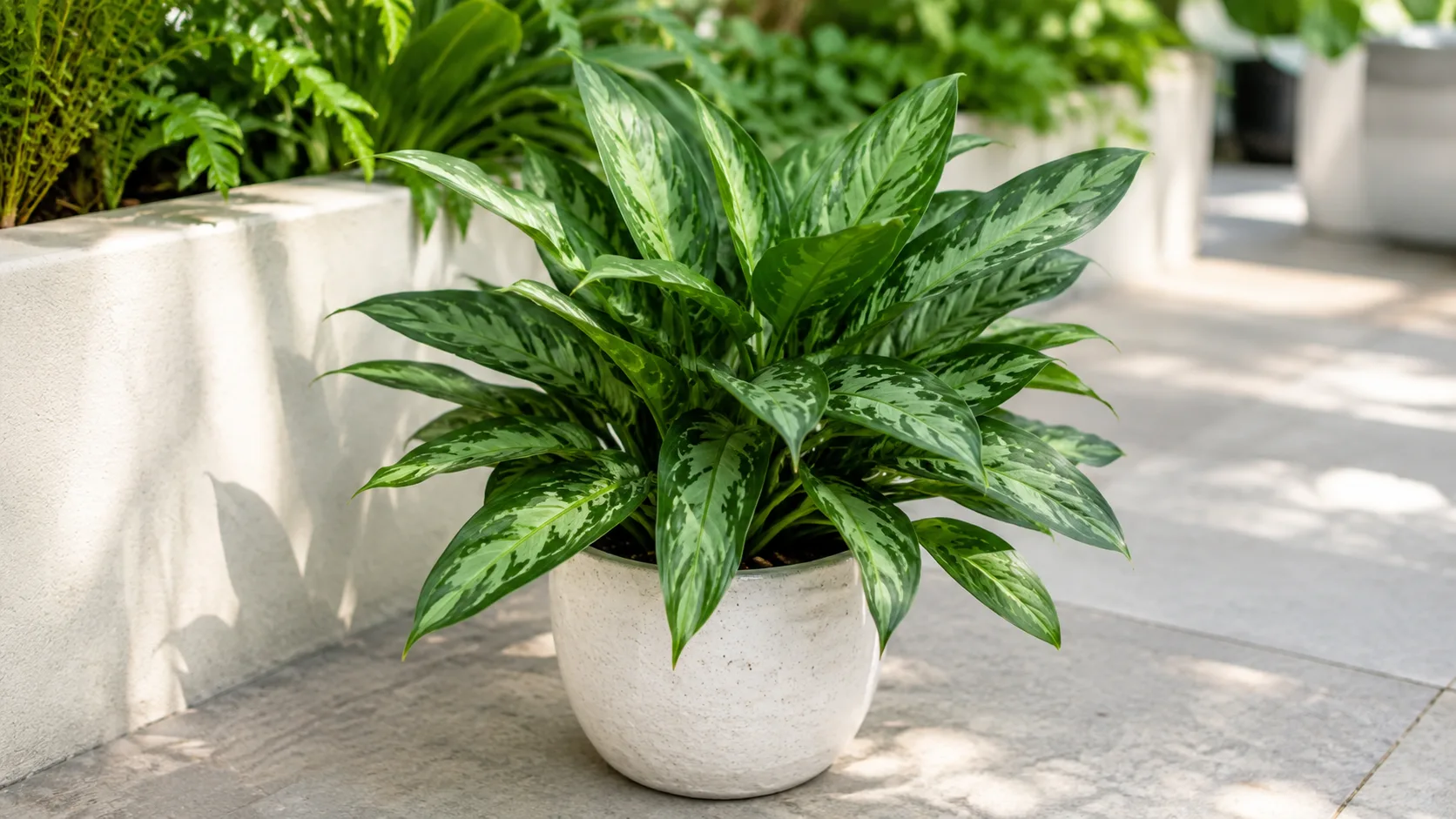
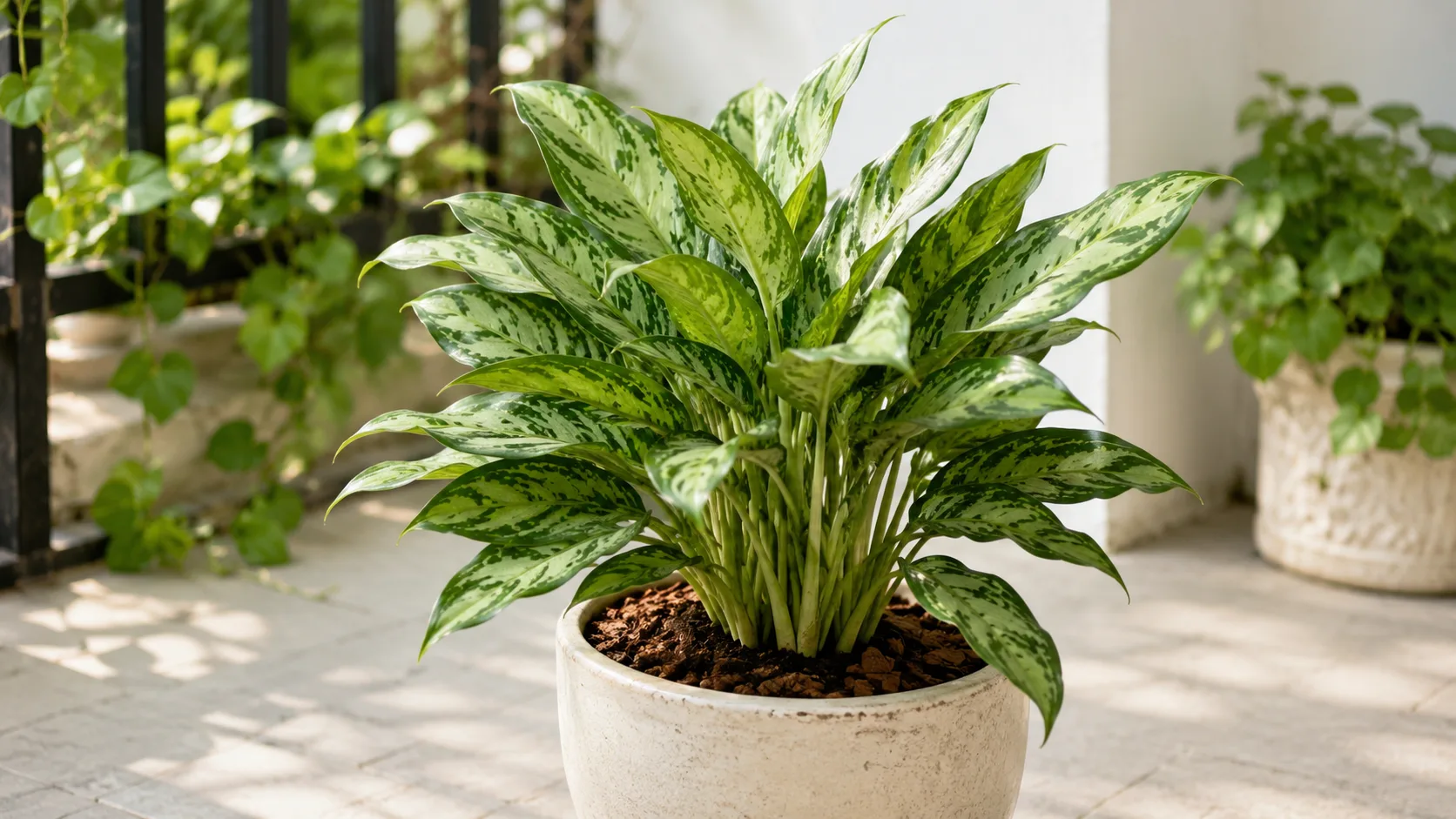
Aglaonema is native to Philippine Islands and northeastern Celebes (tropical Asia), typically reaches 1–3 ft tall and wide; lance-shaped leaves patterned in green, silver, and red indoors, with slow to moderate growth. Aglaonema has a bushy growth habit and part of the Araceae family. It is also known as Chinese Evergreen and Philippine Evergreen.
| Detail | Information |
|---|---|
| Also known as | Chinese Evergreen, Philippine Evergreen |
| Native region | Philippine Islands and northeastern Celebes (tropical Asia) |
| Mature size | 1–3 ft tall and wide; lance-shaped leaves patterned in green, silver, and red |
| Growth rate | Slow to moderate |
| Growth habit | Bushy |
| Scientific name | Aglaonema commutatum |
| Family | Araceae |
Aglaonema (Chinese Evergreen) Care Guide Indoors
Walk into a dentist’s waiting room, a dim hotel lobby, or a north-facing living room and you will often find an Aglaonema - commonly called Chinese evergreen or Philippine evergreen - looking composed while everything else struggles. That reputation is earned. Aglaonema is one of the most forgiving foliage plants you can grow indoors, provided you understand what it actually tolerates versus what it merely survives. This guide covers identification, cultivar differences, light, water, soil, humidity, feeding, Aglaonema repotting guide, propagation, pet safety, troubleshooting, and the first month after you bring one home.
The goal is practical: by the end you should know where to place your plant, how to water it without rotting the roots, which cultivars need more light than others, how to fix yellow leaves and brown tips, how to propagate it, and why it is a poor choice for pet-safe homes.
For related Aglaonema care, see Mealybugs on Aglaonema, Aphids on Aglaonema.
What Aglaonema Actually Is
Aglaonema is a genus of roughly 20–26 herbaceous perennials in the Araceae (arum) family, native to the tropical and subtropical forests of Southeast Asia, from northeastern India through New Guinea. The species most often sold as a houseplant is Aglaonema commutatum, whose native range the Missouri Botanical Garden lists as the Philippine Islands and northeastern Celebes (Sulawesi). The broader genus is documented by Plants of the World Online as spanning tropical and subtropical Asia from Assam and Bangladesh through Borneo, Java, and Papua New Guinea.
The genus name comes from the Greek aglaos (bright) and nema (thread), a reference to the stamens. In a home setting, what matters more is the growth habit: Aglaonema is erect and bushy, typically reaching 1–3 feet tall and wide indoors, with thick, lance-shaped leaves on short stems. Mature leaves on A. commutatum run 4–8 inches long with attractive silver-gray blotches on dark green foliage, per the Missouri Botanical Garden. The plant rarely flowers indoors, but when it does, the inflorescence follows the classic arum pattern - a creamy white spadix enclosed by a pale green spathe - sometimes followed by red berries.
Aglaonema is frequently confused with Dieffenbachia (dumb cane), and the resemblance is real: both are bushy Araceae with patterned leaves. The practical tell is venation. NC State Extension notes that Aglaonema tends to have only 5–8 main lateral veins, whereas Dieffenbachia shows more. Both contain calcium oxalate crystals and are toxic if chewed, though Dieffenbachia’s effects can be more severe. If you are buying for a home with pets, neither genus is appropriate at floor level.
Clemson Cooperative Extension describes Chinese evergreen as “one of the most durable houseplants,” tolerating poor light, dry air, air-conditioning, and drought better than most tropical foliage. That durability has limits - chronic overwatering on Aglaonema, cold drafts, and direct sun still damage the plant - but the baseline tolerance is unusually high for a colorful foliage plant.
Popular Cultivars and How Light Needs Differ
Commerce has moved far beyond plain green A. commutatum. Modern Aglaonema lines include silver-striped, pink-splashed, red-margined, and near-black cultivars bred for interiorscape color. The care mistake that shows up most often is treating every cultivar like a low-light plant. Leaf color is a light meter. Darker green types evolved for deeper shade; high-color selections need brighter indirect light to hold their pattern.
Low-Light-Tolerant Green and Silver Forms
Solid green and silver-gray cultivars are the most shade-forgiving. Clemson HGIC states plainly that solid green cultivars will grow in low light, defined as indirect or heavily shaded indoor areas. Classic examples include Aglaonema modestum (often sold simply as “Chinese evergreen”) and silver-striped forms like ‘Maria’ (dark green with silver stripes) and UF/IFAS-bred lines such as ‘Emerald Bay’ (silvery-green with darker margin dapples) and ‘Moonlight Bay’ (medium green with bold silver markings), described on the UF/IFAS Gardening Solutions page.
These plants can live in a north-facing room, an interior hallway with a skylight nearby, or an office with fluorescent lighting. Growth will be slow and compact, which is normal. What you should not expect is vivid new color - in very dim conditions, even silver types may look duller, but they usually remain structurally healthy if watering matches the slower drying rate.
Variegated, Pink, and Red Cultivars
Cultivars with pink, red, cream, or yellow in the leaves need low to moderate indirect light - meaning bright, indirect exposure for part of the day, not a dark corner. UF/IFAS FP025 notes that green and silver forms perform well in low-light settings, while high-color selections require Aglaonema light guide to retain their color. The Missouri Botanical Garden ‘Red Gold’ entry is explicit: the best coloration appears in partly shady conditions with some direct morning sun, while harsh afternoon sun bleaches or scorches the foliage.
Popular high-color cultivars include ‘Crete’ (green leaves with burgundy-red flecks and borders, pink stems), ‘Cherry’ (green leaves that mature pink), ‘Red Gold’ (green foliage with red margins and yellow streaks), and ‘Pink Dalmatian’ (pink-speckled green leaves). If your pink or red Aglaonema is reverting to plain green, stretching toward a window, or producing smaller pale leaves, it is asking for more light - not more fertilizer.
Light Requirements Indoors
The headline for most homes: low to medium indirect light, with cultivar-specific adjustment. Missouri Botanical Garden recommends diffused sun or good indirect light and warns against direct sun placement. UF/IFAS FP025 goes further for landscape use, noting Aglaonema thrives in full shade outdoors and will leaf-scorch in too-sunny locations - a warning that applies equally to a south-facing windowsill indoors.
A practical placement map: 3–6 feet from an east- or north-facing window suits most green and silver types. Variegated and red cultivars do better within 3 feet of an east window or behind a sheer curtain on south or west exposures. A quarter-turn of the pot each week keeps growth even. If the only bright spot is a south window, pull the plant back or filter the light; midday sun through clear glass will bleach leaves within days.
Low light is survivable but not free. NC State Extension notes that Aglaonema tends to get leggy with age as the stem elongates, and low light accelerates that stretching. Long internodes, a bare lower stem, and small new leaves are the signal. Moving the plant gradually over one to two weeks to a brighter indirect spot is the fix - not pruning alone.
Too much light shows up as bleached patches, brown scorched edges, or leaf curl during midday. Move the plant back, add filtration, and trim the worst leaves after it stabilizes. Aglaonema does not acclimate to harsh direct sun the way a cactus would.
Watering Without root rot on Aglaonema
Aglaonema prefers consistent moisture during active growth and a drier rhythm in winter, but the non-negotiable rule is this: never keep the roots soggy. Clemson HGIC advises letting the top 1–2 inches of soil dry before watering again. Missouri Botanical Garden recommends consistent moisture from spring to fall, reduced watering from early fall to late winter, and explicitly says do not allow soils to dry out completely - a nuance that matters: dry the upper layer, not the entire root ball.
In most homes, that translates to roughly every 7–10 days in summer and every 14–21 days in winter, but the calendar is a starting point. A plant in a dim corner in a cool room may need water half as often as the same cultivar under brighter light in a warm room. The most dangerous season is winter, when reduced light slows water uptake while owners keep summer watering habits - the leading path to root rot.
Overwatering signals include yellow lower leaves, soft mushy stem bases, and sour-smelling soil. underwatering on Aglaonema shows as curling or drooping leaves and brown, papery leaf edges. Aglaonema tolerates brief drying better than chronic wetness, which aligns with its drought tolerance noted by Clemson and UF/IFAS. When in doubt, wait an extra day and check again.
Water thoroughly until it runs from the drainage holes, then empty the saucer within 30 minutes. Avoid pouring water into the leaf rosette; standing water at the crown invites stem rot in dense basal growth. Room-temperature water is fine; NC State Extension specifically warns against cold water, which can shock tropical roots.
How to Check Soil Moisture Before You Water
The finger test remains the most reliable tool. Insert your index finger to the second knuckle - about 2 inches. If the soil at that depth feels dry and crumbly, water. If it feels cool and slightly damp, wait. Lift the pot occasionally to learn its weight: a dry pot is noticeably lighter than a freshly watered one.
A wooden chopstick pushed to the bottom and left for a few minutes works in deep pots. If the stick comes out with damp soil clinging, skip watering. For glazed ceramic pots where you cannot feel the soil surface easily, a moisture meter can help, but treat it as a second opinion, not a replacement for touch - cheap meters often read incorrectly in chunky mixes with lots of bark or perlite.
Humidity and Temperature
Aglaonema is more forgiving on humidity than many tropicals. Clemson HGIC places the preferred indoor range at 68–80°F and notes the plant tolerates low to moderate humidity in an average house. UF/IFAS Gardening Solutions lists 68–77°F as the comfort zone with tolerance down to about 55°F. Missouri Botanical Garden recommends normal room temperature with a 60°F minimum in winter.
A target of 40–60% relative humidity keeps foliage clean in most homes. Below 30%, especially in heated winter air, leaf tips may brown and spider mites become more likely. A pebble tray, grouping plants, or a small humidifier near the pot addresses dry air more effectively than misting, which raises humidity only briefly and can leave wet foliage that invites fungal spotting.
Temperature swings matter as much as absolute numbers. UF/IFAS FP025 warns that temperatures below 45°F can injure foliage outdoors; indoors, cold drafts from windows, AC vents, and frequently opened doors produce similar damage - limp leaves, translucent patches, and sudden yellowing. Keep Aglaonema out of the direct path of HVAC vents and off cold window ledges in winter.
Soil, pH, and Pot Selection
Use a well-draining, lightly fertile potting mix. Missouri Botanical Garden recommends a well-drained, peaty potting mixture. Clemson HGIC suggests a commercial soilless mix with extra humus. UF/IFAS EP160 production guidance targets media with pH 5.5–6.5, 10–20% air space, and components such as sphagnum peat, pine bark, vermiculite, or perlite - a useful benchmark even for a single houseplant pot.
A practical home recipe: standard peat-free potting compost with 20–25% perlite and a handful of coarse orchid bark or sand for extra drainage. The mix should feel airy when you squeeze it, not compact like garden soil. Target pH 5.6–6.5; most bagged indoor mixes already sit close enough that hobbyists rarely need to adjust.
Pot choice follows the same logic as watering. Drainage holes are mandatory. Terracotta dries faster and suits heavy-handed waterers or humid rooms where plastic pots stay wet too long. Plastic retains moisture longer, which helps in dry, bright rooms if you tend to underwater. Size up only one pot diameter at repotting - an oversized pot holds water the root system cannot use, and that is the most common post-repot root-rot trigger.
Fertilizer Basics
Aglaonema is not a heavy feeder. A balanced liquid houseplant fertilizer at half the label strength, applied monthly from spring through early fall, is sufficient when the plant is actively growing. UF/IFAS Gardening Solutions recommends feeding during spring and summer; Clemson HGIC aligns with modest feeding during active growth.
Three rules prevent the most common fertilizer mistakes. Never feed a dry plant - water first, then fertilize moist soil so salts move through the root zone without burning. Pause feeding in winter, after repotting, and while the plant is recovering from root rot, pests, or relocation stress. Flush the pot every two to three months with plain water to wash accumulated salts, especially if brown leaf tips appear despite adequate humidity.
Over-fertilizing shows up as crispy leaf margins and a white crust on the soil surface. If you see that pattern, flush thoroughly and skip the next two feedings. Slow-release granules applied once in spring work for low-maintenance growers, but half-strength liquid feeding gives finer control on a slow-growing plant.
Repotting and Root Health
Repot Aglaonema roughly every two years, or when roots circle the drainage holes, water runs straight through without soaking in, or the plant becomes top-heavy. The best window is early spring, as new growth starts, giving the plant a full warm season to settle. UF/IFAS Gardening Solutions notes you can either move to a larger pot or divide into two smaller plants at repotting - both are valid.
Go up one pot size only. Tease circling roots gently, trim any black or mushy sections with clean shears, and backfill with fresh mix at the same planting depth as before. Water lightly for the first week so torn roots can heal before the mix stays consistently moist. Avoid stacking repotting, fertilizing, and a location change in the same week; pick one stressor at a time.
Root rot develops when wet soil persists in low light or an oversized pot. Signs include foul-smelling mix, soft stems at the base, and yellowing leaves on a plant that is obviously wet. Unpot, cut away all mushy roots, repot into fresh fast-draining mix, and withhold water for about a week before resuming a cautious rhythm. Recovery depends on how much healthy root remains.
Propagation by Division and Stem Cuttings
Home propagation of Aglaonema is straightforward because the plant naturally produces basal suckers and rooted stems. UF/IFAS EP160 lists division of basal shoots or suckers and stem cuttings as the principal propagation methods, noting that micropropagation has not been consistently successful for the genus in commercial production. NC State Extension recommends both division and stem cutting for home growers.
Division is easiest at repotting when multiple crowns are visible. Water the plant the day before, remove it from the pot, and separate the root mass so each section retains several leaves, healthy roots, and at least one growth point. Pot each division separately, water lightly, and keep in bright indirect light with stable humidity until new growth confirms rooting.
Stem cuttings work with sections that have four to five leaves, per UF/IFAS EP160 - cuttings with only two or three leaves root poorly and stall after potting, according to the UF/IFAS commercial production guide. Cut cleanly below a node, remove lower leaves if needed, and root in moist perlite, a perlite-peat blend, or water in warm conditions around 70–80°F. Keep humidity high around the cutting with a loose plastic cover or propagation box, but ensure airflow so mold does not form. Rooting typically takes several weeks; transplant when new leaf growth appears and roots are several inches long.
Do not propagate from a plant that is yellowing from root rot, fighting spider mites, or recovering from cold damage. Weak parent material produces weak offspring.
Toxicity to Pets and People
Aglaonema is not pet-safe. Like most Araceae, it contains insoluble calcium oxalate crystals (raphides) in the leaves, stems, roots, and sap. When chewed, the crystals penetrate soft mouth tissues and cause immediate irritation.
Cats, Dogs, and What to Do After Exposure
The ASPCA lists Chinese evergreen (Aglaonema modestum on the entry, covering the genus as sold) as toxic to dogs, cats, and horses, with clinical signs including oral irritation, pain and swelling of mouth, tongue and lips, excessive drooling, vomiting, and difficulty swallowing. The Merck Veterinary Manual describes the same mechanism for insoluble oxalate houseplants: needle-like raphides released on chewing, causing oral pain and GI upset. NC State Extension rates poison severity as low but notes contact dermatitis is possible from sap.
Most exposures are uncomfortable rather than life-threatening, though the ASPCA notes rare cases of significant throat swelling with large ingestions. If a pet chews Aglaonema, remove remaining plant material from reach, offer a small amount of milk or yogurt if the pet will take it (to help bind crystals in the mouth - only if your vet line approves), and call ASPCA Animal Poison Control at 888-426-4435 or your veterinarian. Seek emergency care if the pet has trouble breathing or swallowing.
For humans, sap contact can cause skin irritation or rash in sensitive individuals. NC State Extension lists contact dermatitis as a documented concern. Wear gloves when pruning or repotting if you react to plant saps. Keep Aglaonema on elevated shelves, plant stands, or in rooms pets do not access - not on coffee tables or floor baskets where a dog or cat can reach it.
First Month After Bringing Aglaonema Home
The first 30 days set the trajectory. Do not repot on day one unless the soil is clearly failing (sour smell, waterlogged, or fungus gnats everywhere) or you see active pests. Most nursery plants are fine in their current mix for at least one season. Instead, quarantine the plant away from your collection for two weeks, inspect leaf undersides and stem joints for spider mites and mealybugs, and learn how fast the pot dries in your home.
Place it in its long-term light spot immediately if possible - every move resets acclimation. Water when the top 2 inches dry, not on the schedule the nursery used in a greenhouse. Watch for yellow lower leaves (often adjustment or prior overwatering at the shop), brown tips (humidity or salt), and drooping (check soil before reacting).
Judge success by firm new leaves and stable color, not fast height gain. Variegated Aglaonemas grow slowly; a compact plant with clean crowns beats a tall soft plant pushed in too little light. If problems appear, fix one variable at a time - light, then water, then drainage - before adding fertilizer, repotting, or heavy pruning.
When buying, choose plants with firm new growth, clean leaf undersides, and soil that does not smell sour. Be cautious of yellowing lower leaves combined with wet soil in a dim shop corner, sticky residue (honeydew from pests), or collapsed crowns.
Common Problems and Real Fixes
Most Aglaonema problems are environmental. The diagnostic order is always the same: check soil moisture, then light, then pests, then water quality and salts. Fixing the growing condition comes before cosmetic trimming.
Yellow Leaves, Brown Tips, and Pests
Yellow leaves are the most common complaint and have several distinct causes. If the soil is wet and stems are soft, overwatering or root rot is the prime suspect - unpot if needed, trim mushy roots, and repot in fresh mix. If the soil is dry and leaves are papery, the plant is underwatered or the air is too dry. Uniform pale yellowing with stretching indicates too little light. Sudden yellowing after a cold night points to temperature injury. A few yellow lower leaves on an otherwise healthy plant are often normal senescence - remove them and move on.
Brown leaf tips usually mean low humidity, salt buildup from tap water or fertilizer, or underwatering. Raise humidity, flush the pot, switch to filtered or rainwater if your tap is hard, and trim brown tips with clean scissors for appearance. New growth should emerge clean once the cause is corrected.
Spider mites thrive in dry winter air. Look for fine webbing, stippled yellow flecks, and dusty-looking leaf undersides. Shower the plant, raise humidity, and treat with insecticidal soap. Mealybugs appear as white cottony clusters in leaf axils; scale as immobile brown bumps on stems. Manual removal with alcohol-dipped swabs plus insecticidal soap for three weekly cycles handles most infestations if caught early. Missouri Botanical Garden and NC State Extension both list aphids, mealybugs, spider mites, and scale as the primary pests, with root rot from overwatering as the main disease concern.
Leggy, bare stems develop over time, especially in low light. Cut back leggy stalks to a few inches above soil level in spring - UF/IFAS Gardening Solutions notes that leggy stalks can be removed and rooted - or divide the plant at repotting to refresh its shape.
Flowers, Berries, and Outdoor Use in Warm Climates
Indoor Aglaonema may produce arum-type flowers - a spathe and spadix similar to a small peace lily - though blooming is inconsistent in low light. NC State Extension recommends removing flowers and fruits to direct energy back to foliage growth. If red berries form after pollination on A. commutatum, they are ornamental but not edible, and removal prevents mess and any risk of curious pets or children investigating them.
Outdoors, Aglaonema is hardy only in USDA zones 10b–11, per NC State and UF/IFAS, where it works as a shaded filler or low hedge under trees. UF/IFAS FP025 recommends spacing plants on 2–3 foot centers in mass plantings and placing them in heavy shade - north sides of buildings or under dense tree canopy. In temperate climates, a potted Aglaonema can spend summer outdoors in shade when nights stay above 55°F, but acclimate gradually and bring it in before cold weather.
Do not confuse outdoor hardiness with indoor tolerance. A plant that thrives on a shaded Florida patio still needs protection from frost, direct midday sun, and temperatures below the mid-50s °F.
Conclusion
Aglaonema earns its reputation as a beginner-friendly foliage plant when you match care to the cultivar in front of you. Dark green and silver types tolerate genuinely low indoor light; pink, red, and heavily variegated cultivars need brighter indirect exposure to keep their color. Water when the top 1–2 inches of soil are dry, use a well-draining mix, keep temperatures in the 65–80°F range away from cold drafts, feed lightly during active growth, and repot every couple of years in spring.
The complications are mostly about boundaries: Aglaonema is toxic to cats and dogs, sap can irritate skin, and winter overwatering in dim rooms destroys roots faster than underwatering ever will. Fix light and watering before reaching for fertilizer or a bigger pot. If you need a floor-level plant in a pet-safe home, choose a non-toxic alternative. If you can place it out of reach and give it steady, boring care, Aglaonema returns the favor with patterned leaves that look good in rooms where fussier tropicals refuse to cooperate.
When to use this page vs other Aglaonema guides
- Aglaonema overview - Canonical hub for this species - care topics and problems branch from here.
- Aglaonema problems - Symptom-first path when you already know something is wrong.
Related Aglaonema guides
How to care for Aglaonema?
How much light does Aglaonema need?
low to medium indirect light
- low to medium indirect light - low to medium indirect light.
When should you water Aglaonema?
Water when the top 2 inches of soil are dry - roughly every 7–10 days in summer.
- Check top 2 inches of soil with finger; aglaonema tolerates brief drying - Water when the top 2 inches of soil are dry - roughly every 7–10 days in summer.
- Drain excess water - Water when the top 2 inches of soil are dry - roughly every 7–10 days in summer.
What soil works best for Aglaonema?
Well-draining, lightly fertile potting mix.
- standard peat-free potting compost - Well-draining, lightly fertile potting mix.
- perlite (20–25%) - Light white granules that keep soil airy and help prevent compaction.
- coarse sand or orchid bark - Chunky bark pieces that create air pockets and mimic epiphytic growing conditions.
Grower notes for Aglaonema
What matters most with Aglaonema
Aglaonema should be judged by color stability and firm new leaves, not fast growth. Variegated aglaonemas often grow slowly, so a compact plant with clean crowns is better than a tall soft plant pushed in low light. In practice, the care checkpoint is simple: low to medium indirect light. Pair that with well-draining, lightly fertile potting mix, and avoid changing water, pot size, and placement all at once.
Best placement in a real home
Aglaonema belongs where low to medium indirect light is realistic for most of the day, not only where the pot looks good. Water when the top 2 inches of soil are dry - roughly every 7–10 days in summer. If the pot stays wet longer than expected, move the plant into better light or reassess the mix before watering again. Humidity target: 40–60%. Temperature comfort zone: 18–27°C (65–80°F).
Before you buy this plant
Choose Aglaonema with firm new growth, clean leaf undersides, and soil that does not smell sour or feel compacted. Be cautious if you see yellow-leaves, sticky residue, collapsed crowns, or a pot that is wet in poor light. Cosmetic old-leaf damage is less worrying than weak roots or active pests.
First month after bringing it home
Do not repot Aglaonema on day one unless the mix is failing or pests are obvious. Quarantine it, learn how fast the pot dries, and keep care boring while it adjusts. Watch especially for yellow-leaves, brown-tips, and root-rot. If problems appear, correct the condition first rather than stacking fertilizer, repotting, and pruning together.
Safety note for Aglaonema
Aglaonema is not a plant to keep within reach of pets or children. The database flags it for cats and dogs. Use gloves if sap or plant tissue is irritating, and pick a pet-safe alternative for floor pots or low shelves.
How to tell Aglaonema is settling in
Also sold as Chinese Evergreen and Philippine Evergreen, this plant should be judged by stable new growth rather than label names alone. If you plan to multiply it later, common methods include Division of root clumps, Stem cuttings in water, and Stem cuttings in moist medium. Repot only when you see Roots circling out of drainage holes and soil drying rapidly after watering. If brown-tips shows up early, inspect light, watering, and roots before assuming the plant is permanently weak.
Is it pet safe?
Aglaonema is toxic to cats and dogs.
Contains insoluble calcium oxalate crystals. Causes oral irritation, drooling, vomiting, and difficulty swallowing in cats and dogs. ASPCA classifies as toxic.
Watering Aglaonema
For Aglaonema, check top 2 inches of soil with finger; aglaonema tolerates brief drying and water every 7–10 days in summer; every 14–21 days in winter. Reduce watering in winter; aglaonema is slow-growing in cool months.
| Detail | Information |
|---|---|
| How often | Every 7–10 days in summer; every 14–21 days in winter |
| How to check | Check top 2 inches of soil with finger; aglaonema tolerates brief drying |
| Seasonal changes | Reduce watering in winter; aglaonema is slow-growing in cool months |
Signs of overwatering
- Yellow lower leaves
- mushy stem bases
- foul-smelling soil
Signs of underwatering
- Curling or drooping leaves
- leaf edges becoming brown and papery
Soil & potting for Aglaonema
Use a mix of standard peat-free potting compost, perlite (20–25%), coarse sand or orchid bark for Aglaonema. Good drainage; avoid waterlogged soil which causes fast root rot. Target soil pH around 5.6–6.5. Repot every 2 years or when root-bound, ideally in spring.
| Detail | Information |
|---|---|
| Recommended mix | standard peat-free potting compost, perlite (20–25%), coarse sand or orchid bark |
| Drainage | Good drainage; avoid waterlogged soil which causes fast root rot |
| Soil pH | 5.6–6.5 |
| Repotting frequency | Every 2 years or when root-bound |
| Best season to repot | Spring |
Signs it needs repotting
- Roots circling out of drainage holes
- soil drying rapidly after watering
- crowded multiple crowns
Humidity & temperature for Aglaonema
Aglaonema prefers 40–60%, though normal home humidity is usually fine. Keep temperatures around 18–27°C (65–80°F).
| Detail | Information |
|---|---|
| Humidity | 40–60% - normal home humidity is fine. |
| Ideal temperature | 18–27°C (65–80°F) |
Fertilizer & pruning for Aglaonema
Common problems on Aglaonema
Yellow Leaves
MediumLikely cause: Overwatering is most common; also caused by cold temperatures or direct sun bleaching
Quick fix: Allow soil to dry to 2 inches; ensure temperatures stay above 15°C; check for drainage
Full fix guide →Brown Tips
LowLikely cause: Low humidity, fluoride in water, or overfertilising causes tip browning
Quick fix: Switch to filtered water; reduce fertiliser; increase humidity
Full fix guide →Root Rot
HighLikely cause: Overwatering in dense soil causes rapid root rot
Quick fix: Unpot, remove mushy roots, repot in fresh well-draining mix; do not water for 7–10 days
Full fix guide →Spider Mites
MediumLikely cause: Dry indoor air in winter creates favourable conditions for spider mites
Quick fix: Isolate, wipe leaves with neem oil solution; increase humidity; repeat weekly
Full fix guide →Overwatering
MediumLikely cause: Common on this plant type; confirm with recent watering, light, and root checks.
Quick fix: Inspect the plant and correct the most likely care stressor before stacking treatments.
Full fix guide →Underwatering
MediumLikely cause: Common on this plant type; confirm with recent watering, light, and root checks.
Quick fix: Inspect the plant and correct the most likely care stressor before stacking treatments.
Full fix guide →Mealybugs
MediumLikely cause: Common on this plant type; confirm with recent watering, light, and root checks.
Quick fix: Inspect the plant and correct the most likely care stressor before stacking treatments.
Full fix guide →Aphids
MediumLikely cause: Common on this plant type; confirm with recent watering, light, and root checks.
Quick fix: Inspect the plant and correct the most likely care stressor before stacking treatments.
Full fix guide →Leggy Growth
MediumLikely cause: Common on this plant type; confirm with recent watering, light, and root checks.
Quick fix: Inspect the plant and correct the most likely care stressor before stacking treatments.
Full fix guide →Slow Growth
MediumLikely cause: Common on this plant type; confirm with recent watering, light, and root checks.
Quick fix: Inspect the plant and correct the most likely care stressor before stacking treatments.
Full fix guide →Wilting
MediumLikely cause: Common on this plant type; confirm with recent watering, light, and root checks.
Quick fix: Inspect the plant and correct the most likely care stressor before stacking treatments.
Full fix guide →Drooping Leaves
MediumLikely cause: Common on this plant type; confirm with recent watering, light, and root checks.
Quick fix: Inspect the plant and correct the most likely care stressor before stacking treatments.
Full fix guide →Low Humidity
MediumLikely cause: Common on this plant type; confirm with recent watering, light, and root checks.
Quick fix: Inspect the plant and correct the most likely care stressor before stacking treatments.
Full fix guide →Not Enough Light
MediumLikely cause: Common on this plant type; confirm with recent watering, light, and root checks.
Quick fix: Inspect the plant and correct the most likely care stressor before stacking treatments.
Full fix guide →Fungus Gnats
MediumLikely cause: Common on this plant type; confirm with recent watering, light, and root checks.
Quick fix: Inspect the plant and correct the most likely care stressor before stacking treatments.
Full fix guide →Mold on Soil
MediumLikely cause: Common on this plant type; confirm with recent watering, light, and root checks.
Quick fix: Inspect the plant and correct the most likely care stressor before stacking treatments.
Full fix guide →Curling Leaves
MediumLikely cause: Common curling leaves pattern on Aglaonema under indoor care stress.
Quick fix: Inspect roots, watering, light, and pests; adjust one variable and monitor new growth.
Full fix guide →Brown Leaves
MediumLikely cause: Common brown leaves pattern on Aglaonema under indoor care stress.
Quick fix: Inspect roots, watering, light, and pests; adjust one variable and monitor new growth.
Full fix guide →Black Spots
MediumLikely cause: Common black spots pattern on Aglaonema under indoor care stress.
Quick fix: Inspect roots, watering, light, and pests; adjust one variable and monitor new growth.
Full fix guide →Holes in Leaves
MediumLikely cause: Common holes in leaves pattern on Aglaonema under indoor care stress.
Quick fix: Inspect roots, watering, light, and pests; adjust one variable and monitor new growth.
Full fix guide →Pale Leaves
MediumLikely cause: Common pale leaves pattern on Aglaonema under indoor care stress.
Quick fix: Inspect roots, watering, light, and pests; adjust one variable and monitor new growth.
Full fix guide →Distorted Leaves
MediumLikely cause: Common distorted leaves pattern on Aglaonema under indoor care stress.
Quick fix: Inspect roots, watering, light, and pests; adjust one variable and monitor new growth.
Full fix guide →Scale Insects
MediumLikely cause: Common scale insects pattern on Aglaonema under indoor care stress.
Quick fix: Inspect roots, watering, light, and pests; adjust one variable and monitor new growth.
Full fix guide →Thrips
MediumLikely cause: Common thrips pattern on Aglaonema under indoor care stress.
Quick fix: Inspect roots, watering, light, and pests; adjust one variable and monitor new growth.
Full fix guide →Whiteflies
MediumLikely cause: Common whiteflies pattern on Aglaonema under indoor care stress.
Quick fix: Inspect roots, watering, light, and pests; adjust one variable and monitor new growth.
Full fix guide →Leaf Miners
MediumLikely cause: Common leaf miners pattern on Aglaonema under indoor care stress.
Quick fix: Inspect roots, watering, light, and pests; adjust one variable and monitor new growth.
Full fix guide →Caterpillars
MediumLikely cause: Common caterpillars pattern on Aglaonema under indoor care stress.
Quick fix: Inspect roots, watering, light, and pests; adjust one variable and monitor new growth.
Full fix guide →Nitrogen Deficiency
MediumLikely cause: Common nitrogen deficiency pattern on Aglaonema under indoor care stress.
Quick fix: Inspect roots, watering, light, and pests; adjust one variable and monitor new growth.
Full fix guide →Iron Deficiency
MediumLikely cause: Common iron deficiency pattern on Aglaonema under indoor care stress.
Quick fix: Inspect roots, watering, light, and pests; adjust one variable and monitor new growth.
Full fix guide →Magnesium Deficiency
MediumLikely cause: Common magnesium deficiency pattern on Aglaonema under indoor care stress.
Quick fix: Inspect roots, watering, light, and pests; adjust one variable and monitor new growth.
Full fix guide →Potassium Deficiency
MediumLikely cause: Common potassium deficiency pattern on Aglaonema under indoor care stress.
Quick fix: Inspect roots, watering, light, and pests; adjust one variable and monitor new growth.
Full fix guide →Calcium Deficiency
MediumLikely cause: Common calcium deficiency pattern on Aglaonema under indoor care stress.
Quick fix: Inspect roots, watering, light, and pests; adjust one variable and monitor new growth.
Full fix guide →