Root Rot on Aglaonema: Causes, Checks & Fixes
Quick answer
Root rot on Aglaonema almost always follows overwatering in slow-draining mix. Stop watering immediately, unpot to inspect roots, and trim mushy tissue before repotting into fresh well-drained soil.
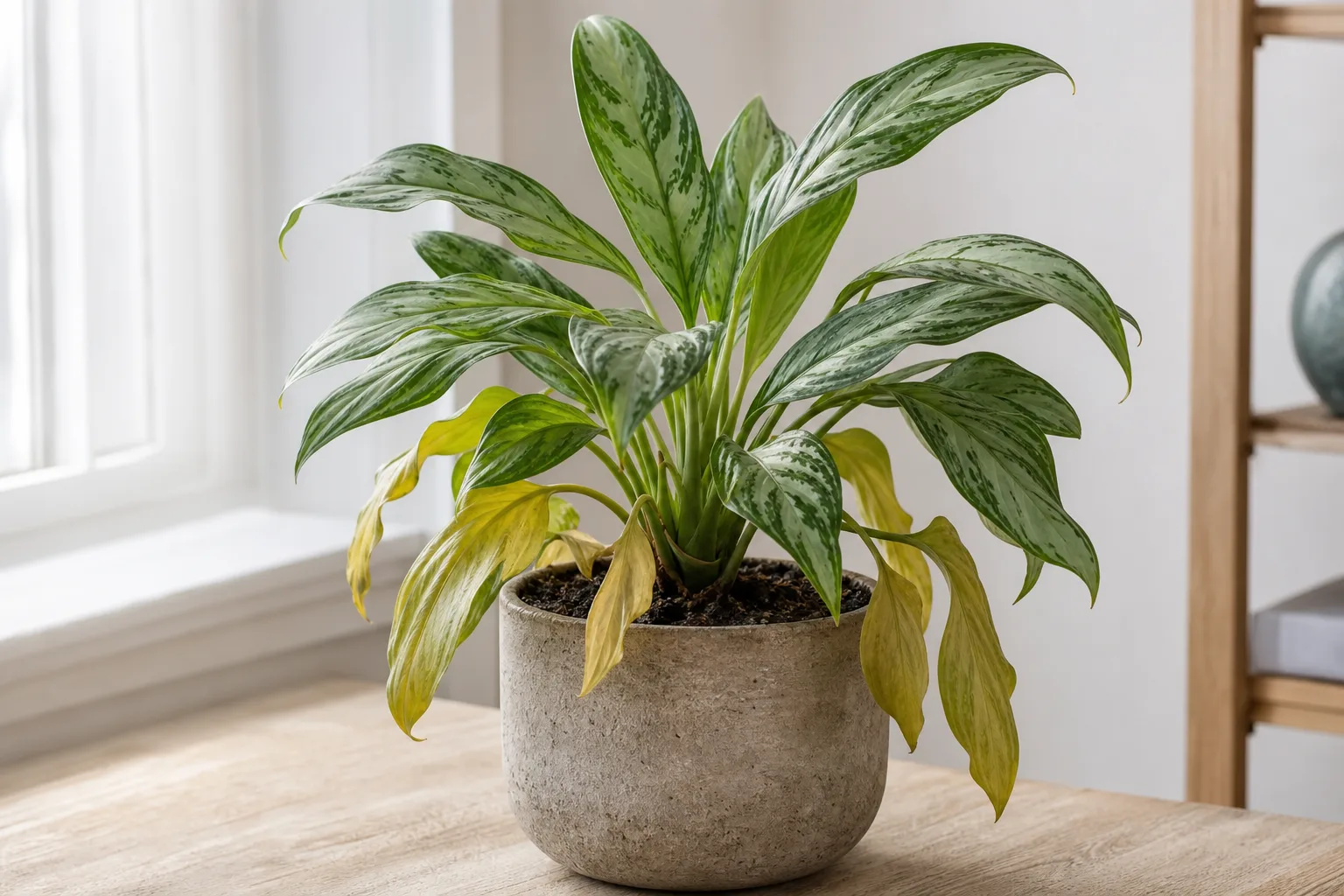
Root Rot on Aglaonema: Causes, Checks & Fixes
This guide covers root rot on Aglaonema. See also the general Root Rot guide, watering, and light pages for this plant.
Root Rot on Aglaonema: Causes, Checks & Fixes
Quick answer
Root rot on Aglaonema is not a mystery disease-it is what happens when roots sit in waterlogged, oxygen-starved soil long enough to decay. Chinese evergreen tolerates brief drying, but it cannot survive roots drowning in dense mix week after week.
First step: stop watering and inspect the root zone. Do not add fertilizer, move the plant to a brighter window, or repot blindly until you know whether roots are firm or mushy. On Aglaonema, the classic trap is limp, yellowing lower leaves while the soil still feels damp-the plant looks thirsty, but rotting roots cannot take up water even when the mix is wet.
For chronic wet-soil patterns that precede rot, see overwatering on Aglaonema. For everyday dry-down rhythm after recovery, see Aglaonema watering. This page is the genus hub for root failure on Chinese evergreen; cultivar owners with named varieties can also read Silver Bay, Maria, Pink Dalmatian, or Red Valentine root-rot guides.
What root rot looks like on Aglaonema
Early rot is easy to miss because patterned foliage can stay attractive while roots fail underground. Watch for this progression on a bushy rosette plant:
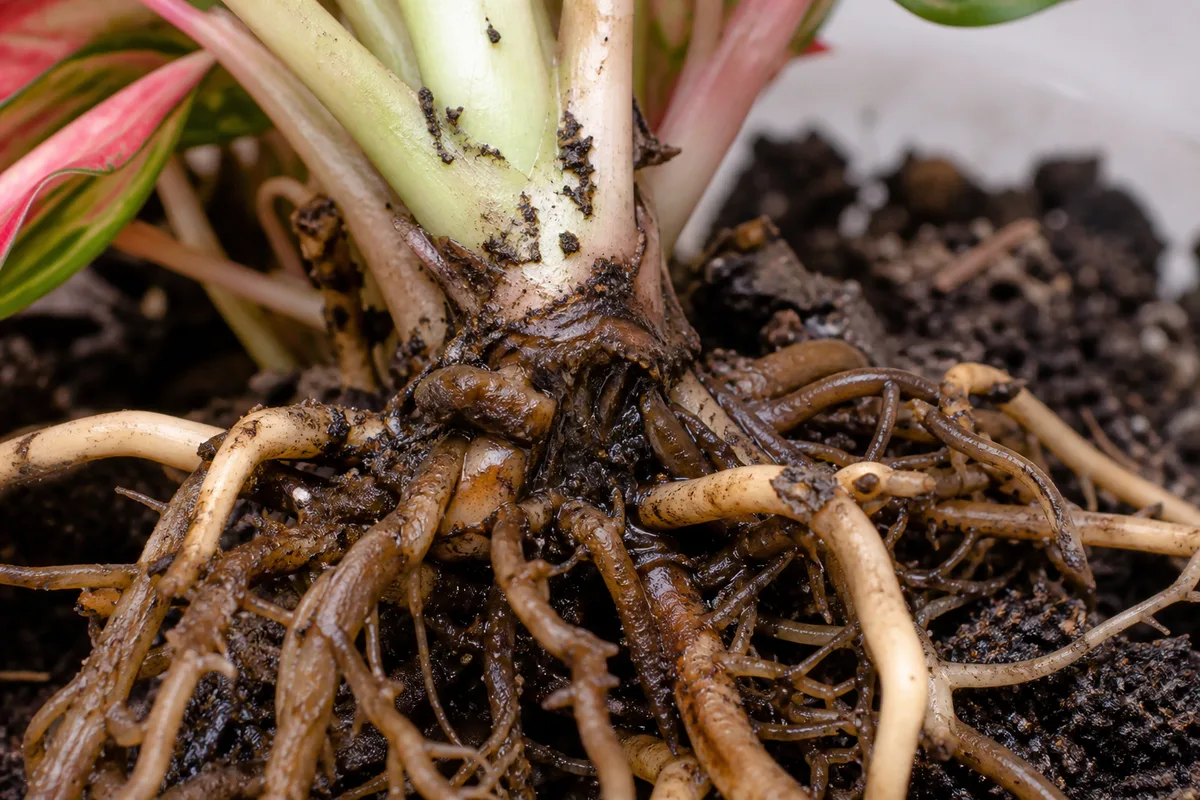
Brown mushy decayed roots on Aglaonema after unpotting from chronically wet mix - trim back to firm pale tissue before repotting into fresh well-drained soil.
- Lower leaves yellow first, often the oldest bottom leaves, while newer crown leaves still look acceptable for a while.
- Leaves stay limp or droop even though the pot feels heavy and the surface mix is cool and dark.
- Stem bases near the soil line turn soft or brown, especially on crowded multi-crown plants where several shoots share one pot.
- The mix smells sour or swampy when you lift the pot or poke near the drainage hole.
- Fungus gnats hover around constantly damp soil-a warning sign that the root zone rarely dries. See fungus gnats on Aglaonema when gnats persist after you correct watering.
- Advanced cases show collapsed crowns, blackened stem tissue spreading upward, and leaves that turn brown and fall in clusters rather than one at a time.
Aglaonema wilts with wet soil because rotting roots lose the ability to absorb water. That paradox-thirsty-looking foliage in a soggy pot-is one of the strongest clues that you are dealing with root failure, not underwatering. For limp-leaf patterns without confirmed mushy roots, compare wilting and yellow leaves guides.
Why Aglaonema gets root rot
Overwatering in dense soil is the main cause. Aglaonema prefers evenly moist soil, not constant saturation. Root rot usually results from a soil mix that does not drain quickly or from overwatering. When mix holds water too long-especially peat-heavy compost without enough perlite or bark-roots suffocate and decay organisms move in. Common culprits on houseplants include Pythium, Phytophthora, and Rhizoctonia-water molds and soil fungi that thrive when mix stays wet and poorly aerated.
Low light slows drying. Aglaonema is marketed as a low-light plant, and it does tolerate shade. But a pot in a dim corner uses water slowly. Watering on the same summer schedule you would use in a brighter room keeps the root zone wet far longer than the plant needs.
Oversized pots trap moisture. A decorative pot much larger than the root ball holds a wide ring of wet soil that never dries. Rot often starts in that permanently damp outer zone before you see obvious leaf symptoms.
Winter slowdown increases risk. Aglaonema grows slowly in cool months. If you keep summer watering frequency through winter, the mix stays saturated while the plant barely draws moisture. Cool soil plus excess water is a common rot trigger.
Blocked drainage and saucer water keep the bottom roots submerged. Chinese evergreen should never sit in standing runoff after bottom-watering.
Cold stress compounds wet-soil damage. Wet soil and cold temperatures often lead to root rots. Temperatures below about 55°F (13°C) slow metabolism further. Roots in cold, wet mix deteriorate faster than roots in warm, appropriately dry conditions.
Decorative cachepots used in office plant services hide standing water longer than open nursery pots-a common reason rot advances before owners notice sour smell at the drainage hole.
Lookalike symptoms to rule out
Not every yellow or limp leaf means rot. Use this table before you unpot:
| Pattern | Leaf / stem signs | Mix / pot | Smell / pests | Likely cause | First action |
|---|---|---|---|---|---|
| Root rot | Lower yellow + limp on wet soil; soft stem bases | Heavy, damp 2+ inches down for days | Sour smell; gnats possible | Oxygen-starved roots + pathogens | Stop water; unpot and inspect |
| Normal lower-leaf aging | One old bottom leaf over months | Dries on schedule between drinks | Neutral | Senescence | Monitor; remove leaf when fully yellow |
| Underwatering | Papery or curled edges; limp collapse | Light pot; dry throughout | Neutral | Drought stress | Water thoroughly-see underwatering |
| Overwatering (early) | Yellow lower leaves; firm stems still | Wet but roots not yet mushy | May smell stale | Chronic wet mix | Pause water-see overwatering |
| Cold draft damage | Sudden yellow; firm stems | Variable; not chronically sour | Neutral | Chilled roots | Move off vents; stable warmth |
| Low light alone | Pale or stretch; no mushy stems | May stay wet longer in dim rooms | Neutral | Slow water use | Brighter filtered light; less water |
If the pot stays heavy for a week after watering and lower leaves keep yellowing, root inspection is warranted regardless of how green the top leaves still look.
How to confirm the cause
Work through this inspection in order:
- Lift the pot. A heavy, waterlogged feel days after the last drink suggests saturation, not drought.
- Smell the drainage hole. A sour or rotten odor means anaerobic conditions in the root zone.
- Check the top 2 inches. Aglaonema should be watered when this zone dries. Constant dampness at the surface confirms overwatering.
- Gently slide the plant out. Knock the pot or squeeze a flexible nursery pot to release the root ball without yanking stems.
- Rinse away old mix under lukewarm running water so you can see root color and texture clearly.
- Press roots gently. Healthy Aglaonema roots are firm, white to tan, and resilient. Rotten roots are brown and soft, translucent, or slimy and may fall apart between your fingers.
- Inspect each crown on multi-stem plants. Rot can hide where stems meet soil while outer leaves still look fine.
Confirmed rot means mushy roots, sour-smelling mix, or soft tissue at the stem base-not just one yellow leaf on an otherwise stable plant.
Case snapshot - dim hallway recovery
Setup: Aglaonema ‘Silver Bay’ in a 20 cm plastic pot inside a sealed decorative sleeve, north-facing hallway with weekly watering through winter.
Day 1: Unpotted after lower leaves yellowed on a still-heavy pot; sour smell at drainage hole; roughly half of roots brown and jelly-like after rinse.
Day 1 treatment: Trimmed mush to firm white tissue; air-dried root ball 90 minutes; repotted same day into nursery pot one size smaller with standard houseplant mix plus 25% perlite-no upsize during recovery.
Week 5: First firm new leaf from center crown; pot weight drops normally between waterings.
This is a diagnostic sketch, not a guarantee-severe crown rot may still require propagation backup.
First fix for Aglaonema
Stop all watering immediately. This single action prevents further oxygen loss while you prepare for root surgery. Move the plant out of direct sun, but do not place it in a darker corner-that slows evaporation and makes recovery harder.
Do not fertilize, mist heavily, or repot into an even larger container. Your next step after the pause is unpotting and trimming decay-but drying out a chronically wet root ball for 24 hours before inspection often makes mushy tissue easier to identify.
Step-by-step recovery
Once you confirm rot, work through these steps in order:
Trim decayed roots
Use clean, sharp scissors or pruners sterilized with rubbing alcohol. Cut away every brown, soft, or hollow root back to firm tissue. It is normal to remove a significant portion on a badly overwatered plant. Dispose of trimmed material in the trash, not the compost bin.
Wear gloves if you have sensitive skin-Aglaonema sap can irritate, and the plant is toxic to cats and dogs if chewed because of insoluble calcium oxalate crystals. Keep trimmed plants away from pets during recovery.
Let cut surfaces dry briefly
After trimming, let the root ball air for one to two hours on a paper towel. This reduces the chance of reinfection when you repot into fresh mix.
Repot into fresh, airy mix
Choose a clean pot with drainage holes sized to the trimmed root mass-not dramatically larger. Do not upsize during recovery; extra wet soil around a reduced root system slows dry-down. Use a well-draining houseplant mix amended with perlite or orchid bark. Aglaonema does well in standard peat-free compost with about 20–25% perlite for faster drainage. Full repotting technique applies after trim.
Set the plant at the same depth it grew before. Do not bury stems deeper to “prop up” a wobbly plant.
Water once, then wait
Water lightly to settle the new mix, then do not water again until the top 2 inches are dry-often 7–10 days on a freshly repotted, root-reduced plant. Hold all fertilizer for at least three to four weeks until you see stable new growth.
Improve light and airflow
Place the recovering plant in bright, indirect light-not harsh sun, but enough brightness that the mix dries predictably between waterings. Gentle airflow helps the surface dry without chilling the plant.
Optional trim aids (evidence-light)
Some growers rinse trimmed roots with dilute hydrogen peroxide or dust cut surfaces with cinnamon. These are home remedies, not substitutes for removing mushy tissue, fixing drainage, and correcting the watering cycle. Extension guidance prioritizes sanitation and dry-down over chemical soil drenches for home growers.
Propagate as backup if the crown fails
If the main stem base is soft but upper stems are still firm, consider rooting healthy stem cuttings in water or moist perlite while you treat the parent. A plant with root rot may be a candidate for rooting stem cuttings of unaffected shoots. Aglaonema roots readily from stem sections with several leaves. See Aglaonema propagation for stem-cutting backup when the base is failing-this is salvage, not a first response.
Recovery timeline
Mild cases with mostly firm roots may stabilize within one to two weeks after you correct watering and improve drainage. Moderate cases needing root pruning typically show the first firm new leaf from the center in three to six weeks during spring or summer growth.
Judge success by new crown growth and root firmness, not by old yellow leaves turning green-they will drop or stay discolored. Severe crown rot where the stem base is black and mushy is often fatal; propagation from healthy upper growth may be the only save.
Signs the plant is improving: the pot lightens between waterings on a normal schedule, new leaves emerge firm and fully colored, and roots you spot through drainage holes look pale and solid.
Signs it is worsening: stem softening spreads upward, leaves collapse in waves despite dry soil, or the mix smells sour again within days of repotting.
What not to do
Do not keep watering because leaves look wilted when soil is already wet-that accelerates rot.
Do not apply fungicide to the soil without removing mushy roots and fixing drainage. Chemicals cannot restore oxygen to waterlogged mix.
Do not repot into garden soil, a pot without holes, or a much bigger decorative cachepot that holds standing water.
Do not fertilize a root-damaged plant hoping to “boost” recovery. Salt stress hits weakened roots hardest.
Do not assume every yellow lower leaf requires emergency surgery-confirm with root texture and soil smell first.
How to prevent root rot on Aglaonema
Prevention comes down to matching water to how fast your pot actually dries in your room:
- Water when the top 2 inches of mix are dry, not on a fixed calendar. In winter, that may mean watering every two to three weeks instead of weekly.
- Use perlite-amended mix and a pot with open drainage. Empty saucers within 30 minutes of watering.
- Right-size the container to the root ball. Repot every two years in spring when roots circle the pot-not preemptively into oversized decorative pots.
- Adjust for light. A plant moved to a dim hallway needs less water than the same cultivar in a bright bathroom.
- Keep temperatures above 15°C (60°F) and avoid cold drafts on wet soil.
- Scout after purchase. Nursery Aglaonema sometimes arrives in heavy, moisture-retentive mix. A timely repot into airier soil prevents the first-month rot that catches new owners off guard.
When to worry
Treat root rot as urgent when the crown feels soft, more than a third of roots are mushy on inspection, or multiple stems collapse within a few days despite moist soil. At that stage, trim aggressively, repot the same day, and start stem-cuttings backup from any firm shoots above the rot line.
If only one bottom leaf yellows over months and roots are firm when you check, you likely have normal aging or mild overwatering-not an emergency repot.
Related Aglaonema guides
- Aglaonema overview - species care hub
- Overwatering - upstream wet-soil cause
- Underwatering - dry-pot lookalike
- Wilting - limp-leaf symptom overlap
- Yellow leaves - lower-leaf pattern
- Fungus gnats - damp-soil pest branch
- Repotting - post-trim container work
- Propagation - stem-cuttings salvage
- Watering - prevention rhythm
Cultivar-specific root rot: Silver Bay · Maria · Pink Dalmatian · Red Valentine