Low Humidity on Aglaonema: Causes, Checks & Fixes
Quick answer
Low humidity on Aglaonema shows up as papery brown tips on older leaves, often after winter heating or placement near a vent-while new growth may still look fine. Chinese evergreen tolerates average home humidity better than calatheas, but aim for 40–60% RH. First step: move the pot off forced-air paths and check whether only lower leaves are affected.
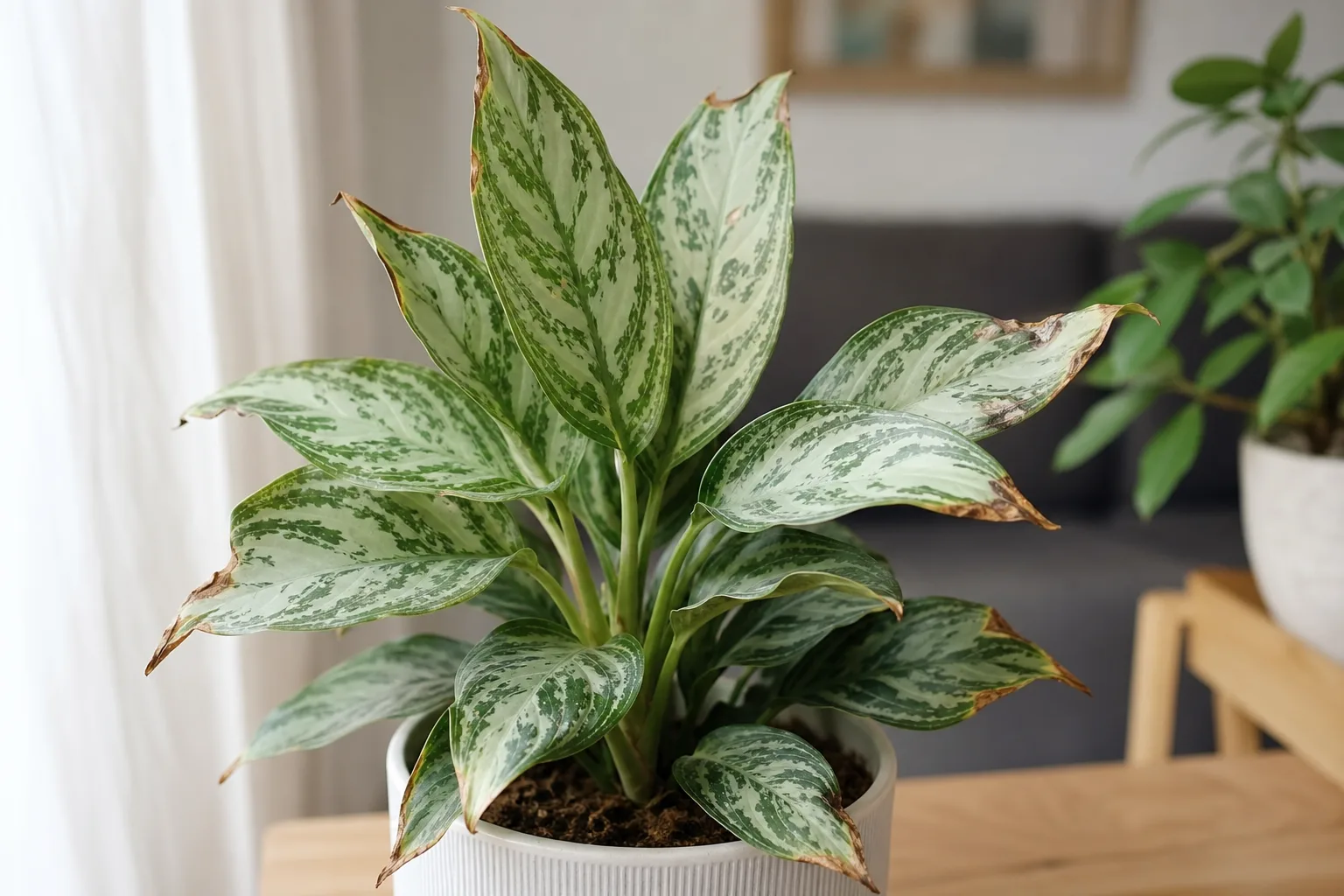
Low Humidity on Aglaonema: Causes, Checks & Fixes
This guide covers low humidity on Aglaonema. See also the general Low Humidity guide, watering, and light pages for this plant.
Low Humidity on Aglaonema: Causes, Checks & Fixes
Quick answer
Low humidity on Aglaonema (Chinese evergreen) usually announces itself through papery brown tips on older leaves, slight leaf curl at the margins, or accelerating tip damage after you turn on central heat-not through sudden crown collapse. Chinese evergreen is more forgiving on humidity than many tropical foliage plants; Clemson Cooperative Extension notes it grows well in an average house with low to moderate humidity. That tolerance has limits: heated winter rooms often sit below 40% relative humidity, and pots on radiator covers or in the path of forced-air vents lose moisture faster than thick stems and roots can resupply the leaf tips.
First step: move the pot at least 3–4 feet from heating vents, radiators, and blowing AC, then note whether only older lower leaves show crisp tips while the newest leaf stays clean. That pattern strongly points to dry-air stress rather than root failure. Do not increase watering when the top 2 inches of mix are still moist-overwatering on Aglaonema damages Aglaonema roots and mimics stress on upper leaves later.
Does Aglaonema need high humidity?
No-not by calathea or fern standards. Clemson HGIC lists Chinese evergreen as tolerant of low to moderate humidity and even notes that Aglaonema modestum tolerates very low light and low humidity. NC State Extension describes the genus as preferring high humidity but tolerating drier air indoors-language that matches real homes better than rainforest-only advice.
For practical indoor growing, aim for 40–60% RH at leaf height. Aglaonema often survives below that band, but below roughly 30–35% in heated winter air, tip burn and spider mite risk in warm, dry indoor air rise. Variegated cultivars with pale or pink tissue-Silver Bay, pink hybrids-show dry-air damage more visibly than solid green modestum types, though none are immune to a direct vent draft.
If your room already holds 45%+ RH and only newest leaves brown, suspect tap-water fluoride or fertilizer salts before blaming humidity alone.
What low humidity looks like on Aglaonema
Aglaonema leaves are wide, lance-shaped, and slow-growing, so the farthest point-the tip-desiccates first when air pulls moisture faster than roots replace it.
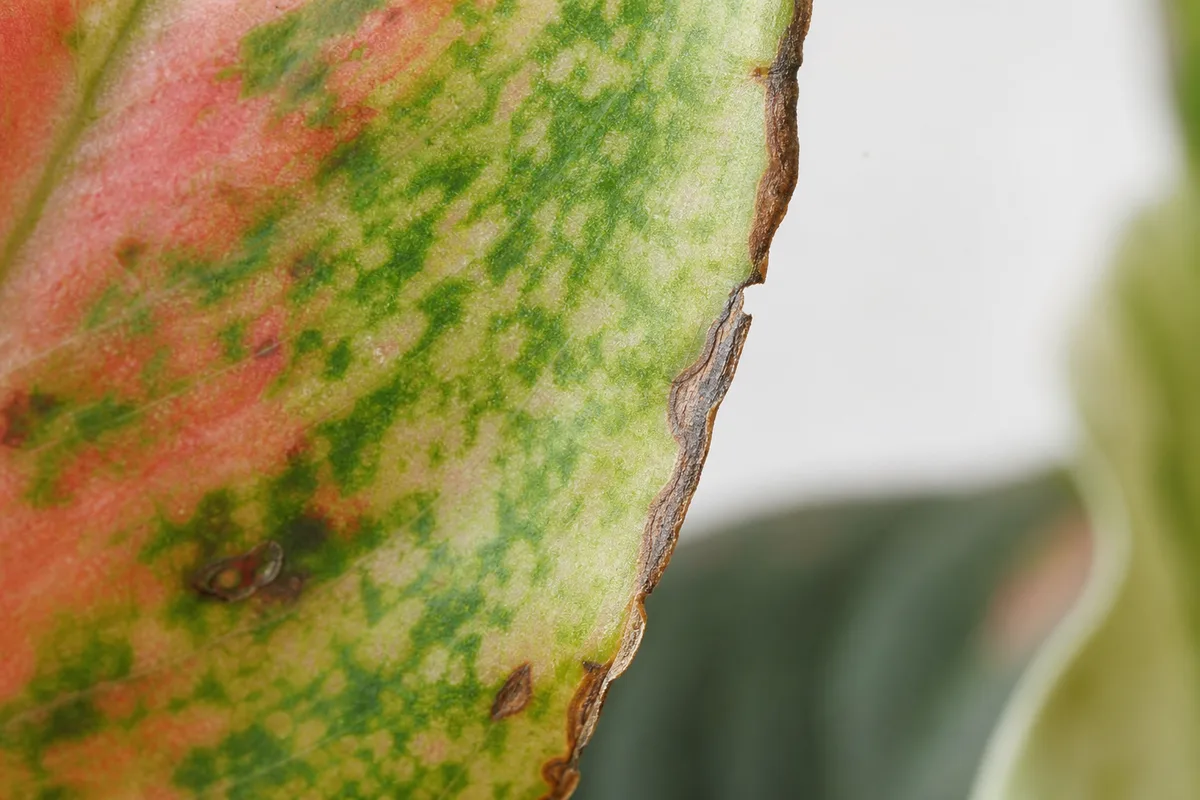
Low Humidity symptoms on Aglaonema - compare with healthy tissue on the same plant.
Typical dry-air patterns include:
- Crispy tan-to-brown tips on older lower leaves while the crown and newest unfolded leaf stay firm and mostly green.
- Papery, dry margins that feel brittle when pinched-not soft, yellow, or wet.
- Damage appearing weeks after heating season starts or after moving the pot near a new vent, sunny winter window, or space heater.
- No sour soil smell, no mushy stem base, and no rapid yellowing of entire leaves-those point away from pure humidity stress.
- Fine stippling or webbing on undersides after prolonged dry heat-then spider mites may be layered on top of low humidity, not instead of it.
Whole-leaf wilting with a very light, dusty pot fits underwatering better than dry air alone. Brown tips on every new leaf despite stable placement often fits water chemistry-see the brown tips guide for the newest-leaf test.
Why Aglaonema gets low-humidity stress
Thick stems, slow transpiration-tips lose first
Aglaonema stores water in thick stems and drought-tolerant roots evolved for tropical and subtropical Southeast Asian forests. The leaf tip is the last section to receive water; when transpiration outpaces uptake in dry air, margins and tips desiccate before the rest of the blade.
Winter heating and vent microclimates
Central heating and forced-air systems drop indoor RH, often into the 20–35% range in winter. Air exiting a register is warm but dry; a pot within a metre of that stream sits in a microclimate far harsher than the rest of the room. Illinois Extension recommends keeping tropical houseplants away from heating vents and raising humidity with humidifiers or plant grouping rather than relying on occasional misting.
More tolerant-but not immune
Marketing calls Aglaonema indestructible, and UF/IFAS Gardening Solutions describes it as tough with minimal care needs. That durability means dry air may show only on older tips for months before new growth fails-but ignoring vent placement still produces cosmetic damage and opens the door to pests in dry heat.
How to confirm low humidity on Aglaonema
Work through these checks in order-they take five minutes and prevent the wrong fix:
- Placement scan - Is the pot on a radiator cover, within 3–4 feet of a heat vent, or in the path of blowing AC? Is it on a sunny winter windowsill where leaves heat and dry faster? Move mentally off the draft line before changing water or feed.
- Newest-leaf test - Find the most recently unfolded leaf. Clean tip on new growth + brown tips only on older leaves strongly supports dry air. Brown tip on the newest leaf with stable humidity points to fluoride, salts, or inconsistent watering-cross-check the brown tips page.
- Soil moisture - Stick two fingers into the top 2 inches of mix. Moist, moderately heavy pot + tip-only damage fits dry-air transpiration; do not add water. Bone-dry, light pot + wilted leaves may combine underwatering with dry air.
- Hygrometer at leaf height (optional but useful) - Readings below 40% during active growth support humidity as a primary cause. Above 45% with persistent new-leaf tip burn implicates water quality or fertilizer salts.
- Season timeline - Symptoms that track furnace startup fit environmental RH drop better than sudden root failure.
- Pest check - Tap a suspect leaf over white paper; moving specks or stippling plus webbing mean treat spider mites after you fix placement-not instead of it.
Write down which pattern matches. One cause is usually dominant; stacking humidifier, flush, repot, and extra water the same day makes it hard to read what worked.
The first fix to try
Move the pot off heating vents, radiators, and AC draft paths-at least 3–4 feet from the air stream-then observe for two weeks before adding other interventions.
Aglaonema responds slowly; this single placement correction removes the most common dry-air trigger without shocking roots. If the room still reads below 40% RH at leaf height after the move, add a small cool-mist humidifier 3–6 feet from the plant and run it during waking hours through heating season. Illinois Extension notes that humidifiers raise ambient moisture more reliably than spritzing leaves.
Do not increase watering when only tips are crisp and soil is moist-that path leads to root stress on a species already sensitive to wet mix.
Step-by-step recovery
After the placement fix, add these steps one at a time based on what you confirmed:
- Stabilize humidity toward 40–60% if older tips were affected and new growth stayed clean. A humidifier beats misting for sustained RH through winter.
- Add a pebble tray or group nearby plants as secondary support once the humidifier holds readings-tray water must sit below the pot bottom, not contact drainage holes.
- Hold watering rhythm - Water when the top 2 inches dry, following the Aglaonema watering guide; dry tips are not a signal to soak wet soil.
- Inspect leaf undersides weekly for two weeks in dry months; raise RH helps prevent spider mites but does not erase an active infestation.
- Trim cosmetic tips - Snip brown tips following the natural leaf curve, leaving a thin sliver of brown edge so you do not cut into living tissue. Sterilize scissors between leaves.
- Switch to filtered water only if new leaves keep browning after placement and humidity stabilize-then follow the brown tips first-fix protocol rather than stacking every treatment at once.
Lookalike symptoms
| What you see | Often confused with | How to tell apart on Aglaonema |
|---|---|---|
| Crispy tips on older leaves only; new leaf clean; firm crown | Low humidity / dry air | Classic dry-air or vent pattern; soil can be appropriately moist. |
| Brown tips on newest unfolded leaf; white crust on soil | Fluoride / salt burn | Persists after moving off vents; filtered water test resolves new growth-see brown tips. |
| Whole-leaf wilt, curl, very light dry pot | Underwatering | Tips-only damage with heavy moist pot points to air, not thirst-see underwatering. |
| Stippling, webbing, dusty undersides in dry heat | Spider mites | Tip burn alone without speckling is environmental; mites need rinse plus treatment after RH rises. |
| Brown tips + wet soil, yellow lower leaves, soft base | root rot on Aglaonema / overwatering | Crown stays firm in pure dry-air stress; sour smell and mushy roots mean rot protocol, not humidifier alone. |
Mistakes to avoid
- Watering more because tips look dry-Aglaonema roots rot in soggy mix; confirm soil dryness first.
- Misting as the only humidity fix-does not hold 40–60% RH through a heating season and can wet dense foliage unnecessarily.
- Humidifier blasting directly onto leaves 24/7-raises foliar disease risk; aim for ambient RH, not constant wet blades.
- Ignoring the newest-leaf pattern-new-leaf tip burn with stable humidity usually needs water-quality correction, not more mist.
- Aglaonema repotting guide, flushing, moving, and fertilizing on day one-change one variable at a time on a slow-growing plant.
- Assuming Aglaonema needs rainforest humidity-unnecessary stress for owners; 40–60% and good placement suffice for most homes.
Recovery timeline and what to expect
Crisp brown tip tissue never turns green again. Judge recovery by new leaves:
- Weeks 1–2 - Existing tips stay brown; no new spread down margins after moving off vents is a good sign.
- Weeks 3–6 - The next one or two leaves should emerge with clean or mostly clean tips if dry air was the main cause.
- After two months - Persistent browning on every new leaf despite 40%+ RH and good placement warrants a brown tips workup for fluoride, salts, or root inspection.
Slow growth is normal. A plant with firm stems, green lower leaves, and one clean new leaf is recovering even if older trimmed tips stay visible.
How to prevent dry-air stress next time
Build routine around how Aglaonema actually grows-slowly, in low to medium indirect light, with moderate humidity:
- Map vents before placement - Keep pots off radiator covers and out of forced-air paths year-round, not only in winter.
- Target 40–60% RH in heated rooms; run a humidifier when readings drop below 40% at leaf height.
- Group tropical plants to share transpiration, but leave air space so crowns do not stay wet against neighbors.
- Weekly newest-leaf check during heating season catches drift before every older leaf shows damage.
- Quarantine and inspect new plants in dry months-low humidity and spider mites often arrive together.
For broader context on temperature, watering, and cultivar differences, see the Aglaonema overview.
When to worry
Escalate beyond cosmetic trimming if:
- Every new leaf opens with brown tips after four weeks off vents with stable 40%+ RH-inspect roots and review water quality per brown tips.
- Stippling and webbing spread despite higher humidity-active spider mites need treatment, not placement alone.
- Stem bases soften, soil smells sour, or lower leaves yellow in clusters-treat as possible root rot, not humidity.
- Temperatures drop below 55°F (13°C) repeatedly-Clemson HGIC warns Chinese evergreen is sensitive to chilling; cold injury can mimic marginal burn but will not fix with a humidifier alone.
For a firm plant with isolated older tip damage, moving off dry-air paths and stabilizing RH usually restores clean new growth within one to two months.
Related Aglaonema guides: Overview · Watering · Brown tips · Spider mites · Underwatering · Wilting
When to use this page vs other Aglaonema guides
- Aglaonema watering guide - Use for routine moisture checks before assuming low humidity is the main issue.
- Aglaonema problems hub - Browse all 16 common issues on this species.
- Brown Tips on Aglaonema - Different entry point when symptoms overlap with low humidity.