Slow Growth on Aglaonema: Causes, Checks & Fixes
Quick answer
Aglaonema is a naturally slow-growing perennial-one to two new leaves per warm season in moderate light is normal for green cultivars. Worry when no new leaves appear across a bright warm season, colorful cultivars fade and stall in dim corners, or wet soil sits unchanged for weeks. First step: compare your cultivar and light level before changing water, fertilizer, or pot size.
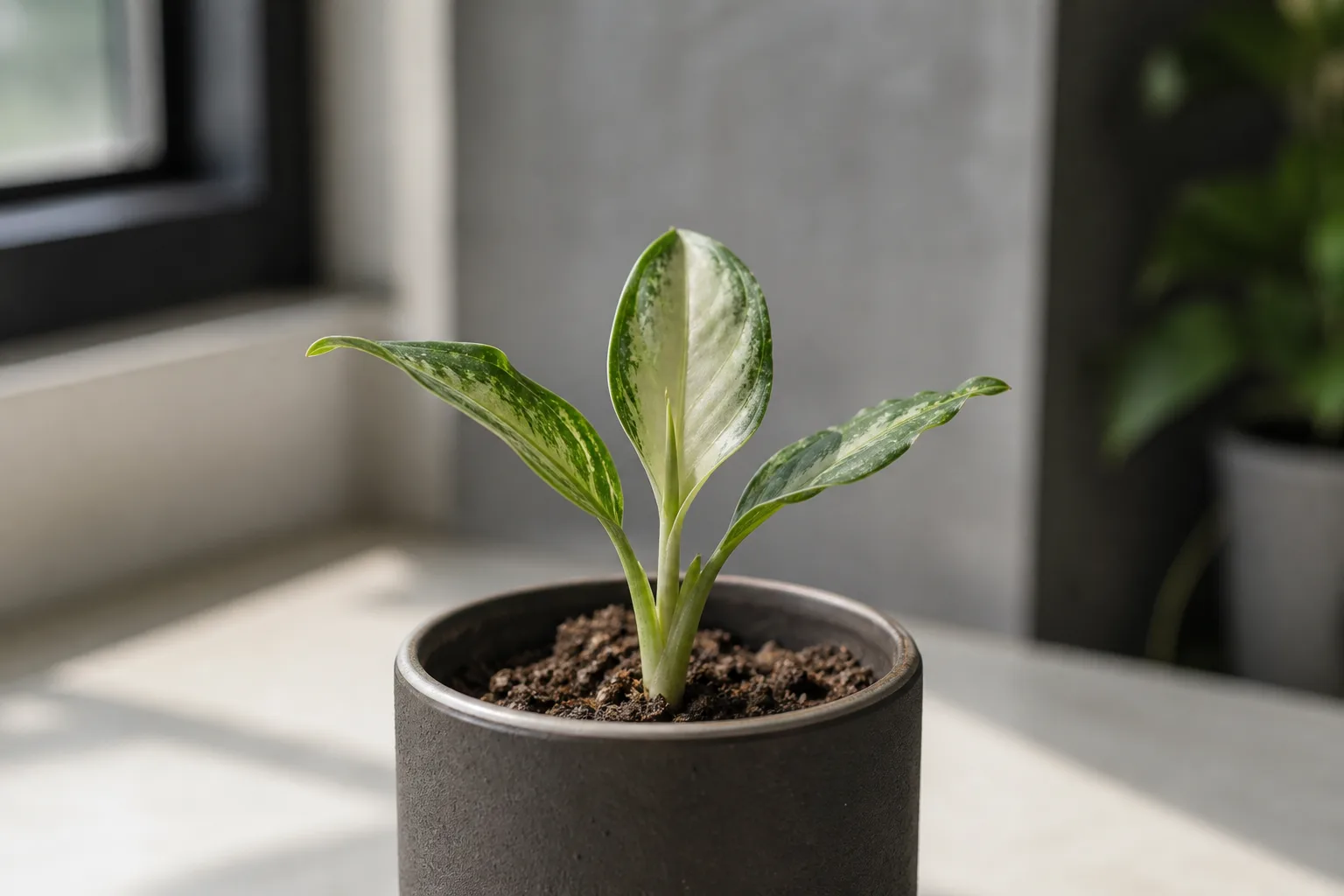
Slow Growth on Aglaonema: Causes, Checks & Fixes
This guide covers slow growth on Aglaonema. See also the general Slow Growth guide, watering, and light pages for this plant.
Slow Growth on Aglaonema: Causes, Checks & Fixes
Quick answer
Aglaonema is supposed to grow slowly. Chinese evergreen is a slow-growing tropical perennial that often adds only a handful of new leaves per year indoors-especially solid green and silver cultivars in low to medium indirect light. That compact pace is healthy, not a sign your plant is broken.
Worry when growth stops entirely across a warm bright season, when each new leaf is smaller or paler than the last, when pink or red cultivars fade and stall in a dim corner, or when wet soil never dries between waterings. Those patterns point to light, root, or watering stress-not normal slowness.
First step: match your cultivar to realistic light before you change water, fertilizer, or pot size. A green Aglaonema modestum type in a north-facing office may need nothing more than patience. A pink ‘Siam Aurora’ in the same spot may need brighter filtered light. Give the plant two to three weeks after one care correction, then judge the next leaf set-not old foliage.
What normal slow growth looks like on Aglaonema
Slow growth on a healthy Chinese evergreen looks compact and steady, not collapsed or faded:
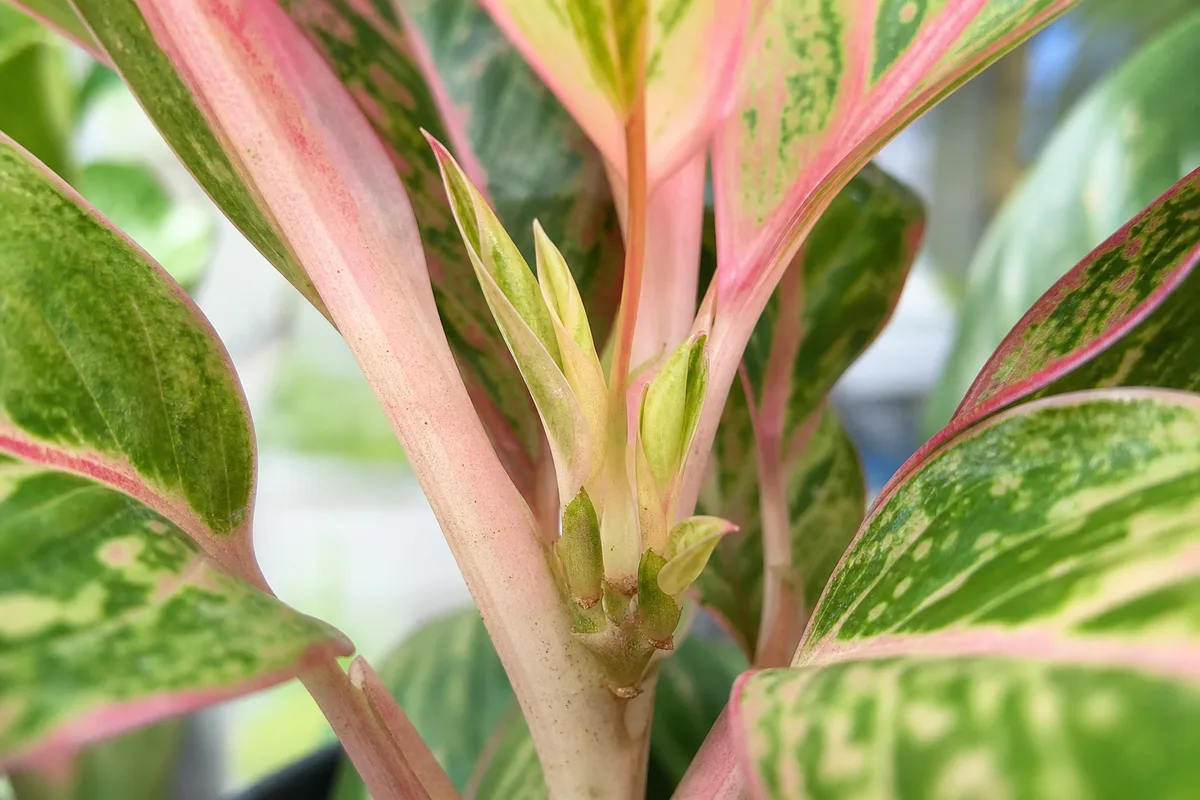
Slow Growth symptoms on Aglaonema - compare with healthy tissue on the same plant.
- Short internodes - new leaves emerge close together on cane-like stems, even if months pass between unfurling.
- Firm, upright foliage - existing leaves stay springy; lower leaf drop on mature canes is normal aging, not crisis.
- Stable or slowly improving color - green types stay deep green; colorful cultivars hold their pattern in adequate light.
- Predictable seasonal rhythm - most new leaves appear in spring and summer; winter often brings a near pause in cool, short-day rooms.
- Manageable soil drying - the top inch or two of mix dries within one to three weeks in most homes, then you water again.
Aglaonema typically reaches one to three feet tall indoors over years, not months. A desk plant that adds one or two leaves through a warm season while the crown stays firm is often doing exactly what the species does.
Expected pace indoors: green vs. colorful cultivars
Solid green and silver types - including Aglaonema modestum, ‘Maria’, and UF/IFAS silver-striped lines - are the most shade-tolerant. Solid green cultivars can grow in low light while they grow slowly and compactly in low to medium indirect light. One to two new leaves from spring through early fall is a realistic indoor pace. Do not compare them to pothos or philodendron speed.
Pink, red, and heavily variegated cultivars - ‘Siam Aurora’, ‘Red Anjamani’, ‘Pink Dalmatian’, ‘Crete’ - contain less chlorophyll in pale sectors. They need brighter indirect light to retain color and maintain growth pace. In the same dim corner where a green type merely grows slowly, a colorful form may produce no new leaves for months and lose pink or red patterning.
Seasonal winter slowdown
Aglaonema often nearly pauses in winter when room light drops, temperatures cool, and watering intervals stretch. A plant that produced leaves through summer but shows little new growth from late fall through early spring-while stems stay firm and soil dries at a slower but steady rate-is usually in seasonal rest, not pathological stall. Resume judging pace when days lengthen and the room warms.
When slow growth is actually a problem
Normal slowness becomes a stall when the plant cannot build healthy new tissue:
- Zero new leaves across a warm bright season - if spring and summer pass in a reasonably lit room and nothing unfurls, light, roots, or chronic wet soil deserve inspection.
- Shrinking or pale new leaves - each successive leaf is smaller, thinner, or duller than the last.
- Color fade on variegated cultivars - pink, red, or silver sectors wash out or revert to plain green in a dim spot.
- Wet soil for weeks - the top mix stays damp without drying; lower leaves may yellow while growth stops.
- Soft crown or sour-smelling soil - root stress or rot layered on slow growth needs immediate attention, not more patience.
If only the pace is modest but new leaves look normal and the crown is firm, you are usually watching healthy Aglaonema biology-not a problem to fix.
Why Aglaonema grows slowly
Naturally slow perennial biology. Chinese evergreen is classified as a slow-growing houseplant. It builds thick lance-shaped leaves on short stems and does not race toward ceiling height. Marketing it as an easy low-light plant often sets unrealistic expectations against faster tropicals.
Cultivar light requirements set the floor. Solid green cultivars tolerate lower light and grow slowly there. Variegated types need low to moderate light to retain pattern and maintain pace. Below that threshold, growth does not just slow-it may stop while the plant survives on stored energy.
Light compensation point. When daily light falls below what the cultivar needs for photosynthesis, the plant cannot produce enough sugars for robust new tissue even if water and fertilizer are abundant. Growth stalls first; leggy stretch or leaf fade may follow. Fertilizer cannot replace missing light energy.
Root-bound habit. Aglaonema tolerates-and sometimes prefers-a slightly snug pot. Extreme root circling, however, can limit new leaves when the root ball is dense, the mix is exhausted, and water runs straight through. Repotting every two to three years into fresh mix-or when roots circle heavily-restores capacity without oversizing the container.
Overwatering in dim corners. Low light reduces water use. Keeping a summer watering calendar in a dark winter room leaves soil wet for weeks, damages fine roots, and stalls growth even though the plant looks merely “quiet.” Wet soil plus zero new leaves is not normal slow pace.
Cold and draft stress. Chinese evergreen prefers 68 to 80 °F and is sensitive to chilling below about 55°F. Nights near cold glass, AC vents, or winter door drafts can pause growth and yellow outer leaves without obvious watering mistakes.
Lookalike symptoms to rule out
Slow growth overlaps with other Aglaonema problems. Separate them before you intervene:
| Pattern | Likely cause | Key check |
|---|---|---|
| Compact plant, few new leaves, firm crown | Normal slow growth or dim but survivable light | New leaves normal size; crown firm |
| Long bare gaps on new stems, lean toward window | Leggy growth from low light | New internodes stretched; not just slow |
| Small pale leaves, soil wet for weeks | Not enough light plus overwatering risk | Mix stays damp; yellow lower leaves |
| Soft crown, sour soil, mushy roots | Root rot | Wet mix; declining tissue |
| Winter pause, firm stems, slow drying | Seasonal dormancy | Resumes when days lengthen |
| Leggy stretch with some new leaves | Etiolation, not healthy slow pace | Gaps lengthening on new growth |
If new leaves are normal size and spacing but infrequent, patience and correct cultivar-light matching are usually the answer-not repotting, pruning, or feeding.
How to confirm the cause
Work through this checklist in order so you change one variable at a time:
- Identify your cultivar type - solid green or silver versus pink, red, or heavy variegation. Colorful types need brighter filtered light to grow at a healthy pace.
- Map placement - distance from the nearest window, direction, curtains, and whether the plant sits on a dim interior shelf or bright east exposure.
- Track new leaves across a season - mark where the newest leaf opened. If nothing unfurls through a warm bright month, that is abnormal stall. If one leaf appears every several weeks with normal size, pace may be fine.
- Check soil drying rate - insert a finger to the first knuckle. If the top inch stays wet for more than two weeks in a dim room, reduce watering frequency and improve light before assuming the plant is simply slow.
- Feel the crown and inspect roots if needed - firm tissue and neutral-smelling mix support light or seasonal explanations. Soft crown or sour odor means slide the plant out and inspect roots before fertilizing or repotting on schedule.
- Note temperature - cold drafts below about 55°F can pause growth independently of light.
- Run a two-week light test - move the plant to brighter safe indirect light without changing water, feed, or pot. Tighter new growth or a visible leaf bud confirms light was limiting pace.
Confirmed normal slow growth: infrequent but healthy new leaves, firm crown, appropriate color for cultivar and placement. Confirmed abnormal stall: zero warm-season leaves, shrinking new foliage, color fade in dim light, or wet soil with yellow lower leaves.
First fix for Aglaonema
Match light to cultivar before you water more, fertilize, or repot.
Move solid green types to low or medium bright indirect light if they are stalled in near darkness-but accept that pace will remain modest. Move pink, red, and heavily variegated cultivars to brighter filtered light: within a few feet of an east window, behind a sheer curtain on south or west exposure, or under a full-spectrum grow light 6–12 inches above the crown for 10–12 hours daily.
Increase exposure gradually if the plant lived in deep shade for months. Sudden harsh direct sun scorches Aglaonema leaves, especially pale sectors.
Once light matches the cultivar, adjust watering to actual drying speed in that brighter spot. Brighter light uses more water; dim corners need longer intervals. Water when the top 1–2 inches of mix feel dry-not on a fixed calendar.
Do not fertilize, repot, and prune on the same day. Give the plant two to three weeks after the light correction, then judge the next leaf.
If roots circle heavily, the mix is collapsed, or water runs straight through, see the repotting guide after light and watering are stable-not as a first move for simple slow pace.
Recovery timeline
Aglaonema recovers on weeks-to-months scale, not days. After light and watering match the cultivar:
- First sign of progress - a visible new leaf bud or slightly firmer new petiole within two to four weeks in a brighter spot.
- One new leaf unfurled - often six to ten weeks for a plant that was genuinely stalled, longer if winter short days overlap the correction.
- Color improvement on variegated types - judge the next two or three leaves for stronger pink, red, or silver patterning; older faded leaves do not regain full color.
- Full seasonal rhythm restored - expect most visible growth spring through early fall once conditions stabilize.
Old leaves do not speed up retroactively. Success means normal-sized new foliage at a steady if slow pace, not pothos-like acceleration.
What not to do
- Do not fertilize a stalled plant in deep shade - nutrients cannot replace light. See the fertilizer guide only after light and roots check out healthy.
- Do not repot solely because “nothing is happening” - unnecessary repotting adds shock. Repot for root-bound conditions, exhausted mix, or confirmed rot-not impatience.
- Do not remove healthy leaves because growth is slow - they are the photosynthetic engine while the plant rebuilds pace.
- Do not stack repotting, hard pruning, and pesticide on the same day as a light move.
- Do not compare to fast-growing pothos or philodendron - Aglaonema’s compact habit is the product, not a defect.
How to prevent abnormal slow growth next time
- Place cultivar to realistic home light - green types for dimmer offices; colorful types for brighter filtered windows. Full placement detail is on the light guide and overview.
- Water by soil dryness, not calendar - slower growth in dim light means slower drying. Wet soil for weeks invites root stress that stalls leaves.
- Repot on a two-to-three-year rhythm or when roots circle heavily, using well-drained mix and a pot only one size larger.
- Keep temperatures above about 55°F (avoid below 55 °F) and away from cold AC blasts and winter windowpanes.
- Feed lightly during active growth only when new leaves are appearing-never as a substitute for adequate light.
- Inspect monthly - a small light or watering correction prevents months of mistaken “dormancy.”
Related Aglaonema guides
- Aglaonema overview - cultivar differences and baseline care
- Light requirements - growth limiter before fertilizer
- Fertilizer guide - when feeding helps vs. hurts
- Not enough light - stall vs. stretch in dim rooms
- Leggy growth - fast stretch, not slow compact pace
- Repotting - root-bound stall diagnosis
- Root rot - wet-soil stall with crown failure