Not Enough Light on Aglaonema: Causes, Checks & Fixes
Quick answer
Aglaonema in too little light stretches toward windows, produces small pale leaves, and may stay wet too long. First step: move it to low or medium bright indirect light-or add a grow light for 10–12 hours daily-before you change watering, fertilizer, or pot size.
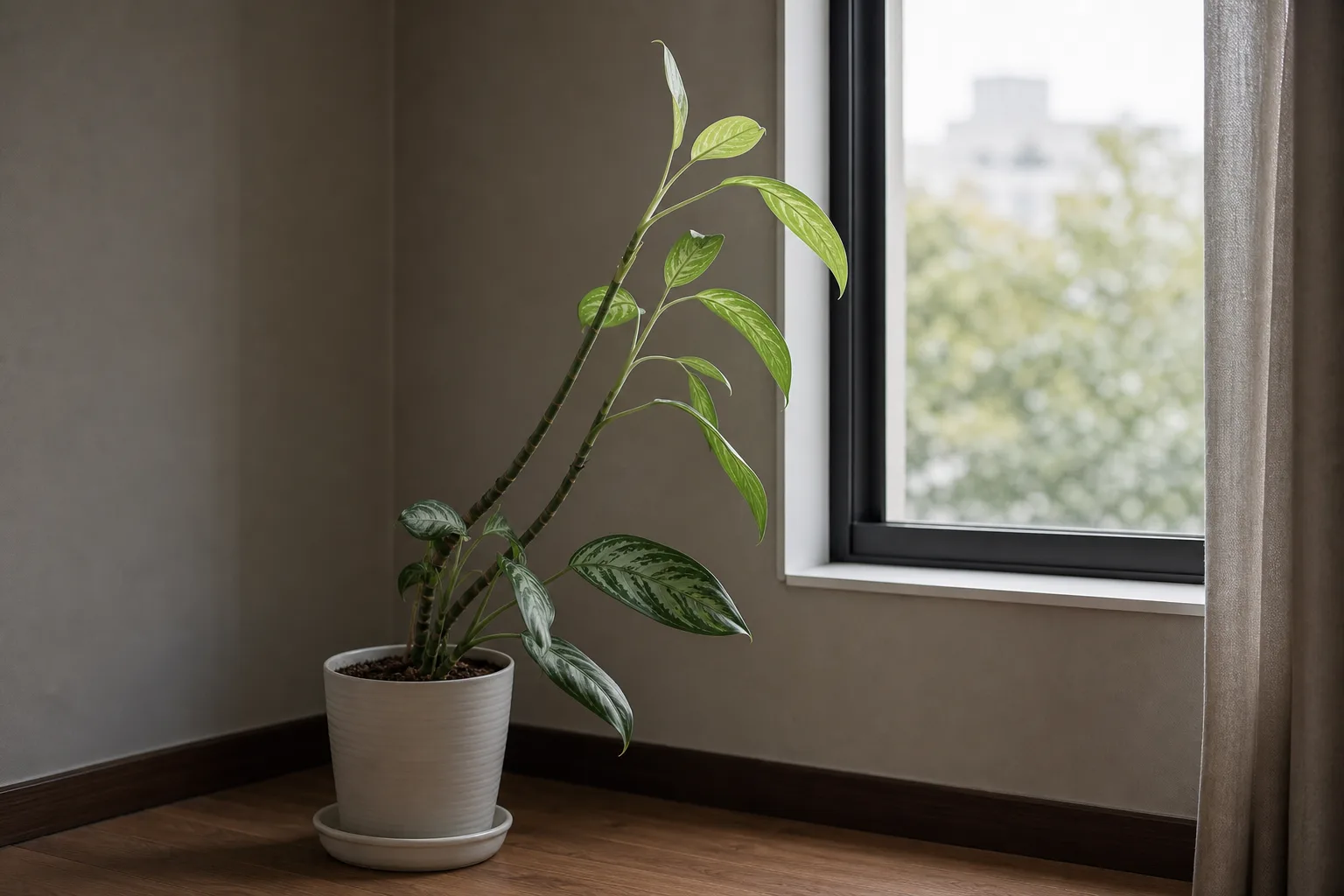
Not Enough Light on Aglaonema: Causes, Checks & Fixes
This guide covers not enough light on Aglaonema. See also the general Not Enough Light guide, watering, and light pages for this plant.
Not Enough Light on Aglaonema: Causes, Checks & Fixes
Quick answer
An Aglaonema that is not getting enough light does not usually collapse overnight-it slows down, stretches, and loses form while the potting mix stays wet longer than you expect. Chinese Evergreen earns its low-light reputation because solid green cultivars can grow in low light while variegated types need low to moderate light, but survival and healthy compact growth are different thresholds. Pink, red, and heavily patterned leaves need brighter indirect exposure than dark green forms.
First step: increase usable light before you change watering, fertilizer, or pot size. Move the plant to low or medium Aglaonema light guide-within a few feet of an east window or a filtered south or west window-or place a full-spectrum grow light 6–12 inches above the crown for 10–12 hours daily. Give it two to three weeks, then judge the next leaf set-not the old stretched sections.
What not enough light looks like on Aglaonema
Insufficient light on Aglaonema shows up as a pattern across new growth, not a single blemished leaf:
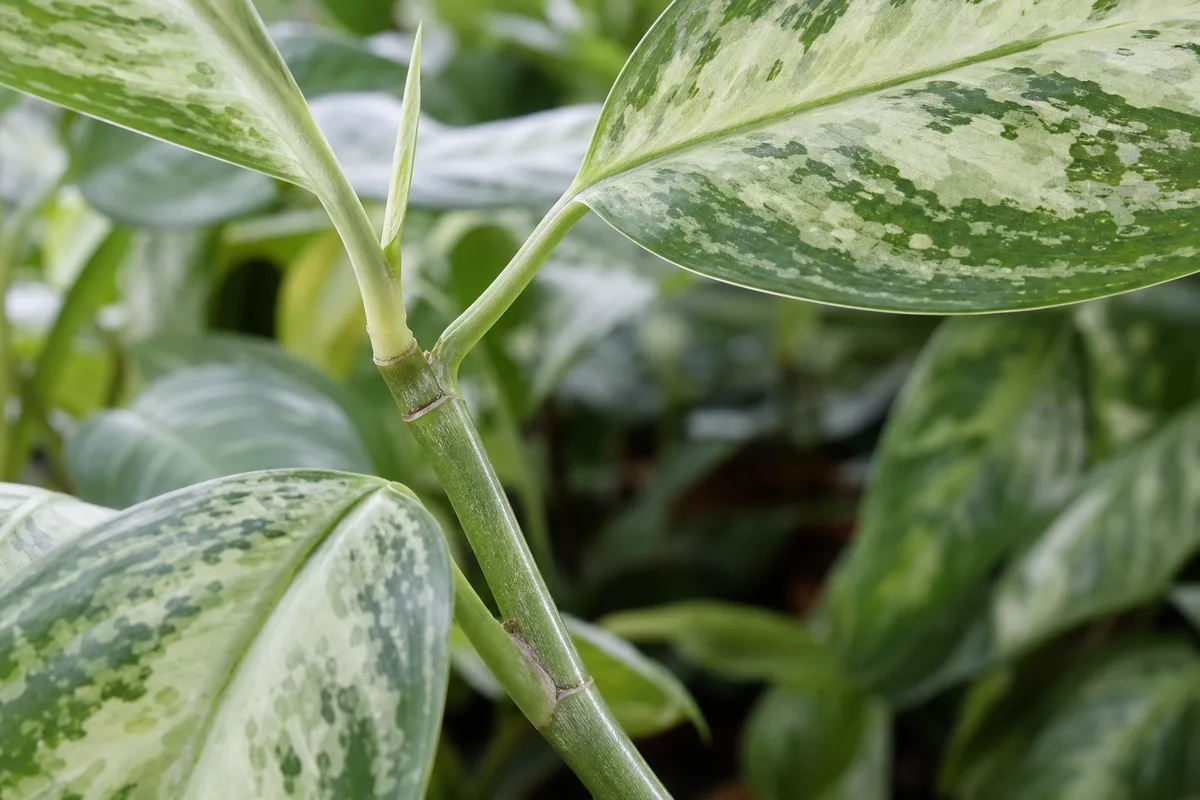
Long gaps between leaves and smaller pale new foliage on an Aglaonema cane stem - new growth should tighten once usable light increases.
- Long internodes - fresh leaves emerge far apart on cane-like stems, leaving bare gaps that were tighter when the plant was younger or in better light.
- Smaller or weaker new leaves - blades look thin, soft, or undersized compared with older foliage near the base.
- Color fade or dull patterning - pink, red, and silver sectors may wash out or shift greener; solid green types sometimes look unusually dark yet sparse because the plant is producing more chlorophyll to capture weak light.
- Directional lean - stems and petioles bend toward the brightest window or lamp; one side of the crown grows taller than the other.
- Stalled or very slow growth on Aglaonema - Aglaonema is naturally slow to moderate, but months with no new leaves in a dim corner point to an energy deficit, not dormancy alone.
- Soil that stays wet - lower light reduces water use, so the top 2 inches of mix may remain damp for weeks and invite yellow lower leaves or fungus gnats.
These signs overlap with leggy growth, but not enough light is the underlying cause-not a separate disease. Mature Aglaonema also sheds lower leaves on bare cane sections normally; the problem is when new growth above those sections is also stretched and pale.
Why Aglaonema gets not enough light
The “low-light plant” label is often misread. Aglaonema handles dim rooms better than most colorful tropicals because it evolved under forest shade, yet indoors a room that feels bright to you may deliver only a fraction of window light a few feet away. Light intensity drops sharply with distance and obstructions, and short winter days shorten effective exposure even when the pot never moves.
Cultivar sets the minimum. Solid green cultivars tolerate lower light; variegated and high-color selections need brighter indirect light to retain pattern and compact form. A green Aglaonema modestum type may merely grow slowly in a north-facing office, while a pink ‘Siam Aurora’ or ‘Red Anjamani’ in the same spot becomes visibly stretched within a season because pale leaf sectors contain less chlorophyll.
Decor placement blocks usable light. Hall tables, bathroom corners, shelves above the plant, tinted glass, and heavy curtains all cut photosynthetic energy. Aglaonema is often sold as an easy desk plant and then kept where no window contributes meaningful light for most of the day.
Seasonal daylight reduction worsens an already marginal spot. A location that worked in summer may fail in winter without supplemental lighting, especially at higher latitudes.
Low light and overwatering on Aglaonema feed each other. When photosynthesis slows, the root zone uses less moisture. Keeping the same watering calendar in a darker room is a common reason yellow lower leaves appear after a move-not because the move shocked the plant, but because wet soil persisted too long in weak light.
Lookalike symptoms to rule out
Before treating light alone, rule out these patterns:
- Normal bare lower cane - older Aglaonema stems naturally lose bottom leaves. Not enough light is likely when new internodes are long and new blades are small, not when only the lower stalk is naked.
- root rot on Aglaonema from chronic wet soil - yellow lower leaves, sour-smelling mix, and a soft stem base mean damaged roots. More light helps future drying, but mushy tissue needs root inspection first.
- underwatering on Aglaonema - curling leaves, papery brown edges, and a very light dry pot point to drought. Stretch can coexist in a dim room, but pot weight and soil dryness confirm water stress.
- Direct sun scorch - bleached or tan crispy patches on the window-facing side mean too much light, not too little. Do not push a shaded Aglaonema suddenly into hot direct sun to “fix” dim growth.
- Cold damage - Aglaonema is sensitive to chilling temperatures below about 15°C (60°F). Yellowing near cold glass or drafts can mimic stress from poor light; check temperature at the leaf surface.
If new growth is small and far apart, the stem base is firm, and soil smells neutral, insufficient light is the leading diagnosis.
How to confirm the cause
Work through this inspection in order:
- Map placement - distance from the nearest window, window direction, curtains, furniture shade, and whether another plant blocks one side.
- Match cultivar to exposure - green and silver types tolerate lower light; pink, red, and heavily variegated leaves need brighter filtered light.
- Track new leaves - mark where the newest leaf opened, then check spacing when the next one unfurls. Growing gaps confirm active etiolation.
- Run a two-week light test - move the pot to the brightest safe indirect spot without changing water or feed. More compact new foliage confirms the limiter was light.
- Check soil drying rate - if the mix stays wet more than two weeks after watering in a dim spot, note that low light may be slowing water use; adjust watering only after light improves or if roots check out healthy.
- Feel the crown and sniff the soil - firm tissue and neutral odor support light stress alone; softness and sour smell mean investigate roots before relying on light alone.
Confirmed insufficient light shows long new internodes, lean toward the brightest direction, dull or faded patterning on colorful cultivars, and tighter leaf spacing only after exposure improves.
First fix for Aglaonema
Move the plant to brighter indirect light-or add a grow light-and wait before stacking other changes.
Place Aglaonema where it receives medium to bright indirect light for much of the day-typical near an east window or beside a filtered south or west window. Missouri Botanical Garden recommends diffused sun or good indirect light for Aglaonema commutatum. If the best window is still more than a few feet away or blocked, use a full-spectrum LED or fluorescent fixture 6–12 inches above the foliage for 10–12 hours daily on a timer.
Increase exposure gradually if the plant lived in a very dark corner for months. Aglaonema does not tolerate direct sunlight on its foliage, especially on variegated cultivars-abrupt hot sun causes bleach and scorch, not recovery.
Rotate the pot a quarter turn each week for even growth. Do not repot, fertilize, or hard-prune on the same day you improve light. One change at a time makes the plant’s response readable.
Adjust watering and feeding after light improves
Brighter exposure usually increases water use. Once the plant sits in better light, recheck the top 2 inches of soil before each watering rather than keeping a calendar from the dim corner. Aglaonema prefers the mix to dry partway between waterings; wet soil in low light was a symptom, not the root cause.
Do not fertilize a stretched, light-starved plant to “wake it up.” Minerals cannot replace light energy. Resume light feeding only after new leaves look normal in size and spacing-typically monthly at half strength during active growth.
Recovery timeline
Expect tighter new leaf spacing within two to three weeks after usable light increases. Old elongated stem sections and faded leaves do not shrink or regain full color-the same plant in brighter light would have been more compact from the start, but existing stretched tissue stays long. Judge success on the next one or two leaf pairs, not by shortening old gaps.
Winter recovery may take longer unless you supplement light through short days. If stems soften, yellowing spreads, or new leaves stay tiny after four weeks in better light, reassess roots and watering-etiolation alone should not collapse a firm Aglaonema crown.
What not to do
- Do not treat height as vigor. Stretching is the plant searching for photons, not healthy fast growth.
- Do not jump to direct hot sun. Acclimate over one to two weeks; scorch patches do not heal.
- Do not fertilize in the same dark spot. Soft elongated stems often get worse, not bushier.
- Do not keep watering on the old schedule when soil stays wet in low light-that invites root trouble.
- Do not stack Aglaonema repotting guide, pruning, relocation, and feeding on one day. Fix light first; reshape later if needed.
How to prevent not enough light next time
Match cultivar to realistic home light. Keep solid green and silver Aglaonema in low to medium indirect light, but give pink, red, and heavily variegated selections brighter indirect exposure than darker-leafed versions year-round.
Rotate pots weekly, dust leaves so they intercept light efficiently, and add supplemental lighting from autumn through early spring when window intensity drops. Recheck placement when you move furniture, wash windows seasonally, and treat compact form and stable leaf color as the success metric-not the dimmest corner where the plant merely survives.
When to use this page vs other Aglaonema guides
- Aglaonema watering guide - Use for routine moisture checks before assuming not enough light is the main issue.
- Aglaonema problems hub - Browse all 16 common issues on this species.
- Leggy Growth on Aglaonema - Different entry point when symptoms overlap with not enough light.
- Slow Growth on Aglaonema - Different entry point when symptoms overlap with not enough light.
- Yellow Leaves on Aglaonema - Different entry point when symptoms overlap with not enough light.