Leggy Chinese Evergreen: Fix Stretched Aglaonema Stems
Quick answer
Leggy Aglaonema-long gaps between leaves on cane-like stems-almost always means the plant is stretching for more light. Pink and variegated cultivars need brighter indirect exposure than solid green types. First step: move it to better indirect light or add a grow light for 10–12 hours daily before you prune anything.
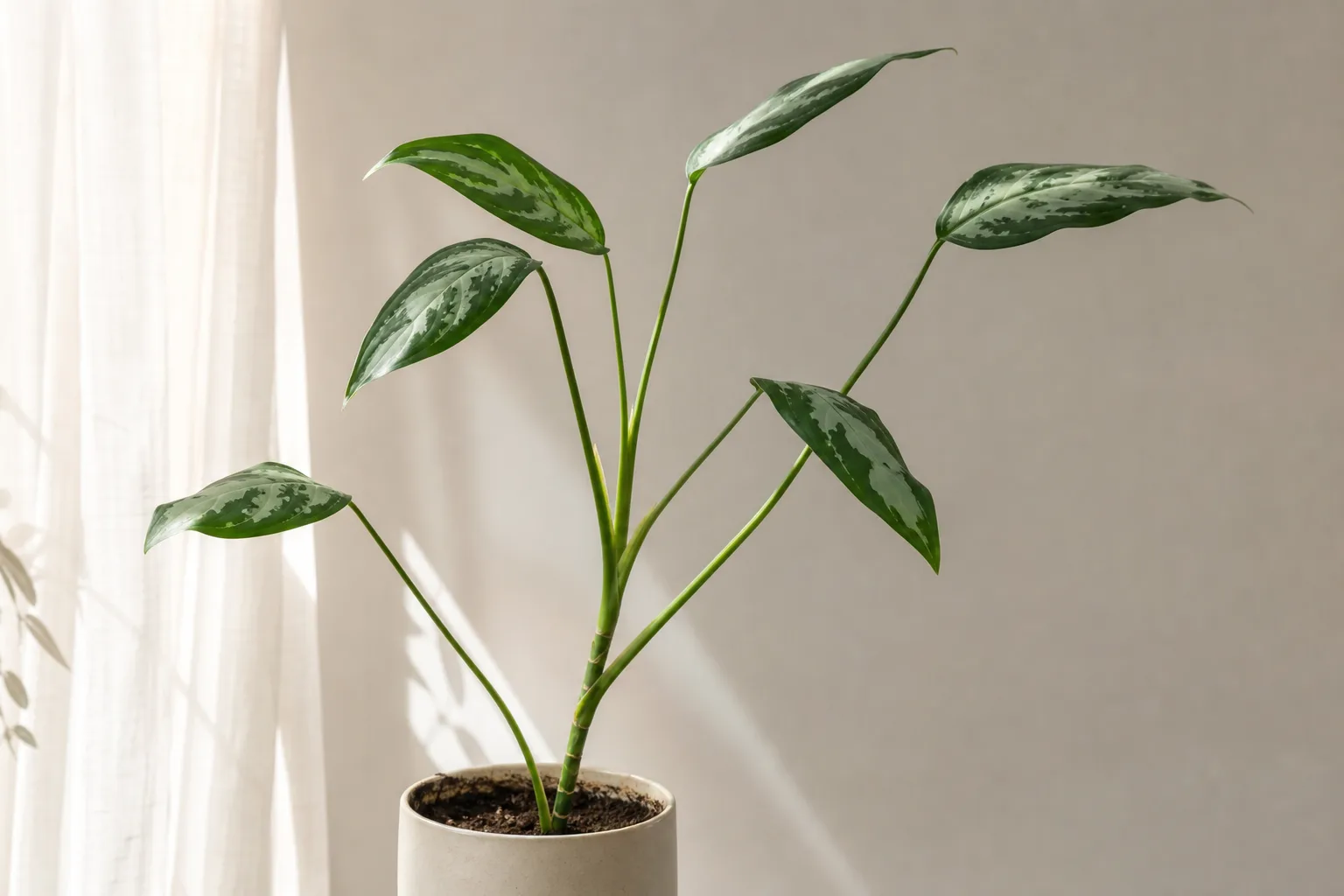
Leggy Growth on Aglaonema: Causes, Checks & Fixes
This guide covers leggy growth on Aglaonema. See also the general Leggy Growth guide, watering, and light pages for this plant.
Leggy Growth on Aglaonema: Causes, Checks & Fixes
Quick answer
Leggy Aglaonema-long bare stems, small new leaves, and a crown that leans toward the window-is etiolation, not fast healthy growth. Chinese Evergreen tolerates dim rooms better than most colorful tropicals, but it still stretches when light is too weak for compact foliage. Variegated and pink-leaved cultivars need more brightness than solid green forms.
First step: improve usable light before you prune, repot, or fertilize. Move the pot to low or medium bright indirect light-within a few feet of an east window or a filtered south or west window-or add a full-spectrum grow light 6–12 inches above the crown for 10–12 hours daily. Give the plant two to three weeks in better light, then prune stretched stems above a node if you still want a bushier shape.
Scope note: This page covers stretched stems and sparse new growth on Aglaonema. If your plant is not growing at all, losing cultivar color, or keeping wet soil for weeks, see not enough light for the full light-deficiency diagnosis-including how dim light and overwatering on Aglaonema interact.
What leggy growth looks like on Aglaonema
Etiolation on Aglaonema has a recognizable pattern on its short, cane-like stems and lance-shaped leaves:
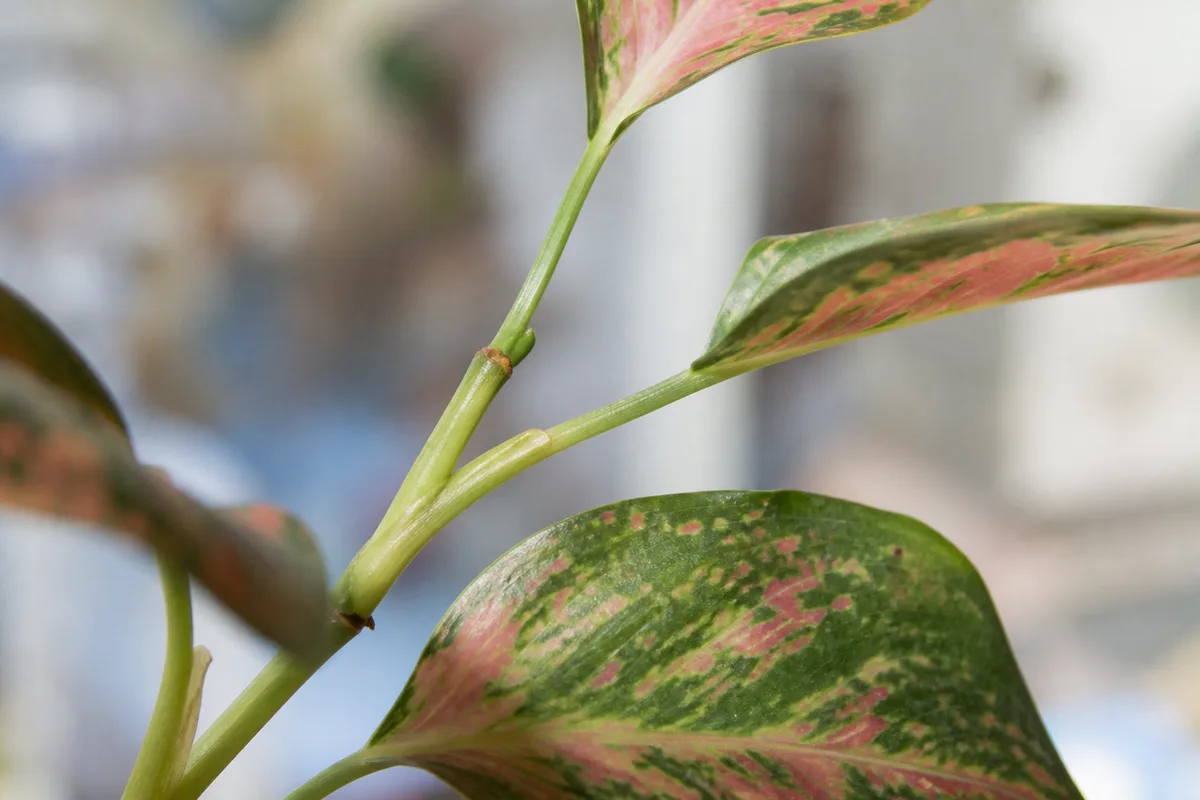
Leggy Growth symptoms on Aglaonema - compare with healthy tissue on the same plant.
- Long internodes - the bare gap between leaf pairs is noticeably longer on new growth than on older compact sections near the base.
- Smaller or paler new leaves - fresh foliage may look thin, lighter green, or less silver or pink than leaves produced in better light.
- Directional lean - stems bend toward the brightest window or lamp; one side of the plant often grows taller than the other.
- Bare lower stalks - as Aglaonema sheds older lower leaves (normal on mature canes), stretch above those bare sections makes the plant look top-heavy and sparse.
- Winter worsening - plants that looked fine in summer become noticeably taller and thinner after short days, when ambient room light drops.
Aglaonema grows slowly to moderately, typically reaching one to three feet tall. A soft, tall plant with weak leaf color is usually light-starved tissue, not a sign that feeding or Aglaonema repotting guide will fix the shape.
Why Aglaonema gets leggy growth
Low light tolerance is not the same as low-light preference. Aglaonema is marketed as a low-light plant because solid green cultivars can grow in low light while variegated types need low to moderate light. Survival and compact growth are different thresholds. When daily light falls below what the cultivar needs, the plant becomes spindly or leggy as it stretches for more light-a deliberate etiolation response.
Variegated and colorful cultivars stretch first. Pink, red, and heavily patterned leaves contain less chlorophyll. Cultivars like Aglaonema ‘Siam Aurora’, ‘Pink Dalmatian’, or ‘Red Anjamani’ need brighter indirect light than dark green A. modestum types. In the same dim corner, a green Chinese Evergreen may merely grow slowly while a pink form becomes visibly leggy within a few months. Full cultivar placement guidance lives on the Aglaonema light guide.
Uneven exposure creates one-sided stretch. Aglaonema rarely gets light from all sides indoors. Stems on the shaded side stay longer and weaker, and the crown tilts toward the brightest direction. This is phototropism layered on etiolation-not a separate disease.
Overfeeding in dim light can make stretch worse. Fertilizer pushes new tissue when the plant lacks the light energy to build dense leaves. The result is soft, elongated stems rather than the bushy crown Aglaonema should form at 1–3 feet tall. Hold feed until light improves; see the fertilizer guide for timing after recovery.
Crowded shelves and dark winter rooms block light from below and shorten effective day length. A plant that sits more than a few feet from any window, or below overhead shelves, often stretches even though the room feels adequately lit to you.
Leggy growth vs not enough light - which guide to read
Both pages address light deficiency on Chinese evergreen, but the search intent differs:
| Symptom pattern | Start here | Also read |
|---|---|---|
| Long new internodes, lean toward window, top-heavy sparse crown | This page (leggy growth) | Light guide for placement |
| Months with no new leaves, faded pink/red patterning, soil wet for weeks | Not enough light | This page if stems are also visibly stretched |
| Yellow lower leaves + soft stem base + sour soil | Root rot | Light guides after roots are healthy |
Leggy growth is the shape of the problem; not enough light is the energy deficit that may include stalled growth and watering side effects. Many stretched plants need both guides-start here for reshaping, then cross-check watering rhythm on the watering guide if soil stays damp in a dim spot.
Lookalike symptoms to rule out
Not every tall Aglaonema is light-starved. Check these before treating:
- Normal cane architecture - mature Aglaonema naturally sheds lower leaves, leaving bare stem sections. Legginess is the problem when new growth also has long gaps and small leaves, not when only the lower cane is bare.
- Root rot from overwatering - yellow lower leaves, foul soil, and a soft stem base mean wet roots, not etiolation. Light correction will not fix a mushy crown; follow the root rot inspection steps first.
- underwatering on Aglaonema stress - curling, papery leaf edges, and very dry soil point to drought. Stretch can coexist with drought in a dim room, but dry pot weight confirms water stress.
- Single tall crown from age - one dominant stem on an old plant may simply be mature height. Multiple stretched stems with weak new foliage still point to light.
If new leaves are small, pale, and far apart while the soil smells normal and the stem base is firm, low light is the leading cause.
How to confirm the cause
Work through this inspection in order:
- Note placement - how many feet from the nearest window, which direction it faces, and whether furniture or other plants shade one side.
- Compare cultivar to light - solid green types tolerate lower light; pink, red, or heavily variegated leaves need brighter indirect exposure per the light guide.
- Measure the stretch - mark where the newest leaf emerged today, then check again in two weeks. If the next leaf opens far above that point with a smaller blade, etiolation is active.
- Test with better light - move the pot to the brightest safe spot (bright indirect, never hot direct sun on the leaves) for 14 days without changing water or fertilizer.
- Feel the stem base and sniff the soil - firm tissue and neutral-smelling mix support a light diagnosis; softness and sour odor mean check roots before pruning.
Confirmed etiolation shows long new internodes, lean toward light, and more compact leaf spacing only after you improve exposure.
First fix for Aglaonema
Move the plant to brighter indirect light-or add a grow light-and wait before pruning.
Place Aglaonema where it receives medium-bright indirect light-typical for Chinese evergreen near east or west-facing windows. If the only available spot is more than a few feet from any window, use a full-spectrum LED or fluorescent fixture 6–12 inches above the foliage for 10–12 hours daily.
Grow-light setup for dim rooms
A standard room lamp is not a substitute for plant-usable light. For stretched Aglaonema in offices or north-facing rooms:
- Fixture type - full-spectrum LED grow bulb or bar rated for houseplants; Chinese evergreen also grows well under fluorescent office lighting when intensity and duration are adequate.
- Distance - 6–12 inches above the crown; raise the fixture if leaf edges bleach.
- Duration - 10–12 hours on a timer; allow a regular dark period overnight.
- Acclimation - increase exposure gradually if the plant lived in a very dark corner for months. A sudden jump to harsh direct sun can bleach or scorch Aglaonema leaves-they do not tolerate direct sunlight on their foliage, especially on variegated cultivars.
Rotate the pot a quarter turn every week so all sides receive similar exposure. Do not repot, fertilize, or hard-prune on the same day you move light-give the plant one change to respond to first.
Pruning and reshaping after light improves
Once new growth shows tighter leaf spacing-usually within two to four weeks-you can reshape leggy stems. Full technique and timing are on the Aglaonema pruning guide; essentials for stretched canes:
- Pinch or cut above a node (the slight bump where leaves attach) on the longest canes. Cut overgrown stems just above a leaf node in spring or early summer to encourage bushier regrowth.
- Remove only one or two stems at a time on stressed plants. Hard pruning every cane at once removes photosynthetic surface while the plant is still adjusting.
- On multi-crown plants, shorten the tallest cane first, wait for a side bud to break, then address the next longest stem-this keeps at least one full photosynthetic crown while you reshape.
- Root tip cuttings separately if you remove long healthy tops. Stem cuttings root in water or moist medium, which is a practical way to restart a compact plant while the parent fills in below.
Lower bare cane sections never regrow leaves. If a stem is mostly naked stalk with a small tuft on top, cutting the top back and letting side buds break-or rooting the tip-is cleaner than waiting for old internodes to leaf out again.
Recovery timeline
Light correction works faster than pruning shows. Expect tighter new leaf spacing within two to three weeks after usable light increases. Old elongated sections remain long permanently-the same plant in brighter light would be more compact with normal-size leaves, but existing stretched internodes do not shrink. Recovery is measured on the next one or two leaf pairs, not by shortening existing gaps.
Winter recovery may take longer unless you supplement light. A grow lamp through short days prevents repeat stretch the following season.
If stems stay soft, new leaves stay tiny, or yellowing spreads after four to six weeks of improved light, reassess watering and roots-and contact your local cooperative extension office for hands-on diagnosis if the plant keeps declining despite correct placement.
What not to do
- Do not assume fast height equals health. Stretching is the plant searching for light, not vigorous growth.
- Do not prune heavily before fixing light. New shoots in the same dim spot will etiolate again.
- Do not move abruptly into direct sun. Aglaonema scorches in prolonged direct sunlight; acclimate over one to two weeks.
- Do not fertilize a stretched plant in a dark corner. Feed lightly only after light improves and new growth looks normal.
- Do not stack repotting, pruning, and relocation on one day. Change light first, then adjust shape once the plant responds.
How to prevent leggy growth next time
Match cultivar to realistic home light. Keep solid green Aglaonema in low to medium indirect light, but place pink, red, and heavily variegated selections where they receive slightly more light than darker-leafed versions year-round-details on the light guide.
Rotate pots weekly, dust leaves so they intercept light efficiently, and add supplemental lighting from autumn through early spring when window light weakens. Prune long canes lightly in spring or early summer per the pruning guide to encourage branching on multi-crown plants.
A compact Aglaonema with stable leaf color and firm new foliage is the goal-not the tallest cane in the dimmest corner that still survives.
When to use this page vs other Aglaonema guides
- Aglaonema watering guide - Use for routine moisture checks before assuming leggy growth is the main issue.
- Aglaonema problems hub - Browse all 16 common issues on this species.
- Not Enough Light on Aglaonema - Different entry point when symptoms overlap with leggy growth.
- Slow Growth on Aglaonema - Different entry point when symptoms overlap with leggy growth.
- Yellow Leaves on Aglaonema - Different entry point when symptoms overlap with leggy growth.