How to Prune Aglaonema: When, Where & What to Cut
How to Prune Aglaonema: When, Where & What to Cut
How to Prune Aglaonema: When, Where & What to Cut
Quick answer
First, remove only dead, damaged, or diseased tissue with clean, sharp scissors. Cut yellow or collapsed leaves at the petiole base near the main stem, and cut soft rotting cane back to firm tissue. Do not start by shortening healthy stems or trimming brown tips on otherwise green leaves. A healthy aglaonema with firm stems and mostly green foliage usually needs little more than occasional grooming.
The Royal Horticultural Society lists no pruning required for Chinese evergreen, and UF/IFAS describes aglaonema as a low-maintenance foliage plant where routine cutting is rarely needed. That framing matters: aglaonema is a slow-growing, clump-forming foliage plant where every healthy leaf supports recovery. Pruning solves specific problems; it is not a monthly chore.
When to prune aglaonema
Minor grooming-removing a fully yellow leaf, a rotting stem section, or a spent flower stalk-can happen whenever you see the problem. Do not leave soft rot or confirmed pest-heavy tissue attached because the calendar says winter.
Structural work-shortening bare canes, removing a top-heavy crown for rejuvenation, or thinning crowded stems-belongs in the plant’s active growth window. For most indoor growers that means spring through early summer, when temperatures are stable and the plant can produce new leaves from nodes along the stem. Aglaonema slows in cool months and after major care changes, so major reshaping during winter or immediately after Aglaonema repotting guide adds stress without speeding recovery.
Emergency vs cosmetic timing
Emergency cuts do not wait. Soft, dark stem tissue, rapidly spreading lesions, or stems collapsing from rot should be removed as soon as you identify firm tissue above the damage. Cosmetic cuts-brown tip trimming, removing one awkward lower leaf, or taking off a flower you dislike-can wait until the plant is otherwise stable and you have time to work carefully.
What pruning does for Chinese evergreen
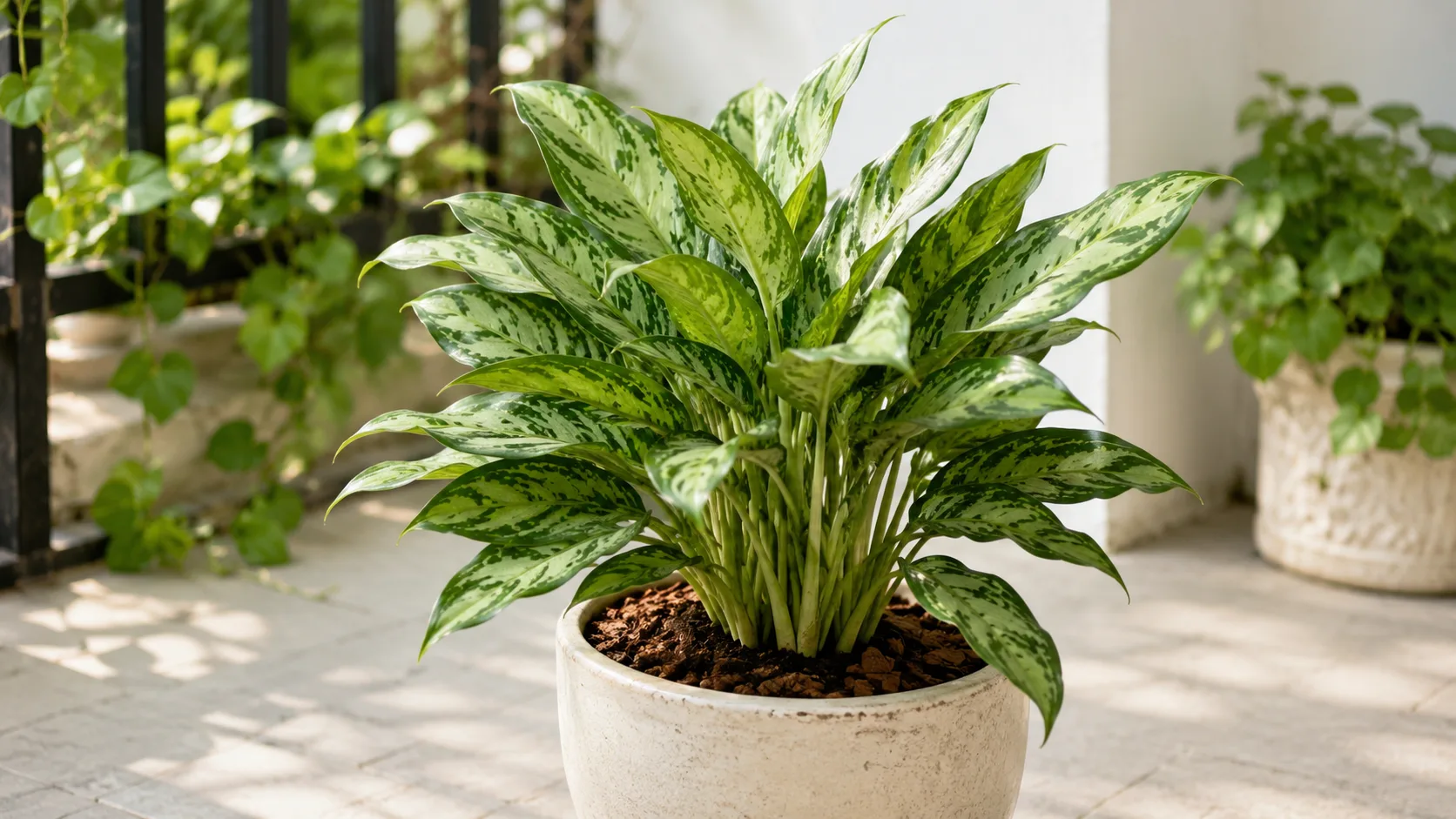
Aglaonema grows as a bushy clump of upright stems, each carrying lance-shaped leaves on short petioles. Lower leaves senesce naturally as the crown fills in, which is why mature plants often show a bare lower cane even when the top looks full. Pruning on Aglaonema overview falls into three useful categories:
Grooming removes fully yellow leaves, dry brown margins, broken petioles, and declining flower stalks. Structural pruning shortens an elongated cane above a node or removes one stem at its base to improve balance. Rejuvenation cuts a leafy top from a bare-stemmed plant so the crown can be rooted while the remaining base gets a chance to sprout from lower nodes-Clemson Cooperative Extension notes that when lower leaves drop and the stem becomes bare, the top can be removed and rooted.
Pruning cannot replace adequate indirect light, correct watering, or healthy roots. It removes tissue that has already failed or redirects growth when conditions support new leaves-but it does not fix chronic overwatering on Aglaonema, cold damage, or deep shade on its own.
What to check before you cut
Walk around the whole plant before touching a blade. Note which leaves are affected, how fast symptoms appeared, whether stems feel firm or soft, and whether soil smells sour. A single yellow leaf at the base of a vigorous plant tells a different story from six yellow leaves in two weeks.
Check the top 2 inches of potting mix with your finger. Saturated mix, a heavy pot, or foul odor suggests root stress may be driving yellowing-cutting leaves will tidy the plant briefly but will not dry the soil. Flip leaves and inspect petiole bases for mealybugs, scale, webbing, or sticky residue. Finally, assess light: aglaonema tolerates low to moderate indirect light, but stems stretch and internodes widen when light is too dim, and variegated cultivars lose color intensity in shade.
Yellow leaves - aging or stress?
One gradually yellowing lower leaf on an otherwise healthy plant is usually normal senescence. Older leaves transfer mobile nutrients back to the plant before dying. Wait until the leaf is mostly yellow and still firm, then cut the petiole at its base. There is no benefit to removing a lower leaf at the first pale patch when everything above it is green.
Multiple yellow leaves demand a care check first. Chronically wet mix, cold exposure below about 15°C (60°F), sudden light changes, and root damage all cause yellowing on aglaonema. Pattern matters: lower leaves yellowing while stems stay firm often follows prolonged wetness; bleached patches on upper leaves may follow too much direct sun. Do not confuse stable variegation-cream, silver, pink, or red zones on cultivars like ‘Maria’ or ‘Red Valentine’-with chlorosis. Compare the leaf to newer growth on the same stem before cutting.
Leggy stems and bare canes
A leggy aglaonema has elongated internodes, smaller new leaves, or a crown sitting well above a naked lower cane. Some bare stem develops with age as lower leaves senesce, but weak, open growth accelerates in dim light. Pruning can reset proportions, yet brighter filtered light is what keeps the next flush of leaves closer together. Move the plant gradually toward a brighter indirect position-east window, sheer curtain at a brighter exposure, or a suitable grow light-before or soon after structural cuts, and avoid jumping into harsh direct sun that scorches foliage.
When the lower cane is bare but the top cluster is healthy, you can shorten the stem above a lower node and keep the rooted base, or remove the top as a tip cutting and root it separately. Success depends on warmth, firm roots, and absence of rot-not every old cane branches predictably from the same point.
Rot, pests, and damaged tissue
Soft, water-soaked stems require immediate isolation and inspection. Stop watering until you understand moisture conditions, then cut rotting tissue back to firm, unblemished cane with a sanitized blade. If the cross-section still shows discoloration, sanitize again and cut farther back. Never propagate visibly soft or foul-smelling material.
For pest-damaged leaves, pruning can reduce hiding places when mealybugs or scale cluster in leaf axils, but removal alone does not end an infestation. Pair cuts with appropriate treatment and weekly reinspection for several weeks.
The first cut to make
After inspection, prioritize urgent sanitation: remove soft rot, confirmed disease, and badly infested tissue before any cosmetic work. Use one clean, decisive cut per removal rather than sawing through succulent stem tissue. Disinfect the blade between cuts when disease is suspected-Iowa State University Extension recommends wiping tools with 70% isopropyl alcohol and allowing them to dry before cutting.
Only after urgent tissue is gone should you remove fully dead leaves, then consider shortening leggy stems or trimming stable brown tips. If the plant still looks balanced and green after sanitation, stop there.
How to prune aglaonema step by step
- Inspect stems, leaf undersides, soil moisture, and crown symmetry.
- Remove urgent tissue - rot, disease, severe pest damage.
- Disinfect the blade between risky cuts.
- Cut dead leaves at the petiole base without nicking adjacent tissue.
- Shorten selected leggy stems if structure still needs correction.
- Trim brown tips only on leaves you are keeping for appearance.
- Reassess - stop before the plant looks sparse; more cuts can wait.
- Clean up - bag debris, wipe tools, wash hands.
Do not seal, paint, or coat pruning wounds. Let cuts dry and callus naturally.
Removing yellow and dead leaves
Follow the leaf blade down to its petiole-the stalk attaching it to the main stem. Hold the leaf gently so its weight does not tear tissue during the cut. Position sharp scissors close to the petiole base, leaving a tiny stub if cutting closer would risk the stem. Cut through in one motion. Do not pull a firmly attached petiole; tearing can strip tissue along the cane.
If a fully dead lower leaf releases with almost no resistance, it may come away cleanly by hand-still support the stem and stop if you feel twisting. After removal, look at the petiole base: firm pale or green tissue is reassuring; brown mush or odor means investigate further, not just keep cutting leaves.
Shortening leggy stems
For a healthy but elongated cane, decide whether you want to keep the rooted base, the leafy top, or both. To encourage regrowth from the base, cut the stem 6–10 mm above a visible node-the ring where a leaf attached or a dormant bud sits. To save the top, take a section with a healthy crown and enough firm stem for a cutting. Clemson Extension lists tip cuttings and stem cuttings as established propagation methods and specifically notes that a top from a bare-stemmed plant can be rooted.
When several canes are leggy, stagger the work: shorten one or two stems, wait for signs of recovery, then decide whether the rest need treatment. This preserves functioning foliage and protects you if roots are weaker than they appear.
Trimming brown tips
Dry brown tips are cosmetic. Use fine scissors and follow the natural leaf contour, cutting just inside the dead tissue rather than deep into green cells. Leaving a narrow brown margin avoids opening a fresh wet edge across healthy tissue. The trimmed outline will not regenerate perfectly, so aim for a natural shape.
Brown tips often follow inconsistent watering, fertilizer salts, low humidity, or root stress. If new leaves keep developing damaged margins, fix the care routine instead of repeatedly trimming old symptoms. Remove the whole leaf at the petiole base when more than half the blade is dead or the petiole is broken.
Removing spent flowers
Aglaonema produces arum-type inflorescences-a spadix enclosed by a spathe-that are usually less showy than the foliage. UF/IFAS notes that removing inflorescences when they appear aids plant longevity and keeps the plant full. Flower removal is optional for appearance, not an emergency. Cut the flower stalk near its base with sanitized scissors without damaging adjacent petioles.
Where to cut on stems and leaves
Dead or yellow leaf: cut the petiole where it meets the main stem.
Brown tip on a green leaf: trim only the dead margin, following the leaf outline.
Leggy cane: cut 6–10 mm above a firm node with a sharp bypass pruner on thick stems or scissors on slender ones.
Bare cane with healthy top: remove the top below the lowest healthy leaves for a tip cutting; shorten the remaining base cane to a lower node if you want the rooted plant to regrow from there.
Rot: cut back into firm white or green stem tissue; discard all mushy sections.
Flower stalk: cut at the base of the stalk without nicking nearby leaves.
Nodes-not random points mid-internode-are where dormant buds may activate after a cane cut. Exact branching varies by cultivar and vigor, so avoid assuming two shoots will always appear from every cut.
How much you can safely remove
As a conservative indoor guideline, avoid removing more than one-quarter to one-third of total healthy foliage in one session. This is risk management, not a biological law-slow-growing variegated aglaonemas with less photosynthetic tissue per leaf recover more slowly than solid-green specimens in warm, bright conditions.
Remove less when the plant is recently repotted, recovering from root stress, kept in very low light, or showing no new growth. Spread major rejuvenation across two sessions if multiple bare canes need shortening. There is rarely a cosmetic reason to test the upper limit.
What not to cut
Do not remove healthy green leaves to force bushiness or symmetry-each leaf feeds roots and new growth on this slow species. Do not cut through soft, discolored cane and hope the top survives; keep cutting back until tissue is firm. Do not strip every leaf from a stem unless you are deliberately rejuvenating a vigorous plant and understand the recovery risk.
Avoid pruning purely because growth paused in winter or after a move. Do not shorten stems in deep shade without a plan to improve light afterward, or new growth will likely stretch again. Do not compost suspicious diseased trimmings in casual indoor setups-bag and discard them.
Tools, sanitation, and sap safety
Use fine pruning scissors for petioles and leaf tips; sharp bypass pruners for thick mature canes. Dull blades crush succulent tissue and enlarge wounds. Keep 70% isopropyl alcohol, gloves, and a bag for debris within reach.
Aglaonema belongs to the Araceae (arum) family and contains insoluble calcium oxalate crystals. Sap can irritate skin and must not contact eyes or mouth. The ASPCA lists Chinese evergreen as toxic to cats and dogs, with possible oral irritation, drooling, vomiting, and difficulty swallowing after ingestion. Wear gloves, work away from pets and children, bag pruned material securely, and wash exposed skin after finishing.
Aftercare and recovery
Return the plant to bright, indirect light and stable warmth between about 18–27°C (65–80°F). Do not move it into direct sun to “fuel” recovery-sudden high light scorches leaves acclimated to lower levels. Protect from cold drafts and heating vents.
Check soil before watering. Pruning reduces leaf area, so the mix may stay wet longer than before. Water when the top 2 inches are dry, then drain thoroughly-never leave the pot standing in saucer water. Hold off on strong fertilizer immediately after a major cut; resume moderate feeding only when new growth shows the plant is actively recovering.
Signs pruning worked
New leaves unfurling from the crown or from nodes below a cane cut, firm remaining stems, stable color on variegated cultivars, and no spread of discoloration from cut sites all indicate success. A brief pause before new growth is normal on aglaonema.
Signs you cut too much or too soon
Continued rapid yellowing, cane collapse, persistent wilt despite appropriate moisture, or softening at cut sites suggests either excessive removal or an unresolved root, moisture, or pest problem. Investigate conditions rather than cutting more foliage.
Common aglaonema pruning mistakes
The most frequent error is treating symptoms as causes-removing yellow leaves from a waterlogged plant produces a cleaner pot for a few days while roots keep declining. Other avoidable mistakes include:
- Using dull or dirty blades that crush tissue and spread contamination
- Pulling attached leaves instead of cutting cleanly at the petiole base
- Removing too much foliage at once on a slow-growing variegated plant
- Pruning and repotting aggressively on the same day
- Watering on the old schedule after removing substantial leaf area
- Expecting guaranteed bushiness without improving light or plant vigor
- Ignoring sap safety and leaving toxic trimmings within pet reach
Aglaonema grows as a living clump, not a perfect sphere. Rotate the pot for even light, improve conditions, and let new leaves contribute before another round of cuts.
When not to prune
Skip structural pruning when the plant is cold-stressed, recently repotted, shipped, or recovering from severe root rot on Aglaonema treatment. Skip cosmetic reshaping when you have not yet corrected the moisture, light, or pest issue that caused the damage. Skip routine cutting on a symmetrical plant with firm stems and mostly green leaves-the correct action is often patience, not scissors.
If stems are soft throughout and roots are mushy, pruning alone will not save the plant; address root health first, then trim only firm tissue above the damage.
Conclusion
Effective aglaonema pruning is restraint paired with precise action. Remove dead or dangerous tissue first, trim cosmetic damage only when it bothers you, and shorten bare or leggy canes when a structural reset is genuinely useful-not on a schedule. Make clean cuts with sanitized tools, protect yourself from irritating sap, and keep trimmings away from pets. Most importantly, match aftercare to the plant’s reduced canopy and fix the light, moisture, or root problem that produced the symptom. A healthy Chinese evergreen rarely needs heavy pruning; when it does, every cut should have a clear reason.
When to use this page vs other Aglaonema guides
- Aglaonema overview - Start here for whole-plant context before deep-diving this topic.
- Aglaonema problems hub - Jump to symptom-specific fix guides when this care topic does not resolve the issue.
- Leggy Growth on Aglaonema - Escalate here when pruning adjustments are not enough.
- Slow Growth on Aglaonema - Escalate here when pruning adjustments are not enough.
- Brown Tips on Aglaonema - Escalate here when pruning adjustments are not enough.