Spider Mites on Aglaonema Pink Dalmatian: Causes, Checks &
Quick answer
Spider mites on Aglaonema Pink Dalmatian show up as fine yellow stippling on pink-and-green leaves in warm, dry indoor air-common beside office AC vents and radiator shelves in winter. First step: isolate the plant and tap a suspect leaf over white paper to confirm slow-moving specks before you spray.
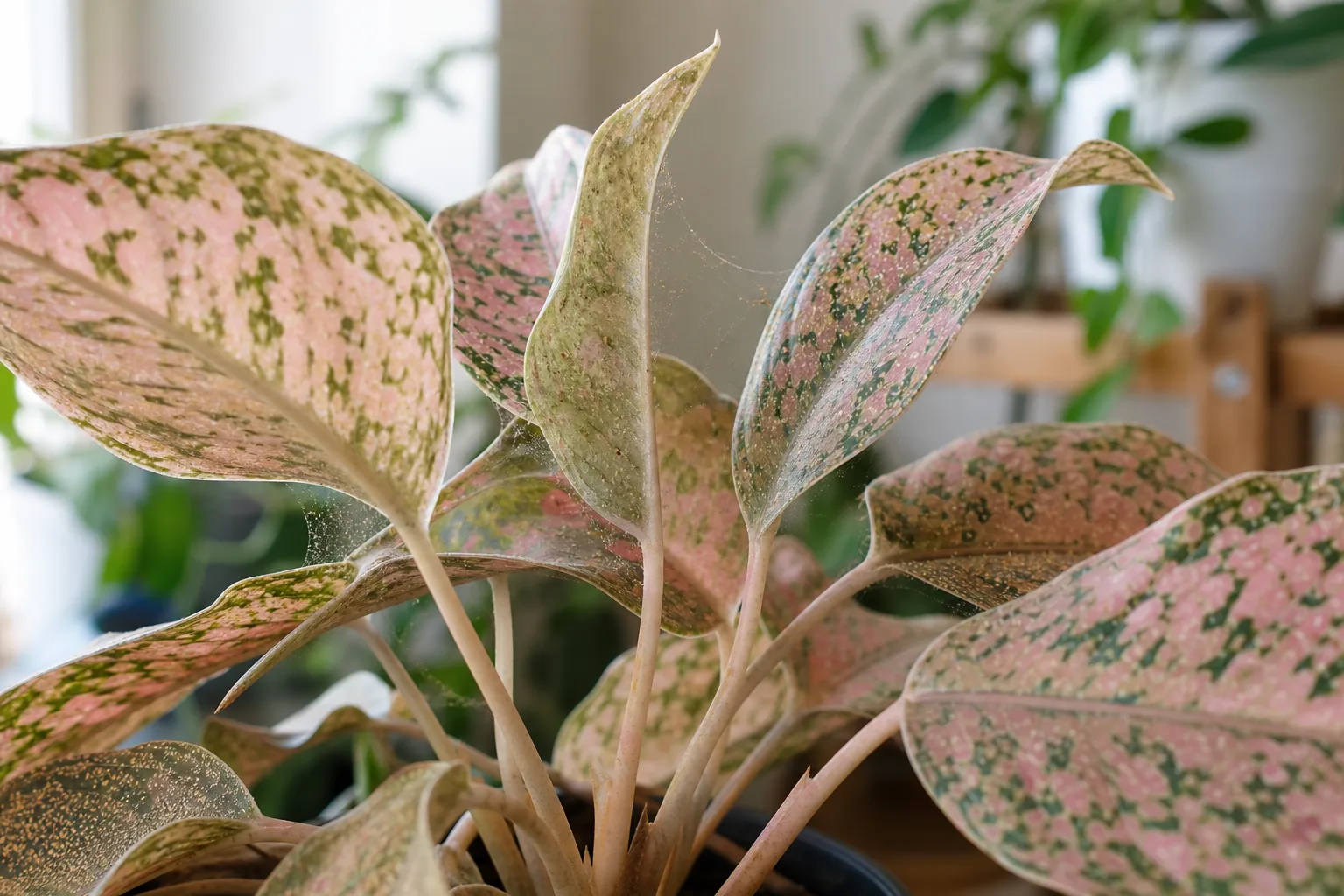
Spider Mites on Aglaonema Pink Dalmatian: Causes, Checks & Fixes
This guide covers spider mites on Aglaonema Pink Dalmatian. See also the general Spider Mites guide, watering, and light pages for this plant.
Spider Mites on Aglaonema Pink Dalmatian: Causes, Checks & Fixes
Quick answer
Spider mites on Aglaonema Pink Dalmatian are tiny sap-sucking arachnids that thrive when warm, dry air strips moisture from smooth lance-shaped leaves. On this pink-speckled Chinese evergreen, the first warning is often fine yellow or white pinpricks on pale pink tissue-easy to dismiss as faded variegation until bronzing and webbing appear at the base of upright petioles.
Pink Dalmatian is sold for office desks and dim corners, which makes winter heating season a common trigger: AC output, radiator shelves, and sunny glass in a heated room all raise mite pressure even though the species tolerates low humidity better than many tropicals.
First step: isolate the plant and tap a suspect leaf over white paper. Slow-moving specks that smear red when crushed confirm active mites. Do not spray the whole collection until you know which pots are infested.
What spider mites look like on Aglaonema Pink Dalmatian
Pink Dalmatian carries smooth, waxy, lance-shaped leaves on short upright stems-not fuzzy foliage. Mite damage still follows the classic pattern, but the pink-and-green variegation changes how early signs read.
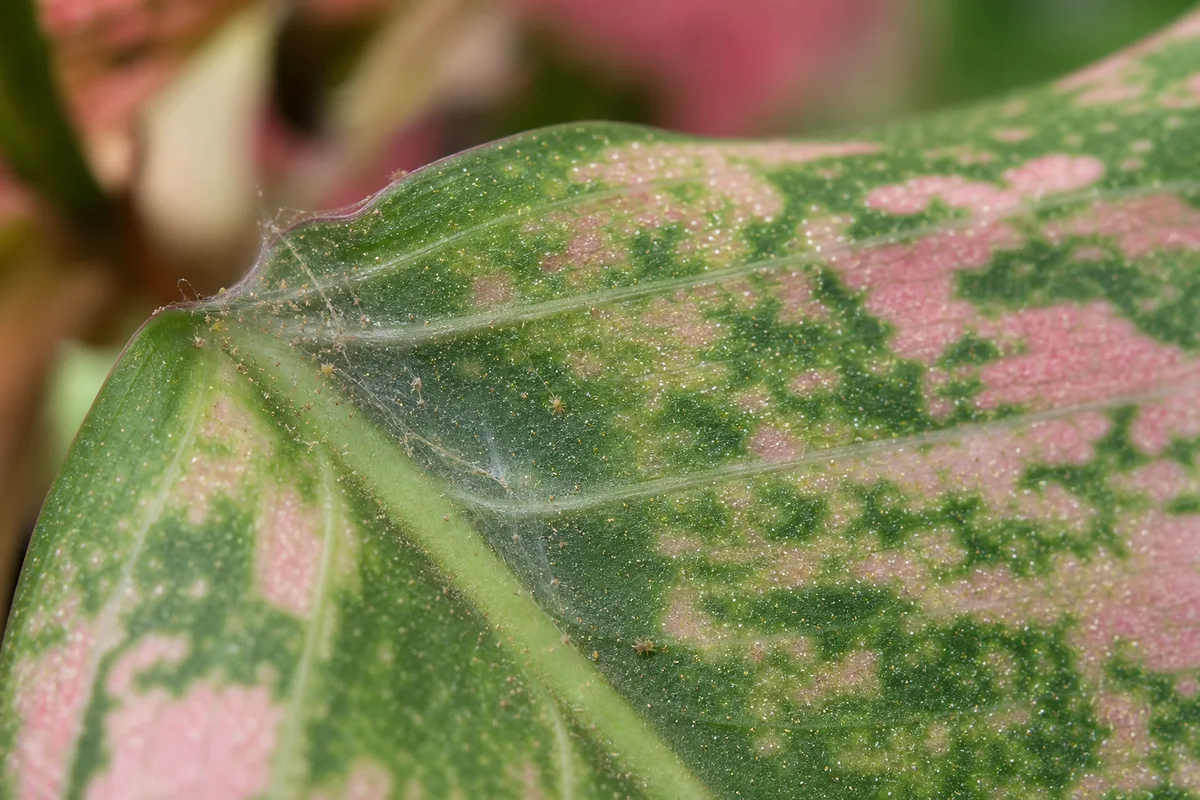
Spider Mites symptoms on Aglaonema Pink Dalmatian - compare with healthy tissue on the same plant.
Visual check - stippling on pink speckles: Compare a suspect leaf to a healthy blade on the same plant. Mite stippling shows as dull, washed-out pink patches with tiny pale dots visible when you tilt the leaf toward a window-not the vivid speckling on new crown growth. Photo reference: macro of pink-speckle stippling beside a healthy variegated leaf on the same Pink Dalmatian rosette.
Stippling on pink speckles vs. green tissue
Mites pierce cells on leaf undersides and leave tiny chlorotic dots. On dark green areas, stippling shows as pale yellow pinpricks. On pale pink speckles, the same damage can look like dull, washed-out pink before you notice bronzing. By the time the whole blade turns bronze or crisp, the colony has usually been active for weeks.
Solid-green Maria-type Aglaonemas often show stippling earlier on uniform dark tissue-you spot yellow pinpricks against green faster than you spot fading on pale pink patches. Pink Dalmatian in a dim office corner can look “fine from above” while mites feed on undersides you rarely inspect; variegated Chinese evergreens also need brighter indirect light than solid-green types to keep speckles vivid, and dull variegation from low light can mask early mite damage until bronzing spreads.
Webbing at petiole bases
Fine silk threads often appear where leaves meet the crown in Pink Dalmatian’s compact upright rosette-not always across the whole plant at first. Check the inner petiole angles and the undersides of the lowest leaves, where mites hide from casual top-down watering.
Visual check - petiole webbing: Use a phone light at the inner angles where short upright petioles meet the crown. Early silk looks like fine fuzz, not the cottony blobs of mealybugs. Photo reference: webbing threads at inner petiole bases on a compact Pink Dalmatian rosette, with underside stippling visible on the lowest leaf.
Bronzing, crisping, and leaf drop
Heavy feeding turns affected blades bronze or gray, then dry at the margins. Lower leaves drop first while the crown may still look intact. Unlike low-humidity brown tips, mite damage includes visible stippling on the blade face and often moving specks on a paper tap-dry air alone does not produce crawlies.
What it does not look like: Even brown tips with no stippling and no webbing usually mean dry air or salt burn, not mites. Thrips leave silvery scrape marks and black specks of frass-different from mite stippling and silk.
Why Aglaonema Pink Dalmatian gets spider mites
Mites multiply fastest in warm, dry conditions. Pink Dalmatian’s typical indoor placements stack several risk factors even though the species is marketed as forgiving:
Office and retail AC - Constant airflow lowers effective humidity around a single desk plant without raising room-wide RH. Mites on a stressed leaf surface outpace slow new growth on this compact cultivar.
Radiator shelves and winter heating - Plants moved closer to heat sources in cold months sit in hot, dry microclimates. Dry indoor air increases pest pressure on foliage while Pink Dalmatian’s slow growth rate means damaged leaves stay visible longer.
Dim light + dry air - Pale variegated cultivars need brighter indirect light than solid-green Maria types. In a shaded corner with dry air, the plant stress-marks slowly while mites reproduce on undersides you rarely inspect.
Grouped displays - Mites walk between pots on shared shelves. One infested Pink Dalmatian in a decorative cluster can seed mealybugs’ favorite hiding spots and neighboring plants before webbing is obvious.
Overwatering recovery - Chronic wet soil weakens roots and slows new growth, leaving old stippled foliage in place for months. If you recently corrected overwatering, mites on stressed lower leaves are a common secondary hit-not a sign you should water more.
How to confirm the cause
Work through these checks in order before committing to sprays:
- Paper tap test - Hold white paper under a suspect leaf and tap the blade firmly. Slow-moving specks confirm mites; nothing moving suggests another cause.
- Underside inspection - Use a phone light on leaf undersides. Mites, eggs, and early silk show here first on Pink Dalmatian’s smooth surface.
- Stippling pattern - Random pinpricks across the blade face with bronzing progression fits mites. Tip-only brown without dots fits low humidity better-see the low-humidity guide.
- Webbing check - Fine silk at petiole bases or between leaves confirms mites over thrips or mineral residue.
- Placement audit - Is the pot beside a heat register, AC vent, or sunny window in a heated room? Dry microclimates support outbreaks even when the rest of the room feels fine.
- Neighbor scan - Inspect plants within arm’s reach on the same shelf. Mites spread before webbing appears on every pot.
If stippling is absent, edges are crisp but the paper tap is clean, and damage hits oldest vent-facing tips only, dry air is the more likely explanation-fix placement and humidity before miticides.
First fix for Aglaonema Pink Dalmatian
Isolate the plant away from your collection, then rinse leaf undersides with lukewarm water.
That single step knocks down adults and buys time to confirm severity. Pink Dalmatian’s smooth leaves tolerate gentle rinsing better than fuzzy-leaved species-tilt the pot so water runs off the undersides without flooding the crown, where upright Chinese evergreens can rot if water sits at the stem base.
Do not apply horticultural oil or soap on the same day as a heavy rinse unless the label allows it on wet foliage. Let leaves dry completely in Aglaonema Pink Dalmatian light guide before the first spray.
Step-by-step treatment
Once isolated and rinsed, work in this order:
- Move off heat paths - Shift the pot away from AC vents, radiator ledges, and hot glass. Stable air slows mite reproduction while you treat.
- Rinse undersides every 5–7 days - Repeat washing at 3- to 5-day intervals on small plants, or every five to seven days for larger Pink Dalmatian pots. Run lukewarm water across undersides; keep the crown dry. Plan at least three rinse cycles.
- Apply horticultural oil or insecticidal soap labeled for mites - After foliage is dry, spray complete underside coverage. Most miticides need two or more applications at five-day intervals in summer or seven-day intervals in cooler rooms because eggs survive single passes. Choose products labeled for houseplants and spider mites-ready-to-use insecticidal soap (often 1% potassium salts of fatty acids) or horticultural oil at summer label rates are common homeowner options cited in MSU Extension houseplant pest guides. Oils and soaps kill by contact and have no residual effect, so undersides must be coated each pass.
- Alternate rinse and spray cycles - A practical schedule: rinse on day 1, oil on day 3 or 4 when dry, rinse again day 7, oil day 10-continue until no new webbing for two weeks.
- Inspect neighbors - Treat or monitor every plant that shared the shelf. Quarantine Pink Dalmatian for four to six weeks after the last live mite sighting.
- Hold fertilizer - Skip feed until new speckled leaves unfurl clean. Tender new growth from excess nitrogen attracts pests on stressed plants.
Heavy webbing - predatory mites in enclosed rooms
For heavy webbing on multiple leaves in a small office or bedroom, predatory mites can outperform repeat oil on pale variegated foliage you are trying to preserve. Phytoseiulus persimilis is a fast curative predator that hunts twospotted spider mites in webbing; Neoseiulus californicus tolerates lower humidity better for prevention in dry heated rooms. Release after a final rinse, when foliage is dry, and stop contact soaps and oils once predators are introduced-they die on treated leaves. A small humidifier near the quarantine zone helps persimilis, which is sensitive to relative humidity below 70%.
Recovery timeline
Active stippling should stop spreading within one to two weeks of consistent rinse-and-oil cycles. Webbing should disappear within two to three weeks if coverage reaches undersides every time.
New clean leaves from the crown are the real success marker. On Pink Dalmatian, expect three to eight weeks for a visibly clean new blade during warm active growth-longer in a cool winter office because this cultivar grows slowly. Old stippled leaves will not re-green or regain lost pink speckling; snip them once the crown produces healthy replacements.
Case note (January 2026): A radiator-shelf Pink Dalmatian in a dry home office showed dull pink speckles on two lower leaves and faint silk at inner petioles. Three underside rinses (days 1, 7, 14) plus two horticultural-oil passes (days 4 and 11) cleared the paper-tap test by week three; the first clean speckled crown leaf unfurled at week six in a cool room-old bronzed lower blades were trimmed, not expected to re-green.
Worsening signs: webbing reaches new center leaves within a week despite treatment, leaves crisp and drop faster than new growth emerges, or mites reappear on neighbors-escalate to predatory mites, a miticide labeled for heavy infestation, or discard severely webbed plants to protect the collection.
Lookalike symptoms
| Pattern | Stippling? | Paper tap | Webbing? | Likely cause |
|---|---|---|---|---|
| Dull pink speckles, bronze patches | Yes, across blade | Moving specks | Often at petioles | Spider mites |
| Crispy brown tips, oldest leaves first | No | Clean | None | Low humidity |
| Silvery streaks, black frass specks | Scraped patches | No mites | None | Thrips |
| White chalky spots, wipes off | No | Clean | None | Mineral or hard-water residue |
| White cottony clusters in crown | No | No mites | None | Mealybugs |
| Sticky honeydew on new growth | No | No mites | None | Aphids |
| Yellow lower leaves, wet heavy pot | No | Clean | None | Overwatering |
What not to do
Do not use insecticides labeled only for insects-many do not kill mites. Systemic imidacloprid treatments do not control spider mites and are a poor substitute for oils or soaps on mites.
Avoid soaking Pink Dalmatian’s crown during shower rinses. Smooth leaves drain well when tilted, but water trapped at the stem base invites rot-different from the fuzzy-leaf overnight-wet warning on other species, but equally damaging here.
Do not assume one spray finished the job. Mite eggs hatch on staggered schedules; repeat applications are required.
Skip hot direct sun immediately after oil sprays on pale pink tissue-variegated blades scorch more easily than solid-green Maria types. Apply oils when leaves are dry and the plant sits in bright indirect light.
When treating indoors, ventilate the room and keep pets away until sprays dry-Chinese evergreen is toxic to cats and dogs, and horticultural oils should not be ingested or licked from foliage.
How to prevent spider mites next time
Inspect undersides weekly in winter heating season, especially on plants beside vents or sunny glass. Increase humidity and monitor regularly in dry indoor air-a small humidifier or grouped plants helps more than occasional misting, which only briefly raises RH.
Keep Pink Dalmatian in brighter indirect light than dark cultivars so new growth stays vigorous and you spot stippling early-variegated types need low to moderate indirect light, not deep shade. Quarantine new Aglaonemas for two weeks and tap-test before placing them on shared shelves.
Match watering to your pot’s dry-down rhythm-see the watering guide-so drought stress and mite stress do not stack. Wipe smooth leaves monthly with a damp cloth to remove dust; mites prefer dusty undersides.
When to worry
Escalate immediately if webbing spans multiple leaves, stippling hits new center growth within days, or mites appear on three or more plants in the same display. Those patterns need aggressive isolation, possible discard of the worst pot, and professional-grade miticides or predatory mites.
If a paper tap shows only a few specks on one lower leaf, the crown is firm, and you moved the plant off a heat path, consistent rinse-and-oil cycles for three weeks are usually enough-Pink Dalmatian rarely collapses overnight from a light mite hit.
When to escalate - rinse-only vs. oil vs. discard vs. predators
Use this ladder so you do not repeat the wrong treatment:
| Severity | What you see | First response | If that fails |
|---|---|---|---|
| Light | A few stippled lower leaves, clean paper tap on neighbors, no webbing | Isolate, rinse undersides every 5–7 days for three cycles, move off heat paths | Add labeled soap or oil on dry foliage; repeat 5–7 days |
| Moderate | Webbing at petiole bases, stippling on multiple blades, mites on paper tap | Rinse + alternate oil/soap every 5–7 days for three full cycles | Hold fertilizer; quarantine 4–6 weeks; treat every shared-shelf neighbor |
| Heavy | Webbing on new center leaves, bronzing across most of the rosette, mites on 3+ pots | Discard or bag the worst plant; aggressive rinse + oil on salvageable neighbors | Release Phytoseiulus persimilis in a humid quarantine room after final rinse; avoid oils once predators are out |
| Collection risk | Mites return after three soap/oil rounds despite humidity fixes | Contact your local cooperative extension office for ID confirmation | Discard severely infested houseplants when reinfestation risk outweighs rescue-protect grouped retail or office displays |
Rinse-only is enough when stippling is limited to one or two lower leaves, the crown is firm, and the first two rinses drop live mite counts on paper-tap tests.
Oil or soap escalation is warranted once webbing appears or stippling spreads beyond the lowest tier-one pass never clears egg cycles.
Discard beats repeat oil when most blades are bronzed and webbed, neighbors are clean, and Pink Dalmatian sits in a high-traffic display where mites walk pot to pot. A replacement plant costs less than months of collection-wide flare-ups.
Predatory mites beat repeat oil when you want to preserve pale pink variegation on a moderately infested plant in an enclosed room with humidity you can raise briefly-after rinsing off webbing and stopping contact sprays.
Related Pink Dalmatian problems
Use these sibling pages when symptoms overlap-each URL scopes a different branch so you do not treat the wrong cause:
- Low humidity - crispy brown tips only, no stippling, no moving specks on paper tap
- Mealybugs - white cottony clusters in the crown, not fine silk threads
- Aphids - sticky honeydew on new growth, soft-bodied insects visible
- Overwatering - yellow lower leaves on wet heavy mix, clean paper tap
- Slow growth - why clean crown leaves may take weeks to show after mite control
- Watering - dry-down rhythm so drought stress does not stack with dry-air mite pressure
- Pink Dalmatian overview - full care hub for light, soil, and placement
FAQs
Can I rinse Aglaonema Pink Dalmatian in the shower to knock off spider mites?
Yes, for this smooth-leaved cultivar. Tilt the pot and rinse leaf undersides with lukewarm water, keeping the crown dry-Pink Dalmatian’s upright rosette holds water at the stem base if you soak the center. Repeat every five to seven days for three cycles, then follow with horticultural oil on dry foliage.
How often should I treat Pink Dalmatian for spider mites?
Rinse undersides every five to seven days for at least three cycles, then apply horticultural oil or insecticidal soap labeled for mites on the same interval until webbing stops and new leaves emerge clean. Mites hatch on a staggered schedule, so one spray rarely clears an infestation.
Does pink variegation hide spider mite damage on Pink Dalmatian?
Early stippling is easier to miss on pale pink speckles than on dark green tissue-the damage can look like faded variegation until bronzing spreads. Solid-green Maria types often show yellow pinpricks sooner. Check undersides weekly in winter and tap-test any leaf that looks dull on one side only; see the low-humidity guide if tips crisp without stippling.
When is spider mite damage urgent on Aglaonema Pink Dalmatian?
Escalate immediately if fine webbing appears between petioles, stippling spreads to new center leaves within a week, or nearby plants in a grouped display show the same dull speckling. A few dots on one lower leaf in stable humidity can wait for confirmation before full treatment.
Will damaged Pink Dalmatian leaves recover after spider mites?
Stippled and bronzed leaves will not fully re-green or regain lost pink speckling. Judge success by clean new growth unfurling from the crown over three to eight weeks-Pink Dalmatian’s slow growth means visible recovery often takes longer than on fast-growing pothos.
When to use this page vs other Aglaonema Pink Dalmatian guides
- Aglaonema Pink Dalmatian watering guide - Use for routine moisture checks before assuming spider mites is the main issue.
- Aglaonema Pink Dalmatian problems hub - Browse all 16 common issues on this species.
- Low Humidity on Aglaonema Pink Dalmatian - Different entry point when symptoms overlap with spider mites.
- Slow Growth on Aglaonema Pink Dalmatian - Different entry point when symptoms overlap with spider mites.