Mold on Soil on Dracaena: Causes, Checks & Fixes
Quick answer
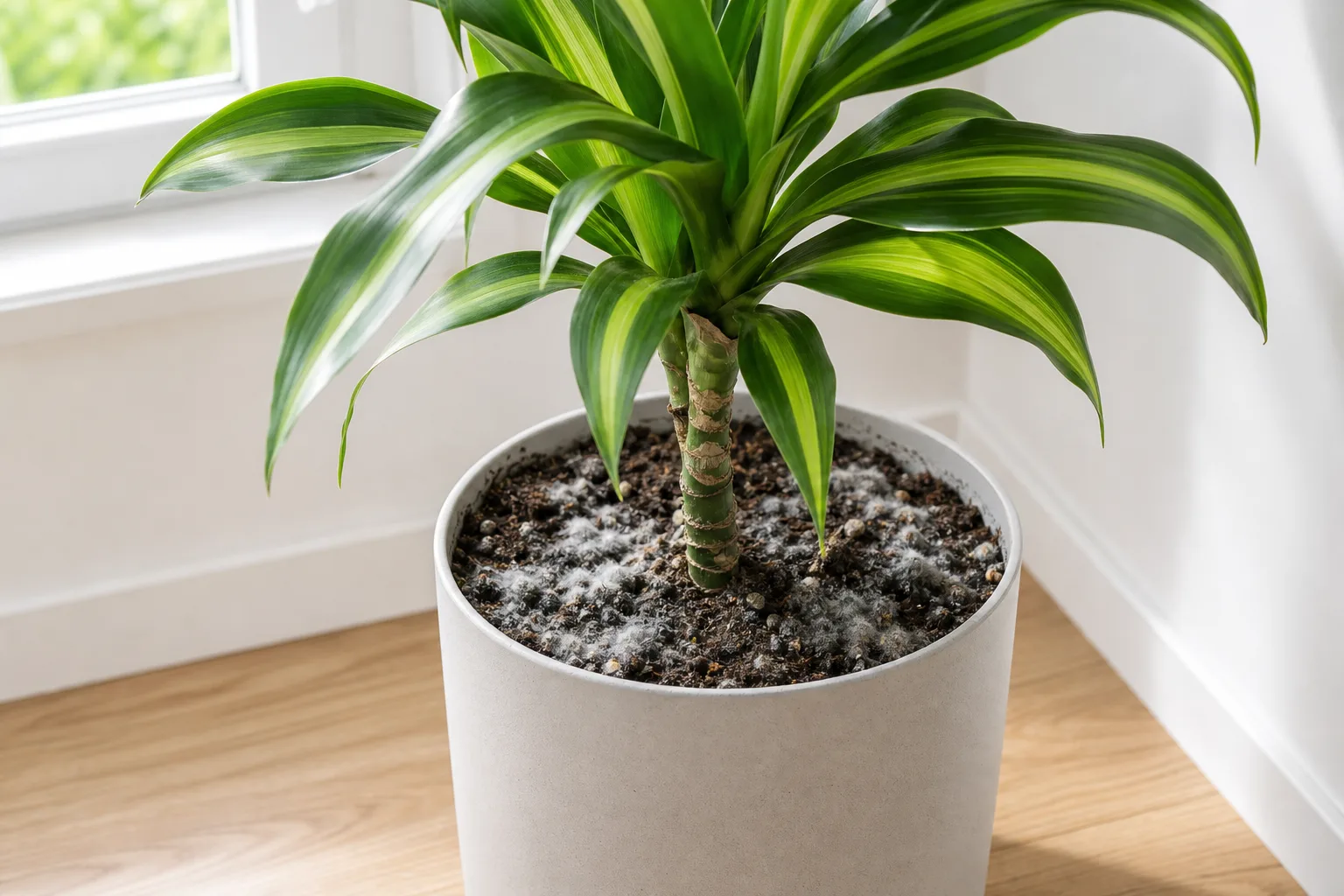
Fluffy white or gray mold on Dracaena potting mix is usually harmless saprophytic fungus feeding on wet organic matter-not a leaf disease. First step: scrape the top layer, then let the surface dry before you water again.
Mold on Soil on Dracaena: Causes, Checks & Fixes
This guide covers mold on soil on Dracaena. See also the general Mold on Soil guide, watering, and light pages for this plant.
Mold on Soil on Dracaena: Causes, Checks & Fixes
Quick answer
White or gray fuzzy patches on Dracaena potting mix are almost always saprophytic fungi breaking down organic matter in soil that has stayed wet too long. The mold is unsightly and signals a moisture problem, but it is not directly attacking your corn plant’s cane or strap leaves the way a leaf pathogen would.
First step: scrape off the top quarter-inch of moldy mix, discard it, and let the soil surface dry completely before the next watering.
Dracaena tolerates dry spells better than soggy roots-root rot usually results from a mix that does not drain quickly or overly frequent watering. If the cane is firm, leaves look normal, and only the soil surface is fuzzy, fix the Dracaena watering guide-not the foliage. If the cane feels soft at soil level or the mix smells sour, investigate root stress before assuming harmless surface mold.
Why Dracaena soil grows mold
Dracaena fragrans is a slow-growing cane plant that uses water steadily but not quickly. In medium to Dracaena light guide, the top two inches of mix should dry between waterings. When that surface stays damp for days-especially in winter when growth slows-saprophytic fungi colonize the wet organic layer.
Several dracaena-specific habits make this common:
overwatering on Dracaena on a calendar. Many owners water weekly regardless of season. Dracaena needs less frequent drinks in winter (often every 14–21 days) when the root zone moves moisture slowly. Constant light watering keeps the surface wet without the plant using it.
Low-light placement. Dracaena survives dim corners, but evaporation drops. A pot that dried in five days near a window may take two weeks in a dark hallway-long enough for mold to appear even if you have not changed your schedule.
Oversized or decorative pots. Mass cane specimens often sit in heavy cache pots without drainage. Extra soil volume holds moisture around the cane base long after the top looks dry. Mold on the surface is an early warning before root rot develops.
Organic debris on the mix. Wide strap leaves shed lower foliage naturally. Those leaves decay on damp soil and feed surface fungi-the same process that produces harmless decomposer fungi in potting media.
Peaty, water-retentive mix. Standard houseplant soil with high peat content stays moist at the surface longer than chunkier blends with perlite and bark-the mix Dracaena prefers for drainage.
Mold and fungus gnats often appear together because both thrive in persistently moist organic soil. Gnats are a separate problem, but shared wet conditions link the two symptoms on dracaena pots.
What mold on soil looks like on Dracaena
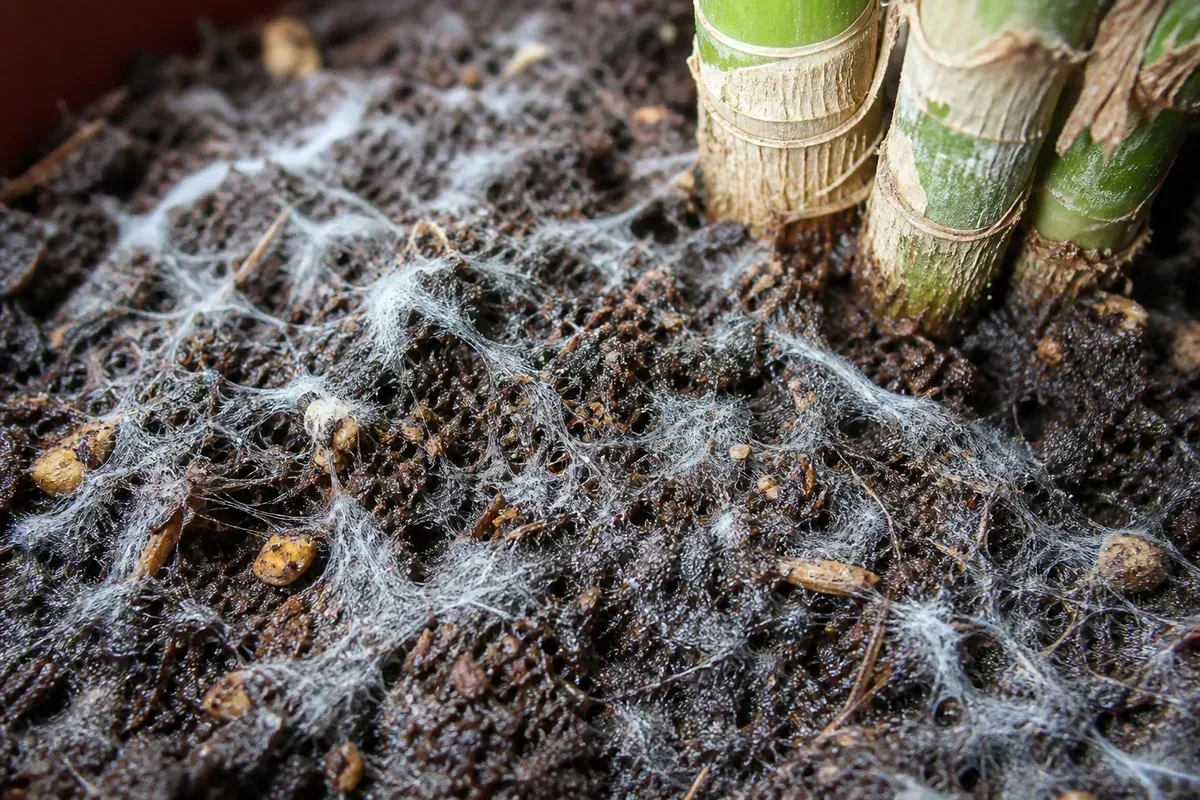
Harmless surface mold on wet topsoil - firm green cane above means fix watering, not foliage treatment.
Typical harmless surface mold:
- Thread-like mycelium spreading across the soil after watering
- Mold concentrated around the cane base or on exposed mix between stems
- Firm tan cane and green leaves otherwise unchanged
- Musty smell only when you disturb the wet surface
Signs the moisture problem has gone deeper:
- Yellowing lower leaves that do not match normal senescence
- Soft, brown, or collapsed tissue at the soil line on the cane
- Sour or rotten smell from the mix even when the surface looks dry
- Small black flies rising when you water or disturb the soil
- Pot feels heavy days after you thought it should have dried
Surface saprophytic mold does not produce leaf spots, powdery coatings on foliage, or sticky residue. Those patterns point to different problems entirely.
How to confirm the cause
Work through these checks before Dracaena repotting guide or spraying fungicide:
- Finger test at two inches - Push your finger into the mix to the second knuckle. If the surface is fuzzy but deeper soil is appropriately dry, you likely have a surface moisture issue. If the whole root zone feels wet and cold, overwatering is confirmed.
- Pot weight - Lift the container. A dracaena pot that stays heavy a week after watering is holding too much moisture for Dracaena overview.
- Cane firmness - Grip the main stem at soil level. Firm tan cane supports harmless mold cleanup. Soft, spongy tissue means escalate to root inspection.
- Leaf pattern - A few naturally aging lower leaves are normal on dracaena. Widespread yellowing with wet soil suggests root stress, not surface fungus alone.
- Drainage check - Confirm holes are open and no standing water sits in the saucer or outer decorative pot.
- Light and airflow - Note whether the plant sits in stagnant air between furniture or in a dim corner where soil dries slowly.
- Debris scan - Remove any fallen leaves or bark mulch sitting on the surface and see whether mold was feeding on that material.
If the cane is firm, leaves are stable, and mold is limited to the top layer on chronically wet soil, you have confirmed saprophytic surface mold tied to watering-not an emergency repot situation.
First fix for Dracaena
Scrape off the top quarter-inch of moldy soil, discard it in the trash, and pause watering until the surface is dry to the touch.
Use a spoon or small trowel. Avoid blowing mold spores toward your face; dracaena is toxic to pets, so dispose of scraped material where cats and dogs cannot reach it. Do not compost moldy dracaena soil if you use that compost near edible gardens.
After scraping, do not water until the top of the mix feels dry. For most indoor dracaenas, that means waiting until the top two inches are dry-not just the scraped surface. This single drying period breaks the fungus-friendly environment without stressing a plant that prefers dry intervals anyway.
Do not reach for fungicide as a first response. Surface mold on houseplant soil is a cultural problem; drying and adjusting water habits fix it more reliably than sprays.
Step-by-step recovery
Once the surface is scraped and drying:
- Empty the saucer after every watering so the bottom of the pot never sits in pooled water.
- Replace the scraped layer with a thin topping of dry, well-draining mix if bare roots are exposed-match your existing perlite-and-bark blend rather than adding dense peat on top.
- Remove fallen leaves promptly so decaying dracaena foliage is not sitting on wet soil.
- Adjust the watering schedule to the pot’s actual dry-down speed. In summer that may be every 7–14 days; in winter it may stretch to 14–21 days or longer in cool, low-light rooms.
- Improve light or airflow if the same pot stays wet too long in its current spot. Moving a few feet toward a brighter indirect window often speeds drying more than watering less on a fixed calendar.
- Add yellow sticky traps only if small flies appear when you disturb the soil-mold and fungus gnats share wet conditions, and traps help monitor adults while soil dries.
- Repot only if mold returns within days after scraping, the mix smells sour, or the cane softens. Choose a pot one size up at most with fresh gritty mix and confirmed drainage holes.
Bottom-watering can help long-term by keeping the surface drier while roots still get moisture from below. Set the pot in a tray of water for 15–30 minutes, then remove excess-do not leave the container submerged.
Recovery timeline
Visible mold should stop spreading within a few days once the surface dries. A light recurrence after the next heavy top-watering is common until you change the rhythm; scrape again and extend the dry interval.
Expect the potting surface to stay clean within one to two weeks when the top layer consistently dries between drinks. Dracaena leaves do not need to “recover” from surface mold-watch for new growth at the crown and firm cane tissue instead.
If mold, gnats, and yellow leaves persist past three weeks despite dry surface intervals, unpot and inspect roots for brown mushy sections before the cane collapses.
Lookalike symptoms to rule out
Powdery mildew coats leaves in dry white powder, not the soil. Dracaena is not a common powdery mildew host indoors.
Mealybugs leave white cottony clusters in leaf axils and along stems, not evenly across soil. Check strap-leaf bases where canes meet.
Mineral or hard-water crust on the soil surface looks chalky and flat, not fuzzy. Dracaena’s fluoride sensitivity causes brown leaf tips, not white soil mold.
Yellow mushrooms on potting mix are fruiting bodies of other saprophytic fungi-also harmless to the plant but worth removing if pets might ingest them.
Root rot wilts the plant while soil stays wet. Surface mold can coexist, but soft cane and sour mix distinguish rot from cosmetic fungus.
Mistakes to avoid
Do not drench the soil with fungicide, cinnamon, or vinegar for harmless surface mold-these do not fix chronic wetness and can stress dracaena roots.
Do not keep watering on schedule “to help” a plant with moldy soil. Dracaena needs dry intervals, not constant moisture.
Do not repot on day one for fuzzy topsoil alone. Repotting into an even larger container often makes moisture problems worse.
Do not ignore mold because it looks harmless. Persistent wet surface conditions precede root rot on a species that already suffers when mix does not drain quickly.
Do not scrape mold and immediately top-water. Let the surface dry first or you recreate the same environment within days.
Dracaena care cross-check
Mold on soil is a moisture diagnostic for this plant. Pair your fix with normal dracaena requirements:
- Allow dracaenas to dry slightly between waterings-water when the top two inches of mix are dry, not on a fixed weekday.
- Use well-draining mix with perlite and coarse bark; avoid staying soggy in pure peat.
- Provide medium to bright indirect light so the pot dries predictably-leggy pale growth in dim corners often coincides with wet soil.
- Reduce winter watering when growth slows; mold frequently appears when summer habits continue through cold months.
- Keep drainage holes open and never let the pot stand in filled saucers.
If brown leaf tips are your main concern, fluoride in tap water may also be involved-that is separate from soil mold but shares the same fix of not letting the root zone stay waterlogged.
How to prevent mold next time
Remove spent strap leaves from the pot surface weekly. Decaying dracaena foliage on damp mix is easy mold food.
Water thoroughly, then let the top layer dry. Judge by finger depth and pot weight, not the calendar alone.
Match pot size to the root ball. A small dracaena cane in a large decorative container will keep a wide ring of wet soil at the surface.
Improve air movement in grouped plant displays. Stagnant humid pockets between pots slow surface drying.
Consider bottom-watering if top-down watering repeatedly leaves a wet surface and fuzzy mold in a low-light spot.
Scout after repotting or bringing a new mass cane home. Fresh organic mix plus generous first watering can trigger temporary surface fungi until drying cycles stabilize.
When to worry
Surface mold alone on a firm, healthy dracaena is not an emergency. Escalate when:
- The cane feels soft or brown at soil level
- Leaves yellow widely while soil stays wet
- The mix smells sour or rotten after drying attempts
- Mold returns within two to three days every time you scrape it
- Fungus gnats persist in large numbers for weeks
Those patterns mean chronic overwatering may already be damaging roots-a condition dracaena tolerates poorly, especially in winter. Unpot, trim mushy roots, and repot into fresh gritty mix rather than repeatedly scraping surface mold.
Conclusion
Mold on Dracaena soil is your pot telling you the surface has stayed wet too long. Scrape the fuzzy layer, let the mix dry, and align watering with how fast this slow-growing cane plant actually uses moisture in your room. Firm stems and clean dry soil within two weeks mean you solved a cultural issue-not a mysterious plant disease.
When to use this page vs other Dracaena guides
- Dracaena watering guide - Use for routine moisture checks before assuming mold on soil is the main issue.
- Dracaena problems hub - Browse all 16 common issues on this species.
- Fungus Gnats on Dracaena - Different entry point when symptoms overlap with mold on soil.
- Overwatering on Dracaena - Different entry point when symptoms overlap with mold on soil.
- Root Rot on Dracaena - Different entry point when symptoms overlap with mold on soil.