Water Stress on Lucky Bamboo: Causes, Checks & Fixes
Quick answer
Water stress on lucky bamboo is usually a split diagnosis: either roots are too dry to pull water, or roots are too damaged by stale or saturated conditions to move water upward. First, identify vase versus soil culture, then check root texture and moisture history before adding water.
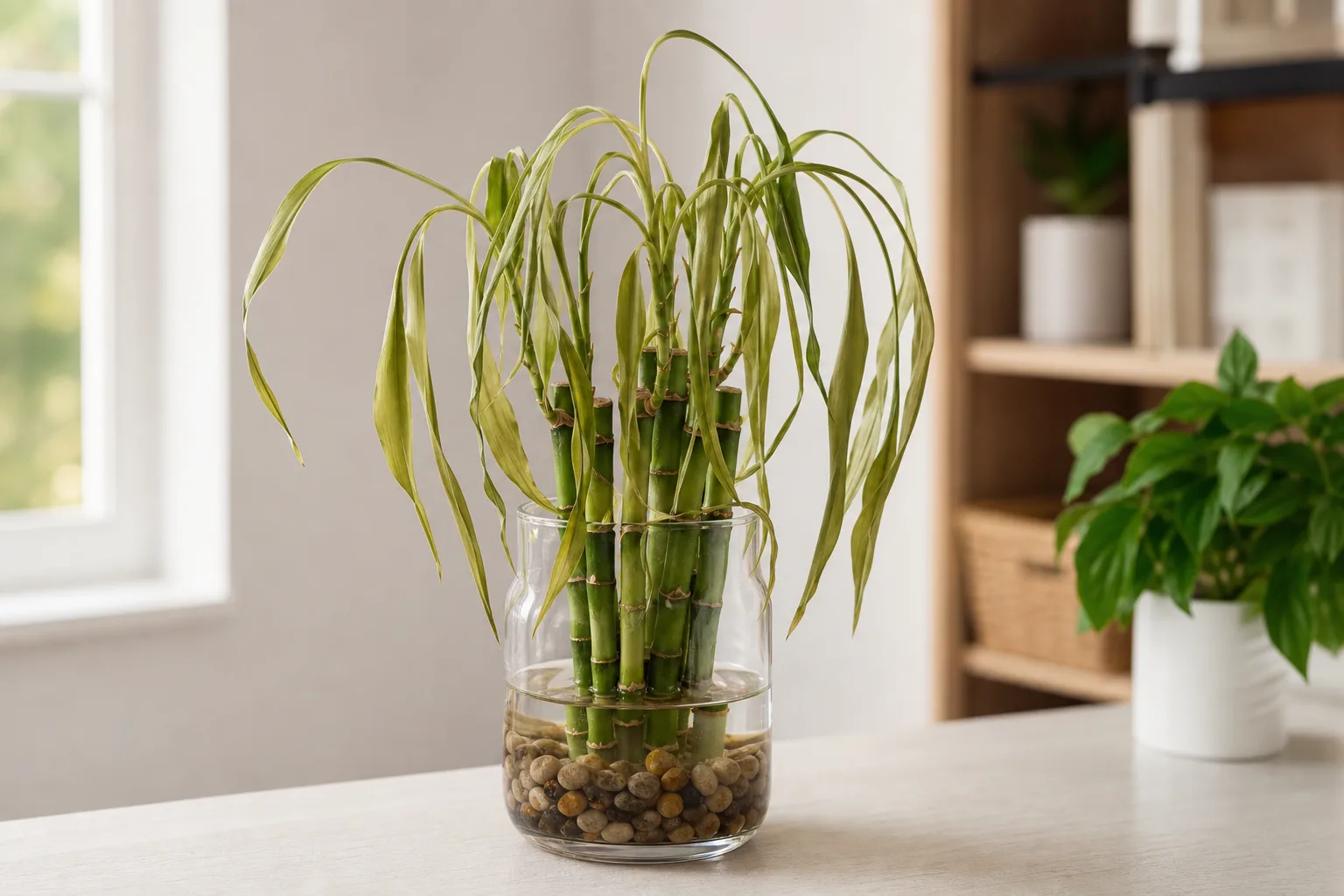
Water Stress on Lucky Bamboo: Causes, Checks & Fixes
This guide covers water stress on Lucky Bamboo. See also the general Water Stress guide, watering, and light pages for this plant.
Water Stress on Lucky Bamboo: Causes, Checks & Fixes
Quick answer
Lucky bamboo (Dracaena sanderiana) water stress is not one single condition. It is usually either dry stress (not enough usable moisture) or wet stress (too much stale or oxygen-poor moisture), and both can cause limp leaves. The first fix is not “water more.” The first fix is diagnosis: check culture type, moisture pattern, and root firmness before taking action.
In vase culture, keep roots and the lowest cane section submerged and change water weekly. In soil, water when the top inch dries rather than on a fixed calendar. If tissue is soft and yellowing, assume wet stress first because overwatering can cause yellow leaves and stem rot.
This page is the swing-diagnosis hub for ambiguous moisture symptoms. If you already know the plant is too dry or too wet, jump to underwatering or overwatering. If whole canes collapse from the base, see wilting.
Water stress vs. wilting vs. underwatering vs. overwatering
Lucky Bamboo problem pages overlap on moisture symptoms. Use this table to pick the right guide:
| Pattern | Vase / soil clue | Roots | Leaves / canes | Start here |
|---|---|---|---|---|
| Water stress (ambiguous) | Conflicting signals - full vase but limp, or wet soil but crispy tips | Firm or mushy - you are still deciding | Limp, yellowing, or wrinkled without a clear dry/wet story | This page |
| Underwatering | Water below roots, dusty top inch, light pot | Firm, slightly shriveled | Wrinkled canes, mild tip crisping | Underwatering |
| Overwatering | Cloudy stale vase or soggy mix for days | Brown, slimy | Yellow leaves plus soft base | Overwatering |
| Wilting | Any moisture state | Often failing | Whole cane bends from base upward | Wilting |
Water stress is the fork before you commit to a rescue path. Wilting is advanced collapse - often wet stress that progressed past reversible firm tissue.
What water stress looks like on Lucky Bamboo
Underwatering pattern
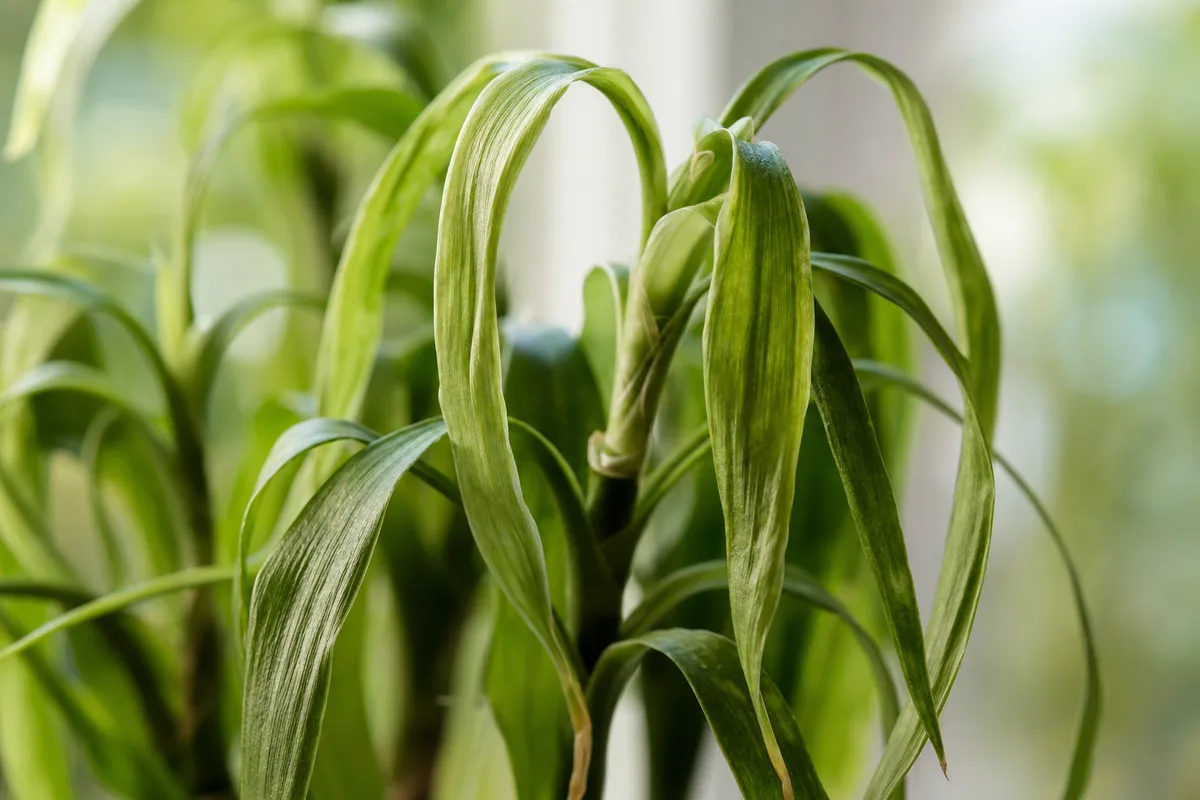
Water Stress symptoms on Lucky Bamboo - compare with healthy tissue on the same plant.
In vases, the water line drops below roots, pebbles dry out, and canes may wrinkle before they yellow. In soil, the pot feels very light and the top layer becomes dusty. Roots are usually firm, not slimy, and stem bases stay solid.
Overwatering pattern
In vases, the issue is often stale water rather than depth alone: cloudy water or fog in the vase is a sign of bacteria that attacks submerged tissue. Roots turn brown or slippery. In soil, mix stays wet for days, leaves yellow while drooping, and lower stem tissue can soften. This aligns with extension guidance that excessive wetness can lead to yellowing and stem rot.
Why “full water” can still look like drought
If roots are damaged, they cannot move moisture well into the upper cane, so leaves can wilt even with water present. That is why root texture beats visual water level when symptoms conflict - a common desk-vase failure mode when owners top off cloudy water for weeks without a full change.
Why Lucky Bamboo gets water stress
Lucky bamboo is commonly grown in water, but hydro setups still require turnover and oxygen exchange. Topping off for weeks without full changes allows bacterial buildup and root decline. Clemson’s guidance to change vase water weekly is the baseline that prevents this failure mode.
In soil, “evenly moist” does not mean permanently saturated. Missouri Botanical Garden’s note on evenly moist soil fits a wet-dry rhythm, not constant heavy watering.
Water quality can confuse diagnosis. Dracaena species are easily affected by fluoride in tap water, and tip injury can look like drought at first glance when roots are still firm. Switch to rain or distilled water when tips brown before you assume the vase needs more volume.
Office low light and decorative cachepots
Dim cubicles slow transpiration, so soil-grown lucky bamboo in a decorative outer pot with no drainage can stay wet below the surface even when the top inch feels dry. The inner pot may hold runoff you cannot see. Lift the nursery pot, check the bottom of the mix, and empty standing water in cachepots before rehydrating - otherwise you add water to an already saturated root zone. Pair with the light guide when a dim desk keeps mix wet longer than your top-inch check suggests.
Braided or tightly grouped displays add one more risk: inner canes may sit in stale pockets while outer canes get better circulation, creating mixed symptoms in the same arrangement.
Why base softness escalates faster on cane structure
Unlike leafy shrubs, lucky bamboo stores little moisture in thin cane tissue. When the lowest submerged nodes soften, rot can climb the hollow cane quickly. Firm tissue above a mushy base may still be salvageable by cutting and rerooting - but soft bases are a same-day signal, not a wait-and-see pattern.
How to confirm the cause
Work through this checklist in order:
- Confirm setup: vase plus pebbles or potting mix.
- Check moisture history: low/evaporated water versus long-stale water or constantly wet mix.
- Inspect roots: firm and pale versus brown and mushy.
- Press stem bases gently: firm means potentially recoverable; soft means escalation.
- Check for lookalikes: tip burn with firm roots may be water quality - see brown tips - not volume stress.
Dry-vs-wet decision table
| Check | Dry stress likely | Wet stress likely | Urgency | Read next |
|---|---|---|---|---|
| Vase water condition | Water below roots, clear | Cloudy, sour, unchanged for weeks | Routine - rehydrate after full reset | Overwatering |
| Soil condition | Top inch dry, pot light | Top inch wet for days, pot heavy | Routine dry / this week wet | Underwatering or Root rot |
| Root feel | Firm, thin, slightly shriveled | Brown, slimy, breaking | Routine / same day if mush spreads | Root rot |
| Leaf/stem trend | Curl, mild tip crisping | Yellow leaves plus soft base | 48–72 hr watch / same day if base soft | Wilting |
| Tip pattern only | N/A - roots firm | N/A - volume may be fine | Low - switch water source | Brown tips |
The first fix to try
Start with one action: reset the root environment based on your table result.
- If dry stress is most likely: rehydrate correctly - full water reset in vase, deep soak and drain in soil - then pause and observe for 48–72 hours.
- If wet stress is most likely: stop adding water, remove stale water or saturated mix, trim mushy roots, and re-establish clean conditions before any feeding.
Avoid stacking many changes at once. Do not fertilize a stressed plant during first response.
Step-by-step recovery
- Remove the plant from its immediate moisture environment (lift from vase pebbles or unpot gently).
- Separate firm tissue from rotted tissue first.
- Rebuild with clean conditions:
- Vase: refill with fresh filtered water to cover roots plus about one inch of stem.
- Soil: repot only if mix is staying soggy; use well-drained potting soil.
- Place in bright, indirect light and stable warmth.
- Resume monitoring cadence:
- Weekly full water changes in vase.
- Top-inch dry checks in soil.
- Delay fertilizer until new growth appears stable.
For detailed mode-specific rescues, use Underwatering, Overwatering, and Root rot.
Salvaging braided displays when one cane fails
Braided lucky bamboo often shares one pebble vase. Partial failure is common:
- Lift each cane separately - outer stems may look fine while an inner cane sits in a stale pocket.
- Compare root firmness per cane - one mushy cluster explains limp leaves on a single stem.
- Separate the failing cane - cut ties carefully; trim soft roots on the weak stem only.
- Reroot firm upper sections in fresh filtered water, or discard soft bases.
- Rebuild only with firm canes - give separated survivors their own vase until roots recover.
If cloudiness returns within 48 hours after a full change, treat as rot escalation, not simple water stress.
Recovery timeline
Recovery speed depends on how much root tissue stayed firm:
- Mild dry stress: leaves often firm up within 1 to 3 days after correct hydration - a practical home observation window, not a published extension metric.
- Mild wet stress after trim-and-reset: expect 2 to 4 weeks before stable new growth; damaged yellow tissue does not re-green.
- Propagation salvage: Clemson notes cane cuttings can form new roots in roughly 2 to 3 weeks under clean water conditions.
Judge progress by new, firm growth and stable root texture - not by old yellow leaves turning green again.
Causes to rule out
| Symptom | How it differs from water-stress fork | Where to go |
|---|---|---|
| Water quality irritation | Brown tips with firm roots; volume looks adequate | Brown tips - switch to filtered or rain water |
| Light stress | Bleached or scorched patches on window-facing leaves; mix may dry fast on the sunny side only | Light guide - move out of direct sun |
| Cold slowdown | Limpness after AC vent move; water and roots may look fine | Warm stable spot; bring indoors before nights drop below 65°F |
| Transplant shock | Brief droop after repot with otherwise healthy roots | Hold water steady; recheck in one week |
Mistakes to avoid
Do not respond to every wilt by adding more water. Do not top off old vase water for weeks without full replacement. Do not keep a soil pot standing in runoff inside a cachepot. Do not move from water to soil and repot aggressively on the same day as emergency root cleanup. Do not fertilize during the first-response window.
How to prevent it next time
In vases, keep roots submerged, use cleaner water, and change the entire water volume weekly. In soil, follow the top-inch dry rule and ensure drainage stays open - lift cachepots after every watering.
Adjust for season and room conditions. Clemson recommends bringing lucky bamboo indoors before nights drop below 65°F, since cool conditions slow recovery and worsen wet-stress risk. Baseline cadence lives in the watering guide.
Related Lucky Bamboo guides
- Lucky bamboo overview - vase vs. soil culture hub
- Lucky bamboo watering - weekly change rhythm and submersion depth once you know dry vs. wet is not the issue
- Underwatering - confirmed drought with firm roots and dry pebbles or light pots
- Overwatering - stale vase or soggy soil before rot is advanced
- Wilting - whole-cane collapse when stems bend from the base
- Root rot - mushy roots, recurring cloudiness within 48 hours of a full reset
- Brown tips - fluoride margins when roots are firm and volume looks fine
- Light - placement and scorch when moisture checks pass but leaves still decline
When to worry
Escalate quickly if cane bases turn soft, water clouds again within 48 hours after a full reset, or yellowing climbs multiple nodes. Lucky bamboo is toxic to cats and dogs, so keep stems and vase water away from pets and contact a veterinarian promptly if ingestion is suspected.
Conclusion - escalation ladder
Use this path instead of repeating the quick answer:
- When roots are firm, water was low or pebbles dry, and stems stay solid - rehydrate with a full vase reset or one deep soak-and-drain in soil, then watch 48–72 hours. No repot, no fertilizer, no culture switch.
- When vase water is cloudy or soil stayed wet for days but bases are still firm - trim mushy roots, dump all water, rinse pebbles, rebuild clean conditions, and follow overwatering if yellowing continues.
- When the lower cane is soft, dark, or collapsing, or cloudiness returns within 48 hours after a full clean - same-day root rot triage; topping off will not save the stem.
- When only one cane in a braid is mushy while others stay firm - separate and reroot firm upper sections; discard soft bases rather than treating the whole display as lost.
- When firm tissue exists only above a rotted base - cut above healthy nodes and reroot per propagation guidance; yellow leaves on the old section will not recover.
FAQs
Why is my lucky bamboo limp even when the vase is full?
A full vase can still produce wilt if roots are slimy or stem bases are soft from stale water conditions. Damaged roots cannot move water effectively into the cane, so leaves droop even with standing water present. Replace water fully, clean the container, and trim mushy roots before assuming it needs more water. If whole canes bend from the base, see wilting - that is collapse, not simple water-stress ambiguity.
How do I decide between underwatering and overwatering fast?
Use moisture pattern plus root feel together. Dry pebbles or a light, dry pot with firm roots points to underwatering, while cloudy or foul vase water and mushy roots point to overwatering stress. If stems are soft at the base, treat as wet stress first regardless of how full the vase looks.
Should I move a stressed lucky bamboo from water to soil right away?
Usually no on day one. Stabilize the plant first by correcting the immediate water issue and removing rot if present. Move to soil later only after roots are firm and new growth resumes - same-day repot plus emergency root cleanup stacks too many shocks.
When should I switch from this guide to root rot steps?
Escalate the same day if the lower cane is soft, dark, or collapsing, or if water turns cloudy again within 48 hours after a full clean. Those signs suggest advancing rot rather than simple water imbalance. Follow the root rot guide for deeper tissue triage.
How can I prevent repeat water stress in braided displays?
Rotate the arrangement during weekly checks and make sure all cane bases sit at similar depth, because tightly grouped stems can dry unevenly or trap stale pockets. Keep water fresh weekly in vases and avoid overfilling above the lower nodes. In soil, keep drainage clear and water only after top-inch dry checks per the watering guide.
Related tool
Use the Plant Problem Diagnosis Tool to narrow causes for water stress on this plant before changing multiple variables at once.