Lucky Bamboo Care Guide: Water, Light & Yellow Stems
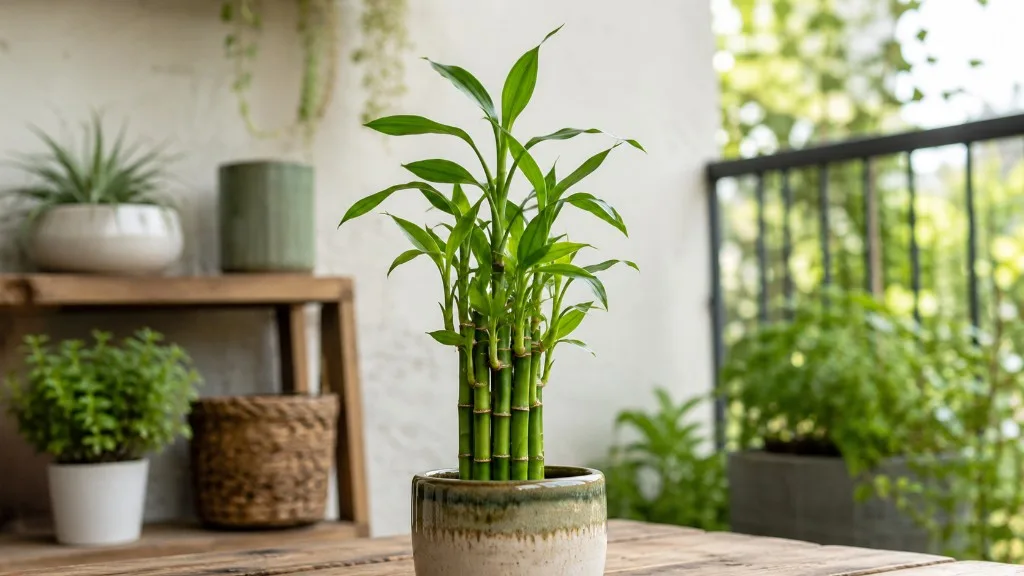
Dracaena sanderiana
Lucky Bamboo needs bright indirect light, clean filtered water changed every 7–10 days, and very dilute fertiliser. Avoid direct sun and fluoridated tap water.
Lucky Bamboo Care Guide: Water, Light & Yellow Stems
Start with wateringThe most common care mistake for Lucky BambooWatering guide →Lucky Bamboo care essentials
Light
medium indirect light, low indirect light, bright indirect light
Water
Keep 5–8 cm of clean, filtered water in the vase. Change every 7–10 days. For soil: water every 5–7 days, keeping soil consistently moist but not soggy.
Soil
For vase growing: clean filtered water with decorative pebbles. For soil: 60 % potting mix + 40 % perlite. pH 5.5–7.0.
Humidity
40–60%
Temperature
18–35°C (65–95°F)
Fertilizer
Feed lightly during active growth.
About Lucky Bamboo
Lucky Bamboo has a upright growth habit.
| Detail | Information |
|---|---|
| Growth habit | Upright |
| Scientific name | Dracaena sanderiana |
Lucky Bamboo Care Guide: Water, Light & Yellow Stems
Walk into a gift shop, office lobby, or houseplant aisle and you will almost certainly find lucky bamboo - slim green canes in a glass vase, sometimes braided, spiraled, or bundled in arrangements of three, five, or eight stems. What the label rarely tells you is that the plant is not bamboo at all, that the water setup is a display method rather than its natural habitat, and that the municipal tap water most people reach for will slowly yellow the leaves. This guide covers Dracaena sanderiana from identification through daily care, with honest comparisons between vase and soil growing, a clear explanation of fluoride sensitivity, and the ASPCA toxicity facts every pet owner needs before bringing one home.
The goal is practical: by the end you should know what lucky bamboo actually is, how to keep it healthy in water or soil, what water to use and how often to change it, where to place it for light, how to fix yellow stems and brown tips, how to propagate it, and why the ASPCA classifies it under Dracaena - not as a harmless desk plant for a home with cats or dogs.
What “Lucky Bamboo” Actually Is (Not True Bamboo)
The single most useful fact about lucky bamboo is that it is not bamboo. It is Dracaena sanderiana, a slow-growing herbaceous perennial in the Asparagaceae family - the same broad plant family that includes asparagus, hostas, and many other Dracaena houseplants such as corn plant and dragon tree. The Missouri Botanical Garden Plant Finder describes it as native to tropical western Africa, reaching up to 5 feet tall with an equal spread in cultivation, with slim upright stems that have distinct nodes giving them a bamboo-like appearance. The North Carolina Extension Gardener Plant Toolbox is explicit: “Lucky bamboo is not a bamboo at all. It is a tropical, perennial shrub from West Africa and a member of the asparagus family.”
That distinction matters for care in three ways. First, true bamboos are grasses with very different root systems and water needs; treating lucky bamboo like an aquatic grass is a common setup error. Second, as a Dracaena, it shares the genus-wide sensitivity to fluoride and chlorine in tap water - the same issue that burns leaf tips on Janet Craig and corn plant. Third, the “lucky bamboo” common name refers only to the visual resemblance of the canes; botanically it has nothing to do with the Bambusoideae subfamily. The species epithet sanderiana honors Henry Frederick Conrad Sander, a German-born English nurseryman and orchid specialist, per the Missouri Botanical Garden entry.
Indoors, mature plants produce bright green to gray-green lance-shaped leaves spaced along upright stems, rarely exceeding a few feet unless given years of good conditions. Small white flowers in clusters are possible but almost never seen on houseplants, according to both Missouri Botanical Garden and NCSU Extension. What you buy in commerce - braided canes, spiral stems, bundles wired together - is trained and shaped stock, not a different species. Cultivars such as ‘Silver Ribbon’ and ‘White Stripe’ add variegated foliage but follow the same care rules.
One more misconception worth clearing: lucky bamboo is not an aquatic plant. Ask Extension notes that although it is “commonly sold in a container of water,” Dracaena sanderiana grows in the understory of tropical rain forests in Cameroon and West Africa - in soil, in moderately Lucky Bamboo light guide. The vase-with-pebbles method works as a clean display culture, but it is not how the species evolved, and that explains why many water-grown plants decline after a year or two unless care is meticulous.
Water Culture vs Soil: Choosing Your Growing Method
Most lucky bamboo arrives in a glass vase with pebbles and water, and that setup is valid - but it is not the only option, and it is not always the best long-term choice. The decision comes down to what you want from the plant: a low-maintenance decorative accent for one to three years, or a longer-lived houseplant with thicker stems and faster growth.
Water culture wins on aesthetics and simplicity. A clear vase shows off the roots, the arrangement stays compact on a desk, and there is no potting mix to manage. The trade-off is thinner roots that are vulnerable to bacterial cloudiness and algae, no soil buffer for nutrients, and a shorter typical lifespan unless you are disciplined about water quality and weekly changes. Soil culture requires a pot with drainage, a regular Lucky Bamboo watering guide, and occasional Lucky Bamboo repotting guide, but the plant builds a denser root system, accesses nutrients more steadily, and - according to experienced growers including the Laidback Gardener - often grows faster and lives significantly longer once established. Clemson HGIC and Missouri Botanical Garden both list soil and water as acceptable media; neither ranks one as the only correct method, but extension sources consistently note that soil matches the plant’s natural habitat more closely.
If your plant is healthy in water and you enjoy the look, keep it there - just commit to the water-change routine and filtered water. If stems are yellowing despite good light, or the arrangement is more than two years old and stalling, moving to soil is the most reliable reset.
Growing Lucky Bamboo in Water (Vase Culture)
Water-grown lucky bamboo needs three things: clean water, a stable anchor, and the right submersion depth. Clemson HGIC recommends submerging enough water to cover the roots and at least one inch of stem - not the entire cane. Submerging stems too deep invites stem rot, especially where leaf sheaths meet the waterline. Pebbles, marbles, or glass chips at the bottom hold the canes upright and give roots something to grip; they provide no nutrients, only mechanical support, as NCSU Extension confirms.
Use a container tall enough that the arrangement does not tip - top-heavy braided bundles are notorious for this. Wash pebbles thoroughly before first use to remove dust and bacteria. Keep the water level consistent between full changes; top off with the same quality water you use for changes if evaporation drops the level below the roots. Change the water completely every week, per Clemson HGIC, NCSU Extension, and Missouri Botanical Garden. Fertilize every other month with liquid houseplant fertilizer at one-quarter the label rate - water culture has no soil to buffer salts, so over-feeding yellows stems quickly.
Expect a typical water-culture lifespan of one to three years with excellent care, though individual plants can exceed that. The Spruce and Gardener’s Path both note that soil-grown plants commonly outlast water-grown ones by several years when conditions are good.
Growing Lucky Bamboo in Soil
Soil-grown lucky bamboo behaves more like the houseplant Dracaena it actually is. Plant in a well-drained indoor or tropical potting mix, in a pot with drainage holes - never a sealed decorative pot without an inner liner. Clemson HGIC advises watering when the top inch of soil feels dry, allowing the pot to drain fully, and never leaving water in the saucer. Tall or newly transplanted stems may need staking until roots anchor.
The plant prefers consistently moist but not soggy soil. Missouri Botanical Garden describes it as “easily grown in evenly moist soil in part shade to full shade.” A practical mix for home use: 60% quality potting mix and 40% perlite, targeting a slightly acidic to neutral pH around 5.5–7.0. Gardener’s Path suggests organically rich sandy loam or a cactus-and-succulent blend amended for moisture retention - the key is drainage with enough structure that roots never sit in stale water.
Fertilize monthly during the active growing season at standard houseplant dilution, per Clemson HGIC - roughly four times the concentration you would use in water culture, still modest by most houseplant standards. Pause or reduce feeding in winter when growth slows. Soil-grown plants in good light often need repotting every one to two years as the root ball expands.
Light: Bright, Indirect, and Stable
Lucky bamboo is an understory plant. In its native West African rain forest it grows in moderately bright, filtered light - not deep cave darkness, and not open sun. Indoors, the target is bright, indirect light for most of the day: an east- or north-facing window, or a south- or west-facing window diffused by a sheer curtain or set back several feet from the glass. Clemson HGIC and Missouri Botanical Garden both specify bright indirect light; Missouri Botanical Garden adds that too much direct sun scorches the foliage.
A desk with steady fluorescent or LED office lighting often works surprisingly well because the plant tolerates medium indirect light and even low indirect light for extended periods, though growth will be slower and stems may stay thinner. NCSU Extension lists “dappled sunlight” and “deep shade (less than 2 hours to no direct sunlight)” among acceptable cultural conditions, which explains its popularity in dimmer rooms - but “tolerates” is not the same as “prefers.” For the greenest leaves and strongest new shoots, give it the brightest indirect spot you have that does not include direct sunbeams.
Avoid placing the vase or pot where hot afternoon sun hits the glass - water in a clear container can heat like a lens and cook roots. Rotate the arrangement a quarter turn every week or two so all sides receive similar light and growth stays even.
Signs Your Plant Is Getting the Wrong Light
Plants speak in symptoms. Bleached, pale, or yellowing leaves with crispy brown patches usually mean too much direct sun or a sudden move into harsh light - pull the plant back and filter the window. Dark green, sparse leaves on elongated, weak stems point to too little light; the plant is stretching toward the nearest source. Uniform yellowing across multiple stems in good light more often implicates water quality or fertilizer than light alone - check those before moving the plant again.
Hard light changes matter. Lucky bamboo adjusts slowly; moving it from a dim corner to a bright sill in one day can shock it. Shift in stages over a week if you are upgrading light. Consistency beats intensity swings.
Water Quality: Fluoride, Chlorine, and Tap Water
If you remember one care rule for lucky bamboo, make it this: the water matters more than the vase. Dracaena species are among the houseplants most sensitive to fluoride in municipal tap water, and lucky bamboo in water culture absorbs everything dissolved in the vessel with no soil to buffer it. Ask Extension states plainly that Dracaena sanderiana “is sensitive to fluoride and chlorine, both found in our tap water” and recommends rainwater or distilled water for both water and soil growing. Deep Green Permaculture lists Dracaena sanderiana (lucky bamboo) among fluoride-sensitive monocots, describing the classic symptom: leaf tips turn yellow, then brown, with necrosis spreading inward - tip burn that new growth will not reverse once damaged.
Chlorine and chloramine are separate problems. Chlorine in many tap supplies will largely dissipate if you let water sit uncovered for 24 hours, a trick that helps corn plants and some other Dracaenas. Fluoride does not evaporate by sitting out, and chloramine - used in a large share of U.S. municipal systems - also persists. A standard activated-carbon pitcher filter removes some chlorine but is not reliable for fluoride removal; distilled water, reverse-osmosis (RO) water, or collected rainwater are the dependable choices for long-term health. Avoid water-softened supplies, which swap calcium and magnesium for sodium ions that Dracaenas handle poorly.
Missouri Botanical Garden notes that leaf tips turning brown can reflect “high levels of water additives such as chlorine” and that filtered or rain water may help. If you must use tap water temporarily, watch for progressive tip burn over 30–60 days - the timeline Ask Extension and experienced growers report for fluoridated supplies - and switch sources at the first sign rather than waiting for whole-stem yellowing.
For soil-grown plants, the same water quality rules apply when you water; salts accumulate in the mix over time just as they concentrate in a vase. Flush the pot with plain, clean water every few months if you notice crusting on the soil surface or persistent tip burn despite good humidity.
Water Changes and Container Hygiene
Weekly water changes are not optional in vase culture - they are the main defense against bacterial cloudiness, foul odor, and stem rot. Each week, pour out all the old water (do not “top up” indefinitely without a full change), rinse the container, and refill with fresh clean water. Old water harbors bacteria that attack submerged tissue; Ask Extension warns that fog or cloudiness in the water is a sign of bacterial growth that can and will attack the plant.
Once a month, go further: lift the stems, rinse the roots under tepid clean water, and wash the pebbles to remove algae and biofilm. Gardener’s Path recommends this monthly rinse to inhibit fungal and bacterial growth that cause rotting roots and deteriorating foliage. Use a bottle brush on narrow vases. If algae coats the glass, a brief soak in diluted vinegar, followed by a thorough rinse, clears it without leaving harmful residue - just ensure no vinegar remains before returning the plant.
Keep the water room temperature. Cold water from the tap shocks tropical roots and contributes to brown leaf tips separate from fluoride damage. Fill your watering container and let it sit to temperature-match the room before use.
In soil culture, “water changes” become watering and flushing - water until it runs from drainage holes, discard saucer runoff within 30 minutes, and occasionally flush with extra plain water to wash salts through the mix. The hygiene principle is the same: do not let stale, oxygen-poor moisture linger around roots.
Humidity and Temperature Indoors
Lucky bamboo is a tropical plant that prefers average indoor warmth and moderate humidity. A comfortable range is roughly 18–35°C (65–95°F), with most homes sitting perfectly in the middle. Clemson HGIC advises bringing outdoor summer plants back inside before night temperatures drop below 65°F (18°C). Cold drafts from winter windows, air-conditioning vents pointed at the desk, or a vase sitting on a metal windowsill in January all cause stress that shows up as leaf curl, tip browning, or stalled growth.
Humidity target for happiest foliage is 40–60%, which most homes achieve without equipment - and water-culture setups often run slightly higher locally because of evaporation from the vase. NCSU Extension notes that low humidity can cause browning of leaf tips, which overlaps with fluoride symptoms; if tips brown but water is clean and light is appropriate, a small humidifier or grouping plants together can help. Misting is optional and short-lived; fixing water quality and avoiding drafts solves most tip-burn cases more reliably than a spray bottle.
Hardiness outdoors is USDA zones 10–12, per Missouri Botanical Garden and Clemson HGIC. In frost-free climates it can live in shaded containers outdoors; everywhere else, treat it as a houseplant year-round or a summer-only patio plant in full shade after frost danger passes.
Soil Mix, Pots, and Drainage
For soil-grown lucky bamboo, the pot and mix do most of the work that pebbles and weekly water changes do in vase culture. Drainage holes are non-negotiable. A decorative pot without holes is a root-rot trap unless you use it as a cachepot and lift the inner nursery pot for every watering.
A workable recipe mirrors what many Dracaena growers use: 60% peat-based or all-purpose indoor potting mix plus 40% perlite, optionally with a small amount of orchid bark for extra air. The mix should feel moist when watered but never compact into mud. Ask Extension suggests adding orchid bark, gravel, and perlite to a moisture-control mix to keep soil loose - lucky bamboo roots need oxygen as much as moisture.
Choose a pot one size larger at repotting - typically 1–2 inches (2.5–5 cm) wider in diameter. Oversized pots hold water the root ball cannot use, especially in low light. Terracotta dries faster; plastic retains moisture longer. Match the material to your watering habits: if you tend to overwater, terracotta or a smaller pot helps; if you underwater, plastic in moderate light gives more margin.
Target soil pH 5.5–7.0, slightly acidic to neutral. Most bagged indoor mixes already fall in this range; testing matters only if you see persistent nutrient issues despite good care.
Fertilizer Schedule and Strength
Lucky bamboo is not a heavy feeder, and excess fertilizer is a common cause of yellow stems and leaf burn - especially in water, where there is no soil to dilute salts. In water culture, Clemson HGIC recommends fertilizing every other month at one-quarter the label rate of a balanced liquid houseplant fertilizer. Some growers use one-tenth strength monthly; the principle is the same: tiny doses because the roots sit in a closed system.
In soil, feed monthly during the growing season at normal houseplant dilution, per Clemson HGIC, and pause or halve frequency in winter when light is low and growth slows. Never fertilize a plant showing stress - yellowing stems, rot, or recent transplant shock - until it stabilizes. Always apply fertilizer to moist roots, not dry stems or dry soil, to avoid salt burn.
If your lucky bamboo lives in water and you never fertilize, it will survive on stored energy for a surprisingly long time, then gradually pale and stall. A drop of very dilute fertilizer twice a year beats a full-strength pour once. Yellowing from over-fertilization often appears after a feed, sometimes within days, with tip burn and soft stem patches - flush with clean water and skip feeding for two to three months.
Propagation by Stem Cuttings
Propagation is one of the easiest parts of lucky bamboo care because the stems root readily from nodes - the rings you see along each cane. Clemson HGIC outlines the standard method: cut a shoot of new growth from the main stem, remove the lowest leaves, and place the cutting in water. New roots typically form in two to three weeks, sometimes up to four.
Use a clean, sharp blade and cut just below a node; roots emerge from nodal tissue, not from random stem sections. Remove any leaves that would sit below the waterline to prevent rot. Use the same distilled, RO, or rainwater you give the parent plant. Keep the cutting in bright indirect light and change the water weekly. When roots are several inches long, leave it in water or transplant to soil - acclimate soil moves gradually, keeping the mix moist but not wet for the first two weeks.
You can also propagate from a healthy section of an older cane by cutting a 4–6 inch (10–15 cm) segment with at least one node, rooting it vertically in water with the node submerged. Multiple cuttings in one vase can produce a fuller arrangement over time. Do not propagate from stems that are yellow, soft, or pest-infested; cuttings inherit the parent’s problems.
Repotting and Moving Between Water and Soil
Repotting soil-grown plants every one to two years, or when roots circle the pot and water runs straight through, refreshes the mix and prevents the watering rhythm from becoming unpredictable. Spring or early summer - the start of active growth - is the best window. Slide the plant out, loosen the outer root mass gently, trim any black or mushy roots with sterile pruners, and replant at the same depth in fresh mix. Water lightly for the first week while cut roots heal.
Moving from water to soil is the upgrade many declining vase plants need. The Laidback Gardener notes that lucky bamboo prefers growing in soil and that water-grown plants often put on little growth and may decline after a year or two. To transplant: rinse roots gently under tepid water, plant in moist well-drained mix, stake if tall, and place in bright indirect light. Expect temporary leaf drop or yellowing - roots adapted to water must convert back to soil roots - but new growth within a few weeks confirms success.
Moving from soil to water is possible for display purposes: rinse soil from roots completely, submerge roots and one inch of stem in clean water with pebbles, and avoid fertilizing for the first month. This direction is less common because soil roots in water can rot if any mix residue remains.
For water-only “repotting,” upgrade to a larger vase when roots fill the container, and treat it as a hygiene event - wash everything, trim dead roots, refresh pebbles.
Shapes, Braids, and Spiral Training
Most lucky bamboo is sold pre-shaped - braided stems, spiral curls, heart formations, or tiered layers wired together. These forms are created by growers using light direction, rotation, and physical guides over months or years, not by something the plant does naturally in a vase on your desk. The Missouri Botanical Garden notes stems are “often trained into a variety of shapes (e.g., braided or spirals).”
You can maintain a shape by keeping light consistent and rotating the plant on a schedule if you are actively training new growth, but re-braiding or re-spiraling mature canes at home is difficult without damaging stems. If a braid unwinds or a wire tie cuts into a cane, remove the constraint and let the stem grow straight rather than forcing it.
Prune lanky or yellowing stems back to the base or to a healthy node with a sterile blade; new shoots often emerge from remaining nodes on established plants. Wipe tools with alcohol between cuts if rot is present.
Toxicity to Pets and People
Lucky bamboo is toxic to cats and dogs and should be treated as unsafe for pet households unless it is kept completely out of reach - which is hard for a desk plant on a low table. The ASPCA lists Dracaena spp. as toxic to both dogs and cats, with toxic principles identified as saponins. Common names on the ASPCA entry include corn plant, dragon tree, ribbon plant - and lucky bamboo appears on the Pet Poison Helpline Dracaena page as an alternate common name for the genus. NCSU Extension classifies Dracaena sanderiana as having low severity poison characteristics for humans and pets, with saponins in flowers, fruits, leaves, roots, sap, and stems.
This is not a “mildly irritating” plant in the way some sources casually suggest. Saponins cause real gastrointestinal and neurological signs in pets when ingested in meaningful amounts.
ASPCA Dracaena Classification and Clinical Signs
The ASPCA clinical signs for Dracaena ingestion include vomiting (occasionally with blood), depression, anorexia, hypersalivation, and dilated pupils in cats. Pet Poison Helpline adds diarrhea, abdominal pain, weakness, and incoordination. All parts contain saponins; leaves and stems are the most accessible to a chewing cat. The water in the vase is not a separate toxin, but a pet drinking it is less concerning than eating plant tissue - the plant material is the risk.
If you suspect ingestion, call ASPCA Animal Poison Control at (888) 426-4435 (a consultation fee may apply) and your veterinarian promptly. Do not induce vomiting unless a veterinary professional directs you to. For homes with cats that chew plants, choose a non-toxic alternative for any surface the cat can reach.
For people, NCSU Extension notes sap can cause skin irritation in sensitive individuals and that humans should not eat the plant. Wear gloves when pruning if you react to sap; wash hands after handling. The toxicity profile is moderate for pets and low for human contact dermatitis - but the pet risk is the primary reason to place lucky bamboo on high shelves or skip it entirely in multi-pet homes.
Common Problems and Real Fixes
Most lucky bamboo problems trace back to water, light, or water quality - in that order. Use this sequence before repotting, fertilizing, or discarding the plant.
Yellow stems or leaves. The top three causes are direct sun, fluoridated or chlorinated tap water, and over-fertilization, per extension and horticulture sources. Yellowing that starts at the top of a stem or in patches along the length suggests sun or chemical burn; yellowing from the base with soft, mushy tissue points to rot from submerged stems, stale water, or soggy soil. Fix: move to bright indirect light, switch to distilled or RO water immediately, flush the container or pot, and hold fertilizer. Trim fully yellow stems at the base with sterile tools.
Brown leaf tips. Usually fluoride toxicity, low humidity, or cold water shocks. Switch water source, trim dead tips for appearance only (damaged tissue will not green up), and ensure room-temperature water. Deep Green Permaculture documents the classic progression: yellow tips first, then brown necrosis spreading inward.
Cloudy or smelly water. Bacterial bloom. Change water immediately, rinse roots and vase, wash pebbles, and commit to weekly changes. If stems are soft, cut back to firm tissue.
root rot on Lucky Bamboo in soil. Soggy mix or no drainage. Unpot, trim black roots, repot in fresh airy mix, and water less until new growth appears.
Algae in the vase. Too much light on clear glass plus nutrients. Move to slightly dimmer spot, scrub the container monthly, and reduce fertilizer frequency.
Pests. NCSU Extension lists mealybugs, mites, and scale as occasional problems; Clemson HGIC adds spider mites and aphids. Rinse foliage, wipe mealybugs with alcohol on a swab, and treat persistent infestations with insecticidal soap or neem oil following label directions. Quarantine affected plants.
Slow or no growth. Often normal in low light or water culture beyond two years. Upgrade light slightly, move to soil, or propagate fresh cuttings from healthy stems.
Feng Shui, Symbolism, and Stalk Counts
Lucky bamboo’s popularity owes as much to culture and symbolism as to ease of care. Clemson HGIC notes that although the plant is native to western Africa, it is strongly associated with Chinese culture and feng shui, often given as a gift for Chinese New Year and other celebrations representing good fortune, happiness, and prosperity.
Traditional stalk counts carry meaning in feng shui practice: one stem for good fortune, two for love and relationships, three for happiness, five for health, six for prosperity, and eight or nine for various extended blessings depending on the source. Four stems are omitted in many traditions because the word for “four” sounds like “death” in Mandarin - a detail worth knowing if you are buying a gift for someone who observes these customs. These meanings do not change horticultural care; they explain why commerce sells specific bundle sizes wired together.
Placement in feng shui varies by school - east for family, southeast for wealth, south for reputation - but horticulturally, any spot with bright indirect light, stable temperature, and safe distance from pets outranks symbolic direction. A “lucky” plant in a dark hallway with tap water will yellow regardless of compass bearing.
Conclusion
Lucky bamboo is Dracaena sanderiana - a West African understory houseplant that looks like bamboo but shares its genus with corn plant and dragon tree, including the fluoride sensitivity and ASPCA saponin toxicity that come with it. The care is straightforward once you stop treating it like indestructible aquatic décor: bright indirect light, distilled, RO, or rainwater changed weekly in vase culture or moist, well-drained soil watered when the top inch dries, light feeding at quarter strength in water or monthly in soil, and complete separation from cats and dogs who might chew the stems.
Choose water culture for a clean, short-to-medium-term display; choose soil for a longer-lived plant with stronger roots. When stems yellow, fix water quality and light before fertilizing or reshaping. Propagate from nodal cuttings if you want backups. And if you share your home with pets, treat lucky bamboo as a display plant on an inaccessible shelf - or pick a non-toxic alternative instead. Get the water right, keep the light indirect, and this slow-growing Dracaena will stay green far longer than the “lucky bamboo” label implies.
When to use this page vs other Lucky Bamboo guides
- Lucky Bamboo overview - Canonical hub for this species - care topics and problems branch from here.
- Lucky Bamboo problems - Symptom-first path when you already know something is wrong.
Related Lucky Bamboo guides
- Lucky Bamboo watering
- Lucky Bamboo light
- Lucky Bamboo soil
- Lucky Bamboo propagation
- Lucky Bamboo fertilizer
- Lucky Bamboo repotting
- Lucky Bamboo pruning
- Ants on Plant on Lucky Bamboo
- Bacterial Wilt on Lucky Bamboo
- Black Spots on Lucky Bamboo
- Brown Tips on Lucky Bamboo
- Calcium Deficiency on Lucky Bamboo
How to care for Lucky Bamboo?
How much light does Lucky Bamboo need?
medium indirect light, low indirect light, bright indirect light
- medium indirect light, low indirect light, bright indirect light - medium indirect light, low indirect light, bright indirect light.
When should you water Lucky Bamboo?
Keep 5–8 cm of clean, filtered water in the vase. Change every 7–10 days. For soil: water every 5–7 days, keeping soil consistently moist but not soggy.
- Check top 2 inches - Stick a finger or knuckle into the soil; water only when the top layer feels dry.
- Drain excess water - Keep 5–8 cm of clean, filtered water in the vase.
What soil works best for Lucky Bamboo?
For vase growing: clean filtered water with decorative pebbles. For soil: 60 % potting mix + 40 % perlite. pH 5.5–7.0.
- Well-draining mix - For soil: 60 % potting mix + 40 % perlite.
Grower notes for Lucky Bamboo
What matters most with Lucky Bamboo
Lucky Bamboo is easiest to grow when you judge the whole plant: new growth, root-zone moisture, light exposure, and how quickly the pot dries after watering. In practice, the care checkpoint is simple: medium indirect light, low indirect light, bright indirect light. Pair that with for vase growing: clean filtered water with decorative pebbles. For soil: 60 % potting mix + 40 % perlite; pH 5.5–7.0, and avoid changing water, pot size, and placement all at once.
Best placement in a real home
Lucky Bamboo belongs where medium indirect light, low indirect light, bright indirect light is realistic for most of the day, not only where the pot looks good. Keep 5–8 cm of clean, filtered water in the vase. Change every 7–10 days. For soil: water every 5–7 days, keeping soil consistently moist but not soggy. If the pot stays wet longer than expected, move the plant into better light or reassess the mix before watering again. Humidity target: 40–60%. Temperature comfort zone: 18–35°C (65–95°F).
Before you buy this plant
Choose Lucky Bamboo with firm new growth, clean leaf undersides, and soil that does not smell sour or feel compacted. Be cautious if you see yellow-leaves, sticky residue, collapsed crowns, or a pot that is wet in poor light. Cosmetic old-leaf damage is less worrying than weak roots or active pests.
First month after bringing it home
Do not repot Lucky Bamboo on day one unless the mix is failing or pests are obvious. Quarantine it, learn how fast the pot dries, and keep care boring while it adjusts. Watch especially for yellow-leaves, brown-tips, and root-rot. If problems appear, correct the condition first rather than stacking fertilizer, repotting, and pruning together.
Safety note for Lucky Bamboo
Lucky Bamboo is not a plant to keep within reach of pets or children. Treat it as an inaccessible display plant. Use gloves if sap or plant tissue is irritating, and pick a pet-safe alternative for floor pots or low shelves.
How to tell Lucky Bamboo is settling in
If you plan to multiply it later, common methods include Stem cuttings in water. If brown-tips shows up early, inspect light, watering, and roots before assuming the plant is permanently weak.
Is it pet safe?
Lucky Bamboo is toxic to cats and dogs.
Classified as Dracaena by the ASPCA; contains saponins toxic to cats and dogs. Ingestion causes vomiting (occasionally with blood), depression, loss of appetite, and dilated pupils in cats.
Watering Lucky Bamboo
Keep 5–8 cm of clean, filtered water in the vase. Change every 7–10 days. For soil: water every 5–7 days, keeping soil consistently moist but not soggy.
Soil & potting for Lucky Bamboo
For vase growing: clean filtered water with decorative pebbles. For soil: 60 % potting mix + 40 % perlite. pH 5.5–7.0.
Humidity & temperature for Lucky Bamboo
Lucky Bamboo prefers 40–60%, though normal home humidity is usually fine. Keep temperatures around 18–35°C (65–95°F).
| Detail | Information |
|---|---|
| Humidity | 40–60% - normal home humidity is fine. |
| Ideal temperature | 18–35°C (65–95°F) |
Fertilizer & pruning for Lucky Bamboo
Use feed lightly during active growth. for Lucky Bamboo.
| Detail | Information |
|---|---|
| Fertilizer type | Feed lightly during active growth. |
Common problems on Lucky Bamboo
Likely cause: Jul 12, 2023 · However, when ants start crawling all over your plant , it can be concerning and may even affect the health of your lucky bamboo . In this article, we will discuss effective methods to get rid of ants on your lucky bamboo pla
Quick fix: Confirm diagnosis on your Lucky Bamboo, then address the most likely care or pest factor described in current extension guidance.
Full fix guide →Bacterial Wilt
HighLikely cause: Jul 25, 2024 · Sometimes, despite our best efforts, Lucky Bamboo may continue to wilt , signaling a cry for help beyond our expertise. Here's how to recognize when it's time to call in the cavalry.
Quick fix: Confirm diagnosis on your Lucky Bamboo, then address the most likely care or pest factor described in current extension guidance.
Full fix guide →Black Spots
MediumLikely cause: Jun 8, 2024 · Black spots on Lucky Bamboo can range from tiny dots to larger, irregular patches. Unlike the uniform patterns of natural variegation, these spots are the plant's SOS signals . They may appear dry or have a "wet" look, often w
Quick fix: Confirm diagnosis on your Lucky Bamboo, then address the most likely care or pest factor described in current extension guidance.
Full fix guide →Brown Tips
LowLikely cause: Fluoride or chlorine in tap water, or low humidity
Quick fix: Use filtered water; increase humidity
Full fix guide →Calcium Deficiency
MediumLikely cause: Feb 28, 2026 · Why it works: Eggshells slowly release calcium and other minerals, providing your lucky bamboo with a steady supply of these essential nutrients. This is especially beneficial if your plant is showing signs of calcium deficie
Quick fix: Confirm diagnosis on your Lucky Bamboo, then address the most likely care or pest factor described in current extension guidance.
Full fix guide →Cold Damage
MediumLikely cause: Jun 5, 2024 · Cold temperatures can be a harsh reality for houseplants, and Lucky Bamboo is no exception. Let's explore how to identify, treat, and prevent cold damage in your beloved green companion.
Quick fix: Confirm diagnosis on your Lucky Bamboo, then address the most likely care or pest factor described in current extension guidance.
Full fix guide →Downy Mildew
MediumLikely cause: Nov 3, 2022 · Powdery mildew is a common fungal disease that is spread by fungal spores. The infected foliage of the lucky bamboo experience growth stunt and dieback as a result of the lack of sunlight penetration to the surface of the leav
Quick fix: Confirm diagnosis on your Lucky Bamboo, then address the most likely care or pest factor described in current extension guidance.
Full fix guide →Draft Stress
MediumLikely cause: 1 day ago · Does the water temperature matter for Lucky Bamboo? Yes, it is best to use room-temperature water. Using water that is icy cold can shock the roots and cause the plant to go into a state of stress . By letting your water sit out
Quick fix: Confirm diagnosis on your Lucky Bamboo, then address the most likely care or pest factor described in current extension guidance.
Full fix guide →Drooping Leaves
MediumLikely cause: The top 5 causes of drooping leaves on lucky bamboo is too much water, too much sun, too much fertilizer, drying out too much and very cold weather . Let’s explore each one and how to solve each problem.
Quick fix: Confirm diagnosis on your Lucky Bamboo, then address the most likely care or pest factor described in current extension guidance.
Full fix guide →Likely cause: Lucky Bamboo is an ‘easy-to-grow’ plant with greater cultural significance. People believe that it brings good luck and good fortune. It is famous for its exotic foliage, so people usually do not bat their eyes on the flower. The plant gets
Quick fix: Confirm diagnosis on your Lucky Bamboo, then address the most likely care or pest factor described in current extension guidance.
Full fix guide →Fertilizer Burn
MediumLikely cause: Oct 1, 2025 · A: Fertilizing Lucky Bamboo growing in rocks is similar to fertilizing water-grown plants. Simply dilute the fertilizer solution and pour it over the rocks, ensuring that the roots are submerged.
Quick fix: Confirm diagnosis on your Lucky Bamboo, then address the most likely care or pest factor described in current extension guidance.
Full fix guide →Flowers Turning Brown
MediumLikely cause: Jan 23, 2022 · Even though lucky bamboos are nearly indestructible, they can still become ill. Lucky bamboo turning brown is a common occurrence, significantly if it’s growing in water or if you’ve neglected it. While this is entirely natur
Quick fix: Confirm diagnosis on your Lucky Bamboo, then address the most likely care or pest factor described in current extension guidance.
Full fix guide →Fungus Gnats
LowLikely cause: Jul 13, 2023 · By following these preventive measures and effective solutions, you can successfully get rid of gnats in your lucky bamboo plant and ensure its health and vitality.
Quick fix: Confirm diagnosis on your Lucky Bamboo, then address the most likely care or pest factor described in current extension guidance.
Full fix guide →High Humidity
MediumLikely cause: Jan 22, 2024 · In its natural habitat, lucky bamboo enjoys high humidity levels, often above 50% . The air is moist, and the temperatures are stable, rarely dipping below 60°F (15°C). These conditions contribute to its lush growth and vibra
Quick fix: Confirm diagnosis on your Lucky Bamboo, then address the most likely care or pest factor described in current extension guidance.
Full fix guide →Leaf Drop
MediumLikely cause: Jun 8, 2024 · Lucky Bamboo craves light like a cat craves a sunbeam but doesn't want to get sunburned. Inadequate light makes for a leggy and lethargic plant, while leaves drop like flies.
Quick fix: Confirm diagnosis on your Lucky Bamboo, then address the most likely care or pest factor described in current extension guidance.
Full fix guide →Leaf Spot Disease
MediumLikely cause: Your lucky bamboo has leaf spots ? Don't panic — Leaf spot disease on Lucky Bamboo manifests as discrete lesions coalescing to cover…. Here's exactly how to fix it.
Quick fix: Confirm diagnosis on your Lucky Bamboo, then address the most likely care or pest factor described in current extension guidance.
Full fix guide →Mealybugs
MediumLikely cause: Here is exactly how to identify, understand, and safely eradicate mealybugs from your Lucky Bamboo . Mealybugs are tiny, soft-bodied insects that survive by piercing plant tissue and sucking out the nutrient-rich sap.
Quick fix: Confirm diagnosis on your Lucky Bamboo, then address the most likely care or pest factor described in current extension guidance.
Full fix guide →Mosaic Virus
MediumLikely cause: Nov 7, 2023 · In this article, I tried to give you a comprehensive list of lucky bamboo diseases with their images and names. I provided you with an overview of their symptoms and showed you how to treat your infected plant.
Quick fix: Confirm diagnosis on your Lucky Bamboo, then address the most likely care or pest factor described in current extension guidance.
Full fix guide →No New Growth
MediumLikely cause: Nov 21, 2023 · Growth might be slow, but with patience, you’ll soon have a vibrant lucky bamboo gracing your space. We've covered several common reasons why your lucky bamboo might not be growing as expected.
Quick fix: Confirm diagnosis on your Lucky Bamboo, then address the most likely care or pest factor described in current extension guidance.
Full fix guide →Nutrient Lockout
MediumLikely cause: 5 days ago · Lucky bamboo is a beginner-friendly bamboo plant that thrives in an indoor environment. All it requires is some tender loving care, like regular watering, indirect sunlight, and added nutrients . In this guide, we’ll teach you
Quick fix: Confirm diagnosis on your Lucky Bamboo, then address the most likely care or pest factor described in current extension guidance.
Full fix guide →Overwatering
HighLikely cause: First, you need to identify the signs of overwatering, such as mushy stems or yellowing leaves . To rescue your plant, start by checking the roots for rot and trimming any damaged areas. Then, repot your lucky bamboo in fresh water and a cl
Quick fix: Confirm diagnosis on your Lucky Bamboo, then address the most likely care or pest factor described in current extension guidance.
Full fix guide →Plant Leaning
MediumLikely cause: Feb 15, 2024 · In water, lucky bamboo roots can become tangled and cramped, which affects the plant’s stability. Occasionally, give them room to breathe by gently untangling the roots and replanting them in a slightly larger container if ne
Quick fix: Confirm diagnosis on your Lucky Bamboo, then address the most likely care or pest factor described in current extension guidance.
Full fix guide →Poor Drainage
MediumLikely cause: Aug 14, 2025 · When grown in water, drainage holes are not necessary. Lucky bamboo, a Dracaena species, thrives in consistently moist conditions, though it is not a true aquatic plant.
Quick fix: Confirm diagnosis on your Lucky Bamboo, then address the most likely care or pest factor described in current extension guidance.
Full fix guide →Pot Too Large
MediumLikely cause: Jul 28, 2024 · A pot that's too small can restrict root growth, leading to a root-bound plant that struggles to absorb nutrients and water. Conversely, a pot that's too large can cause soil to remain wet for too long, potentially leading to
Quick fix: Confirm diagnosis on your Lucky Bamboo, then address the most likely care or pest factor described in current extension guidance.
Full fix guide →Root Bound
MediumLikely cause: Jan 22, 2024 · In this article, we'll take a closer look at the root - bound condition in lucky bamboo, why it's a concern, and how to identify, prevent, and fix it. We’ll also explore some practical tips to ensure your lucky bamboo stays h
Quick fix: Confirm diagnosis on your Lucky Bamboo, then address the most likely care or pest factor described in current extension guidance.
Full fix guide →Root Rot
MediumLikely cause: Bacterial rot in stagnant water or overwatering in soil
Quick fix: Change water fully; reduce watering in soil
Full fix guide →Salt Build-up
MediumLikely cause: Aug 8, 2025 · In this article, we’ll explore how chlorine, fluoride, and mineral build - up affect Lucky Bamboo , and how you can provide the cleanest, healthiest water for optimal growth.
Quick fix: Confirm diagnosis on your Lucky Bamboo, then address the most likely care or pest factor described in current extension guidance.
Full fix guide →Slow Growth
LowLikely cause: Insufficient light or very dilute water conditions
Quick fix: Move to brighter indirect light; fertilise at quarter-strength monthly
Full fix guide →Likely cause: This Medium Lucky Bamboo Flower Braid is actually a grouping of 10 pairs of Bamboo which have been trained to grow in a twisted braid. The small , medium green leaves sprout from the top as its “ flower .” View all Feb 2, 2026 · What is Luc
Quick fix: Confirm diagnosis on your Lucky Bamboo, then address the most likely care or pest factor described in current extension guidance.
Full fix guide →Soil Too Alkaline
MediumLikely cause: Lucky bamboo prefers a slightly acidic to neutral pH between 5.5 and 6.5. A pH-balanced mix ensures the plant can absorb iron and magnesium properly, preventing leaf yellowing (chlorosis).
Quick fix: Confirm diagnosis on your Lucky Bamboo, then address the most likely care or pest factor described in current extension guidance.
Full fix guide →Stunted Growth
MediumLikely cause: Aug 7, 2025 · Lucky bamboo is sensitive to chlorine and fluoride often found in tap water, which can cause leaf tip burn and stunt growth over time . Using filtered, distilled, or rainwater is preferable to avoid mineral buildup and chemica
Quick fix: Confirm diagnosis on your Lucky Bamboo, then address the most likely care or pest factor described in current extension guidance.
Full fix guide →Likely cause: Dec 15, 2023 · Lucky bamboo prefers indirect light. This means it should be placed in a spot where it receives bright but filtered sunlight. A north or east-facing window is usually ideal, as these locations provide gentle, indirect light t
Quick fix: Confirm diagnosis on your Lucky Bamboo, then address the most likely care or pest factor described in current extension guidance.
Full fix guide →Thrips
MediumLikely cause: Nov 12, 2024 · In this article, we'll cover everything you need to know about spotting thrips on your lucky bamboo and, most importantly, how to remove them. We'll also discuss preventive measures to keep these pesky insects at bay, ensurin
Quick fix: Confirm diagnosis on your Lucky Bamboo, then address the most likely care or pest factor described in current extension guidance.
Full fix guide →Transparent Leaves
MediumLikely cause: Aug 15, 2024 · Scroll down to download more similar styles of bamboo , bamboo leaves , green PNG images. They are perfectly suitable for designing presentations, stickers, banners or sharing on social medias.
Quick fix: Confirm diagnosis on your Lucky Bamboo, then address the most likely care or pest factor described in current extension guidance.
Full fix guide →Transplant Shock
MediumLikely cause: Aug 18, 2024 · Repotting can be a traumatic experience for any plant, and lucky bamboo is no exception. When you move it from one pot to another, you're essentially disrupting its comfort zone. This disruption, known as transplant shock , c
Quick fix: Confirm diagnosis on your Lucky Bamboo, then address the most likely care or pest factor described in current extension guidance.
Full fix guide →Underwatering
MediumLikely cause: Feb 12, 2026 · Underwatering is a silent saboteur, and it can slowly deplete the vitality of your beloved Lucky Bamboo. So, how do you know if your lucky charm is actually thirsty? Let’s dive into the telltale signs of underwatering , so yo
Quick fix: Confirm diagnosis on your Lucky Bamboo, then address the most likely care or pest factor described in current extension guidance.
Full fix guide →Water Stress
MediumLikely cause: Jan 16, 2026 · Learn how to keep lucky bamboo thriving in water : prevent yellowing, root rot, and algae with proven care steps and avoid common mistakes like tap water chlorine or direct sun exposure.
Quick fix: Confirm diagnosis on your Lucky Bamboo, then address the most likely care or pest factor described in current extension guidance.
Full fix guide →Weak Stems
MediumLikely cause: Jan 13, 2025 · Bent stems can occur if your lucky bamboo isn’t getting enough light, causing it to stretch towards a light source. Solution: Rotate the plant regularly and ensure it has access to even, indirect light.
Quick fix: Confirm diagnosis on your Lucky Bamboo, then address the most likely care or pest factor described in current extension guidance.
Full fix guide →Whiteflies
MediumLikely cause: Mar 23, 2024 · Dealing with pests on your lucky bamboo can be frustrating, but with the right knowledge and tools, you can keep your plant healthy and thriving. From spider mites to whiteflies , each pest requires specific management strate
Quick fix: Confirm diagnosis on your Lucky Bamboo, then address the most likely care or pest factor described in current extension guidance.
Full fix guide →Yellow Leaves
MediumLikely cause: Too much direct light or fluoride in water
Quick fix: Move to indirect light; switch to filtered water
Full fix guide →Yellow Seedlings
MediumLikely cause: Dec 8, 2025 · Lucky bamboo turning yellow is a common headache that hits fast, but it's rarely fatal if caught early. Here's how to fix it.
Quick fix: Follow extension or botanical guidance for Lucky Bamboo yellow seedlings; adjust care before applying broad treatments.
Full fix guide →Aphids
MediumLikely cause: Aphids on Lucky Bamboo cluster on new leaves and soft shoots, often with sticky honeydew. First step: rinse off bugs and apply insecticidal soap or neem oil to new growth.
Quick fix: See plant-specific guide for step-by-step fixes.
Full fix guide →Leggy Growth
MediumLikely cause: Leggy lucky bamboo shows long bare spaces between leaves from etiolation in too little light. First step: move to bright indirect light, then prune the worst lanky cane to a node once exposure improve
Quick fix: See plant-specific guide for step-by-step fixes.
Full fix guide →Low Humidity
MediumLikely cause: Low humidity browns Lucky Bamboo leaf tips near vents and dry heat; dry rooms also speed vase evaporation, tempting tap-water top-ups that stack fluoride burn. First step: relocate away from HVAC blas
Quick fix: See plant-specific guide for step-by-step fixes.
Full fix guide →Mold on Soil
MediumLikely cause: White mold on Lucky Bamboo soil usually means a wet surface and poor airflow. First step: scrape the mold, let the top inch dry before watering, and improve light and drainage.
Quick fix: See plant-specific guide for step-by-step fixes.
Full fix guide →Not Enough Light
MediumLikely cause: Lucky Bamboo in too little light grows pale, leggy, and slow. First step: move to bright indirect light away from deep shade - not direct sun.
Quick fix: See plant-specific guide for step-by-step fixes.
Full fix guide →Spider Mites
MediumLikely cause: Spider mites on Lucky Bamboo cause stippled, dull strap leaves and fine webbing in dry air - often hidden inside braided canes. First step: isolate the plant, rinse every leaf surface with lukewarm wa
Quick fix: See plant-specific guide for step-by-step fixes.
Full fix guide →Wilting
MediumLikely cause: Wilting Lucky Bamboo with dry pebbles or soil needs water; wilting with wet soil or cloudy vase water suggests root rot. First step: check moisture and root firmness before the next drink.
Quick fix: See plant-specific guide for step-by-step fixes.
Full fix guide →