Drooping Leaves on Lucky Bamboo: Causes, Checks & Fixes
Quick answer
Drooping Lucky Bamboo leaves usually mean underwatering, root rot, or dry air - not always thirst. First step: check vase water level or soil moisture and root firmness before watering.
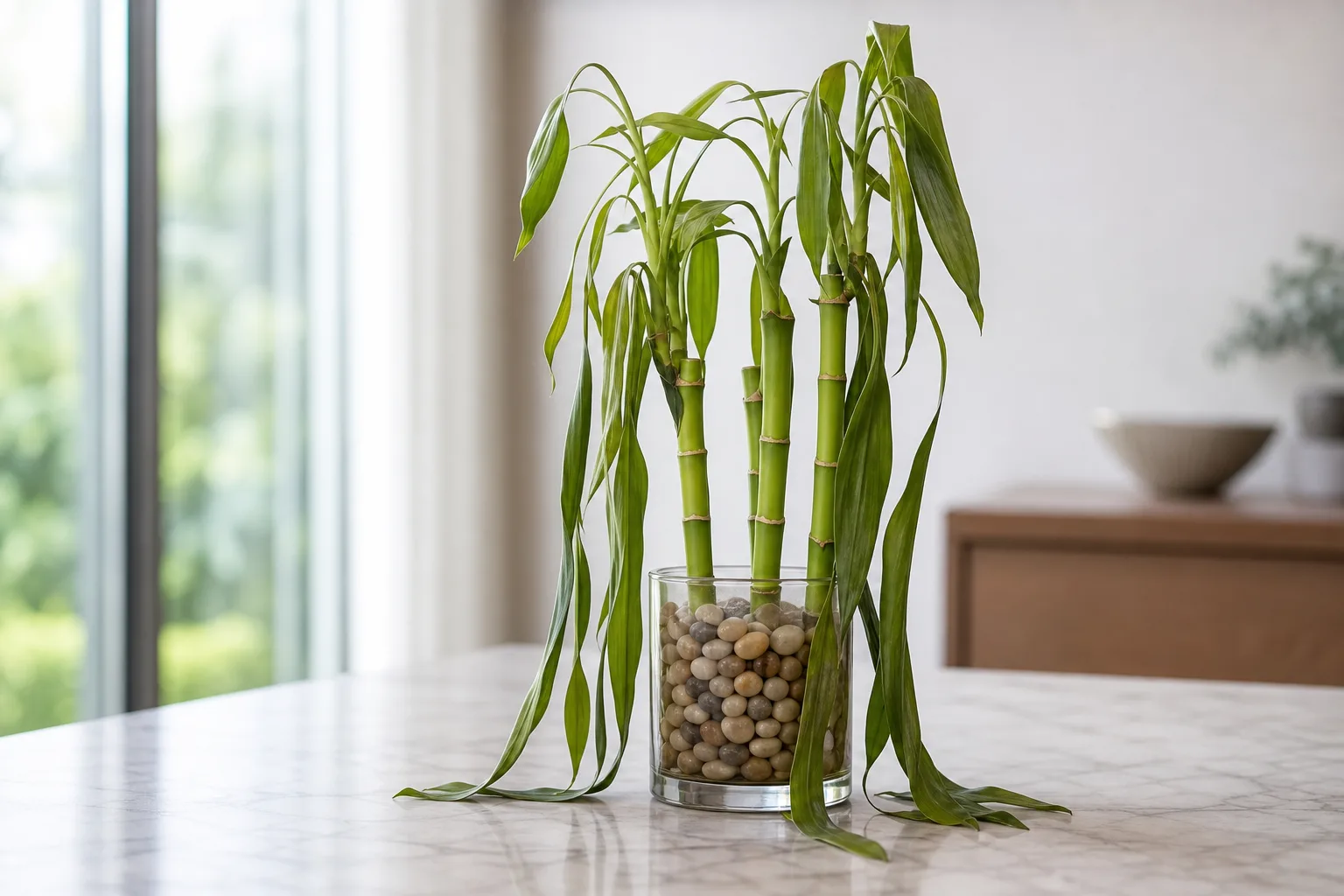
Drooping Leaves on Lucky Bamboo: Causes, Checks & Fixes
This guide covers drooping leaves on Lucky Bamboo. See also the general Drooping Leaves guide, watering, and light pages for this plant.
Drooping Leaves on Lucky Bamboo: Causes, Checks & Fixes
Quick answer
Drooping leaves on Lucky Bamboo (Dracaena sanderiana) signal water stress at the roots - either too little moisture, too much with rot, or dry air stressing leaf turgor. This page covers leaf hang along firm canes; if whole canes collapse limply from the base, see wilting for stem-level collapse routing.
First step: confirm vase water depth or soil dryness and feel roots for firmness before adding water.
Leaves hang when roots cannot supply water fast enough. That happens in drought and in overwatering that causes yellowing and stem rotting - the pot may be wet while leaves still droop.
Drooping leaves vs wilting on Lucky Bamboo
These symptoms overlap but point to different pages in the lucky-bamboo cluster:
| Pattern | Canes | Leaves | Likely cause | Start here |
|---|---|---|---|---|
| Leaf droop | Firm, upright | Strappy blades hang down along the cane | Underwatering, mild humidity stress, early rot, or heat draft | This page |
| Whole-cane wilt | Limber from base upward | Collapse with the cane | Severe drought, advanced rot, or post-move shock | Wilting |
| Tip burn only | Firm | Brown dry margins, minimal hang | Fluoride or low humidity | Brown tips or low humidity |
Leaf droop can progress to cane wilt if root damage spreads - treat cloudy vase water or mushy roots before stems soften.
What drooping leaves look like on Lucky Bamboo
Strappy leaves normally arch slightly from upright canes. Problem droop pulls leaves downward along the full cane, sometimes touching pebbles or desk surfaces while stem nodes stay solid.
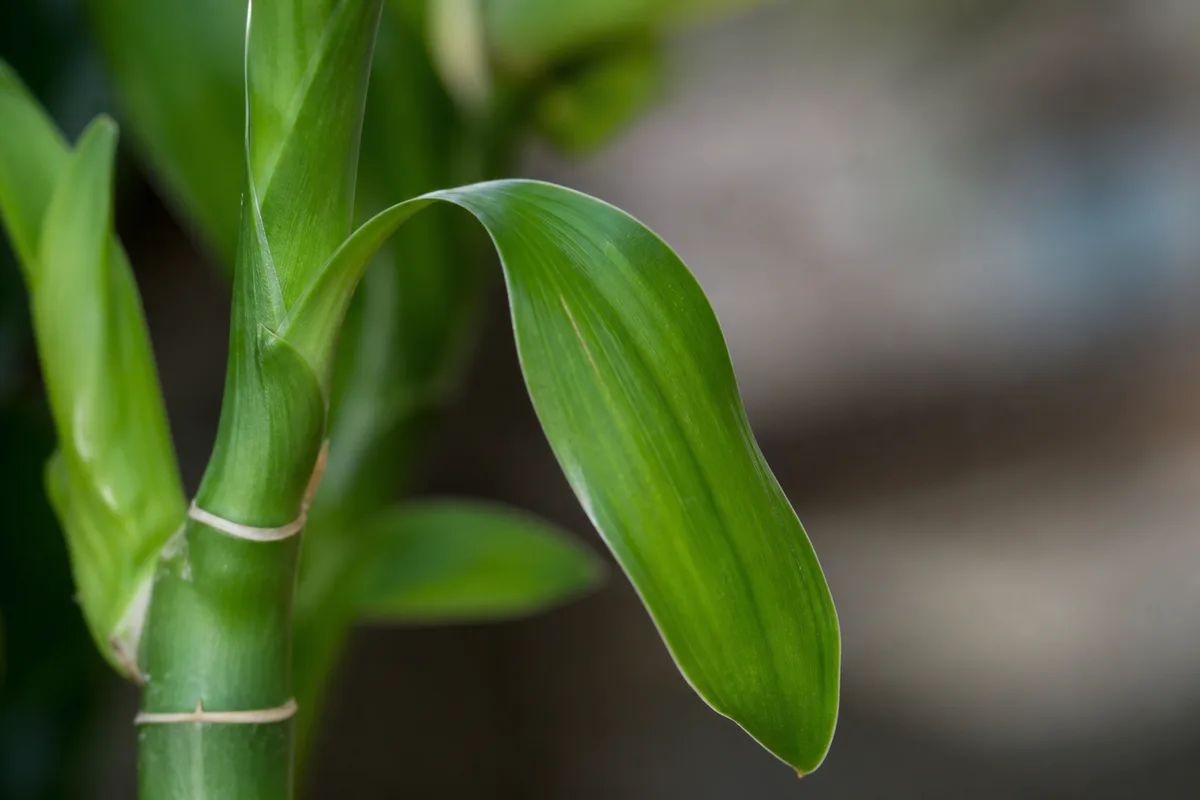
Drooping Leaves symptoms on Lucky Bamboo - compare with healthy tissue on the same plant.
Underwatering, rot, humidity, and heat patterns
Underwatering: Dry vase or soil, slightly wrinkled canes at nodes, firm white roots when rinsed. Leaves droop uniformly along each cane.
Overwatering / rot: Wet conditions, yellow lower leaves, cloudy or milky vase water, soft stem bases, sour smell. Leaves droop despite water present - the rot paradox.
Low humidity: Leaf tips brown while leaves droop mildly; worst on foliage nearest radiators or AC vents. Low humidity can cause browning of the leaf tips alongside limp foliage. Canes stay firm.
Heat or AC drafts: Temporary afternoon droop with firm stems; perks overnight when roots are healthy and water is adequate.
Braided displays: Outer leaves may look fine while inner shoots droop first - dry air and stagnant water collect in the braid center. Lift individual canes to inspect hidden foliage.
Why Lucky Bamboo leaves droop
Vase culture causes
Vase water below roots and one inch of stem exposes roots to air - leaves lose turgor quickly in warm rooms with bright, indirect light.
Stale vase water breeds bacteria that damage roots - functionally like soggy soil. Fog or cloudiness in the water is a sign of bacteria that can attack the plant. When you see cloudiness with drooping leaves, follow the one-line rot protocol: dump all water, rinse pebbles, trim mushy roots, refill with filtered water - full steps on the root rot guide.
Weekly water changes prevent bacterial buildup. Forgotten refills in summer evaporate faster than winter, so droop after travel often means low water level, not disease.
Soil culture causes
Soil watered on calendar without dryness checks stays wet in low light while roots decay. Dracaena sanderiana is much less difficult to maintain in soil when drainage and filtered water are consistent - but soggy mix still rots roots while leaves hang.
Direct sunlight damages leaves and increases transpiration - droop plus scorch on sun-facing sides after a window move.
Dry indoor air in winter pulls moisture from leaf edges faster than roots replace it when humidity drops below roughly 40% near heat vents. Fluoride in tap water weakens tissue over time and can overlap with humidity tip burn - filtered water helps both.
How to confirm the cause
Work through these checks in order - stop when one pattern clearly fits:
- Water level / soil probe - Dry pebbles or top inch dry vs. saturated mix or full vase.
- Root firmness - Mushy brown roots vs. firm pale tissue when rinsed.
- Water clarity - Cloudy vase water supports rot; clear water with dry roots supports drought.
- Humidity context - Within 3 feet of heat vent, space heater, or blowing AC?
- Light exposure - Direct sun on one side only? Recent move to a brighter sill?
- Lower leaf only - Single old leaf drooping may be normal shed; many leaves drooping is systemic.
- Braid center - Lift inner canes separately; hidden droop with outer leaves upright points to center airflow or water gaps.
First fix for Lucky Bamboo
Correct the confirmed root or humidity issue - not both extremes at once.
If dry: Refill vase with filtered or distilled water to proper depth, or soak soil until drainage runs and empty saucers.
If wet rot: Full water change after trimming soft roots, or repot into well-drained potting soil. See root rot for trim-and-rinse protocol.
If dry air: Move at least 3–4 feet from HVAC vents first - humidity trays and grouping help after placement is fixed.
Do not water on autopilot when leaves droop. Confirm roots and water clarity first.
Step-by-step recovery
After underwatering (firm roots, dry vase or soil)
- Rehydrate with filtered water to correct depth or water soil once until drainage exits.
- Hours 0–24: Watch for cane firmness returning at nodes; leaves may still hang.
- Hours 24–48: Most drought droop lifts if roots were firm - judge by leaf angle, not color.
- Resume weekly water routine with filtered water; note faster summer evaporation.
After root dysfunction (cloudy water or wet soil with mushy roots)
- Dump cloudy water or remove wet soil; trim all soft roots with clean scissors.
- Rinse pebbles or repot into fresh mix; refill vase with filtered water at proper depth.
- Days 1–3: Hold fertilizer; place in bright indirect light with airflow.
- Week 1–2: Some yellow drooping leaves drop permanently - watch for new leaf unfurling on firm canes.
- If water clouds again within 48 hours, escalate to full root rot recovery - partial top-ups will not work.
After humidity or heat stress (firm roots, clear water, vent nearby)
- Relocate 3–4 feet from heat vents, space heaters, and direct AC blasts.
- Set a pebble tray: shallow dish with pebbles and water below pot base - evaporation raises local humidity without soaking stems.
- Group with other houseplants for modest microclimate lift; avoid crowding braided displays so center canes get airflow.
- Days 2–5: Mild droop should ease; old brown tips on damaged margins will not green up.
Stake tall soil-grown canes if top-heavy after rehydration.
Recovery timeline
Rehydration perk: Often visible within 24–48 hours after correct watering when roots are firm. Canes firm at nodes before every leaf lifts.
Rot recovery: Two to four weeks before new root tips appear; some drooping leaves drop permanently rather than perk. Severe stem softness means the display may not recover whole - propagate firm cane sections in clean water.
Humidity-related droop: Improves within days after moving away from dry-air sources. Tip burn on old leaves remains cosmetic.
Heat draft droop: Temporary afternoon limpness with firm stems and adequate water usually resolves overnight without extra watering.
Causes to rule out
| Lookalike | Key difference from drooping leaves |
|---|---|
| Normal leaf drop | One lower yellow leaf on firm cane |
| Fluoride tip burn | Brown dry margins without whole-leaf hang |
| Pests | Mite stippling or mealybug cotton present |
| Wilting | Whole cane limp from base - see wilting |
| Underwatering (deep drought) | Wrinkled canes, very dry vase - see underwatering when drought is the only issue |
What not to do
Do not mist heavily into braided crevices if rot is suspected - trapped moisture worsens anaerobic conditions; airflow matters more than foliar mist.
Do not water wet rotting plants. Avoid moving to direct sun to “dry” drooping leaves - direct sun scorches foliage and increases transpiration stress.
Do not top up cloudy vase water without a full change and root inspection.
Do not assume drooping always means thirst - the wet-pot droop pattern is common on lucky bamboo and needs root rescue, not another drink.
How to prevent drooping leaves next time
Vase culture: Maintain water depth covering roots plus one inch of stem. Change water weekly with filtered or rain water. Rinse pebbles monthly. Check water level twice weekly in summer - evaporation outpaces winter.
Soil culture: Water when the top inch of soil is dry and empty saucers completely. Match watering to light - brighter spots dry faster than dim corners.
Humidity and placement: Keep plants at least 3–4 feet from heating vents and direct AC blasts. Use a pebble tray or group with other plants when winter indoor air runs dry. Target roughly 40–60% RH at leaf height when a hygrometer is available - see the low humidity guide for fluoride overlap with tip burn.
Light: Bright, indirect light away from scorch and heat blasts. Acclimate gradually after moving to a brighter window.
Braided displays: Monthly, lift each cane and inspect inner shoots for early droop, cloudy water at the braid base, or trapped debris. Separate canes if center rot is suspected before it spreads through the weave.
FAQs
Is drooping the same as wilting on Lucky Bamboo?
No. Drooping leaves hang down along firm upright canes - usually leaf-level turgor failure from drought, early rot, humidity, or heat. Wilting means the whole cane goes limp from the base, often with advanced root failure or severe dehydration. Start on this page for leaf hang; route to wilting when stems bend at the base.
How can I confirm why Lucky Bamboo leaves are drooping?
Dry pebbles or a light pot with limp leaves point to underwatering. Drooping with wet soil, cloudy vase water, or soft stems suggests root rot - inspect roots before watering again. Drooping with firm roots, clear water, and dry air near vents points to humidity or heat stress rather than thirst.
Will drooping leaves recover after rot rescue?
Some leaves perk after root trimming and fresh water if stems stay firm. Yellow drooping leaves often drop instead of recovering fully - judge success by new leaf unfurling and firm canes, not old damaged blades. Severe rot with soft stems rarely restores a whole braided display; propagate healthy cane sections instead.
When is drooping urgent on Lucky Bamboo?
Urgent when stems soften at the base, vase water smells sour, or drooping spreads rapidly while conditions stay wet. Slow droop of a single lower leaf on an otherwise firm cane may be normal aging. Cloudy water returning within 48 hours of a change means escalate to root rot immediately.
How do I prevent drooping leaves on Lucky Bamboo?
Keep consistent vase depth with weekly filtered water changes, water soil when the top inch dries, maintain bright indirect light, and keep plants away from HVAC blasts. Use pebble trays or plant grouping in dry winter rooms. Inspect braided inner canes monthly for hidden droop before outer foliage looks stressed.
Related Lucky Bamboo problems
- Wilting - whole-cane collapse from the base; use when stems bend limply, not just leaf hang on firm canes
- Underwatering - dry vase or light pot when drought is the sole cause without rot signs
- Overwatering - wet soil before roots fail; yellow lower leaves with heavy pot but firm stems still upright
- Root rot - cloudy vase water or mushy roots; full trim-and-rinse protocol when droop pairs with bacterial water
- Low humidity - brown tips plus mild droop near vents; humidity setup when water and roots check out
- Brown tips - fluoride margins without whole-leaf hang; filtered water fix when tips brown but canes stay firm
- Watering - weekly filtered rhythm for vase and soil culture baseline
Lucky Bamboo care guides
- Overview - vase vs. soil culture decision hub
- Light - bright indirect placement and sun-scorch avoidance
When to worry
Escalate with mushy stems, sour-smelling water, or drooping that worsens despite wet conditions - follow root rot same-day. Lucky bamboo is toxic to pets if chewed during recovery pruning.
Contact your local Cooperative Extension office if firm-caned plants keep drooping after corrected watering, humidity setup, and weekly filtered water changes - persistent symptoms on otherwise healthy roots may signal pest inspection needs per NC State Dracaena sanderiana guidance.
Conclusion
Drooping Lucky Bamboo leaves mean roots cannot support turgor - from drought, rot, dry air, or heat. Check water depth, root firmness, and vent placement, apply one matching fix, and maintain weekly filtered water care in bright indirect light. For braided displays, lift each cane monthly to inspect inner shoots when outer leaves look fine but lower blades hang - center airflow and water gaps fail before the whole arrangement shows stress.
When to use this page vs other Lucky Bamboo guides
- Lucky Bamboo watering guide - Use for routine moisture checks before assuming drooping leaves is the main issue.
- Lucky Bamboo problems hub - Browse all 41 common issues on this species.
- Underwatering on Lucky Bamboo - Different entry point when symptoms overlap with drooping leaves.
- Overwatering on Lucky Bamboo - Different entry point when symptoms overlap with drooping leaves.
- Root Rot on Lucky Bamboo - Different entry point when symptoms overlap with drooping leaves.