Overwatering on Lucky Bamboo: Causes, Checks & Fixes
Quick answer
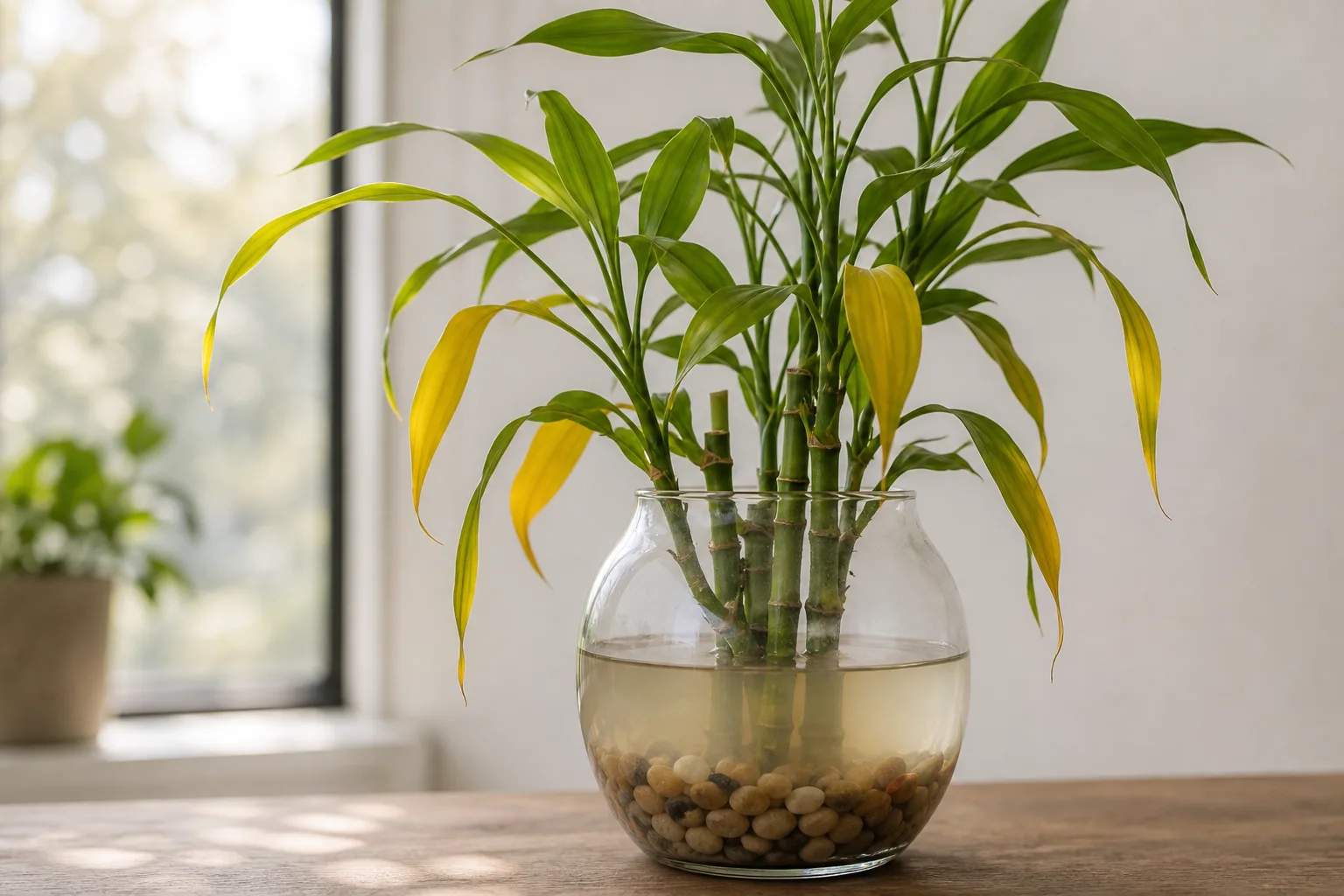
Overwatered Lucky Bamboo in soil sits in soggy mix; in vases, unchanged water breeds bacteria. Damaged roots cannot move water up the cane, so a full vase still wilts. First step: let soil dry to the top inch or fully change vase water and rinse pebbles.
Overwatering on Lucky Bamboo: Causes, Checks & Fixes
This guide covers overwatering on Lucky Bamboo. See also the general Overwatering guide, watering, and light pages for this plant.
Overwatering on Lucky Bamboo: Causes, Checks & Fixes
Quick answer
Overwatering on Lucky Bamboo (Dracaena sanderiana) means roots stay oxygen-starved - in soil from watering too often, in vases from stagnant unchanged water. Damaged roots cannot move water up the fleshy cane, so a vase can look full while stems still wilt. First step: water soil when the top inch is dry for potted plants, or fully change vase water weekly for water culture per the watering guide.
Overwatering can cause yellowing of the leaves and rotting of the stems. Lucky Bamboo in decorative cachepots or saucers with standing water faces the same risk as heavy-handed soil watering. If only tips brown on firm canes with clear water, check brown tips before assuming excess moisture.
What overwatering looks on Lucky Bamboo
Soil culture signs
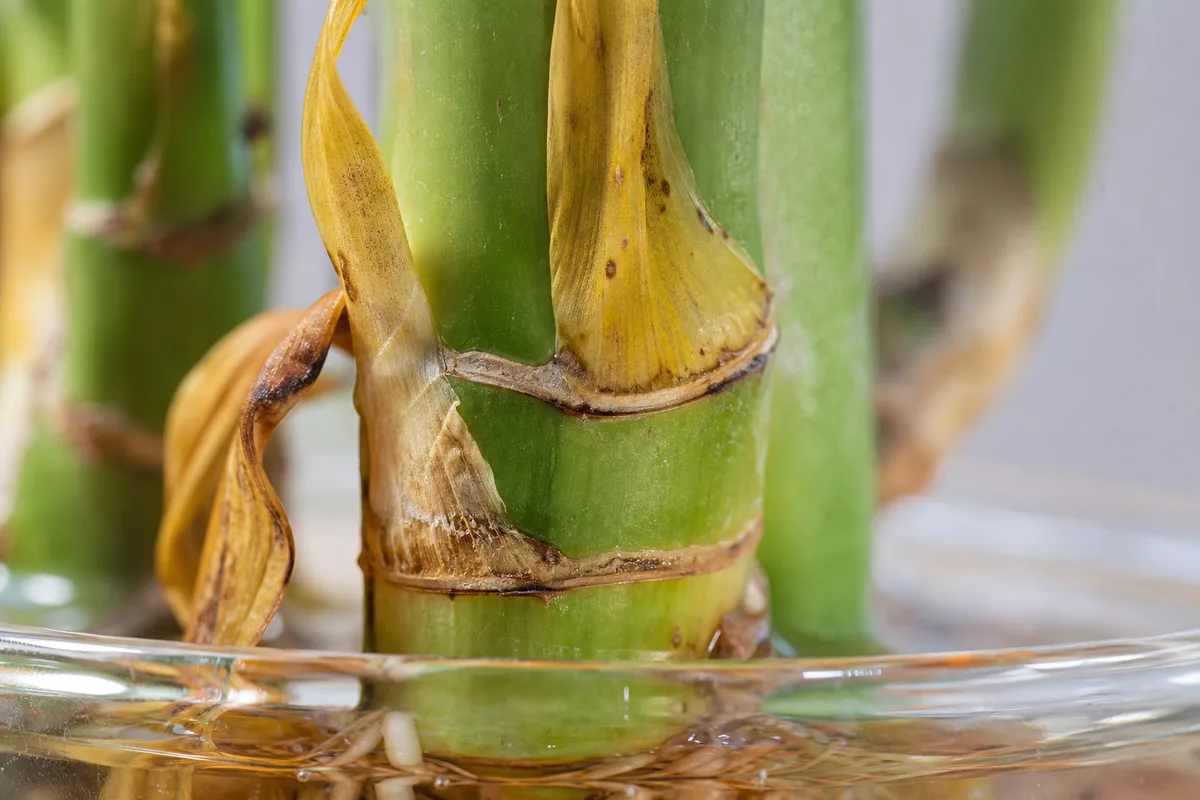
Overwatering symptoms on Lucky Bamboo - compare with healthy tissue on the same plant.
Lower leaves yellow, canes droop despite wet mix, and the pot feels heavy for days. A sour smell from the drain hole suggests anaerobic conditions. Stem bases may soften where they meet saturated mix.
Vase culture signs
Water turns cloudy or greenish, roots brown and slimy, and canes yellow from the bottom. Topping off old water without changing it mimics overwatering - bacteria multiply in stale liquid and show up as fog or cloudiness in the vase.
Shared signs and the wilting paradox
New growth stalls while older leaves fail. The pattern differs from underwatering, which shows dry pebbles, light pots, and firm but limp canes.
The wilt-on-wet paradox is common on Lucky Bamboo: canes look thirsty while roots sit in water or soggy mix because rotting roots cannot transport water upward. The cane stores some moisture, but without functioning roots the plant cannot replace what leaves lose - so droop persists until you fix the root zone, not add more water.
Why Lucky Bamboo gets overwatered
Calendar watering without checking moisture is the main soil mistake. Easily grown in evenly moist soil does not mean constantly wet - it means appropriate moisture with drainage.
Low light reduces water use. A plant in a dim office keeps soil wet longer; the same weekly habit that worked near a bright window becomes excessive. Cool winter rooms slow evaporation further - a dim desk in January may need half the summer watering frequency for soil and still needs weekly vase changes because bacteria do not wait for transpiration.
Vase setups fail when owners skip weekly water changes. Daily top-offs on month-old water concentrate minerals and bacterial load while the vase looks full.
Fluoride and chlorine in untreated tap water weaken Dracaena tissue over time. In chronically stale vase water, that chemistry stacks on wet-root stress - tips may brown while roots also decline. Filtered or distilled water helps both problems; see brown tips if chemistry is the primary signal.
Decorative pots without drainage, oversized containers, and saucers left full after watering all trap moisture around cane roots. Braided arrangements in shared vases can hide soft inner canes while outer stems look green.
How to confirm the cause
- Moisture depth - Is soil wet below the surface for 5+ days? Is vase water cloudy?
- Wilting paradox - Drooping canes with wet conditions point to root dysfunction, not thirst.
- Drainage - Are holes open? Is a cachepot holding runoff?
- Water change log - When was vase water fully replaced, not just topped up?
- Root inspection - Mushy roots confirm overwatering; firm white roots suggest another diagnosis.
- Light and temperature - Dim placement plus frequent water strongly supports overwatering; cool rooms extend wet-soil windows.
Lookalike comparison table
| Symptom pattern | Overwatering (soil) | Overwatering (vase) | Underwatering | Advancing root rot | Fluoride tips |
|---|---|---|---|---|---|
| Leaf signs | Yellow lower leaves, droop | Yellow from base up | Limp, may crisp | Yellow climb, soft base | Even tip burn |
| Moisture | Wet mix 5+ days | Cloudy, sour water | Dry pebbles, light pot | Cloudy, fast return | Clear water |
| Stem base | Soft in wet mix | Soft at waterline | Firm | Mushy, dark | Firm |
| First move | Stop water, dry top inch | Full change, rinse roots | Water deeply once | Root rot protocol | Filtered water |
| Read next | This guide | This guide | Underwatering | Root rot | Brown tips |
First fix for Lucky Bamboo
Stop adding water and dry down or fully refresh.
Soil: withhold water until the top inch is dry, empty saucers, and improve light if the pot dries too slowly. Vase: dump all water, scrub container, rinse pebbles, trim soft roots, refill with filtered water covering roots and one inch of stem.
One correction only - do not also repot, switch culture, and fertilize the same day.
Mild, moderate, and severe branches
Mild - Firm canes, soil wet but not sour, or vase water slightly hazy with white firm roots: withhold soil water until the top inch dries, or one full vase change with rinsed pebbles. Re-check in one week.
Moderate - Yellow lower leaves, sour smell, brown slimy roots, or water unchanged 10+ days: trim mushy roots with sterilized scissors, repot soil plants into fresh well-drained potting mix if mix smells sour, and start weekly filtered-water changes for vases.
Severe - Stem bases mushy, water clouds within 48 hours of a full clean, or multiple soft nodes on braided canes: follow the root rot guide the same day. Propagate firm cane sections in clean water if the display cannot be saved intact.
When to escalate to root-rot protocol
Escalate when mushy stems persist 48 hours after a full water change and root trim, when yellowing spreads up canes despite dry soil, or when more than half the root mass is brown and slimy on inspection. Early overwatering triage on this page is not enough once stem tissue rots - advanced rescue lives on the root-rot guide.
Step-by-step recovery
- Halt all watering or topping up until you inspect roots.
- Unpot soil plants or lift canes from pebbles; rinse roots under lukewarm water.
- Trim brown, mushy root tissue with sterilized scissors. If step 3 reveals mostly mushy roots and soft stem bases, stop here and switch to root rot rescue.
- Repot soil plants into well-drained mix if mix smells sour; use a pot with drainage.
- Refill vases with clean filtered water on a weekly schedule per the watering guide.
- Remove yellow leaves that detach easily; keep firm canes staked if needed.
- Resume light feeding only after two weeks of stable roots and new white root tips.
Recovery timeline
Mild overwatering may stabilize within one dry-down cycle or one water change. Root pruning cases need two to four weeks before new root tips show - judge progress by firm canes and stopped yellow spread, not by old damaged leaves greening up.
Braided stems with multiple soft nodes rarely recover intact - propagate firm sections in fresh water. See the overview propagation notes if you need to salvage part of a display.
Causes to rule out
- Underwatering - Dry mix, limp canes, firm roots. See underwatering.
- Fluoride damage - Brown tips with clear water and firm roots. See brown tips.
- Direct sun - Scorched leaves with dry soil, not chronic wetness.
- Cold damage - After outdoor exposure below 65°F nights.
- Yellow leaves from other causes - See yellow leaves if pattern does not match wet roots.
What not to do
Do not water wilting plants automatically - confirm roots first. Do not top up cloudy vase water. Avoid heavy fertilizer on stressed roots. Do not repot into larger pots while soil is still saturated. Do not move from vase to soil the same day as rescue; stabilize roots in one culture first.
How to prevent overwatering next time
Match watering to checks, not habit. Soil: top inch dry before watering. Vase: full weekly change with filtered water - topping off is not a substitute.
Move plants to bright, indirect light so they use water predictably. Empty saucers every time. In cool dim offices, stretch soil intervals in winter but keep vase changes weekly.
Consider soil culture if weekly vase maintenance is unsustainable - easier to maintain in soil with proper drainage than a neglected vase.
Related Lucky Bamboo guides
When to worry
Escalate when stems turn mushy or rot smell returns within 48 hours of changing water - use the root rot guide that day. Lucky bamboo is toxic to cats and dogs - discard leaked vase water safely, wash hands after handling, and contact a veterinarian promptly if a pet ingests leaves or vase water.
Conclusion
Lucky Bamboo overwatering shows up as soggy soil or stale vase water, not mysterious wilt. Confirm wet roots, dry down or refresh completely, trim decay, and align future watering with moisture checks and weekly water changes. If stems stay mushy 48 hours after that reset, escalate to root-rot rescue - not another top-off.