Yellow Leaves on Lucky Bamboo: Fluoride, Sun & Vase Water
Quick answer
Lucky Bamboo yellow leaves usually mean too much direct sun, fluoride in tap water, over-fertilizing in vase water, or over-submerged stems. First step: move to bright indirect light and switch to filtered water.
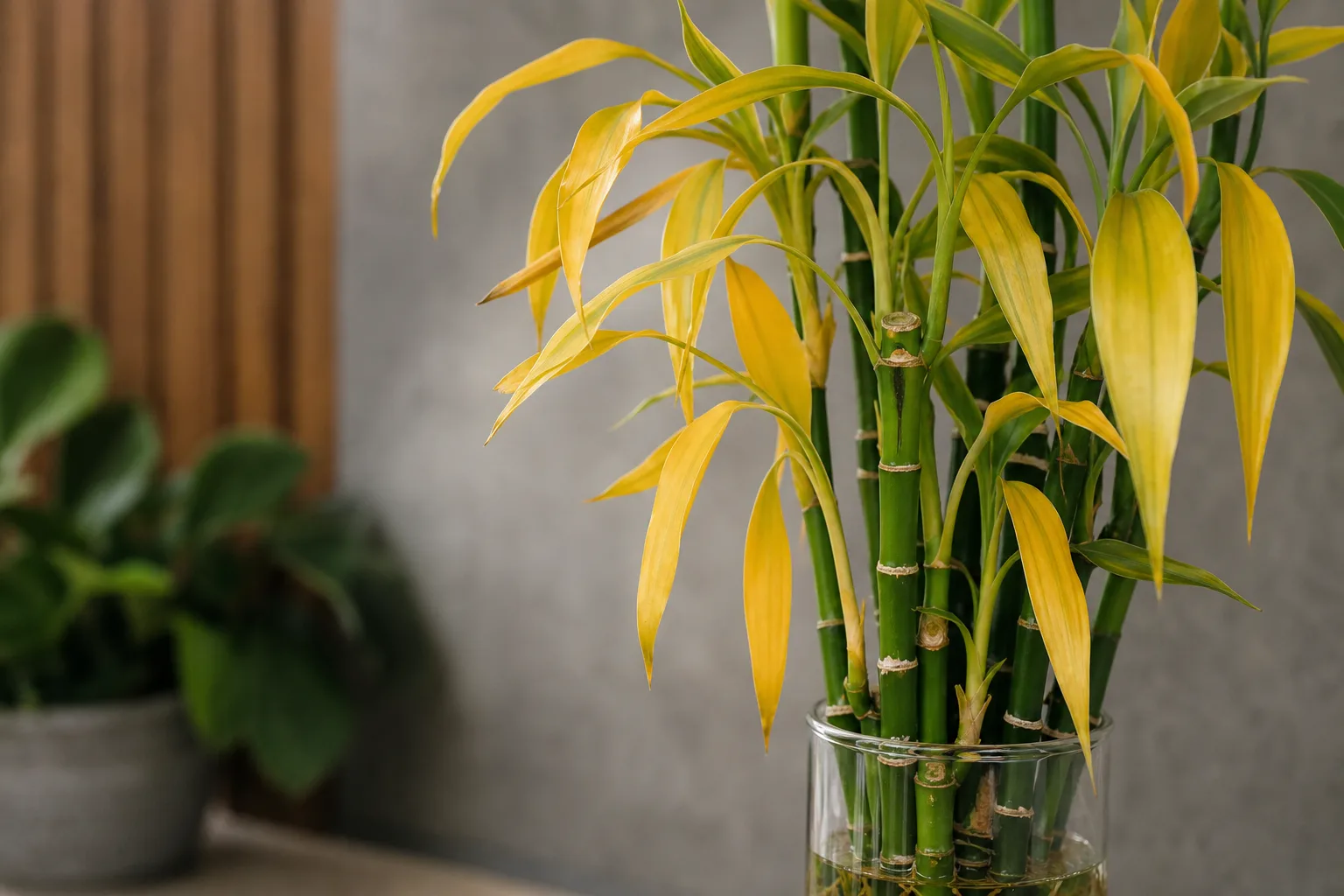
Yellow Leaves on Lucky Bamboo: Causes, Checks & Fixes
This guide covers yellow leaves on Lucky Bamboo. See also the general Yellow Leaves guide, watering, and light pages for this plant.
Yellow Leaves on Lucky Bamboo: Causes, Checks & Fixes
Quick answer
Yellow leaves on Lucky Bamboo (Dracaena sanderiana) most often trace to too much direct sun, fluoride or chlorine in tap water, over-fertilizing in vase water, over-submerged stems, or stagnant vase water - not random bad luck. First step: move to bright, indirect light and switch to filtered or distilled water.
Unlike true bamboo, Lucky Bamboo is a slow-growing tropical perennial with strappy leaves spaced along fleshy green canes. Yellowing on this plant often signals water chemistry, light stress, or submerged stem rot before a general nutrient shortage. For yellow stems and broader culture context, start with the lucky bamboo overview.
Lucky Bamboo yellow-leaf quick reference
| Cause | Leaf pattern | Water / soil state | Cane feel | Urgency |
|---|---|---|---|---|
| Direct sun | Yellow or bleached patches on window-facing leaves; crisp brown edges | Adequate depth; water may look clear | Firm | Moderate - move plant |
| Fluoride / tap water | Yellow with brown tips; often older leaves first | Tap-filled vase or pot | Firm | Moderate - change water source |
| Over-fertilizing | Yellowing after a feed; tip burn; pale new growth | Vase with recent fertilizer | Firm unless combined with rot | Moderate - flush, pause feed |
| Stagnant vase water | Lower leaves yellow; slight cloudiness | Weeks without full change | Firm early; soft if advanced | Moderate to high - full rinse |
| Over-submerged stems | Yellow from base up; stem band at waterline | Water above roots + one inch of stem | Soft at submerged nodes | High - trim and reroot |
| Soil overwatering | Lower yellow leaves; limp foliage | Wet mix for days | Firm until rot sets in | High if mushy roots - overwatering |
| Normal aging | One lowest sheath yellows on a firm cane | Healthy routine | Firm | Low - trim or wait for drop |
| Root rot | Rapid spread up cane; sour smell | Cloudy vase or sour soil | Soft base | Urgent - root rot |
What yellow leaves look like on Lucky Bamboo
Sun-related yellowing appears on leaves facing the window, often with bleached or crisp patches. Direct sunlight will damage the leaves, turning them brown as well as yellow.
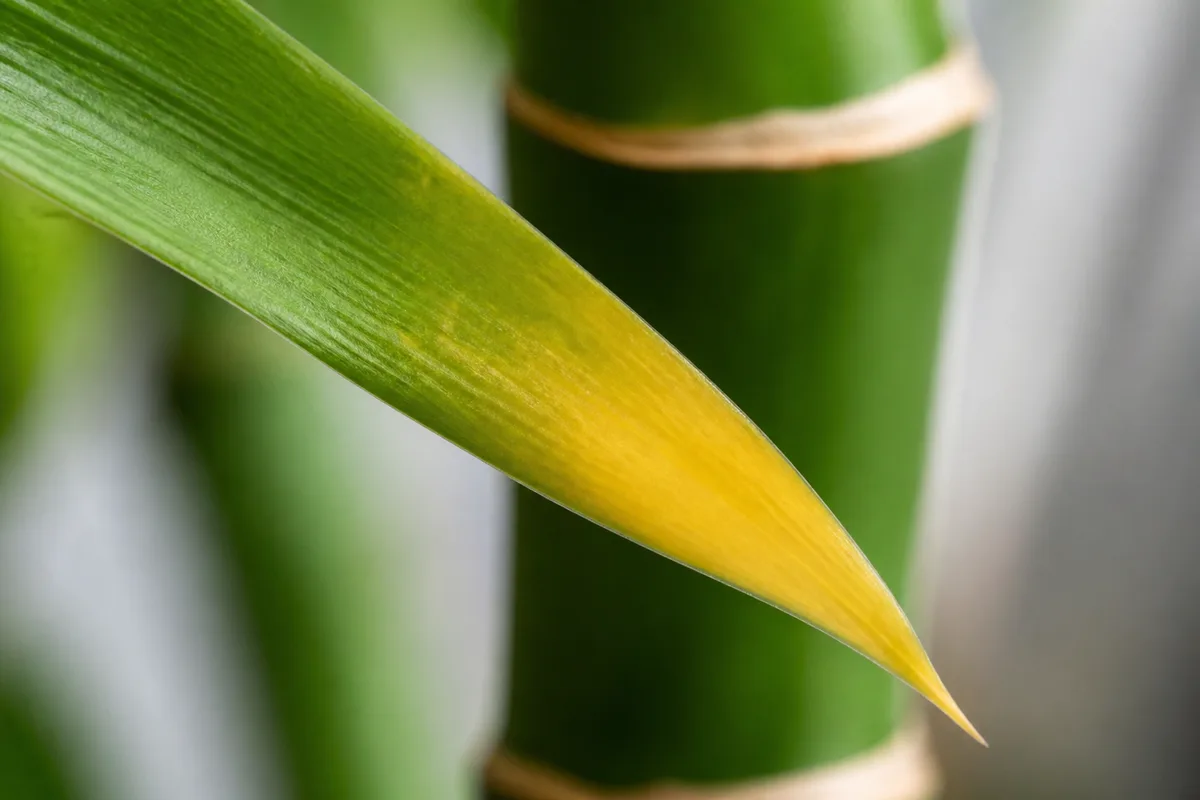
Yellow Leaves symptoms on Lucky Bamboo - compare with healthy tissue on the same plant.
Fluoride or chlorine damage shows as yellowing with brown tips, sometimes starting on older lower leaves while new growth at the top still looks green. Fluoride can cause the leaves to yellow on Dracaena species grown in tap water. Tip-only browning without full yellow blades may overlap with the brown tips guide.
Over-fertilizing in water culture often follows a recent liquid feed - yellowing and tip burn within days, sometimes with a white mineral film on pebbles or vase walls. Clemson HGIC recommends one-quarter the label rate every other month in vases with no soil buffer; full-strength or monthly doses concentrate salts quickly.
Over-submerged stems yellow from the base upward where too much cane sits underwater. Clemson HGIC advises covering roots and at least one inch of stem - not the entire stalk. Deep submersion invites rot at leaf sheaths meeting the waterline, especially in braided gift arrangements.
Overwatering in soil or neglected vase water produces yellow lower leaves, limp canes, and sometimes soft stem bases. Overwatering can cause yellowing of the leaves and rotting of the stems.
Stagnant vase water with bacterial cloudiness yellows lower foliage before the whole plant collapses - distinct from fluoride tip burn because water looks dull or smells off even when leaves show only pale lower sheaths.
Normal aging removes the lowest leaf on a cane occasionally; one yellow sheath dropping from a firm cane is not an emergency.
Why Lucky Bamboo gets yellow leaves
Lucky Bamboo tolerates lower light but too much direct sun will scorch the foliage. South- or west-facing sills without sheer curtains are a common trigger - see drooping leaves when sun stress combines with wilt.
Tap water is the second major cause. Dracaena sp. are easily affected, and sometimes killed, by fluoride. City water also carries chlorine; letting water sit overnight removes some chlorine gas but not fluoride, and chloramine in many municipal systems persists as well. Owners who switch to a day-old tap jug without seeing improvement are usually fighting fluoride, not chlorine alone.
In water culture, yellow leaves may follow weeks without a water change, when bacteria build and roots weaken. Algae on pebbles often correlates with biofilm that reintroduces bacteria at each top-up - rinse pebbles during weekly changes per the watering guide.
In soil, watering before the top inch of soil is dry keeps roots oxygen-starved. Chronic wet feet overlap with the dedicated overwatering page.
Very dilute vase conditions without occasional weak fertilizer can yellow older leaves, though water quality, submersion depth, and light should be ruled out first. Over-feeding is more common on display plants than true deficiency.
In braided or multi-cane arrangements, one stem may yellow while neighbors stay green - uneven submersion, a rotting inner cane, or sun hitting only one side of the bundle. Lift and inspect each cane separately before assuming whole-plant fluoride stress.
How to confirm the cause
Work through this inspection order:
- Light check - Does afternoon sun hit the leaves directly? Did yellowing start after a move closer to the glass?
- Water source - Are you using unfiltered tap water in the vase or pot?
- Culture check - When was vase water last changed? Is soil wet for days? Does water smell sour or look cloudy?
- Submersion depth - Is water only over roots plus one inch of stem, or are upper nodes submerged?
- Fertilizer history - Did yellowing follow a recent feed? Is there white crust on pebbles?
- Pattern - Sun-side yellowing vs. tip burn vs. lower-leaf drop vs. base-up climb tells different stories.
- Root firmness - Lift canes from pebbles or unpot soil plants. Mushy roots mean rot, not simple fluoride burn.
- New growth - Pale, slow new leaves suggest chronic low light on top of other stress.
First fix for Lucky Bamboo
Move to Lucky Bamboo light guide and switch to filtered or distilled water - one change at a time so you can read the response.
Relocate away from direct sun beams. Change the water weekly with low-fluoride water, rinsing pebbles if algae is present. Lower water to roots plus one inch of stem if stems were over-submerged.
For soil plants, pause watering until the top inch dries, then resume with filtered water only. Do not fertilize until yellowing stops spreading.
Step-by-step recovery
After sun or fluoride stress
- Move the plant to an east-facing or filtered bright window.
- Replace all vase water or allow soil to dry to the correct depth.
- Trim fully yellow leaves at the base with clean scissors - they will not green up.
- Rinse pebbles and container if growing in water.
- Wait two weeks; judge by new leaf color, not old damage.
- If growth is steady but pale after water and light are stable, add liquid fertilizer at one-quarter the recommended rate every other month in water culture only.
After over-fertilizing
- Dump all vase water and rinse roots and pebbles under filtered water.
- Refill with clean filtered water only - no fertilizer for two to three months.
- Trim yellow or burned leaf tips if they are fully necrotic.
- Resume quarter-rate feeding only after two clean weekly cycles with no new yellowing.
After over-submersion or sour vase water
- Lift canes and inspect the submerged zone - soft tissue must be cut back to firm green cane.
- Sterilize the vase; scrub pebbles.
- Re-seat at correct depth: roots covered, one inch of lowest stem submerged, upper nodes dry.
- If base rot is advanced, follow root rot trimming and rerooting steps.
Recovery example: tap water plus sunny sill
A south-facing desk with daily tap top-ups often produces sun-bleached outer leaves and fluoride tip burn within a month. After moving to bright indirect light and switching to filtered water with weekly full changes (not top-offs alone), firm canes typically show clean new sheaths within two to three weekly cycles - old yellow blades stay yellow until trimmed, but spread stops.
Recovery timeline
Fluoride and light corrections may stop new yellowing within one to two weekly water cycles. Existing yellow tissue remains until trimmed or shed naturally.
Over-fertilizing recovery needs a full flush and two to three months without feed before quarter-rate resumes.
If stems soften or yellowing climbs quickly, switch to root rot diagnosis - recovery then depends on trimming bad roots, not only changing water type.
Causes to rule out
| Lookalike | Key difference |
|---|---|
| Brown tips only | Often fluoride or low humidity without full yellowing - brown tips |
| Root rot | Wilting with cloudy water or sour soil; roots mushy - root rot |
| Drooping without yellow | Stress wilt before color change - drooping leaves |
| Cold exposure | Sudden yellowing after nights below 65°F outdoors |
| Leaf sheath scars | Brown marks where old leaves detached; firm cane underneath |
| Underwatering | Dry pebbles with firm dry roots - underwatering |
What not to do
Do not move into stronger sun to “green up” yellow leaves. Do not pour more tap water hoping to flush without changing the source. Avoid heavy fertilizer on stressed plants. Do not ignore cloudy vase water while treating yellow leaves as a light problem alone.
Do not submerge stems deeper when trying to “save” a yellowing plant - that accelerates rot at the waterline.
Lucky Bamboo care cross-check
Yellow leaves often mean two conditions failed at once - tap water plus a sunny sill, unchanged vase water in a dim office, or over-feeding in a sealed gift vase with no weekly change routine.
Chlorine vs. fluoride: Overnight tap sitting may help chlorine-sensitive setups but will not fix fluoride tip burn. When in doubt, use distilled or RO water for vase culture.
Braided displays: Monthly, separate canes enough to inspect inner stems at the waterline. One rotting cane in a bundle can yellow before neighbors show symptoms.
Desk cachepots: Soil plants in decorative outer pots without drainage mimic overwatering - yellow lower leaves with wet inner mix point to overwatering, not fluoride alone.
How to prevent yellow leaves next time
Use rainwater or distilled water consistently. Place in bright, indirect light - not direct sun, not deep shade.
Maintain weekly water changes for vase plants per the watering guide. Keep submersion at roots plus one inch of stem. For soil, match watering to dryness checks, not a fixed calendar. Growing in well-drained potting soil reduces chronic wet-root yellowing.
Fertilize vases sparingly - quarter rate every other month only after water quality is stable.
When to worry
Treat as urgent if canes soften, vase water smells rotten, or yellowing reaches new shoots within days - start root rot triage immediately.
Lucky bamboo is toxic to cats and dogs; remove dropped yellow leaves if pets can reach them. If a pet ingests any part of the plant, call ASPCA Animal Poison Control at (888) 426-4435 and your veterinarian - do not wait for leaf recovery first.
Contact your local Cooperative Extension office if firm-caned plants keep yellowing after filtered water, correct light, and weekly vase changes.
Related Lucky Bamboo problems
- Overview - yellow stems, vase culture hub, and fluoride basics
- Root rot - soft cane base, sour water, rapid yellow climb
- Brown tips - fluoride margins without full leaf yellowing
- Overwatering - wet soil, chronic saturation before rot
- Watering - weekly change rhythm and submersion depth
- Drooping leaves - limp foliage before or without yellow
- Underwatering - dry vase with firm roots
- Fertilizer burn - salt stress after heavy feeding
- Dracaena genus yellow leaves - shared Dracaena fluoride sensitivity
Conclusion
Match yellow leaves to the quick-reference table, fix light and water quality first, and keep vase stems at the correct submersion depth. Trim spent yellow tissue, judge recovery by firm new growth over two to three weekly cycles, and route soft canes or sour water to root rot before leaves are the only symptom you track.
When to use this page vs other Lucky Bamboo guides
- Lucky Bamboo watering guide - Use for routine moisture checks before assuming yellow leaves is the main issue.
- Lucky Bamboo problems hub - Browse all 41 common issues on this species.
- Overwatering on Lucky Bamboo - Different entry point when symptoms overlap with yellow leaves.
- Underwatering on Lucky Bamboo - Different entry point when symptoms overlap with yellow leaves.
- Root Rot on Lucky Bamboo - Different entry point when symptoms overlap with yellow leaves.