Fertilizer Burn on Lucky Bamboo: Causes, Checks & Fixes
Quick answer
Fertilizer burn on Lucky Bamboo shows as brown leaf tips, yellow margins, or cloudy vase water after feeding. First step: stop fertilizer, fully change vase water or flush soil, then resume at one-quarter strength only when new growth looks clean.
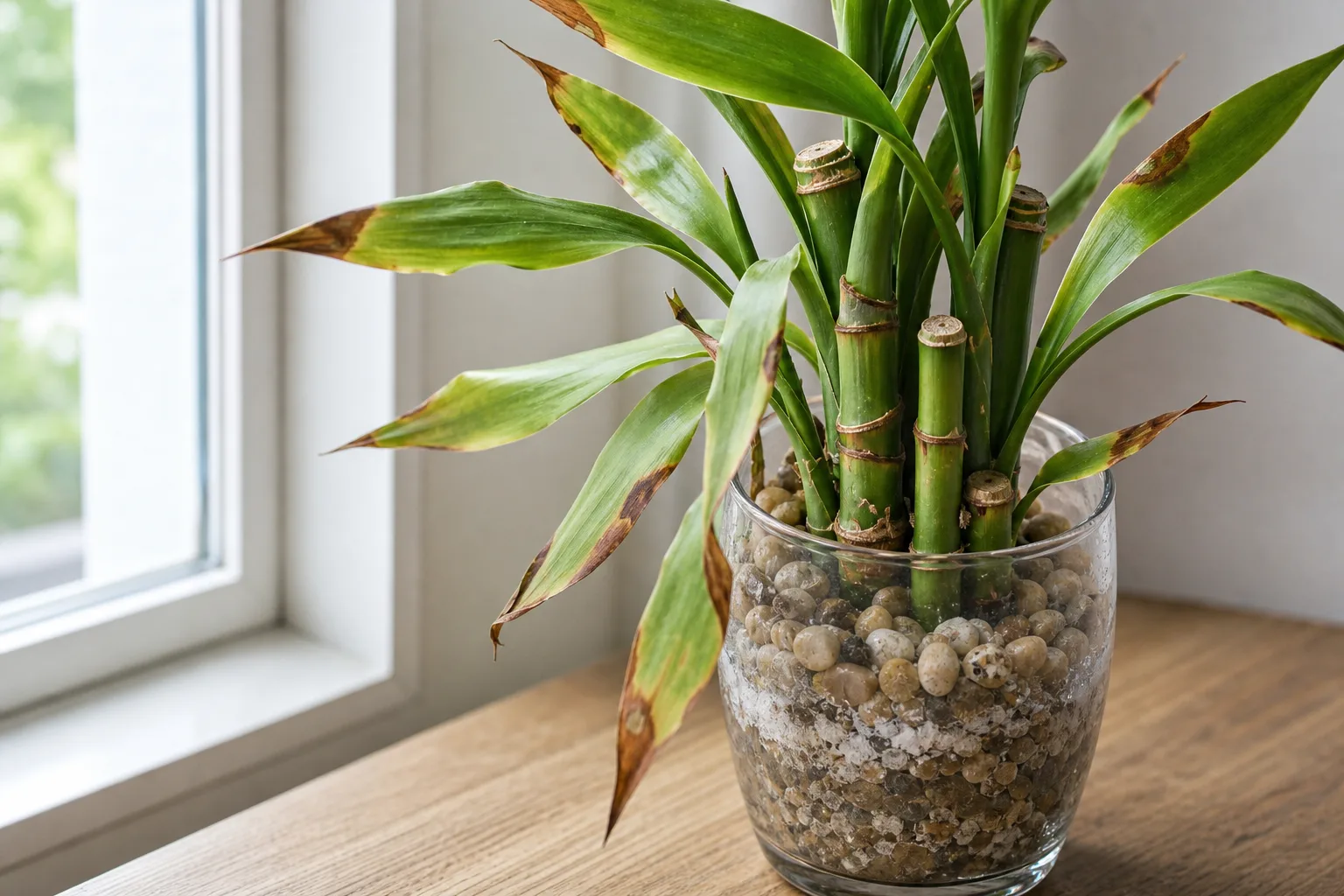
Fertilizer Burn on Lucky Bamboo: Causes, Checks & Fixes
This guide covers fertilizer burn on Lucky Bamboo. See also the general Fertilizer Burn guide, watering, and light pages for this plant.
Fertilizer Burn on Lucky Bamboo: Causes, Checks & Fixes
Quick answer
Fertilizer burn on Lucky Bamboo (Dracaena sanderiana) comes from too much salt too often - especially in vase water with no soil to buffer ions. First step: stop all fertilizer, fully change vase water or flush soil, then resume at one-quarter the recommended rate every other month in water culture only after new growth looks green.
Dracaena species are sensitive to salt. Burned tips overlap with fluoride damage, so fix feeding and water quality together rather than adding more nutrients to “green up” a stressed plant.
What fertilizer burn looks like on Lucky Bamboo
Salt injury typically shows on newest strap leaves first:
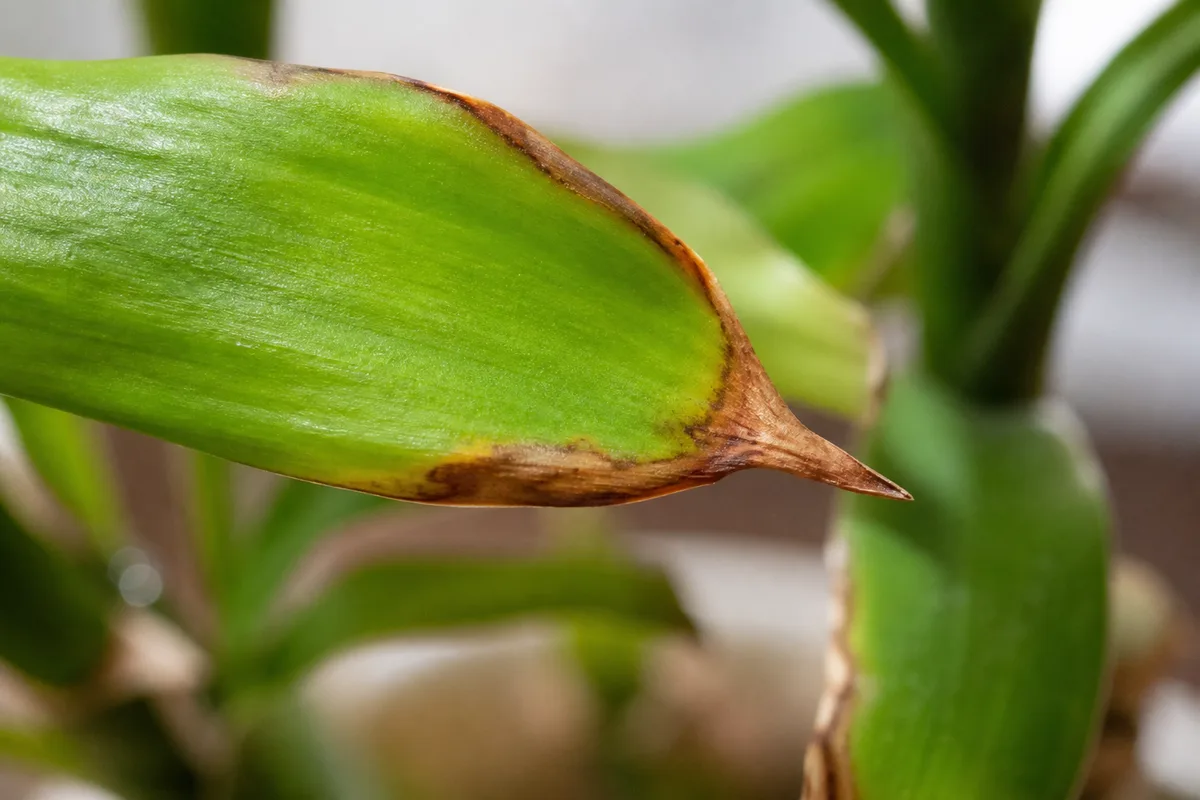
Fertilizer Burn symptoms on Lucky Bamboo - compare with healthy tissue on the same plant.
- Brown or yellow leaf tips and margins appearing days after feeding
- Leaf tip necrosis that progresses inward if feeding continues
- Sudden leaf yellowing on one cane in a braided arrangement that received concentrated drops
- Cloudy or foul vase water after soluble fertilizer was added directly to the jar
In water culture, there is nowhere for excess salts to go except root tissue and the water column. White mineral film on pebbles or the glass lip often follows repeated feeding without full water changes.
In soil culture, crust on the pot rim or pebble mulch surface suggests buildup. Overwatering can yellow leaves, but fertilizer burn keeps mix structurally damp yet tips burn - roots may still be firm if caught early.
Why Lucky Bamboo burns easily from fertilizer
Lucky Bamboo grows slowly indoors. It needs modest nutrition, not houseplant-strength doses on a weekly rhythm.
Contributing factors:
- Full-strength liquid fertilizer poured into clear vase water
- Stacked salts from tap water fluoride plus fertilizer ions (easily affected by fluoride)
- Feeding stressed plants after Lucky Bamboo repotting guide, rot recovery, or draft damage
- Soil mixes with slow-release pellets plus liquid feeds on the same schedule
- No weekly water change in vases, letting salts concentrate (change water weekly)
Clemson recommends monthly fertilizer during the growing season for soil-grown plants - much less aggressive than feeding water jars every week. Extension guidance also suggests about 20% of the manufacturer’s recommended dose as a safe mindset for Dracaena.
How to confirm the cause
Confirm in this order:
- Feeding history - What product, what dose, what date?
- Water source - Tap vs. filtered; fluoride problems mimic burn.
- Culture - Vase salts concentrate faster than soil.
- Root firmness - Mushy roots mean rot, not salt alone.
- Pattern - Tip burn on newest leaves after feeding supports fertilizer; uniform tips in dry winter air suggest humidity.
- Vase clarity - Cloudy water after fertilizer strongly implicates bacterial bloom plus salts.
Leaf tips turning brown can be low humidity, incorrect lighting, or water additives - rule those out if you never fertilized.
First fix for Lucky Bamboo
Stop fertilizer immediately and remove salts from the root zone.
For vase plants: dump all water, rinse pebbles, gently rinse roots, refill with filtered or distilled water at the proper depth - roots plus one inch of stem. Do not add plant food until two to four weeks of clean new tips.
For soil plants: water heavily until drain runs clear, empty the saucer, and let the top inch dry before the next rinse. Trim only fully dead leaf tissue.
Step-by-step recovery
- Cease all fertilizer - including “lucky bamboo” tablets marketed for vases.
- Change vase water completely or flush soil twice over two weeks.
- Trim brown tips cosmetically with clean scissors; do not strip all leaves.
- Move to bright, indirect light so recovery photosynthesizes efficiently.
- Resume feeding only when new sheaths open green - water culture at quarter strength every other month.
- For soil, follow monthly houseplant fertilizer during growth at label dilution, not double doses.
- Consider transitioning chronic burn cases from vase to well-drained potting soil - extension notes soil culture is often easier long term.
Recovery timeline
Mild tip burn on firm canes often stabilizes within one to two weeks after salts are flushed. New leaf tissue may emerge clean in two to four weeks.
Repeated burn with cloudy water and soft roots may require trimming roots and propagating firm cane sections - new roots form in 2 to 3 weeks from healthy cuttings in fresh water without fertilizer until established.
Causes to rule out
Brown tips without overfeeding may be:
- Fluoride or chlorine - Use rain or distilled water.
- Low humidity - Browning of leaf tips in heated rooms.
- Direct sun - Scorched patches, not just tips.
- root rot on Lucky Bamboo - Yellow leaves, mushy roots, sour smell.
- Normal sheath scars - Static brown at old nodes.
What not to do
Do not feed “to help recovery.” Do not drop fertilizer tablets into unchanged vase water. Avoid Epsom salt or vinegar “flushes” without extension backing. Do not use full-strength fertilizer because growth seems slow - Lucky Bamboo is slow-growing by nature.
How to prevent fertilizer burn next time
Water culture: fertilize every other month at one-quarter strength and change water weekly with filtered water.
Soil culture: feed monthly in spring and summer only when the top inch dries properly between drinks. Skip winter feeding in dim rooms.
Never combine slow-release mix, liquid feed, and vase tablets on the same plant.
Lucky Bamboo care cross-check
Burn prevention pairs with fluoride management - both are salt-related stresses. Filtered water plus minimal fertilizer beats frequent heavy feeding on a plant marketed as “low maintenance.”
When to worry
Escalate if stems soften, vase water clouds within 48 hours of changing, or yellowing spreads up multiple canes. Lucky bamboo is toxic to pets - rinse spilled fertilizer water thoroughly if pets drink from plant saucers.
Conclusion
Fertilizer burn on Lucky Bamboo is excess salt in vase water or soil, not a mysterious nutrient mystery. Stop feeding, flush the root zone, use filtered water, and resume at quarter strength on Clemson’s water-culture schedule. Firm canes with trimmed tips usually produce clean new leaves once salts are gone.
When to use this page vs other Lucky Bamboo guides
- Lucky Bamboo watering guide - Use for routine moisture checks before assuming fertilizer burn is the main issue.
- Lucky Bamboo problems hub - Browse all 41 common issues on this species.
- Salt Build-up on Lucky Bamboo - Different entry point when symptoms overlap with fertilizer burn.
- Brown Tips on Lucky Bamboo - Different entry point when symptoms overlap with fertilizer burn.