Salt Build Up on Lucky Bamboo: Causes, Checks & Fixes
Quick answer
Salt buildup on Lucky Bamboo shows as white crust on pebbles or pot rims and brown leaf tips from tap-water minerals and fertilizer salts. First step: fully change vase water and scrub pebbles-or leach soil with filtered water at three times pot volume-then switch to low-mineral water and pause fertilizer until new tips stay clean.
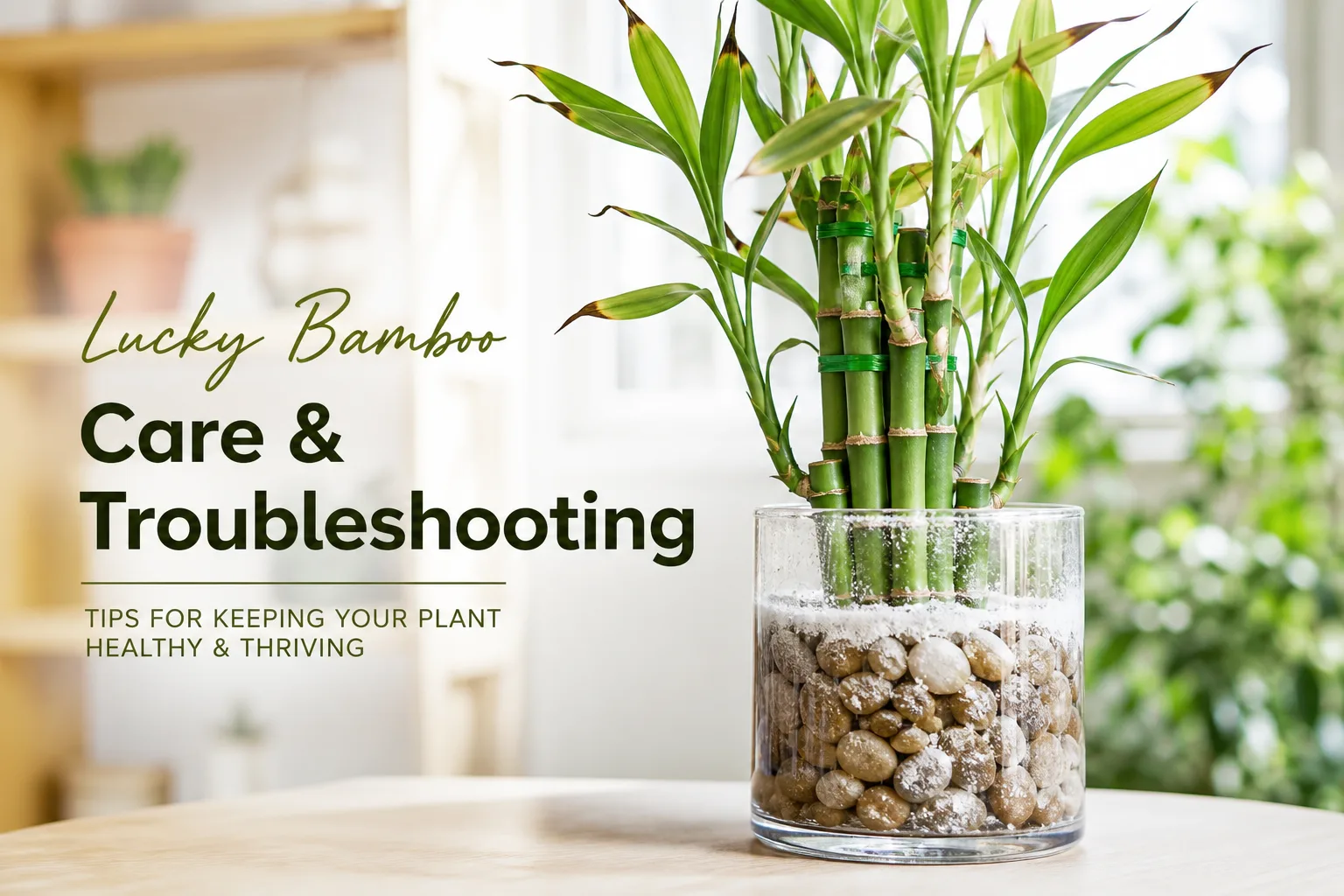
Salt Build Up on Lucky Bamboo: Causes, Checks & Fixes
This guide covers salt build-up on Lucky Bamboo. See also the general Salt Build-up guide, watering, and light pages for this plant.
Salt Build Up on Lucky Bamboo: Causes, Checks & Fixes
Quick answer
White crust on pebbles, vase walls, or the pot rim is the confirmatory sign that Lucky Bamboo (Dracaena sanderiana) has salt and mineral buildup-not just ordinary tip burn. Tap-water fluoride and chlorine, fertilizer residue, and topping off vase water without full weekly changes concentrate minerals until leaf tips brown and crystals coat the display.
First step: fully dump vase water and scrub pebbles-or leach soil with filtered water at least three times the pot volume-then switch to filtered or distilled water and pause fertilizer until new growth shows clean tips.
This page owns mineral-accumulation triage when crust is visible. For tip burn without crust on tap water alone, see brown tips. For acute injury right after a heavy feed, see fertilizer burn. For weekly change rhythm and water depth, see the watering guide.
What salt buildup looks like on Lucky Bamboo
Water culture signs
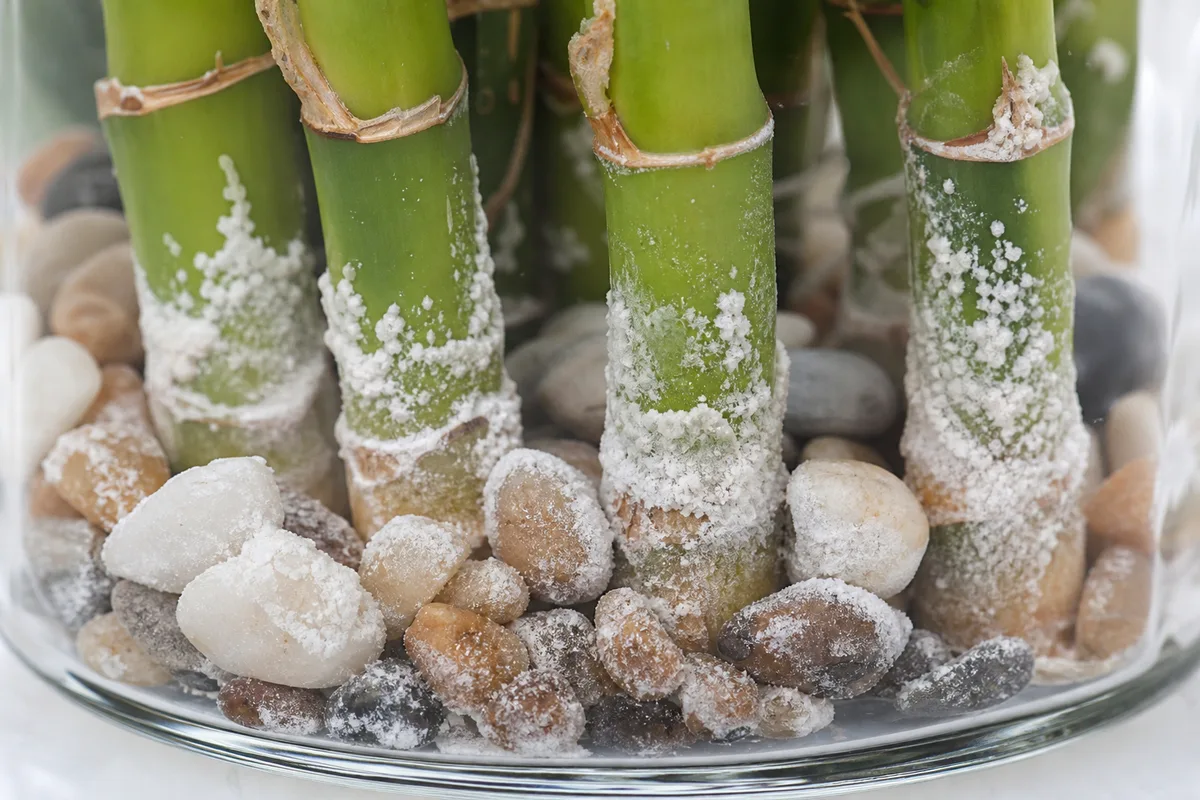
Salt Build-up symptoms on Lucky Bamboo - compare with healthy tissue on the same plant.
In decorative vases, white or tan crust coats pebbles, the glass above the water line, and cane nodes where evaporation leaves minerals behind. Leaf tips turn brown or yellow while the rest of the blade stays green. Vase water may look clear yet smell stale if salts accumulated over months of top-up watering without full changes.
Rough pebble surfaces and tight decorative containers trap crystals that re-dissolve into the root zone each time you top up-so crust can worsen even when the water looks fine.
Soil culture signs
In pots, a white mineral ring appears on the rim or soil surface. Leaf tips turning brown can follow high levels of water additives in municipal supplies. Lower leaves may yellow when salt stress combines with over-fertilizing.
Tip burn vs. advanced stress
Healthy Lucky Bamboo shows solid green margins on new growth. Tip burn that spreads inward or pairs with soft stems points to advanced stress beyond simple salt crust-route to root rot if roots are mushy or vase water clouds within days of a full change.
Why Lucky Bamboo gets salt buildup
Tap-water fluoride and chlorine
Lucky Bamboo is sensitive to fluoride and salt in tap water. Dracaena species are easily affected by fluoride added to many city supplies. Fluoride is an accumulative foliar toxin-it moves in the transpiration stream and concentrates at leaf margins, which is why narrow Dracaena blades show tip injury before stems fail. MSU Extension links city-water fluoride to necrotic tips on sensitive indoor plants including dracaenas.
Vase top-up vs. weekly full change
Water-culture setups concentrate salts as water evaporates. Topping off the vase without changing the water weekly leaves minerals behind while fresh dilution never happens. Letting the level drop slightly before a scheduled full change is safer than endlessly topping stale water-minerals leave only when you pour the vase out.
Fertilizer accumulation in slow-growing Dracaena
Soil-grown plants accumulate salts when fertilizer is applied too often or at full strength. In water culture, fertilize every other month at one-quarter the recommended rate-more than that builds residue quickly on a slow-growing cane. Fed-but-failing pale growth with heavy crust overlaps nutrient lockout; this page focuses on removing crust and minerals, not uptake-block mechanics alone.
Hard water and softened-water sodium
Hard tap water in arid regions deposits faster. Water softeners swap calcium for sodium, which still stresses roots and can worsen tip burn-use filtered, rain, or distilled water instead. In chronic hard-water homes, an optional TDS or EC meter on vase water or flush runoff helps confirm whether salts are dropping after leaching.
How to confirm the cause
Confirm in this order:
- Crust location - White deposits on pebbles, pot rim, or soil surface confirm mineral accumulation. No crust with tip burn only → brown tips may own the fix.
- Water source - City tap with known fluoride or chlorine strongly supports mineral burn.
- Tip pattern - Brown margins on firm plants with good watering rhythm point to water quality, not rot.
- Fertilizer history - Recent full-strength feeding plus tip burn confirms salt overload; sudden injury after one dose → fertilizer burn.
- Vase maintenance - Months of top-up without full water changes concentrates salts.
- Root check - Firm white roots with tip burn means salts, not root rot; mushy roots mean root rot.
Low humidity also causes browning of the leaf tips-rule that out if tips brown in winter with dry air but water is filtered and pebbles are clean.
Lookalike comparison table
| Pattern | Salt buildup (this page) | Brown tips (fluoride) | Fertilizer burn | Root rot | Low humidity |
|---|---|---|---|---|---|
| Crust on pebbles/soil | Yes - white or tan | Usually none | Sometimes after heavy feed | No | No |
| Tip injury | Brown margins, firm tissue | Brown margins, firm tissue | Rapid after feeding | Yellow climbs, soft base | Winter margins only |
| Vase water | Clear but stale; mineral film | Often clear | May look normal | Cloudy, sour fast | Clear |
| Roots | Firm, pale | Firm | Firm | Mushy, brown | Firm |
| First move | Full change + scrub or leach | Filtered water switch | Stop feed + flush | Root rot protocol | Raise humidity modestly |
| Read next | This guide | Brown tips | Fertilizer burn | Root rot | Watering |
First fix for Lucky Bamboo
Fully change vase water and rinse pebbles, or leach soil until runoff runs clear-then switch to filtered water and pause fertilizer.
For vases: dump all water, scrub pebbles and container, refill with filtered or distilled water covering roots and one inch of stem.
For soil: remove surface crust if present, then leach with filtered water at at least three times the pot volume, draining fully and emptying saucers each time. Repot into fresh well-drained potting soil if salts have crusted heavily across most of the mix surface.
Cosmetic, moderate, and severe branches
Cosmetic - Light rim crust, tip burn on a few leaves, firm roots, recent tap-water habit only: one full vase change with pebble rinse, or one soil leach, plus immediate switch to low-mineral water. Hold fertilizer four weeks.
Moderate - Heavy pebble crust, cloudy mineral film on vase walls, or white ring covering much of the soil surface: scrub pebbles thoroughly, run the full three-times-pot-volume leach twice over one week, and pause all feed until new tips emerge clean.
Severe - Crust returns within two weeks after a proper scrub or leach, growth stalls, or yellowing spreads beyond tips with firm roots: repot soil-grown plants into fresh mix per the soil guide. If stems soften or vase water clouds within 48 hours of a full clean refill, escalate to root rot the same day-salts may have enabled bacterial stress.
When to route to sibling guides
- Tips burn, pebbles stay clean, tap water only → brown tips before a second flush cycle.
- Injury within days of one heavy fertilizer dose → fertilizer burn.
- Pale new growth despite feeding into topped-up water → nutrient lockout after crust removal.
Step-by-step recovery
- Stop fertilizing immediately until new growth shows clean tips.
- For vases: remove plant, scrub pebbles with water (no soap), rinse cane bases, refill with filtered water at correct depth.
- For soil: leach with filtered water at three times pot volume; empty saucers each time. If crust reappears within two weeks, repot instead of a third blind leach.
- Trim severely burned leaf tips for appearance only-tissue will not regreen.
- Resume weekly water changes for vase plants; rinse pebbles monthly in hard-water homes.
- When growth resumes, fertilize at quarter strength per the fertilizer guide-every other month in water, monthly at half rate in soil during warm months only.
- Place in bright, indirect light so the plant uses water steadily and new leaves emerge clean.
Consider moving chronically affected vase plants to soil with filtered water-Dracaena sanderiana is much less difficult to maintain in soil when salts are flushed regularly and weekly vase scrubs are hard to sustain.
Recovery timeline
New leaf tips should emerge without burn within two to four weeks after switching water and flushing salts. Old burned tips remain brown permanently.
Chronic salt stress over years may slow overall growth until water quality improves. Expect gradual improvement rather than overnight reversal. If tips keep browning on filtered water after two leaches and four weeks without fertilizer, test an alternate water source for a month before assuming another diagnosis.
Causes to rule out
Salt buildup symptoms overlap with:
- Root rot - Mushy roots, cloudy foul vase water, soft stems; fix drainage and water changes per root rot, not just water source.
- Low humidity - Winter tip browning with clean pebbles and filtered water; increase humidity modestly.
- Direct sun scorch - Bleached or brown patches on exposed leaf surfaces, not just tips.
- Normal leaf sheath scars - Brown patches where old leaves detached at nodes; cosmetic, not salt damage.
- Yellow leaves from other stress - See yellow leaves if whole blades yellow without crust.
What not to do
Do not top up vase water to “save” evaporated volume-always full change weekly per the watering guide. Do not apply full-strength fertilizer to burned plants. Avoid Epsom salt or vinegar doses without knowing your water chemistry-they can worsen imbalance. Do not use softened water high in sodium. Do not assume brown tips always mean thirst on a Dracaena-minerals and fluoride are common culprits.
How to prevent salt buildup next time
Use filtered, rain, or distilled water consistently. Change vase water weekly and rinse pebbles monthly in hard-water regions.
For soil culture, follow the fertilizer guide for conservative rates and leach every four to six months with low-mineral water. Water when the top inch of soil is dry so salts do not concentrate in a permanently wet root zone.
Related Lucky Bamboo guides
- Lucky bamboo overview
- Lucky bamboo watering - weekly full change and submersion depth
- Brown tips - fluoride or chlorine burn without visible crust
- Fertilizer burn - acute post-feed injury
- Nutrient lockout - fed but failing with crust
- Fertilizer guide - quarter-strength schedule
- Root rot - mushy roots and cloudy vase water
- Yellow leaves
- Lucky bamboo soil - mix and repot after chronic crust
- Light
When to worry
Escalate if yellowing spreads beyond tips, stems soften, or vase water clouds within days of changing-salts may have enabled bacterial rot; use the root rot guide that day. Lucky bamboo is toxic to pets-wear gloves when trimming burned leaves, keep plants out of reach, and contact a veterinarian promptly if a cat or dog ingests leaves or drinks contaminated vase water.
Conclusion
Salt buildup on Lucky Bamboo is a mineral-accumulation problem-white crust on pebbles or pot rims plus tip burn on firm roots. Flush vases or leach soil at three times pot volume, switch to low-mineral water, and pause fertilizer until new tips stay clean. No crust but tips burn on tap water alone? Start with brown tips instead. Crust that returns after two proper flushes means repot-not another top-up.