Lucky Bamboo Fertilizer: When, How, and Mistakes to Avoid
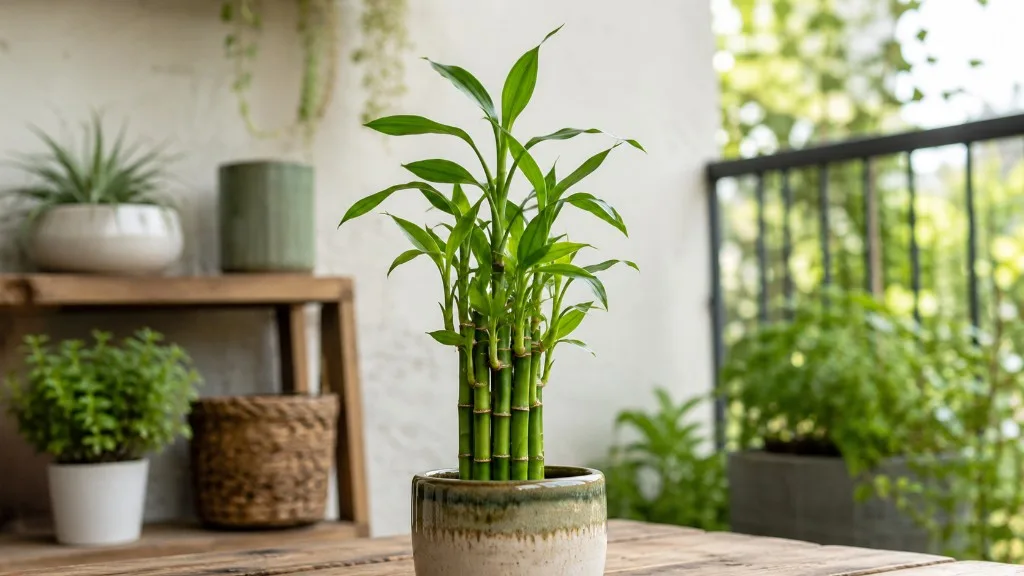
Lucky Bamboo Fertilizer: When, How, and Mistakes to Avoid
Lucky Bamboo Fertilizer: When, How, and Mistakes to Avoid
Lucky bamboo fertilizer trips up growers because the plant is sold two ways - bundled canes in a glass vase with pebbles, and potted specimens in soil - and each path follows a different dilution and frequency. Most gift-shop lucky bamboo never touches potting mix, yet most generic houseplant fertilizer advice assumes soil, drainage holes, and a dry-down cycle. Get the culture wrong and you get the classic failure mode: yellow stems, brown leaf tips, and white mineral film on pebbles within weeks of a well-intentioned pour.
Lucky bamboo is Dracaena sanderiana, a slow-growing tropical shrub from western Africa in the asparagus family - not true bamboo, and not a heavy feeder. Clemson HGIC describes it as a plant that tolerates lean conditions and punishes excess salts, especially in water culture where there is no soil buffer. This guide leads with vase fertilization - the dominant real-world setup - then covers soil schedules, fluoride interaction with fertilizer salts, step-by-step dosing, recovery after over-feeding, and when to skip nutrients entirely.
Do Lucky Bamboo Arrangements in Water Need Fertilizer?
Many healthy vase arrangements survive months or years without any fertilizer because the canes store energy and pebbles contribute nothing except anchor support. NC State Extension notes that pebbles hold the stems upright but provide no nutrients - every mineral in the vase came from your water or your bottle. Over time, growth slows, new leaves may pale slightly, and stems stay thinner than soil-grown specimens. That is when light, scheduled feeding helps - not because lucky bamboo is hungry, but because a closed water system eventually lacks nitrogen and micronutrients once stored reserves deplete.
Feeding is optional for a decorative desk vase you replace every year or two. It becomes worthwhile when you want greener new growth on a long-term arrangement, when multiple canes share one small water volume, or when the plant has been in the same vase more than twelve months with only plain water. Never fertilize as a fix for yellowing until you rule out stagnant water, low light, and fluoridated tap water - those causes are more common than deficiency. The lucky bamboo overview and watering guide cover the base routine; fertilizer only makes sense once weekly water changes and clean water are already in place.
When to Skip Feeding Entirely
Skip fertilizer when the plant shows stress - yellowing stems, mushy tissue at the waterline, recent transplant shock, or rot after an infrequent water change. Skip it when you cannot commit to weekly full water replacements; adding fertilizer to water you only top up concentrates salts as evaporation leaves minerals behind. Skip it in tiny novelty vases under 10 cm (4 in) tall where even a quarter-strength dose overwhelms the volume. Skip it through autumn and winter when indoor growth slows. And skip it if tips are already brown from tap-water fluoride - more nutrients will not fix chemical tip burn and may accelerate damage.
Water Culture vs. Soil: Two Different Feeding Schedules
Water culture and soil culture are not two intensities of the same schedule - they are different systems with different salt dynamics. In a vase, fertilizer dissolves directly into the entire root zone with no cation exchange from potting mix to buffer uptake. In soil, organic matter and drainage slow salt movement and allow periodic flushing through the drain holes. Treating both like a standard pothos - monthly half-strength feeds regardless of medium - is how lucky bamboo ends up on the nutrient-lockout problem page.
| Vase + pebbles | Potting soil | |
|---|---|---|
| Clemson HGIC rate | One-quarter label strength | Normal houseplant dilution |
| Frequency | Every other month in growing season | Monthly in growing season |
| Salt management | Weekly full water change | Leach with plain water monthly |
| Winter | Pause feeding | Pause or halve frequency |
| Primary risk | Salt concentration in unchanged water | Salt crust on soil surface |
The principle behind both schedules is identical: small doses during active growth, long pauses when the plant slows, and plain-water flushing to reset salts. The numbers differ because water culture has no dilution layer between roots and dissolved minerals.
Vase Culture: Quarter Strength Every Other Month
Clemson HGIC recommends fertilizing water-grown lucky bamboo every other month with liquid houseplant fertilizer at one-quarter the label rate. That is roughly four times weaker than a typical soil feed and half as frequent as a monthly soil schedule - reflecting the closed vase system. A balanced 10-10-10 or 20-20-20 liquid product diluted per that rule is standard extension guidance; lucky bamboo does not need high-nitrogen “leafy foliage” formulas because growth is cane-and-node driven, not broad-leaf driven.
Mark your calendar for every other month from late spring through early fall - May, July, September as a simple northern-hemisphere pattern, adjusting for your local active growth window. Between feed months, use only plain clean water at the weekly change. Never interpret “every other month” as permission to add fertilizer every week at one-quarter strength; cumulative salts from weekly micro-doses exceed what a single bi-monthly dose followed by plain water changes would produce.
Soil Culture: Monthly During Growing Season
Soil-grown lucky bamboo follows the broader Dracaena houseplant pattern. Clemson HGIC advises monthly feeding during the active growing season at normal houseplant dilution - still modest compared to heavy feeders like outdoor vegetables, but roughly four times the concentration you would use in a vase. Apply to moist soil only; dry roots plus fertilizer salts cause burn. Pause or reduce to every six to eight weeks in winter when light is low and new shoots are rare.
Soil provides more forgiveness than a vase because excess ions can bind to organic matter and wash out the drain hole during a heavy plain-water flush. That does not mean soil-grown plants tolerate full-strength weekly feeding - NC State Extension still classifies Dracaena sanderiana as a light feeder. Match frequency to visible growth: a bright summer plant pushing new leaves monthly earns its feed; a dim office specimen may need half the calendar rate even in soil.
Fluoride, Tap Water, and Fertilizer Salts
If you remember one chemistry lesson for lucky bamboo feeding, make it this: fluoride from tap water and fertilizer salts stack in the same closed vase. Dracaena species are among the houseplants most sensitive to fluoride in municipal water. Ask Extension states plainly that Dracaena sanderiana is sensitive to fluoride and chlorine in tap water and recommends rainwater or distilled water for both water and soil culture. Deep Green Permaculture lists lucky bamboo among fluoride-sensitive monocots, describing tip yellowing and brown necrosis spreading inward from leaf margins.
Fertilizer adds nitrogen, phosphorus, potassium, and trace elements - all as soluble salts. In a vase with no soil buffer, those salts join fluoride, calcium, and magnesium from tap water every time you feed without a full water change. Evaporation concentrates the brew further: water leaves, minerals stay. The visible result - brown tips, pale new growth, white film on pebbles or vase walls - looks identical to “over-fertilizing” even when your dose was textbook. That is why water quality is a prerequisite to feeding, not an optional upgrade.
Avoid fertilizers high in superphosphate or other fluoride-bearing ingredients; Dracaena growers routinely report worse tip burn with certain phosphorus sources. Use a standard balanced liquid houseplant formula at the reduced rates in this guide, and pair it with distilled, reverse-osmosis, or rainwater when possible. If you must use tap water, watch new leaf tips for 30–60 days after your first feed - progressive browning means fix water before adjusting fertilizer.
Why Dracaena Tip Burn Mimics Over-Fertilizing
Tip burn on lucky bamboo is a symptom cluster, not a single diagnosis. Fluoride toxicity, salt lockout from unchanged vase water, genuine over-application of fertilizer, and low humidity can all produce brown margins on new leaves while older tissue stays green longer. Growers often respond by feeding more (“it looks hungry”) or by flushing with more tap water (“dilute the salts”) - both can worsen the underlying chemistry.
The decision split is practical. White crust on pebbles or vase walls plus a history of feeding into topped-up water points to salt lockout - see nutrient-lockout. Brown tips on otherwise firm stems with no crust, on plants that have never been fertilized but use tap water daily points to fluoride - see brown tips. Sudden yellowing of multiple stems within a week of a heavy feed points to acute fertilizer burn. Fix the category before changing dose; the recovery paths differ even when the leaf damage looks similar.
Step-by-Step: How to Fertilize Lucky Bamboo in a Vase
Vase fertilization belongs at the weekly water change, not as a mid-week top-up into stale water. The full replacement resets bacterial load and dilutes accumulated minerals; adding fertilizer to water that has been sitting nine days stacks new salts on old ones. Plan feed months on the same day you already change water - do not create a separate “fertilizer day” between changes.
Start by pouring out all old water - never reuse it. Rinse pebbles briefly under tepid clean water if you see algae or slime. Refill the vase with room-temperature filtered or distilled water to the correct depth: roots covered plus at least one inch of stem, per Clemson HGIC. On feed months only, add balanced liquid fertilizer at one-quarter the bottle’s label rate for houseplants. For a typical 2-liter vase, that often translates to a few drops of concentrate mixed into the refill water before you pour - measure with a syringe or dropper rather than eyeballing from the bottle cap.
Stir gently so the solution is even, then place the canes back. Wipe any fertilizer splash off leaves; foliar residue can burn in bright desk light. Mark the date and do not feed again until the next scheduled feed month - six to eight weeks later. Between feed months, plain water only at weekly changes. If you have a braided bundle of three or five canes sharing one small vase, treat the arrangement as one system: the shared water volume concentrates salts faster than a single cane in a larger jar. When in doubt, feed less, not more.
Add Fertilizer Only at a Weekly Water Change
This rule is non-negotiable for vase culture. Mid-week “just a drop” into cloudy or partially evaporated water is the most common cause of salt crisis on office desks. Weekly full changes are already the primary nutrient-management tool - Clemson HGIC and NC State Extension both recommend weekly water replacement for plants grown in standing water. Fertilizer is a supplement to that hygiene routine, not a substitute for it.
If your calendar says feed week but the water turned cloudy on day four, change the water first, assess stem firmness, and postpone feeding until the plant is stable. Feeding into bacterial soup accelerates stem rot regardless of salt math. Healthy stems, clear water, and green new growth are prerequisites every feed month.
Step-by-Step: How to Fertilize Soil-Grown Lucky Bamboo
Soil-grown lucky bamboo should be fertilized monthly during active growth at standard houseplant dilution, per Clemson HGIC. Water the plant the day before if the top inch is dry - you want moist roots, not a drought-stressed root ball. Mix fertilizer at label houseplant strength (not the quarter rate used in vases). Apply slowly across the soil surface until a small amount drains from the holes, then empty the saucer within thirty minutes.
Never fertilize dry soil. Salts in dry pore spaces pull moisture out of roots by osmosis and cause burn before the plant can uptake anything useful. If you forgot to pre-moisten, water with plain water first, wait an hour, then feed. Skip feeding for four weeks after repotting - fresh potting mix usually contains enough starter nutrients, and damaged root hairs from handling cannot handle salts. See the repotting guide for timing.
Moist Roots and Monthly Salt Leaching
Even with monthly rather than bi-monthly feeding, salts accumulate in the root zone over time - especially if you water with hard tap water. Once a month, replace a scheduled feed with a plain-water leach: water slowly until excess runs freely from the drain holes two or three times over an hour, discarding all saucer runoff. That flushes built-up ions without adding more. Missouri Botanical Garden describes Dracaena sanderiana as easily grown in evenly moist soil in part shade - that assumes reasonable salt management, not perpetual feeding without flushing.
Watch the pot rim and saucer for white crust. Crust plus pale new leaves despite feeding suggests lockout - leach heavily, pause fertilizer four weeks, and confirm drainage is working. Saucers that recycle salty runoff back into the mix recreate vase-style concentration in a pot.
Signs You Are Feeding Correctly
Correct feeding on lucky bamboo is quiet - no drama, no tip burn, no film on glass. New leaves emerge at the nodes with normal green color (or stable variegation on cultivars like ‘Silver Ribbon’). Stems stay firm along their length. In a vase, water stays relatively clear between weekly changes when light is moderate; a little algae is normal, swampy cloudiness is not. In soil, the top inch dries on a predictable rhythm and new shoots appear in spring and summer.
Growth rate should match light: a bright plant produces more nodes and may use nutrients faster; a dim desk plant grows slowly and needs fewer feed months. Adjust expectations before adjusting dose. If you are feeding on schedule but growth is pale and leggy, check light levels first - fertilizer cannot replace photons. If growth is pale but compact in good light with clean water, your schedule is likely working and patience is appropriate; lucky bamboo is not a fast feeder.
Signs of Over-Fertilizing and Nutrient Lockout
Over-fertilizing lucky bamboo rarely looks like a sudden collapse. It usually starts as brown leaf tips on the newest leaves, then yellowing stems or leaves, then white mineral crust on pebbles, vase walls, or soil surface. NC State Extension links excess moisture and cultural stress to yellowing and stem issues; excess salts produce overlapping symptoms through root injury and blocked uptake. You may also see stunted new growth - the plant appears “fed but failing” because minerals are present but roots cannot use them.
In vase culture, a telltale sign is evaporation lines on the glass with gritty deposit - minerals left behind as water level drops between negligent top-ups. In soil, fertilizer balls or slow-release pellets pushed to the surface after repeated watering indicate uneven release in a small pot. Sudden leaf drop after a feed week is a late-stage warning. Stop feeding immediately when multiple signs appear together.
When to Open the Nutrient-Lockout and Brown-Tips Guides
Route to the nutrient-lockout guide when you have white crust, a history of feeding into unchanged vase water, pale new growth despite regular feeding, and firm - not mushy - roots. The fix is flush, pause, filtered water, then resume at lower frequency. Route to the brown-tips guide when tips brown on plants with little or no fertilizer history but chronic tap water use, especially if crust is minimal. Route to the yellow-leaves guide when yellowing is widespread and you need to separate fertilizer from light, rot, and water-quality causes.
Do not stack fixes - flushing with fluoridated tap water while adding more fertilizer is a common double mistake. Pick one primary diagnosis, apply its fix for two to three weeks, and read new growth before changing course.
Seasonal Pause: Autumn Through Early Spring
Lucky bamboo slows when days shorten and indoor temperatures cool, even without a true dormancy like temperate bulbs. Light feeding during active growth is NC State’s framing - the corollary is no feeding when growth is not active. Pause fertilizer from late autumn through early spring in most homes: roughly November through February in the northern hemisphere, adjusted for your climate and window light.
Vase growers still perform weekly water changes through winter; only the fertilizer bottle stays capped. Soil growers may extend the interval between plain-water irrigations but should not compensate for winter with extra fertilizer “to keep the plant green.” Resume feeding when you see new node breaks or leaf unfurling in spring - start with one feed at the normal reduced rate, then return to the full seasonal schedule over a month if growth stays strong.
Recovery After Over-Fertilizing
Recovery is straightforward but not instant. Step one: stop all fertilizer immediately and note the date. Step two: for vases, pour out all water, rinse pebbles and roots under tepid clean water, scrub mineral film if present, and refill with filtered or distilled water only. For soil, leach heavily with plain low-fluoride water until drain runs clear, three times in one session if crust was heavy. Step three: pause feeding for four to six weeks minimum while watching new leaf tips.
Badly burned tip tissue will not revert to green - judge recovery by new growth emerging clean after the pause. Most stable plants show improved tips on the next one or two leaf cycles within four to six weeks when water quality is fixed. Resume at half your normal frequency for the first feed month after recovery - one-eighth label strength in water culture, or half-strength soil dose - then return to Clemson schedules if new growth stays clean. If stems soften or roots turn mushy during recovery, pivot to rot protocols; salt flush will not fix bacterial stem infection.
Common Mistakes with Lucky Bamboo Fertilizer
Feeding into unchanged vase water is the top mistake - topping up evaporated water all month, then adding a fertilizer drop on day 28 concentrates months of minerals. Using full label strength in water because “quarter strength sounds too weak” yellows stems within days. Feeding every week at low strength thinking it is safer than bi-monthly quarter doses - salt integration over time is worse than a single scheduled feed followed by plain weeks.
Slow-release pellets in small pots release unpredictably in warm window sills and low light alike; liquid control beats pellets for lucky bamboo. Foliar feeding leaves residue on Dracaena leaves that burns under desk lamps. Fertilizing to fix yellow stems without checking rot, light, or water age wastes time and worsens salts. Combining fluoridated tap water with regular feeding produces chronic tip burn misdiagnosed as nutrient deficiency - leading to more fertilizer in a downward spiral.
Feeding stressed plants - recent repot, shipping shock, or heat stress - burns roots that are already compromised. Ignoring braided arrangements as one shared salt bath causes overdosing when each cane “looks small.” Leaving spilled concentrate near pets risks ingestion; lucky bamboo is toxic to cats and dogs due to saponins, and fertilizer liquid is an additional irritant.
How Fertilizer Fits With Water, Light, and Soil Care
Fertilizer is the last variable to tune, not the first. Watering rhythm - weekly vase changes or soil top-inch dry checks - must be stable before any feed. Light drives how fast the plant uses nutrients; dim offices need fewer feed months than bright east windows. Soil mix and drainage determine how salts move in potted culture; sealed decorative pots without drain holes make fertilizer risky at any rate.
Think of the care stack as a pyramid: clean water and correct submersion depth at the base, appropriate light next, then fertilizer at the top in small amounts. Removing fertilizer rarely kills a display plant; getting water or light wrong while over-feeding kills plenty. When you repot from vase to soil, change the schedule - not just the medium - from bi-monthly quarter strength to monthly soil dilution only after roots establish.
Practical Checks
Urgency check
White salt crust plus sudden widespread tip burn after a recent feed is urgent - flush immediately and pause feeding. Mild tip browning on one leaf with firm stems and clear water is lower urgency - fix water source before adjusting fertilizer.
Best inspection order
Before every feed month, check water clarity and smell, then stem firmness at the waterline or soil surface, then newest leaf color, then calendar season. If any check fails, skip feeding and fix the failing layer first.
Pet and child note
Lucky bamboo contains saponins toxic to pets. Keep fertilizer bottles and spilled solution away from cats and dogs. Rinse discarded flush water down a sink pets cannot access. Contact your veterinarian if ingestion is suspected.
How We Wrote and Verified This Guide
Author: sai-ananth. Reviewer: LeafyPixels Review Board. Methodology: Recommendations were checked against Clemson HGIC, NC State Extension, Missouri Botanical Garden, and Ask Extension references for Dracaena sanderiana, then aligned with LeafyPixels lucky-bamboo care data. Water-culture rates (quarter strength, every other month) and soil rates (monthly, houseplant dilution) follow Clemson HGIC. Fluoride guidance reflects Ask Extension and Dracaena sensitivity literature.
Primary sources used: Clemson HGIC lucky bamboo care; NC State Plant Toolbox; Missouri Botanical Garden Plant Finder; Ask Extension fluoride FAQ. Retail advice contradicting extension schedules - especially full-strength vase feeding or skipping weekly water changes - was rejected.
Related Lucky Bamboo Care
- Lucky bamboo overview - full care hub
- Watering - weekly changes before any feed
- Light needs - brightness affects nutrient use
- Soil and mix - drainage for potted specimens
- Repotting - when to pause feeding after transplant
- Nutrient lockout · Brown tips · Yellow leaves
Conclusion
Lucky bamboo fertilizer works when you match the dose to the culture. In a vase, feed every other month at one-quarter label strength only at a weekly full water change, using low-fluoride water. In soil, feed monthly at houseplant dilution during active growth, on moist mix, with periodic plain-water leaching. Pause autumn through early spring, never feed stressed or rot-prone plants, and treat brown tips as a water-quality or salt problem before reaching for the bottle again.
When in doubt, skip a feed month. Lucky bamboo tolerates lean conditions far better than salt shock. Get water and light right first, then add the smallest effective dose - your newest leaves will tell you whether the schedule is working long before the canes show serious damage.
When to use this page vs other Lucky Bamboo guides
- Lucky Bamboo overview - Start here for whole-plant context before deep-diving this topic.
- Lucky Bamboo problems hub - Jump to symptom-specific fix guides when this care topic does not resolve the issue.
- Salt Build-up on Lucky Bamboo - Escalate here when fertilizer adjustments are not enough.
- Fertilizer Burn on Lucky Bamboo - Escalate here when fertilizer adjustments are not enough.