Nutrient Lockout on Lucky Bamboo: Causes, Checks & Fixes
Quick answer
Nutrient lockout on Lucky Bamboo usually means salt or fluoride is blocking uptake-not missing nitrogen-especially when you keep feeding vase water without full changes. First step: fully change vase water or leach soil with filtered water, stop fertilizer for four weeks, and confirm firm roots before any dilute feed resumes.
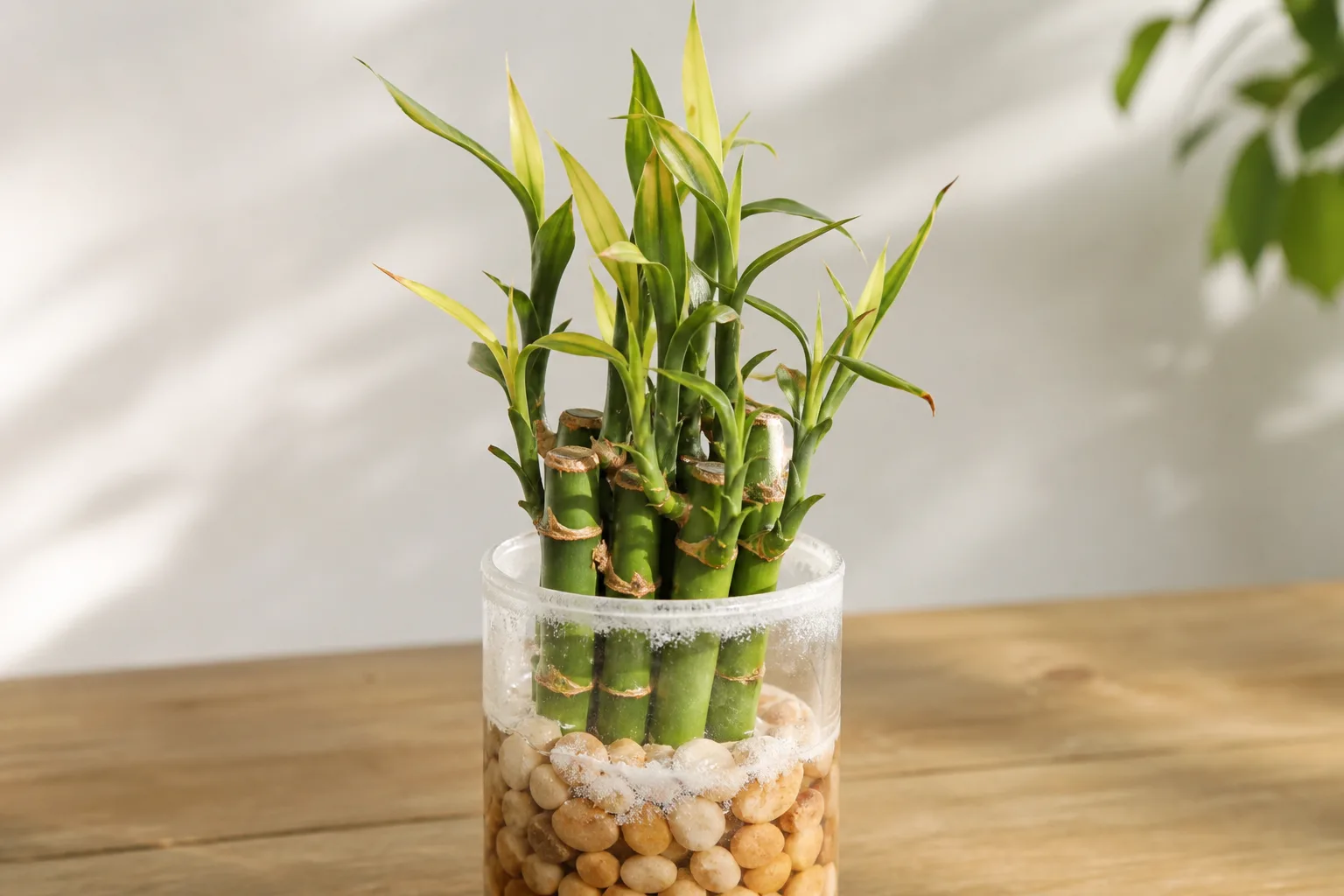
Nutrient Lockout on Lucky Bamboo: Causes, Checks & Fixes
This guide covers nutrient lockout on Lucky Bamboo. See also the general Nutrient Lockout guide, watering, and light pages for this plant.
Nutrient Lockout on Lucky Bamboo: Causes, Checks & Fixes
Quick answer
On Lucky Bamboo (Dracaena sanderiana), “nutrient lockout” in home care usually means soluble salts or fluoride are blocking uptake-not classic hydroponic pH lockout and not a simple nitrogen shortage. The telltale story is fed but failing: you keep adding fertilizer or topping up vase water, yet new leaves stay pale and narrow with brown tips while white mineral crust coats pebbles or the pot rim.
First step: fully dump and refresh vase water-or leach soil with filtered or distilled water-then stop all fertilizer for four weeks. Use filtered or distilled water before any dilute feeding resumes.
This page owns the uptake-block triage when feeding fails despite visible salts or crust. For mineral crust detail, see salt buildup; for acute post-feed injury, fertilizer burn; for tip burn without crust on tap water, brown tips. Baseline vase changes and water chemistry live in the watering guide.
What nutrient lockout looks like on Lucky Bamboo
Water culture signs
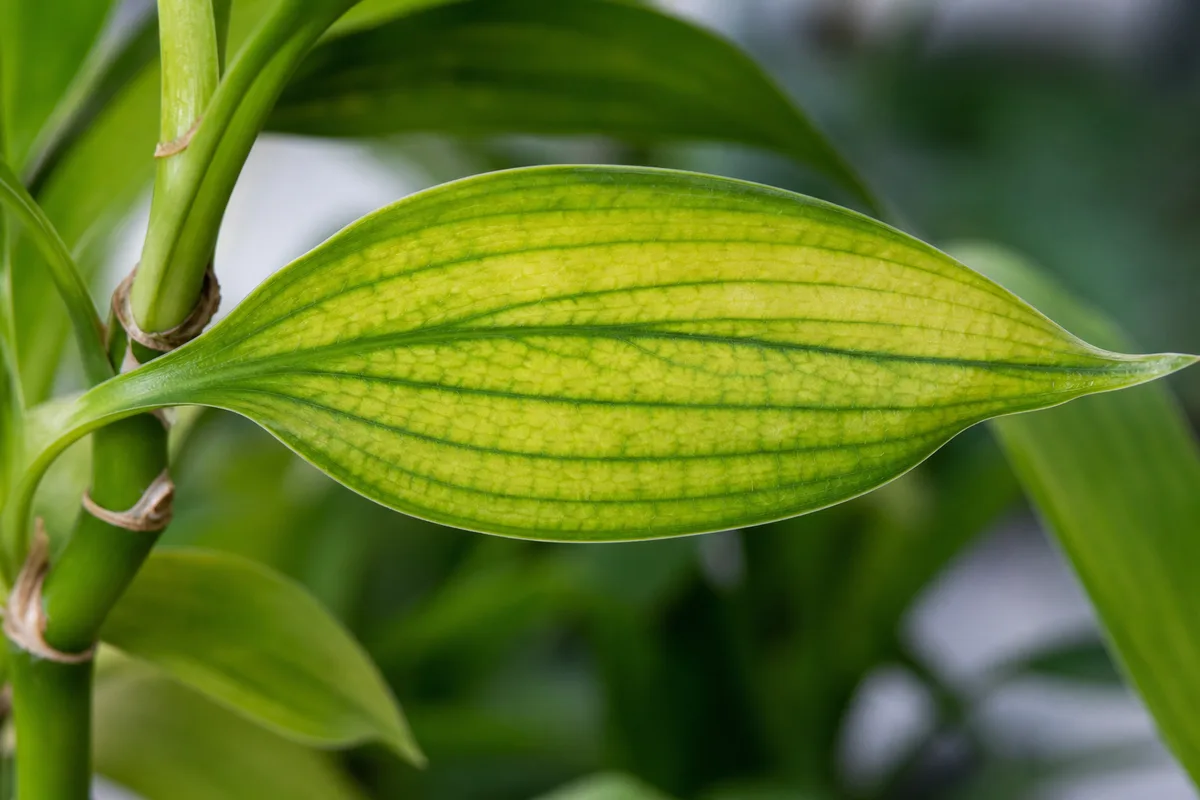
Nutrient Lockout symptoms on Lucky Bamboo - compare with healthy tissue on the same plant.
In decorative vases, lockout often shows as pale, narrow new leaves while older blades carry brown tips. White or gray mineral film coats pebbles, the glass above the water line, and sometimes cane nodes. Vase water may look clear yet feel “heavy” from months of top-ups without full changes. The arrangement looks like you feed faithfully-but growth stalls anyway.
Soil culture signs
In pots, symmetric tip burn pairs with small new growth and a white salt ring on the rim or soil surface. Mix can feel damp while leaves act thirsty-roots sit in a salty root zone even when water is present. Saucers that hold runoff recycle salts back into the mix.
Lockout vs. root rot vs. low light
Lockout keeps firm roots and stems without sour odor. Root rot brings cloudy water, mushy brown roots, and soft stems. Low light produces uniform pale stretch without crust or a fertilizer history. Judge recovery on new leaf tips after flush, not old burned margins-they stay brown permanently.
Why Lucky Bamboo gets nutrient lockout
No soil buffer in vase culture
Water-culture lucky bamboo has no potting mix to dilute or hold nutrients. Every fertilizer drop and tap-water mineral stays in a small closed volume. Ask Extension notes that Dracaena species in standing water need clear, chemical-free water and light feeding-excess accumulates fast when water is only topped off.
Evaporation and top-up salt concentration
As vase water evaporates, minerals concentrate while you top up with fresh water. Salts never leave until a full weekly change-Clemson HGIC’s recommended vase routine. Monthly fertilizer added to the same unreplaced water quickly exceeds what slow-growing D. sanderiana tolerates.
Fluoride plus fertilizer stacking
Dracaena sanderiana is sensitive to fluoride and salt in municipal tap water. Fluoride is an accumulative poison in foliage-it moves in the transpiration stream and concentrates at leaf margins, which is why narrow Dracaena blades show tip injury first. Combined fluoride from tap water plus fertilizer salts produces the classic fed-but-failing display. MSU Extension links city-water fluoride to tip burn on sensitive indoor plants including dracaenas.
Low light slowing salt use relative to accumulation
Dim corners slow metabolism, so salts accumulate faster relative to growth. Lockout appears sooner on stagnant vase plants away from windows than on bright specimens that use water and minerals steadily.
Soil lockout pathways
Potted plants lock out when fertilizer is applied too often, saucers recycle salty runoff, or hard tap water builds high soluble salts in container media. Missouri Botanical Garden describes D. sanderiana in evenly moist soil-but that assumes reasonable salt management, not chronic over-feeding without leaching.
How to confirm the cause
Work through this checklist in order:
- Crust check - White film on pebbles, vase walls, or soil rim supports salt-linked lockout.
- Fertilizer history - Frequent drops into the same vase water strongly implicate salts blocking uptake.
- Water source - Chronic tip burn on filtered-water-only plants suggests past buildup; on tap water alone, route to brown tips if crust is minimal.
- Root firmness - Firm pale roots fit lockout; mushy roots mean root rot, not salts alone.
- Response test - Full water change plus two weeks without fertilizer should stop tip worsening if lockout is primary.
- Soil leach test - Water heavily until roughly twice the pot’s volume drains clear; improvement within two weeks supports salt flush.
Lookalike comparison table
| Pattern | Likely cause | Where to go next |
|---|---|---|
| Pale new growth + white pebble crust + regular feeding | Nutrient lockout / salt uptake block | Stay on this page-flush and pause feed |
| White crust, tip burn, tap water, little fertilizer history | Salt buildup from water minerals | Salt buildup |
| Tip necrosis within days of one heavy feed | Acute fertilizer burn | Fertilizer burn |
| Brown tips, no crust, tap water only | Fluoride or chlorine injury | Brown tips |
| Cloudy water, mushy roots, sour smell | Root rot | Root rot |
| Uniform pale stretch, no crust, dim room | Low light | Not enough light |
| Even yellowing, zero feed for years in plain water | Possible true deficiency | Flush first, then see fertilizer guide |
When to route to sibling guides
- Crust dominates, feeding history light → salt buildup for mineral removal detail.
- Yellowing right after a heavy dose → fertilizer burn before another flush cycle.
- Tips only, no crust, municipal tap → brown tips-water quality may be the whole problem.
- Stems soft at waterline → root rot even if salts are also present.
First fix for Lucky Bamboo
Fully replace vase water and rinse pebbles, or leach soil with filtered water, and pause all fertilizer for four weeks.
Mild cases (early tip burn, light crust)
Switch to filtered or distilled water and perform one full weekly vase change without adding fertilizer. Many mild cases stabilize when tap fluoride and top-up concentration stop-no scrub needed yet. If tips stop worsening in two weeks, you may not need the full four-week feed pause.
Moderate cases (pale new growth, visible crust, regular feeding)
Discard all vase water, scrub the container, rinse pebbles until white residue is gone, rinse roots gently, and refill with filtered water covering roots and one inch of stem per Clemson HGIC. For soil, run filtered water slowly until about twice the pot volume drains freely over one hour; empty saucers after each pass. Hold fertilizer four full weeks.
Severe cases (most leaves tip-burned, stunted new growth, crust returns quickly)
Repeat the moderate flush, then repot soil-grown plants into fresh mix if a second leach within six weeks fails to produce clean new tips. For vases, consider moving to soil culture-Ask Extension notes soil is less difficult to maintain long term when weekly water changes are hard to sustain. Do not add calmag, iron, or extra nitrogen to “green up”-that deepens lockout and overlaps fertilizer burn.
Step-by-step recovery
- Stop all fertilizer immediately and note the date.
- Fully refresh vase water or leach soil as described above.
- Wipe mineral crust from vase walls and pebbles.
- Trim only fully dead brown tips if they snag-leave live green tissue.
- Place in bright indirect light to support steady metabolism without forcing weak growth.
- After four stable weeks, resume feeding at quarter-strength balanced liquid every other month in water culture-matching the fertilizer guide-or monthly half-rate in soil during warm active months only.
- Monitor new leaves-clean emergence means lockout cleared; renewed tip burn means flush again and reduce feeding further.
Align every feed with a fresh weekly water change in vases-never mid-week into topped-up water.
Recovery timeline
Salt flush effects often show within two to three weeks as new tips stay green longer. Old burned tips remain brown permanently. Full normal leaf width may take four to eight weeks after lockout clears.
Fluoride injury improves slowly after switching water-expect gradual tip stability, not overnight greening of old tissue.
Worsening signs: Tips keep burning after two full flushes, stems soften at the waterline, or yellowing climbs canes-escalate to root rot protocol rather than a third fertilizer-free month alone.
Causes to rule out
- Root rot - Cloudy water, mushy roots, stem softness; flushing salts will not help.
- Underwatering in soil - Light pot, dry top several inches; no salt crust.
- Low light chlorosis - Pale stretch without mineral crust or fertilizer history.
- Cold stress - Temperatures below 65°F (18°C) yellow leaves more uniformly; see cold damage.
- True deficiency - Rare in water culture with zero feeding for many years; even yellowing without crust-use dilute feed only after flush confirms uptake works.
What not to do
Do not double fertilizer to green up a locked-out plant-that is how “fed but failing” starts. Do not top up vase water for months without full changes. Avoid hard tap water during recovery. Do not repot into fresh mix and immediately feed heavily. Do not pour calmag or extra nitrogen into vase water when tips burn; route to fertilizer burn if a recent heavy dose caused the damage.
How to prevent nutrient lockout next time
Change vase water weekly with low-fluoride water per the watering guide. Fertilize water culture lightly and rarely-quarter-strength every other month during warm active growth, added only at the weekly change.
For soil, feed at half label rate in spring and summer when the top inch dries between waterings and growth is active. Flush pots every two to three months by deep watering until drain runs clear-leaching reduces soluble salt buildup.
Decorative vases with evaporation lines are salt alarms-scrub and refresh before tips burn. Transition to soil if vase salt management is difficult; drainage and filtered water buffer extremes better than a closed pebble vase long term.
When to worry
Escalate if stems soften, roots turn slimy, or yellowing climbs canes after flushing-rot may overlap lockout. Repot soil plants when crust returns within two weeks of a thorough leach.
Lucky bamboo is toxic to cats and dogs. Rinse fertilizer spills and discarded flush water away from pets. Contact your veterinarian or the ASPCA Animal Poison Control Center if a pet chews stems or drinks vase water-do not wait for symptoms to worsen.
Related Lucky Bamboo guides
- Lucky bamboo overview - water vs. soil culture context
- Watering guide - weekly full changes and filtered-water protocol
- Fertilizer guide - quarter-strength vase schedule and when to skip feed
- Salt buildup - mineral crust accumulation detail
- Fertilizer burn - acute post-feed soluble salt injury
- Brown tips - fluoride-only tip burn without crust
- Root rot - mushy roots and cloudy vase water
- Yellow leaves - broader yellowing patterns
Conclusion
Nutrient lockout on Lucky Bamboo is usually salt and fluoride blocking uptake in water culture or salty soil-not a call for more fertilizer on pale leaves. Confirm the fed-but-failing pattern, flush the medium, pause feeding four weeks, use filtered water, and resume dilute fertilizer only after new leaves stay clean. Route crust-light tap-water cases to brown tips; route post-feed shock to fertilizer burn-this page owns the overlap when feeding keeps failing despite visible salts.