How to Propagate Lucky Bamboo: Best Method & Aftercare
How to Propagate Lucky Bamboo: Best Method & Aftercare
How to Propagate Lucky Bamboo: Best Method & Aftercare
Lucky bamboo propagation is one of the simpler houseplant projects once you understand what you are actually growing. Lucky bamboo is not bamboo at all - it is Dracaena sanderiana, a tropical understory shrub from western Africa with upright green canes and distinct nodes - raised rings along each stem where leaves and roots emerge. The only reliable propagation method for this species is nodal stem cuttings rooted in clean water (with an optional move to soil later). There are no offsets, divisions, or rhizomes to separate; every successful new plant starts from a cane segment that includes at least one living node.
Clemson HGIC outlines the standard method: cut a shoot of new growth from the main stem, remove the lowest leaves, and place the cutting in water. New roots usually form in two to three weeks. NC State Extension lists stem cutting as the recommended propagation strategy for D. sanderiana. This guide walks through node identification, cut placement, water type, rooting timeline, braided-arrangement cautions, soil transition, and the failure signs that send most cuttings to the compost bin.
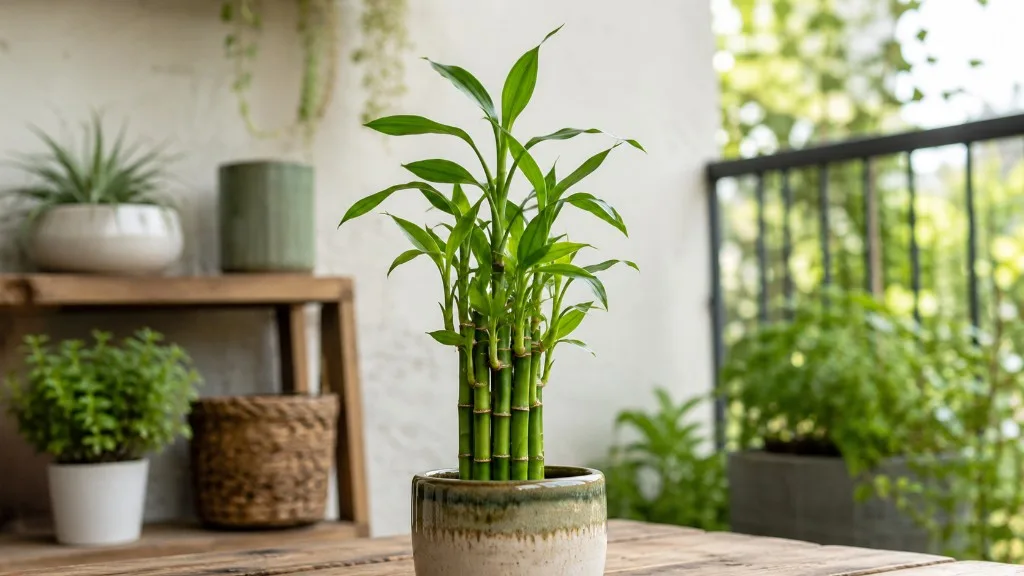
On thin store-bought canes, the node looks like a slightly wider brownish ring where a leaf sheath wraps the stem - roots emerge from that band, never from smooth green cane between rings. If you cannot spot the ring yet, run a fingertip along the stem: the node is the slight bump where a leaf was attached or where a sheath still wraps the cane.
What Makes Lucky Bamboo Easy to Propagate (Nodal Stem Biology)
Lucky bamboo roots from nodal tissue, not from random sections of bare cane. Each node is a band or slight swelling encircling the stem - the same ring you see where a leaf sheath wraps the cane. Adventitious roots emerge from cells at or just below that ring when the node sits in moist air or clean water. A cutting with leaves but no node may stay green for weeks and never produce roots. A node submerged without leaves above the waterline roots reliably when the parent was healthy and the water is chlorine-free.
The species is not aquatic. In habitat it grows in rain-forest soil under filtered light. Water propagation works because nodal tissue can initiate roots in a humid environment - the same physiology that lets you root corn plant and dragon tree cuttings. That also explains two common failures: submerging leaf sheaths below the waterline (they rot and foul the vessel) and using fluoridated tap water (Dracaena species accumulate fluoride and stall or yellow new growth). Ask Extension notes that Dracaena sanderiana is sensitive to fluoride and chlorine in tap water and recommends rainwater or distilled water for both water culture and soil growing.
Most store-bought lucky bamboo arrives as a cluster of canes in a vase - sometimes braided, spiraled, or wired together. Each cane is still an individual stem capable of rooting if you cut below a node on healthy tissue. The biology is straightforward; the practical challenge is choosing which cane to sacrifice without destabilizing a decorative arrangement.
Best Timing for Lucky Bamboo Propagation
Propagate during active growth - roughly spring through early fall indoors - when room temperatures sit in the comfortable range and the parent pushes new strap leaves at shoot tips. Clemson HGIC dracaena guidance recommends propagating dracaenas from tip or stem cuttings in spring or late summer, the same window when wounds heal fastest and roots form quickly.
Timing is not only about the calendar. Avoid taking cuttings when:
- The parent stem is yellow, soft, or smells sour at the base - cuttings inherit weakness
- You just received the plant from shipping - wait two to three weeks for it to stabilize
- Vase water is cloudy or foul - change water and rinse roots before cutting into a dirty system
- The room is below about 18°C (65°F) and growth has stalled - roots form slowly in cool air
A firm green cane with healthy leaves at the top is ready material. Yellowing that affects the whole arrangement usually means light, fluoride, or fertilizer stress on the parent - fix those conditions before propagating, or take cuttings only from the one stem that stayed green.
What You Need Before You Start
Gather supplies before you cut so the open wound spends minimal time exposed:
- Sharp blade or pruning shears - sterilized with rubbing alcohol or a 10% bleach rinse
- Clear glass or jar - tall enough to support the cutting upright
- Pebbles, marbles, or glass chips - washed, to anchor the stem (optional but helpful)
- Distilled, reverse-osmosis, or rainwater - not straight tap if your supply is fluoridated
- Bright indirect light location - east or north window, or several feet back from south glass
- Small saucer or tray - to catch drips during weekly water changes
You do not need rooting hormone for lucky bamboo; nodal cuttings root readily without it. Gloves are optional for handling cut stems but worth using if you have sensitive skin - lucky bamboo can cause skin irritation in humans, and sap exposure is more likely during propagation than during casual display.
Step-by-Step: Propagate Lucky Bamboo from a Stem Cutting
Follow these steps in order. Each one addresses a failure point that kills cuttings before roots appear.
Choose a Healthy Cane and Identify the Node
Select a firm green cane with at least one visible node between the cut site and the leafy shoot tip. The node looks like a brownish ring slightly wider than the rest of the stem. Leaves emerge from sheaths attached just above each ring. If you are shortening a tall cane, the lowest node on your cutting segment must sit where you plan to submerge it - roots will not sprout from bare cane between nodes.
On multi-stem vases, choose one cane you can remove or shorten without toppling the arrangement. Single-stem specimens are simplest for a first propagation.
Cut Below the Node and Remove Submerged Leaves
Sterilize your blade, then cut just below a node - about one-eighth to one-quarter inch (3–6 mm) beneath the ring. For a standalone segment, a 4–6 inch (10–15 cm) piece with one or two nodes gives enough stem to anchor in the vase.
Strip every leaf and leaf sheath that would sit below the waterline. Submerged foliage decays within days, clouds the water, and invites bacterial rot up the stem. Only the node and bare green cane should contact the water; all remaining leaves stay dry above the surface.
Set Up the Water Rooting Vase (Distilled / RO Water)
Wash the container and pebbles. Add a shallow bed of pebbles if you want the cutting to stand upright without tipping. Pour 1–2 inches (2.5–5 cm) of room-temperature distilled, RO, or rainwater into the jar - enough to cover the node fully without drowning leaf tissue. Fluoride does not evaporate by letting tap water sit out, and chloramine persists in many municipal supplies - for propagation, where the cutting has no soil buffer, clean water is not optional if your tap supply is treated.
Set the cutting in the vase so the node is submerged and the lowest dry leaf sits clearly above the water. If you root multiple cuttings in one jar, space stems so leaves do not overlap into the water and no two submerged nodes touch - crowded foliage traps humidity against the waterline and speeds bacterial bloom. One cutting per small jar is simplest for beginners; use a wider vessel with at least 2 inches (5 cm) between stems when rooting several canes from one parent.
Light and Weekly Water Changes While Roots Form
Place the jar in bright, indirect light - the same exposure you would give a mature plant. Direct sun on a clear jar can heat the water and cook nodal tissue.
Change the water completely every week. Pour out all old water, rinse the container, and refill with fresh clean water at room temperature. Do not top up indefinitely without a full change - stale water harbors bacteria that attack submerged stems. Between changes, add water only to replace evaporation, using the same quality source.
Resist pulling the cutting out daily to check for roots. Disturbance slows progress. You will see roots through clear glass when they are ready.
How Long Until Roots Appear (2–3 Weeks Typical)
Under warm indoor conditions with good light and clean water, lucky bamboo cuttings usually show white or pale roots at the node within two to three weeks. Cool rooms, dim corners, or fluoridated water push the timeline toward four weeks or stall rooting entirely.
Visible roots 1–2 inches (2.5–5 cm) long mean the cutting can stay in water indefinitely, move to a decorative vase with pebbles, or transition to soil. New strap leaves at the shoot tip are a second confirmation that the cutting has energy to grow - roots and top growth together signal success.
If four weeks pass with no roots on a firm green cutting, re-check water quality and light. If the stem is yellow or soft at the submerged section, discard it and start from healthier parent material.
Aftercare: Keeping New Plants Healthy
Rooted cuttings are young plants with smaller reserves than established canes. They need stable conditions - not frequent moves, strong fertilizer, or direct sun.
When to Fertilize
Hold fertilizer until roots are clearly visible and at least an inch long. In water culture, feed at one-quarter the label rate of balanced liquid houseplant fertilizer every other month at most. Full-strength feeding on a freshly rooted cutting yellows stems quickly because there is no soil to buffer salts.
Moving Rooted Cuttings from Water to Soil
You can keep lucky bamboo in water for years, but soil often produces thicker roots and faster top growth over time. To transition:
- Rinse roots gently under tepid clean water.
- Plant in well-drained indoor potting mix - roughly 60% potting mix and 40% perlite - in a pot with drainage holes.
- Water until it runs from the bottom, then discard saucer runoff.
- Keep the mix consistently moist but not soggy for the first two weeks while water roots adapt to soil.
- Place in bright indirect light and hold fertilizer until new growth appears.
Expect temporary leaf yellowing or drop during the switch - roots must rebuild as soil roots. New green leaves within three to six weeks confirm the move worked. For mix details, watering rhythm, and pot sizing after transplant, see the lucky bamboo soil guide, watering guide, and repotting guide.
Water Culture vs. Soil After Rooting
Both outcomes are valid once roots are 1–2 inches long. Choose based on how you want to maintain the plant, not because one method is universally better.
| Factor | Stay in water | Move to soil |
|---|---|---|
| Maintenance | Weekly full water change; quarter-rate fertilizer every other month | Water when top inch dries; same dilute feeding schedule |
| Growth rate | Steady but often slower top growth long term | Usually faster cane elongation and thicker root mass |
| Fluoride exposure | Direct - no soil buffer; distilled/RO critical | Slight buffer from mix; still avoid fluoridated tap |
| Best for | Desk vases, gifts, low-footprint displays | Faster fill-in, larger specimens, mixed houseplant collections |
Permanent water culture works when you commit to weekly changes and clean water forever. Soil suits growers who already maintain other potted Dracaena and want less algae management in clear jars.
Propagating from Braided or Multi-Stalk Arrangements
Braided and wired store displays bind several canes together for aesthetics. You can still propagate from them, but the stakes are higher for the remaining arrangement.
Single-cane removal: If one stem in a three- or five-stalk vase turns yellow while others stay green, cut that cane at the base below the braid, root the healthy upper section if any green tissue remains, and discard the rotten base. Do not leave a dead cane in shared water - bacteria spread to neighbors.
Topping for propagation without unbraiding: Cut the leafy shoot tip from one cane above a node, root the top section in a separate jar, and leave the parent cane in the braid. The parent will sprout new shoots from nodes below the cut over several weeks in warm bright light. This preserves the braid shape better than removing an entire cane.
When removal destabilizes the display: Pulling a full cane from a tight three-stalk braid often loosens the weave and tips the vase. If the braid wobbles after removal, re-anchor remaining canes with fresh pebbles or accept a full rearrangement rather than forcing a wobbly gift display to stand. Topping one cane is almost always lower risk than extracting one stalk entirely.
Wired spirals: Cuts on trained stems produce straight new growth, not a recreated spiral. Propagate for new plants, not to duplicate nursery training at home.
Avoid propagating from canes that are mechanically bound so tightly that the wire cuts into tissue - open wounds rot before they root. Remove wire or ribbon first if you are taking a full cane out of a bundle.
Signs Propagation Is Failing (and What to Do)
| Symptom | Likely cause | Action |
|---|---|---|
| Mushy stem at waterline | Submerged leaves or dirty water | Discard cutting; strip leaves lower; fresh water |
| Yellow stem while roots absent | Weak parent or fluoride water | Switch to distilled/RO; start from greener cane |
| Cloudy, foul water | Bacterial bloom | Full water change; if stem softens, discard |
| Brown leaf tips on new cutting | Fluoride or chlorine | Replace water source immediately |
| Cutting shrivels, water stays clear | No node on segment | Re-cut from cane that includes a ring |
| Roots formed then blackened | Stale water or cold shock | Change water weekly; warm room |
Overwatering and poor water hygiene cause yellowing and stem rot on D. sanderiana - the same organisms attack vulnerable cuttings faster than established plants. When a cutting fails, diagnose the water and node setup before blaming bad luck.
For yellowing patterns on parent plants, see yellow leaves on lucky bamboo. For mushy base rot in shared vases, see root rot.
When Not to Propagate
Propagation is a backup plan, not a rescue for a dying arrangement. Do not propagate as your first move when:
- Every stem is yellowing at once - fix light and water quality first
- Active mealybugs, scale, or spider mites cover the parent - treat pests before multiplying the problem
- The cane is soft, hollow, or dark at the base - rot will continue in the cutting
- You just applied full-strength fertilizer to a stressed vase plant - wait until growth normalizes
Taking a cutting from a weak parent produces a weak cutting. Stabilize conditions, change to clean water for two weeks, and reassess which cane - if any - is firm enough to try.
Pet Safety Note During Propagation
Lucky bamboo remains toxic to cats and dogs during propagation. The ASPCA lists Dracaena spp. as toxic to both species, with saponins in leaves, stems, roots, and sap. Fresh cuts expose more sap, and trimmings left on a desk are easy targets for chewing pets.
Keep cuttings, pruned sections, and propagation jars out of reach. Wash hands after handling cut stems. If a pet ingests any part of the plant, contact your veterinarian and ASPCA Animal Poison Control at (888) 426-4435. For full toxicity details, see the lucky bamboo overview.
How We Wrote and Verified This Guide
This page was reviewed by the LeafyPixels Review Board against Clemson HGIC, NC State Extension, Missouri Botanical Garden, and Ask Extension propagation and water-quality guidance before publication. Factual claims in the body were validated with inline extension citations via claims-validator-v1; see the validatedClaims block at the end of this file for the audit trail.
Author: sai-ananth. Reviewer: LeafyPixels Review Board. Reviewed: 2026-06-15. We lead with nodal biology and distilled-water requirements because those two factors separate reliable lucky bamboo propagation from the failed cuttings most readers describe in forums.
Revision note (2026-06-17): Rendered on-page FAQs; replaced recap conclusion with four-week discard and braid-destabilization escalation; added water-vs-soil comparison table, multi-cutting jar spacing guidance, repotting internal link, and author bio link per E-E-A-T audit.
Related Lucky Bamboo Care Guides
- Lucky bamboo overview - identification, vase vs soil culture, fluoride sensitivity
- Watering lucky bamboo - weekly water changes and submersion depth
- Light for lucky bamboo - bright indirect placement for rooting and growth
- Soil and pots - mix recipe for transitioning rooted cuttings
- Fertilizer - quarter-strength feeding in water culture
- Pruning - topping canes to generate propagation material
- Repotting - when to upsize after soil transition
FAQs
Where exactly do I cut on a lucky bamboo cane?
Cut just below a node - the raised ring on the stem where leaves attach. Use a sterilized blade about one-eighth to one-quarter inch beneath the ring. The cutting must include at least one node that will sit submerged in water; roots emerge from nodal tissue, not from bare cane between rings.
Can I propagate braided lucky bamboo without ruining the arrangement?
Yes, in most cases. Topping one cane above a node and rooting the leafy section in a separate jar preserves the braid on the parent stem, which will sprout new shoots from lower nodes. Removing an entire cane from a tight braid can destabilize the display - prefer topping over full removal when possible.
How long until lucky bamboo cuttings root in water?
Expect visible roots in two to three weeks under warm indoor conditions with bright indirect light and clean water. Cool rooms, dim light, or fluoridated tap water can extend the timeline to four weeks or prevent rooting. Roots one to two inches long are ready for a permanent vase or soil transplant.
Can I use tap water to propagate lucky bamboo?
Only if your tap supply is low in fluoride and chlorine. Dracaena sanderiana is sensitive to both, and cuttings in water absorb chemicals directly with no soil buffer. Distilled, reverse-osmosis, or rainwater is the safer default. Letting tap water sit overnight removes some chlorine but not fluoride or chloramine.
When can I move a rooted lucky bamboo cutting to soil?
Move the cutting when roots are at least one to two inches long and the shoot tip looks firm and green. Plant in well-drained mix, water to moisten (not saturate), and keep bright indirect light. Hold fertilizer for two to three weeks until new growth confirms the roots have adapted. Expect minor leaf yellowing during the transition.
Conclusion
Four weeks with no roots on a firm green cutting means retry with distilled water and brighter light - not infinite patience. If the submerged section turns yellow or soft before roots appear, discard the cutting and take material from a healthier cane; weak parent tissue rarely recovers in water.
For braided displays, topping one cane preserves the weave; removing a full stalk from a tight three-stalk braid often tips the vase - re-anchor with fresh pebbles or accept rearrangement rather than nursing a wobbly gift plant. Once roots hit 1–2 inches, choose permanent water culture with weekly changes or soil for faster top growth, then tie ongoing care to the watering, light, and soil guides so the new plant does not inherit the fluoride mistakes that killed your first attempt.