How to Prune Lucky Bamboo: When, Where & What to Cut
How to Prune Lucky Bamboo: When, Where & What to Cut
How to Prune Lucky Bamboo: When, Where & What to Cut
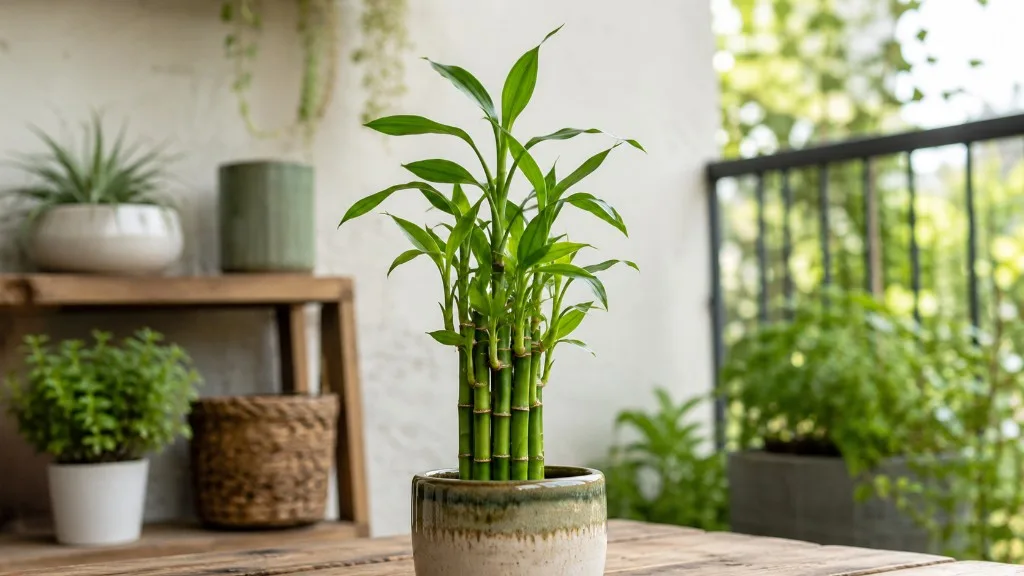
Lucky bamboo pruning on Dracaena sanderiana is stem and shoot maintenance - not shrub pruning at a soil line. Most specimens grow as upright green canes in water and pebbles or lightly moist soil, with narrow strap leaves clustered in shoots at the top. You shorten shoots to control height, remove yellow leaves at their sheaths, thin crowded stems, and root trimmed sections in clean water. NC State Extension notes lucky bamboo is not true bamboo but a tropical shrub from West Africa in the asparagus family (Asparagaceae); Clemson HGIC describes it as a dracaena that grows equally well in water or soil.
Arranged spirals and braided stems are nursery-trained shapes. Pruning keeps those forms compact and removes stems that yellow from fluoride, stale vase water, or too much direct sun - but new growth will not retrace a spiral on its own.
First action: remove only fully yellow or brown leaves - pull gently downward at the sheath where the leaf meets the cane; if the leaf resists, cut at that sheath base. Do not shorten canes or top shoots until you have inspected water quality, light, and stem firmness.
What Lucky Bamboo Pruning Actually Means
Unlike vines you pinch for fullness along the whole length, lucky bamboo branches from nodes - raised rings or slight swellings on the green cane where leaves and shoots emerge. Cutting through a cane above a node ends upward growth on that segment and redirects energy to buds near the wound. Growth does not appear from bare cane between nodes.
Three jobs get confused online:
- Cosmetic cleanup - yellow or brown leaves at sheaths; does not change architecture
- Shoot shortening - snip the leafy top cluster to reduce height while keeping the trained cane length
- Structural cane cuts - shorten the green stem itself, usually to force side shoots or match stem heights in a multi-stem vase
Pruning cannot fix chronic fluoride burn, algae-filled vase water, or a rotting cane - it only removes tissue and redirects growth once conditions improve.
How Lucky Bamboo Grows - Nodes, Shoots, and Spirals
Each cane is a fleshy green stem resembling bamboo. NC State Extension describes bright green strappy leaves widely spaced along upright stems, often trained into braids or spirals at the nursery. Indoors, most vase specimens show foliage only at the top - a cluster of leaves on one or more short shoots.
Nodes look like brownish rings encircling the cane. New leaves and side shoots emerge from these points. Clemson HGIC states that when dracaena stems become too long and bare, cutting them at the desired height produces new leaves - the same physiology applies to lucky bamboo canes topped above a node.
Spiral and braided forms are created by rotating stems toward light over months. A straight heading cut produces straight regrowth. Expect a fuller top, not a recreated spiral.
What to Check Before You Cut
Run through this inspection before any structural cut:
- Water clarity and smell - cloudy, foul, or algae-thick water means change water and rinse pebbles before pruning into that environment
- Stem firmness - soft, hollow, or dark mushy tissue signals rot; structural cuts on rotted canes fail
- Yellow pattern - all leaves on one stem vs scattered tips across the arrangement points to different causes (rot vs fluoride or light)
- Nodes below your planned cut - leave at least one healthy node on the parent cane if you want regrowth below the cut
- Pet access - ASPCA lists dracaena species as toxic to cats and dogs; secure trimmings and wash hands after handling cut stems
For vase-grown plants, Clemson HGIC recommends changing water weekly and keeping roots plus about one inch of stem submerged - not the foliage.
The First Cut to Make
Start with yellow-leaf removal only. Grip a fully yellow strap at the base and pull downward. If it releases cleanly at the sheath without tearing green tissue, discard it. If it resists, use sterilized scissors to cut where the leaf sheath wraps the cane.
This single step clarifies whether the stem itself is failing or whether a few old leaves senesced while the cane stays firm and green. Only after cleanup should you decide on shoot shortening or cane topping.
When to Prune Lucky Bamboo
Anytime: Fully yellow or brown leaves; mushy shoot tips; algae-heavy water after you have cleaned the vase.
Late spring through summer: Structural height cuts, thinning dense clumps, and rooting removed tops. Clemson HGIC recommends propagating dracaenas from tip or stem cuttings in spring or late summer - the same window when cuts heal fastest indoors.
After a fresh water change: Inspect weekly; trim yellow tissue before decay spreads through shared vase water.
When Not to Prune
Avoid heavy structural cuts when:
- Vase water is dirty, warm, or smells sour - fix water first
- Room temperature is below about 18°C (65°F) and growth has stalled - Clemson HGIC recommends 60–70°F day temperatures for dracaenas
- Every stem in the arrangement is yellowing at once - that pattern usually means light, fluoride, or fertilizer stress, not a pruning deficit
- You just repotted a soil-grown specimen - wait two to three weeks unless rot is active
Cosmetic removal of fully dead leaves is still fine during stress.
Where to Cut
Shortening a Top Shoot
When one leafy shoot towers above a matched set, snip the shoot stem just above a node on the shoot itself - typically 2–5 cm above where the shoot joins the main cane. Use a straight, clean cut with sharp scissors. New leaves usually emerge from the node just below your cut within a few weeks in warm Lucky Bamboo light guide.
This method preserves spiral-trained cane length while reducing top heaviness.
Shortening a Whole Cane
To reduce total stem height - for example when one cane in a five-stem vase outgrows the others - cut the main green cane straight across at the target height, 5–10 mm above a visible node. Do not crush or splinter the cane end; a flat clean cut heals better in water culture.
Side shoots or a new top cluster often appear from one to two nodes below the cut during active growth. Cutting between nodes without leaving a node below the wound produces a bare stub that may not sprout.
Yellow and Dead Leaves
Remove only leaves that are fully yellow or brown. Cut or pull at the sheath base on the cane - never strip green leaves for tidiness. Green leaves still photosynthesize and protect the stem.
Brown tips on otherwise green leaves often signal fluoride in tap water. Clemson HGIC notes dracaenas are sensitive to fluoride, with yellowing tips or scorched margins as symptoms. Trim only the dry brown tissue if you must, but switch to filtered or distilled water or tips will return on new growth.
Removing a Rotted Cane
When a cane turns yellow along the full length, feels soft, and smells sour, the main stem is failing. Cut at the pebble line or soil surface and discard the entire soft segment. Salvage any firm green side shoots by cutting them with a healthy node and rooting in fresh water.
Do not leave a rotting cane in a shared vase - bacteria spread through the water to healthy roots.
Step-by-Step Vase Pruning
- Empty stale water and rinse pebbles until they no longer smell. Inspect each cane - firm green stem, white or cream roots without black mush.
- Sterilize scissors or a craft knife with 70% isopropyl alcohol.
- Remove yellow leaves one stem at a time using the sheath method above.
- Shorten tall shoots or canes - one structural cut per stem per session if the arrangement is dense.
- Reassemble with clean filtered or distilled water covering roots and about 2–5 cm of stem - never submerge foliage.
- Change water in seven to ten days; watch for new leaf buds in two to four weeks at 18–35°C (65–95°F) in bright indirect light.
For soil-grown lucky bamboo, follow the same cut placement; keep mix lightly moist after cuts, not waterlogged. NC State Extension notes overwatering on Lucky Bamboo causes yellowing and stem rot in dracaenas.
How Much You Can Safely Remove
Yellow or dead leaves: Remove all that are fully discolored - this does not count toward a structural limit.
Shoot or cane shortening: Limit to about one-third of the visible green cane height per stem in one session. If you need a much shorter arrangement, stagger cuts across several weeks rather than topping every cane the same day.
Whole cane removal: Removing one rotted stem from a multi-stem vase is appropriate and protective - that is not the same as aggressive shaping.
Pruning cannot restore a stem that has fully yellowed and softened along its length. Discard it and root a healthy cutting instead.
Multi-Stem Arrangements and Staggered Cuts
Gift arrangements often hold two, three, five, or eight canes bound with wire or grown from one root mass. When one stem outgrows the set:
- Shorten only the tall cane first; wait two to three weeks before cutting a second stem
- Match cut heights gradually rather than topping all canes to one line in a single session
- After removing a dead stem, a gap in the display is normal - root a trimmed top in the same vase once roots form, or add a rooted cutting
Dense clumps in one vase share water chemistry. One rotting stem can contaminate the rest - early removal matters more than symmetrical height.
Tools, Sterilization, and Pet Safety
Use sharp scissors, a craft knife, or small bypass pruners. Dull blades crush fleshy cane tissue and brown quickly in water culture. Wipe blades with 70% isopropyl alcohol between stems, especially in shared vases where cut surfaces leak sugars that feed bacteria.
NC State Extension classifies Dracaena sanderiana as low-severity poison to humans but toxic to cats and dogs, with vomiting and depression reported. ASPCA lists dracaena species as toxic to pets. Wash hands after pruning, dispose of trimmings in closed trash, and keep vases off surfaces pets can reach.
Propagation from Trimmings
Healthy topped sections and side shoots root easily - lucky bamboo’s primary propagation method is stem cuttings. NC State Extension lists stem cutting as the recommended propagation strategy for Lucky Bamboo overview.
Take a section 10–15 cm long with at least one node. Remove lower leaves so one node sits submerged. Place in clean filtered water in bright indirect light. Refresh water weekly. Roots typically form in two to four weeks; transfer to a pebble vase or moist soil when roots are several centimeters long.
Clemson HGIC notes dracaenas propagate readily from tip or stem cuttings in spring or late summer - the fastest window for rooting lucky bamboo trimmings indoors.
Aftercare and Recovery
Immediately after pruning: Use fresh filtered or distilled water; keep foliage above the water line; return to bright indirect light - not direct sun on fresh cuts.
Water culture: Change water every seven to ten days. Clemson HGIC recommends weekly water changes for vase-grown lucky bamboo. Foul water after pruning invites rot at cut ends.
Soil culture: Water when the top inch of mix feels dry; ensure the pot drains freely.
Light: Bright indirect light speeds bud break. Low light slows regrowth for months without killing the cane.
Do not fertilize heavily the week after structural cuts. If you feed vase specimens, Clemson HGIC suggests liquid houseplant fertilizer at one-quarter strength every other month - not full strength on freshly cut stems.
Recovery Timeline
- Yellow leaf removal - immediate visual improvement; no growth delay
- Shoot shortening - new leaf buds at the cut node in two to four weeks during active growth
- Cane topping - side shoots or a new top cluster in three to six weeks in warm bright conditions
- Rooting a cutting - roots in two to four weeks; establishment in the arrangement another few weeks
Off-season cuts in cool rooms or dim offices may show no visible response until spring even when the cane remains healthy.
Signs pruning worked: Firm green cane below the cut, small green buds swelling at nodes, new strap leaves unfurling, water staying clear between changes.
Signs pruning failed or was mistimed: Cut end turning black and soft, entire cane yellowing downward from the wound, no bud swell after eight weeks in warm bright light, or repeated yellowing on every new leaf - usually water chemistry or light, not cut placement.
Mistakes to Avoid
- Pruning into dirty vase water - sugars from cut surfaces feed bacteria; always start with fresh water
- Using fluoridated tap water - causes repeat yellowing; switch to filtered or distilled water
- Direct sun on freshly cut stems - scorches tissue and browns cut ends
- Removing all green leaves from a live cane - leaves cannot regrow along old bare sections between nodes
- Cutting between nodes with no node below - produces a bare stub that may never sprout
- Topping every stem the same day - shocks the arrangement and slows recovery in shared water
- Expecting spiral regrowth - new shoots grow straight; spirals require retraining, not pruning alone
- Leaving rotted canes in the vase - spreads infection to healthy stems
Conclusion
Lucky bamboo pruning shortens shoots or canes above nodes, removes yellow leaves at sheaths, and keeps vase water clean - treat it as dracaena stem maintenance in water culture, not lawn mowing. Start with dead-leaf cleanup, fix water and light before structural cuts, limit each stem to about one-third per session, and root healthy trimmings rather than discarding them.
When to use this page vs other Lucky Bamboo guides
- Lucky Bamboo overview - Start here for whole-plant context before deep-diving this topic.
- Lucky Bamboo problems hub - Jump to symptom-specific fix guides when this care topic does not resolve the issue.
- Plant Leaning on Lucky Bamboo - Escalate here when pruning adjustments are not enough.
- Slow Growth on Lucky Bamboo - Escalate here when pruning adjustments are not enough.
- Brown Tips on Lucky Bamboo - Escalate here when pruning adjustments are not enough.