Slow Growth on Lucky Bamboo: Causes, Checks & Fixes
Quick answer
Lucky bamboo is naturally slow-growing; a true stall usually means too little light or nutrient-poor vase water. First step: move to bright indirect light and begin quarter-strength feeding during warm months after fixing water quality.
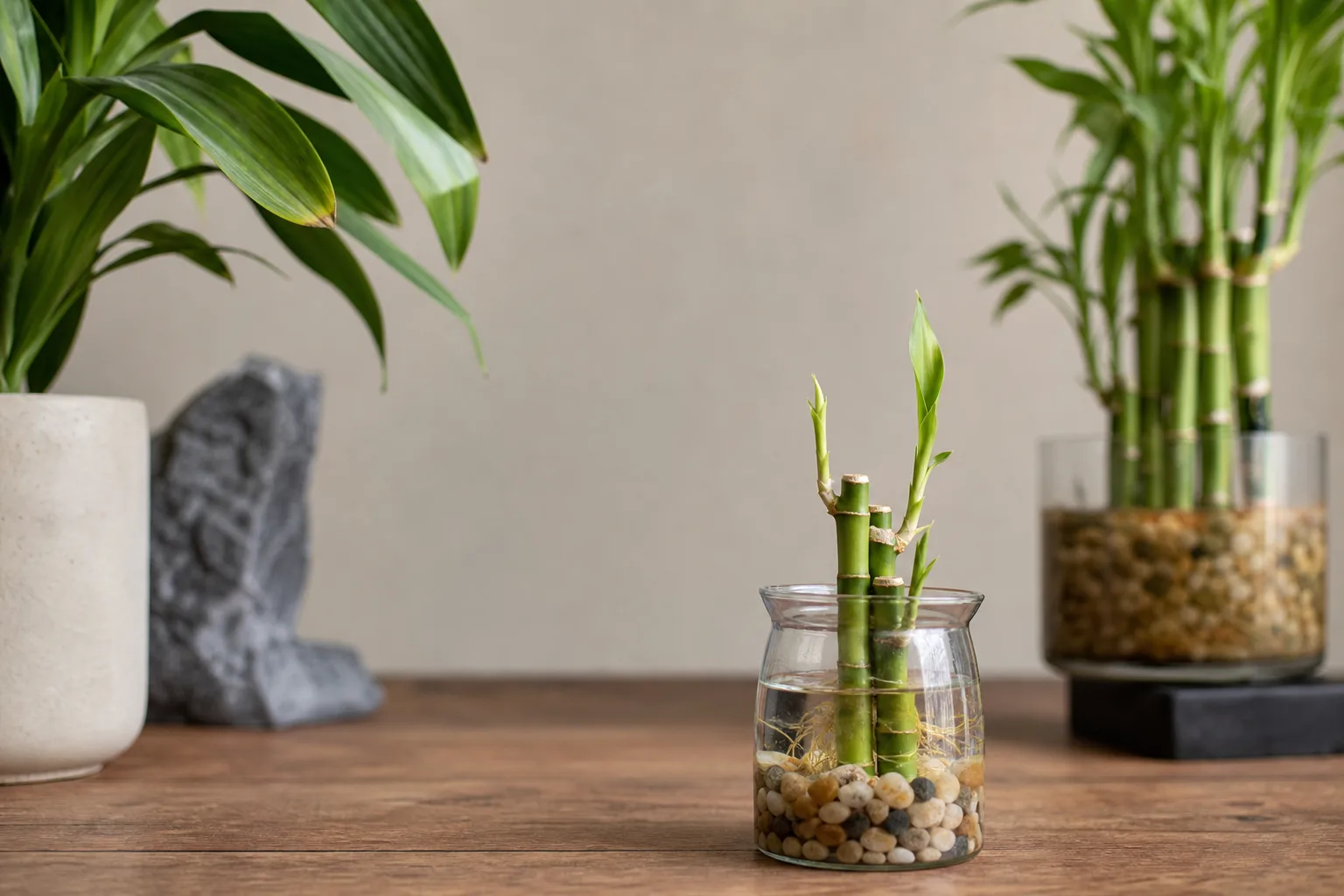
Slow Growth on Lucky Bamboo: Causes, Checks & Fixes
This guide covers slow growth on Lucky Bamboo. See also the general Slow Growth guide, watering, and light pages for this plant.
Slow Growth on Lucky Bamboo: Causes, Checks & Fixes
Quick answer
Lucky bamboo (Dracaena sanderiana) is slow by design - not a fast climber like true bamboo. This page is for owners asking whether their plant’s pace is normal or whether growth has truly stalled. Compare your arrangement to its own recent history, not to pothos or supermarket “bamboo” labels.
Read a different guide when the symptom fits better:
| Your main concern | Start here |
|---|---|
| Smaller, paler new leaves with long gaps between nodes | Stunted growth |
| No leaf buds at any node for six to eight warm weeks | No new growth |
| Canes stretching long and thin toward a window | Leggy growth or Not enough light |
| Pace feels fine but you want faster vigor long term | This page, then Watering and Fertilizer |
When growth has stalled completely, the usual culprits are too little light or nutrient-poor, fluoride-heavy vase water. First fix: move to bright indirect light and establish filtered water with very dilute feeding in warm months - not full-strength fertilizer for speed.
For baseline care context, see the lucky bamboo overview.
What slow growth looks like on Lucky Bamboo
Normal slowness
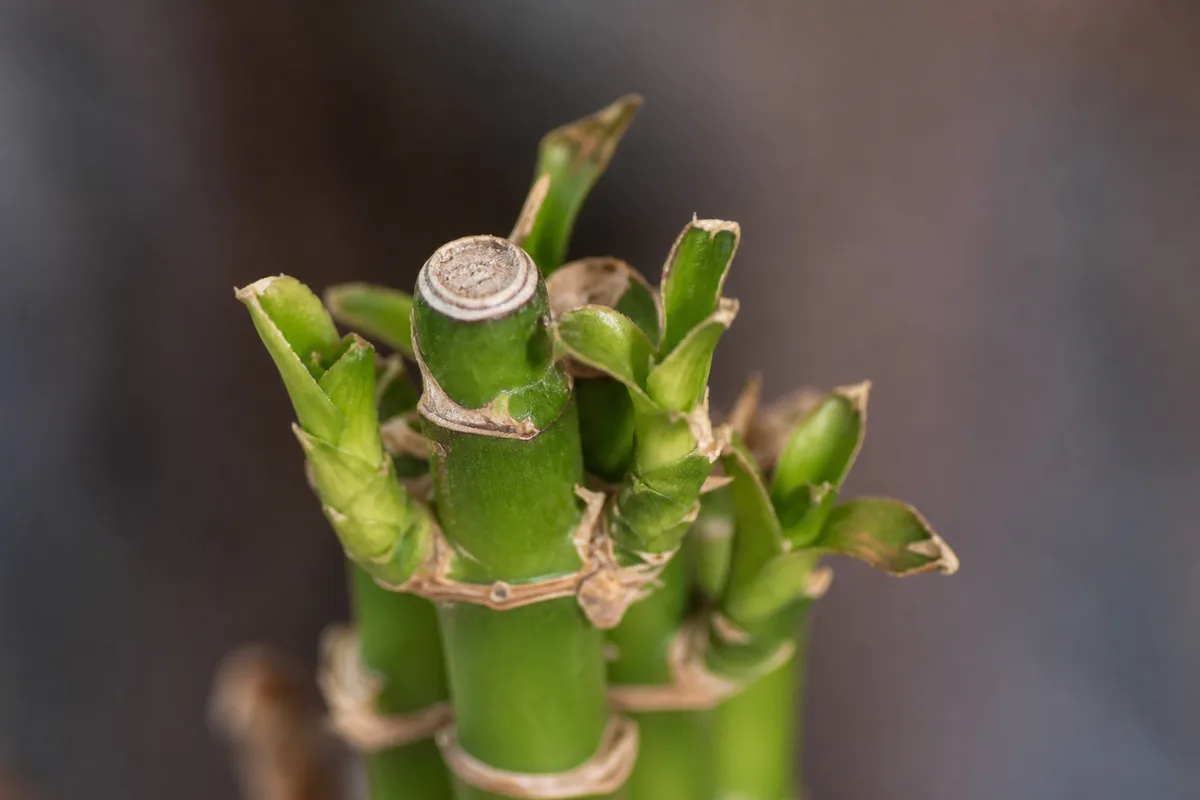
Slow Growth symptoms on Lucky Bamboo - compare with healthy tissue on the same plant.
Firm green canes, occasional new leaves at nodes, and roots slowly filling pebbles or soil over seasons describe healthy slow growth. A three-cane braided vase on a stable desk may add only one or two small leaves per cane in a growing season and still be fine. Missouri Botanical Garden describes mature plants as slow-growing herbaceous perennials that reach up to about 5 feet tall over time - indoor increments are much smaller.
Problem stall
Problem slowness adds pale new leaves, no shoots for many months in warm weather, thin leaves spaced far apart, or canes that fail to thicken. In vase culture, roots may stay stubby in unchanged cloudy water while old leaves look green - the plant is maintaining tissue, not building new biomass.
Leggy stretch with slow height gain
Long internodes with small leaves mean the plant is reaching for photons while adding little cane mass. That overlap sits between slow growth and insufficient light; use the leggy growth guide if stretch is your primary symptom.
A simple monthly check
Mark the highest node on the tallest cane with a small dot of tape. Measure from that mark to the tip every 30 days during spring and summer. Normal lucky bamboo may gain only a fraction of an inch per month indoors; zero change for three warm months after years of occasional leaves signals a stall worth fixing.
Why Lucky Bamboo grows slowly
Species biology sets the floor. Lucky bamboo is not true bamboo; it is a tropical Dracaena adapted to filtered understory light and modest nutrients. Braided and spiral gift forms also divert energy into maintaining multiple tied canes rather than adding height - a five-stem prosperity arrangement will not behave like a single straight cutting.
Low light is the top cultural limiter. NC State notes the species tolerates lower light with slower growth. Clemson recommends bright, indirect light in east- or north-facing rooms - deep interior shelves without plant-facing window light keep plants alive but static.
Water culture without nutrients sustains roots but starves new tissue. Extension guidance for hydroponic lucky bamboo is to fertilize with a water-based fertilizer once a month at low strength - not label rate. Many desk vases never get fed at all.
Fluoride and salt in tap water affect Dracaena over time. Ask Extension notes Dracaena sp. are easily affected by fluoride, which can stunt nodes before obvious tip burn appears. See brown tips when margins crisp first.
Cool temperatures slow metabolism. Bring outdoor summer plants indoors before nights drop below 65°F.
Case note: store display to dim cubicle
A common pattern: a bright garden-center display moves to a windowless cubicle with tap water topped off but never fully changed. For four to six months the canes stay green while no new leaves appear. After relocation to an east window, weekly filtered water changes, and quarter-strength feed every other month in water culture, the first new leaf at the second node from the tip often appears within four to eight weeks in warm conditions. Old bare cane sections do not backfill with leaves - judge recovery by new tissue only.
How to confirm the cause
Work through this list in order:
- Baseline expectation - Has the plant always been slow, or did it stop recently after a move or water change?
- Light at the leaf - Can you read comfortably without a lamp where the plant sits all day? If not, light is likely limiting. See light guide for window and grow-light targets.
- Water and feed history - Vase unchanged for weeks? Never fertilized in water culture?
- Water quality - Tap water only? Brown tips may accompany fluoride stunting.
- Root health - Firm white roots support nutrition fixes; mushy roots mean root rot, not slow growth alone.
- Season - Cool, dark months naturally pause growth; compare spring to winter.
First fix for Lucky Bamboo
Move to brighter indirect light and begin quarter-strength feeding in warm months after water quality is corrected.
Relocate to an east window or filtered bright exposure - never unacclimated direct sun. For vase plants, change water weekly with filtered water, then add liquid fertilizer at one-quarter the recommended rate every other month.
For soil plants, fertilize monthly during the growing season at houseplant strength only after water quality and light are corrected.
Grow-light setup for offices and interior rooms
When no plant-facing window exists, add a full-spectrum LED fixture 12 to 18 inches (30 to 45 cm) above the tallest cane. Run it 8 to 10 hours daily on a timer so the arrangement receives steady brightness instead of brief ceiling glare. Acclimate over 7 to 14 days if moving from deep shade - sudden intense light scorches leaves. Full placement specs live in the lucky bamboo light guide.
Step-by-step recovery
- Improve light one step at a time - avoid jumping from deep shade to a sunny sill in one day.
- Switch to filtered or distilled water for all irrigation.
- Establish weekly vase changes or proper soil dry-down watering per the watering guide.
- Apply first dilute feed only after the water routine is stable for two weeks.
- Stake tall canes in soil until roots anchor if brighter light increases transpiration.
- Track new leaf emergence monthly with the tape-and-ruler check; expect inches per year, not inches per month.
Recovery timeline
After light and nutrition improve, new leaves may appear within four to eight weeks in warm conditions. Cane elongation accrues over seasons - cuttings form new roots in 2 to 3 weeks under clean conditions, but mature braided displays grow slower.
Do not expect braided arrangements to double in height in one year indoors. If nothing improves after 8 to 12 weeks of corrected care with firm canes, contact your local cooperative extension office for hands-on diagnosis.
Causes to rule out
| Symptom cluster | Likely issue | Guide |
|---|---|---|
| Cloudy water, soft stems, growth stops with decline | Root rot | Root rot |
| Stippling, fine webbing | Spider mites | Spider mites |
| Crowded roots, pot stays wet | Pot bound / poor drainage | Root bound |
| Long bare internodes, lean toward window | Insufficient light | Not enough light |
| Winter only, firm canes, stable old leaves | Seasonal pause | Normal - recheck in spring |
What not to do
Do not push full-strength fertilizer into vase water for speed - salt burn and fertilizer burn follow. Do not move into direct sun for “energy.” Avoid repotting and fertilizing the same week. Do not compare to true bamboo growth rates. Do not feed heavily in dim corners where the plant cannot use nutrients.
How to prevent stalled growth
Keep bright, indirect light consistent year-round. Use filtered water and weekly vase maintenance. Feed lightly only during active growth per the fertilizer guide.
Water-to-soil transition for long-term vigor
Extension sources note lucky bamboo is much less difficult to maintain in soil than in neglected vases with tap water. When you want steadier growth over years:
- Wait until canes are firm and roots are white after weekly water changes - not during rot or transplant shock.
- Choose well-drained indoor potting mix and a pot with drainage holes; see repotting.
- Nest roots in moist mix, stake tall canes, and water when the top inch dries.
- Pause fertilizer for four weeks, then resume monthly dilute feeds in warm months.
Lucky Bamboo care cross-check
Slow growth fixes require aligning three systems: light at the leaf surface, water chemistry, and modest feeding only when the first two are stable. A plant in a dim office with tap water topped off for months and no fertilizer will stay alive but static - that is a care mismatch, not bad luck.
Use the hub guides to verify each leg: light for placement and grow lights, watering for vase depth and soil rhythm, fertilizer for culture-specific dilution. If pace is acceptable but form is ugly, pruning can redirect energy without forcing growth with heavy feed.
Related Lucky Bamboo guides
- Lucky bamboo overview
- Light
- Watering
- Fertilizer
- Stunted growth
- No new growth
- Not enough light
- Leggy growth
- Brown tips
- Root rot
When to worry
Escalate if slow growth pairs with yellowing climbing stems, stem rot, or pest webs - route to yellow leaves or root rot as needed. Stable slow growth on firm green canes in acceptable light is often fine for decorative arrangements.
Conclusion
Lucky bamboo is naturally slow; true stalls usually mean low light, nutrient-poor vase water, or fluoride damage. Brighten indirect light, use filtered water with weekly changes, and fertilize lightly in warm months. Measure success by periodic new leaves and firm canes - not fast height gains - and use sibling guides when your symptom is stunting, bare nodes, or stretch rather than pace alone.