Root Bound on Lucky Bamboo: Causes, Checks & Fixes
Quick answer
Start with culture type: soil-grown Lucky Bamboo becomes root bound when circling roots displace mix; vase plants crowd pebbles instead. First fix for soil - unpot, tease circling roots, repot one size up in spring with well-drained mix. For vases - divide braided canes or move to a wider container with rinsed pebbles.
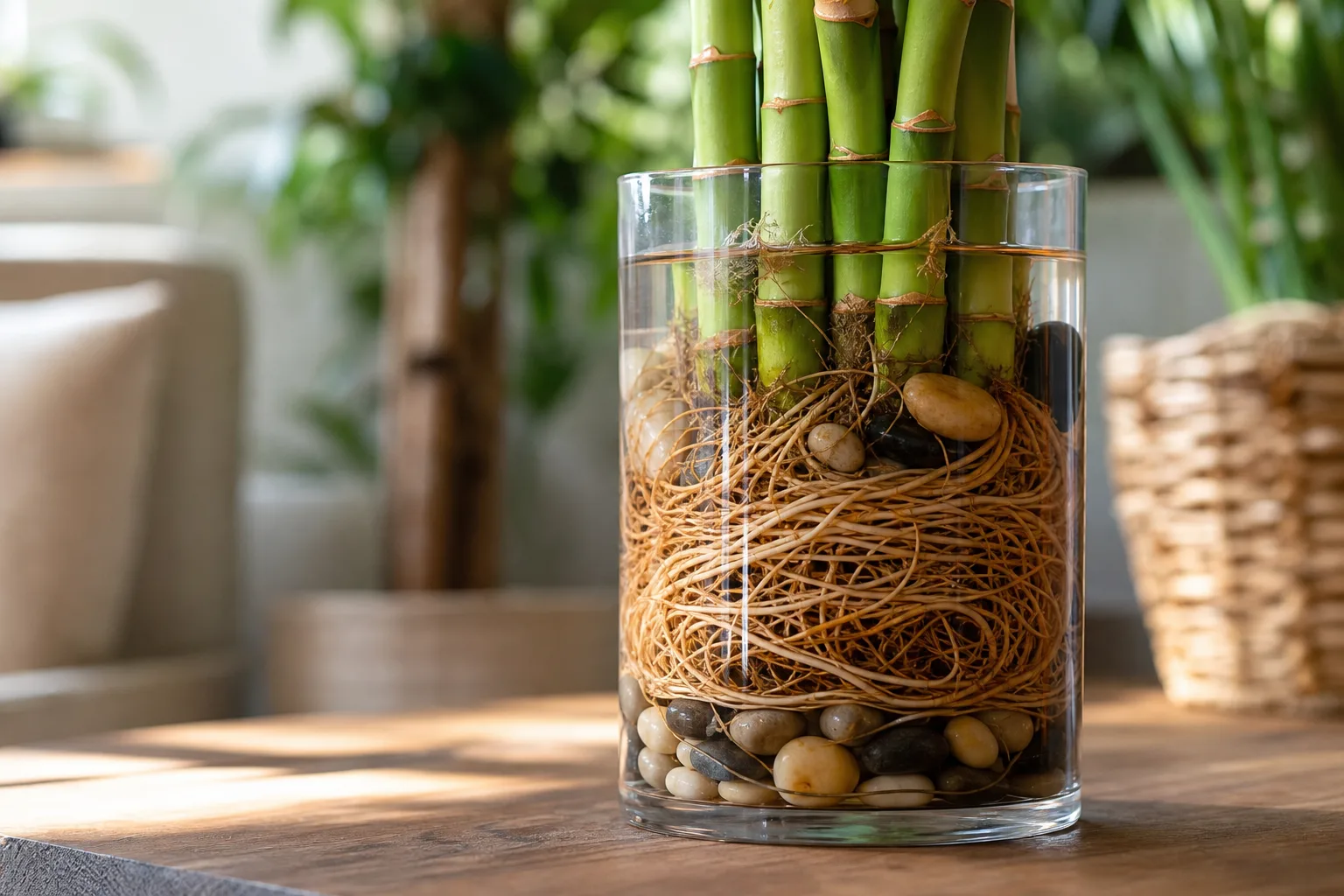
Root Bound on Lucky Bamboo: Causes, Checks & Fixes
This guide covers root bound on Lucky Bamboo. See also the general Root Bound guide, watering, and light pages for this plant.
Root Bound on Lucky Bamboo: Causes, Checks & Fixes
Quick answer
Before symptom lists: is your Lucky Bamboo in a soil pot or a water vase? Soil-grown plants become root bound when circling roots displace potting mix. Vase displays rarely bind in soil terms - they overcrowd pebbles when multiple braided canes share one narrow glass.
First fix for soil: unpot, loosen or trim circling roots, and repot into a container one size larger with well-drained mix - ideally in spring when active growth resumes.
First fix for vases: pour out water, rinse pebbles, separate canes if each section has roots, trim only mushy tissue, and refill with room-temperature filtered or distilled water covering roots plus one inch of stem.
For the full vase scrub-and-refill workflow or a water-to-soil move, see the lucky bamboo repotting guide.
Is your Lucky Bamboo in soil or a water vase?
Most retail Lucky Bamboo arrives in a decorative vase with pebbles, not potting soil. That culture path follows different crowding rules than a drain-hole pot on a windowsill.
| Culture | What “root bound” means here | What to inspect first |
|---|---|---|
| Soil pot | Circling roots displace mix; water runs through; plant wilts between drinks | Unpot and look for a dense root mat with little loose soil |
| Water vase | Roots pack pebbles; multiple canes compete in one glass; growth stalls despite weekly water changes | Lift canes, check pebble crowding and white root-tip space |
| Braided gift display | Several canes share one root zone - pot or vase fills faster than a single stem | Decide whether to repot the whole braid or divide canes |
If you are unsure, peek at the base: pebbles and standing water mean vase culture; dark mix and a drain hole mean soil culture. Wrong-path fixes - upsizing a vase when the real issue is fluoride burn, or dividing a soil pot when roots are actually rotting - waste a recovery window. Route to root rot if stems soften or roots are mushy brown.
What root bound looks on Lucky Bamboo
Soil culture signs
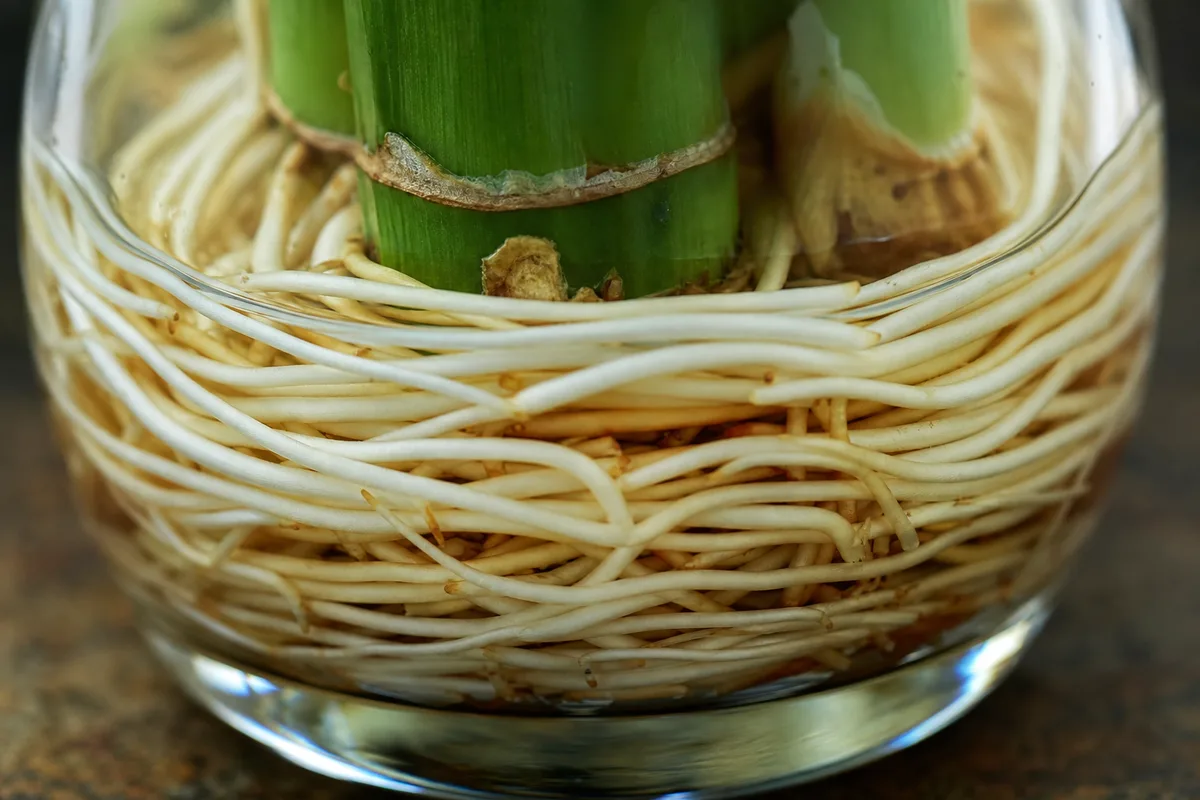
Root Bound symptoms on Lucky Bamboo - compare with healthy tissue on the same plant.
In a drain-hole pot, root-bound Lucky Bamboo shows stalled new leaf tips, wilting between waterings, and water that runs through immediately without soaking in. When you unpot, roots form a dense mat circling the outer edge. You may see roots emerging from drain holes or pushing the plant up in the pot.
The pot may feel unusually light shortly after watering because the root mass displaces most of the mix. Lower leaves may yellow as the plant struggles to absorb water and nutrients from the exhausted root zone - a pattern that overlaps underwatering until you inspect the root ball.
Water culture and vase overcrowding signs
Binding looks different in pebbles: roots packed tightly with little room for new white tips. Multiple braided canes sharing one small vase compete for the same limited space. Growth slows even when water is changed weekly. Outer canes may yellow while inner stems stay greener because one side of the braid catches more light and air.
Cloudy water within two to three days of a full change can mean bacterial buildup from overcrowded roots - not classic soil binding, but the same fix intent: clean, divide, or widen the container.
Why Lucky Bamboo gets root bound
Lucky Bamboo (Dracaena sanderiana) is a slow-growing houseplant, but soil-grown specimens left in the same container for years will eventually fill the pot. Gift plants often arrive in small nursery pots sized for shipping, not long-term growth.
Braided displays contain multiple canes sharing one root zone, accelerating how fast a pot fills. The species requires a moist potting mix - as roots replace mix, the remaining soil dries unevenly and nutrient availability drops. See the lucky bamboo soil guide for well-drained mix ratios that slow compaction between repots.
Water-culture roots grow continuously in water. Without division or a larger vase, they eventually crowd pebbles and limit oxygen exchange at the root surface. That is why vase growers who never divide a five-stem braid often hit a growth wall after two to three years even with faithful weekly water changes per the watering guide.
How to confirm the cause
Confirm in this order:
- Culture type - Soil-pot binding vs. vase pebble crowding (see table above).
- Unpot or lift inspection - Circling roots with minimal loose mix confirms soil binding; packed pebbles with a solid root cylinder confirm vase crowding.
- Water behavior - Immediate runoff after watering with wilting between drinks points to a dense soil root ball.
- Growth history - No new tips for months in the same container supports crowding over low light stall alone.
- Root color - White tips on circling roots mean stress but salvageable tissue; all brown slimy roots suggest rot instead.
- Drain hole roots - Visible roots at holes confirm a soil-grown plant has outgrown its container.
An oversized pot with slow growth and persistently wet outer soil is pot too large, not root bound - downsize or refresh mix instead of upsizing again.
Lookalike symptoms
| Symptom pattern | More likely cause | Check |
|---|---|---|
| Dry pot, limp canes, sparse roots | Underwatering | Roots loose, not circling |
| Brown leaf tips, adequate root space | Fluoride or salt damage | Switch filtered water - brown tips |
| Slow growth, loose roots, plenty of mix | Low light | Increase bright indirect light |
| Wet outer soil, small root ball | Pot too large | Do not upsize - see pot-too-large guide |
Mild vs. severe binding
Not every circling root needs emergency surgery.
| Severity | Soil signs | Vase signs | Timing |
|---|---|---|---|
| Mild | Light circling, steady new tips, water still absorbs | Pebbles have gaps; weekly water stays clear | Plan repot next spring |
| Moderate | Water runs through fast; tips stall 3–6 months | Roots fill half the pebble layer | Repot or divide within 2–4 weeks |
| Severe | Daily wilting despite watering; roots only, almost no mix | Pebbles packed solid; sour smell; outer cane decline | Repot or divide now; check for rot |
Mild binding during winter can wait for spring active growth unless drain holes are blocked or stems wilt daily.
First fix for Lucky Bamboo
Soil repot: unpot, tease, one size up
Unpot, loosen circling roots, and repot into a container one size larger with fresh well-drained mix.
Score or gently tease apart the outer root mat so new tips can grow outward. Trim any dead brown roots only - avoid removing more than one-third of healthy white roots at once. Use indoor or tropical potting soil and stake tall braided canes until roots anchor. Water when the top inch of soil is dry after the first light soak.
Vase fix: divide canes, rinse pebbles, trim roots
For crowded vase plants: pour out all water, lift canes, rinse pebbles in a colander, and scrub slime from the glass. Separate canes only when each section has roots attached at the base. Trim excess roots lightly and remove mushy brown tissue only. Refill with filtered or distilled water covering roots and one inch of stem.
Repot the whole braid as one unit when stems are bonded but each cane still shares a healthy root cluster - you do not need to unravel twists to fix crowding.
Step-by-step recovery (soil)
Best timing: repot in spring or early summer when indoor growth resumes - March through June in most climates. Winter repots are possible for urgent wilting but recover slower; hold fertilizer longer after a cold-season move.
- Water lightly the day before repotting so roots are flexible, not brittle.
- Slide the plant out; if it resists, run a knife around the pot edge.
- Loosen the outer root mat with your fingers; score tightly bound balls with a sterile knife if roots will not tease apart.
- Choose a pot one to two inches wider in diameter with drain holes - not three sizes up.
- Repot with fresh well-drained mix per the soil guide; firm gently and stake braided canes.
- Water once lightly, then follow the top-inch-dry rule from the watering guide.
- Place in bright, indirect light and hold fertilizer for four weeks.
- Use filtered water if your tap is high in fluoride - recovering roots are sensitive to leaf-tip burn after repot stress.
If unpotting reveals mushy roots or sour smell, switch to the root rot workflow before assuming binding was the only issue.
Vase division walkthrough
- Pour out all old water and lift the arrangement from pebbles.
- Rinse pebbles under lukewarm water; scrub the vase; replace stones that smell sour after cleaning.
- Inspect each cane base - firm green tissue with white root tips is salvageable; soft yellow tissue at the waterline needs trimming or propagation.
- When to cut braids apart: only if you want separate plants and each section has at least one cane with attached roots. Cut at the base with sterile shears; do not rip bonded stems.
- When to keep the braid intact: repot the whole bundle into a wider vase or soil pot one size up - loosen outer water roots gently with rinsing, not aggressive pulling.
- Reassemble with rinsed pebbles, refill with room-temperature filtered water to the correct depth, and resume weekly full water changes.
- Propagate trimmed healthy cane sections as backup - see the propagation guide if a cane fails after division.
Moving a long-term vase plant to soil after repeated overcrowding can reduce future binding - the repotting guide covers water-to-soil timing and the first-month moisture balance that prevents rot.
Recovery timeline
Repotted soil-grown Lucky Bamboo often shows new white root tips within two to four weeks. New leaf growth may follow in four to eight weeks depending on light and season.
Severely bound plants with minimal healthy roots may recover slowly through one growing season. New roots from cane cuttings usually form within two to three weeks in water if an entire section fails - take backups during repotting when braids are mature.
Vase divisions may pause growth for one to two weeks while roots adjust to new pebble spacing; yellowing outer leaves on crowded braids often stop once each cane has room.
What not to do
Do not jump to a pot three sizes larger - excess soil stays wet and invites rot. Do not slice away more than one-third of healthy roots at once. Do not fertilize immediately after repotting. Avoid forcing apart tightly braided stems if it tears cane tissue at the base. Do not repot into soil with cold tap water or leave a vase on a winter windowsill during recovery - temperature shock compounds repot stress.
How to prevent root binding next time
Repot soil-grown Lucky Bamboo every one to two years during spring growth, or when roots circle the pot edge. Use well-drained potting soil and upsize only one container size at a time.
For water culture, change water weekly and divide crowded vases before roots pack solid. Consider moving long-term specimens to soil when vase crowding repeats every year - Dracaena sanderiana is much less difficult to maintain in soil when drainage and filtered water are consistent.
Work root checks into routine care: when you change vase water, lift canes briefly and glance at pebble spacing; when you water soil pots, note how fast water drains and whether the pot feels light the next day.
When to worry
Escalate if stems soften after repotting, roots are mostly brown and slimy, or wilting worsens despite correct watering. Lucky bamboo is toxic to pets - wear gloves when handling sap from cut roots, and keep trimmings away from cats and dogs.
Repeated binding within months of repotting may mean the pot is still too small for a multi-cane braid, or that pot too large on the prior attempt left roots stranded in wet unused mix - inspect root health before upsizing again.
Next steps
- Repotting guide - full vase scrub, pebble cleaning, soil upsizing, and water-to-soil transitions
- Watering guide - top-inch-dry rule, weekly vase changes, and fluoride-safe refill habits
- Soil guide - well-drained mix for soil-grown specimens after binding correction
- Propagation guide - cane backups if division or severe trimming removes part of a braid
- Root rot - when soft stems or mushy roots overlap with crowding symptoms
- Pot too large - when wet outer soil and a small root ball mimic binding
When to use this page vs other Lucky Bamboo guides
- Lucky Bamboo watering guide - Use for routine moisture checks before assuming root bound is the main issue.
- Lucky Bamboo problems hub - Browse all 41 common issues on this species.