Brown Tips on Lucky Bamboo: Causes, Checks & Fixes
Quick answer
Lucky Bamboo brown tips usually mean fluoride or chlorine in tap water, or dry indoor air. First step: switch to filtered or distilled water and keep the plant away from heating vents.
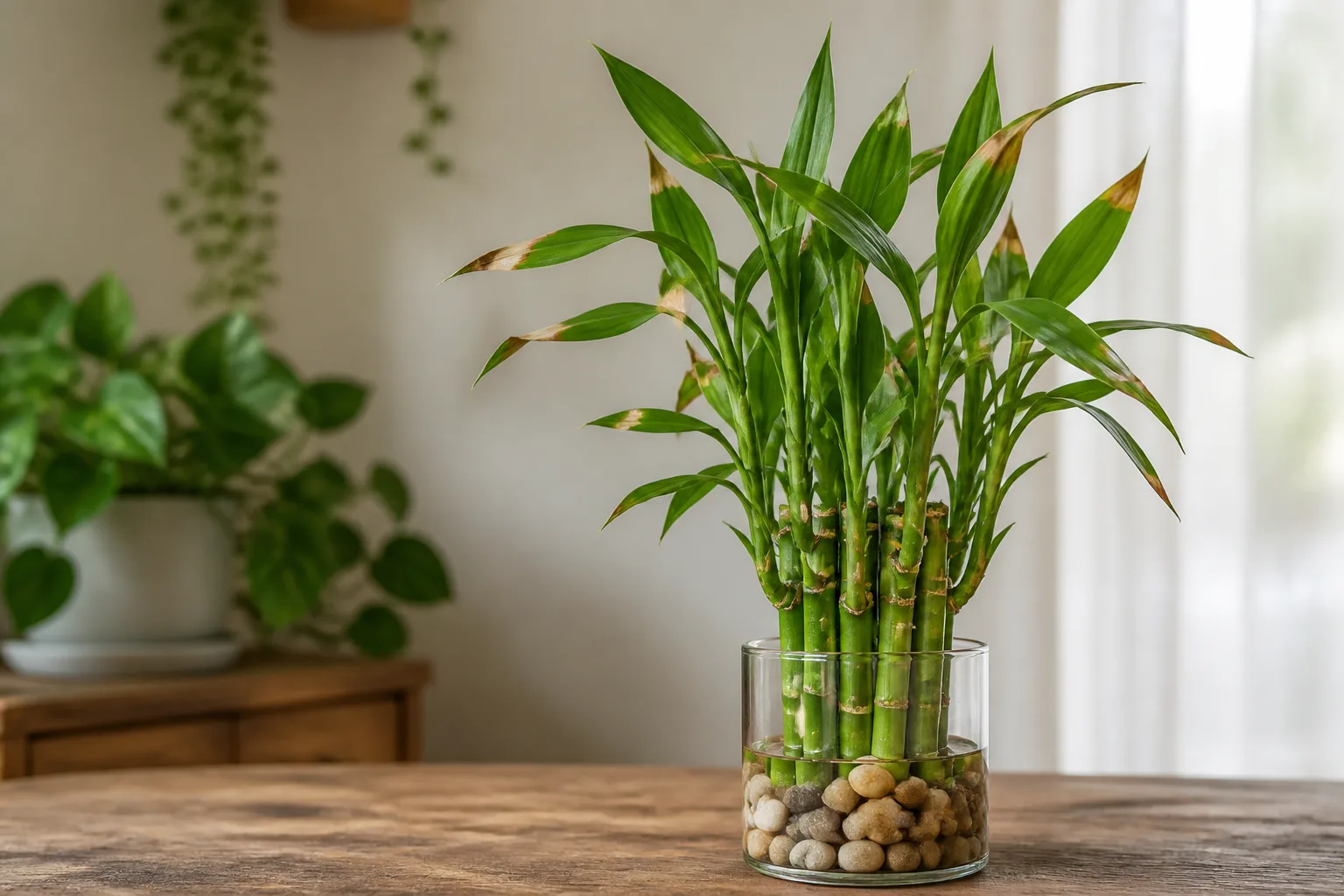
Brown Tips on Lucky Bamboo: Causes, Checks & Fixes
This guide covers brown tips on Lucky Bamboo. See also the general Brown Tips guide, watering, and light pages for this plant.
Brown Tips on Lucky Bamboo: Causes, Checks & Fixes
Quick answer
Brown tips on Lucky Bamboo (Dracaena sanderiana) most often come from fluoride or chlorine in tap water and low indoor humidity. First step: switch to filtered water or rain water and move the plant away from heating vents.
Leaf tips turning brown can be a symptom of multiple issues, including low humidity, incorrect lighting, or high levels of water additives such as chlorine. On Dracaena canes, tip burn shows on the narrow leaf margins before the whole leaf yellows.
What brown tips look like on Lucky Bamboo
Healthy Lucky Bamboo leaves are lance-shaped and bright green with smooth edges. Fluoride burn creates dry brown or tan tips, sometimes with a yellow band above the dead tissue. Multiple leaves at different heights may show the same pattern when tap water is the cause.
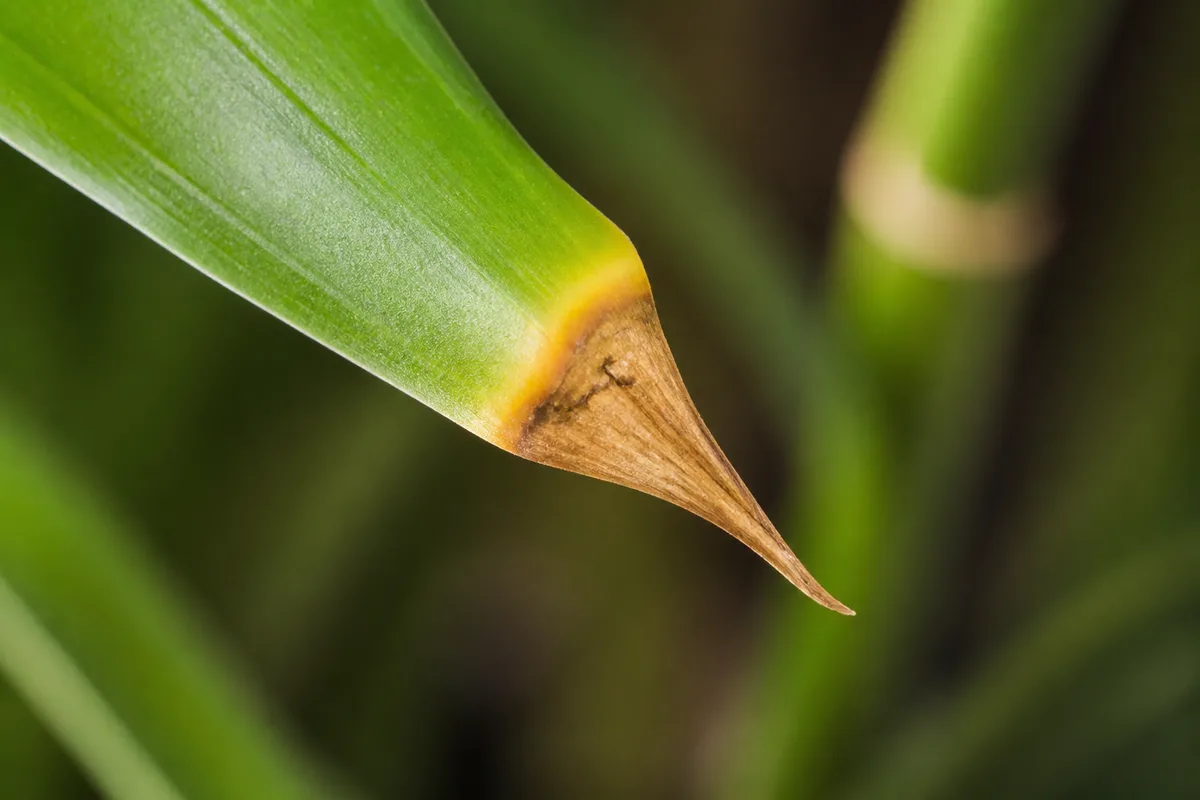
Brown Tips symptoms on Lucky Bamboo - compare with healthy tissue on the same plant.
Low humidity produces similar crisp edges, often worse on leaves closest to AC vents, radiators, or drafty winter windows. Tips may curl slightly before browning.
Direct sun scorch browns the sun-facing side of leaves, sometimes with bleached patches rather than uniform tip death.
Normal scars from dropped leaf sheaths can look like brown patches on the green cane - firm tissue underneath, not progressive tip burn on active leaves.
Why Lucky Bamboo gets brown tips
Dracaena species rank among houseplants most sensitive to municipal water additives. Dracaena sp. are easily affected by fluoride. Fluoride accumulates in leaf margins over repeated watering, killing tissue from the tip inward.
Chlorine causes related damage. Using filtered water or rain water may help reduce leaf tip browning. Letting tap water sit overnight reduces chlorine but not fluoride.
Low humidity can cause browning of the leaf tips - common in heated rooms where Lucky Bamboo sits near desks and electronics that dry the air.
Incorrect light adds stress: direct sunlight will damage the leaves, producing crisp margins that mimic water-quality burn.
Salt buildup from over-fertilizing vase water can also brown tips. Dracaena sanderiana is sensitive to salt - another reason to fertilize lightly.
How to confirm the cause
- Water audit - Have you used straight tap water for months in the vase or pot?
- Airflow - Is the plant near a heat vent or frequently running AC?
- Light direction - Does damage align with the sun-facing window side?
- Fertilizer history - Was liquid feed added at full strength to vase water?
- Stem and water check - Firm canes and clear water support tip-burn diagnosis; mushy stems suggest rot instead.
- New growth - If newest leaves already show tips browning, water chemistry is still wrong.
First fix for Lucky Bamboo
Switch to filtered, distilled, or rainwater and relocate away from dry air blasts.
Dump vase water completely, rinse pebbles, and refill with low-fluoride water. For soil plants, flush once with filtered water, then resume watering only when the top inch of soil is dry.
Move the arrangement off radiators and out of direct sun. One correction at a time helps you see which factor mattered most.
Step-by-step recovery
- Replace all growing water or flush soil with filtered water.
- Change vase water weekly going forward.
- Trim dead tip tissue with clean scissors - cut into healthy green only if the edge is fully dry.
- Raise ambient humidity modestly by grouping plants or using a pebble tray - avoid misting if fungal spots appear on leaves.
- Hold fertilizer for one month; resume at one-quarter strength every other month in water culture if growth is pale.
- Watch the next two new leaves for clean margins.
Recovery timeline
New leaves should emerge without tip burn within two to four weeks after water quality improves. Old damaged tips remain until trimmed or the leaf is removed naturally.
Chronic tap-water use may require several monthly water changes before fluoride levels in pebbles and roots drop enough to stop symptoms.
Causes to rule out
- root rot on Lucky Bamboo - Cloudy water, sour smell, soft stems; not isolated dry tips.
- Yellow leaves on Lucky Bamboo - Whole-leaf yellowing from sun or overwatering on Lucky Bamboo; tips may brown secondarily.
- Mechanical damage - Bumped leaves in tight braided arrangements; localized tears, not symmetric tip burn.
- Pest stippling - Spider mite damage shows speckling before edge browning; check undersides.
What not to do
Do not trim aggressively into living green tissue - small brown tips are cosmetic. Avoid increasing fertilizer to “heal” tips. Do not return to tap water because filtered water “did not fix old leaves overnight.” Do not place in direct sun to dry tips faster.
How to prevent brown tips next time
Commit to rainwater or distilled water for all drinks and vase refills. Maintain weekly water changes. Keep the plant in bright, indirect light at moderate humidity, away from HVAC drafts.
For soil culture, use well-drained potting soil and empty saucers so salts do not concentrate.
Lucky Bamboo care cross-check
Tip burn on Lucky Bamboo is rarely a humidity-only problem when tap water is in play - fix water chemistry first, then humidity. Vase plants depend entirely on what you pour in; even perfect light cannot offset daily fluoride exposure.
When to worry
Brown tips alone are low severity. Worry when tips accompany stem softness, cloudy water, or widespread yellowing - pivot to root-rot or overwatering guides. Lucky bamboo sap can irritate skin; wear gloves when trimming many leaves.
Conclusion
Lucky Bamboo brown tips usually mean tap water fluoride, dry air, or direct sun - not a mysterious deficiency. Confirm the pattern, switch to filtered water, improve placement away from dry heat, and judge recovery by new leaf edges staying green.
When to use this page vs other Lucky Bamboo guides
- Lucky Bamboo watering guide - Use for routine moisture checks before assuming brown tips is the main issue.
- Lucky Bamboo problems hub - Browse all 41 common issues on this species.
- Underwatering on Lucky Bamboo - Different entry point when symptoms overlap with brown tips.
- Overwatering on Lucky Bamboo - Different entry point when symptoms overlap with brown tips.
- Yellow Leaves on Lucky Bamboo - Different entry point when symptoms overlap with brown tips.