Stunted Growth on Lucky Bamboo: Causes, Checks & Fixes
Quick answer
Lucky Bamboo stunted growth usually comes from fluoride-heavy tap water, dim light, or failing roots in stagnant vase water or soggy soil. First step: inspect roots, switch to filtered water, and move to bright indirect light.
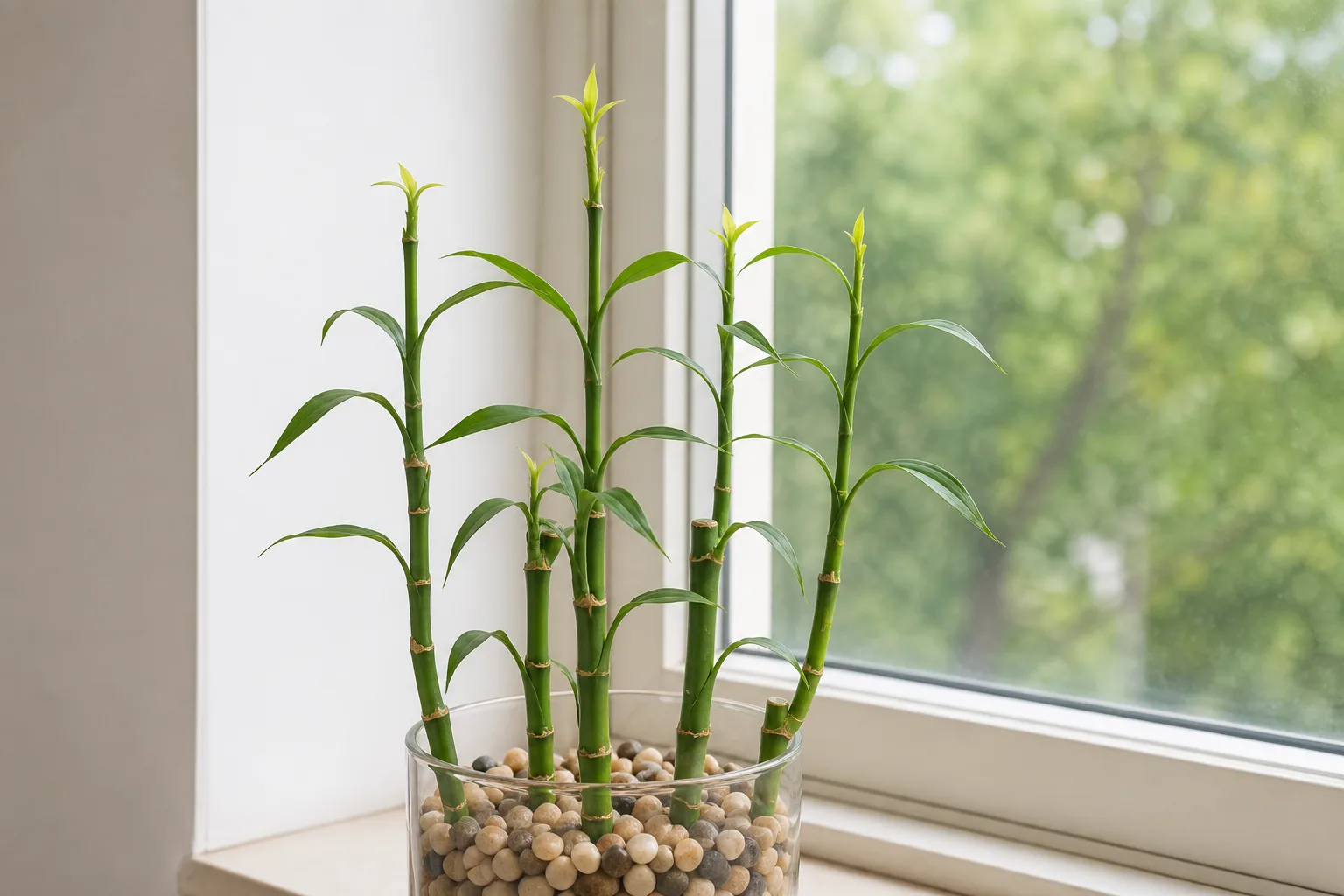
Stunted Growth on Lucky Bamboo: Causes, Checks & Fixes
This guide covers stunted growth on Lucky Bamboo. See also the general Stunted Growth guide, watering, and light pages for this plant.
Stunted Growth on Lucky Bamboo: Causes, Checks & Fixes
Quick answer
Stunted growth on Lucky Bamboo (Dracaena sanderiana) usually traces to fluoride in tap water, too little light, or roots failing in stagnant vase water or soggy soil. First step: inspect root firmness, switch to filtered or distilled water, and move to bright, indirect light.
Lucky Bamboo is slow-growing by nature, but months without new leaves in a warm room signal a care problem - not normal dormancy indoors.
What stunted growth looks like on Lucky Bamboo
Early signs: New leaves emerge smaller than older ones, internodes stretch longer between leaf pairs, and cane tips stay bare for months. Foliage may look pale or yellow-green instead of deep green.
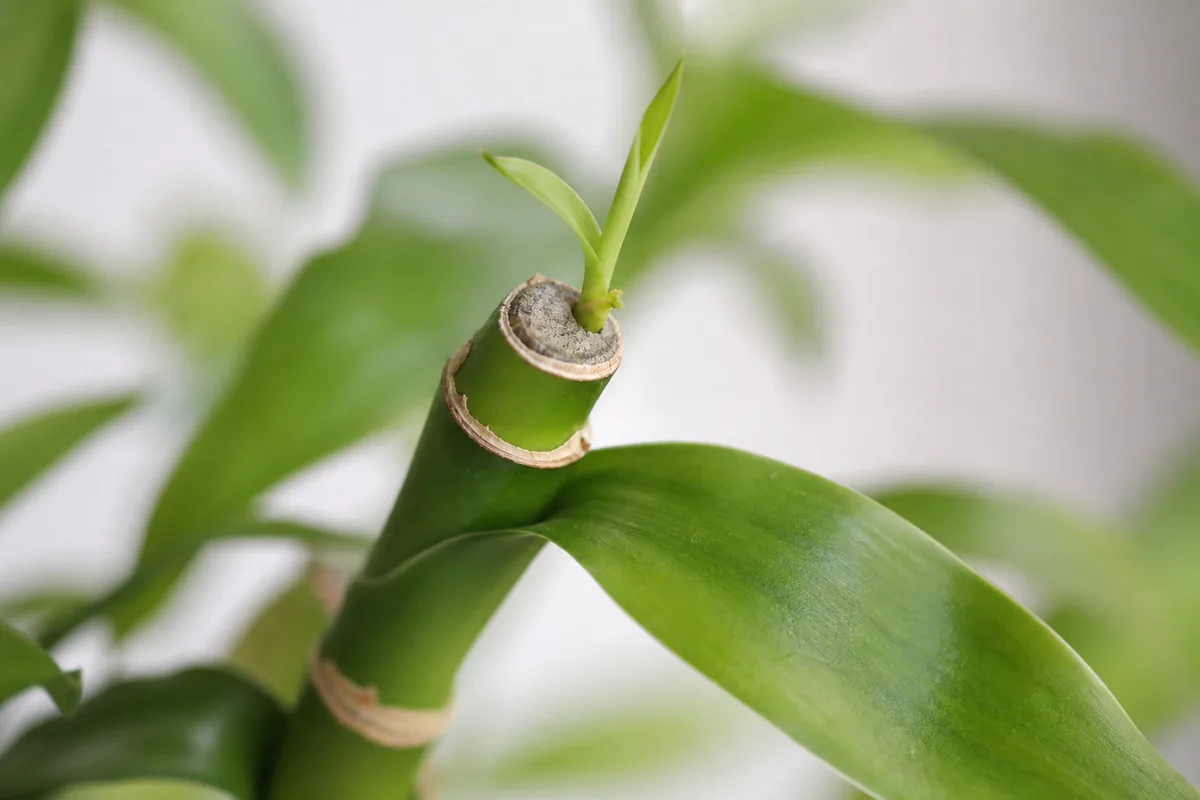
Stunted Growth symptoms on Lucky Bamboo - compare with healthy tissue on the same plant.
In water culture, stunting often pairs with cloudy water, brown slimy roots, or algae buildup - the plant cannot absorb nutrients or oxygen efficiently. In soil culture, wet mix that never dries, a heavy pot, and yellow lower leaves suggest roots are too damaged to support growth.
Healthy Lucky Bamboo in good conditions still grows slowly. Stunting is the absence of proportional new leaves over many weeks, not simply a short desk plant.
Why Lucky Bamboo gets stunted growth
Dracaena species are easily affected by fluoride in tap water, which browns leaf tips and weakens tissue over time. Stressed plants redirect energy to survival instead of new shoots.
Low light slows metabolism. Dracaena sanderiana tolerates lower light with slower growth but cannot produce vigorous leaves in deep shade indefinitely. Dim corners also keep vase water or soil wet longer, inviting rot.
Root failure stops growth entirely. Overwatering can cause yellowing of the leaves and rotting of the stems in soil. Vase water unchanged for weeks breeds bacteria that attack roots - growth halts even when water looks full.
Vase-grown plants receive no soil nutrients unless you fertilize lightly; years in plain water without any feeding can produce pale, small leaves. Soil plants in unchanged mix for years may be root-bound, limiting uptake.
How to confirm the cause
Confirm in this order:
- Growth timeline - No new leaves for three or more warm months? Likely stunting, not normal pause.
- Water source - Tap water with known fluoride issues? Tip burn plus small new leaves supports water stress.
- Light level - Can you read without a lamp where the plant sits all day? Deep shade confirms light deficit.
- Root check - Lift from pebbles or unpot soil plants. Firm white roots vs. brown slime.
- Vase clarity - Cloudy water within days of changing points to bacterial stress.
- Pot weight - Soil pot stays heavy and wet for a week? Overwatering stunts through root damage.
Cold rooms below comfortable indoor temps also slow growth but rarely stop it completely unless combined with wet roots.
First fix for Lucky Bamboo
Switch to filtered water and improve light while fixing roots.
For vase plants: fully change water, rinse pebbles, trim any brown roots, and refill with filtered or distilled water. Move to bright, indirect light within one to two weeks.
For soil plants: unpot if mix stays wet, trim mushy roots, repot into well-drained potting soil, and water when the top inch of soil is dry.
Hold fertilizer until new growth appears - stressed roots cannot process salts.
Step-by-step recovery
- Inspect roots in water or soil; trim decay and refresh medium.
- Replace tap water with filtered or distilled water permanently.
- Relocate to Lucky Bamboo light guide - east window or filtered bright room.
- For vase culture, change water weekly and rinse pebbles monthly.
- For soil, verify drainage holes and empty saucers after each watering.
- After four weeks of stable care, apply quarter-strength liquid fertilizer once monthly if growth resumes.
- Track new leaf size monthly - improvement should be visible within six weeks.
Consider moving long-term vase plants to soil if growth remains weak; Dracaena sanderiana is much less difficult to maintain in soil with proper drainage and filtered water.
Recovery timeline
Corrected water and light often produce noticeably larger new leaves within four to eight weeks. root rot on Lucky Bamboo recovery may take two to four weeks before any new shoot appears.
Because the species is slow-growing, expect inches per year - not weekly height jumps. Judge success by leaf quality and regular new nodes, not rapid cane elongation.
Causes to rule out
- Normal slow growth - Compact new leaves in bright light with clear water; no action needed.
- Winter cool-down - Slight slowdown in unheated rooms; resumes when warm.
- Recent Lucky Bamboo repotting guide - Temporary pause for two to three weeks after disturbance.
- Pest damage - Mites or thrips stipple leaves; inspect undersides before assuming nutrition issues.
What not to do
Do not pile on fertilizer to force growth - salts burn stressed Dracaena roots. Avoid moving directly into hot afternoon sun to “boost” growth; direct sunlight damages leaves. Do not ignore cloudy vase water. Do not repot into oversized pots that stay wet longer.
How to prevent stunted growth next time
Establish filtered water and weekly vase changes as default maintenance. Place in bright, indirect light and rotate weekly.
For soil culture, match watering to light - brighter spots dry faster. Refresh potting mix every two to three years if growth slows despite good care.
Lucky Bamboo care cross-check
Growth speed ties to light, water quality, and root health together. A plant in filtered water but deep shade will stay pale and sparse. One in bright light with stagnant vase water will stall from root decline. Fix all three levers before expecting height gains.
When to worry
Escalate when stunting pairs with soft stems, climbing yellow leaves, or roots that dissolve when rinsed. Lucky bamboo is toxic to pets - keep fertilizer and trimmed root debris away from cats and dogs.
Conclusion
Stunted Lucky Bamboo growth comes from fluoride stress, insufficient light, or failing roots in water or soil - not from bad luck. Confirm with root inspection and growth timeline, switch to filtered water, brighten indirect light, and refresh the root zone. Expect slow but steady new leaves once conditions align.
When to use this page vs other Lucky Bamboo guides
- Lucky Bamboo watering guide - Use for routine moisture checks before assuming stunted growth is the main issue.
- Lucky Bamboo problems hub - Browse all 41 common issues on this species.