No New Growth on Lucky Bamboo: Causes, Checks & Fixes
Quick answer
Lucky Bamboo stops producing new leaves when light is too dim, vase water goes stale, roots fail, or the plant is too cold. First step: move to bright indirect light, fully change vase water or verify soil moisture and drainage, then inspect roots for firm white tissue.
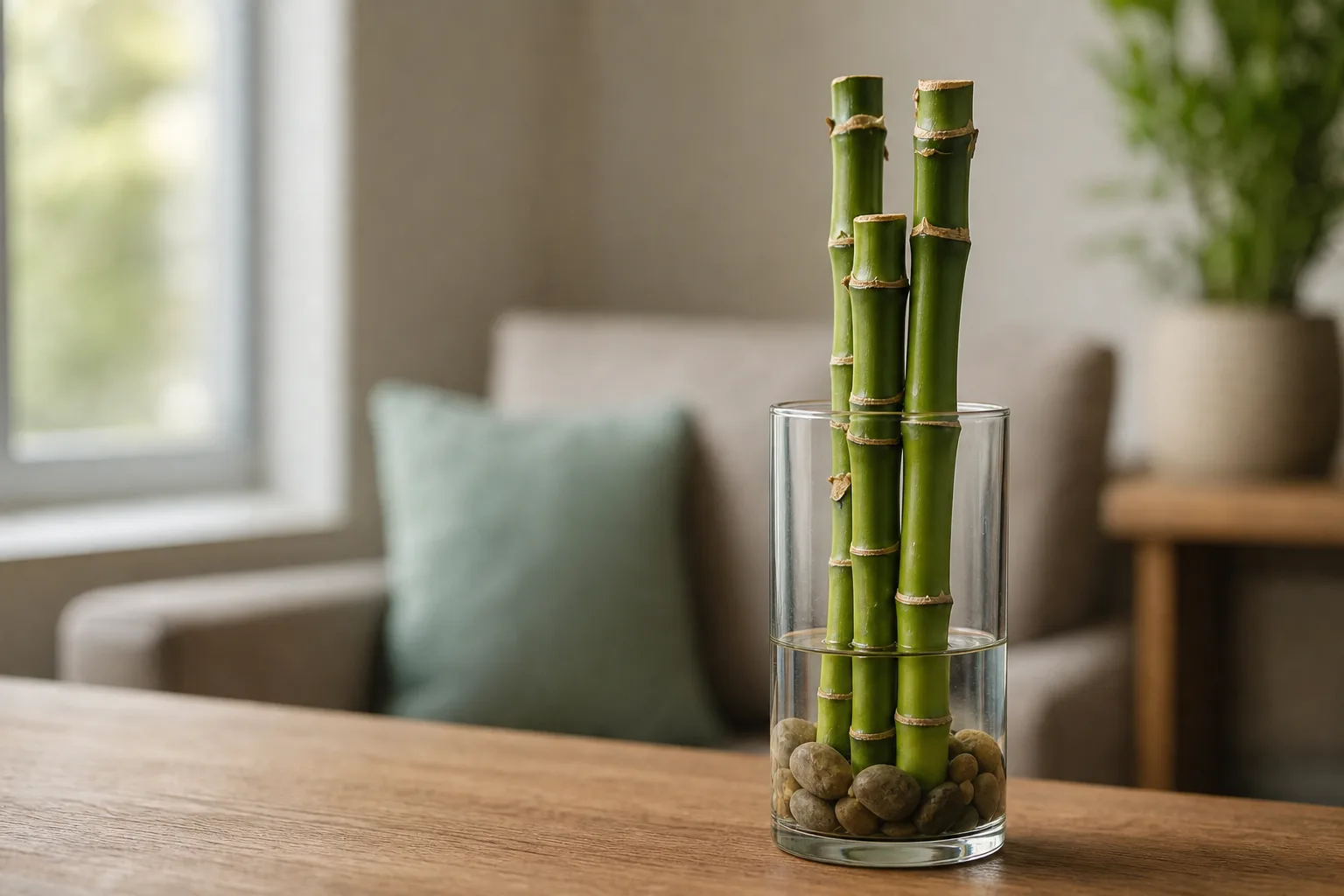
No New Growth on Lucky Bamboo: Causes, Checks & Fixes
This guide covers no new growth on Lucky Bamboo. See also the general No New Growth guide, watering, and light pages for this plant.
No New Growth on Lucky Bamboo: Causes, Checks & Fixes
Quick answer
No new growth on Lucky Bamboo (Dracaena sanderiana) means zero leaf buds at cane tips or nodes for weeks - not merely slow height gain. The usual culprits are insufficient light, stagnant vase water, failing roots, or cool room temperatures. First step: move to bright indirect light, fully change vase water or confirm soil is neither bone-dry nor soggy for weeks, and inspect roots for firm pale tissue.
Read a different guide when the symptom fits better:
| Your main concern | Start here |
|---|---|
| Plant grows, but very slowly - occasional leaves over months | Slow growth |
| Canes stretch long and thin toward a window | Leggy growth or Not enough light |
| Smaller, paler new leaves with long gaps between nodes | Stunted growth |
| Yellowing stems, cloudy water, mushy roots | Root rot |
For baseline culture - vase depth, fluoride water, and seasonal rhythm - see the lucky bamboo overview and watering guide.
Lucky Bamboo is slow by nature compared to tropical vines, but healthy canes in good conditions produce visible leaf buds regularly. Bright, indirect light drives that rhythm. Water unchanged for weeks starves roots of oxygen and stalls new leaves even when old foliage still looks green.
What no new growth looks on Lucky Bamboo
Water-culture patterns
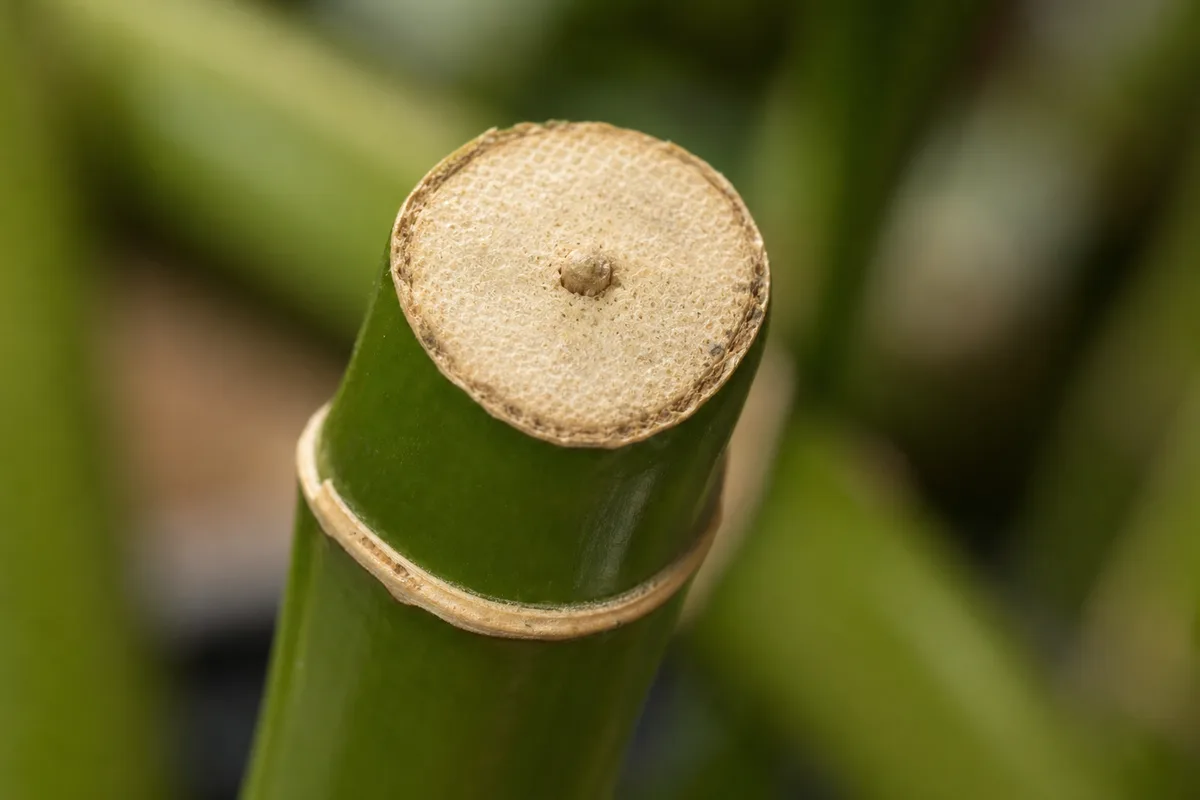
No New Growth symptoms on Lucky Bamboo - compare with healthy tissue on the same plant.
On water-culture plants, cane tips stay bare with no emerging leaf sheath for months. Existing leaves may stay green but look dull. Vase water may be clear or slightly cloudy; pebbles may be coated in algae while roots look sparse or brown. Algae on glass is not mildew - it signals light plus unchanged water feeding biofilm that competes with roots for oxygen.
Soil-culture patterns
In soil culture, the plant holds old leaves but produces no new ones. Pot weight stays constant; mix may be compacted or waterlogged. Check the overwatering guide if mix stays wet for weeks.
Braided and uneven stall patterns
Braided displays sometimes show one cane growing while others stall - uneven root health within the bundle. Inner canes may have fewer roots touching water or pebbles than outer stems. That pattern needs separation and solo rooting, not more fertilizer on the whole braid.
Distinguish from normal winter pause - firm green canes, no spreading yellow, stable care - versus active decline - yellowing climbing stems, soft nodes, sour smell.
Why Lucky Bamboo stops growing
Low light is the most common indoor cause. Dracaena sanderiana is easily grown in part shade but “part shade” still means a bright room, not a hallway with no windows. Dim light stops new leaf initiation while old leaves persist. NC State notes the species tolerates lower light with slower growth - survival without new buds is common on dim desks.
Water culture stalls when water is not changed weekly. Depleted oxygen and bacterial buildup weaken roots silently. Fluoride in tap water adds chronic stress that shows as tip burn before growth stops entirely.
Soil plants stop when overwatering keeps mix saturated or when underwatering desiccates roots. Extreme pot size - too large - holds cold wet mix around sparse roots and delays growth; see pot too large when the container dwarfs the root ball.
Temperature below 65°F at night slows metabolism. Drafty windows and AC blasts mimic dormancy. Pure water culture with zero nutrients for years can limit growth, though excess fertilizer is more common as burn, not stall.
How to confirm the cause
Confirm in this order:
- Light level - Can you read comfortably without a lamp at the plant’s spot? If not, light is likely too low. Compare placement to the light guide foot-candle bands.
- Vase change date - Water unchanged more than 10–14 days supports stagnation stall.
- Root inspection - Firm white roots support a care fix; brown slime means rot must be cleared first per the root rot guide.
- Soil moisture pattern - Constant wetness or perpetual dryness both stop growth.
- Temperature - Measure overnight lows near the plant; cold corners stall Dracaena.
- Recent fertilizer - Heavy salts can pause growth after burn; pure water for years may need dilute feeding in warm months only.
First fix for Lucky Bamboo
Increase light to bright indirect and fully refresh the root environment - change all vase water and rinse pebbles, or repot soil plants into fresh well-drained potting soil if mix was soggy or compacted.
For vases: dump water, rinse roots and pebbles, trim any soft roots, refill with filtered or distilled water, submerging roots and one inch of stem. Follow the full watering guide for weekly rhythm.
For soil: water when the top inch of soil is dry and ensure drainage holes are open. Move closer to a bright window with filtered light, not direct hot sun - acclimate over 7 to 14 days if coming from deep shade per the light guide.
Add one drop of liquid houseplant fertilizer per month in warm active months only after growth restarts - not before roots and light are fixed. See the fertilizer guide for dilution rates.
Grow-light setup for offices and interior rooms
Windowless cubicles and interior shelves often fall below the bright-indirect band lucky bamboo needs for new leaf initiation. A full-spectrum LED grow light 12 to 18 inches (30 to 45 cm) above the tallest cane, run 8 to 10 hours daily on a timer, can restart buds where ceiling fluorescents alone keep plants alive but static.
Start conservatively if the arrangement lived in deep shade for years - raise the fixture or shorten hours if new leaves bleach or crisp. Cover the whole braid so outer canes are not left in shadow. Product class and distance details live on the lucky bamboo light guide.
Step-by-step recovery
- Relocate to the brightest indirect spot available - an east or north window with sheer curtain often works.
- Fully change vase water or repot soil if roots or mix look compromised.
- Trim mushy roots; sterilize scissors between cuts.
- Wipe dusty leaves so remaining foliage photosynthesizes efficiently.
- Maintain weekly water changes with filtered water.
- Wait three to four weeks before expecting new buds - Dracaena responds slowly.
- If one cane in a braid stays dormant, separate and root it alone in clean water - see the propagation guide for binding removal and submersion depth.
Recovery timeline
Light and water fixes often trigger the first new leaf in two to four weeks on firm canes. Root rot recovery may take four to eight weeks before visible buds. Winter adjustments may show no growth until temperatures stay above 65°F consistently - that can be normal pause, not failure.
Old leaves rarely increase in size; judge progress by new sheath openings at tips or nodes, not by enlarging mature foliage.
Causes to rule out
Growth stalls overlap with several sibling problems:
| Symptom pattern | Likely cause | Guide |
|---|---|---|
| Firm canes, stable green leaves, cold season | Seasonal slow-down | Wait with better light; compare to slow growth |
| Cloudy water, mushy roots, yellowing stems | Root rot | Root rot - growth will not return until rot is cleared |
| White residue on pebbles or soil surface | Nutrient lockout or salt crust | Salt build-up - flush or refresh medium |
| Roots circle pot heavily | Root-bound soil plant | Root-bound - gentle repot into slightly larger container |
| Cottony clumps at nodes | Pest drain | Mealybugs - inspect leaf axils and stem joints |
| Tips cut for height control | Recently pruned top | New side shoots need weeks - see pruning guide |
No new growth vs slow growth - when to read which guide
Use this page when no leaf buds appear at any node for six to eight warm weeks - zero growth, not slow growth. Use the slow growth guide when the plant does add occasional leaves but at a pace that feels too slow for your expectations. Both pages share light and water fixes; this page adds zero-bud confirmation, braid separation, and grow-light escalation for windowless rooms.
What not to do
Do not dump full-strength fertilizer on a stagnant plant hoping to “wake it up.” Do not move daily between rooms. Avoid dark corners even if vase water looks clear. Do not repot into a huge pot - excess wet soil stalls roots further. Do not assume slow growth means the plant needs more water; check roots first. Do not jump from a dim corner to unfiltered south-window sun - acclimate over 7 to 14 days to avoid scorch documented on the light guide.
How to prevent growth stalls next time
Change vase water weekly with low-fluoride water. Keep bright indirect light year-round - supplement with a grow light in windowless offices. For soil, water when the top inch dries and use an appropriately sized pot.
Consider transitioning to soil long term if weekly vase maintenance is inconsistent - Dracaena sanderiana is much less difficult to maintain in soil with drainage and filtered water. Feed lightly only during warm months per the fertilizer guide.
Lucky Bamboo care cross-check
Growth requires aligned light, clean water or balanced soil moisture, and stable warmth. Run this monthly check against the overview, light, and watering guides:
- Light - Newest leaf on each cane is green and normal size, not pale or stretched. Interior shelves without plant-facing window light fail this test.
- Water - Vase water changed within seven days; soil top inch dries between drinks. Topping off cloudy water without a full dump does not count.
- Roots - Firm and pale when lifted; no sour smell or brown slime at the water line.
- Temperature - Overnight lows near the plant stay above 65°F; no AC vent stream on the vase.
A decorative vase in a dim office with six-month-old water will stay static until care matches how the species is easily grown in evenly moist soil or maintained water culture.
Related Lucky Bamboo guides
- Overview - vase vs. soil culture decision hub
- Light - window placement, grow lights, and acclimation
- Watering - weekly filtered rhythm and submersion depth
- Propagation - separating dormant braid canes
- Slow growth - when occasional leaves are normal
- Root rot - when cloudy water and mushy roots block recovery
When to worry
Escalate if canes yellow from the base, stems soften, or vase water clouds within 48 hours of changing. Lucky bamboo is toxic to pets - keep fertilizer drops and trimmed roots away from pets. Call the ASPCA Animal Poison Control Center at (888) 426-4435 if a pet ingests leaves or vase water.
Contact your local Cooperative Extension office if firm-caned plants show no new sheaths after 8 to 12 weeks of corrected bright indirect light, weekly filtered water, and very dilute warm-season feeding.
Conclusion
Judge recovery by new sheath openings, not old leaf size - a firm cane that adds one bud after months of zero growth is winning. If light, water, and root checks pass but buds still fail, separate stalled braid canes and escalate to your extension office before assuming the arrangement is finished.
Related tool
Use the Plant Problem Diagnosis Tool to narrow causes for no new growth on this plant before changing multiple variables at once.